

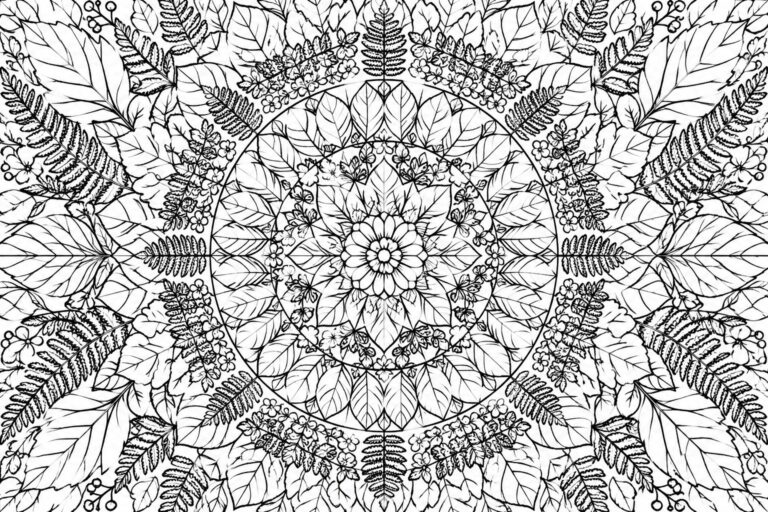
I enjoy making coloring pages that feature leaves and other botanical forms in mandala shapes.
My sketches usually start from walks outside where I notice the patterns in plants.
This set includes twenty different designs for you to try.
They are simple enough for regular coloring sessions at home.
I find them relaxing when I just want to fill in shapes without a big project.
Botanical Mandala with Layered Leaves and Ferns
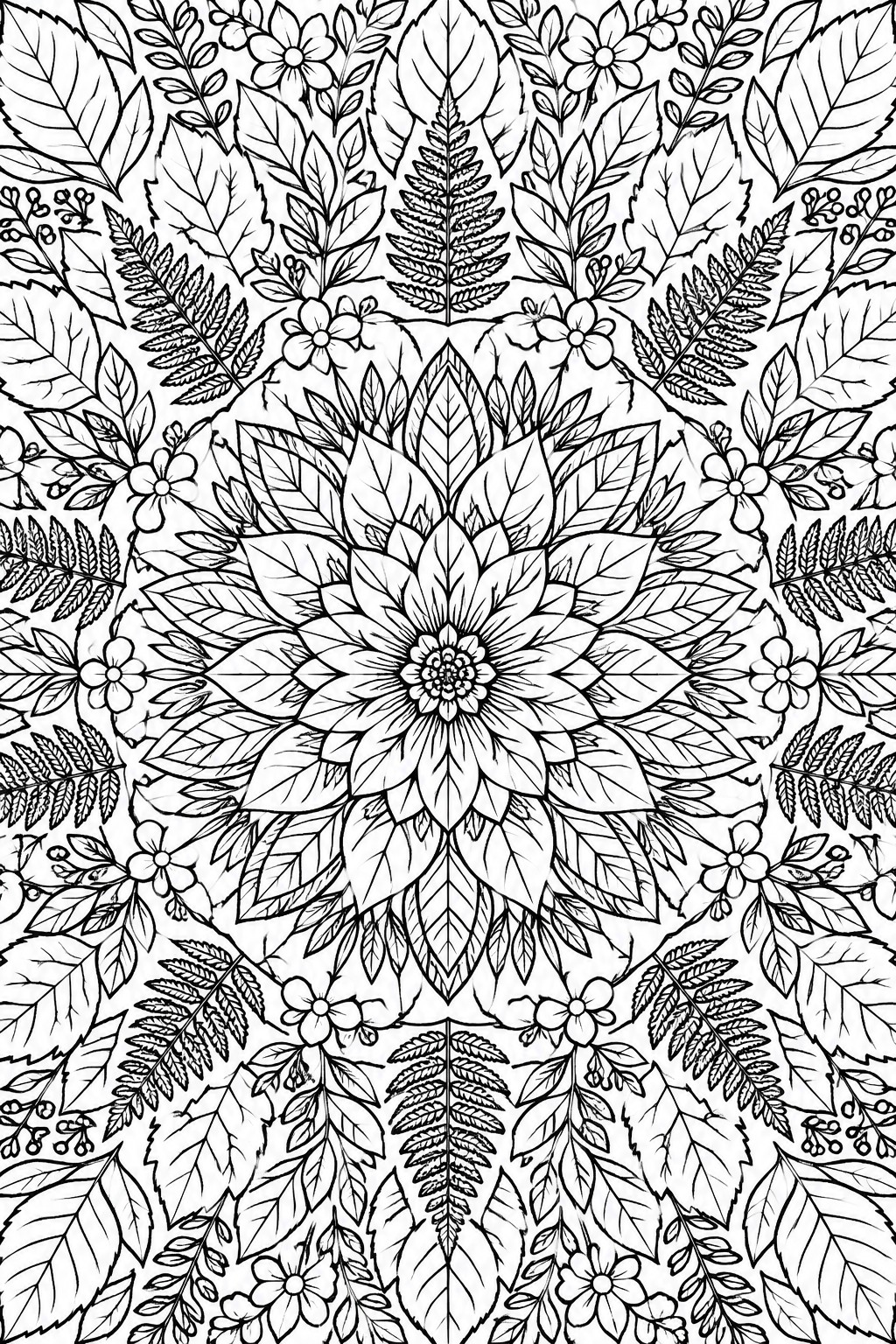
Nature mandalas like this one combine leaves flowers and ferns into a repeating circular pattern. The design centers on a large bloom with multiple rings of botanical shapes radiating outward in perfect symmetry. Clear divisions between elements make it straightforward to color without losing track of the overall structure.
The detail level makes this a smart pick for adults who want a structured yet intricate project. What makes this page useful is how the radial layout supports balanced coloring from center to edge. For a relaxing session this kind of page offers enough variety in shapes to hold interest without becoming overwhelming.
Fern Spiral Mandala with Layered Leaves
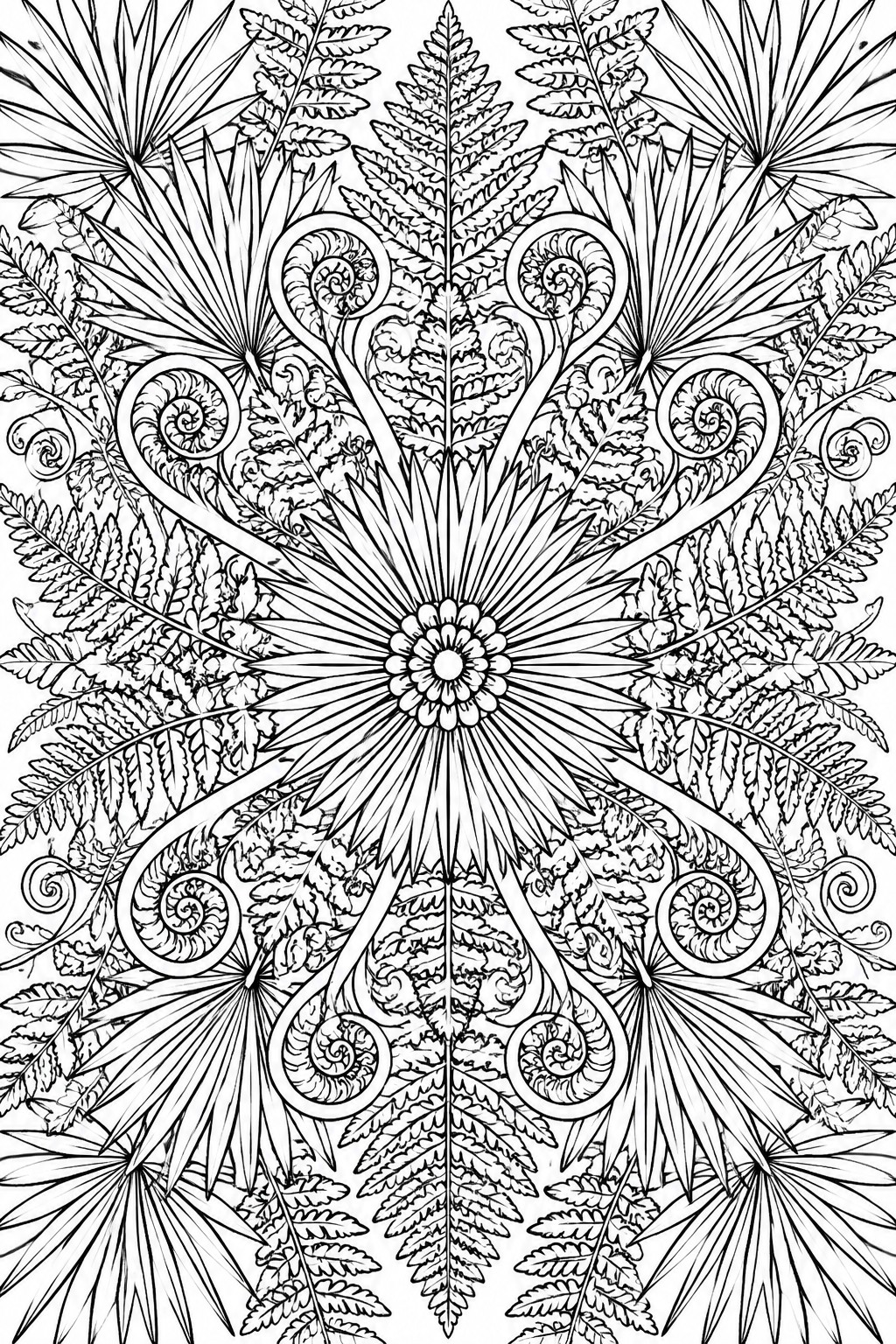
A mandala centered on a small flower uses repeating clusters of ferns, palm fronds, and tight spiral shapes to fill each quadrant. The design keeps the same botanical elements mirrored across the circle so each section mirrors the next. This repetition gives colorers clear shapes to follow while still leaving room to vary pressure and shading on the leaf veins and curled tips.
The layout makes this easy to color by working outward from the center without losing track of the pattern. What makes this page useful is the mix of tight spirals near the middle and larger fronds toward the edges, which lets colorers switch between fine detail work and broader strokes. A page like this works especially well for adults who want a focused session on one symmetrical piece rather than jumping between unrelated subjects. The consistent line weight also helps the finished page look balanced even if some areas get lighter or heavier coloring.
Symmetrical Mandala Built from Leaves Flowers and Seed Pods
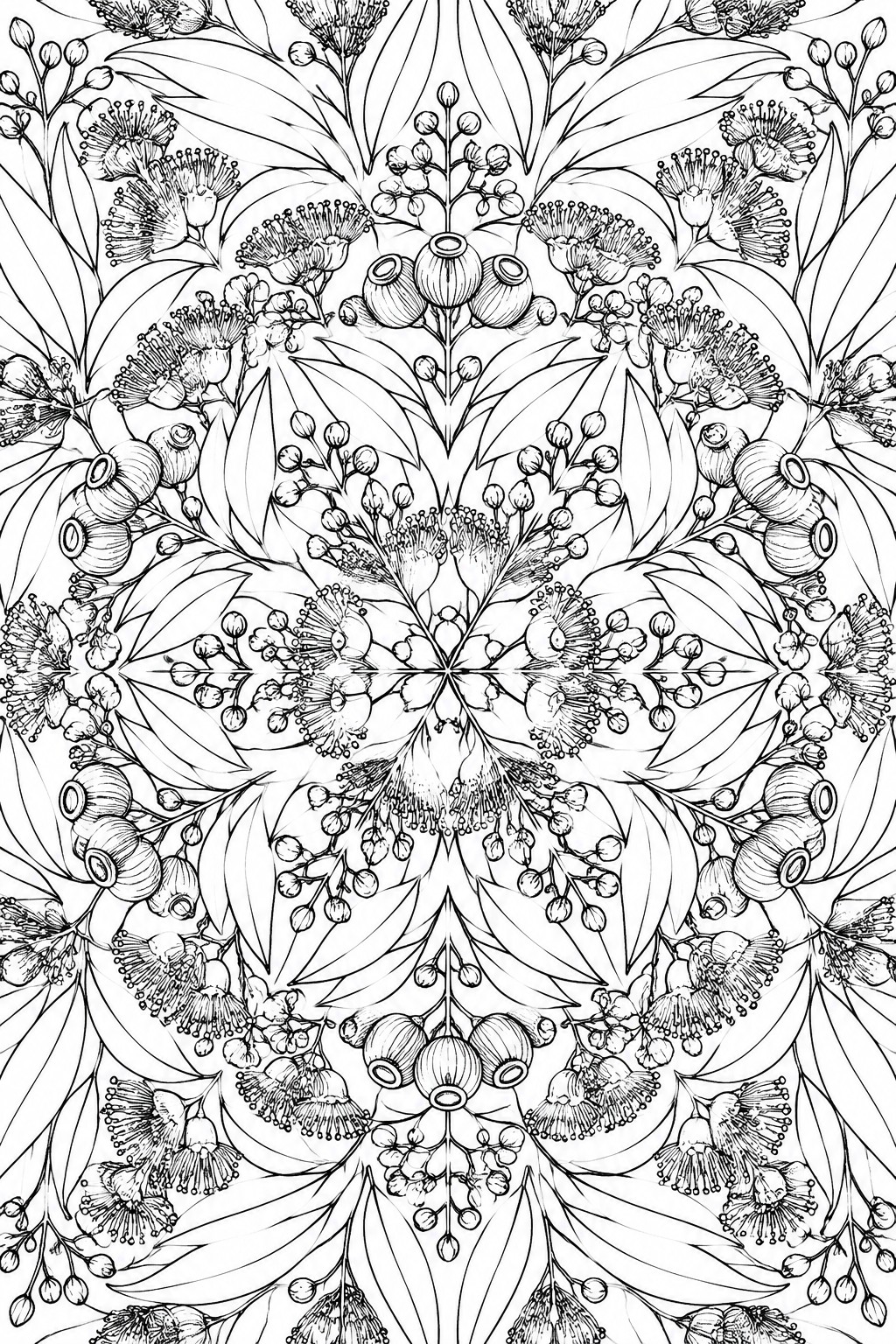
This coloring page idea uses a radial mandala layout where leaves, flowers, buds, and seed pods repeat in balanced sections around a central point. The design mixes open leaf shapes with tighter clusters of blooms and rounded pods to create contrast between larger areas and finer details. Fine lines keep the structure clear while allowing colorers to work on one wedge or ring at a time.
The layout makes this easy to color because the repeating symmetry gives natural guides for matching colors across sections. A page like this works especially well for adults who want a detailed botanical pattern that stays organized without extra planning. The mix of solid leaves and textured flower centers offers both quick fills and small spots that reward slower shading work.
Succulent Rosette Mandala with Layered Leaves
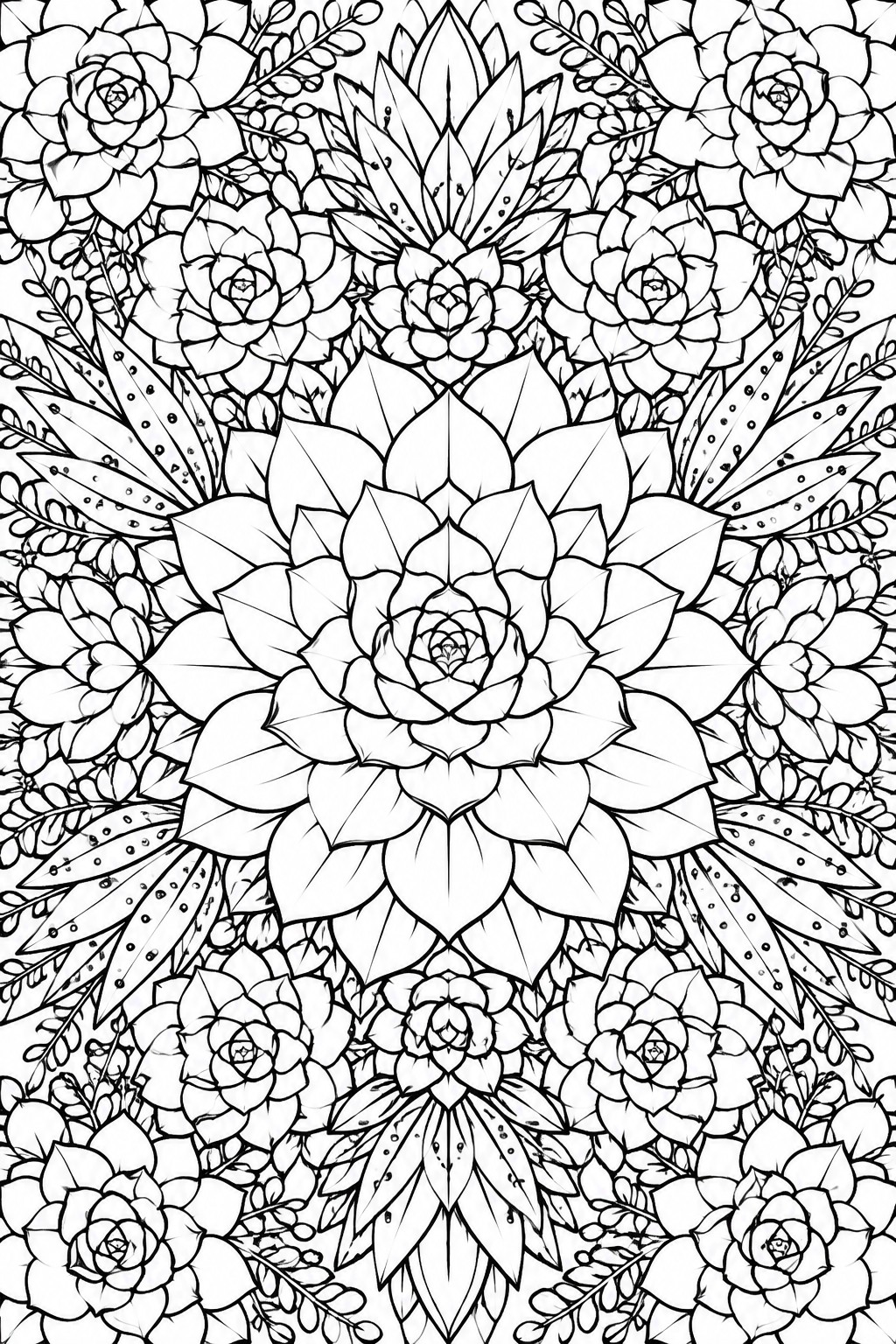
A mandala centered on a large succulent rosette creates a clear focal point that branches outward into smaller rosettes and pointed leaves. The radial layout repeats similar botanical shapes at different sizes to form distinct sections around the page. This structure mixes broad petal forms with finer dotted leaves so colorers can shift between larger areas and tighter details as they work.
What makes this page useful is the even spacing that lets colorers tackle one wedge at a time without losing track of the overall design. The combination of solid shapes and patterned leaves gives enough variety to keep the session interesting while still feeling organized. For adults who prefer botanical themes, the succulent focus offers a modern option that differs from typical flower mandalas. The consistent line weight across the page supports clean coloring with markers or colored pencils.
Layered Ginkgo Leaf Mandala with Concentric Rings
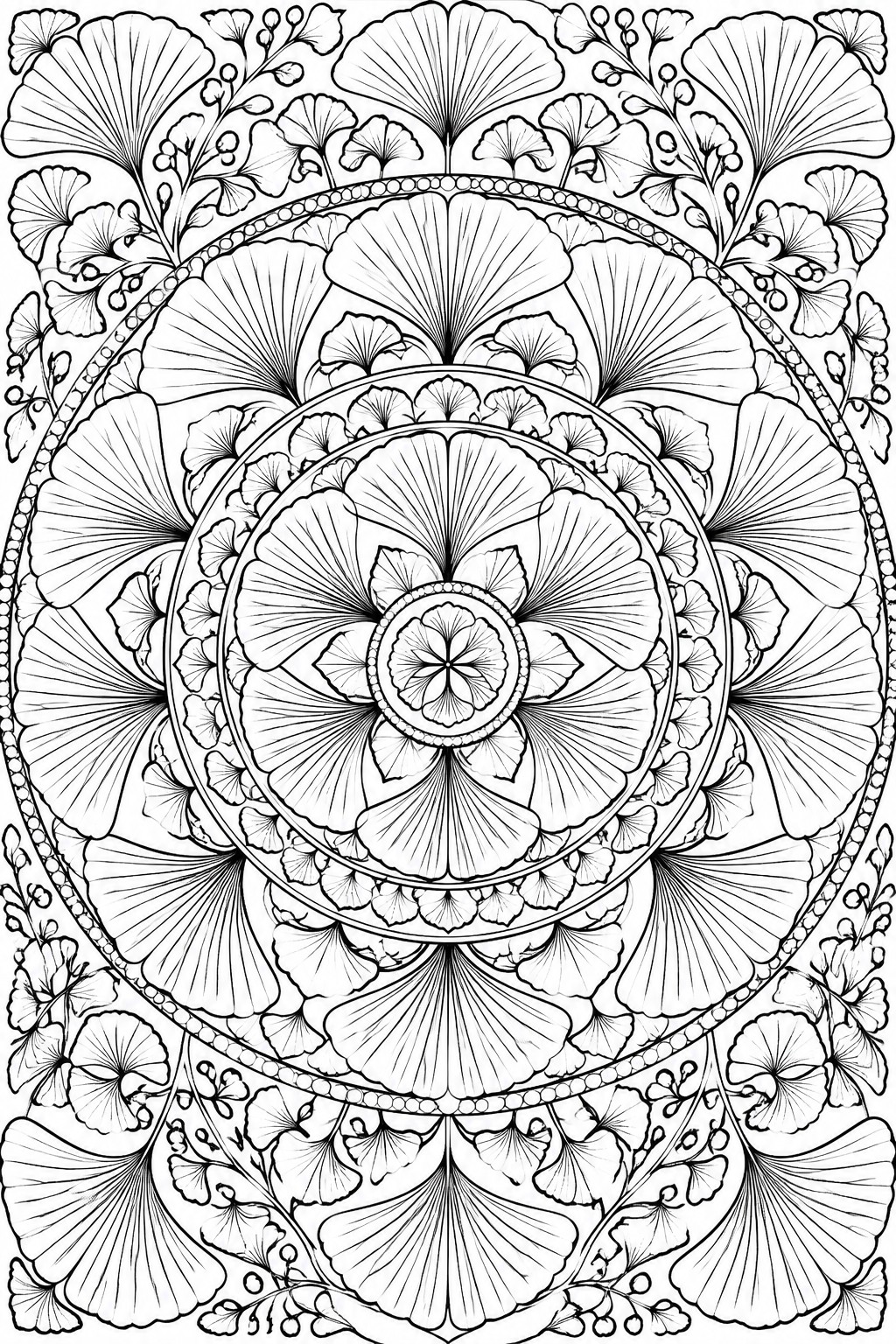
This coloring page idea uses ginkgo leaves as the main element in a mandala built from multiple concentric circles. The leaves repeat in radial patterns that grow larger from the center outward, separated by dotted ring borders. A small central flower anchors the design while the rest of the page fills with fan shaped leaves in varying sizes and orientations.
The layout makes this easy to color ring by ring without losing track of the pattern. A page like this works especially well for adults who prefer detailed botanical work because the small leaf sections demand focus in tight spaces. The repeating shapes keep the process steady once a color choice is set for each ring. The high level of detail also makes the finished page stand out when shared online.
Oak and Acorn Mandala
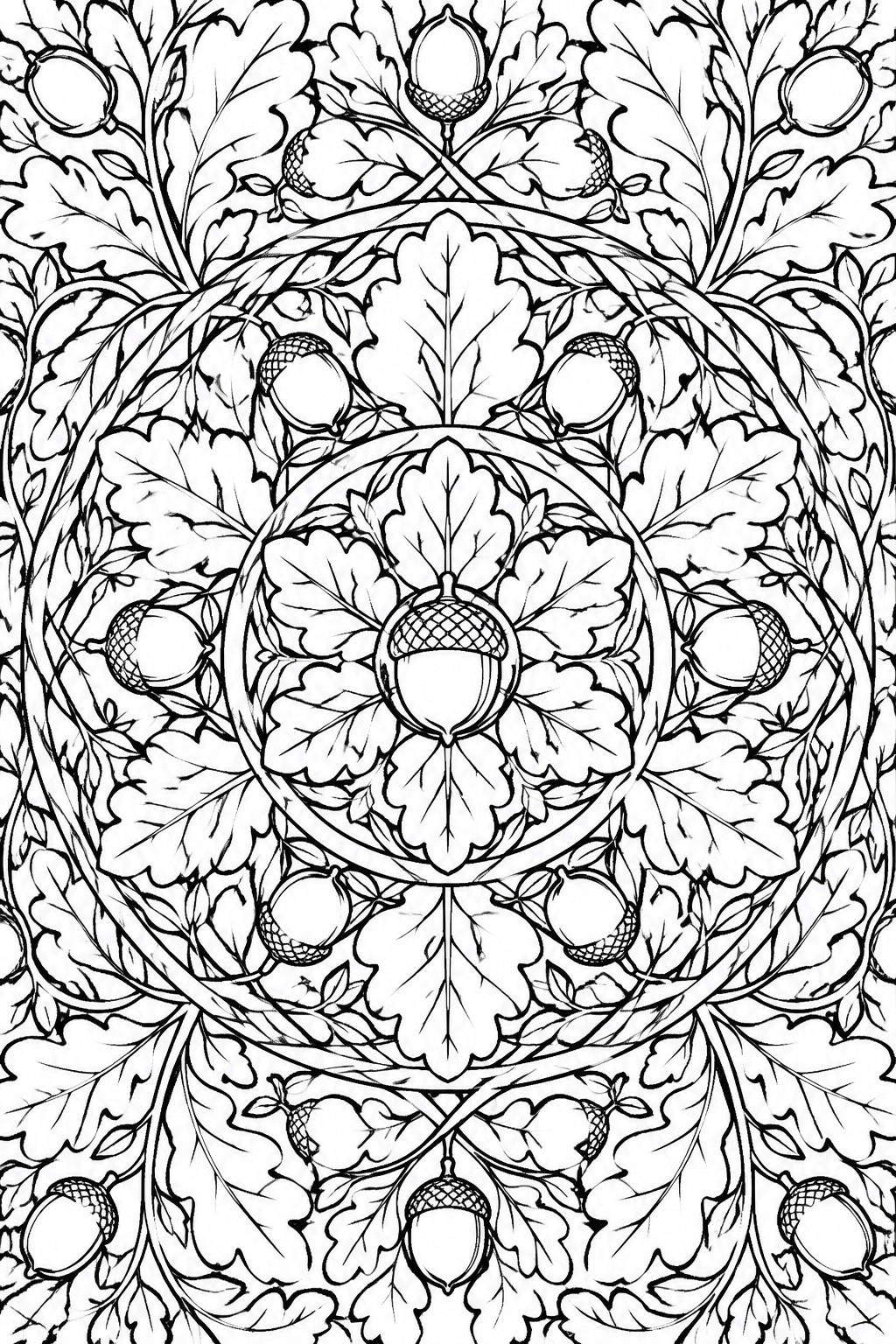
Oak leaf and acorn mandalas use a circular layout built from repeating botanical elements. The design places a single acorn at the center then builds outward through rings of leaves and acorns that grow smaller toward the edge. Clean linework and even spacing create clear sections that keep the pattern organized while still offering plenty of shapes to color.
What makes this page useful is the way the concentric rings break the design into manageable zones. Colorers can finish one ring at a time without losing track of the overall structure. The medium level of detail works well for adults who want a pattern-focused session that stays interesting without becoming tedious. The consistent leaf and acorn shapes also make it easy to try different color combinations or shading techniques across similar forms.
Tropical Mandala with Hibiscus and Monstera Leaves
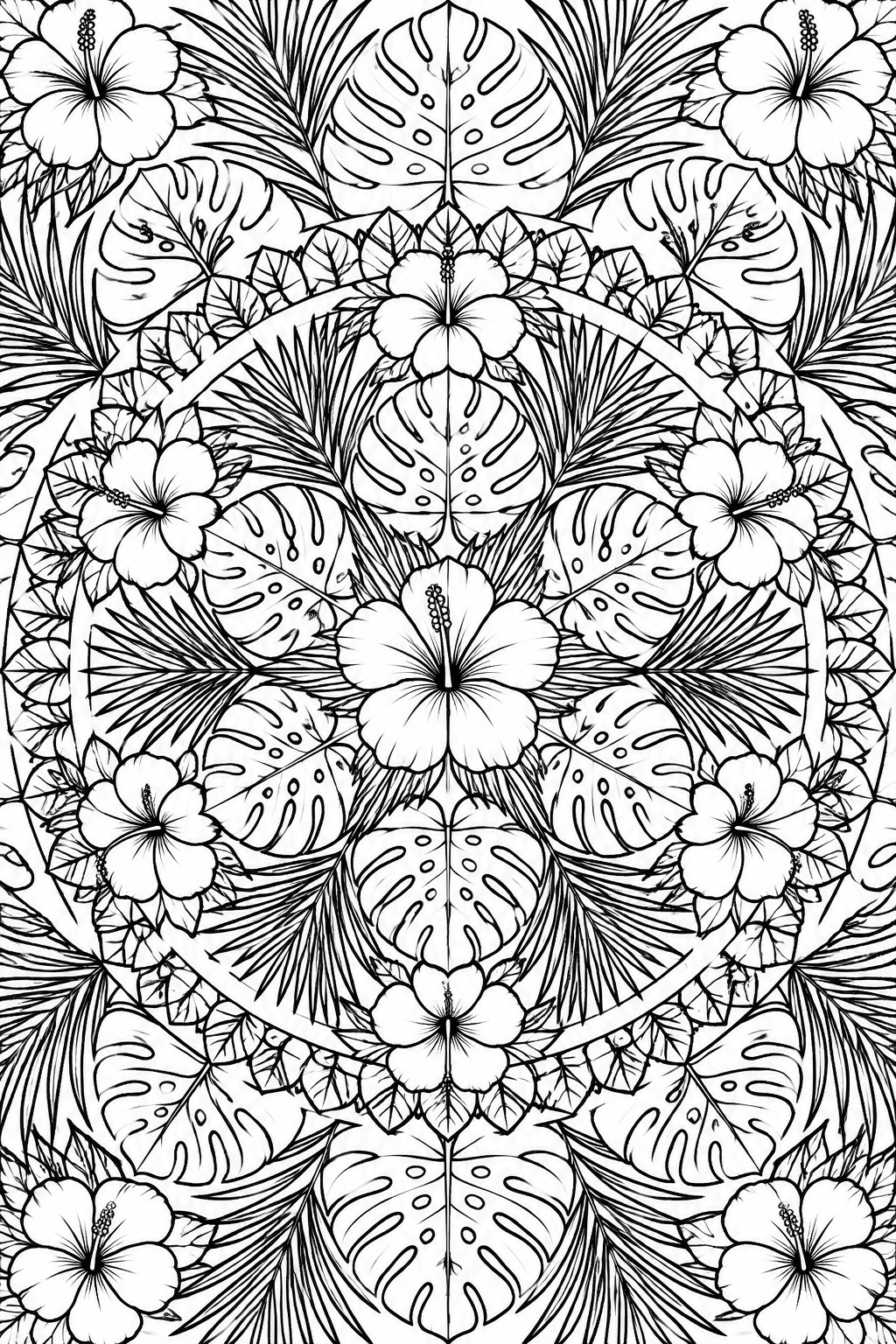
A mandala built from tropical plants places hibiscus flowers and monstera leaves in repeating radial sections. The layout starts with a large central bloom and expands through layers of palm fronds and additional flowers that stay evenly spaced inside a circular border. Bold outlines and clear divisions between each leaf and petal create separate areas that stay easy to track while coloring.
What makes this page useful is the balance between larger open petals and smaller leaf details that support both broad coloring and finer work in one design. The repeating symmetry helps color choices stay consistent without extra planning. A page like this works especially well for adults who want a structured pattern with enough variety in the botanical shapes to hold interest through a full session.
Intricate Botanical Mandala Built from Leaves and Flowers
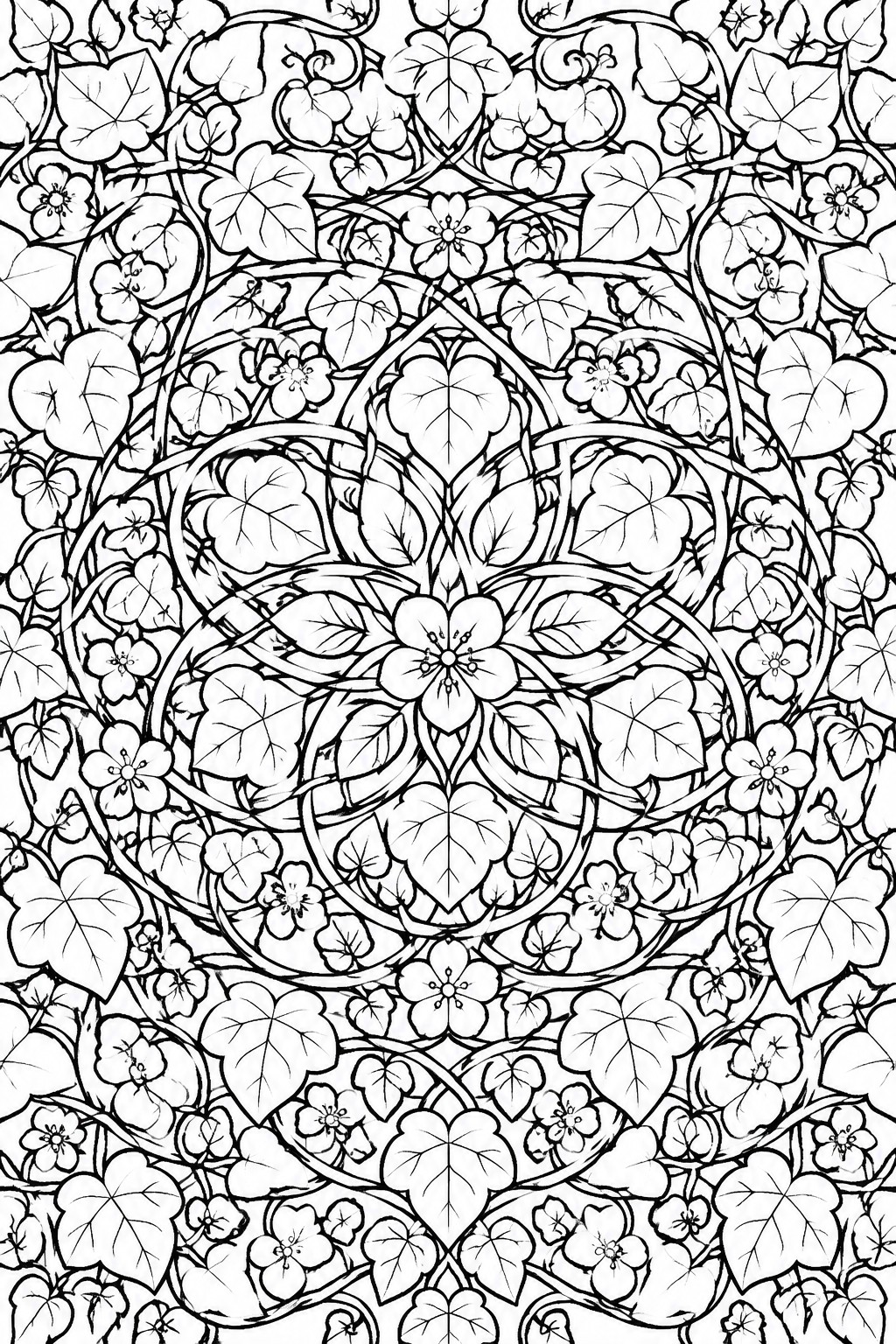
This coloring page idea uses a mandala format where leaves, flowers, and vines are arranged in repeating circular layers around a central bloom. The composition stacks larger shapes near the middle with smaller details filling outward rings. The style relies on clean outlines and overlapping botanical forms that create distinct sections for coloring.
What makes this page useful is the clear radial structure that helps colorers work from the center without losing track of the design. The detail level makes this a smart pick for adults who want a focused session with room for shading and color variation. Layered elements give enough small spaces to keep the process engaging without requiring extreme precision.
Maple Leaf and Samara Mandala
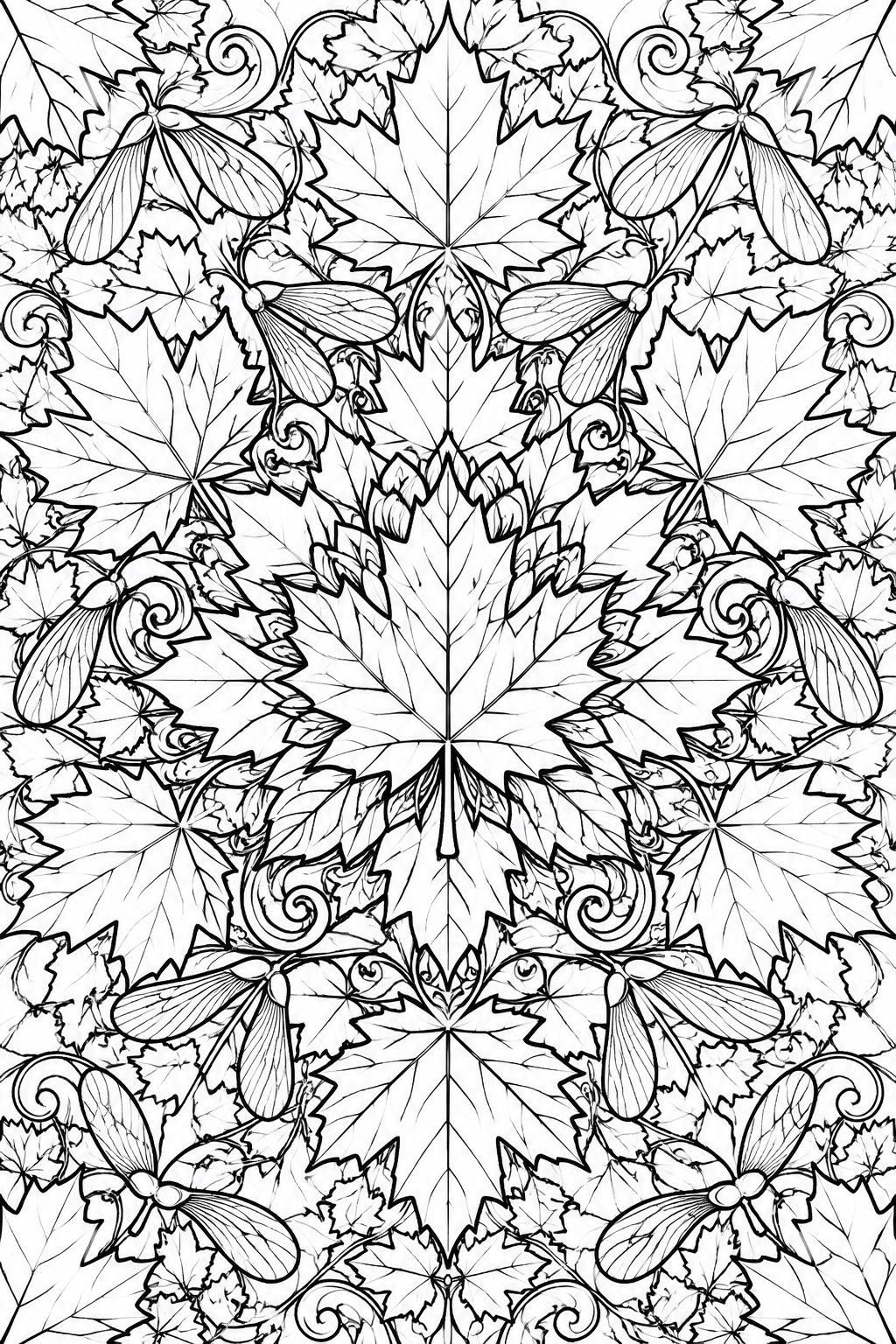
This coloring page idea uses a mandala format built from maple leaves and winged seeds arranged in repeating radial patterns. The composition layers larger leaves toward the center with smaller leaves and seeds filling the spaces between them. Fine line work creates vein details and wing textures that give colorers clear sections to work within.
The layout makes this easy to color because the symmetry lets color choices mirror across the page without extra planning. A page like this works especially well for adults who want a detailed botanical pattern that still feels organized. The mix of broad leaf shapes and narrow seed wings creates both large areas and small spots to fill in one session.
Rose Mandala Built from Concentric Floral Rings
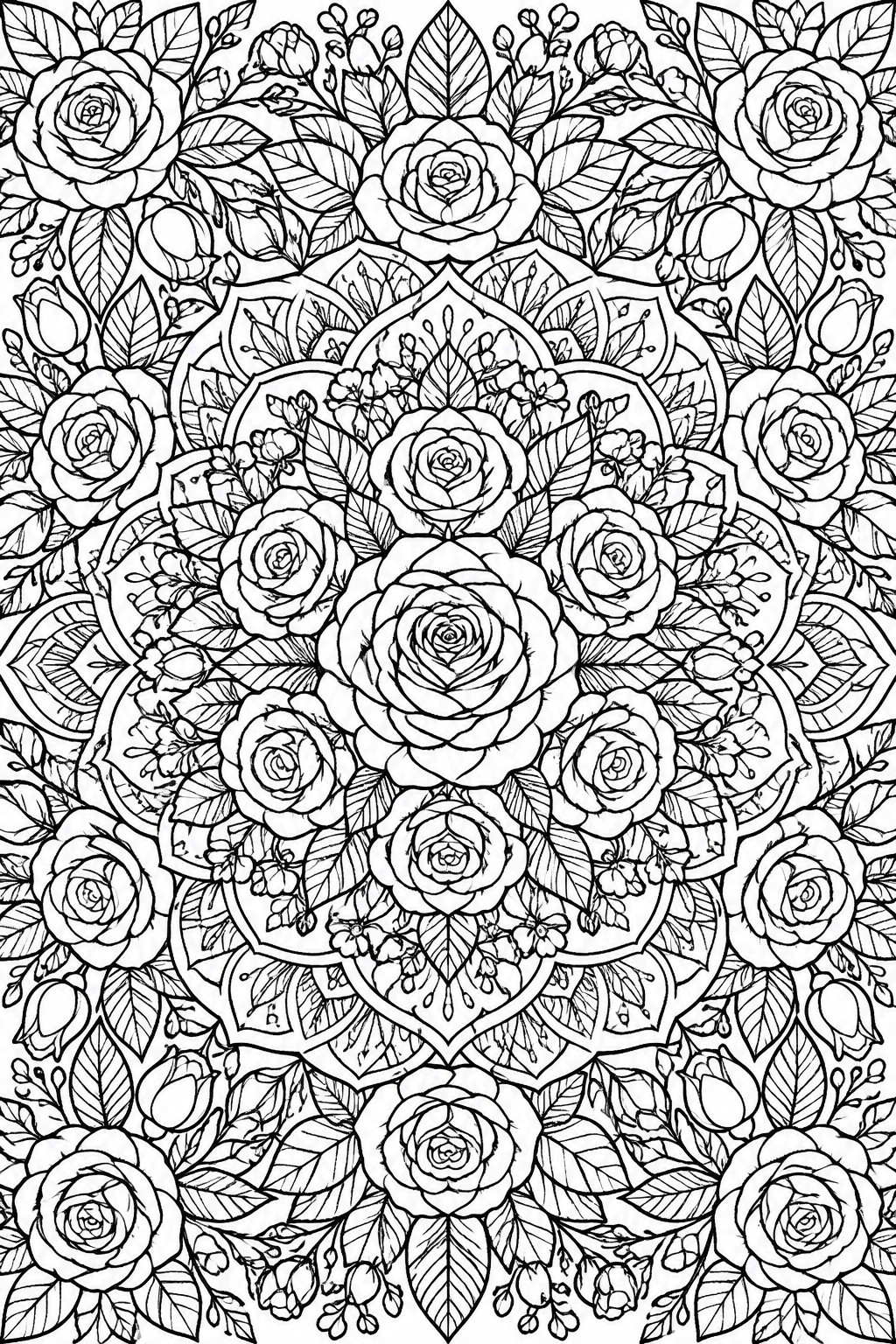
A rose mandala places a large central bloom at the core and builds outward through repeated rings of smaller roses, leaves, and buds. The design uses clear circular sections that separate the page into manageable zones while maintaining full rotational symmetry. This structure lets colorers focus on one ring at a time without losing the overall pattern.
The layout makes this easy to color because each ring offers its own set of shapes that connect naturally to the next. A page like this works especially well for adults who want medium detail without tiny isolated elements. The open rose petals and grouped leaves give space for simple fills or added shading, and the balanced repeats help the finished page look complete even if not every area receives the same attention.
Radial Mandala with Ferns and Seed Pods
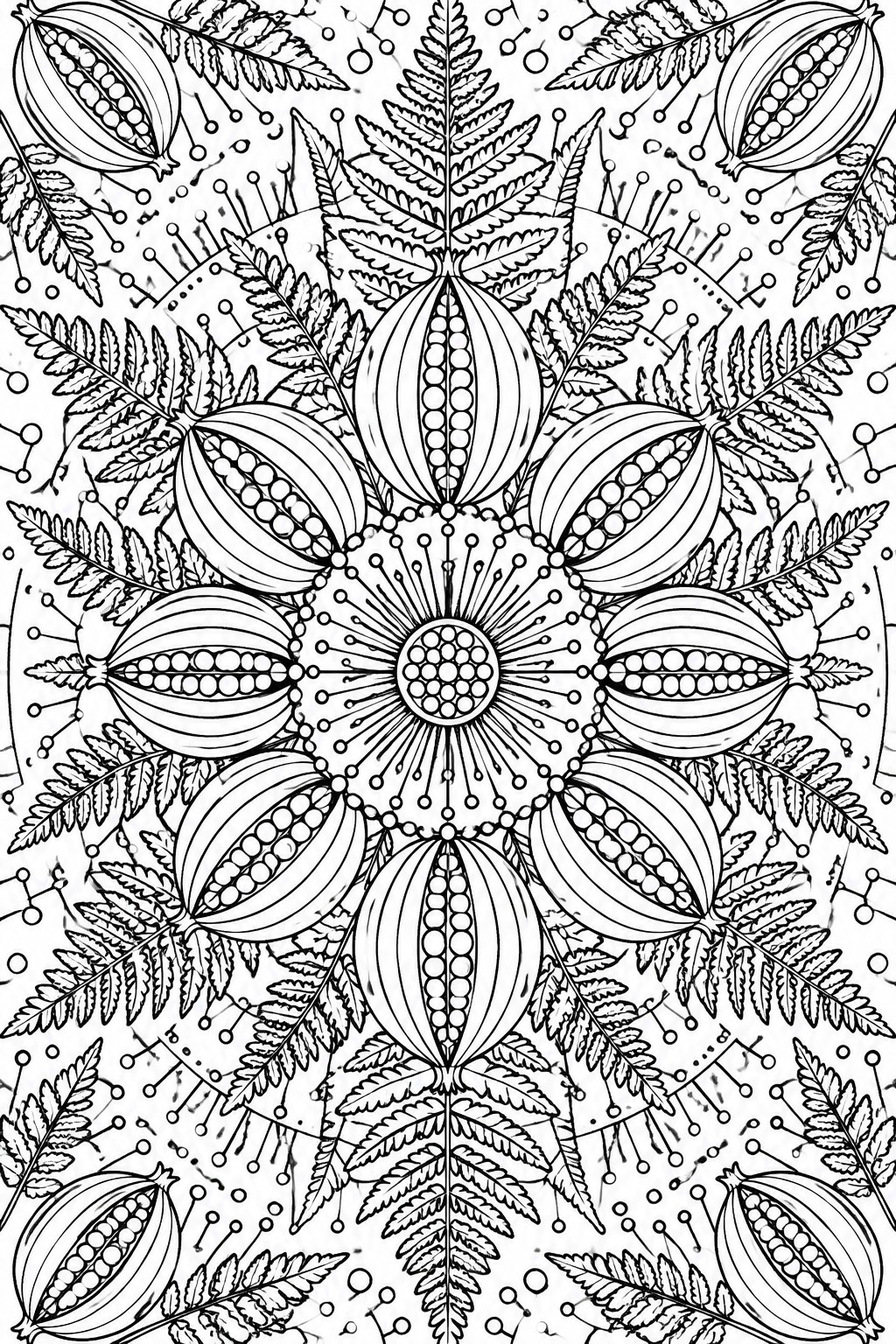
A mandala built from repeating botanical forms places eight oval seed pods around a central bloom, with fern fronds filling the spaces between them. The design uses clear radial symmetry so each section mirrors the next, creating natural boundaries for color choices. Small dotted circles and lines add light texture that stays separate from the main shapes.
The layout makes this easy to color because the repeating pods and leaves let you apply the same colors in a pattern or switch them up around the circle. What makes this page useful is the mix of larger open pod areas and finer fern details, which suits adults who want medium detail without tight spaces. A page like this works especially well for focused sessions since the symmetry keeps the design organized from the center outward.
Layered Botanical Mandala with Central Bloom and Radiating Foliage
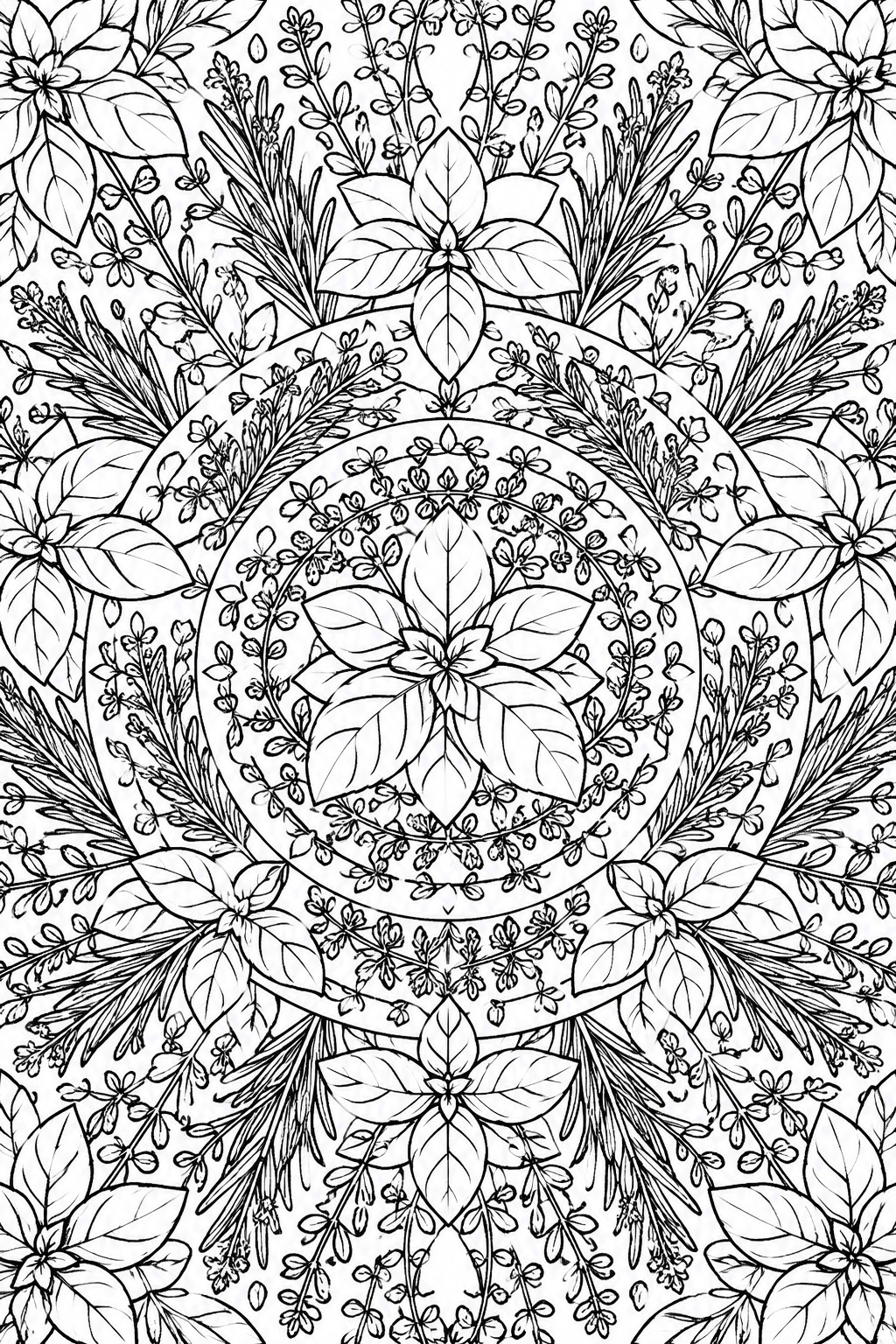
A nature mandala built from concentric rings of leaves and flowers gives colorers a structured way to work with botanical shapes. The design places a large central flower inside successive circles that hold smaller blooms and foliage before expanding to an outer ring of larger leaves and stems. This arrangement creates distinct zones that support both repetitive pattern work and varied leaf coloring.
What makes this page useful is the clear division between the tight inner rings and the more open outer foliage. Colorers can complete the center first for a contained session then expand outward without the whole design feeling overwhelming. The even distribution of elements keeps lines readable while still offering enough detail to hold interest over multiple sittings. This kind of balanced mandala works well for adults who want botanical themes without extreme intricacy.
Pine Cone Mandala Built from Evergreen Branches
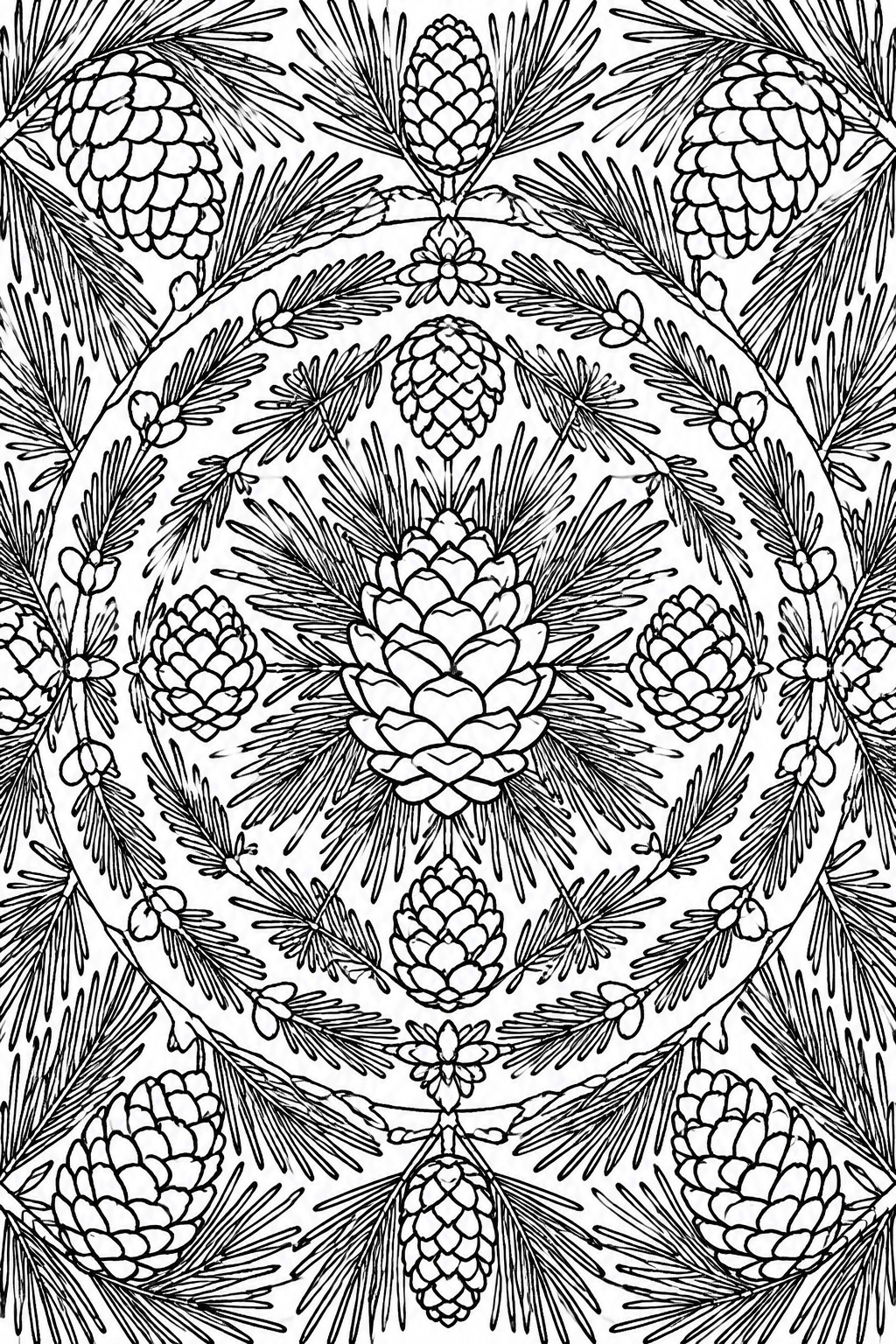
This coloring page idea uses a classic mandala structure made entirely from pine cones and pine needle clusters. The design places a large central cone at the middle, then builds outward with smaller cones and needle sprays arranged in concentric rings. Fine line work creates distinct sections that support both broad shading and tighter pattern work inside each ring.
The layout makes this easy to color because the radial symmetry lets you work section by section without losing your place. A page like this works especially well for adults who prefer detailed botanical patterns over loose scenes. The mix of larger cone shapes and finer needle areas gives colorers a choice between quick fills and more precise work. This structure also prints cleanly and holds up well when shared on Pinterest boards focused on nature mandalas.
Lotus Mandala with Pond Lilies and Water Patterns
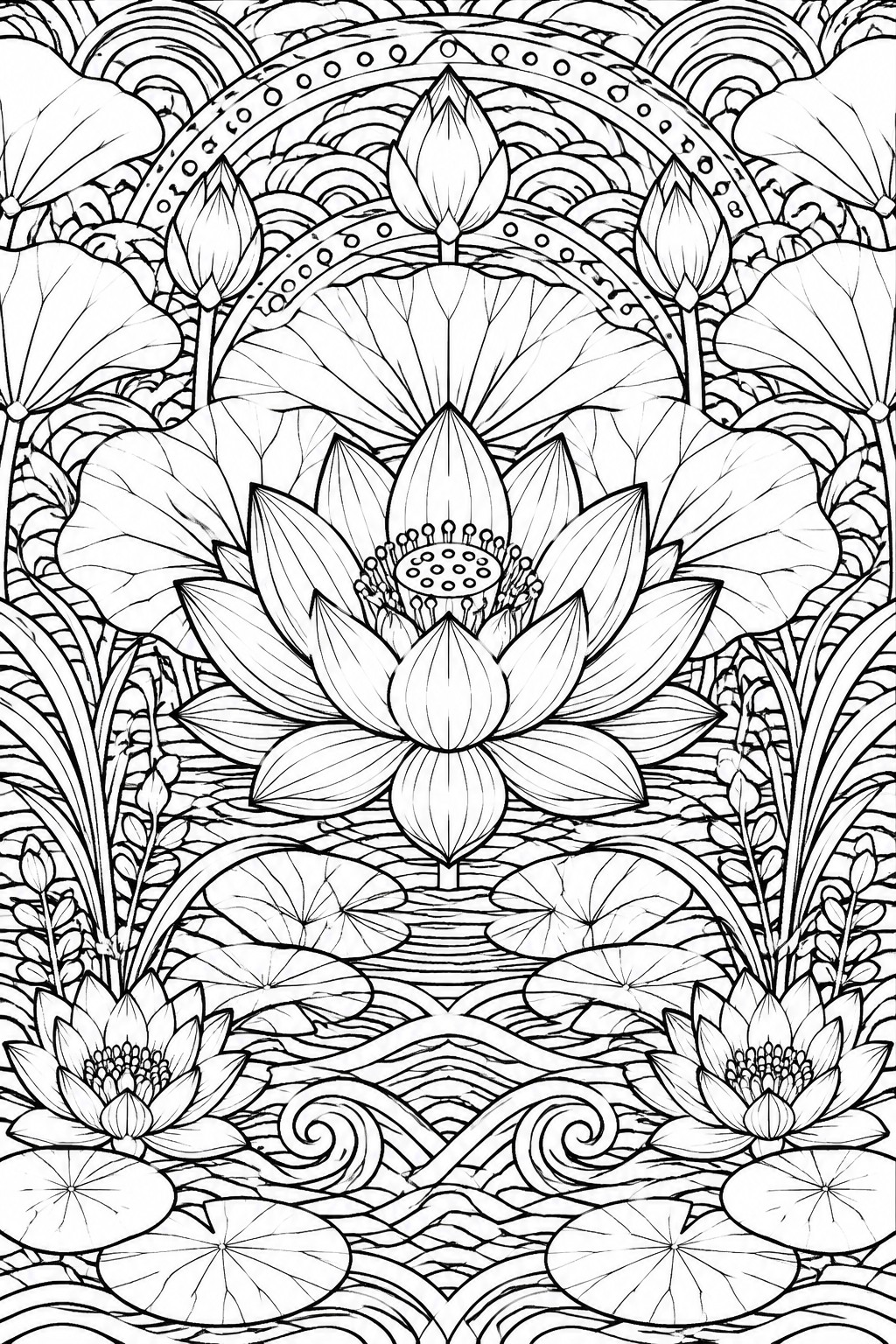
A mandala built around a large central lotus flower forms the main subject here, with additional lilies and broad leaves placed around it to suggest a pond setting. Concentric rings and flowing water lines create the outer structure while smaller blooms sit at the lower edges. The page uses tight line work on petals and leaf veins to give colorers many contained sections to fill at different scales.
The layout makes this easy to color because the circular frames divide the page into clear zones that can be tackled one at a time. A page like this works especially well for adults who want a botanical mandala without extreme symmetry demands. The mix of larger open leaves and detailed flower centers provides variety in how much time each area requires. This kind of design stands out for its complete circular composition that feels finished once the main lotus is colored.
Layered Floral Mandala with Mixed Blooms
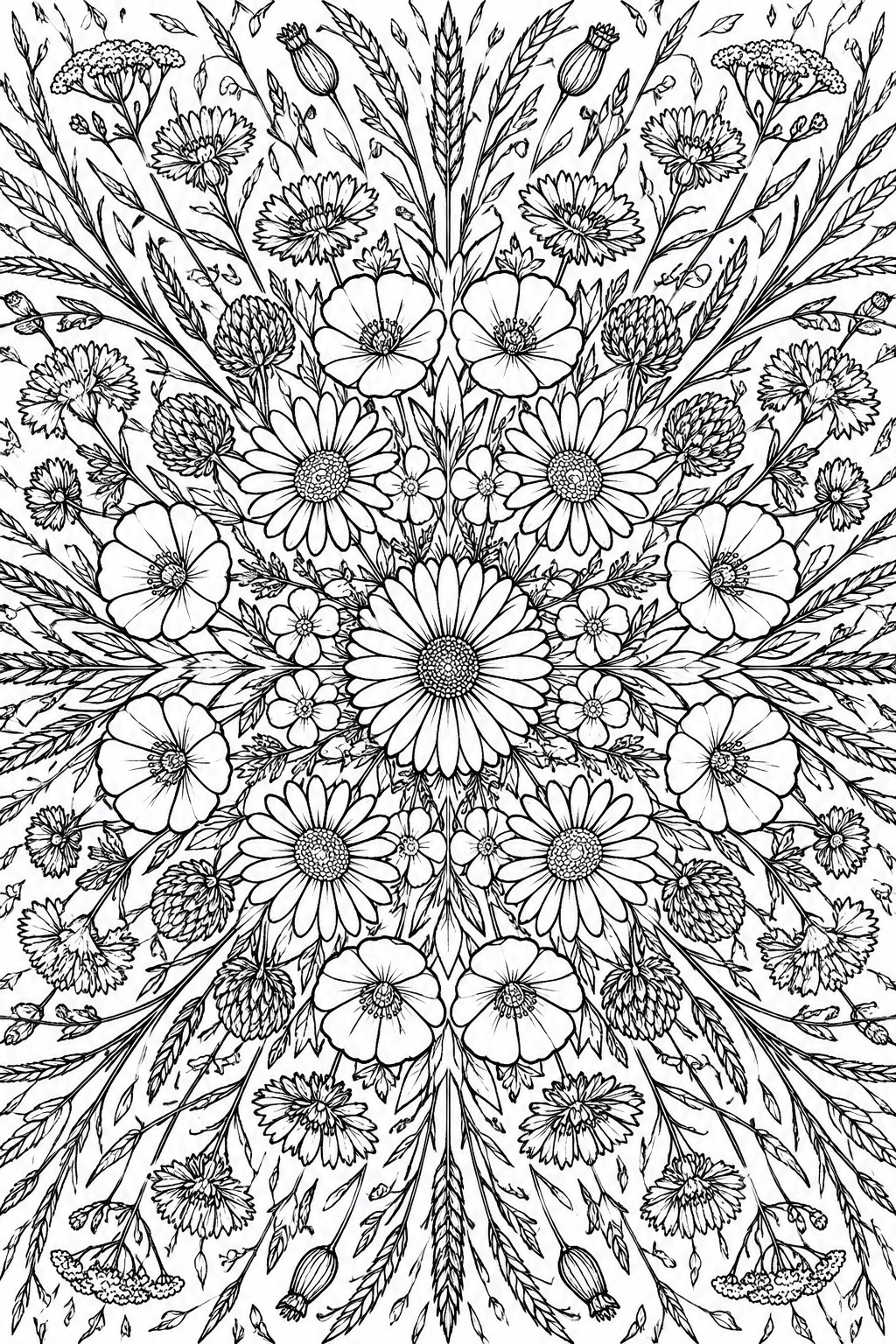
A nature mandala idea centers on a large central daisy surrounded by rings of poppies, smaller daisies, and spiky foliage that radiate outward in balanced sections. The style combines open flower shapes with dense clusters of leaves and stems to fill the circle evenly without large empty gaps. This composition works well because the repeating flower types create natural boundaries that help colorers focus on one area at a time while maintaining overall symmetry.
The layout makes this easy to color in stages since each ring stands apart from the others. A page like this works especially well for adults who want a detailed botanical pattern that still feels organized. The variety of flower sizes lets you move between larger petals and finer leaf work without losing the mandala structure. What makes this page useful is how the radial design supports consistent coloring across the whole sheet.
Olive Branch Mandala with Repeating Botanical Rings
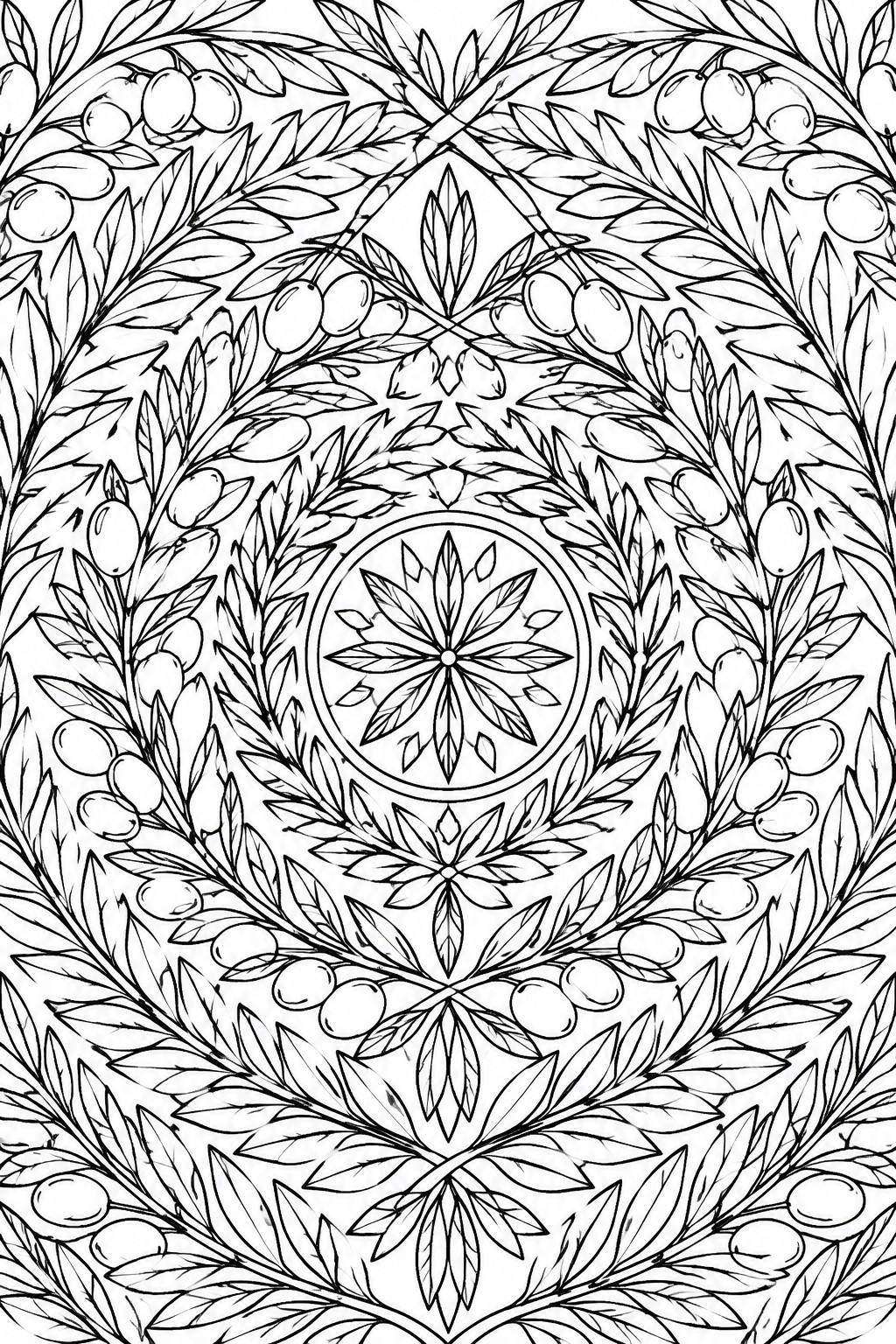
Olive branches with leaves and small fruits create the core pattern in this mandala coloring page. The design arranges these elements in concentric circular layers around a central star-shaped flower. Radial symmetry and repeating motifs give the page a structured layout that supports consistent coloring from the center outward.
The detail level makes this a smart pick for adults who enjoy focused pattern work. The even spacing of branches and fruits helps colorers fill areas without overcrowding decisions. This type of page stands out for printable collections because the natural olive theme offers a fresh take on standard mandala forms.
Layered Leaf Mandala with Concentric Botanical Rings
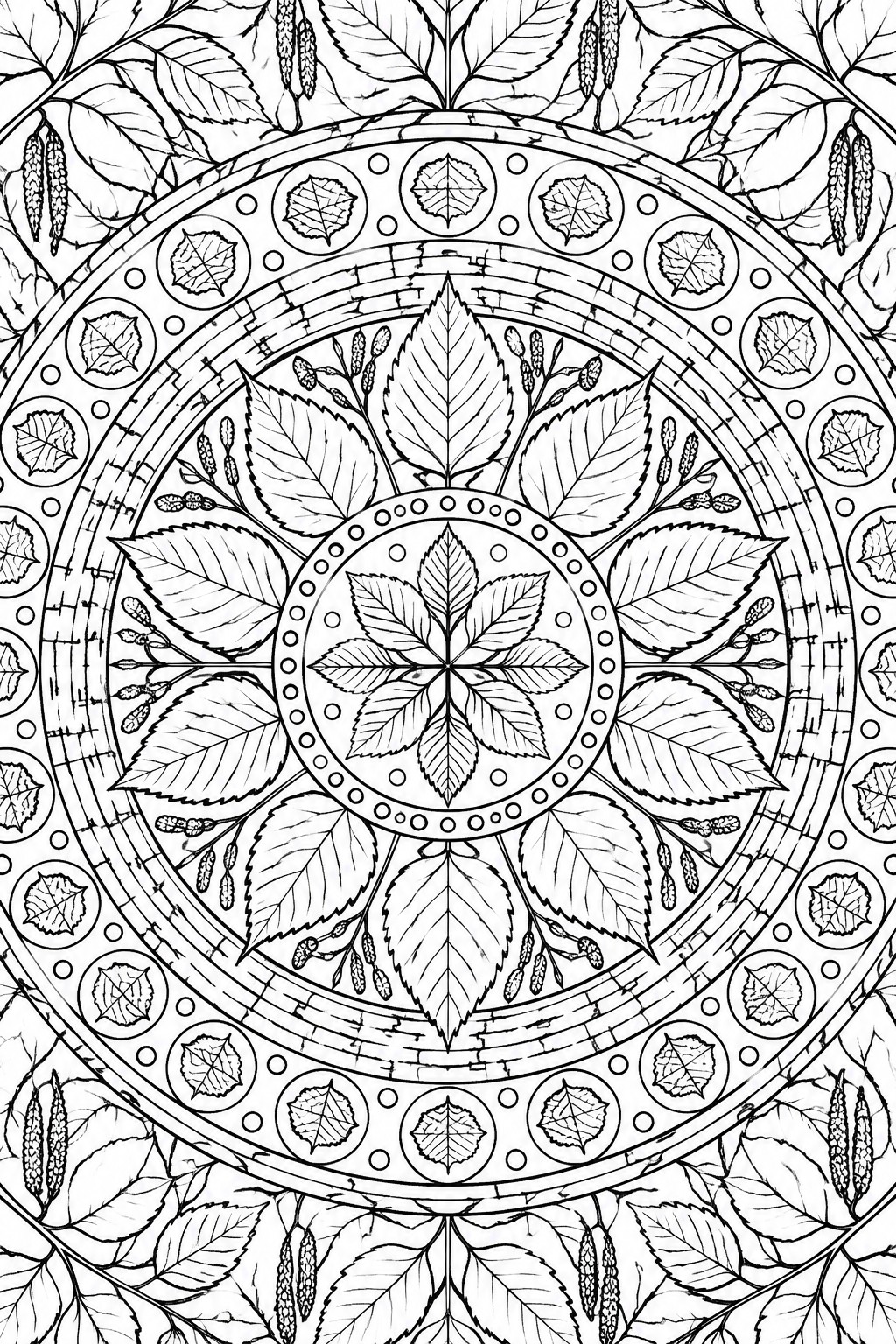
A nature mandala like this uses repeating leaf forms to create a balanced circular pattern. Multiple rings of foliage surround a central multi-petaled leaf motif. The design mixes small detailed elements with larger open leaf shapes across the layers.
The layout makes this easy to color by separating the work into distinct circular sections. Colorers can choose to focus on the intricate center or the simpler outer motifs depending on their preference. This kind of page stands out for its clear structure that supports both quick sessions and longer detailed coloring.
Layered Leaf Mandala with Flower Border
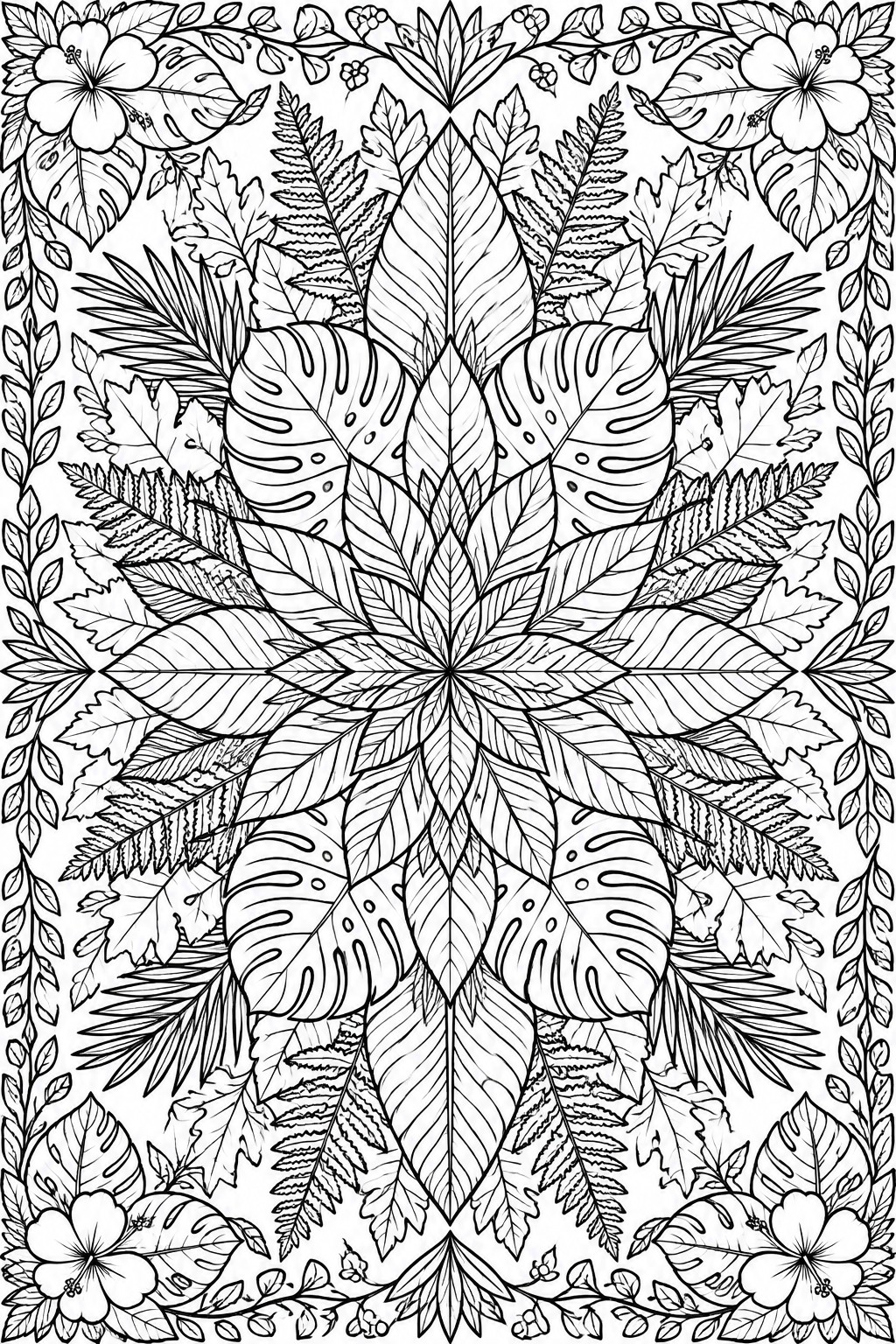
A mandala built from layered leaves creates a strong central focal point that radiates outward in even sections. The design mixes broad monstera shapes with delicate ferns and palm fronds to give colorers different textures to work with in each ring. A border of hibiscus flowers and trailing vines frames the whole thing and adds a finished look once colored.
The layout makes this easy to color by guiding the eye along clear repeating sections. A page like this works especially well for adults who enjoy detailed botanical patterns without needing advanced shading skills. The mix of large open leaves and finer lines lets colorers switch between quick fills and more precise work as they go.
Layered Botanical Mandala Built from Leaves and Flowers
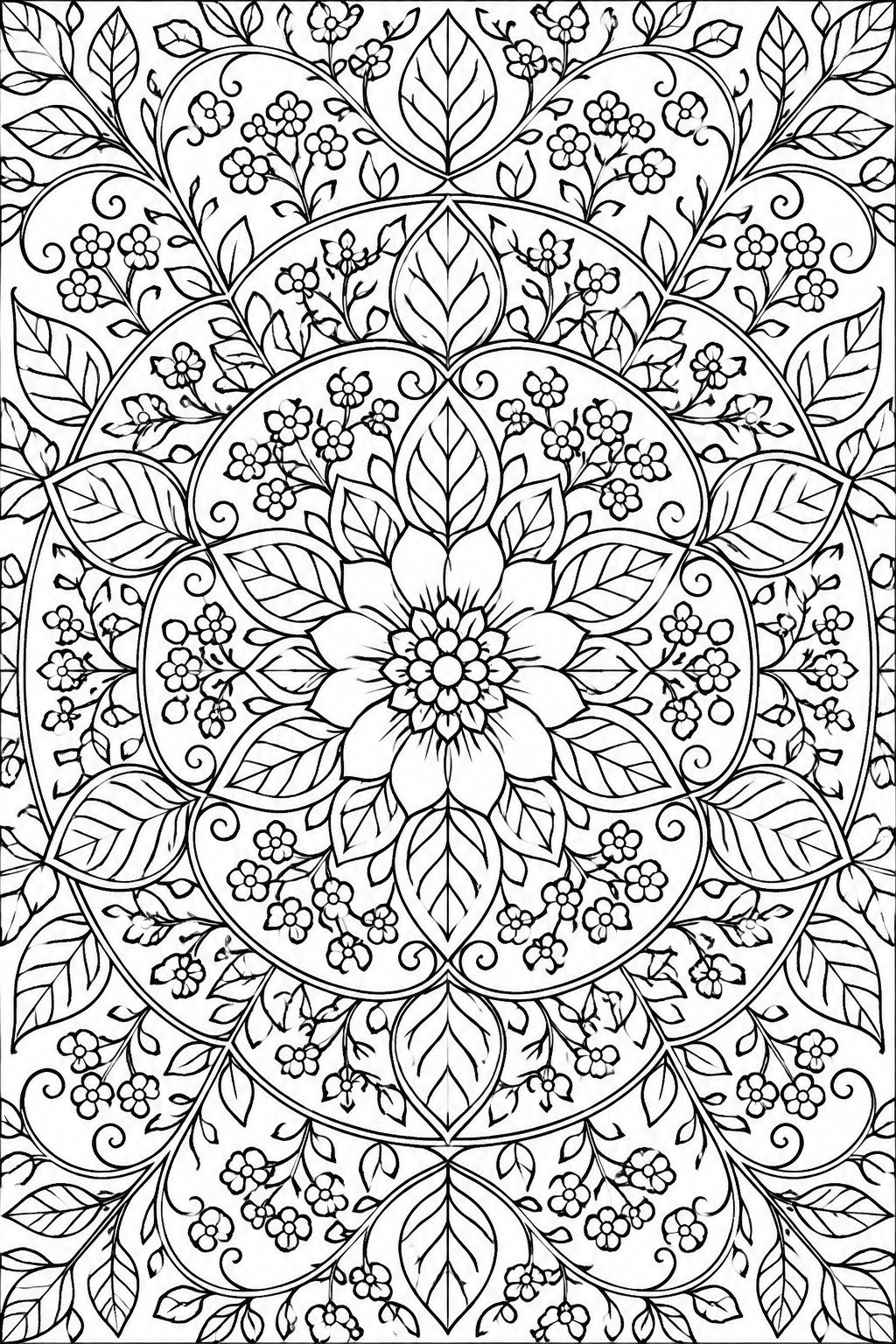
A nature mandala works by arranging leaves, flowers, and vines into repeating circular bands that radiate from a central bloom. The style relies on clean line art with consistent botanical motifs that fill each ring without overlapping into a full scene. This composition creates distinct zones of leaves and petals that let colorers work section by section while keeping the overall symmetry intact.
What makes this page useful is the clear ring structure that breaks the design into manageable areas. The detail level makes this a smart pick for adults who prefer pattern-focused coloring over loose scenes. A page like this works especially well for colorers who enjoy varying pressure on leaf veins and flower centers. The balanced spacing between motifs keeps the page from becoming too dense in any single spot.
Detailed Botanical Mandala Built from Leaves and Seed Pods
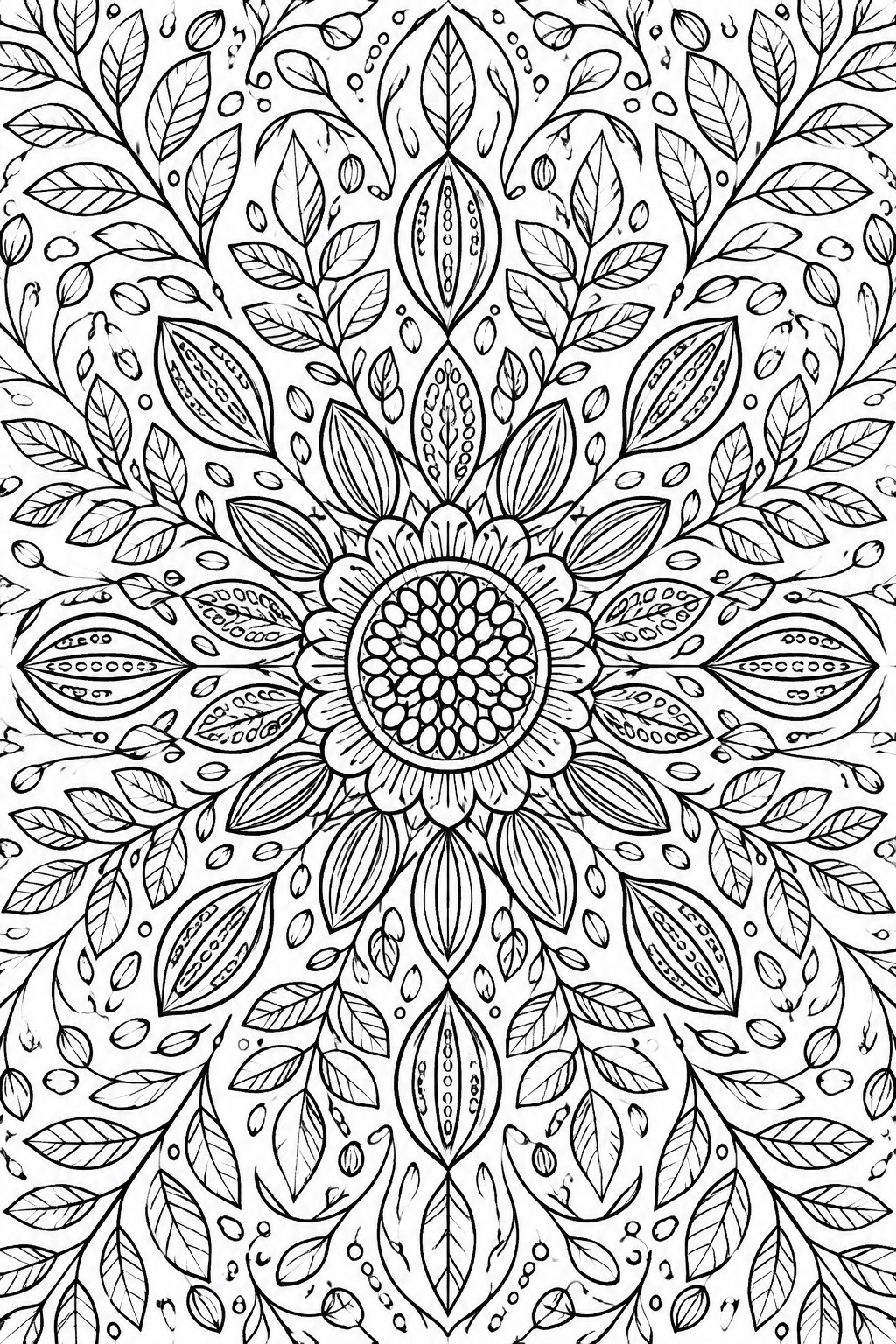
Nature mandalas centered on leaves and botanical forms use radial symmetry to organize many small shapes around a central flower. This page places seed pods and layered leaves in repeating sections that radiate outward from the middle. The line work includes both open leaf shapes and tighter patterns of dots and veins that break the circle into manageable parts.
What makes this page useful is the even spacing that lets colorers work on one wedge at a time without losing track of the design. The mix of larger open leaves and smaller filled pods gives options for both quick coverage and more focused detail work. A page like this works especially well for adults who want a structured yet varied coloring session that stays interesting from center to edge.
Frequently Asked Questions
What makes these nature mandala coloring pages unique compared to standard mandala designs? These pages combine the circular symmetry of traditional mandalas with realistic leaf shapes, flower petals, and other botanical elements. This creates a nature themed focus that encourages users to notice details like vein patterns in leaves or the arrangement of seeds in a pod while coloring. The result blends mindfulness practice with an appreciation for plant forms.
Are the 20 nature mandala coloring pages suitable for children as well as adults? Yes, the designs range from simpler outlines with larger spaces to highly intricate patterns with fine details. Younger children can start with the less complex pages using broad crayons or markers, while adults and older kids can enjoy the detailed botanical layers with finer tools. This variety allows families or mixed age groups to color together.
What art supplies are recommended for bringing out the best results on these botanical mandala pages? Colored pencils work well for shading leaf textures and creating depth in overlapping forms. Watercolor pencils or markers add soft gradients that mimic natural plant tones. For a bold look, gel pens highlight fine lines around stems and petals. Always test colors on a small area first to avoid bleeding through the paper.
How can coloring these nature mandala pages support relaxation or focus? The repetitive circular structure combined with organic shapes helps quiet the mind by directing attention to one section at a time, such as filling in a cluster of leaves. Many people report reduced stress after completing a page because the activity combines creative expression with the calming repetition found in meditation. Keeping the pages in a journal allows tracking of progress over multiple sessions.
Can these coloring pages be used for learning about plants or botany? Absolutely. Each design features identifiable elements like fern fronds, oak leaves, or flower blooms, so users can research the real plants while coloring. Teachers or parents can pair the activity with discussions about plant parts, seasonal changes, or ecosystems. Printing multiple copies of one page lets groups compare different color choices to represent the same botanical form in various seasons.
