

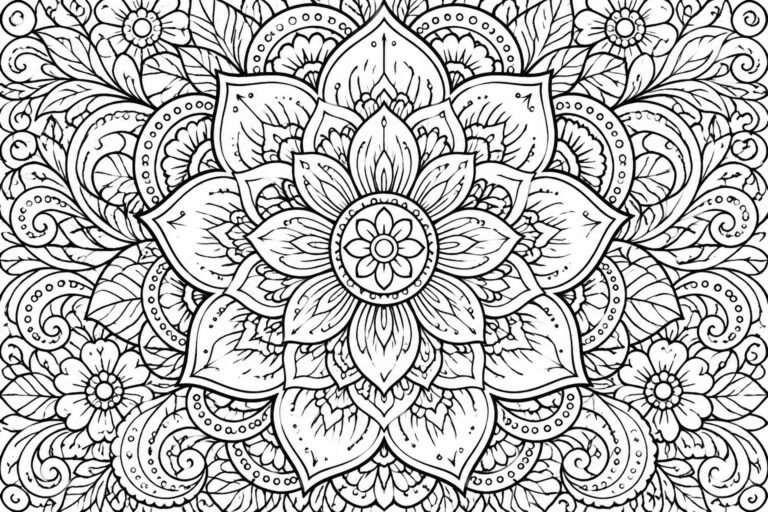
I like coloring mandala pages because they give me a chance to relax without needing a lot of focus.
Lately I have been adding freeform patterns to the designs to make them more interesting.
This collection has 22 different ones that I created with that in mind.
Each page has a mandala base but leaves space for your own doodles and choices.
I hope they turn out to be something you enjoy working on too.
Floral Mandala with Layered Petals and Outer Swirls
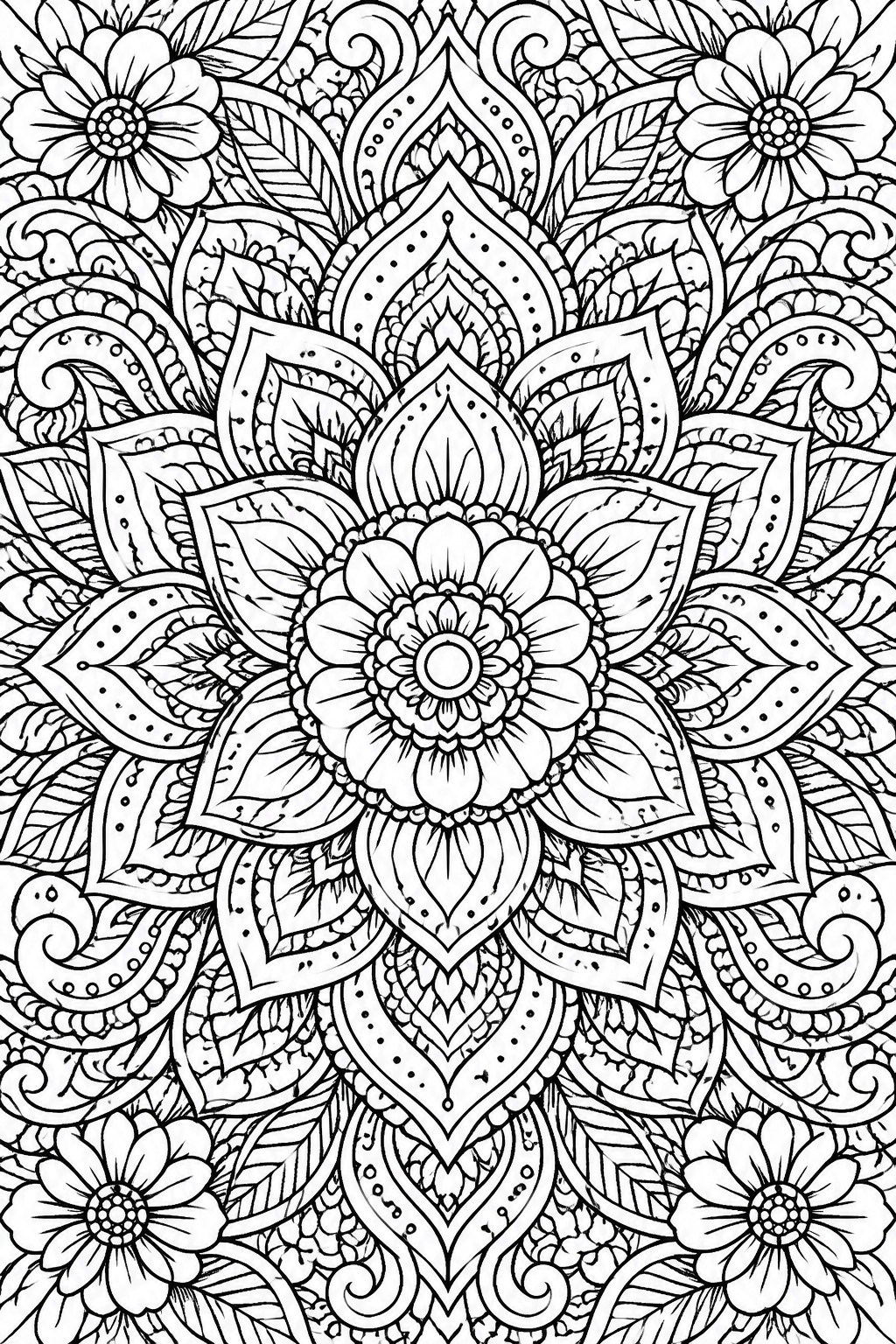
This coloring page idea centers on a mandala built around one large flower at the middle. The design pairs the structured petal layers with surrounding leaf shapes, dotted lines, and curved vines that extend outward. Four smaller flowers sit near the corners and connect through loose swirls, giving the page both a clear focal point and open areas for pattern work.
The layout makes this easy to color because the central mandala repeats similar shapes while the outer sections add different curves and smaller blooms. A page like this works especially well for adults who want medium detail and can spend time on one zone before switching to another. The spaces between elements reduce the chance of colors running together and let colorers try shading or blending without crowding. This kind of balanced mandala stands out on Pinterest when paired with keywords like intricate floral mandala or freeform doodle patterns.
Paisley Mandala with Layered Floral Centers
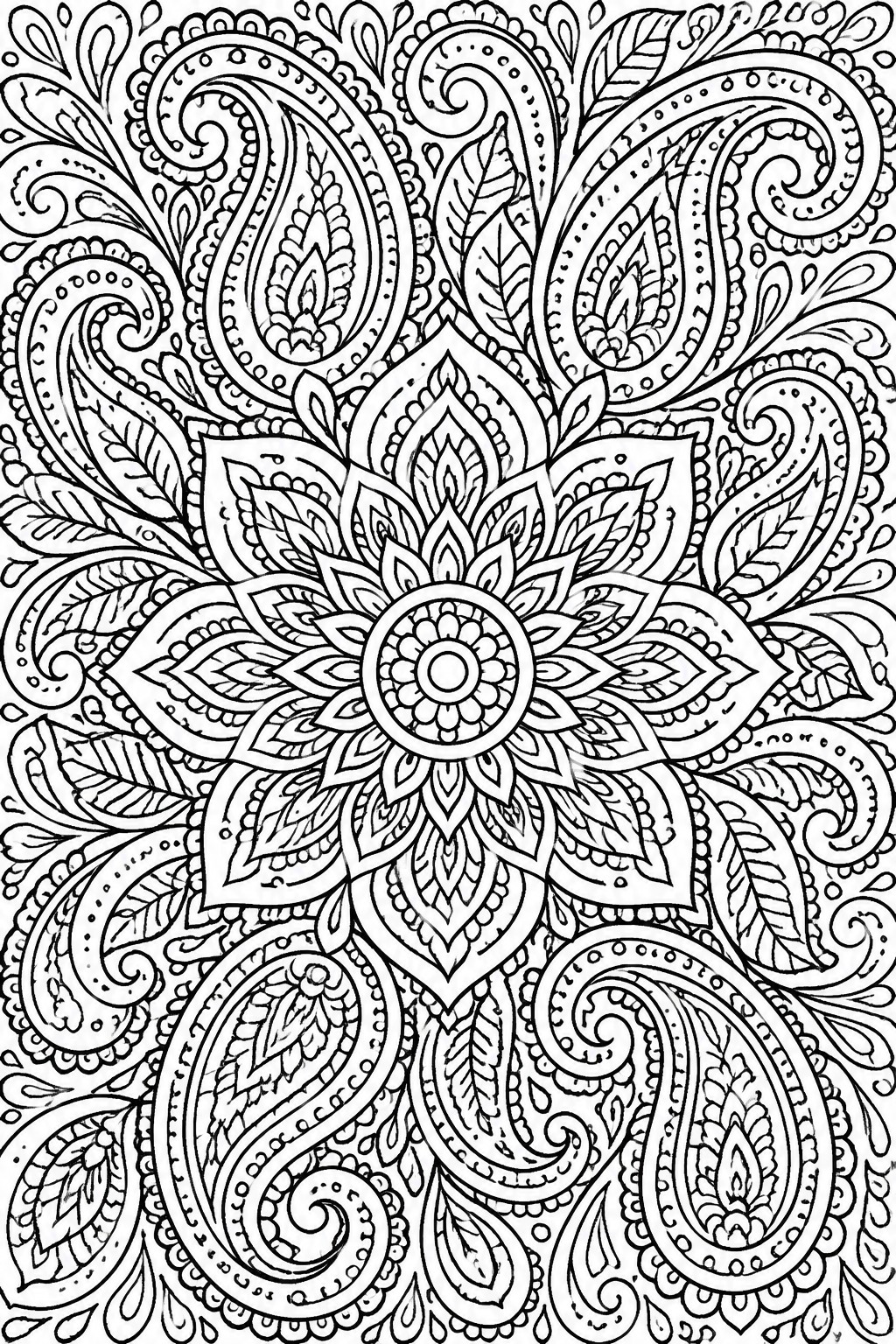
This coloring page idea centers on a mandala built from paisley shapes that radiate around a detailed flower core. The design mixes large swirling paisleys with smaller leaf and petal fills, creating a symmetrical layout full of repeating freeform elements. The varied scale of the motifs gives colorers distinct sections that range from bold outlines to tight dotted patterns.
The layout makes this easy to color because the paisley forms create natural boundaries that keep sections manageable. A page like this works especially well for adults who want a detailed session without jumping between unrelated themes. The mix of open curves and fine inner details supports steady progress while still offering enough complexity to hold attention across multiple sittings.
Star Mandala with Concentric Rings and Grid Patterns
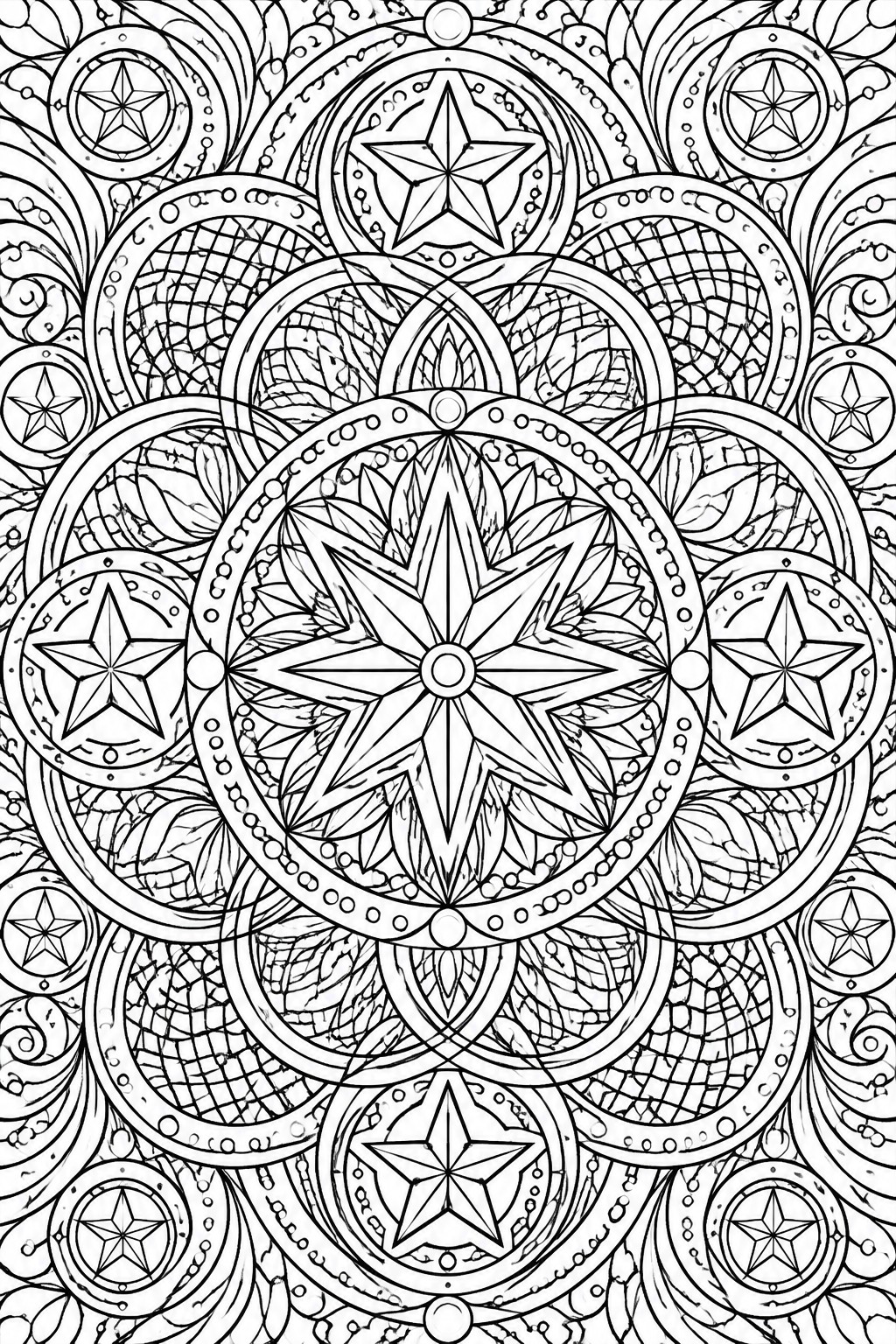
This coloring page idea centers on a large eight pointed star set inside multiple overlapping rings that contain smaller star circles. The design mixes bold star shapes with sections of crosshatching and leaf like fills that create texture between the rings. The radial layout keeps the focus on the center while the surrounding circles add repeating areas that build outward in a balanced way.
The layout makes this easy to color because the rings divide the page into manageable sections that can be finished one at a time. A page like this works especially well for adults who want a mix of large shapes and finer pattern work without switching between completely different designs. The open centers of the stars give quick wins while the grid and leaf areas allow for slower detailed coloring. This kind of page stands out on Pinterest when searchers look for mandalas that combine geometric stars with freeform fills.
Celestial Mandala with Sun Moon and Phase Rings
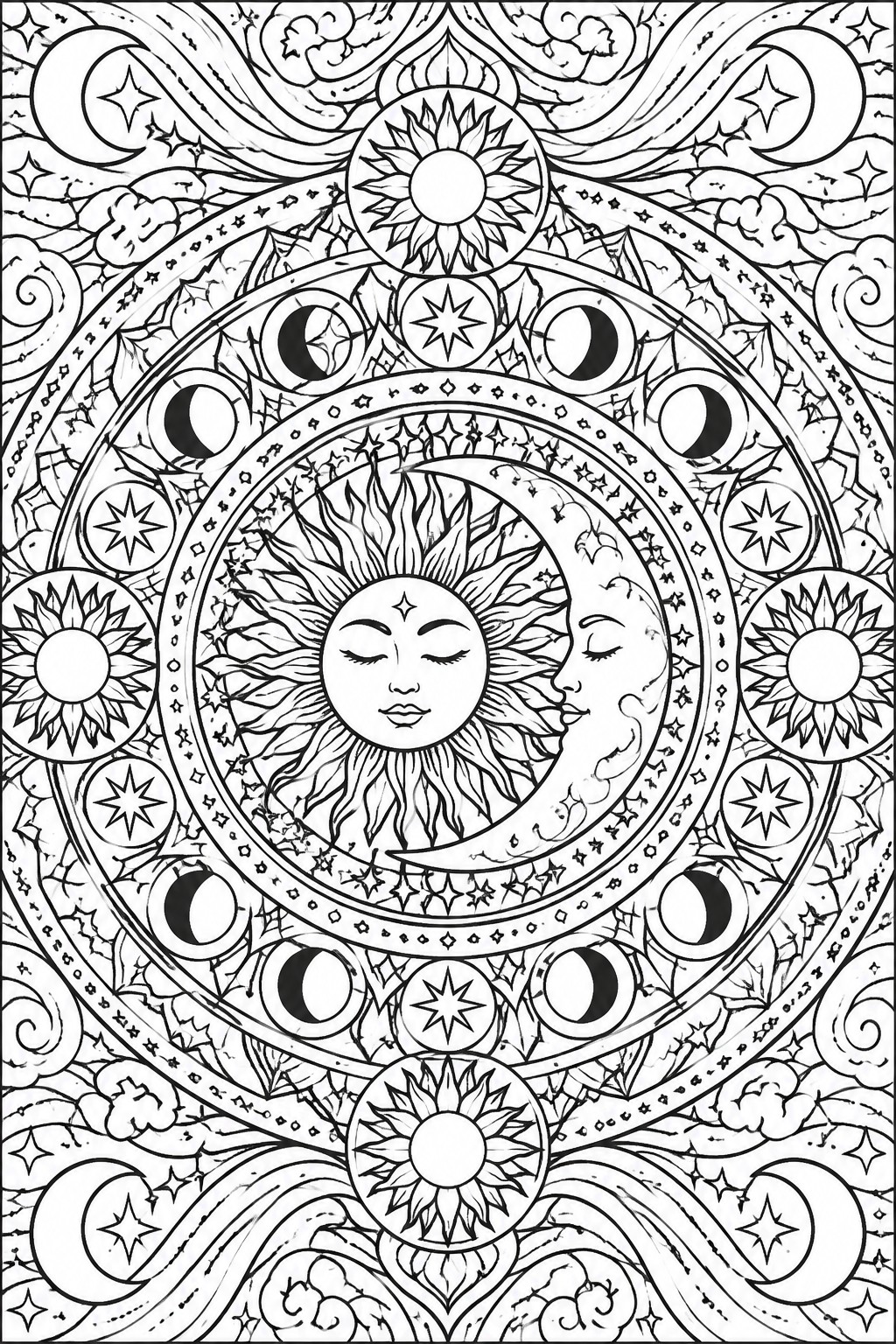
This mandala builds its design around a central sun and moon that share the middle circle with detailed faces. Concentric rings hold moon phases, small suns, and stars that repeat in balanced sections. Flowing outer bands add clouds and extra crescents to complete the full circular layout.
The layout makes this easy to color because the rings guide the eye from one section to the next without confusion. A page like this works especially well for adults who want steady detail across a large area. The consistent line weight and repeated shapes keep the focus on filling patterns rather than figuring out what to color next.
Ocean Mandala Built Around a Central Nautilus Shell
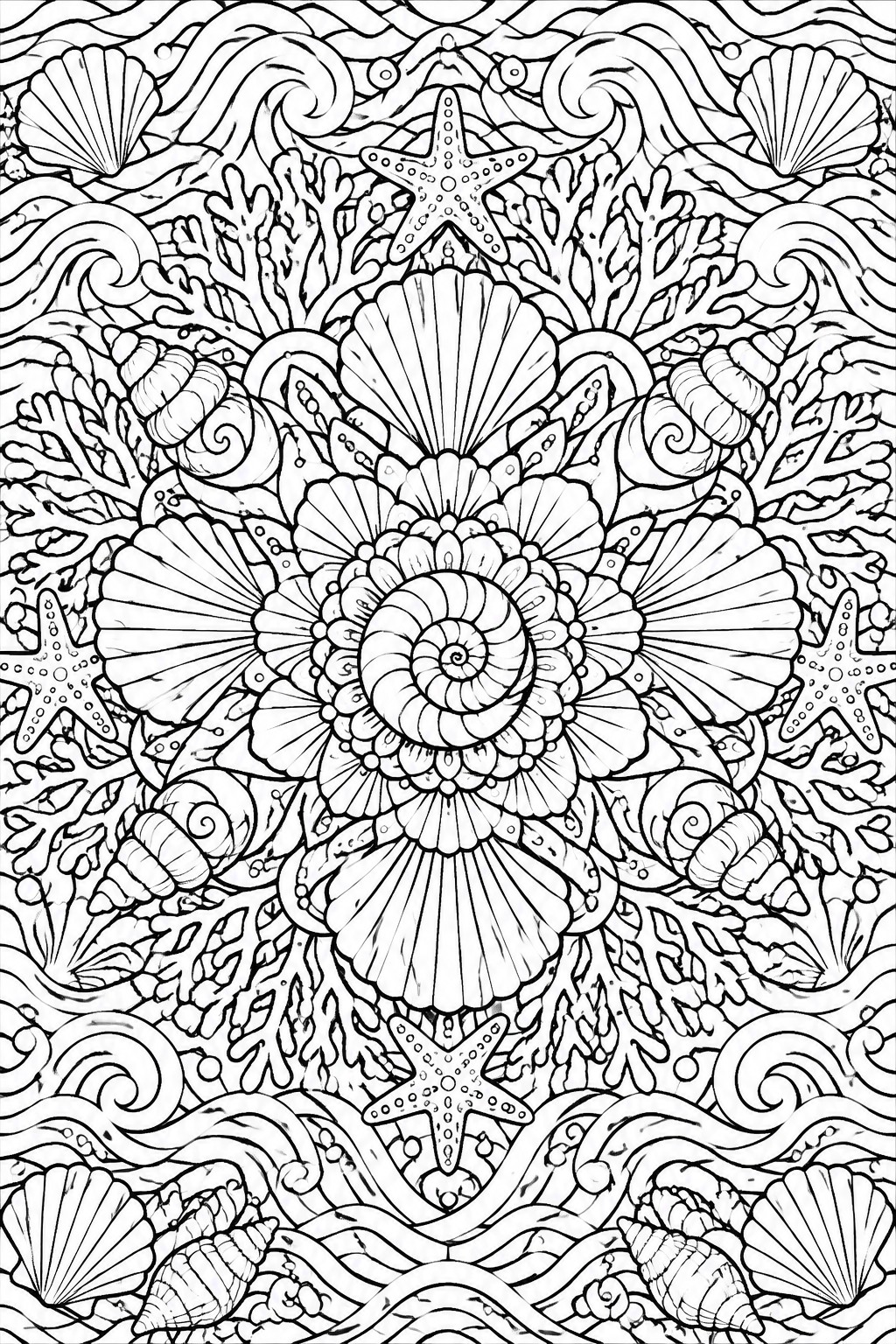
A mandala design that uses ocean motifs as its repeating pattern creates a circular layout centered on a large nautilus shell. Fan shells, starfish, and coiled sea snails radiate outward while coral shapes and wave lines fill the gaps between them. The freeform placement of these elements keeps the symmetry of a mandala while turning it into a single themed scene.
What makes this page useful is the clear size difference between the big central shell and the smaller surrounding details, which lets colorers switch between broad strokes and fine work. The layered arrangement of coral and waves adds enough variety to hold interest across multiple sessions without becoming repetitive. Adults looking for pattern-focused pages will find the density satisfying, and the strong outlines make it print well for repeated use.
Symmetrical Peacock Feather Mandala
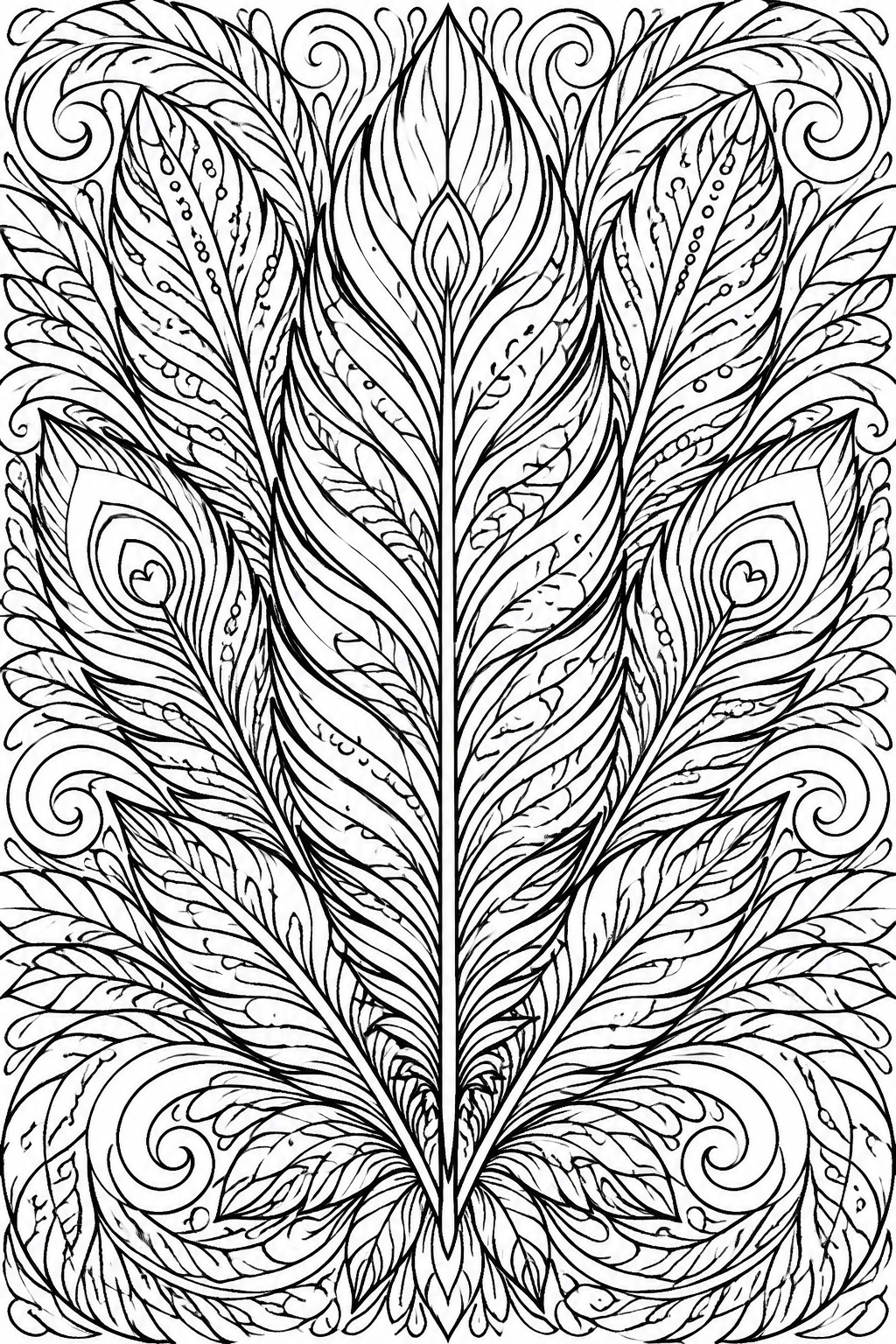
Peacock feathers form the main subject here with a large central plume running down the middle. Matching side feathers create a balanced symmetrical layout that fills the page from top to bottom. Swirling lines at the edges and small dot details along the barbs add extra pattern work without crowding the main shapes.
The layout makes this easy to color in sections because each feather stands out as its own unit. What makes this page useful is the mix of larger open areas inside the plumes and finer dot work that lets colorers move between simple fills and small accents. A page like this works especially well for adults who want a detailed but structured design that still feels approachable. The repeating feather shapes also help the finished piece look polished even if some sections get less attention.
Elephant Paisley Mandala with Layered Patterns
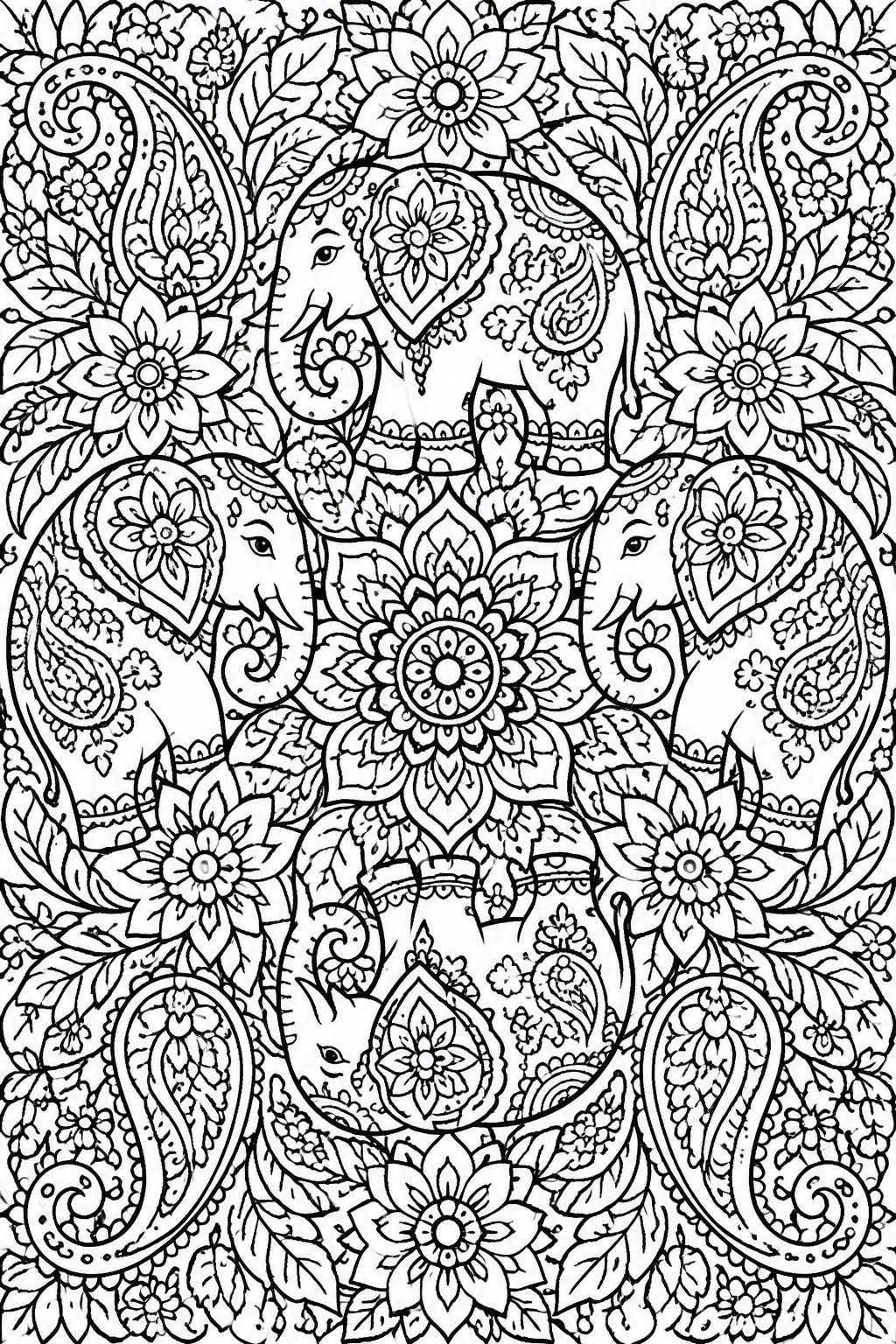
Elephant outlines sit at the center of this mandala page while paisley shapes and floral mandalas fill the surrounding spaces. The design arranges one large elephant at the top with smaller elephants on the sides and a fox near the bottom to create balanced sections. Freeform patterns blend animal forms with repeating flower and leaf details that break the page into manageable areas for coloring.
The layout makes this easy to color because the paisley and mandala sections give clear boundaries without requiring perfect symmetry. A page like this works especially well for adults who want a mix of larger animal shapes and finer pattern work in one design. The detail level supports longer sessions where colorers can focus on one cluster of flowers or swirls at a time.
Botanical Mandala Built Around a Central Flower and Patterned Pods
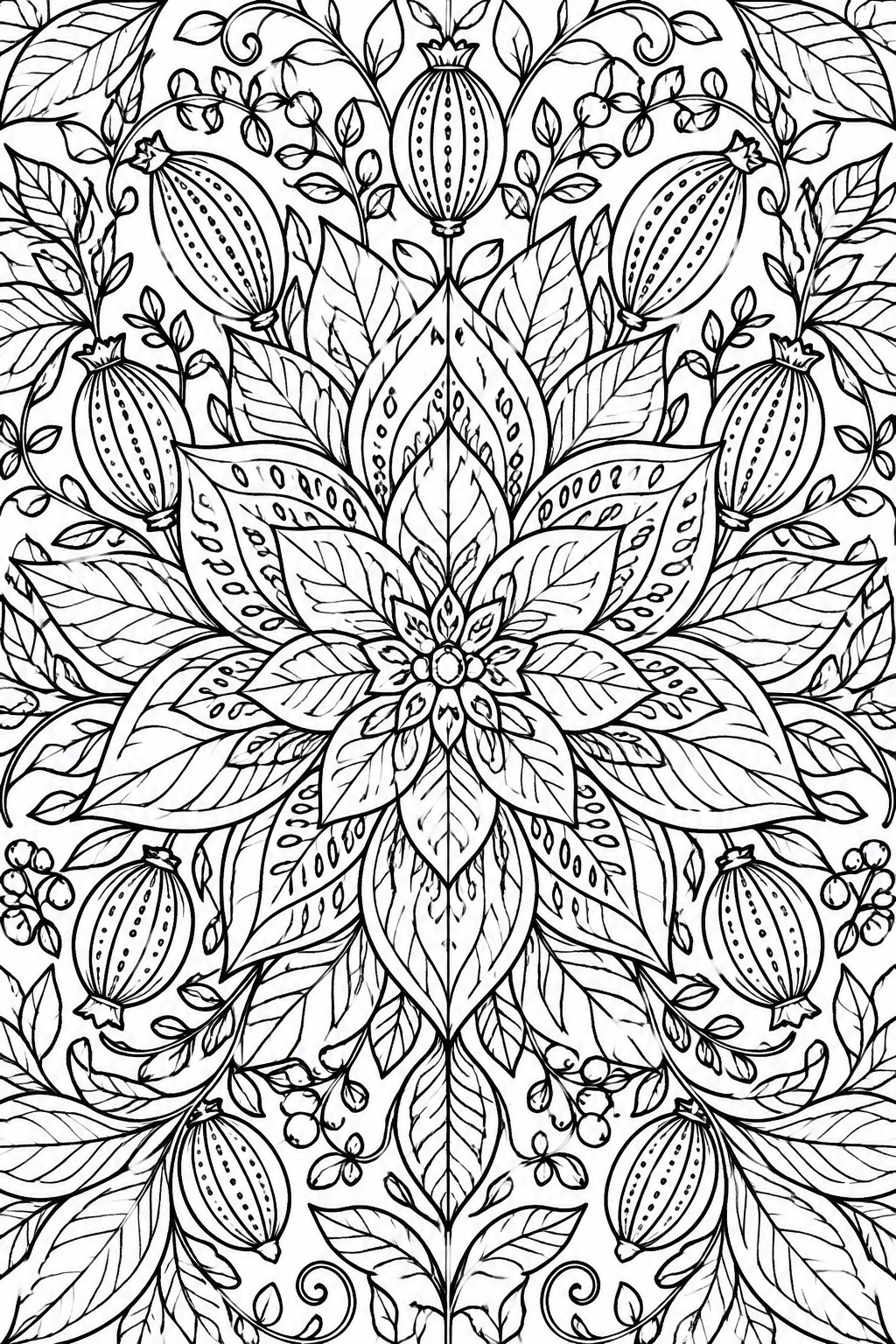
This mandala centers on a multi-petaled bloom that sits at the middle of the page. Layers of pointed leaves spread outward, broken up by rounded pods that carry vertical rows of dots and small berry clusters on connecting vines. The design uses repeating motifs and even spacing to fill the circle without leaving large empty zones.
The dotted patterns on the pods give colorers a clear way to practice texture without needing tiny details everywhere. A page like this works especially well for adults who want a structured mandala but still room to vary pressure and shading on the larger leaves. The symmetry makes it simple to color one section at a time while keeping the overall balance intact.
Crystal Mandala with Faceted Gems and Freeform Swirls
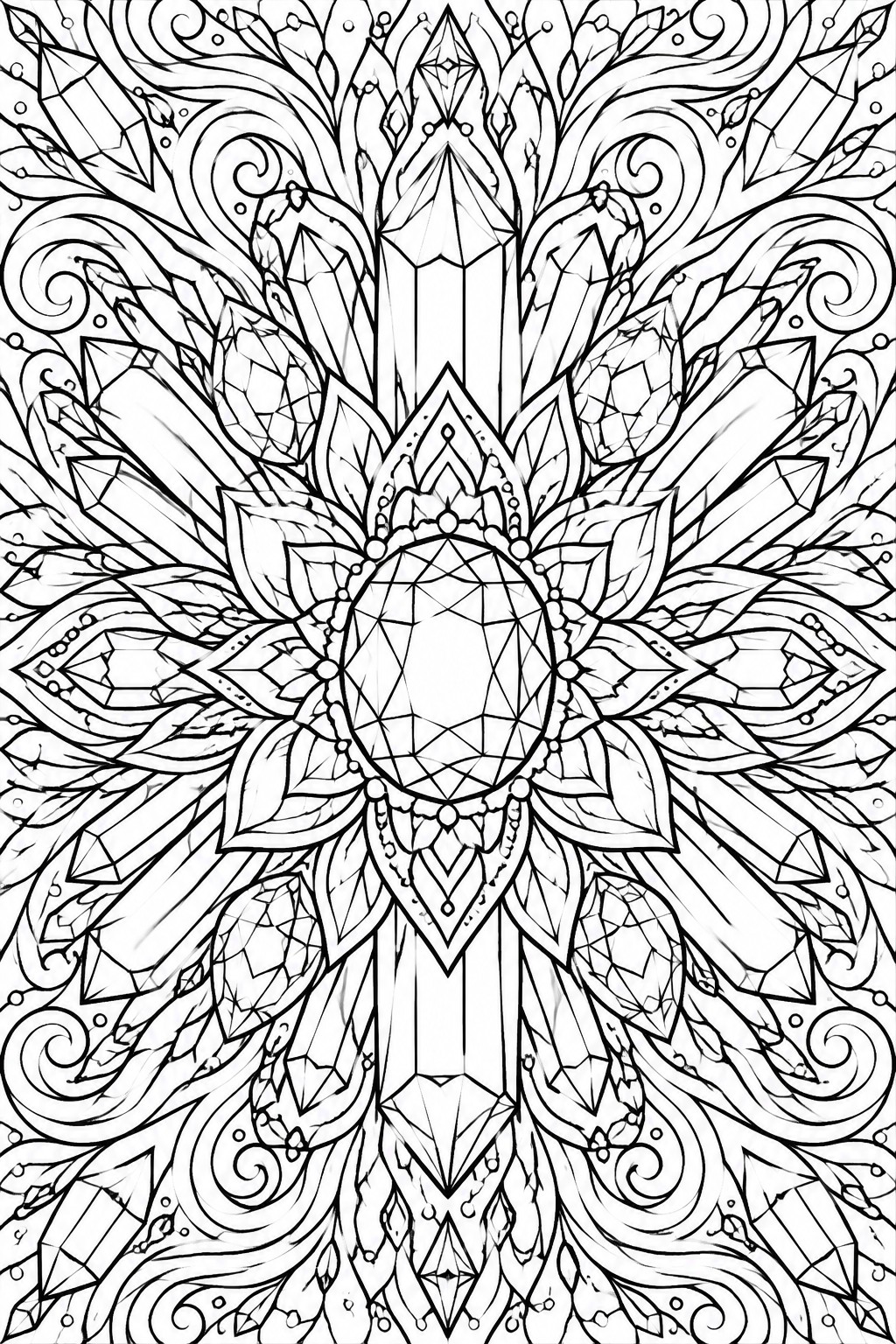
This mandala centers on a large faceted gem surrounded by clusters of smaller crystals, leaves, and flowing swirls. The design mixes sharp geometric lines from the crystal facets with organic curves and repeating patterns that radiate outward. Colorers get clear sections for precise shading alongside larger open shapes that allow for broader color choices.
The layout makes this easy to color in stages since the symmetry guides the eye without forcing a single approach. A page like this works especially well for adults who enjoy detailed work because the crystal facets create natural boundaries for color variation. The combination of tight patterns and open leaf areas keeps the session interesting without becoming overwhelming.
Butterfly Mandala with Freeform Leaf and Swirl Patterns
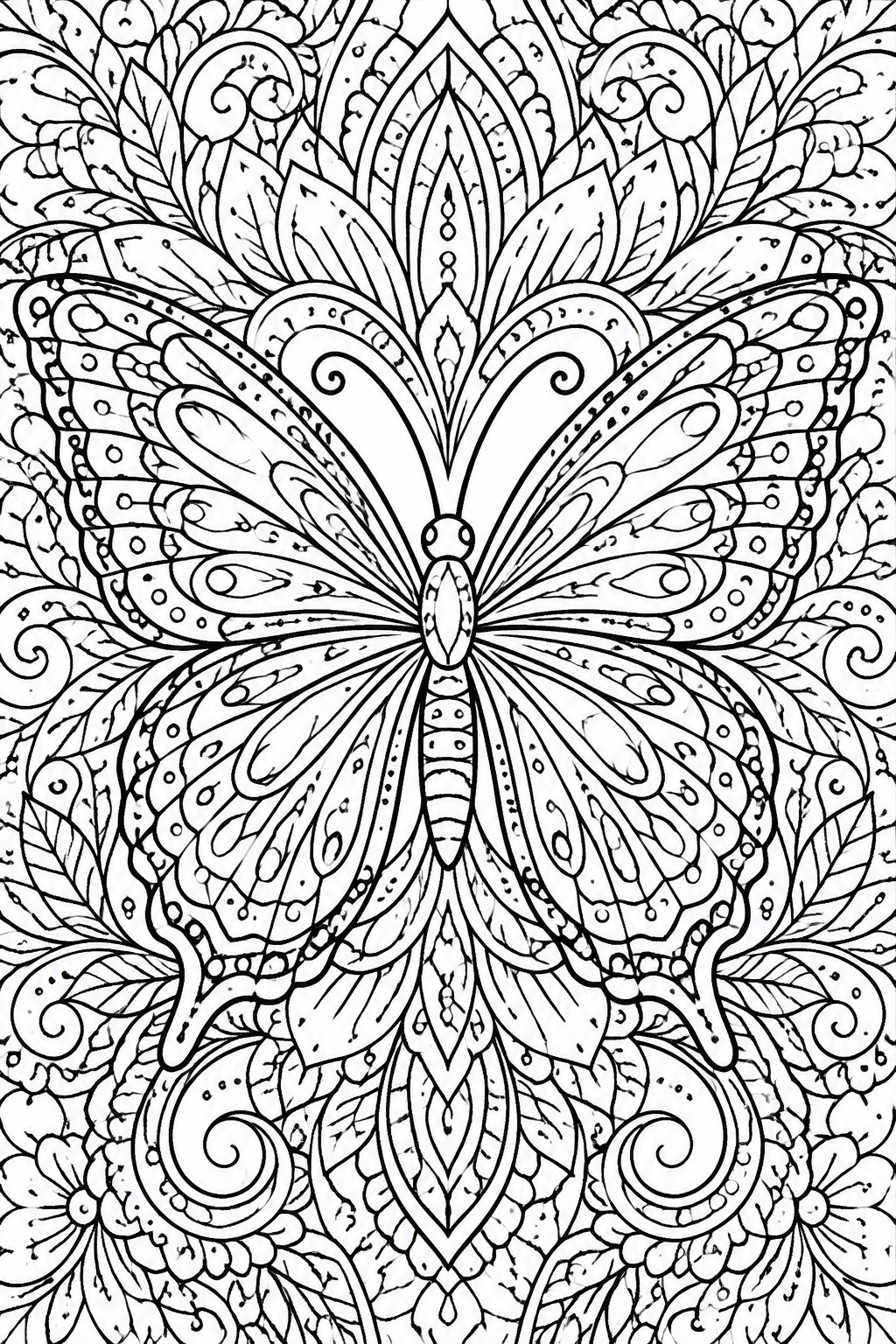
A central butterfly anchors this mandala design, its wings built from repeating curved shapes and dotted accents that create clear sections for coloring. The surrounding area fills with layered leaves, tight spirals, and small flower clusters that spread outward in an uneven but balanced way. This combination gives colorers both structured wing areas and looser organic shapes to work through at their own pace.
What makes this page useful is the clear separation between the butterfly body and the surrounding freeform elements. The detail level makes this a smart pick for adults who want something intricate but not overly tight or geometric. The layout makes this easy to color in sections, starting with the wings before moving to the outer leaves and swirls. A page like this works especially well for Pinterest because the strong central shape stands out even in a small preview thumbnail.
Organic Mandala with Layered Petals and Freeform Swirls
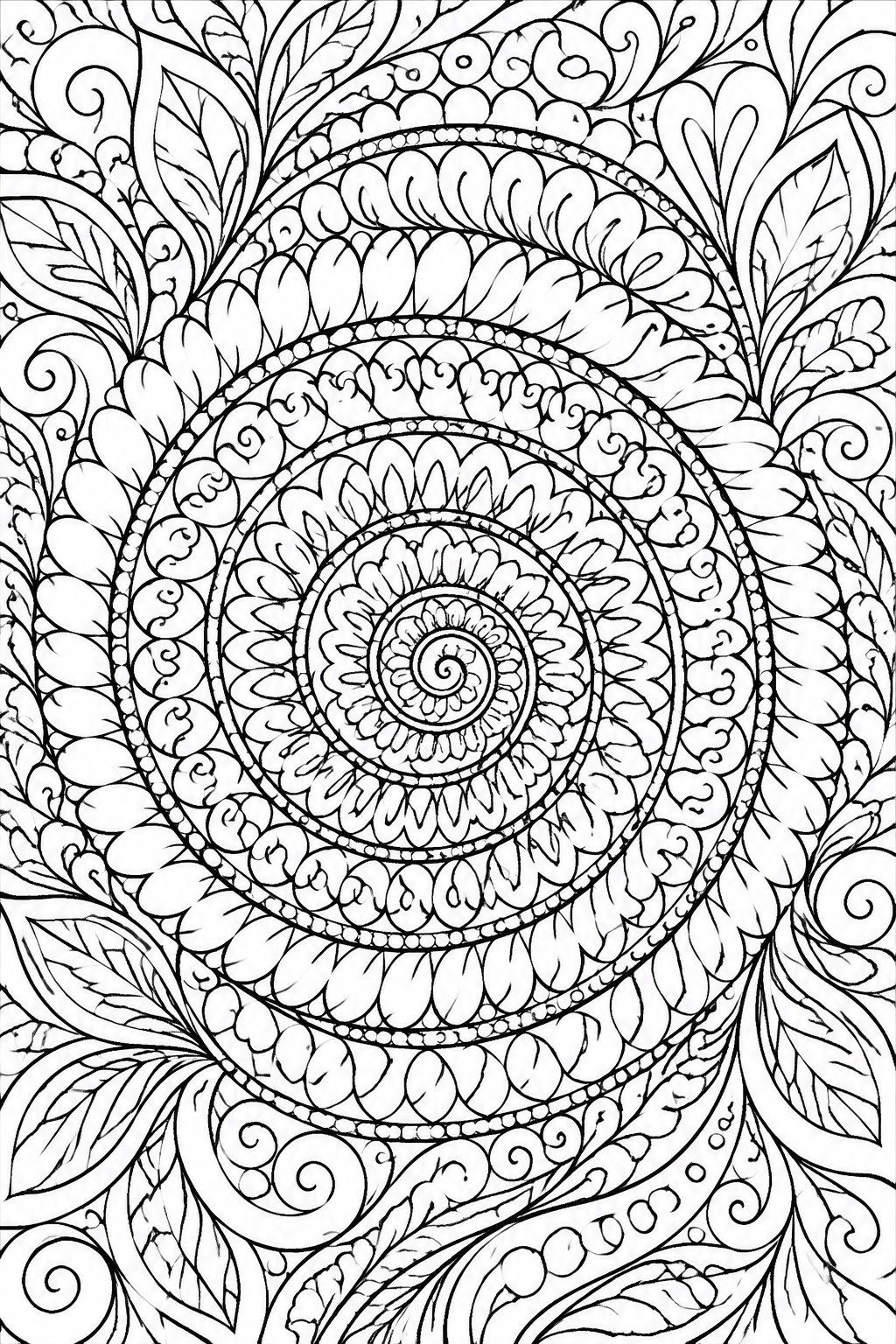
This mandala idea uses concentric rings that build outward from a small central spiral. Each ring mixes leaf shapes, petal clusters, and curved line work that varies in size and direction. The freeform patterning keeps the overall circle balanced while letting individual sections differ enough to hold interest during coloring.
What makes this page useful is the steady progression of detail from center to edge. A page like this works especially well for adults who want a pattern-focused session without jumping between unrelated subjects. The mix of open leaf areas and tighter dotted borders gives clear spots to switch techniques or colors without losing the overall structure.
Tribal Mask Mandala with Layered Faces and Leaf Details
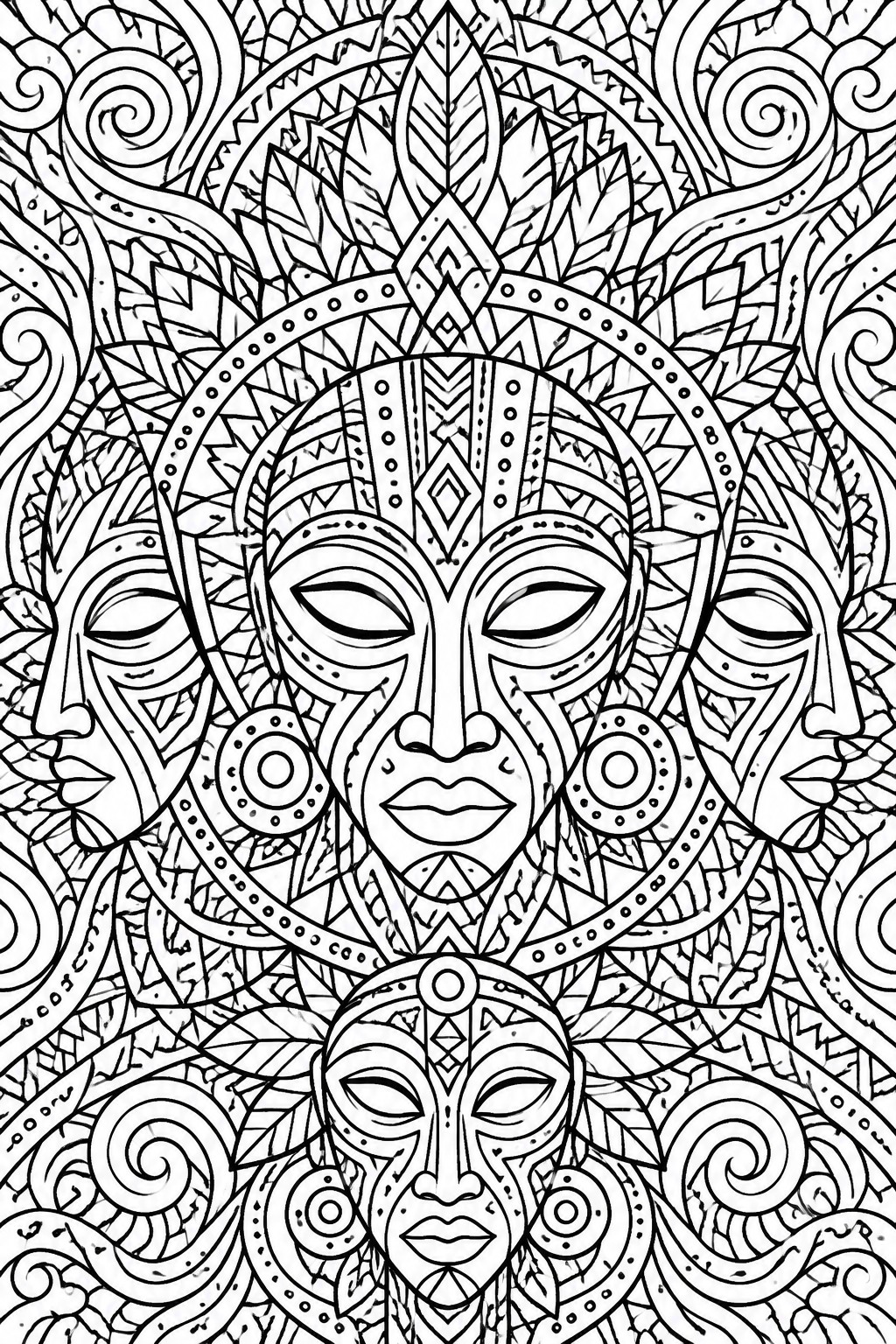
This mandala centers on several tribal-style mask faces arranged in a circular layout. A large central mask sits between two side profiles while a smaller mask anchors the bottom. Dense patterns of leaves, geometric shapes, and spirals fill the spaces between the faces to create balanced sections.
What makes this page useful is the clear separation between the mask areas and the surrounding pattern work. Colorers can focus on shading the faces first before moving into the finer leaf and swirl details. The design suits adults who want a mix of larger shapes and repetitive patterns without tiny isolated spots. This structure helps the finished page look cohesive even when different colors are used across sections.
Layered Floral Mandala with Concentric Scalloped Rings
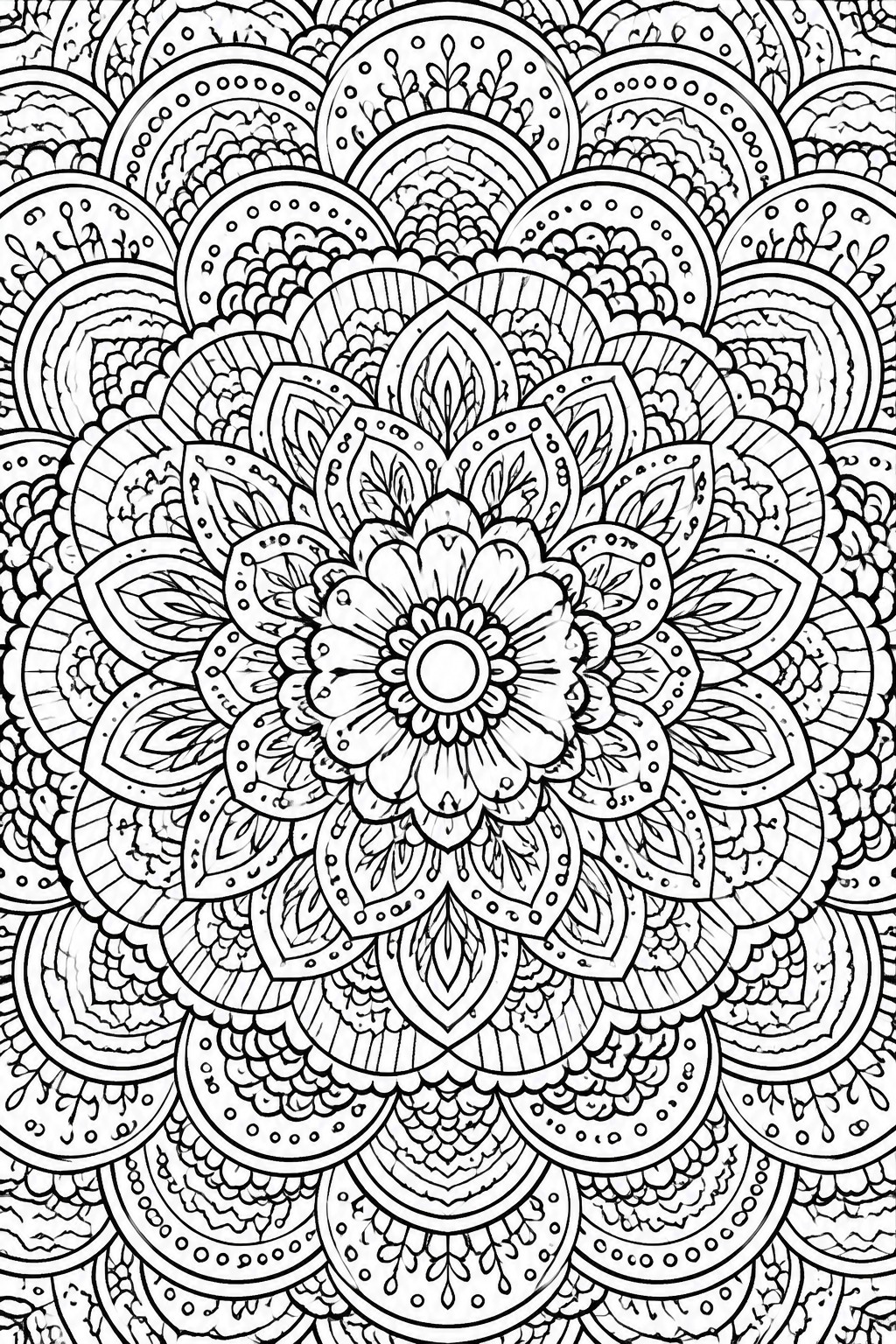
A mandala built around one large central flower uses radiating petals and pointed leaf shapes to anchor the design. Multiple rings of scalloped edges, dotted lines, and smaller repeating motifs expand outward in a radial pattern. The mix of open petal spaces and tighter curved or dotted sections creates clear zones that guide coloring choices without locking them down.
The detail level makes this a smart pick for adults who want a focused pattern session that still leaves room for color variation. Balanced spacing between dense and open areas keeps the page from feeling crowded, so markers or colored pencils move smoothly across sections. A page like this works especially well for printing because the strong central symmetry holds up even when color choices shift between rings.
Layered Hibiscus Mandala with Vine Fillers
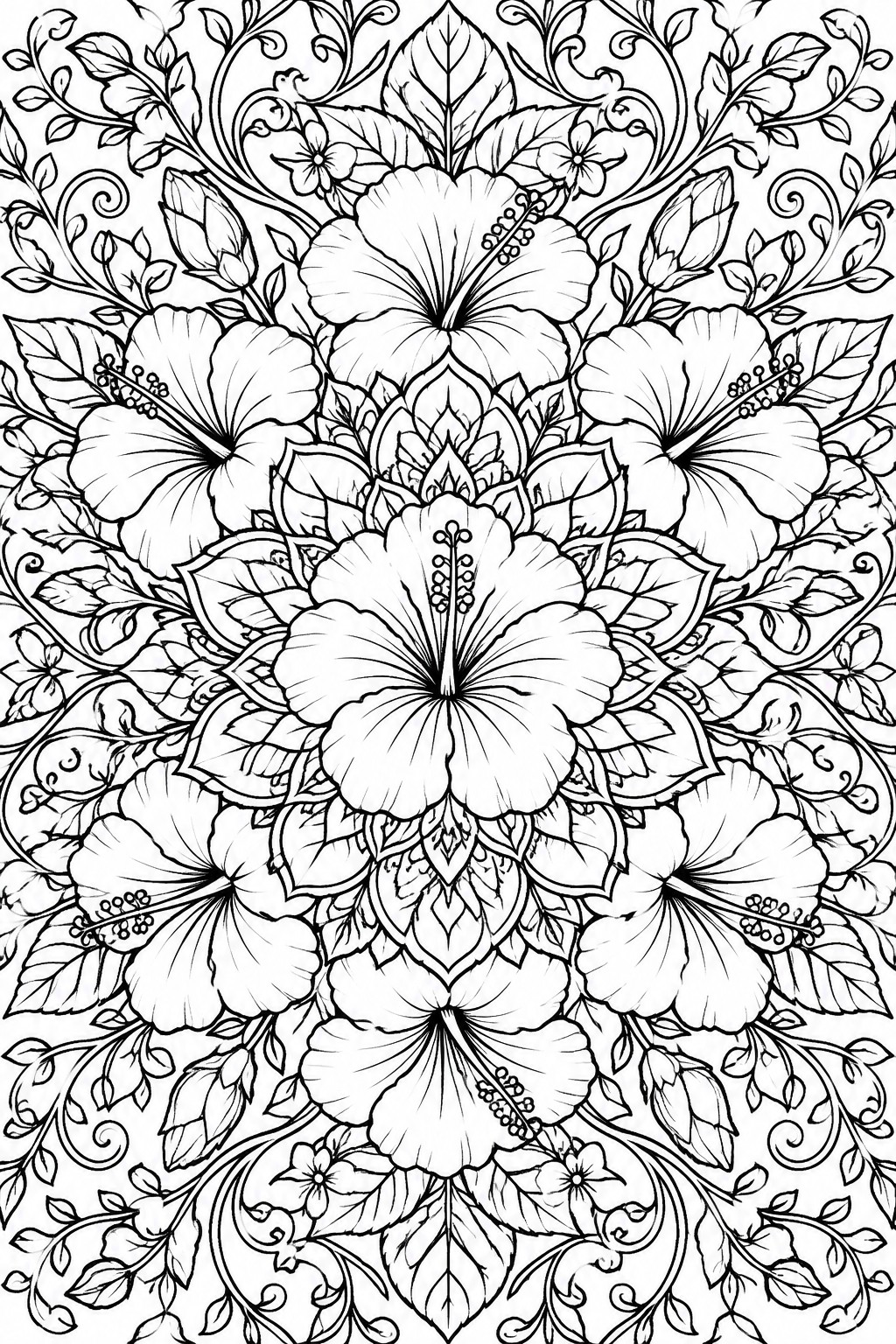
A mandala built from hibiscus flowers places one large bloom at the center and surrounds it with smaller flowers and foliage in repeating rings. The design uses thick petal outlines and clusters of leaves connected by thin curving vines that fill gaps without crowding the main shapes. This gives colorers clear sections to tackle one ring at a time while the symmetry keeps the whole page feeling organized.
What makes this page useful is the balance between large open petals and tighter leaf clusters that let someone shift between quick coverage and finer detail work. The layout works especially well for adults who prefer a single subject rather than scattered motifs. A page like this stands out on Pinterest because the repeated flower forms create natural color zones that look finished even when only part of the design is done.
Nautical Mandala with Shells Anchors and Ropes
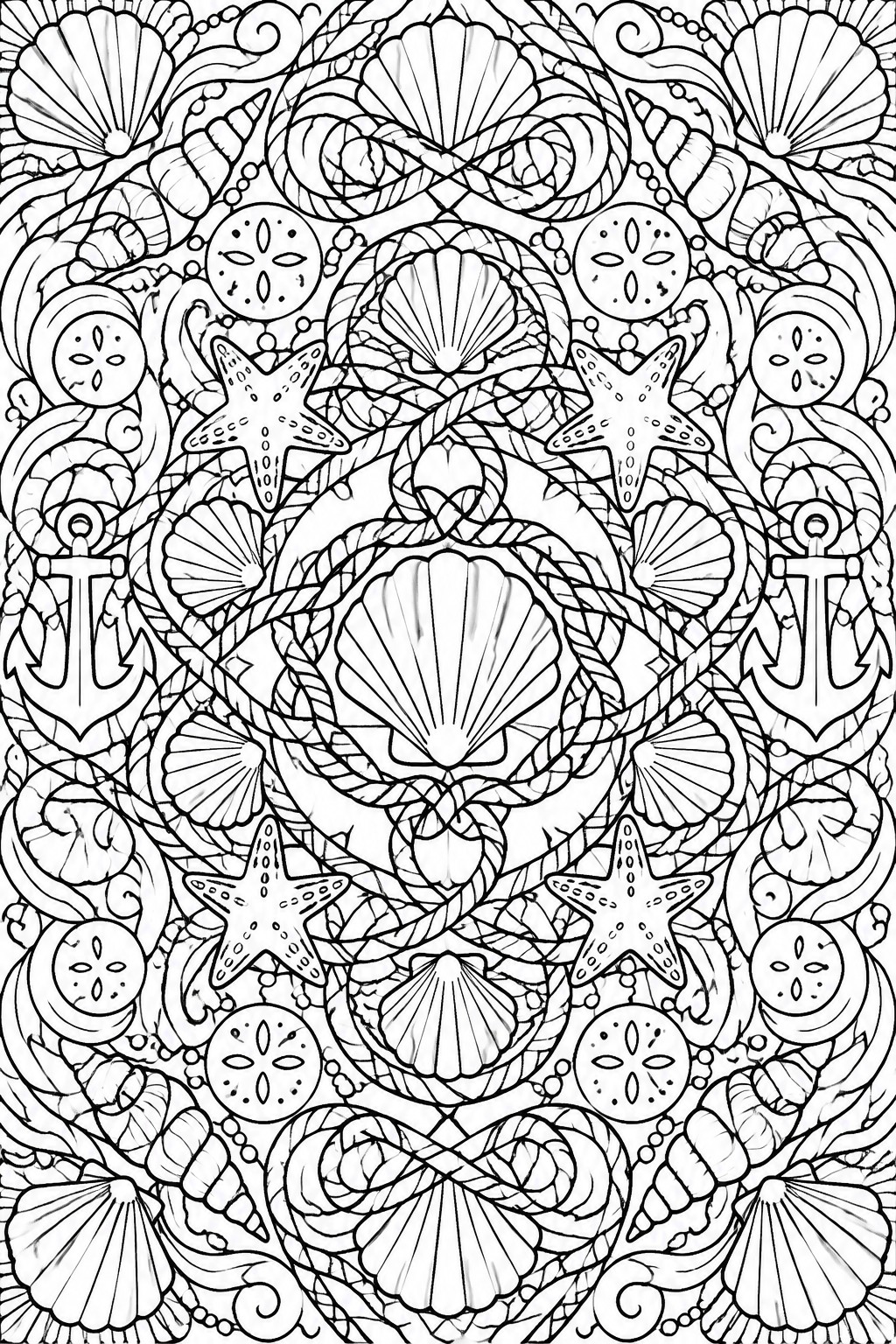
Ocean motifs form the core of this mandala through repeated scallop shells, starfish, sand dollars, and anchors. Thick ropes twist between the shapes to divide the circle into connected sections and guide the eye outward from the center. The even spacing and mix of bold outlines with smaller filler patterns create clear zones that stay manageable during coloring.
What makes this page useful is the way larger central shells sit beside finer rope details so colorers can switch between broad strokes and tighter work. The layout keeps elements distinct without overcrowding so markers or colored pencils stay inside the lines more easily. A page like this works especially well for adults who want a themed mandala that feels structured yet not overwhelming. The repeating nautical elements also make it simple to plan a consistent color scheme across the whole design.
Layered Mandala with Floral and Leaf Freeform Patterns
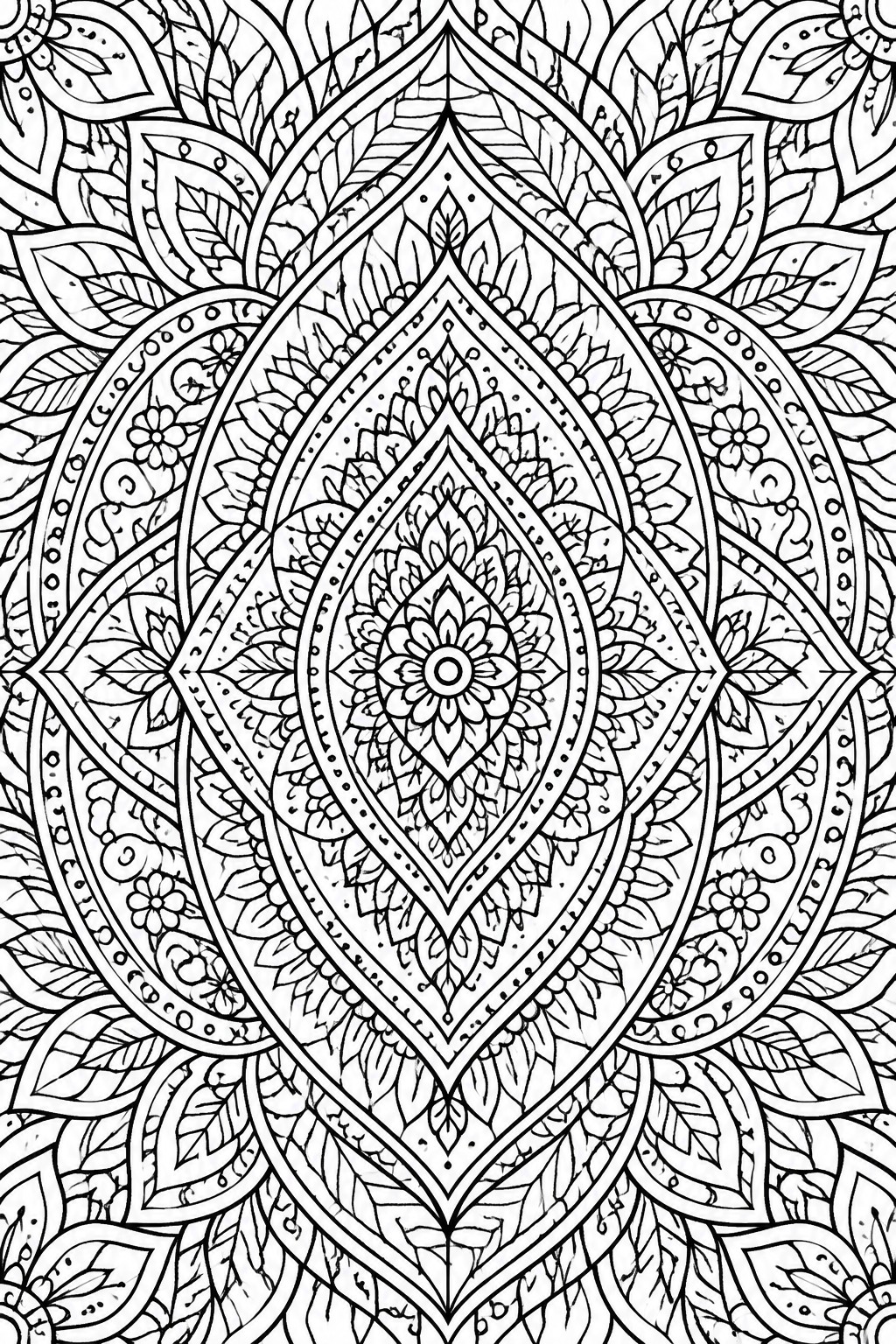
A central flower sits at the core of this mandala while rings of petals, leaves, and smaller blooms expand outward in a pointed oval shape. Freeform patterning shows up in the varied leaf curves, dotted lines, and swirl accents that fill each band without rigid repeats. The dense layout packs many small shapes together so colorers can shift between broad strokes and fine detail work.
The layout makes this easy to color because the repeating rings give natural sections to tackle one at a time. Adults who prefer intricate pages will find the mix of larger petals and tighter leaf clusters keeps the session engaging without becoming overwhelming. The consistent line weight also helps the design print cleanly for repeated use.
Oak Acorn Tree Ring Mandala
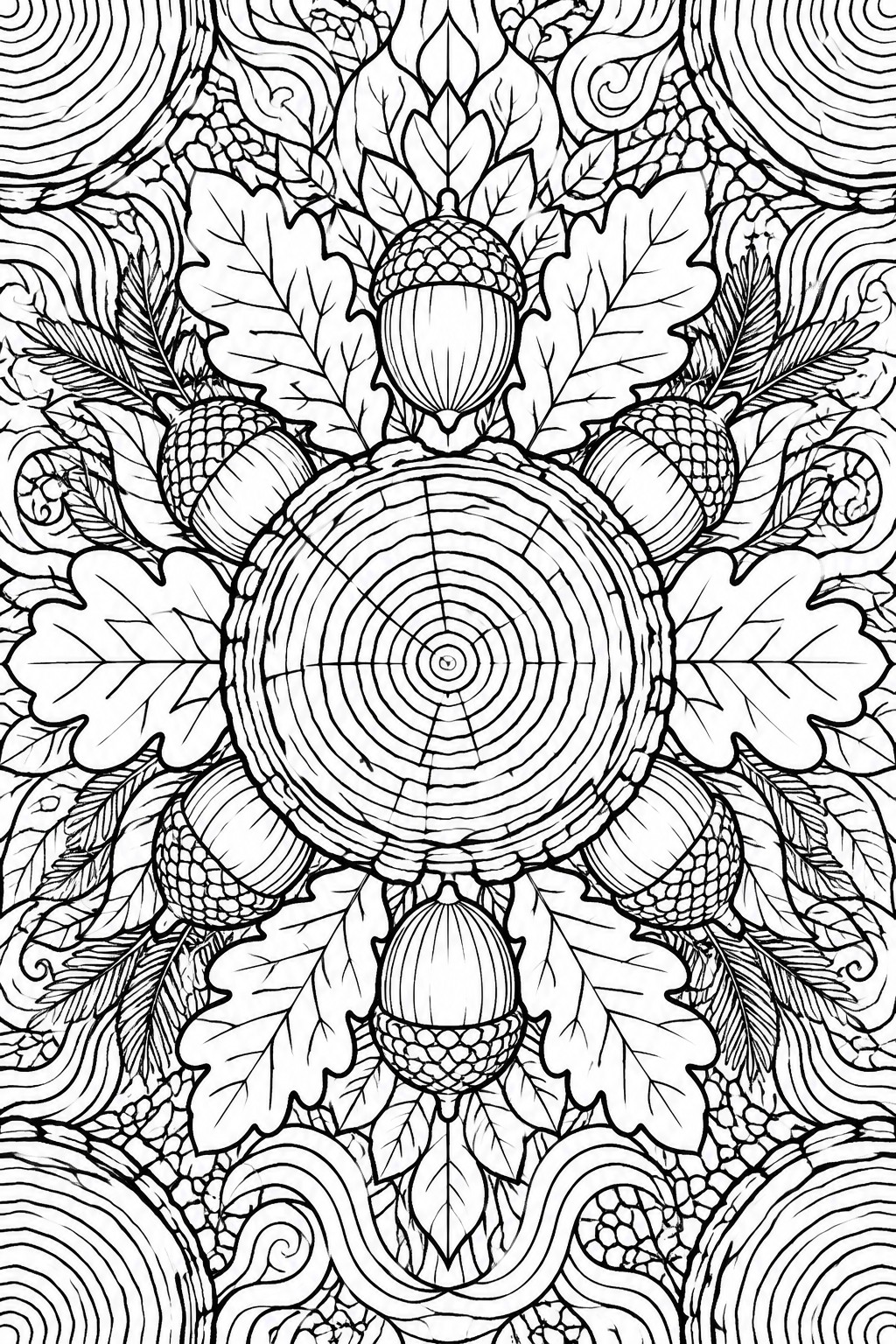
Oak leaves and acorns form a radial mandala built around a central tree ring cross section. The design layers natural motifs in repeating segments with added swirls and smaller leaves filling gaps between the main shapes. Concentric rings in the middle create a clear focal point while the surrounding acorns and foliage introduce varied textures through their scales and veins.
The layout makes this easy to color by letting users work from the center outward without overlapping lines. A page like this works especially well for adults who want medium detail that supports both quick fills and slower shading on the wood grain. The balance of large leaf shapes and smaller pattern areas gives colorers options to adjust how much time they spend on each section.
Clock Mandala Built from Gears and Multiple Timepieces
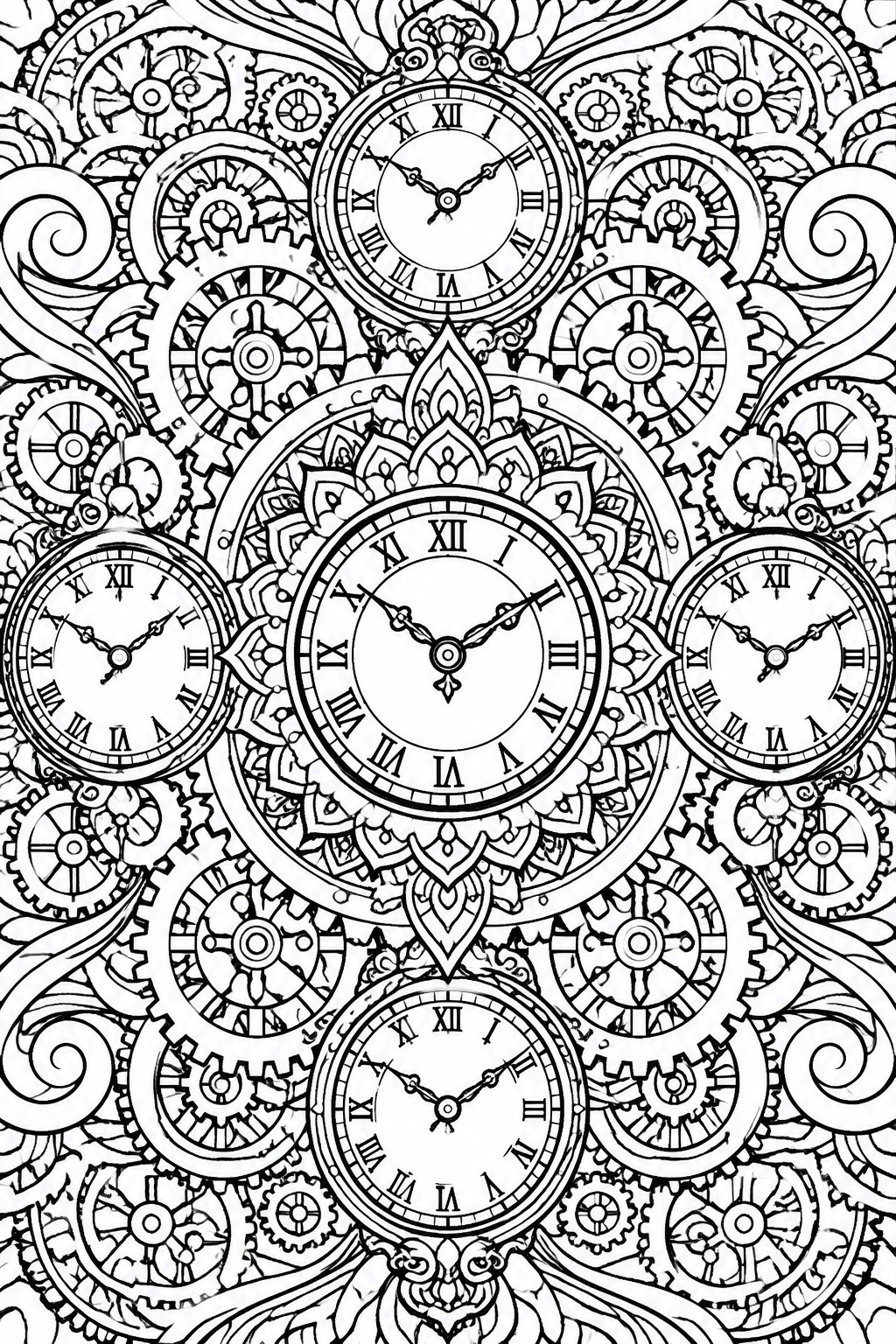
This coloring page centers on a mandala made from several analog clocks set among interlocking gears and curved mechanical patterns. The layout places one large clock in the middle with four smaller ones around it, all connected by repeating gear shapes and ornamental lines that fill the space evenly. The combination of round clock faces and angular gear teeth creates distinct sections that keep the eye moving across the page.
What makes this page useful is the way the clock faces give clear starting points while the surrounding gears offer smaller, more open shapes to color next. The detail level makes this a smart pick for adults who want a longer session without jumping between unrelated subjects. A page like this stands out on Pinterest because the mechanical theme feels distinct from standard floral mandalas yet still follows the same symmetrical structure.
Layered Lotus Mandala with Freeform Vine Patterns
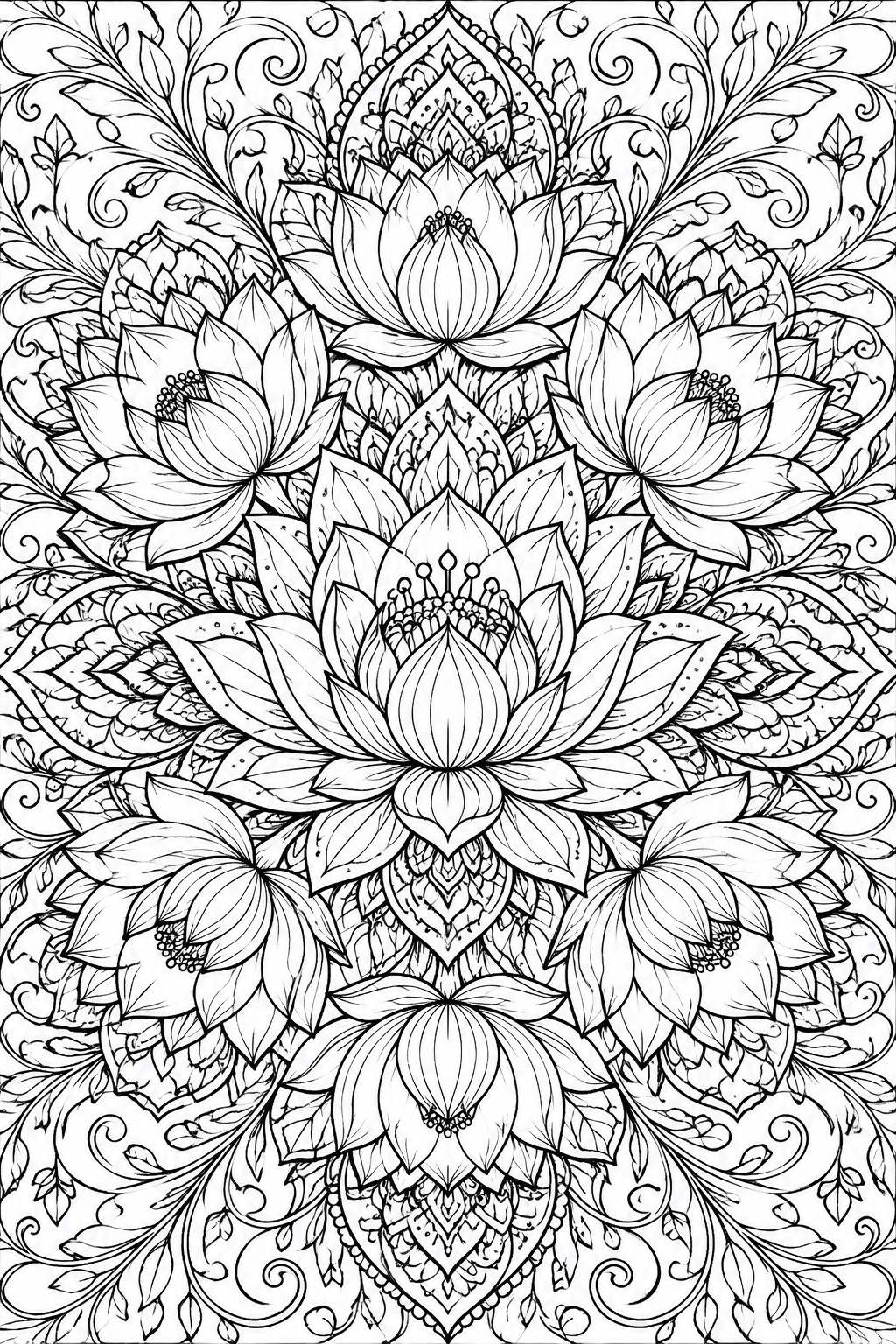
Lotus flowers sit at the center of this mandala and repeat outward in stacked layers. The design blends tight petal lines with loose swirling vines and scattered leaves that fill the spaces between blooms. This mix gives colorers clear focal points while still offering open areas for pattern work.
The layout makes this easy to color because the central lotus anchors the page and the surrounding flowers create natural sections. A page like this works especially well for adults who want detail without total chaos. The symmetry supports steady progress while the freeform vines keep the session from feeling too rigid.
Ornate Gothic Architecture Mandala with Swirling Foliage
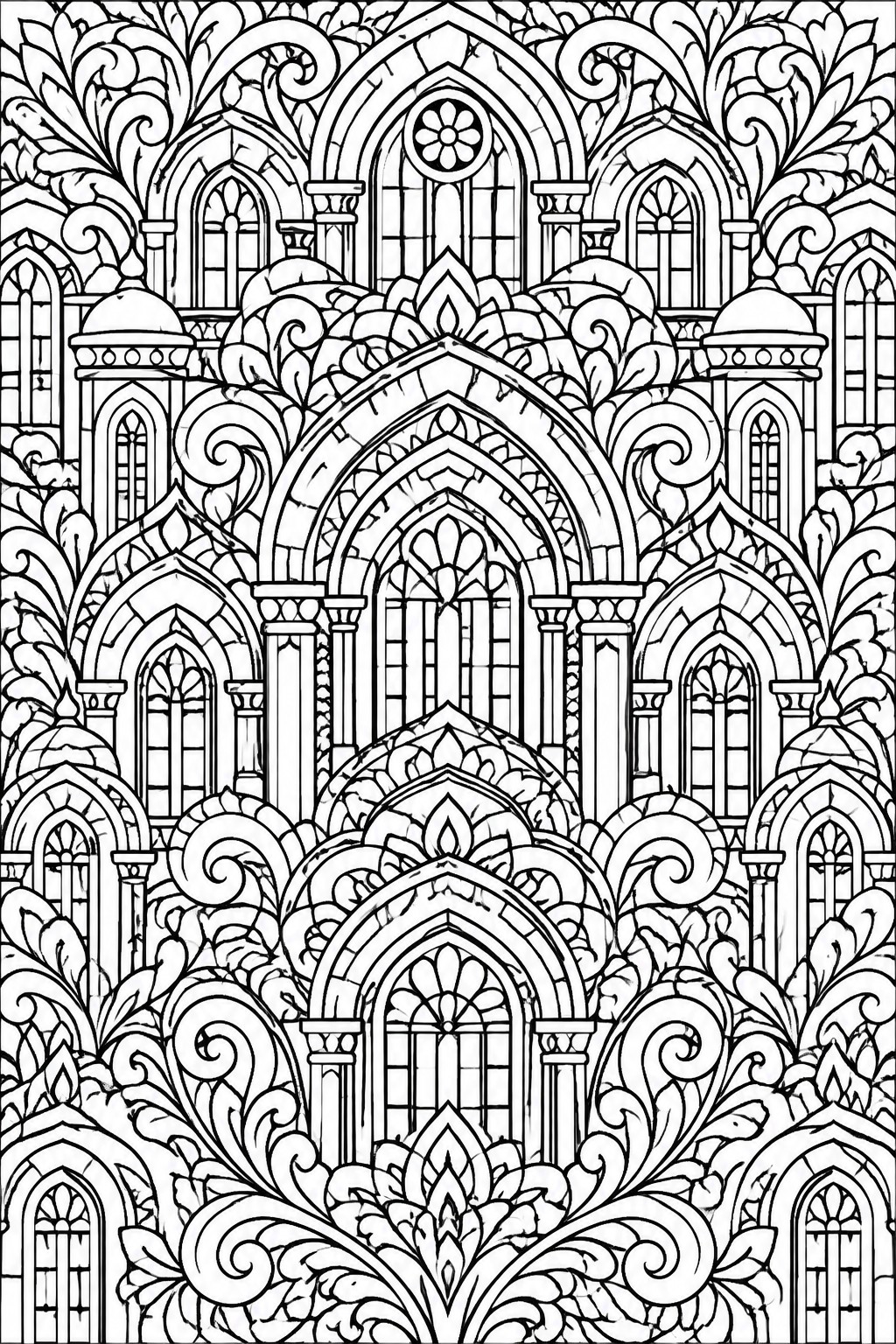
This coloring page builds a mandala from repeated Gothic arches, windows, and domes that stack in layers. Straight architectural lines mix with dense swirling leaves and vines that fill the gaps between structures. The clear separation between the building shapes and the organic patterns lets colorers work section by section without losing the overall symmetry.
The layout makes this easy to color because the arches and foliage create natural boundaries that guide the eye. A page like this works especially well for adults who want a detailed project they can tackle over multiple sittings. The repeating motifs also give room to test different color combinations on similar shapes without starting from scratch each time.
Eye Mandala with Layered Swirls and Repeating Motifs
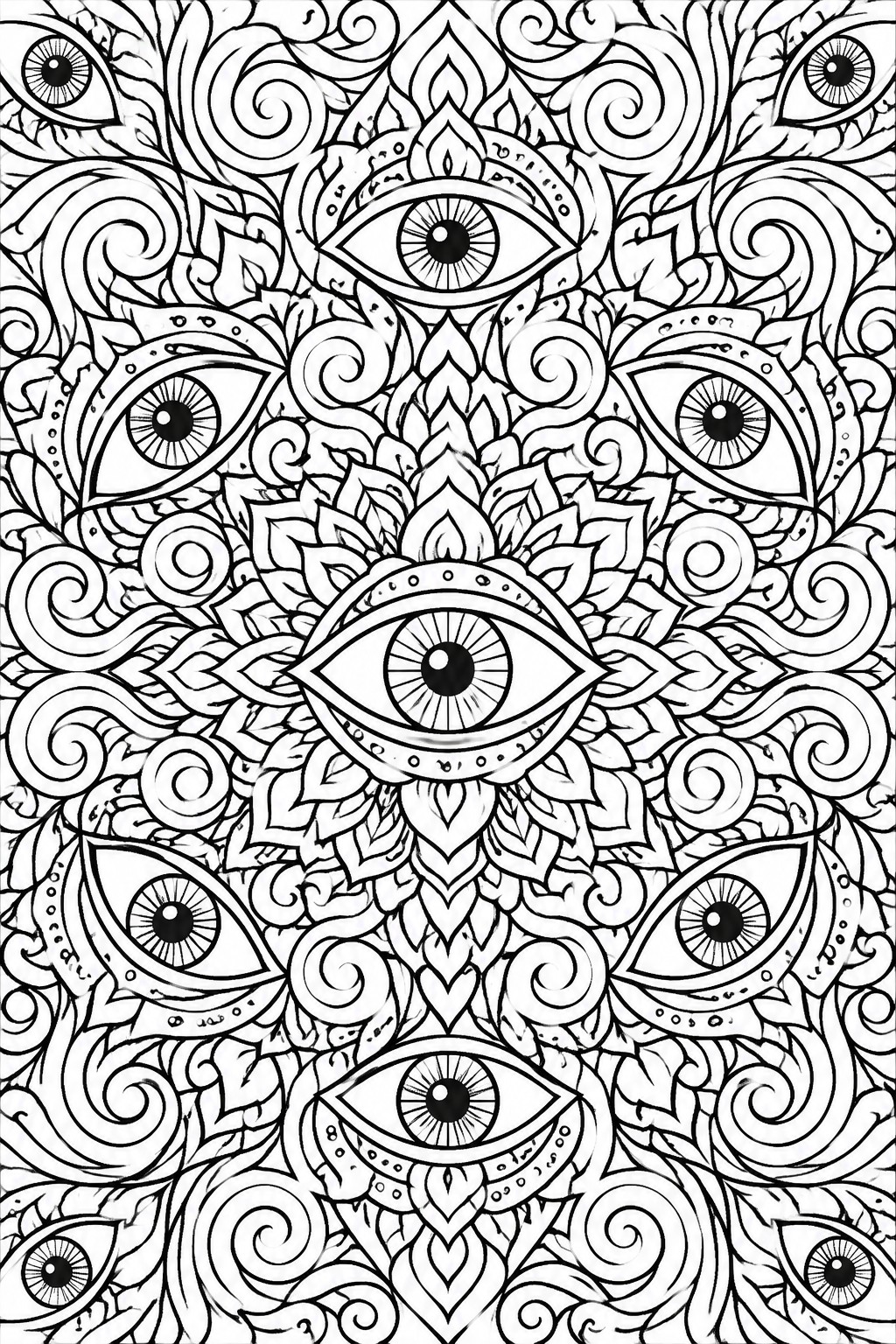
This coloring page centers on a mandala built from multiple eye shapes placed in symmetrical positions around a large central eye. The design fills the space with swirling lines, leaf shapes, and dotted accents that connect the eyes into one continuous pattern. The result gives colorers a clear structure of repeating elements that still leaves room for individual color decisions in each section.
The detail level makes this a smart pick for adults who prefer pages with plenty to work on. What makes this page useful is the way the eyes act as built-in focal points while the surrounding swirls create smaller areas that can be colored one at a time. For a longer session, this kind of layout supports steady progress without large empty zones that can feel intimidating.
Fish Mandala Built from Scales and Leaves
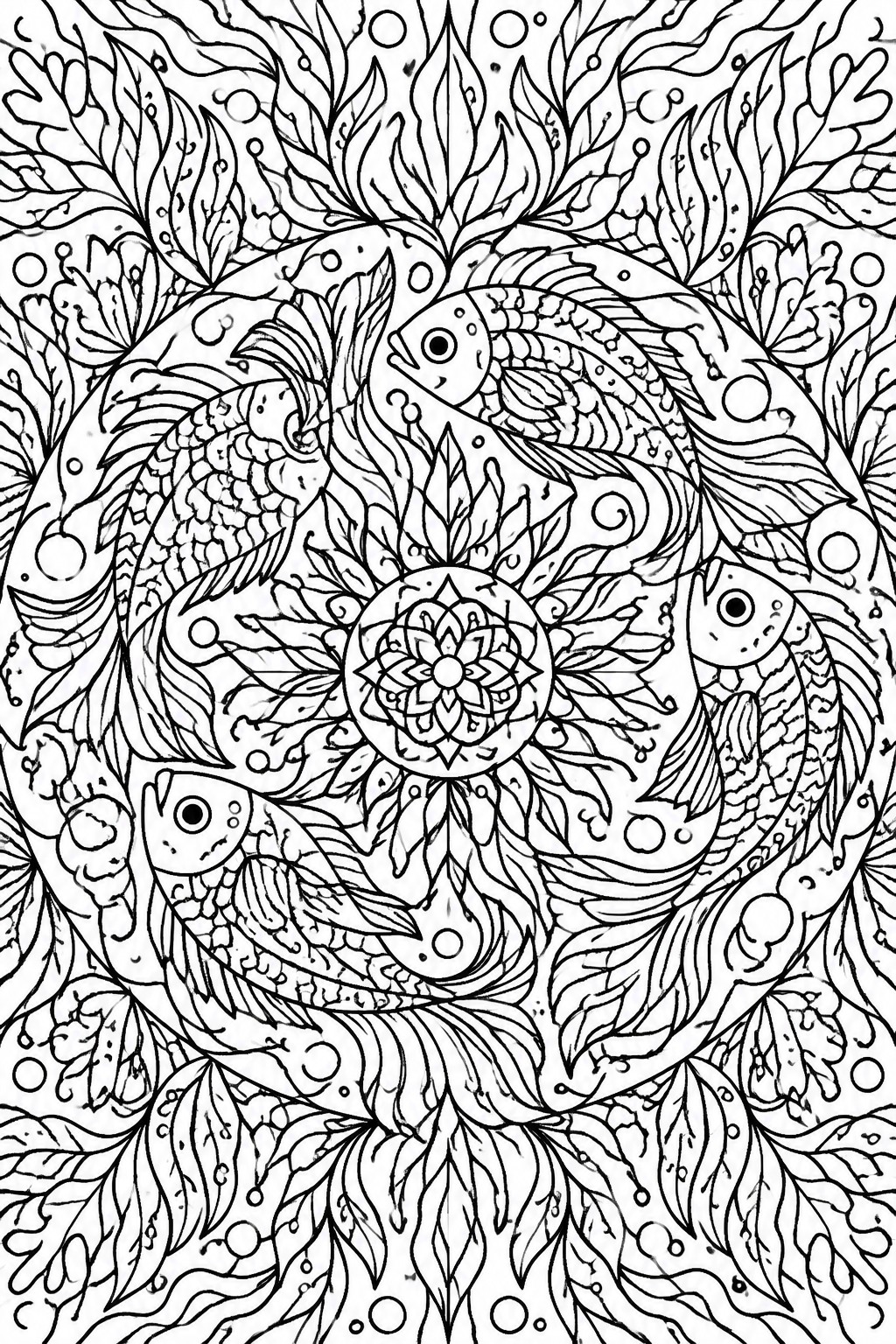
A mandala formed around fish uses their scaled bodies and the surrounding leaves to create repeating curved shapes that fill the circle. The fish swim in a continuous loop with bubbles and fronds placed between them to keep the pattern moving. The central flower gives the design a clear starting point while the outer ring of foliage closes the composition.
The many small sections inside each fish and leaf make this page a steady choice for longer coloring sessions. Colorers who like filling textures will find the scales and veins give clear lines to follow without needing extra planning. A design like this stands out for people who want a nature theme inside a mandala format rather than abstract shapes alone.
Frequently Asked Questions
What are doodle mandala coloring pages with freeform patterning? These pages feature circular mandala structures mixed with spontaneous doodle elements like swirls, abstract shapes, and irregular lines that do not follow rigid symmetry. The freeform patterning encourages colorists to add their own creative touches rather than sticking to predefined repeats, making each finished piece unique.
How do I access and print the full set of 22 pages? Look for a downloadable PDF link in the article or related resource section. Open the file on your computer, select letter size paper in your print settings, and choose black and white or grayscale mode for crisp outlines. Print one page at a time if your printer tends to handle thicker stock better, and consider using 65 lb cardstock to support heavier coloring mediums.
Which coloring supplies work best without smudging or bleeding? Start with colored pencils for precise shading in the doodle areas, as they allow layering and blending. Switch to alcohol based markers for bold fills in larger sections, but test on scrap paper first. Keep a colorless blender pencil handy to smooth transitions between the structured mandala rings and the organic freeform patterns.
Are these designs suitable for different skill levels? The collection includes a mix of simpler outlines with fewer lines for beginners and highly detailed pages with overlapping elements for more experienced colorists. Beginners can focus on one section at a time, while advanced users can experiment with color gradients and texture effects to highlight the freeform aspects.
How can coloring these pages support mindfulness or stress relief? Filling in the mandalas promotes focused attention through repetitive motions, while the freeform patterns invite playful improvisation that shifts the mind away from daily worries. Set aside 20 to 30 minutes in a quiet space, choose colors intuitively, and notice how the process creates a calming rhythm without pressure to finish an entire page in one sitting.
