

I put together these floral mandala pages because I wanted more options with lots of petals and blooms.
The designs are centered on those elements and stay pretty simple overall.
I have 21 of them ready for printing if you like that style of coloring.
They work well with colored pencils or markers depending on what you prefer.
Sometimes I color one while listening to a podcast in the evening.
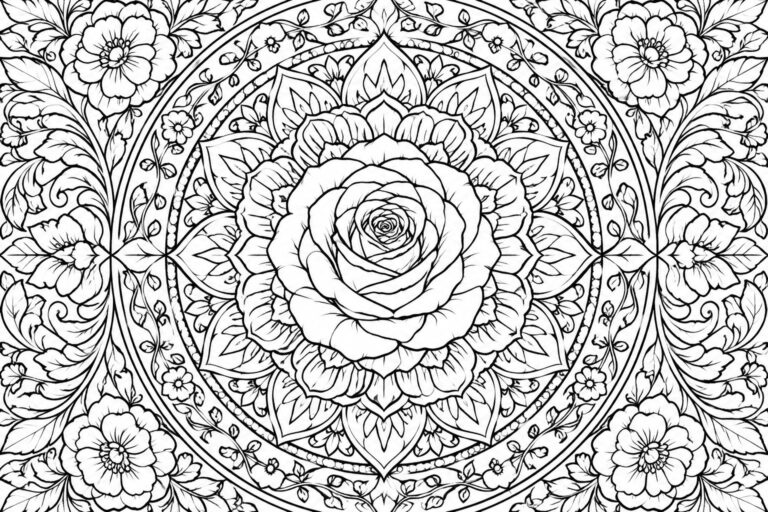
Rose Centered Mandala with Layered Floral Rings

A large rose sits at the center of this mandala design, with rows of pointed petals and smaller flowers arranged in repeating circular bands. The layout keeps the main bloom prominent while filling the surrounding space with leaf shapes and compact flower clusters that follow the same radial structure. Colorers can focus on one ring at a time or build contrast between the solid rose center and the finer outer details.
The layout makes this easy to color because the clear rings give natural stopping points and prevent the page from feeling scattered. A page like this works especially well for adults who want a mandala without tiny isolated shapes that take too long to finish. The balance of large petal areas and tighter leaf patterns also helps the finished page look complete even if some sections receive less detail.
Symmetrical Lotus Mandala with Radiating Blooms and Foliage
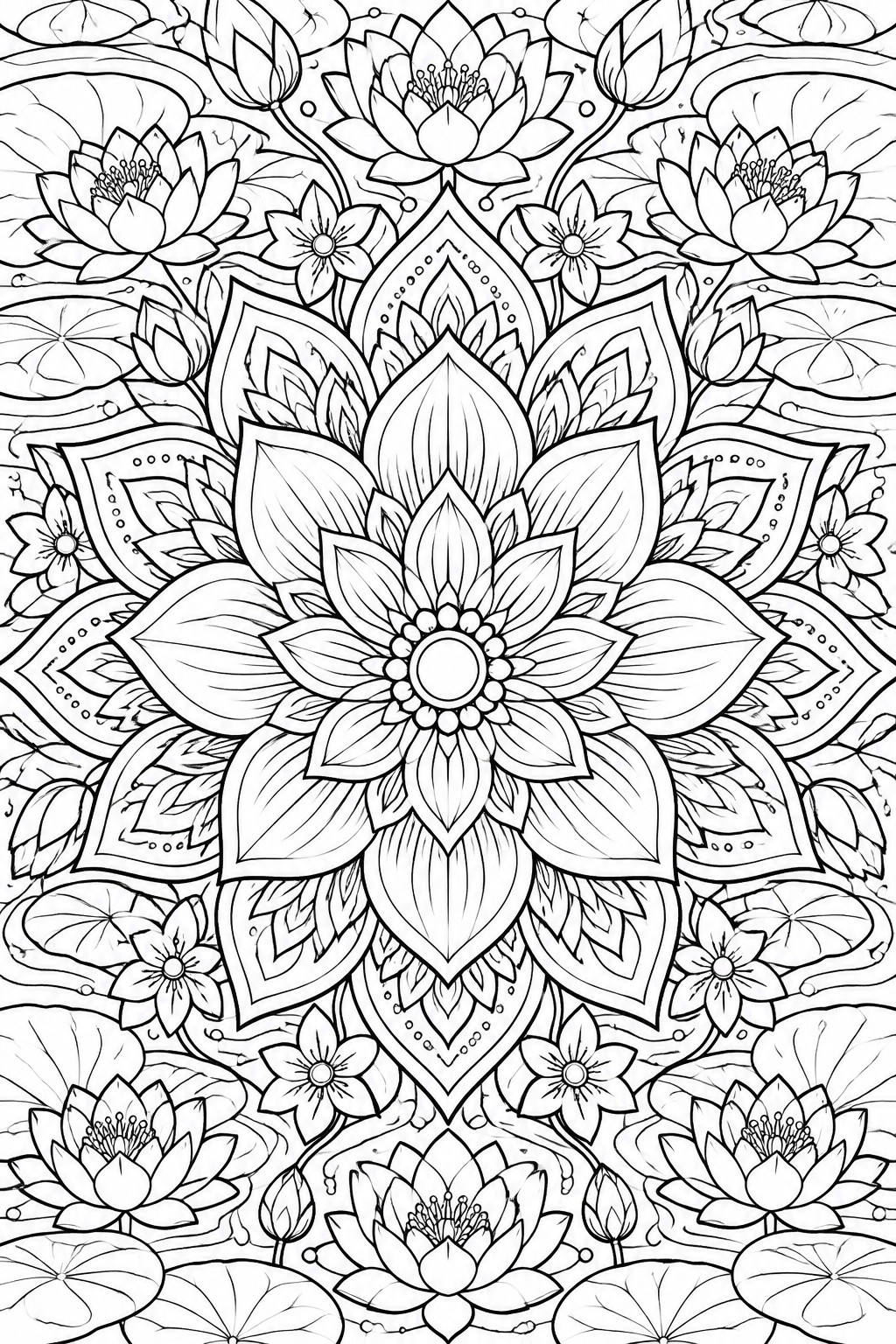
This coloring page centers on a large lotus-style bloom placed in the middle of a circular mandala. The design radiates outward with layered petals, pointed leaves, and smaller flowers that fill the space evenly around the center. The line work stays consistent and clear, creating distinct sections that range from broad petal shapes to finer leaf details.
What makes this page useful is the clear focal point that guides coloring from the middle out. The mix of larger open petals and tighter surrounding patterns gives colorers both quick coverage areas and spots that reward slower, careful work. A page like this works especially well for adults who want a structured yet varied design that stays interesting for a full session. The balanced layout also makes it easy to print and frame once colored.
Sunflower Mandala with Layered Petals and Leaf Surround
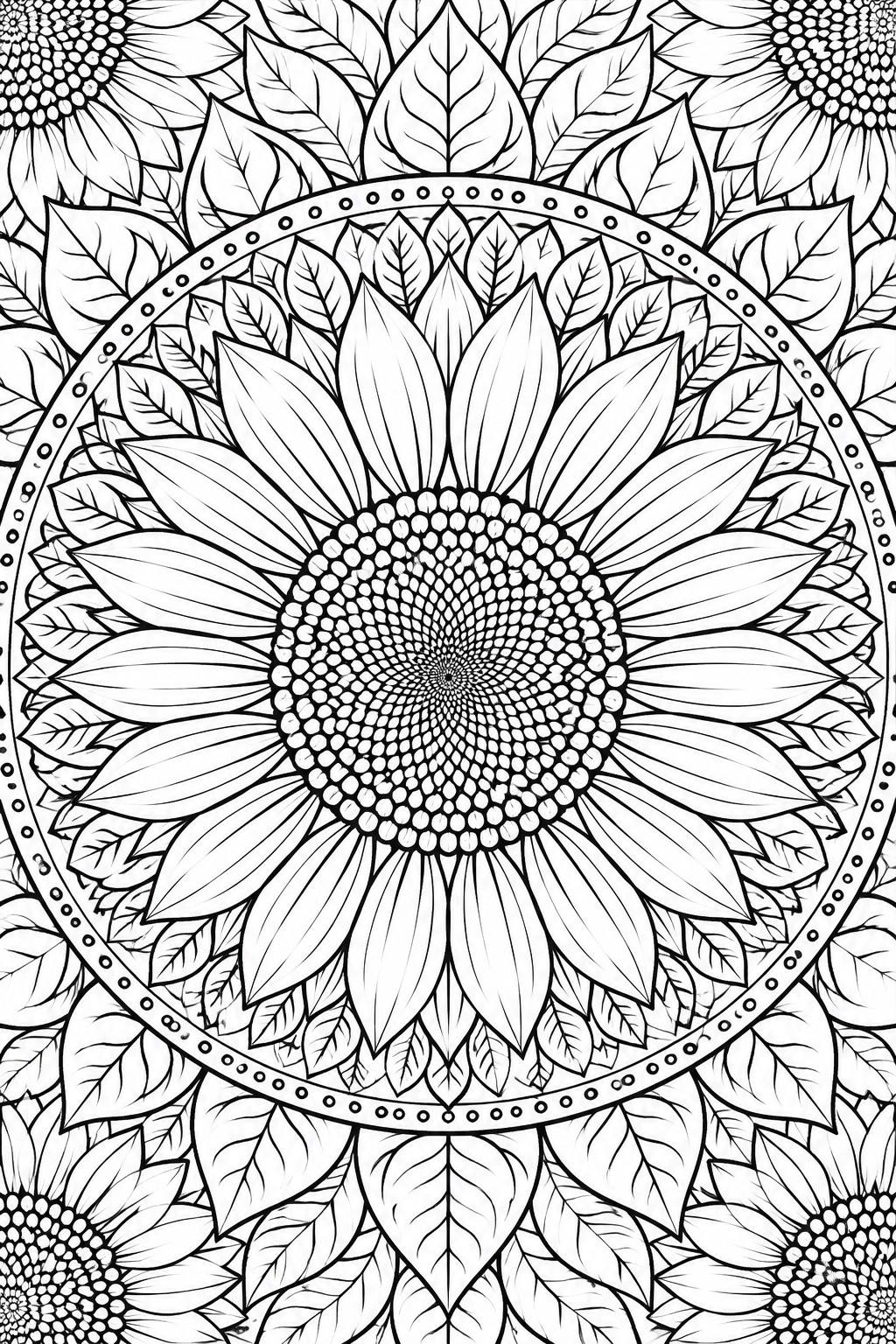
This mandala places a large sunflower at the center, using a dotted core that expands into long, pointed petals. The petals sit inside a ring of smaller leaves, with more blooms and foliage filling the outer sections in a repeating circular pattern. A dotted border keeps the whole design contained and balanced.
The layout makes this easy to color because the large petals give clear sections to fill while the dotted center offers smaller shapes for added focus. What makes this page useful is the mix of open petal spaces and tighter detail areas, which suits adults who want a mandala without extreme intricacy. The sunflower theme helps the page stand out when shared on Pinterest since the flower shape is easy to recognize even in black and white.
Layered Central Bloom Mandala with Surrounding Swirls

A floral mandala built around one oversized central flower uses stacked petal rings to draw the eye inward while smaller blooms and curling stems fill the outer ring. The design repeats circular motifs of leaves and tight flower clusters to keep the layout balanced without gaps. This gives colorers distinct petal zones for layering color and clear boundaries between the main bloom and the surrounding pattern work.
The layout makes this easy to color by working from the center petals outward in stages. A page like this works especially well for adults who want medium detail without tiny filler patterns. The open petal areas allow smooth blending while the finer leaf edges add just enough structure to keep the session focused.
Layered Daisy Mandala with Repeating Blooms
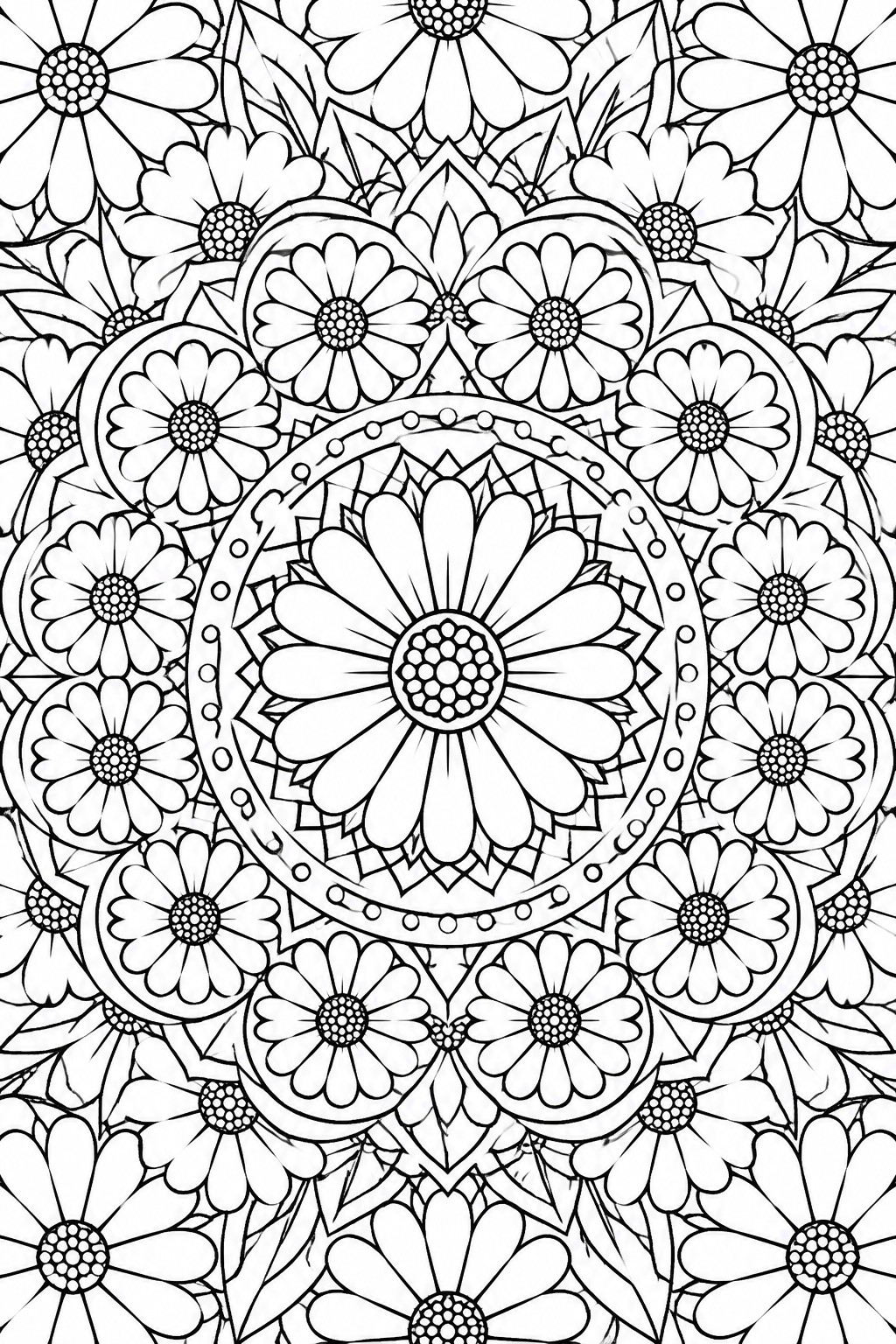
A floral mandala forms the core of this page with a large central flower surrounded by rings of smaller daisies and leaves. The design repeats the same flower shape in different sizes to build a full circular pattern that extends to the edges. This approach gives colorers clear sections to work through while maintaining a consistent flower theme across the whole page.
The layout makes this easy to color because the petals provide wide spaces next to tighter leaf areas for contrast. What makes this page useful is the repeating shapes that let colorers repeat color choices without needing to plan a full scene. A page like this works especially well for adults who want a pattern session that stays focused on blooms instead of abstract lines. The dense but organized arrangement helps the design stand out when shared as a printable option.
Layered Floral Mandala Built Around a Central Bloom
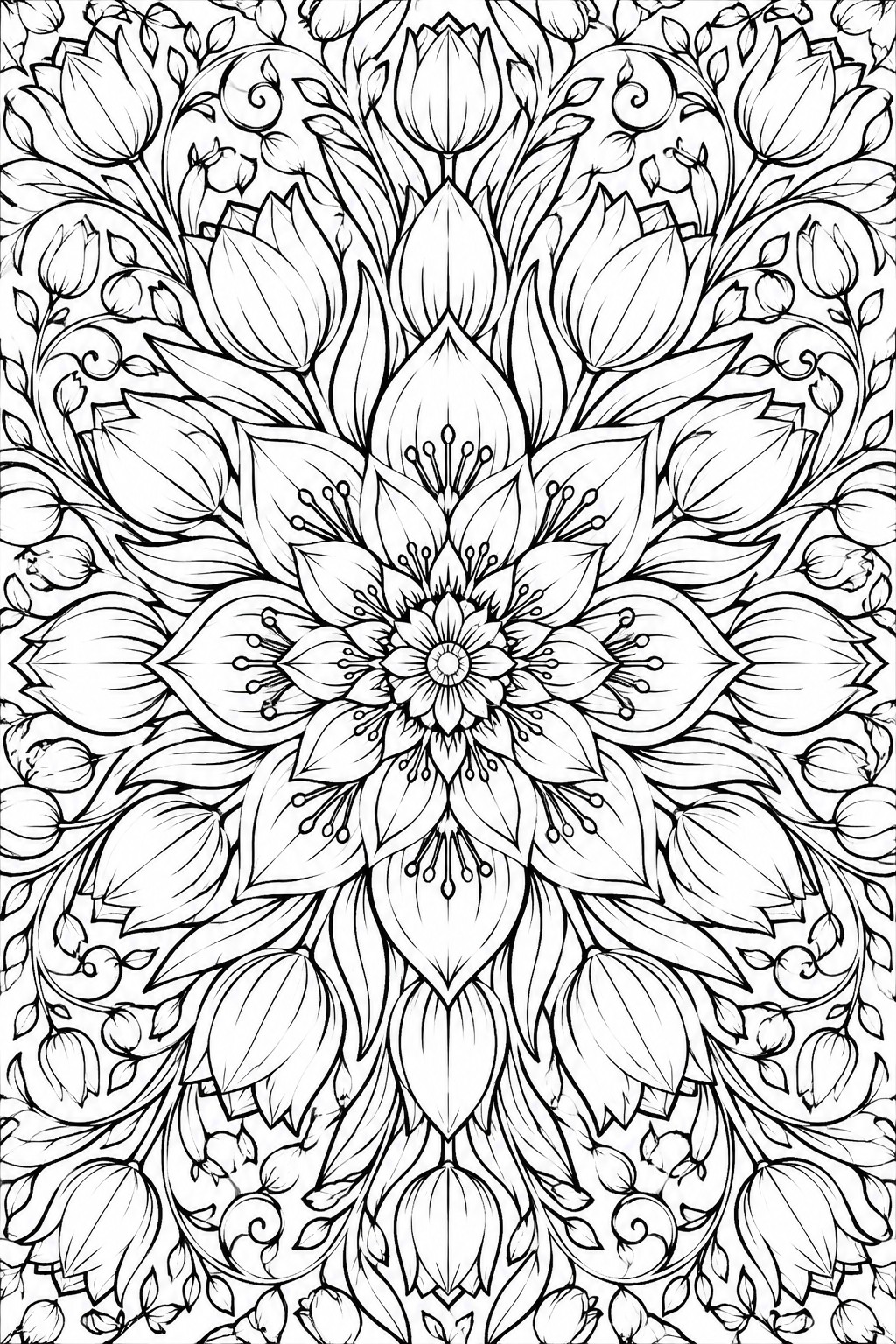
This design uses a symmetrical mandala structure where a detailed central flower sits at the core. Multiple rings of petals, leaves, and smaller blooms expand outward with connecting vines and buds filling the spaces between them. The mix of large open petals and tighter clusters of shapes gives colorers distinct zones that range from broad areas to fine line work.
The layout makes this easy to color by breaking the page into natural sections that follow the symmetry. Detailed line work supports both simple color fills and more layered shading without requiring constant decisions about the overall balance. A page like this works especially well for adults who want a focused but varied session that still feels structured. The density of elements also makes it a strong choice for Pinterest because the finished result shows clear progress and visual impact.
Hibiscus Mandala with Tropical Foliage Layers

A mandala built from large hibiscus blooms and monstera-style leaves creates a dense circular pattern centered on open flowers. The design places multiple blooms at different angles with leaves and smaller details filling the spaces between them. Clear outlines separate each petal and leaf so colorers can work section by section without overlapping lines.
The layout makes this easy to color because the large flower areas give quick coverage while the smaller leaf sections add variety. What makes this page useful is the balanced mix of bold shapes and finer stamen details that suit adults who want something more involved than basic outlines. The repeating symmetry also helps the page look finished even if only a few sections receive full color.
Cherry Blossom Mandala with Layered Blooms and Branches
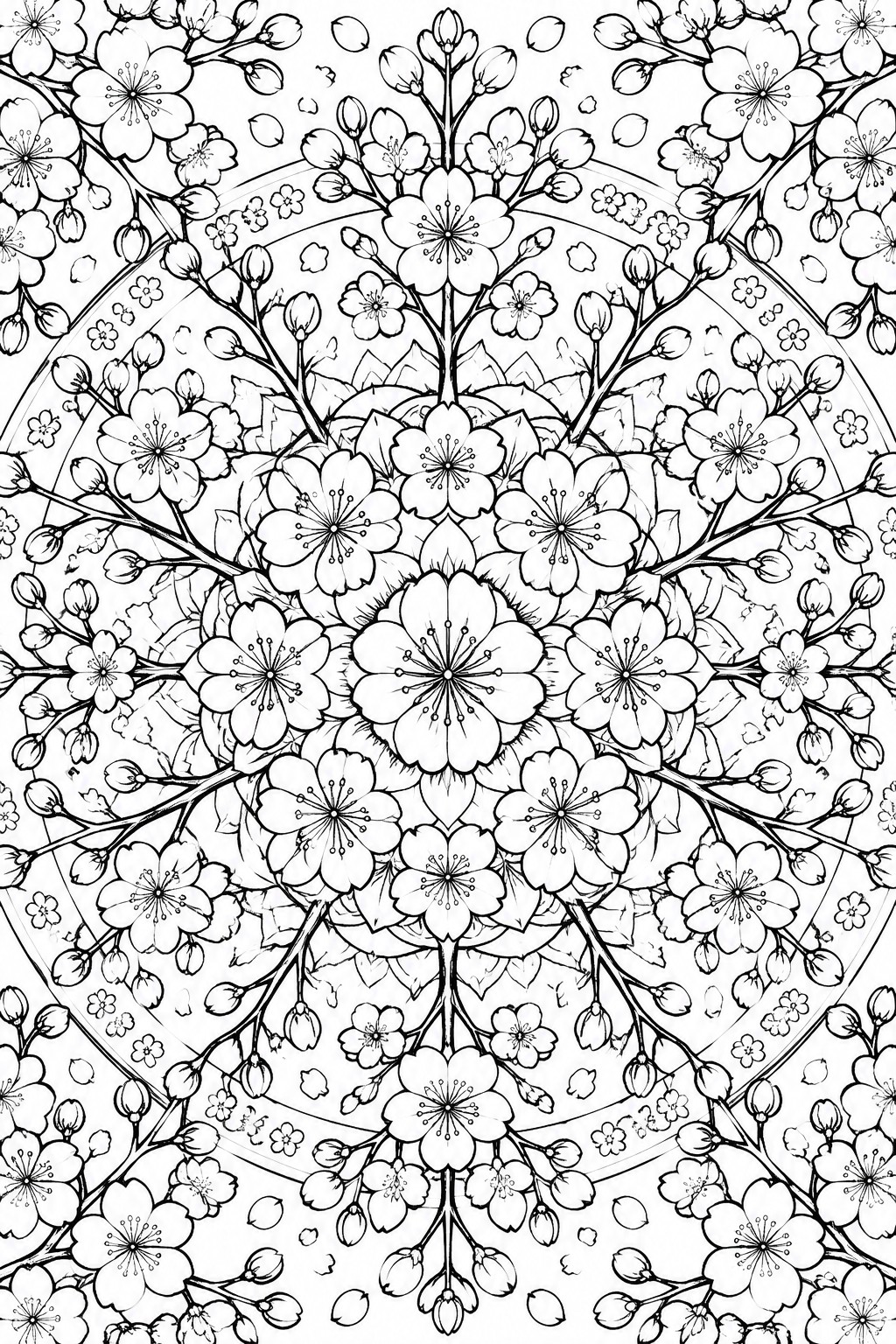
Cherry blossom mandalas arrange clusters of open flowers, buds, and thin branches into repeating circular layers that build outward from a single center bloom. The design uses different flower sizes and branch angles to fill each section evenly while keeping the overall shape balanced. This creates a clear structure that guides color placement without restricting choices.
The dense arrangement of petals and small elements supports longer coloring sessions for adults who prefer detailed work. Symmetry across the circle helps maintain consistent coloring on opposite sides, which reduces decision fatigue during the process. The recognizable flower shapes also make the finished page easy to identify when shared online.
Central Bloom Mandala with Layered Petals
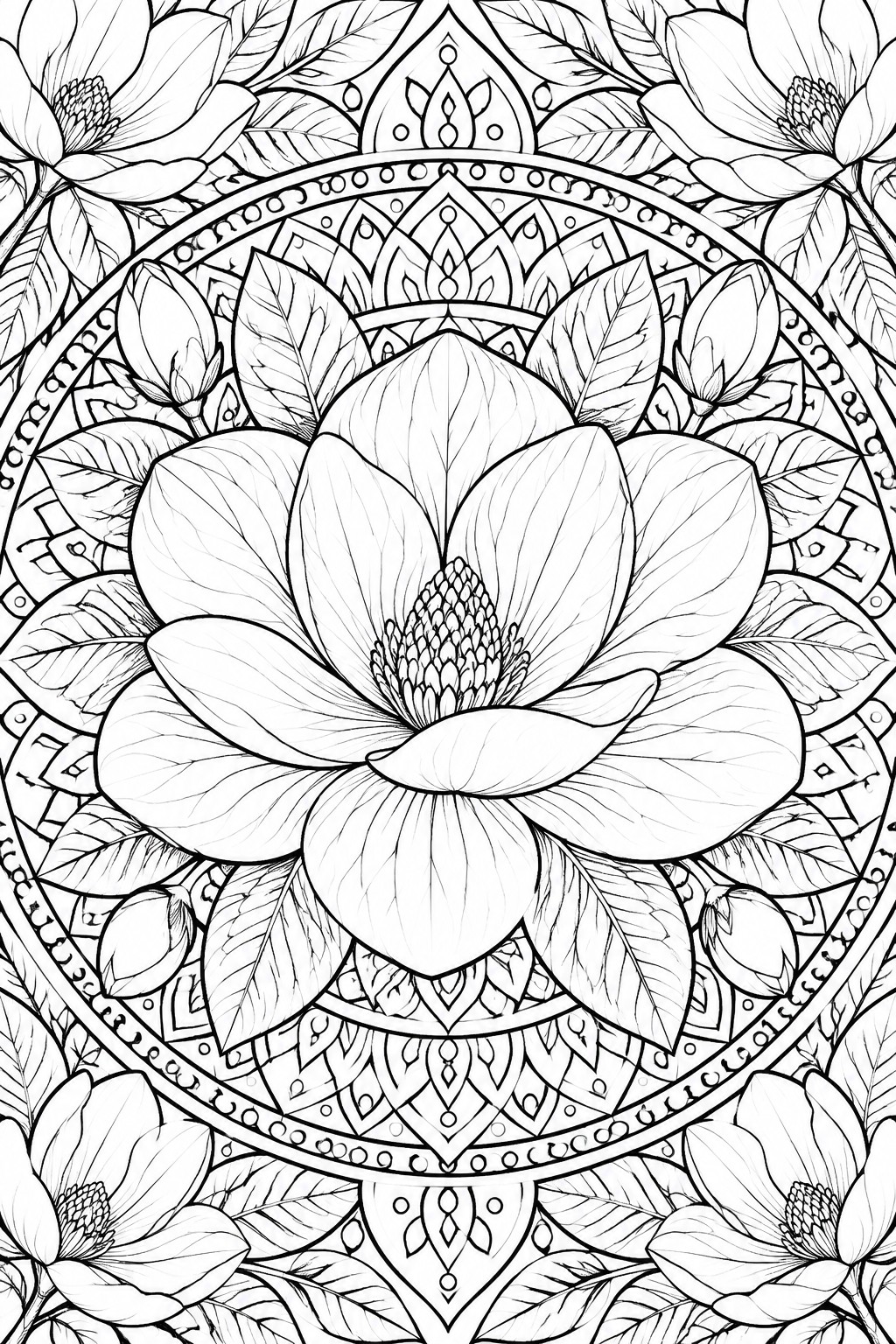
A floral mandala built around one large central flower gives colorers a strong focal point to start from. The design uses repeated rings of leaves, smaller buds, and geometric patterns to create a balanced circular layout. Thick petal outlines paired with finer inner details let colorers choose between broad strokes and small sections as they work outward.
The layout makes this easy to color because the central flower provides clear sections while the surrounding rings add variety without crowding the page. This kind of page suits adults who want a medium level of detail that still feels approachable in one sitting. The symmetrical structure helps the finished piece look even no matter which areas get more attention.
Mandala Built Around a Large Central Flower with Radiating Blooms

A mandala format places one large multi-petaled flower at the center and builds outward through successive rings of smaller flowers, buds, and leaves. The petals on the central bloom create natural divisions that continue into the surrounding layers. This structure keeps the design symmetrical while giving colorers clear zones to work within.
What makes this page useful is the way the oversized central flower serves as an obvious starting point. The surrounding rings add detail without overlapping, so sections stay distinct during coloring. A page like this works especially well for adults who want a pattern-focused session that still offers breathing room between elements. The even spacing helps the finished piece look balanced even if some areas receive lighter shading than others.
Layered Lily Mandala Built Around Central Blooms
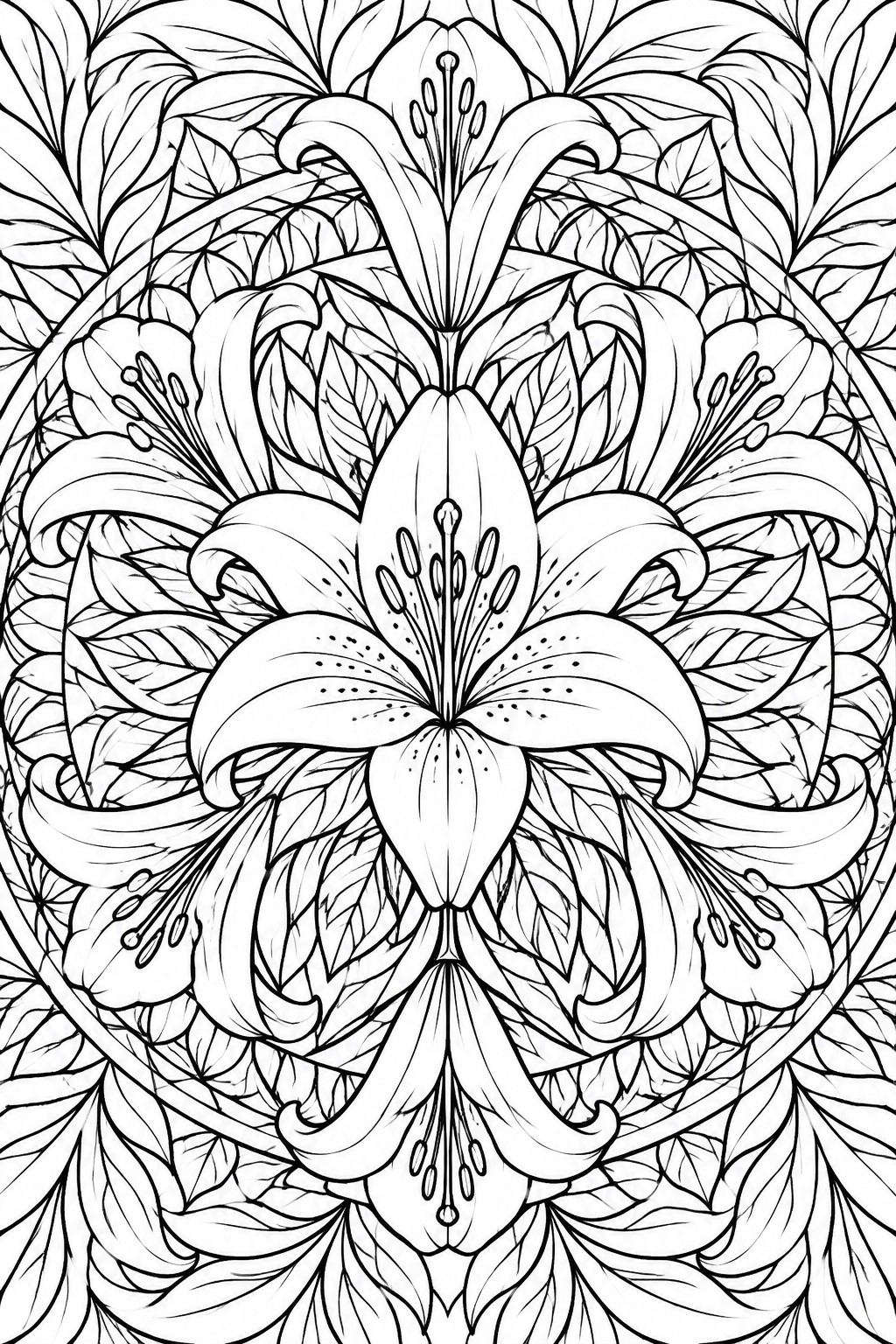
A mandala design that places several open lilies at the center and builds outward with rings of leaves and additional blooms. The page uses a strict circular frame and repeating radial symmetry so every petal and leaf has a matching counterpart across the design. This creates clear sections for color planning while still packing enough overlapping shapes to keep the page engaging for extended sessions.
The layout makes this easy to color because the symmetry lets colorers repeat the same palette choices in mirrored areas without constant decision making. A page like this works especially well for adults who want medium detail that stays focused on one subject rather than scattered elements. The larger central petals give room for smooth base fills while the tighter leaf clusters around the edges support finer line work and shading.
Layered Central Bloom Mandala with Repeating Petals
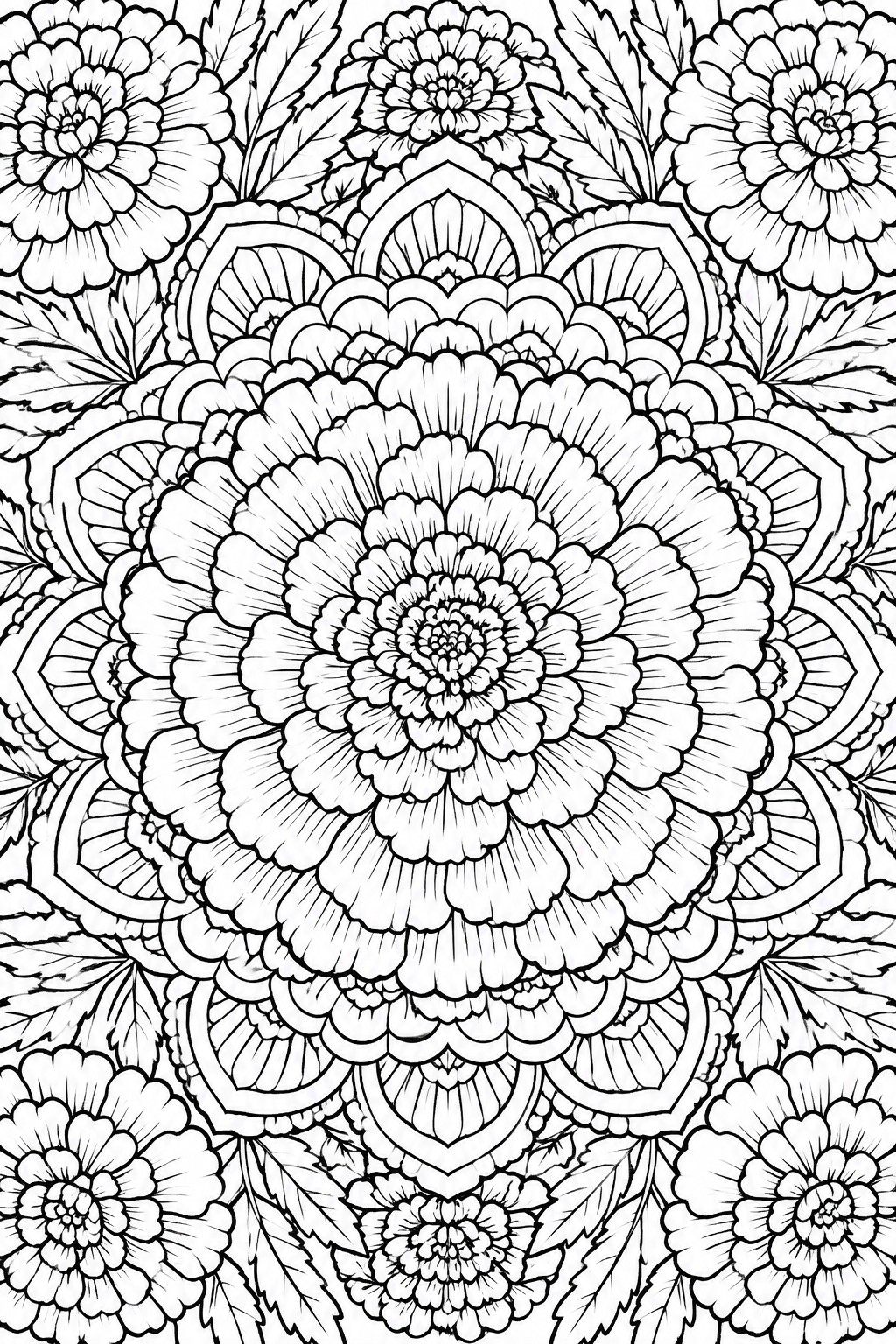
A floral mandala idea like this builds around one oversized central flower made of many concentric petal rings. The design extends outward with smaller matching blooms and leaf shapes that fill the remaining space in a circular layout. This approach gives colorers clear rings and sections to follow while still leaving room for personal color choices across the whole page.
What makes this page useful is the repeated petal patterns that create natural stopping points during a coloring session. The detail level works well for adults who want something structured but not too open or too tiny. The balanced spacing between the main bloom and outer flowers keeps the page from feeling crowded while still offering plenty of lines to work through.
Floral Mandala with Oversized Central Bloom and Outer Rings
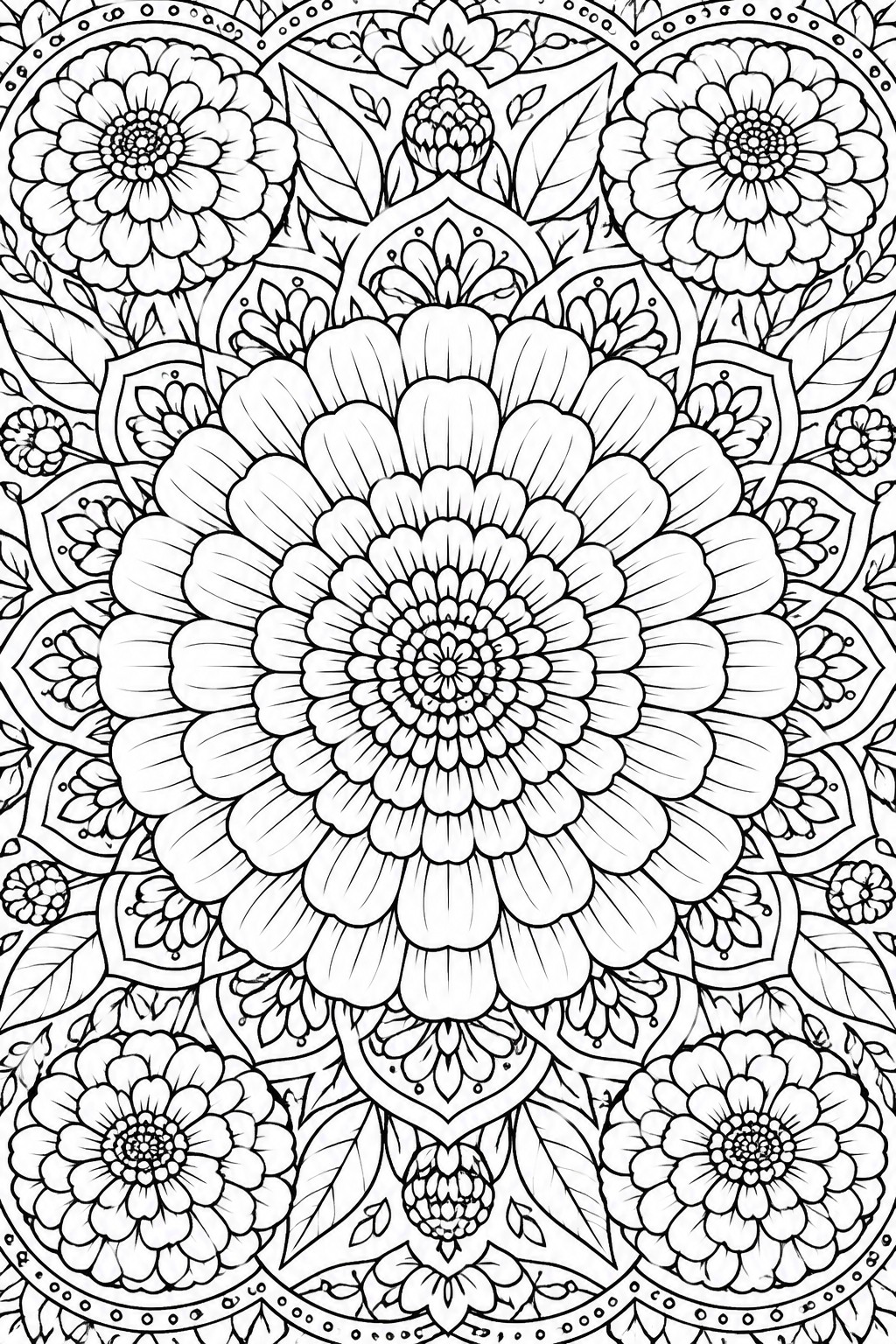
A large central flower with many layered petals forms the core of this mandala design. Smaller flowers and leaf clusters fill the surrounding rings in a repeating circular pattern. The varying petal sizes create clear sections that move from broad areas in the middle to finer details near the edges.
The layout makes this easy to color in stages without losing track of the overall pattern. A page like this works especially well for adults who want a mix of open spaces for quick fills and tighter areas for shading practice. The balanced symmetry helps the design stay manageable even when adding multiple color layers across the rings.
Mandala with Layered Petals Around a Central Compass Star
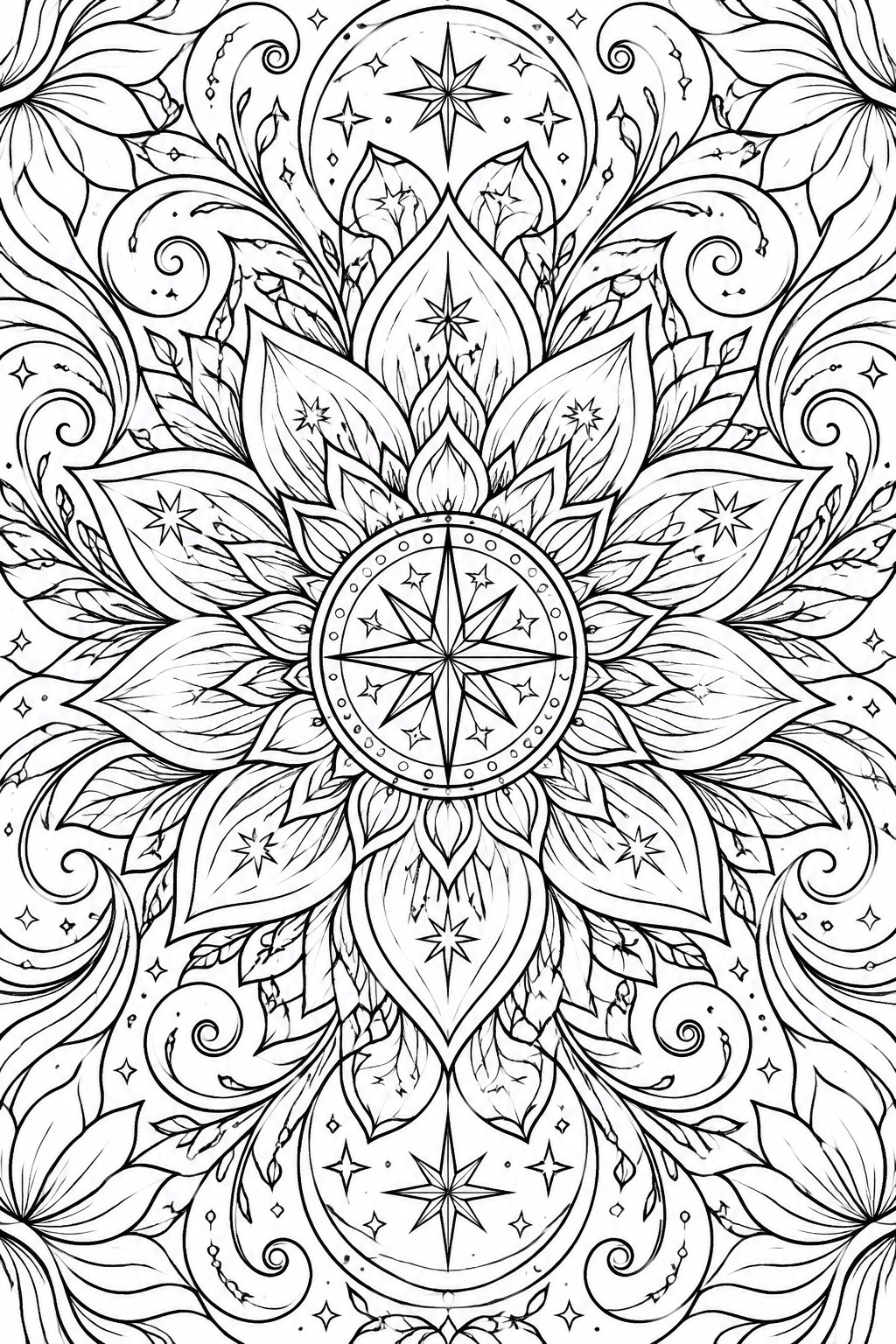
This design places a geometric compass star at the very center of a mandala built from overlapping petals and leaves. Swirling vines and smaller star shapes fill the spaces between the main floral layers while crescent moons sit at the top and bottom. The radial layout keeps every section distinct so colorers can work from the middle outward without losing the pattern.
The clear separation between petals and background swirls makes this page easy to color in stages. Its mix of bold central shapes and finer outer details suits adults who want something structured but not overly tiny. A page like this prints well for repeated use because the lines stay sharp and the symmetry helps color choices look intentional.
Pansy Mandala Built from Concentric Flower Rings
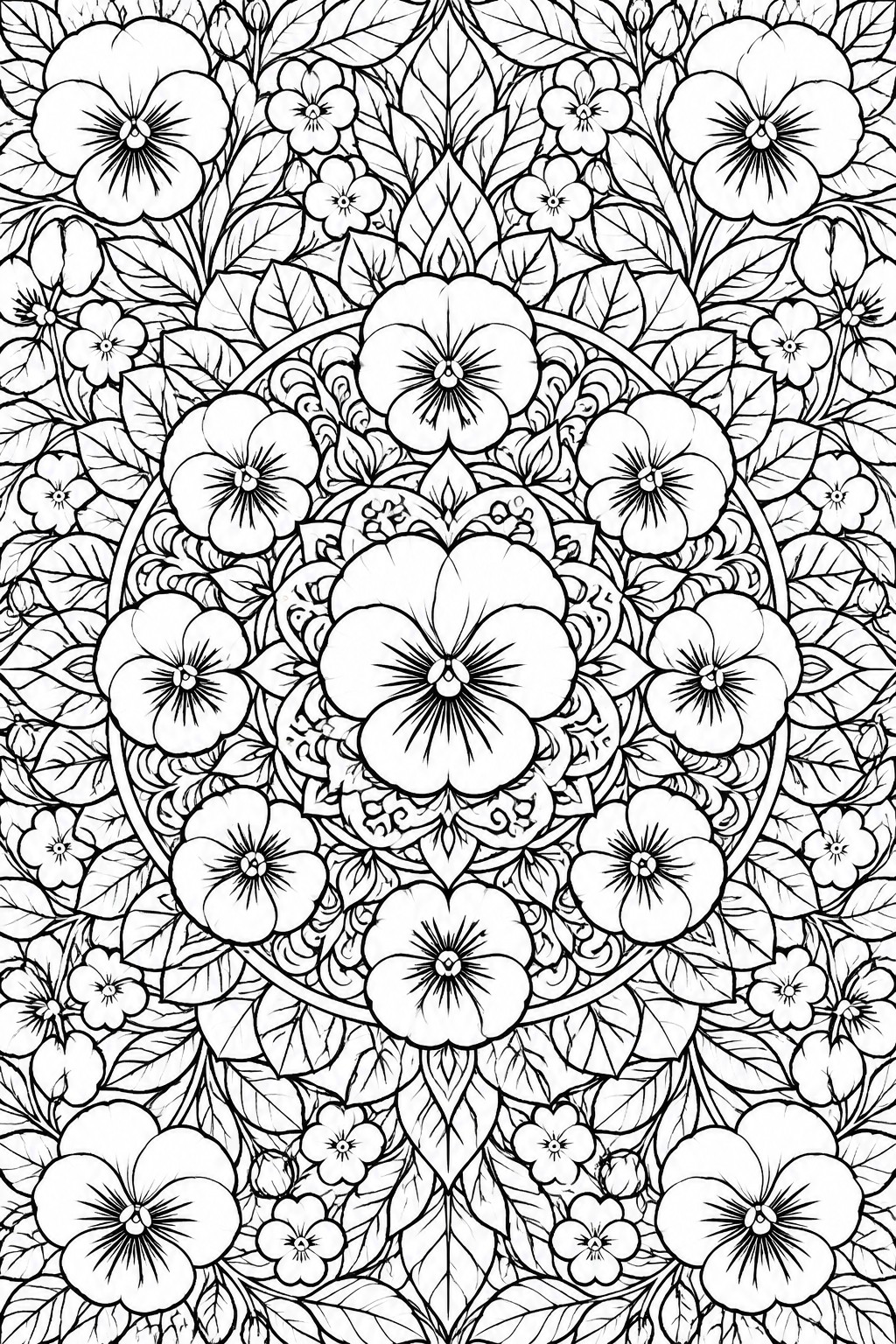
A floral mandala centered on pansy blooms uses a circular layout with one large flower in the middle and smaller blooms arranged in rings around it. The design fills the space with overlapping petals and leaves that create clear sections for coloring. Fine lines separate each element so color choices stay distinct even in tight areas.
The layout makes this easy to color because the symmetry guides the eye and reduces the chance of uneven results. Medium detail suits adults who want a focused session without extreme intricacy. A page like this stands out on Pinterest for its balanced mix of large petals and background foliage that prints cleanly.
Orchid Mandala with Layered Petals
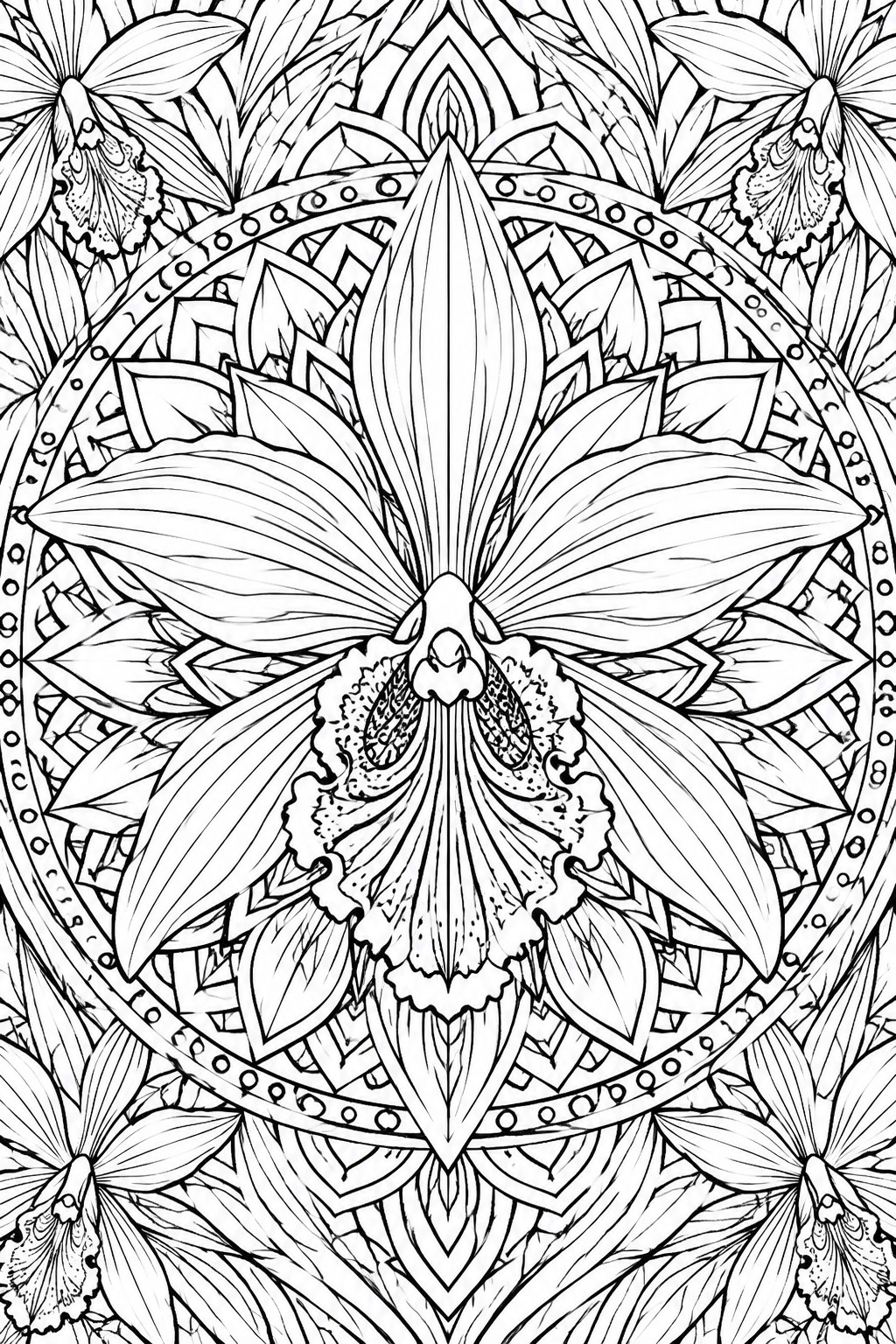
A mandala design built around one large central orchid gives colorers a clear focal point while still filling the page with surrounding rings of smaller flowers and geometric shapes. The layout uses radiating petals from the middle bloom that connect into repeating border patterns, creating a balanced structure with both open petal areas and tighter detail zones near the center. This mix lets colorers work on broad sections first before moving into the finer linework around the flower’s throat and outer frame.
The layout makes this easy to color because the central flower stands out as a natural starting place, while the circular bands give natural breaks between pattern types. A page like this works especially well for adults who want a medium-length session with both bold shapes and smaller repeating elements. The even spacing around the edges helps the finished piece look complete even if some outer areas stay simpler.
Layered Iris Bloom in Mandala Style
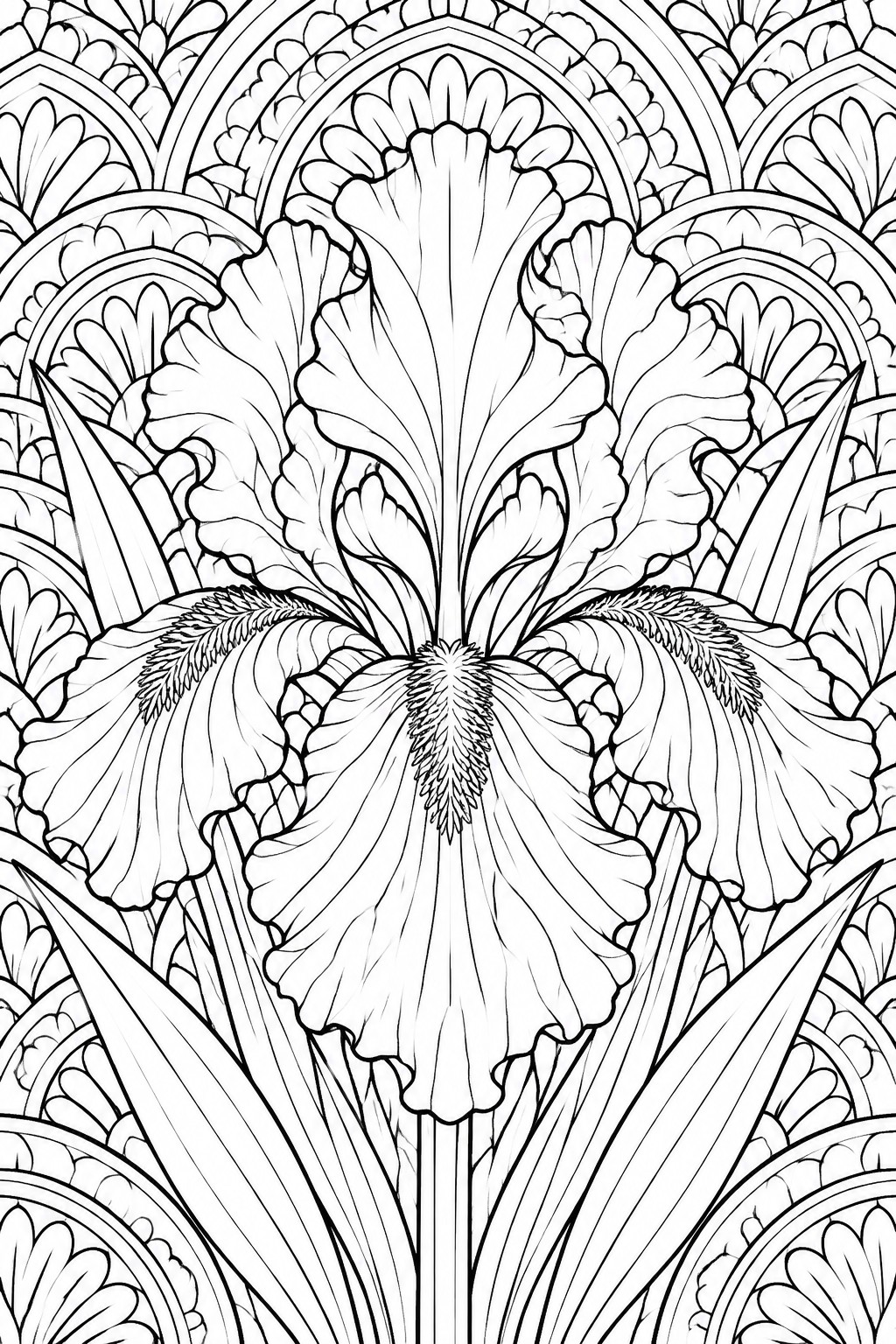
A central iris flower forms the core of this mandala design with broad petals that extend outward in symmetrical layers. Fine lines along the petal edges and textured stamen details give colorers distinct sections to work with. The arched background patterns add structure without crowding the main bloom.
What makes this page useful is the balance between larger petal surfaces and tighter line work near the center. This setup suits adults who prefer steady progress over quick fills. The clear separation between flower and background elements keeps the layout readable even when using multiple colors.
Layered Floral Mandala with Concentric Bloom Rings
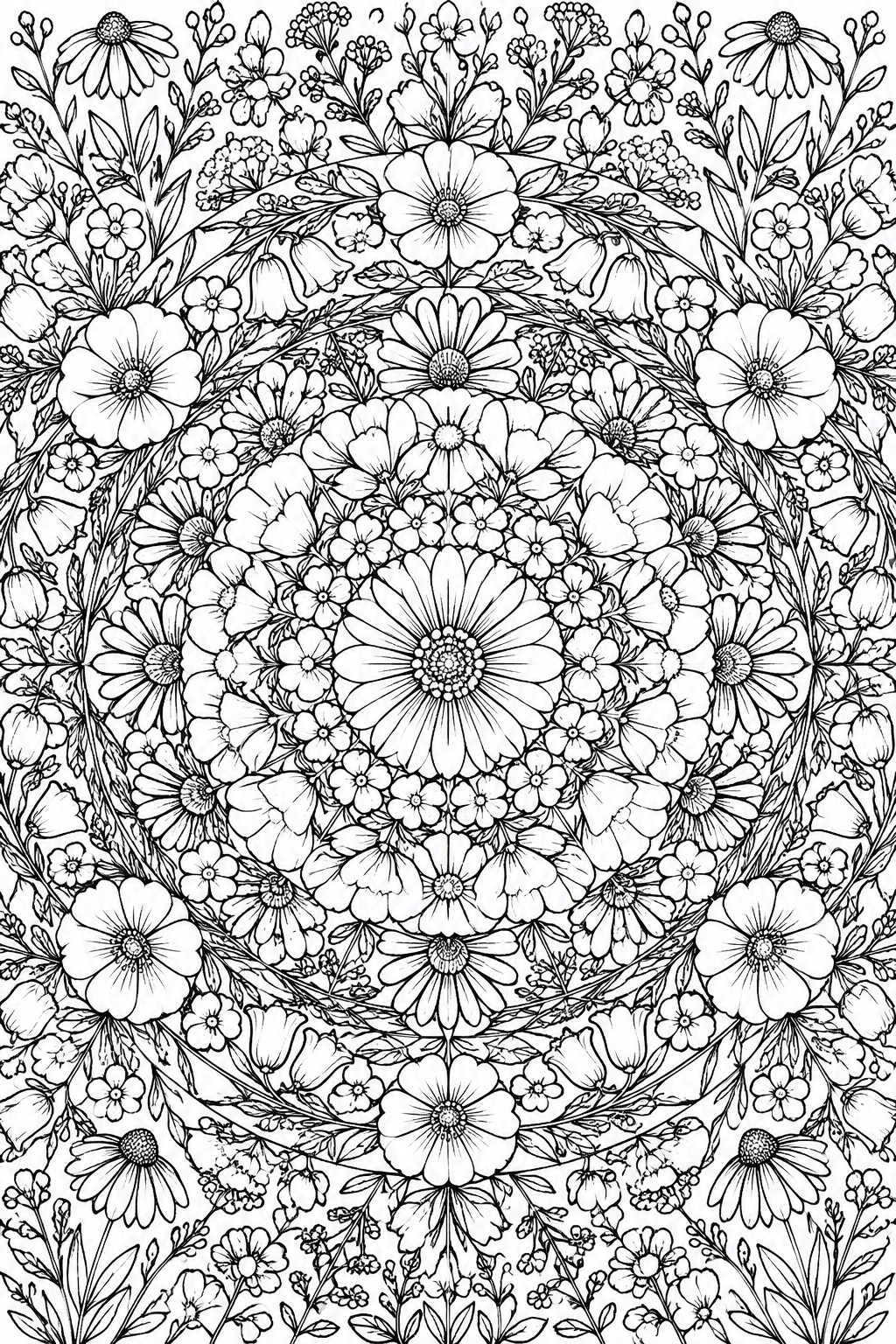
A floral mandala like this builds its design from multiple rings of different flower types placed around a central bloom. Larger daisies and open petals form the main bands while smaller blossoms and leaves fill the spaces between them. The radial layout creates clear sections that still connect into one balanced pattern.
The layout makes this easy to color by moving outward ring by ring or focusing on one flower type at a time. A page like this works especially well for adults who want medium detail without tiny isolated shapes. The mix of larger open areas and finer line work gives options for both quick sessions and longer focused coloring.
Layered Floral Mandala Built from Petal Rings
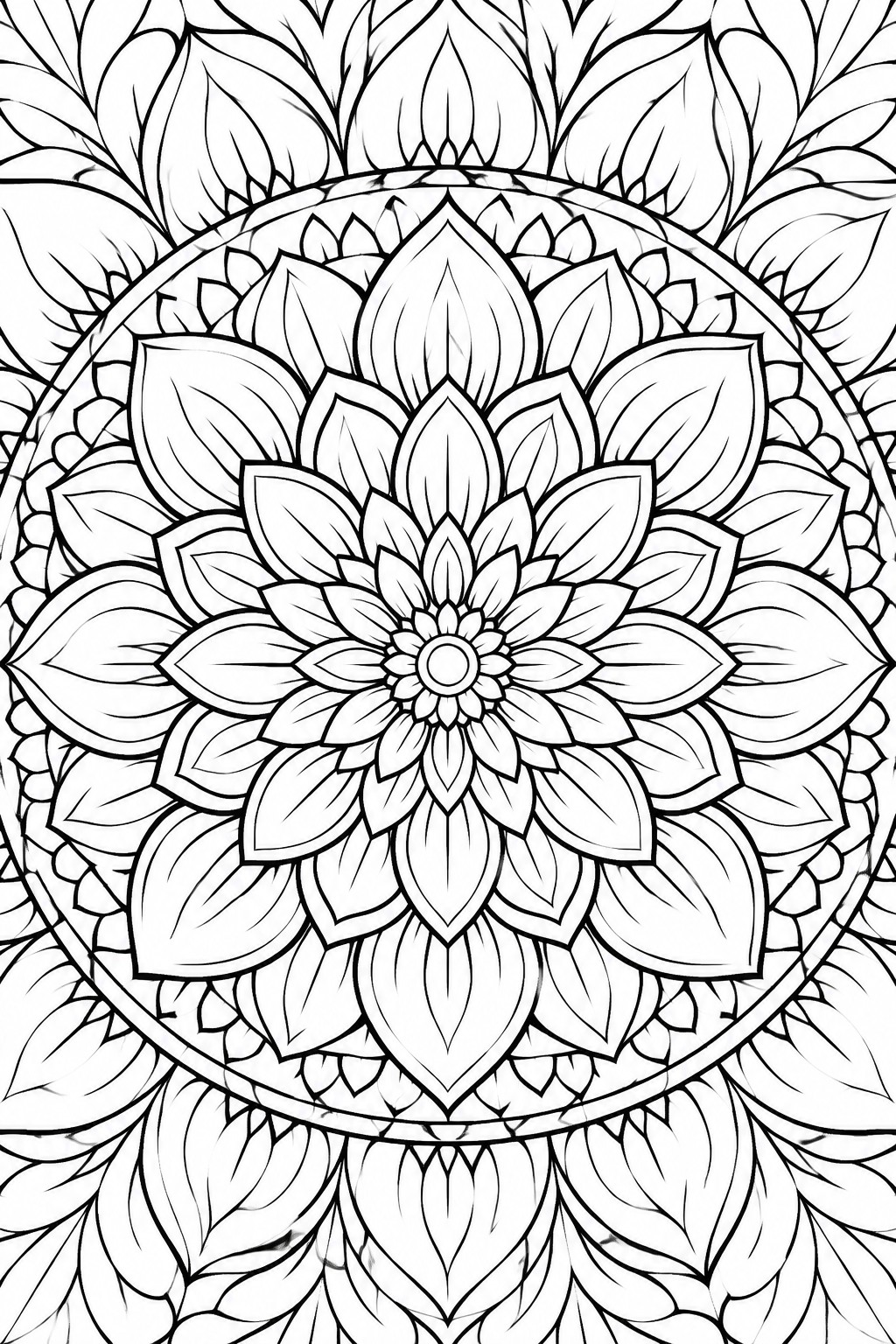
A floral mandala like this centers on a small bloom in the middle and expands through several rings of pointed petals and leaves. The style relies on clean outlines and balanced symmetry that repeat the same shapes around the circle. This setup gives colorers distinct sections to work on one ring at a time while keeping the whole design connected.
The layout makes this easy to color because the rings stay separate and the petal shapes stay large enough for quick fills. A page like this works especially well for adults who want steady detail without tiny spaces that take hours. The clear center focus also helps the finished page look complete even if only a few rings get color.
Central Bloom Mandala with Layered Petals and Foliage

A floral mandala idea that builds outward from one large central flower, using rings of leaves and smaller blooms to fill the circular space. The design keeps the main flower as the focal point while smaller flowers and leaves create repeating sections around it. Fine line work defines each petal and leaf edge, giving clear boundaries that help colorers stay organized as they move through the layers.
The layout makes this easy to color because the central flower provides a natural starting point before moving into the surrounding rings. What makes this page useful is the mix of larger petal shapes with tighter leaf clusters, which lets colorers switch between broad strokes and smaller details without losing the overall pattern. For adults who like medium detail, this kind of page offers enough structure to feel guided while still leaving room for color choices. The symmetrical arrangement also helps the finished page look balanced even if some sections receive different color treatments.
Layered Floral Mandala with Concentric Petal Rings
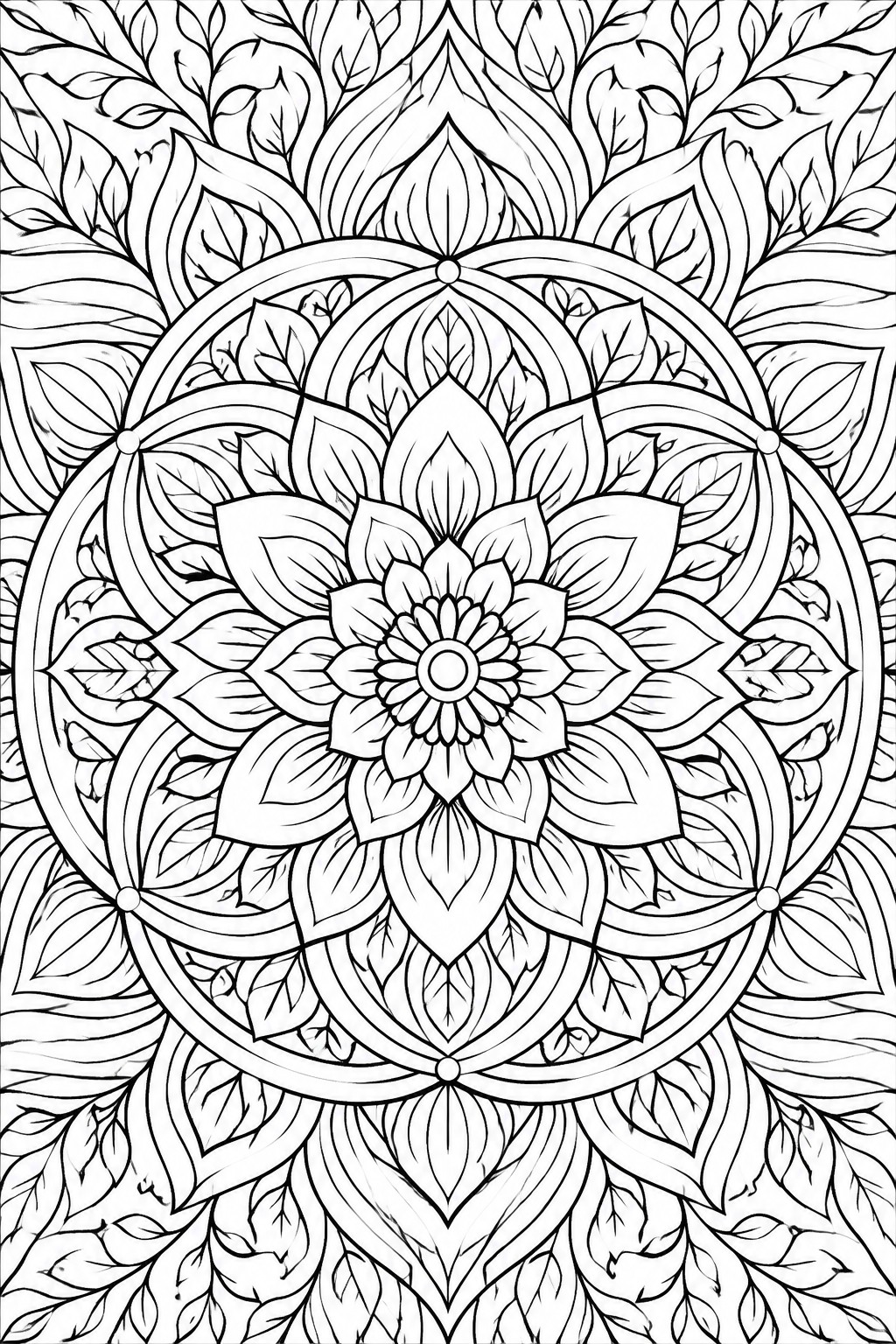
A mandala built around a central multi-petaled flower creates a strong focal point that draws the eye inward. The design uses repeating circular layers filled with both broad petals and clusters of leaves that radiate outward. This structure gives colorers distinct rings to complete one section at a time while the symmetry keeps the overall pattern balanced.
What makes this page useful is the mix of larger petal areas and tighter leaf details that let you switch between broad color blocks and smaller accents. The layout makes this easy to color because the rings naturally break the page into separate zones without needing extra planning. A page like this works especially well for adults who want a detailed mandala that still feels approachable rather than overwhelming.
Frequently Asked Questions
Where can I download or print the 21 floral mandala coloring pages? Search online for the exact title on reputable sites that offer free or affordable PDF downloads of printable coloring books. Once you have the files print them on letter size paper using a standard home printer. Choose a site with clear licensing terms so you can enjoy the pages without restrictions.
What coloring tools work best for these petal and bloom centered designs? Colored pencils give excellent control for shading the layered petals and allow easy blending of soft tones. Fine tip markers or gel pens add bright pops of color to the central blooms without smearing. Begin with light pressure and build up layers to create depth in the floral patterns.
Are the mandala pages suitable for beginners or children? Many of these designs feature a mix of simple petal outlines and more detailed centers so beginners and older kids can start with the easier sections. Adults who enjoy intricate work will find plenty of challenge in the bloom details. Adjust your approach by focusing on one ring of petals at a time to keep the process enjoyable.
How can I display or preserve my finished colored mandalas? After coloring scan the pages or take clear photos to create digital copies for sharing. For physical display use a frame with a mat to protect the paper and hang the artwork in a well lit area. Laminate smaller prints to turn them into bookmarks or greeting cards for a creative reuse option.
What paper weight prevents issues when coloring these pages? Print on at least 24 pound paper or cardstock to avoid ink bleed from markers while still allowing smooth pencil strokes. Heavier stock also holds up better if you plan to erase or add water based highlights to the floral centers. Test a single page first to confirm your supplies perform well on the chosen paper.
