

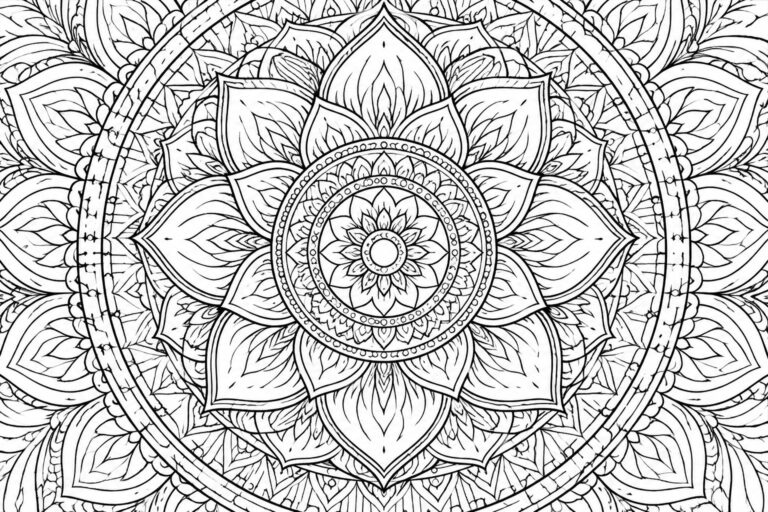
I often look for mandala designs when I want a coloring project that has some structure but still leaves room for my own choices with color.
These pages mix floral shapes with geometric lines in a way that keeps everything balanced and not too busy in one spot.
I put together 23 of them after trying out different combinations until the symmetry felt right.
The level of detail works for an afternoon session without taking forever to finish.
They stay focused on that mix of flowers and repeating patterns throughout.
Layered Floral Mandala with Concentric Rings and Dot Patterns
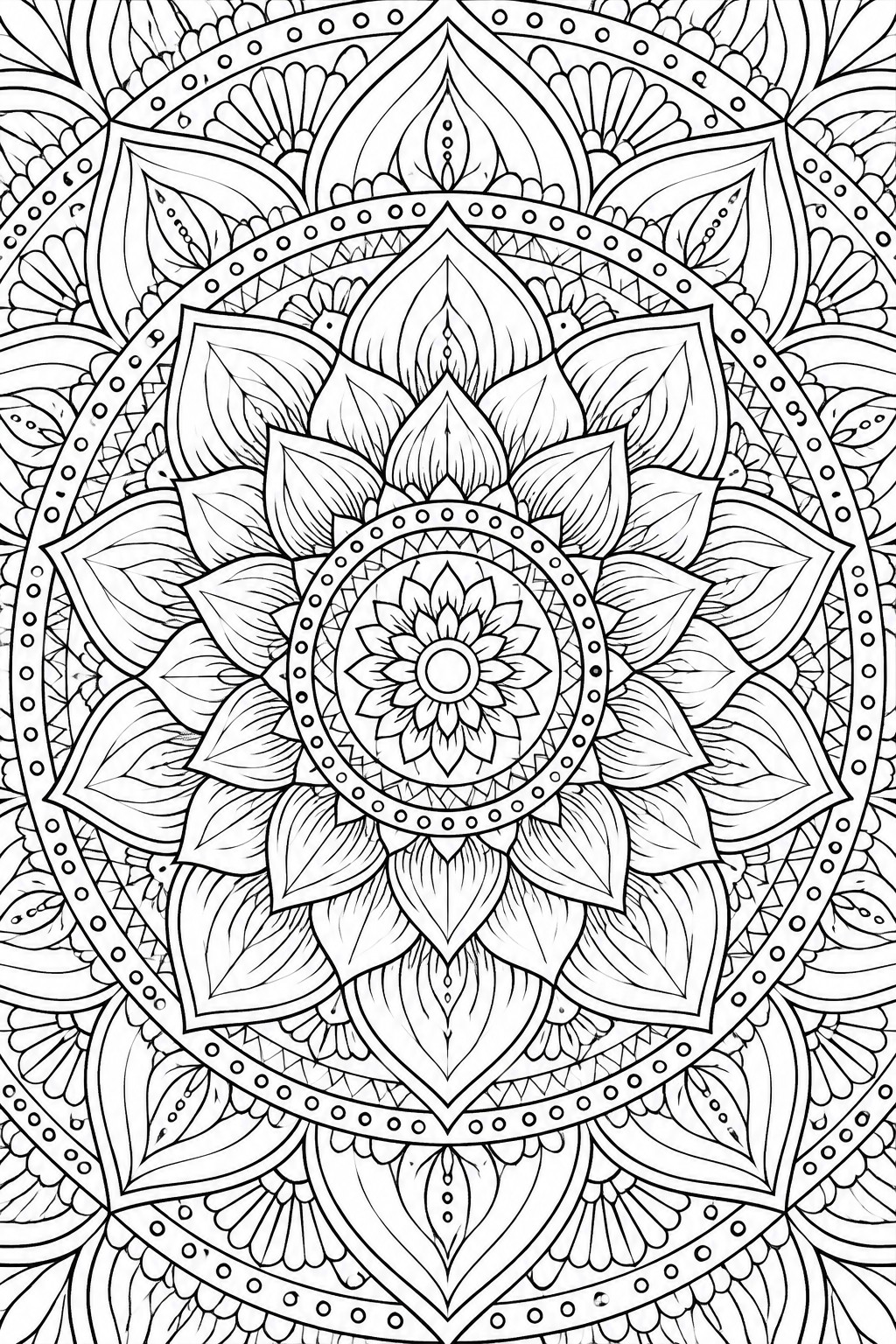
This mandala builds from a small central flower outward through multiple rings of pointed petals and broad leaves. Each ring sits inside a circular band marked by evenly spaced dots that create clear boundaries between sections. The repeating radial layout gives colorers distinct zones to fill while keeping the overall design balanced and structured.
The detail level makes this a smart pick for adults who prefer pattern-focused coloring over quick pages. Clear circular divisions help keep the work organized even when adding multiple colors or gradients. A page like this stands out for its even symmetry, which makes it easy to match shades across opposite sections without constant reference.
Rose Mandala with Concentric Floral Rings
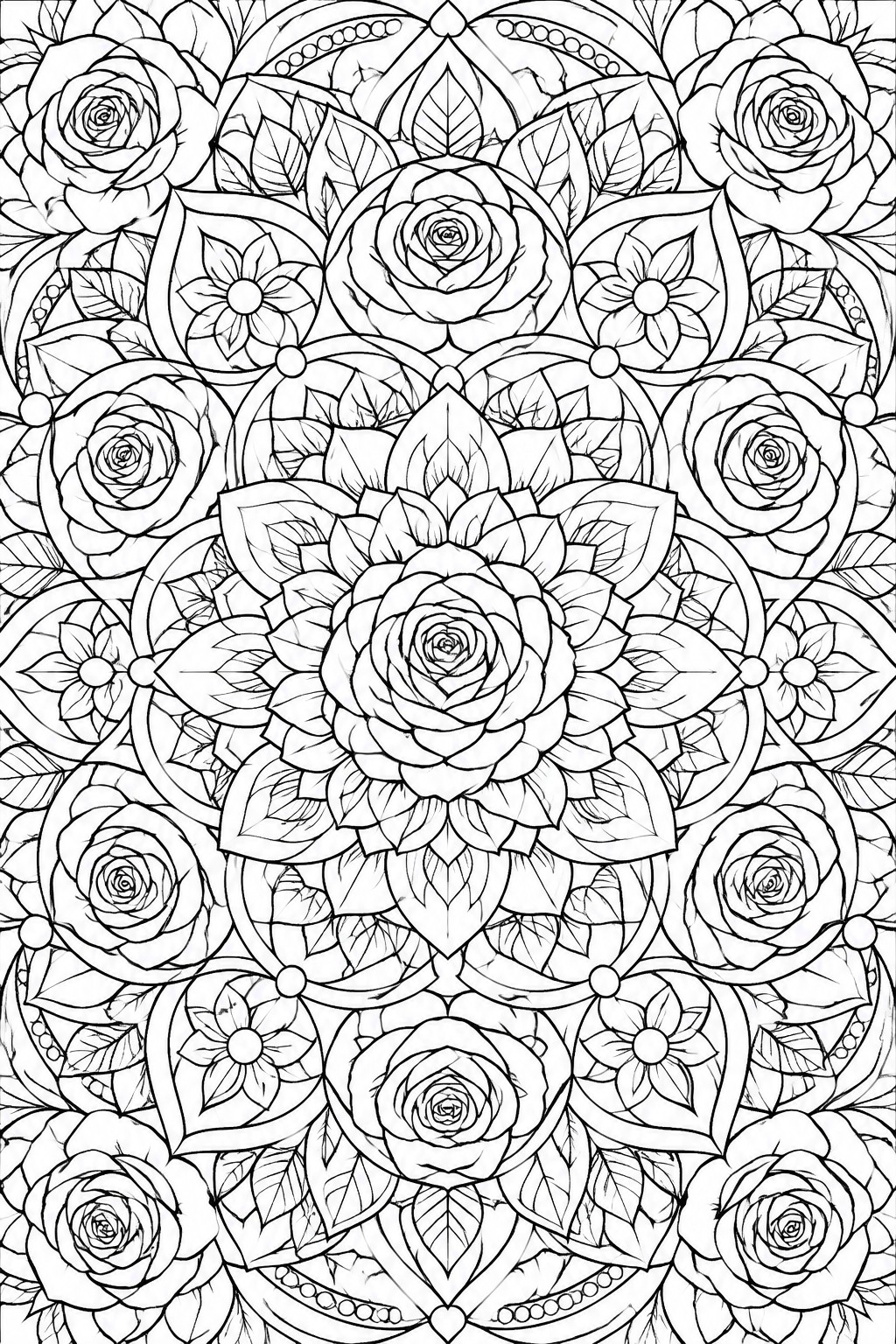
A mandala built around a large central rose that expands into multiple rings of additional roses, leaves, and smaller flowers. Geometric curves and dotted borders separate the layers while keeping the whole design balanced and circular. The repeating flower shapes give colorers distinct areas to fill without needing to plan the overall layout.
The layout makes this easy to color by breaking the page into rings that can be tackled one section at a time. What makes this page useful is the combination of bold rose outlines and finer leaf details that work for both simple color blocks and added shading. A page like this works especially well for adults who want a structured yet detailed project that stays interesting from center to edge.
Sunflower Mandala with Honeycomb Centers
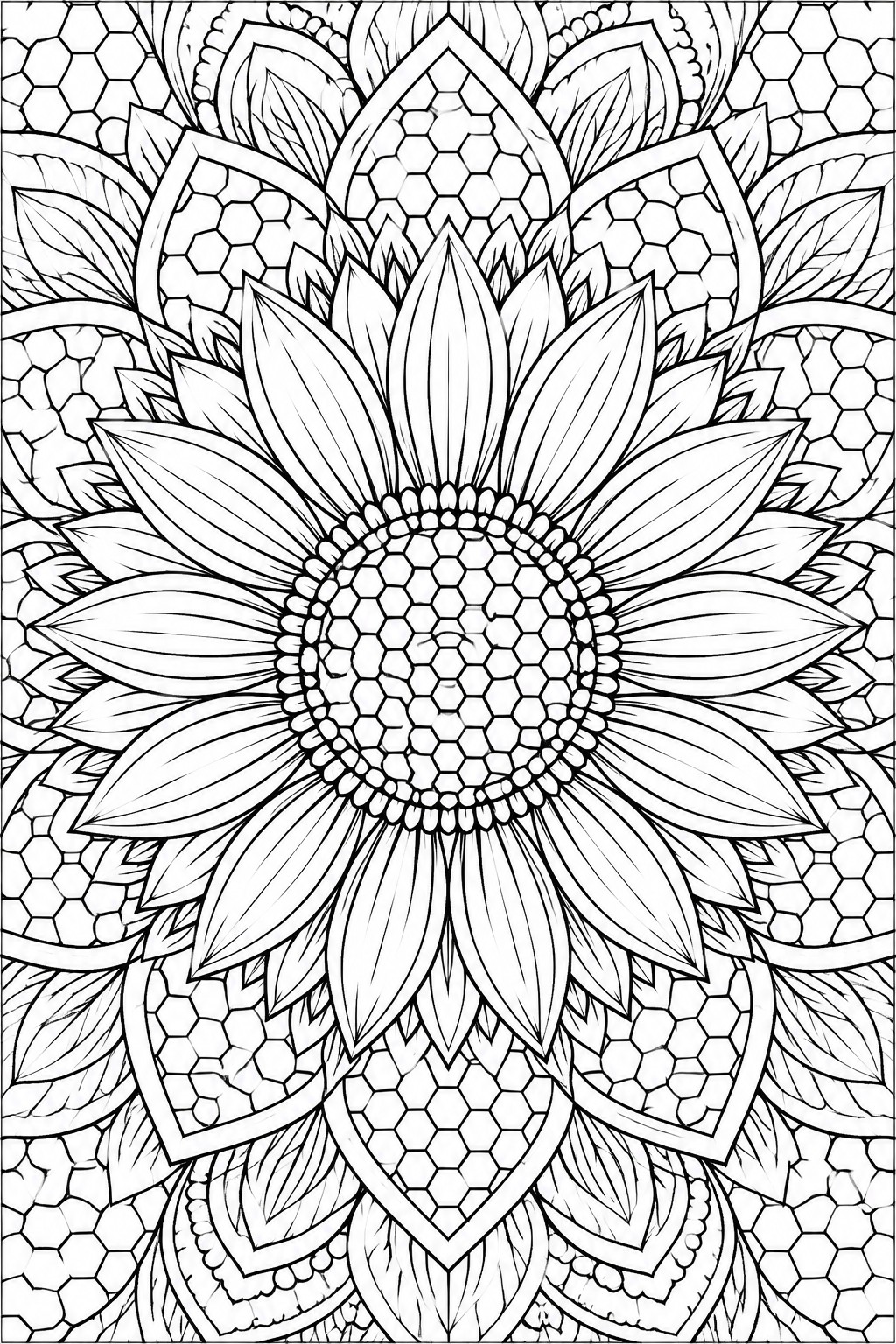
A mandala built around a large central sunflower combines broad pointed petals with repeating hexagon patterns filling the core and outer background zones. The design layers petal rings around the flower while adding leaf shapes and geometric sections that extend the symmetry outward. This creates clear zones for different coloring approaches within one balanced circular layout.
The layout makes this easy to color because the open petals give room for simple shading while the hexagons supply smaller structured areas. A page like this works especially well for adults who want a mix of freeform and pattern work without switching designs. The consistent radial lines help keep colors aligned across the full page.
Layered Peony Mandala with Radial Symmetry
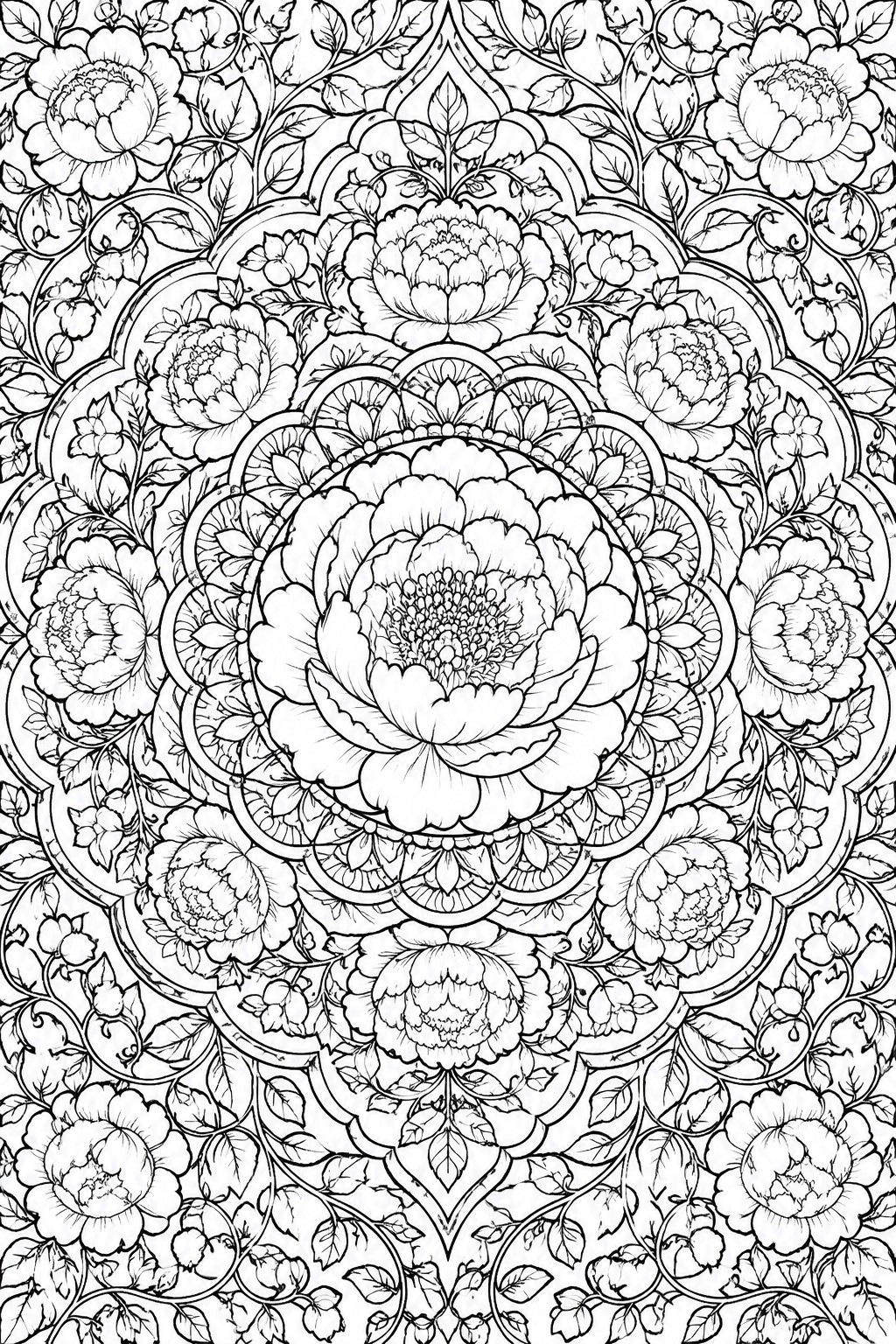
This coloring page centers on a floral mandala where large peony blooms form repeating rings around a detailed central flower. The design combines thick petal outlines with finer leaf and vine patterns to create distinct sections that radiate outward. Geometric circles and arches hold the floral elements in place while keeping the overall layout balanced and structured.
The layout makes this easy to color in stages because the rings separate naturally into different areas. A page like this works especially well for adults who enjoy intricate designs without feeling overwhelmed by tiny spaces. The mix of open petals and tighter vine work gives colorers a chance to vary their approach across one sheet. This kind of mandala stands out for printable collections because the symmetry supports consistent color repeats.
Daisy Mandala with Hexagonal and Star Geometry
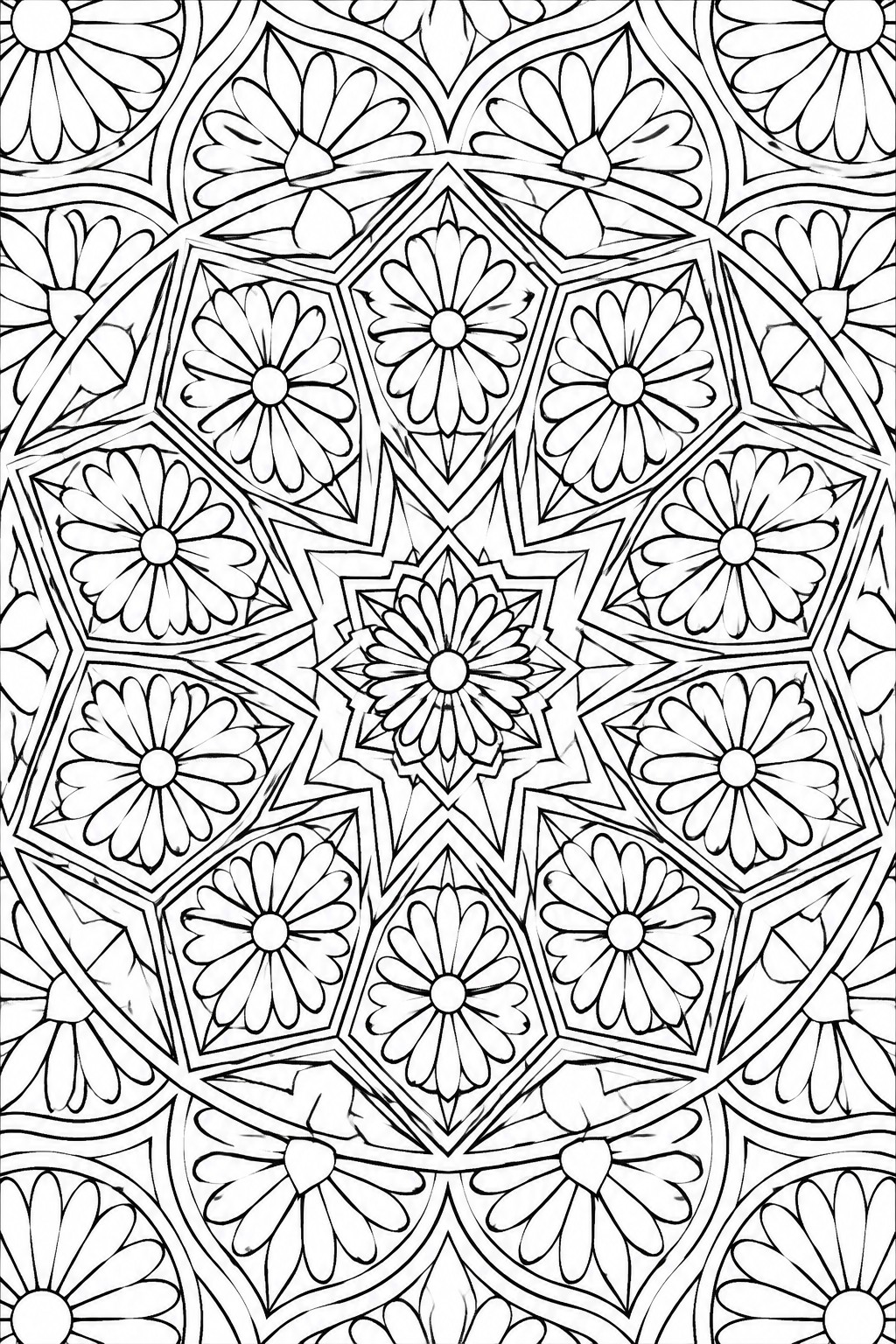
This mandala centers on daisy style flowers placed inside repeating hexagonal frames that build outward from a central star. The design uses consistent radial symmetry so each section mirrors the others around the circle. Clear geometric boundaries separate the flower clusters and create natural stopping points during coloring.
What makes this page useful is the even spacing between flowers and lines that keeps the pattern readable at every stage. The layout works especially well for adults who want detail without cramped areas that force tiny strokes. Coloring one ring at a time gives steady progress while the strong symmetry helps maintain balance across the whole page.
Hibiscus Mandala with Radial Flower Symmetry and Leaf Details
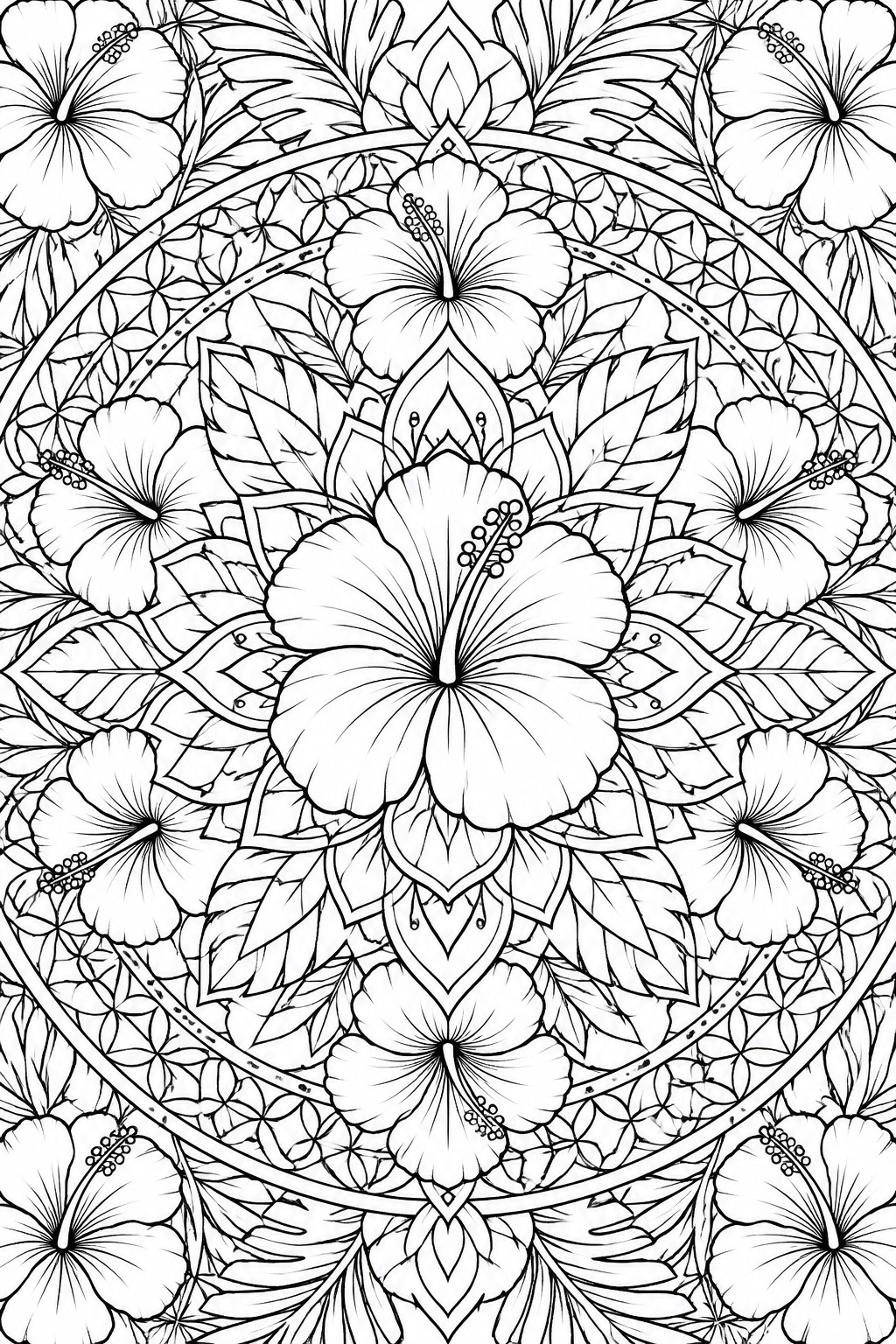
A floral mandala built around large hibiscus blooms forms the core of this design. The page uses tight radial symmetry to arrange the flowers in repeating layers that alternate with clusters of pointed leaves. Fine line details on the petals and stamen clusters create many small sections inside each bloom while the outer rings fill with smaller background flowers and geometric shapes.
What makes this page useful is the clear separation between large central flowers and tighter surrounding patterns. This layout supports both broad coloring in the main blooms and finer work in the leaves and edge rings during the same session. The detail level makes this a smart pick for adults who enjoy pattern-focused mandalas without extreme complexity. The strong circular frame keeps the design balanced so the finished page holds together even with varied coloring speeds.
Magnolia Mandala with Layered Blooms and Circular Frames
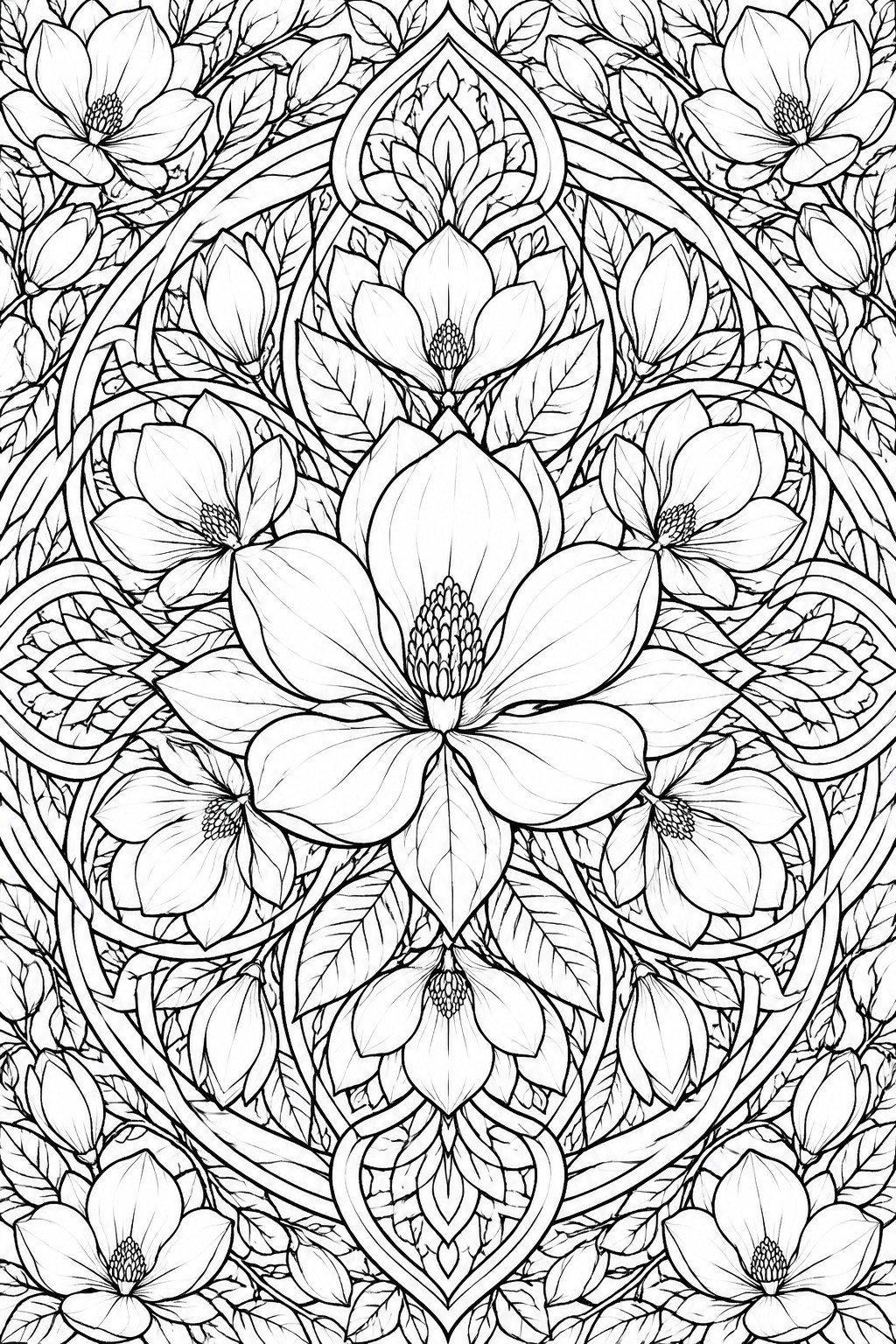
This mandala idea places a large central flower with many overlapping petals at the core, then builds outward with smaller matching blooms, leaves, and curved stems that repeat in rings. The design mixes organic petal shapes with tighter geometric bands that create clear sections for coloring. The result is a dense floral pattern that stays organized through strong radial symmetry rather than scattered elements.
The detail level makes this a smart pick for adults who want a longer session without losing their place in the pattern. Similar flower shapes across the rings let you test different color combinations or shading styles on the same motif. The tight line work and small centers give the page enough structure to feel satisfying even when you work on one section at a time.
Layered Floral Mandala with Geometric Frame
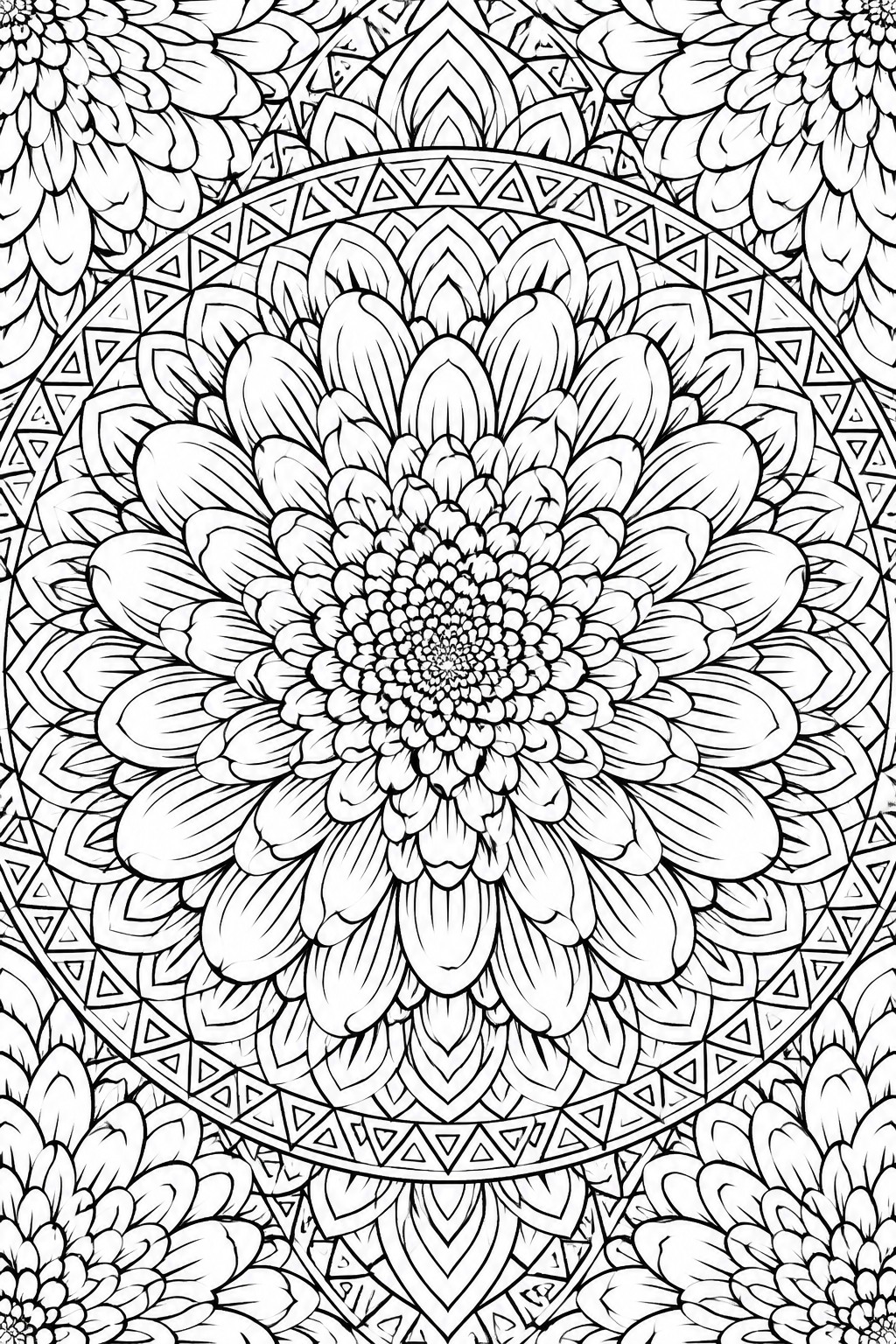
A mandala built around one large central flower uses tight rings of petals that grow denser toward the middle. The design places a band of triangles and small diamonds around that flower to form a clear circular boundary. Clusters of additional blooms fill the space outside the band to keep the full page balanced and symmetrical.
The center offers many small petal shapes that reward slow and careful coloring while the outer flowers provide larger sections for faster progress. This balance suits adults who want a detailed but not overwhelming session that still feels complete when finished. The repeating radial layout helps color choices stay consistent without extra planning. Pages with this exact mix of dense center and simpler outer flowers tend to get saved often for their clear structure.
Concentric Floral Mandala with Layered Rings
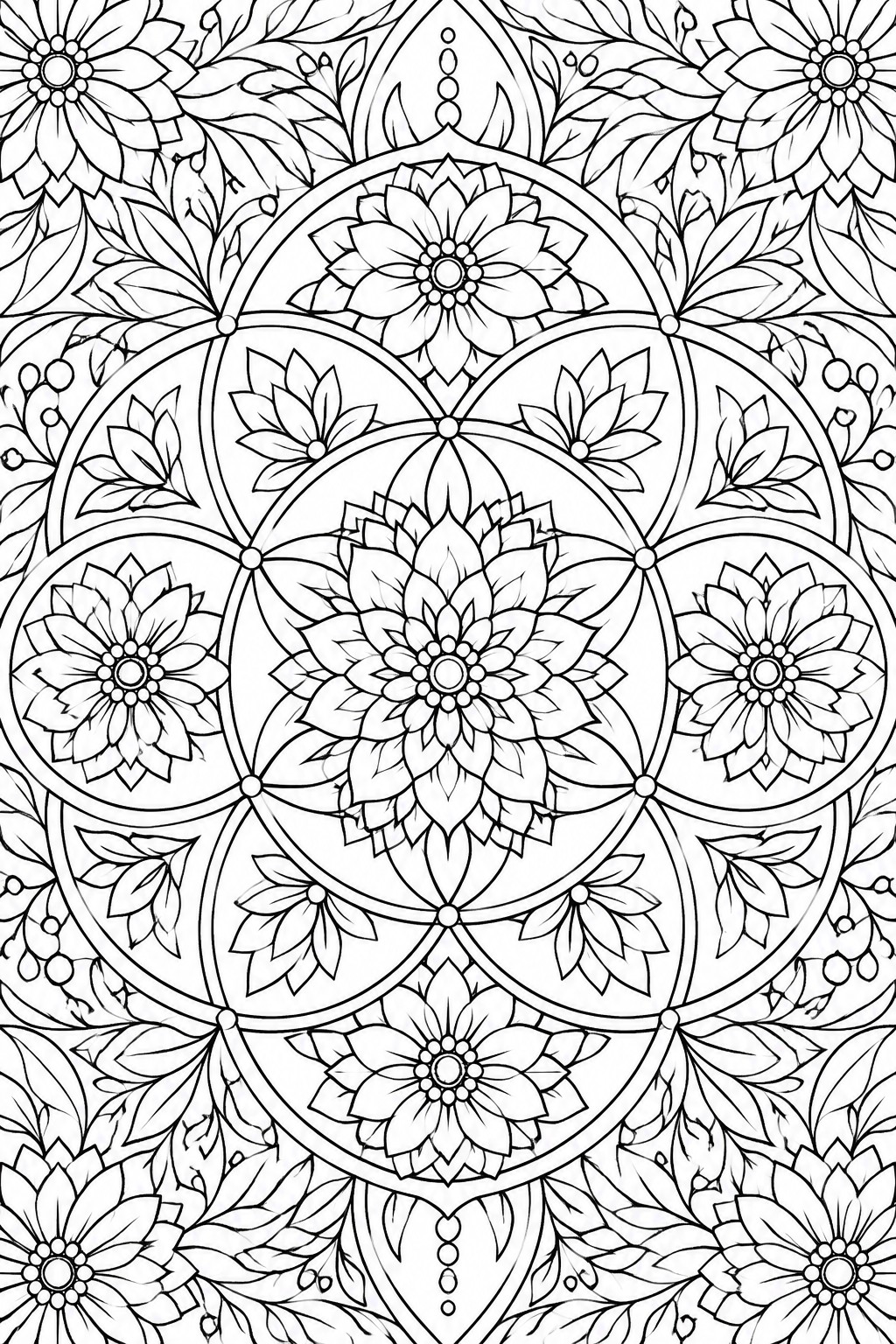
Floral mandalas like this one use overlapping circles to organize flowers and leaves into repeating sections around a central bloom. The page places larger flowers at key points on the rings while filling gaps with smaller petals and foliage that follow the same radial lines. This creates clear boundaries that help colorers maintain the symmetry without extra planning.
The layout makes this easy to color in stages since each ring stands somewhat independently. The detail level makes this a smart pick for adults who want a focused but not overly tight pattern. A page like this works especially well for building a collection of printable mandalas because the balanced structure shows off color choices clearly once finished. The open petal areas give room for simple shading while the leaf clusters add texture without crowding the design.
Concentric Floral Mandala with Geometric Borders
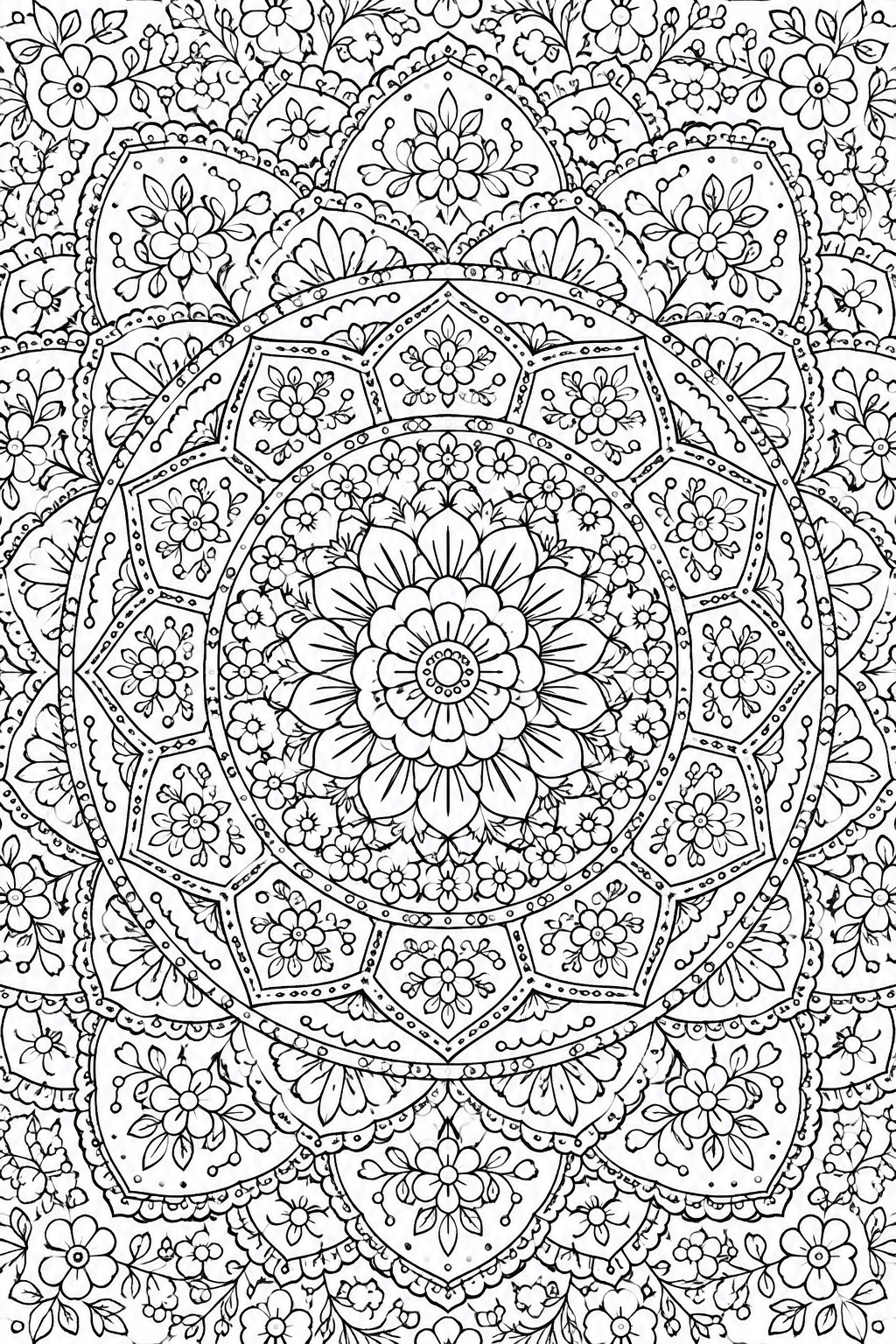
A mandala centered on layered floral rings uses geometric frames to organize the outer sections into repeating units. The design builds outward from a central bloom through multiple bands of petals, smaller flowers, and leaf clusters. Symmetry across the full circle creates consistent sections that support steady coloring progress from one ring to the next.
The detail level makes this a smart pick for adults who enjoy pattern-focused work. Clear boundaries between shapes keep sections distinct while the repeating motifs allow color choices to carry across the page without constant decision making. The layout supports both fine-tip work in tight areas and broader shading in larger petals. This kind of page stands out for its balance of structure and variety in a single printable.
Layered Floral Mandala with Geometric Frames
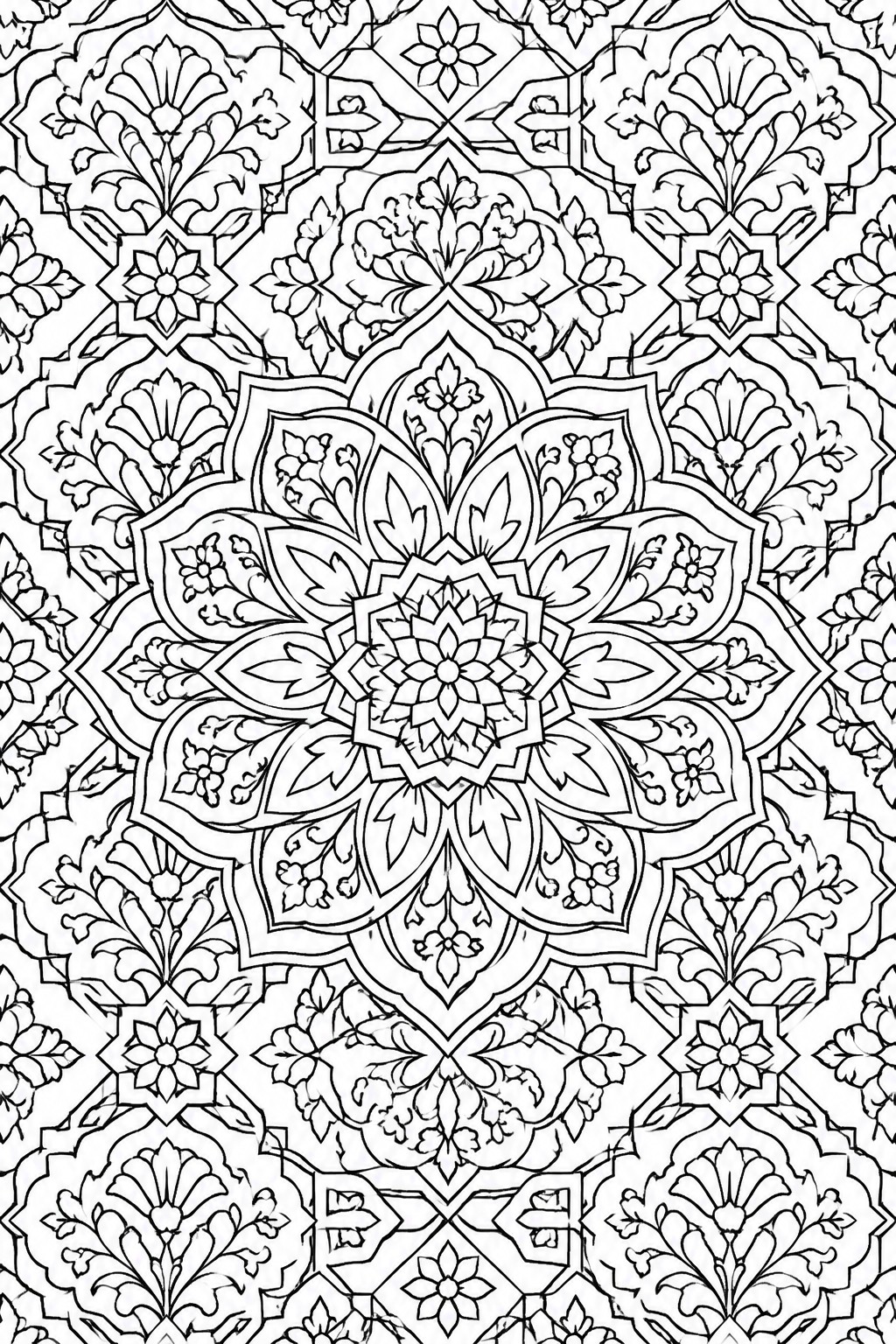
A mandala built around one large central bloom uses multiple rings of petals and leaves to create many small sections for coloring. Geometric frames and smaller star-shaped flowers repeat around the center to fill the page evenly. The mix of open petal shapes and tight leaf clusters gives clear areas for both broad strokes and fine detail work.
The layout makes this easy to color in stages without losing track of the overall pattern. Symmetry across the design helps color choices stay consistent from one side to the other. A page like this suits adults who want a detailed but structured project that can be completed over several sessions. The repeating border elements also stand out as a clean option for testing gradient techniques.
Symmetrical Floral Mandala with Geometric Accents
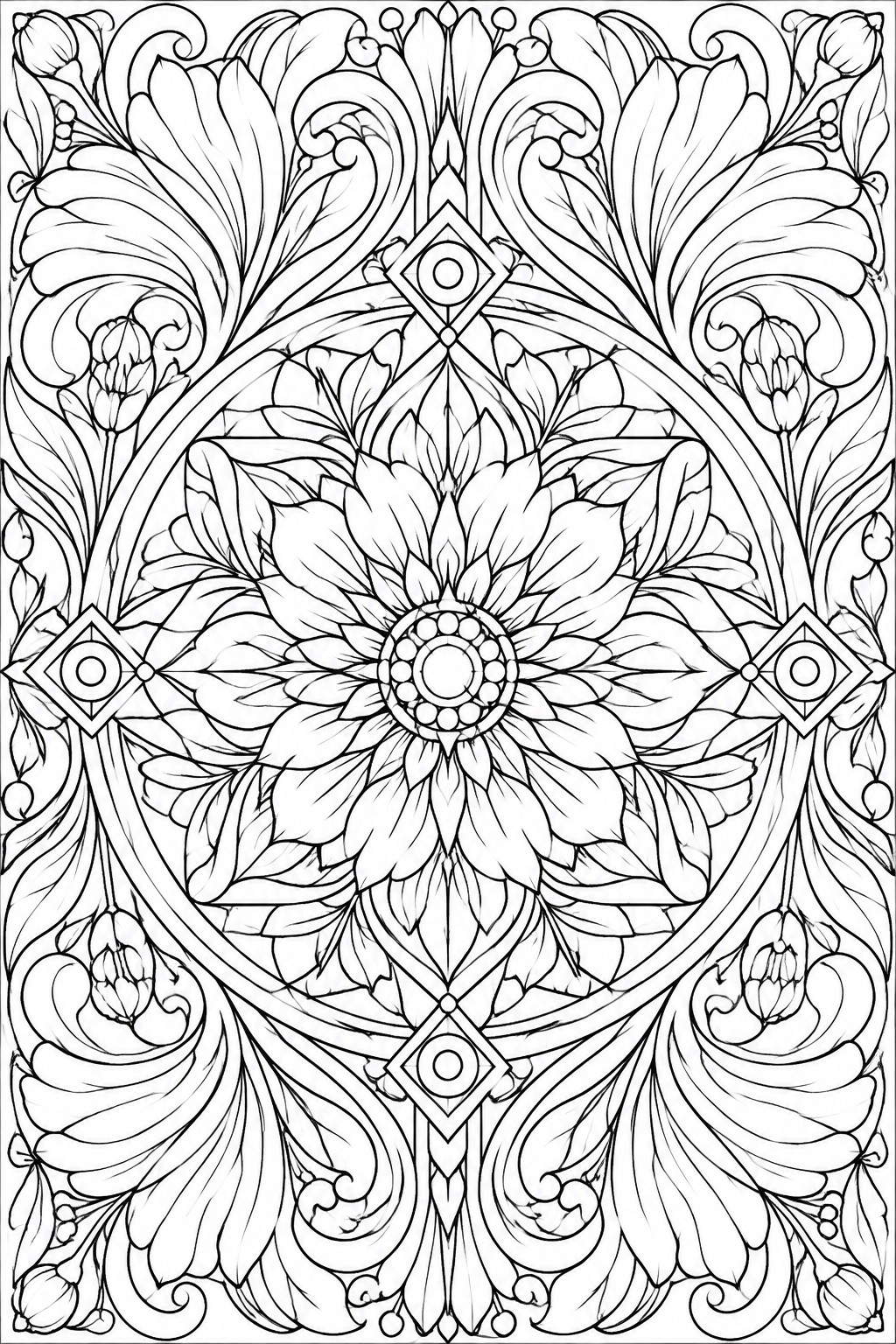
This coloring page centers on a large multi-petaled flower that radiates outward into layered leaves and curved stems. The design pairs that central bloom with repeating diamond frames and circular motifs placed at the midpoints of each side. Fine lines create tight clusters of buds and swirls that fill the outer areas while keeping the overall layout balanced and easy to follow section by section.
What makes this page useful is the strong radial symmetry that lets colorers repeat the same palette across opposite sections without guessing. The mix of broad petals and smaller leaf details gives both quick coverage and areas that benefit from extra shading or pattern work. A page like this works especially well for adults who want an intricate mandala that still feels organized rather than scattered. The clear separation between the center flower and the surrounding frame also helps the finished piece look polished even if some sections receive simpler color fills.
Interwoven Floral Mandala with Braided Bands
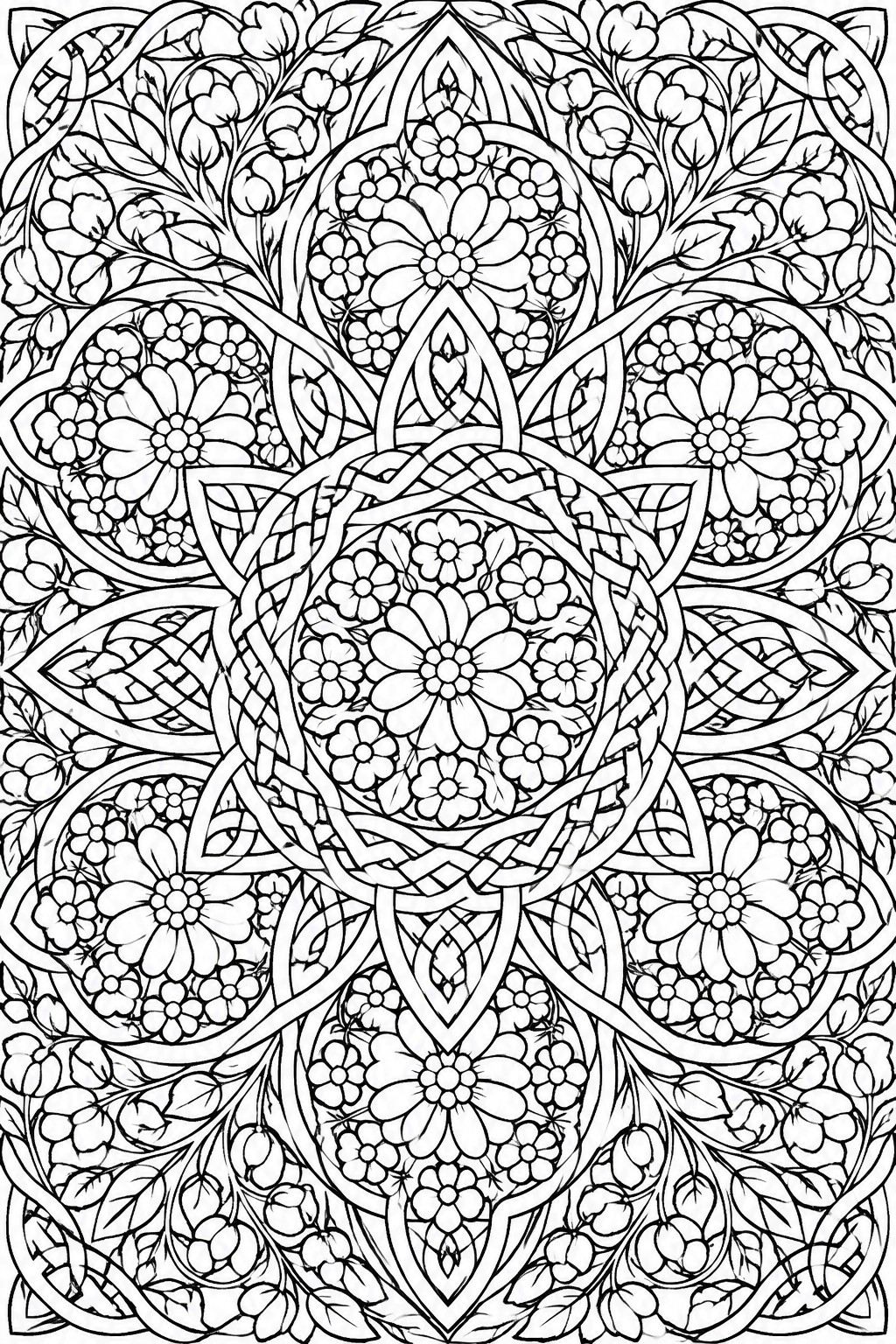
This mandala centers on layered circles of flowers that repeat around a tight central bloom, with thick braided lines crossing through the design to form a star-shaped framework. Smaller flower clusters and leaf sections fill the spaces between the braids, creating clear zones that follow the same radial symmetry. The combination of round floral areas and angular woven lines gives the page a structured pattern that guides coloring choices without requiring a single uniform approach.
The layout makes this easy to color in rings or wedges because the braids act as natural dividers between sections. What makes this page useful is the balance of larger open flowers for quicker coloring and tighter leaf clusters for added detail when wanted. A page like this works especially well for adults who prefer repetitive patterns that still offer variety in scale and line density. The consistent symmetry also helps the finished page look balanced even if coloring time is limited to one area at a time.
Succulent Hexagon Mandala with Repeating Rosettes
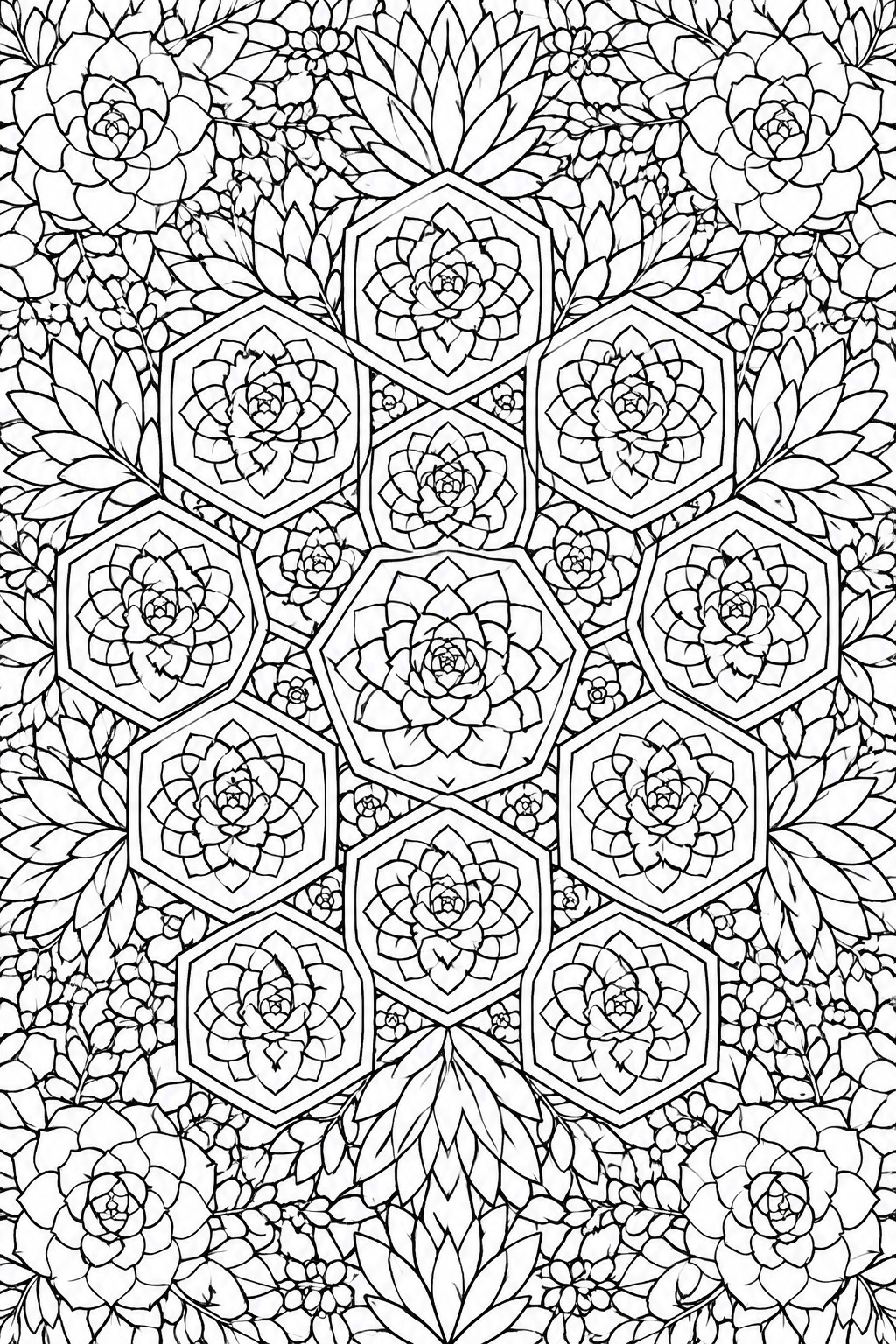
Succulent rosettes sit inside a series of connected hexagons that form the backbone of this mandala. The design places one large central flower and builds outward through rings of smaller hexagons, each holding its own rosette, while dense leaf clusters fill the spaces between them. This mix of rigid geometric frames and soft plant shapes gives colorers distinct sections to tackle one at a time.
The layout makes this easy to color because the hexagon outlines act as built-in borders that contain color choices. A page like this works especially well for adults who want detailed work without losing track of the overall pattern. The repeated flower shapes let colorers try shading techniques across similar motifs while the outer leaf areas provide variety for background filling.
Intricate Mandala with Central Star and Layered Floral Symmetry
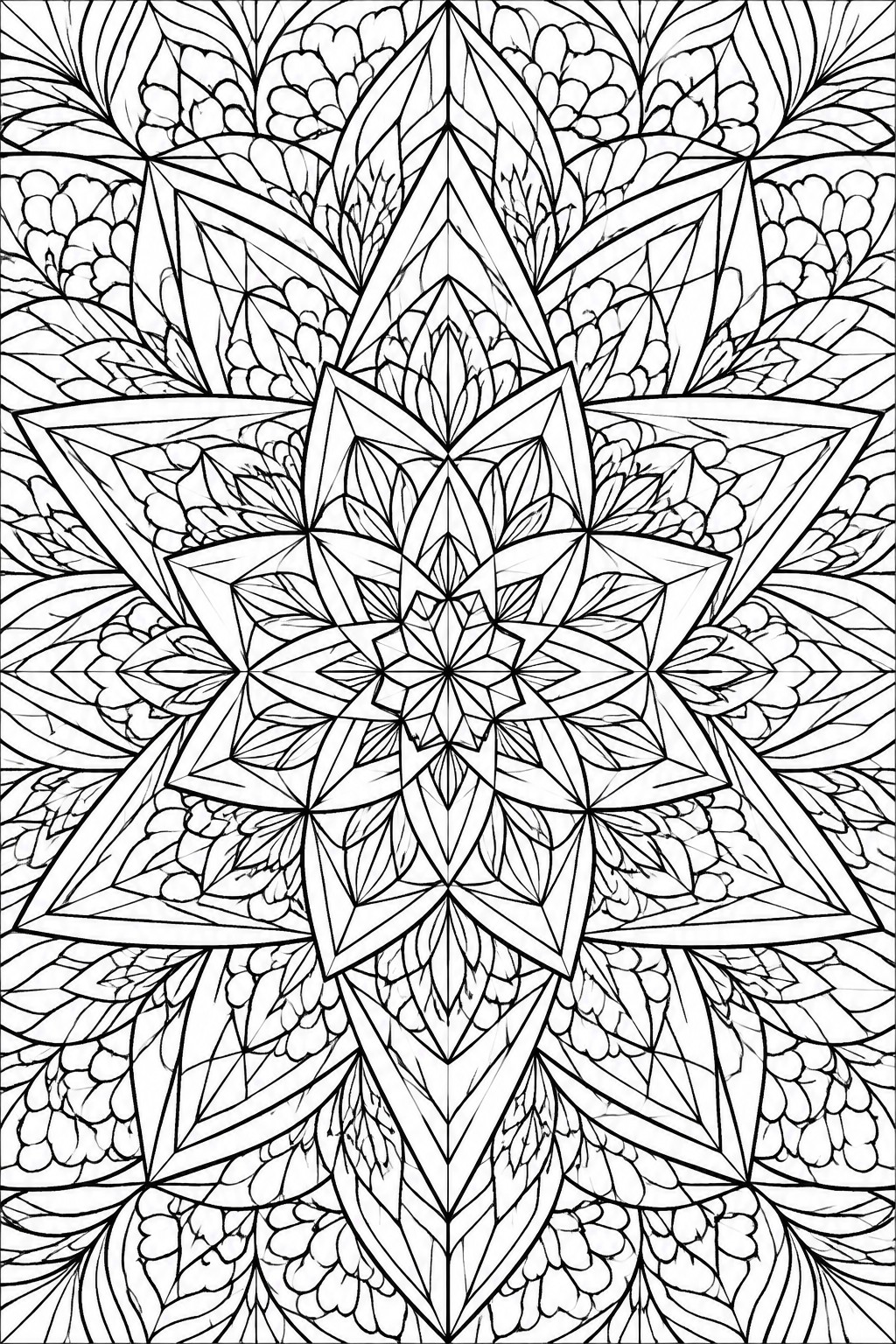
This mandala builds around a sharp geometric star at the center that expands through repeated petal and leaf sections. Strict radial symmetry organizes every ring so the same shapes appear in balanced positions around the page. Dense line work fills the space with small triangular and curved segments that reward steady coloring.
The detail level makes this a smart pick for adults who enjoy pattern focused sessions. The repeating layout removes the need to invent new shapes and lets colorers concentrate on shading choices instead. A design with this much structure stands out on Pinterest because the finished image holds together even when only a few colors are used.
Concentric Tulip Rings in a Symmetrical Floral Mandala
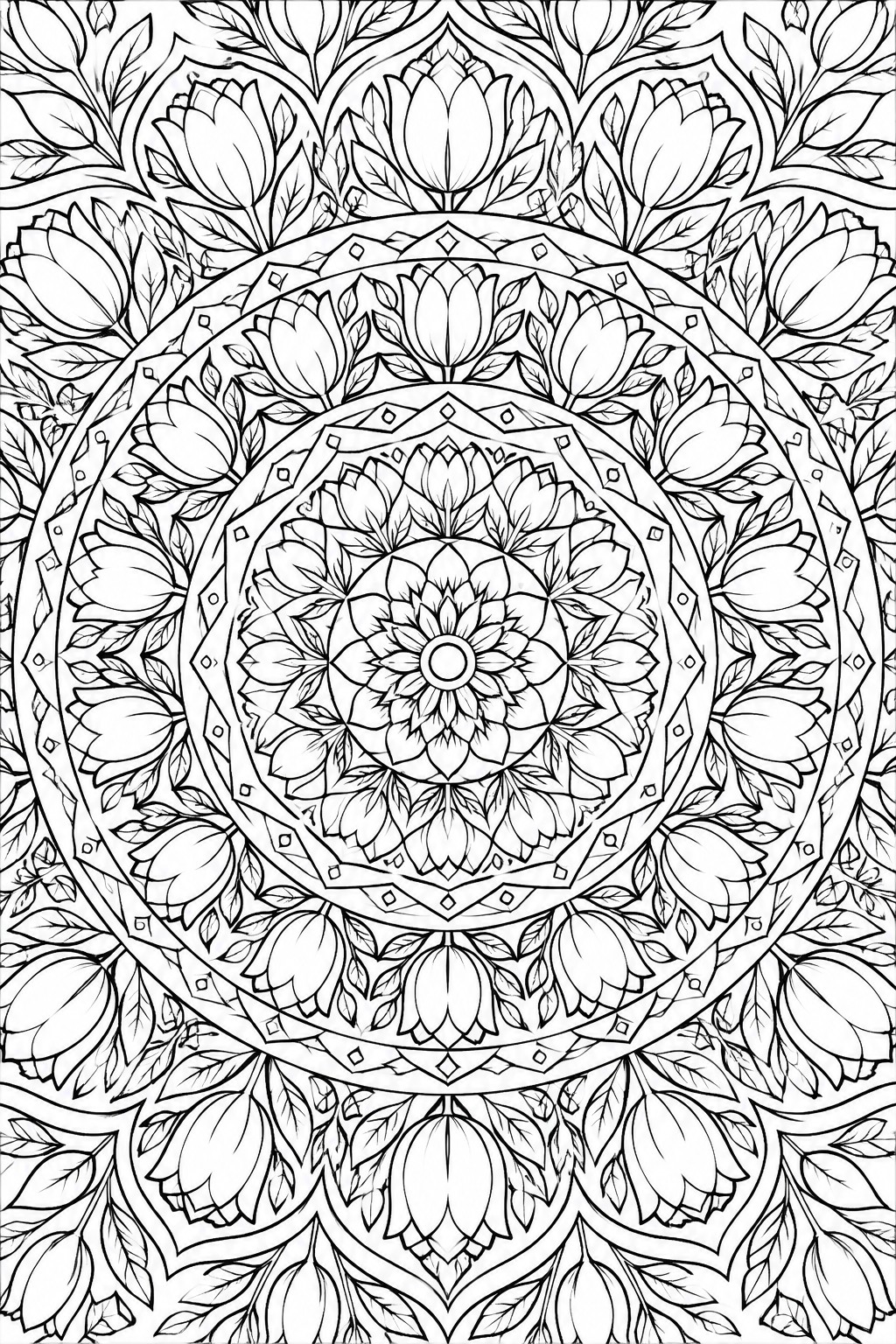
Mandala pages that repeat the same flower shape in rings build natural symmetry that keeps the design balanced. This layout places tulip style blooms in multiple circular bands around a central flower with many pointed petals. Dotted geometric lines separate the rings while leaves fill the outer areas to keep the pattern dense but readable.
The layout makes this easy to color because each ring stays contained within its own boundary. What makes this page useful is the even spacing that lets colorers work section by section without losing track of the overall design. A page like this works especially well for adults who want a pattern focused session that still offers room for shading on the petals and leaves. The repeating shapes also make it simple to test different color combinations across similar elements.
Spiral Floral Mandala with Repeating Concentric Rings
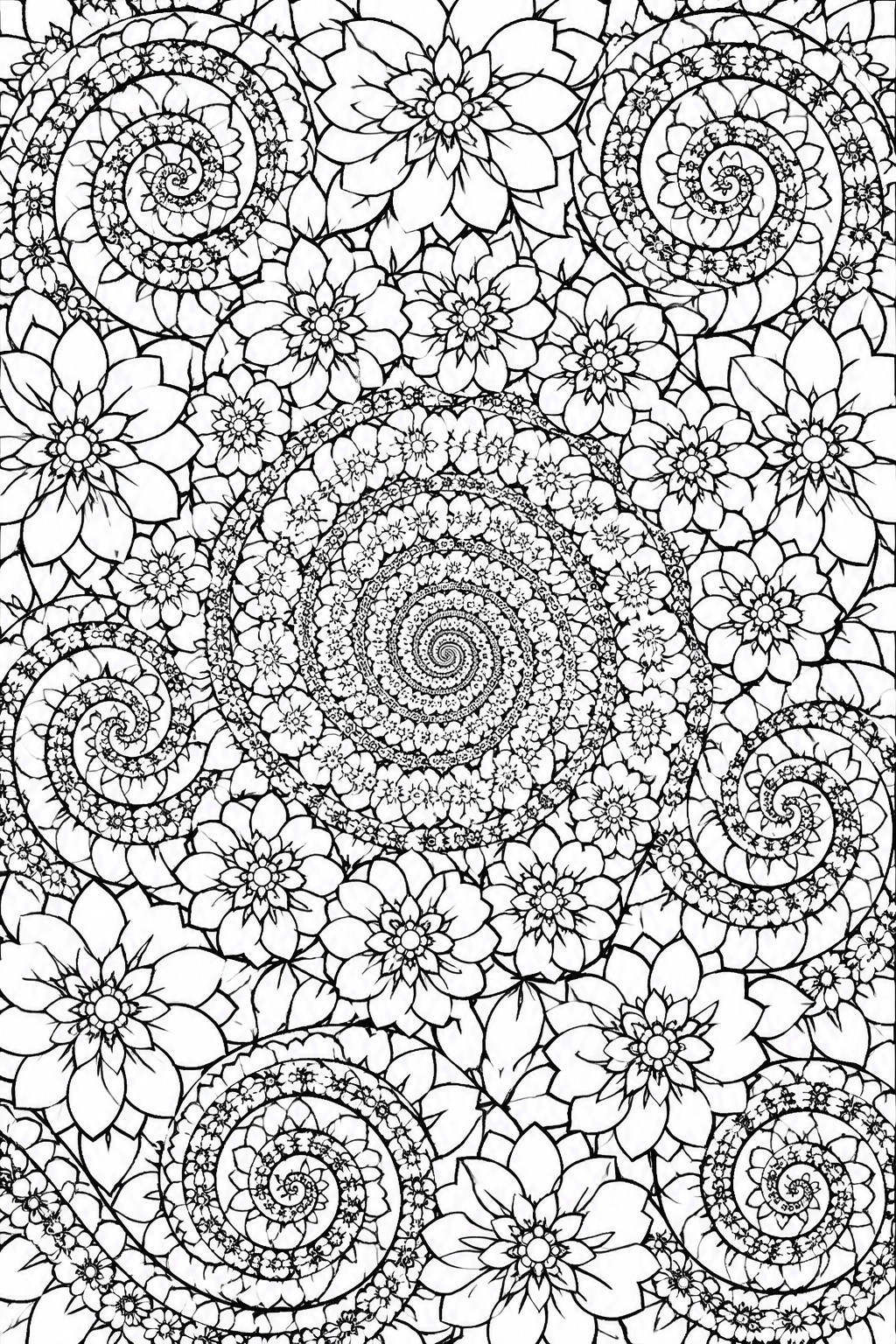
Mandala pages built this way center a tight geometric core and expand it through rings of small flowers and curved petal lines. The design mixes large open blooms with tight spiral arms that repeat the same flower shapes at different sizes. This creates a balanced layout where every section follows the same radial structure without large empty spaces.
The fine repeating lines across the spirals and flower clusters make this page a strong pick for adults who want a steady, detail-focused session. Colorers can work section by section while the symmetry keeps the overall pattern easy to follow. Pages with this mix of small shapes and larger blooms tend to hold attention longer than simpler designs because each ring offers a new but related area to complete.
Lily Mandala with Layered Geometric Frames
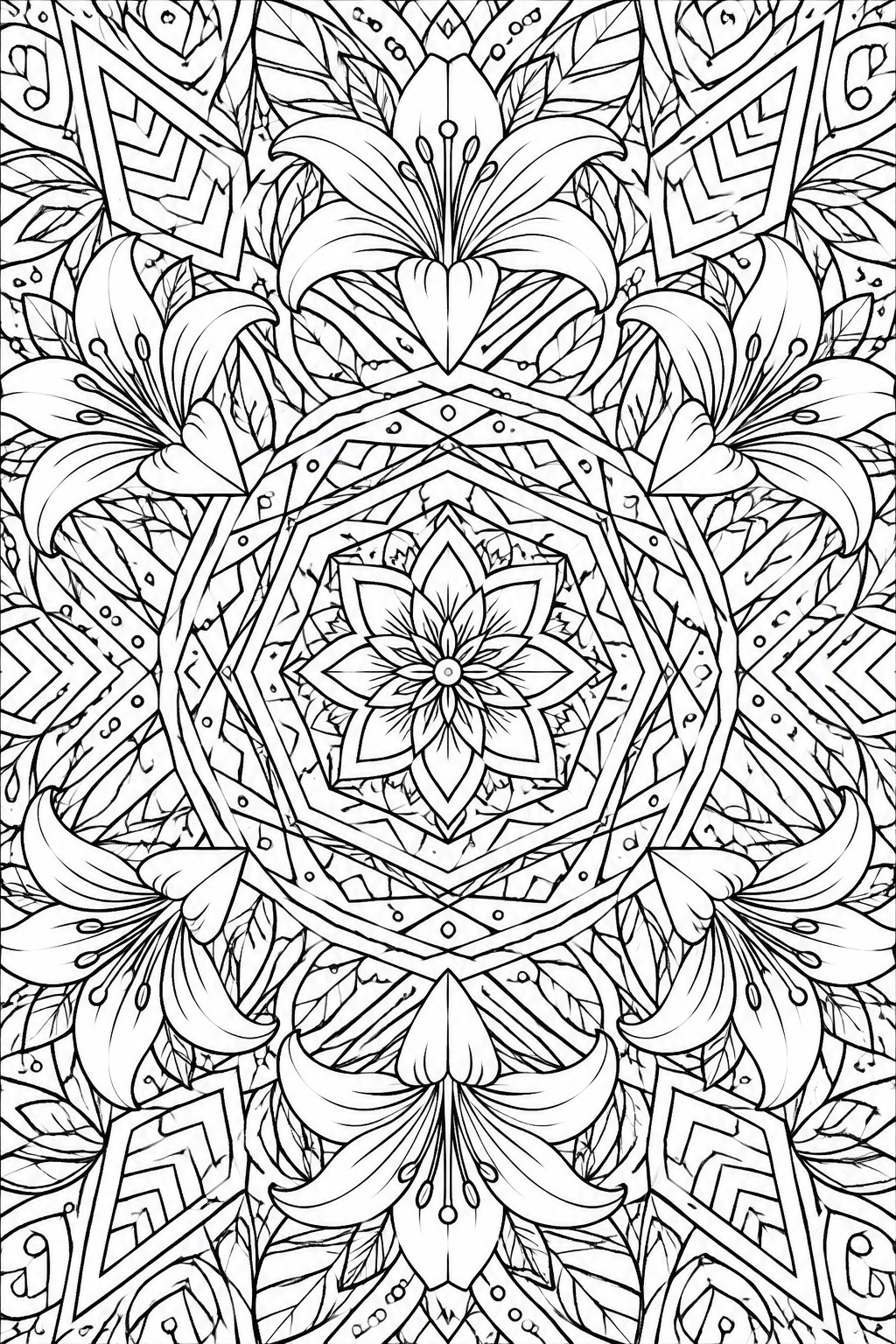
This coloring page idea uses a central floral mandala as the core, surrounded by lilies and leaves arranged in repeating sections. The design mixes curved petal shapes with straight geometric lines, hexagons, and angular borders that create clear sections to color. The balanced layout of organic flowers against precise patterns gives colorers distinct areas to fill while maintaining overall symmetry.
The detail level makes this a smart pick for adults who like structured yet varied pages. Symmetry helps guide color choices across opposite sections without needing constant decisions. The mix of small dots, leaf veins, and larger flower petals offers both fine work and broader spaces, so the page stays engaging from start to finish.
Layered Floral Mandala with Geometric Symmetry
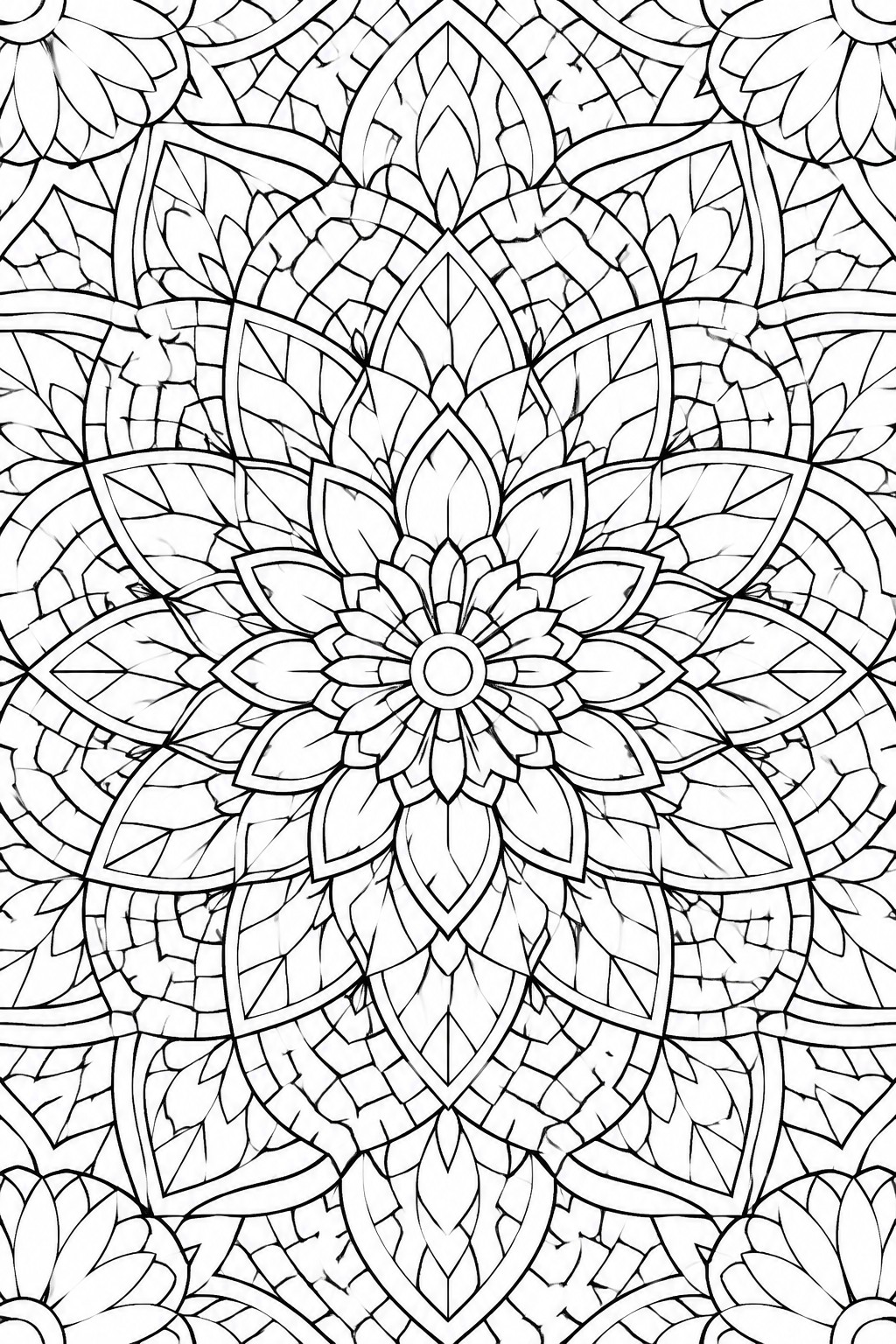
Mandala pages like this one place a large central flower at the core and build outward with rings of petals and leaves that repeat in perfect balance. The design mixes organic shapes with structured geometric sections that fill the outer areas and create clear boundaries between different parts of the pattern. This approach gives colorers distinct zones to work within while keeping the whole page unified through radial symmetry.
The detail level makes this a smart pick for adults who enjoy focused pattern work over several sessions. What makes this page useful is the way the layers create natural stopping points so you can color in stages without losing the overall design. A page like this works especially well for people who like symmetry because the repeating shapes help guide color choices and keep the finished result looking balanced.
Layered Floral Mandala with Leaf Borders
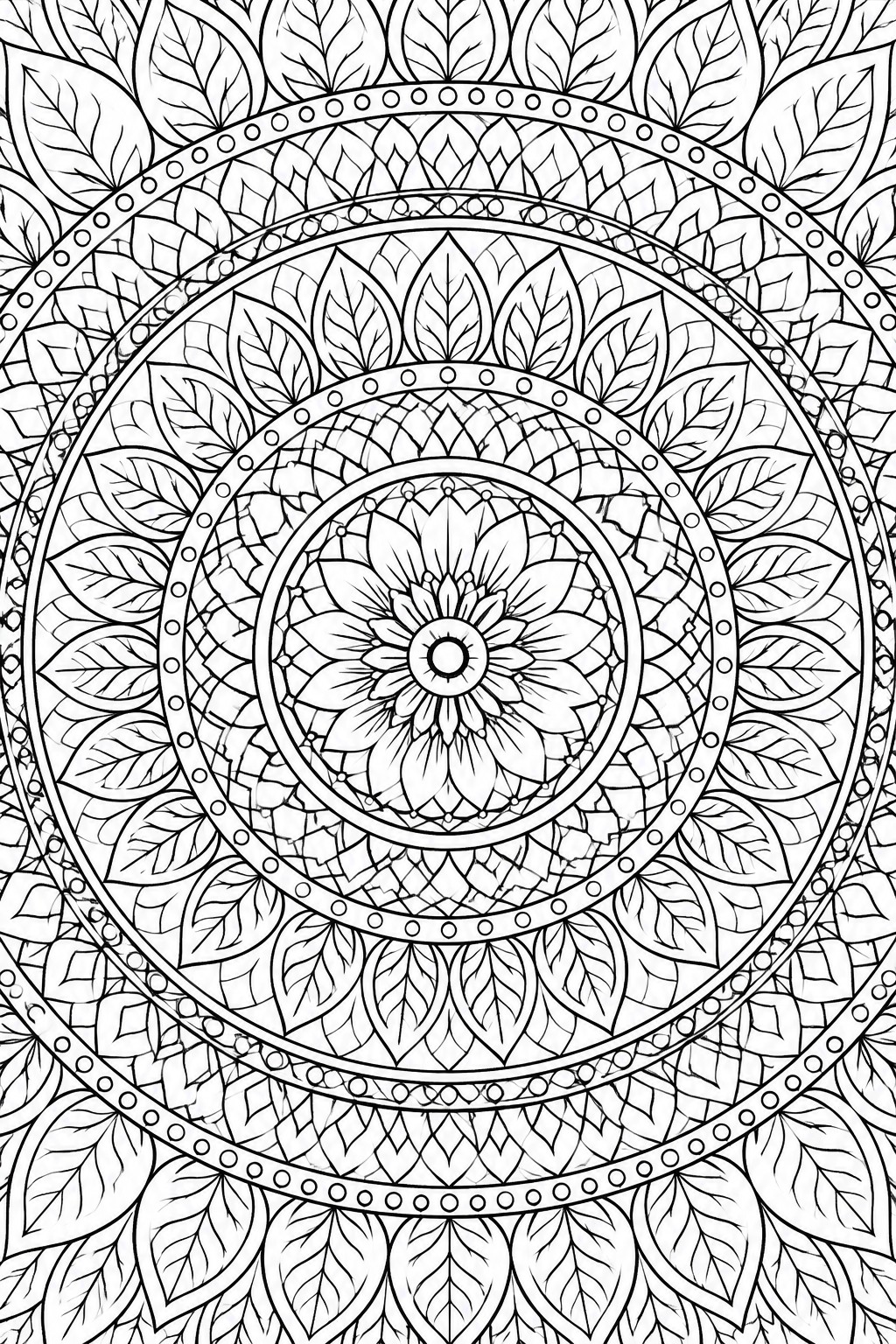
Mandala designs built around a central flower use repeating rings to create balanced sections that guide color choices. This one places a detailed bloom at the core, then adds successive circles of pointed leaves and dotted lines that separate each band. The outer edge finishes with larger leaf shapes that frame the whole pattern without crowding the inner layers.
What makes this page useful is the clear ring structure that lets colorers work one section at a time without losing the overall design. The mix of larger outer leaves and tighter inner petals offers both quick coverage and finer work in the same page. A page like this works especially well for adults who prefer pattern repetition over loose scenes. The even spacing between elements also helps the finished piece look neat even when colors vary across similar shapes.
Floral Mandala with Spiral Geometric Frames
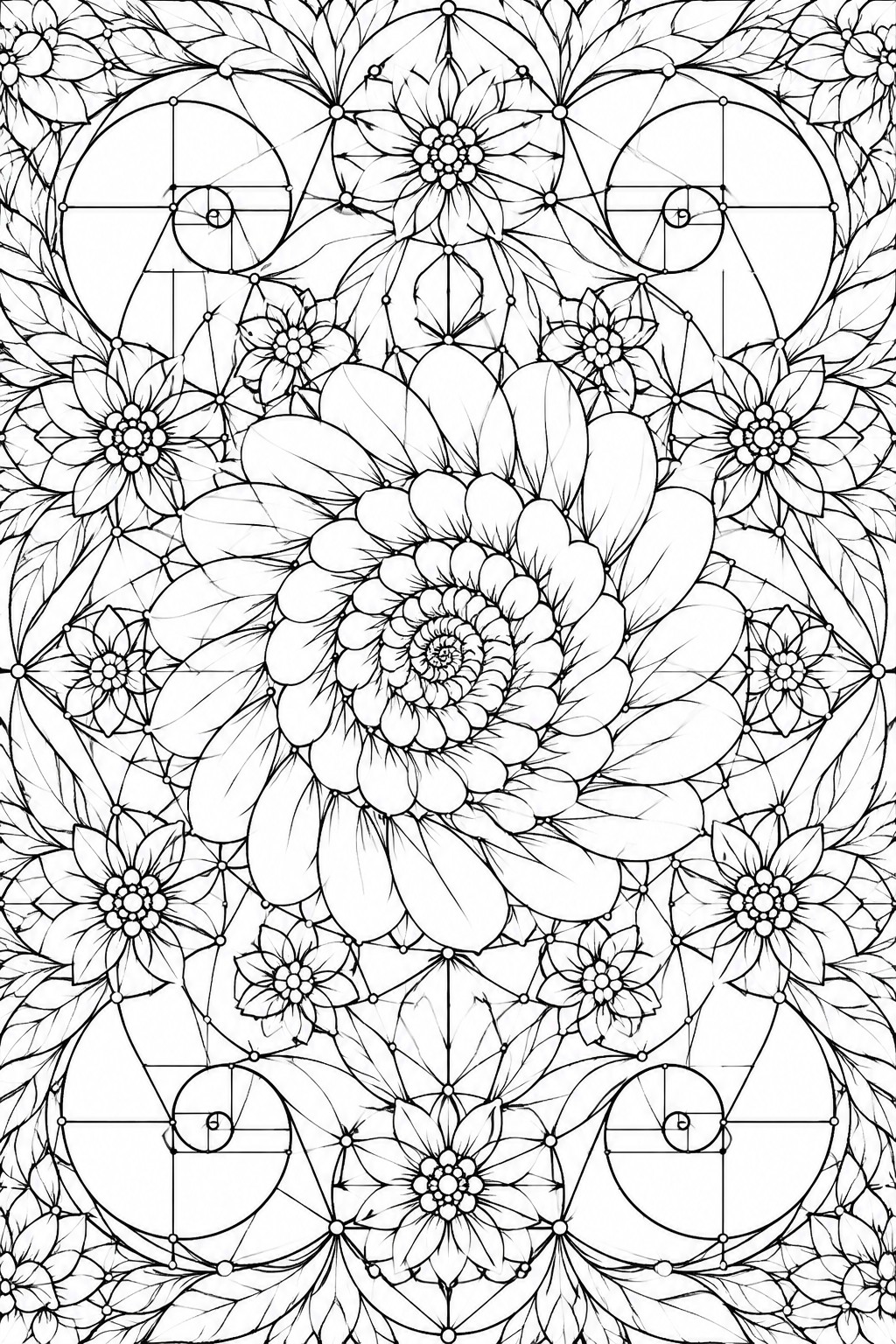
This coloring page idea centers on a large multi-petaled bloom placed at the middle of a symmetrical mandala, with smaller flowers and leaf clusters filling the spaces around it. Circular frames holding spiral patterns repeat at the corners and edges to tie the floral elements into a structured grid. The combination of soft petal outlines and rigid circular geometry creates clear zones that support both broad coloring and finer detail work.
The layout makes this easy to color because the strong central flower gives a natural starting point while the surrounding symmetry keeps sections organized. A page like this works especially well for adults who want medium to high detail without tiny isolated shapes everywhere. The larger petals offer room for color blending or shading while the spirals provide focused spots that reward steady lines. This balance helps the page feel complete once finished rather than scattered.
Concentric Floral Mandala with Repeating Rings
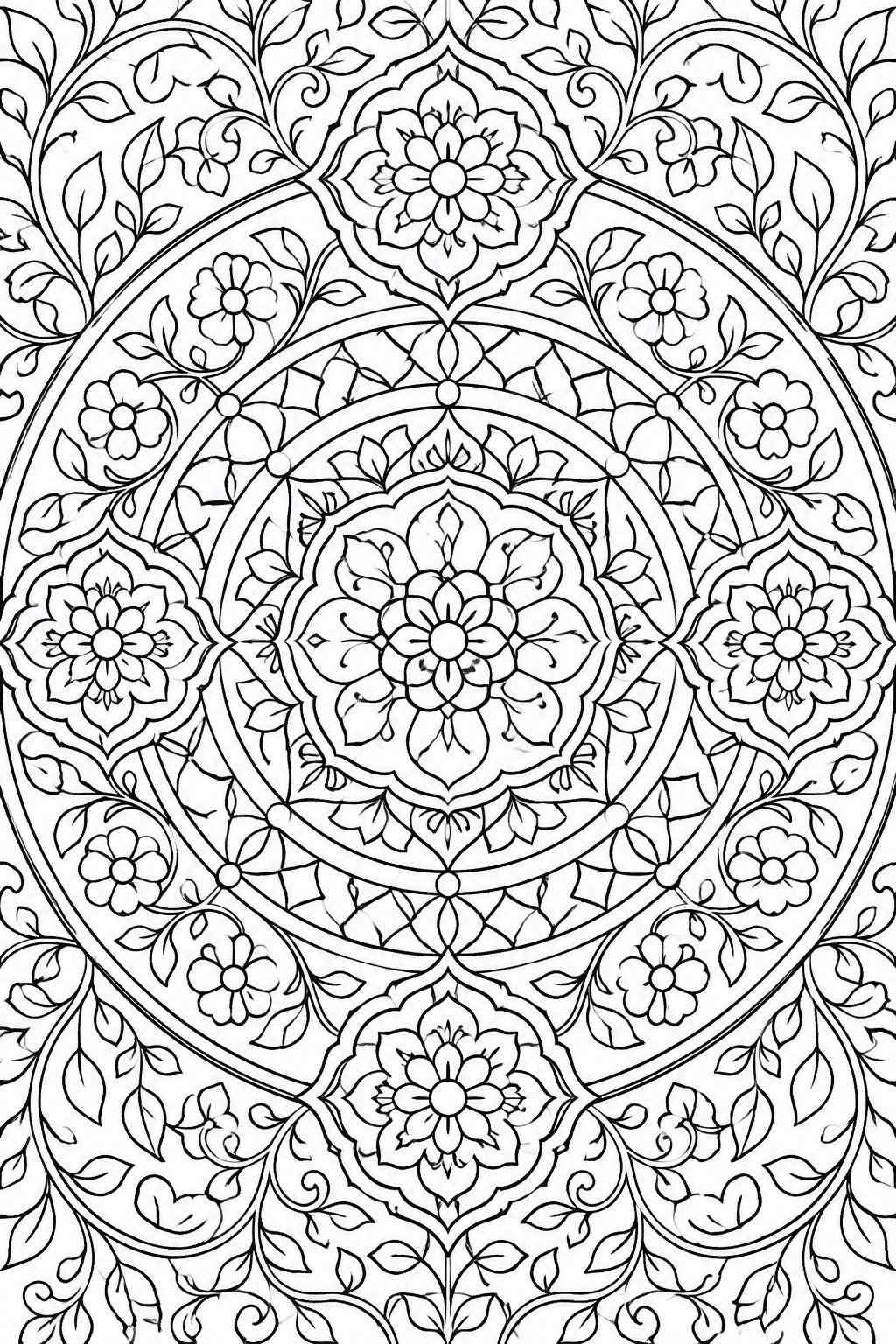
Mandala designs like this center on a large flower and build outward through rings of smaller blooms and foliage. The style relies on precise geometric placement of floral elements so each ring mirrors the next. This creates a satisfying coloring experience because the symmetry helps color choices repeat evenly around the circle.
What makes this page useful is the clear division into rings that lets colorers tackle one band at a time. The detail level makes this a smart pick for adults who want a focused pattern session without overwhelming chaos. The vine elements around the edges add extra areas for background color without crowding the main rings.
Layered Mandala with Central Bloom and Radiating Patterns
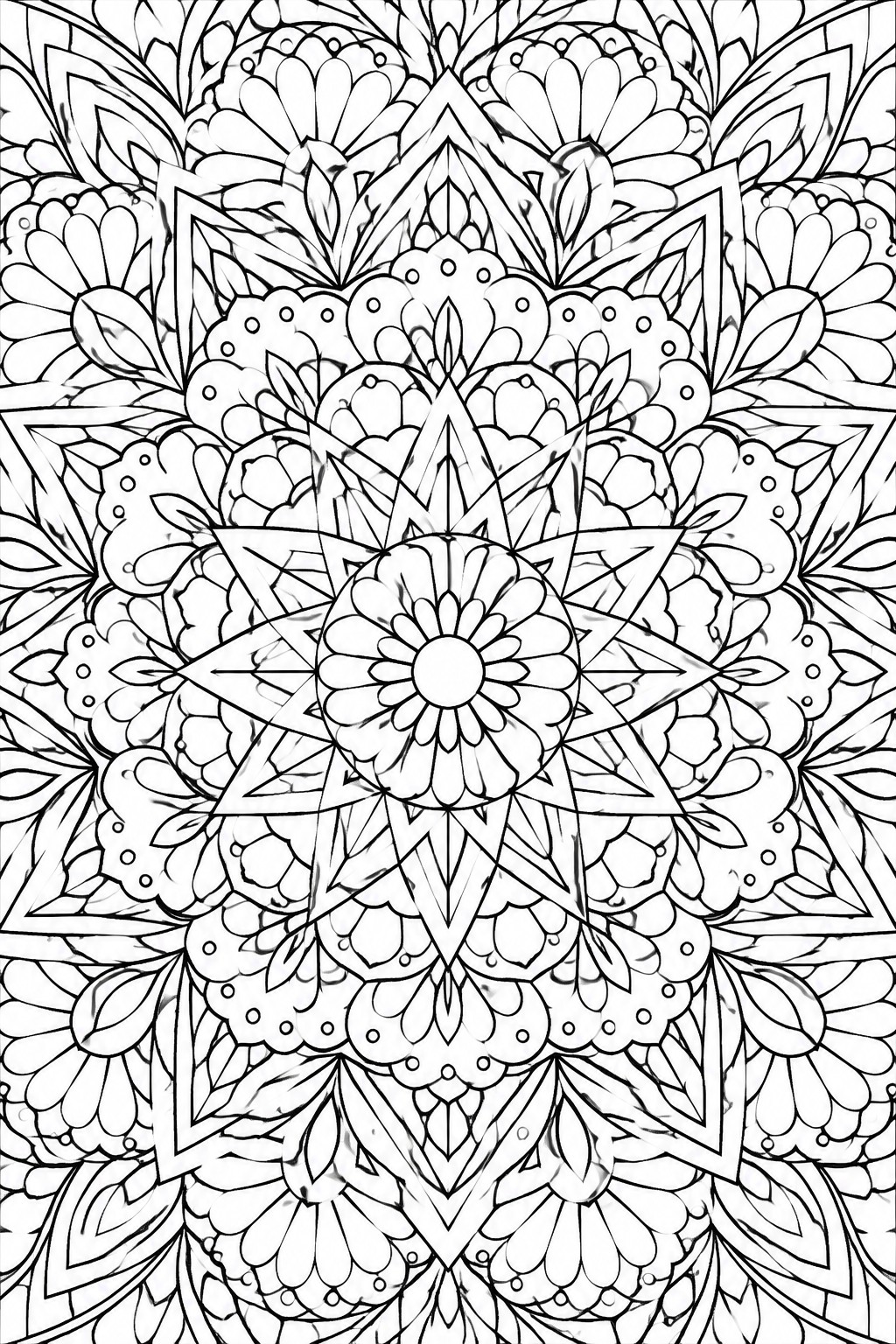
Mandala pages like this center on a single flower that expands into rings of petals, leaves, dots, and pointed geometric forms. The design keeps every element aligned through strict radial symmetry so the same shapes repeat around the circle. This layout gives colorers clear sections to fill while the mix of rounded and angular lines creates natural variety in how each ring can be shaded.
The detail level makes this a smart pick for adults who want a focused session without jumping between unrelated scenes. Tight spacing between shapes means markers or fine tips work better than broad crayons. A page like this stands out on Pinterest because the finished version shows clear contrast between the central flower and the outer rings.
Frequently Asked Questions
1. What makes these mandala coloring pages stand out from standard designs? These pages feature 23 unique compositions that blend floral motifs like petals and leaves with precise geometric patterns such as circles, triangles, and repeating shapes. The symmetry creates balanced layouts where every element mirrors across the center, offering a structured yet organic feel that encourages focused coloring sessions.
2. Are these coloring pages appropriate for beginners or only experienced artists? They work well for various skill levels because the intricate details allow simple color fills for starters while providing enough complexity for advanced users to add shading and layers. Start with larger sections to build confidence before tackling finer lines, and the built-in symmetry helps guide choices without requiring perfect freehand skills.
3. What paper and tools work best for printing and coloring these designs? Use heavyweight paper or cardstock of at least 200 grams per square meter to prevent bleed-through from markers or wet media. Colored pencils offer control for details and blending, while gel pens add vibrant highlights. Print at high resolution on a home printer or use a service for crisp lines that hold up to repeated erasing if needed.
4. How does the floral and geometric symmetry support relaxation during coloring? The repeating patterns create a meditative rhythm as you mirror colors across the design, which can lower stress by promoting steady breathing and concentration. Floral elements add a natural flow that feels soothing, while geometric precision gives a sense of order, making each page a calming activity that improves mindfulness over time.
5. Where can these 23 mandala pages be accessed and are digital versions available? Many sites offer instant digital downloads in PDF format for easy printing at home, often with options to resize pages. Search for the exact title to locate free samples or paid bundles, and check artist websites or marketplaces for printable files that maintain the original symmetry and detail quality.
