

Are you ready to create a cozy baby blanket but unsure how many crochet stitches you need? You’re not alone. Many new crocheters find themselves puzzled by the stitch count and sizing, especially when it comes to those adorable little blankets.
In this article, you’ll discover the key factors that influence the number of stitches needed for a perfect baby blanket. Whether you’re aiming for a snug swaddle or a larger keepsake, we’ll guide you through the process. By the end, you’ll feel confident in your crochet project and ready to wrap that little one in warmth and love.
Key Takeaways
- Understanding Crochet Basics: Familiarize yourself with essential crochet stitches like chain, single, double, half double, and slip stitches to create your baby blanket.
- Importance of Stitch Count: The number of stitches directly affects the size, texture, and warmth of your blanket; accurate measurement is crucial.
- Standard Dimensions: Know the typical sizes for baby blankets, such as receiving (30″x30″ to 40″x40″) and crib blankets (30″x36″ to 36″x52″) to ensure your design is appropriate.
- Gauge Swatch Method: Always create a gauge swatch to determine your stitches per inch; this helps in calculating the proper stitch count for your desired blanket size.
- Choosing the Right Stitches: Select basic and decorative stitches, like single crochet for density and bobble stitch for texture, to enhance your blanket’s aesthetic and comfort.
- Avoiding Common Mistakes: Check your gauge, keep track of your stitch count, and choose compatible stitches to avoid sizing issues and ensure a polished final product.
Understanding Crochet Stitches
Understanding crochet stitches is essential for creating the perfect baby blanket. The stitch count affects not only the size but also the texture and thickness of your final product.
Types of Crochet Stitches
- Chain Stitch: The foundation for most crochet projects. Start with a slip knot, then create a series of loops by pulling the yarn through. Each loop counts as one stitch.
- Single Crochet: Provides a tight and textured finish. Insert your hook into the stitch, yarn over, pull through, yarn over again, and pull through both loops on your hook.
- Double Crochet: Adds height and is more open. Yarn over, insert the hook, yarn over again, pull through, yarn over, pull through two loops, yarn over, and pull through the remaining two loops.
- Half Double Crochet: A middle ground between single and double crochet. Yarn over, insert the hook, yarn over, pull through, yarn over, and pull through all three loops on the hook.
- Slip Stitch: Used for joining rounds or closing gaps. Insert the hook, yarn over, and pull through the stitch and loop on the hook in one motion.
Importance of Stitch Count
Stitch count governs the dimensions of your blanket. A higher stitch count results in a larger, cozier blanket but also requires more yarn.
- Measuring Size: Determine the width and length of your blanket, and calculate the stitches based on the desired sizes. For example, if you want a 36-inch by 48-inch blanket with single crochet stitches, you might require around 120 stitches across if your gauge is 5 stitches per inch.
- Consistency in Stitching: Maintain consistent tension and stitch size for a uniform appearance. Use a swatch to test your stitch count before beginning.
- Adjusting Patterns: If patterns call for a specific stitch count, adjust according to your gauge. A 10-stitch difference can alter the size significantly.
Understanding these various stitches and their implications allows you to design a blanket that fits your goals, whether for warmth or aesthetic appeal.
Determining Blanket Size
Choosing the right size for a baby blanket involves understanding standard dimensions and the factors that influence size. You’ll measure your crocheting skills against these guidelines to create the perfect blanket.
Recommended Products

#6 Blanket Yarn: Each skein 10.5 oz/300 g, 220 yards/201 m, 4 skeins per pack. Size 6 super bulky yarn is perfect for crochet, knitting, blankets, amigurumi, and crafting projects. Backed by feedback from thousands of knitting and crochet enthusiasts, our thick yarn delivers up to 50% greater durability for finished projects. Loved by makers everywhere, Knyteruna #6 chenille chunky yarn is the top choice for crocheted blankets.

Content: 100% polyester, Care: This yarn for knitting, crocheting, amigurumi and craft projects is easy to care for, simply machine wash and dry all crafted items.

Standard Baby Blanket Dimensions
Typical sizes for baby blankets include:
| Blanket Type | Size (in inches) |
|---|---|
| Receiving Blanket | 30 x 30 to 40 x 40 |
| Crib Blanket | 30 x 36 to 36 x 52 |
| Toddler Blanket | 36 x 48 to 40 x 60 |
These dimensions cover various uses—from swaddling to providing warmth in a crib. Your choice depends on the intended purpose and your design preferences.
Factors Influencing Size
Several factors influence the size of your blanket:
- Yarn Weight: Thicker yarns create bulkier blankets. If you opt for lighter or thinner yarns, expect a larger stitch count for warmth and comfort.
- Stitch Type: Different stitches affect size. For instance, a granny square may create a different dimension than a single crochet stitch.
- Gauge: Your tension while crocheting matters. A tighter gauge leads to a smaller blanket, while a looser gauge allows for a larger size. Always check your gauge by making a swatch.
- Desired finished size: Consider how big you’d like the blanket to be when completed. Customize your stitch count based on this target size.
Understanding these elements helps you determine how many stitches to incorporate, ensuring you craft a beautiful baby blanket that meets your needs.
Calculating Stitch Count
Calculating the necessary stitch count for your baby blanket involves understanding gauge and applying a straightforward formula. These steps ensure the blanket turns out as envisioned.
Gauge Swatch Method
Start by making a gauge swatch. A gauge swatch helps you determine how many stitches fit within a certain measurement. To create one, crochet a small square, typically about 4 inches by 4 inches, using the same yarn and stitch you plan for your blanket. Measure how many stitches are in a 4-inch section across the width and how many rows are in 4 inches vertically. This measurement allows you to translate your stitch count to the final blanket size.
Formula for Stitch Calculation
To calculate the total stitch count, use the following formula:
- Determine the desired width of your blanket in inches.
- Divide the desired width by the number of stitches per inch, which you get from your gauge swatch.
- Multiply the result by the total length you need in inches.
For example, if your blanket should be 30 inches wide and your gauge shows 5 stitches per inch, the calculation becomes:
- 30 inches ÷ 5 stitches per inch = 6 stitches
- Now, multiply by the desired length (let’s say 36 inches):
- 6 stitches x 36 inches = 216 total stitches.
This formula provides your starting point. Adjust for stitch type and personal design preferences for the perfect baby blanket.
Recommended Stitches for Baby Blankets
Choosing the right stitches for a baby blanket affects its texture and appearance. Below are ideal options for basic stitches and decorative stitches that enhance your blanket.
Recommended Products


[ Beginners-Friendly Crochet Kit ]: For beginners, this beginners crochet kit’s yarn is a game-changer: soft, anti-shrinkage, easy to see the stitches and crochet with. Even fumbled stitches are clear to spot—no squinting. The included video tutorial cafted with the kit’s supplies too—telling you exactly how to make this blanket with repetitive crocheting skill. Imagine your first session: follow a video, see neat stitches form in minutes. It turns “I can’t” into “I did it!”
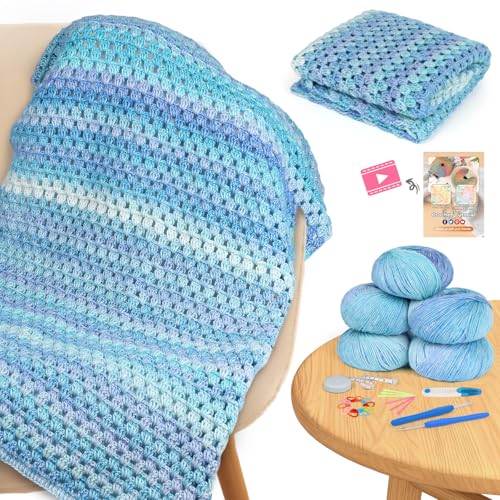
[ Beginners-Friendly Crochet Kit ]: For beginners, this beginners crochet kit’s yarn is a game-changer: soft, anti-shrinkage, easy to see the stitches and crochet with. Even fumbled stitches are clear to spot—no squinting. The included video tutorial cafted with the kit’s supplies too—telling you exactly how to make this blanket with repetitive crocheting skill. Imagine your first session: follow a video, see neat stitches form in minutes. It turns “I can’t” into “I did it!”
Basic Stitches
- Chain Stitch: Begin most projects with this fundamental stitch. It creates the foundation for your blanket. Use a chain stitch to start your desired width.
- Single Crochet: This stitch offers a dense fabric. It creates a tight, warm blanket. Try single crochet for a cozy feel especially suitable for colder weather.
- Half Double Crochet: This stitch balances between single and double crochet. It adds height while maintaining thickness. Use half double crochet for a soft and flexible blanket.
- Double Crochet: Ideal for larger blankets, double crochet produces a looser fabric. It makes your blanket lighter and faster to stitch. Use this for bigger, airy designs.
Here’s a guide to help you choose your basic stitch:
| Stitch Type | Texture | Warmth Level | Speed to Crochet |
|---|---|---|---|
| Chain Stitch | Smooth | Low | Fast |
| Single Crochet | Dense | High | Moderate |
| Half Double Crochet | Soft | Medium | Moderate |
| Double Crochet | Airy | Low | Fast |
- Shell Stitch: This stitch adds a beautiful ripple effect. It’s great for creating a visually appealing blanket. Use shell stitches for a touch of elegance.
- V-Stitch: This combination of double and chain stitches creates an open, lacy look. It adds dimension and is perfect for a lightweight blanket. Use V-stitch to enhance design while keeping it airy.
- Bobble Stitch: This texture-rich stitch creates raised bumps on your blanket. It adds playful touches, perfect for a baby blanket’s charm. Use bobble stitches for added whimsy.
- Cross Stitch: This stitch crosses over itself, creating a unique pattern. It adds a sophisticated element to your project. Use cross stitches for intricate detailing.
Consider these decorative stitches to personalize your blanket:
| Stitch Type | Design Element | Complexity Level |
|---|---|---|
| Shell Stitch | Ripple Effect | Moderate |
| V-Stitch | Lacy Appearance | Easy |
| Bobble Stitch | Textured Touch | Moderate |
| Cross Stitch | Intricate Pattern | Advanced |
Experiment with these stitches and find the combination that meets the blanket’s needs and your style. Adjust as desired for warmth, texture, and aesthetics.
Tips for Beginners
Starting your crochet journey can feel overwhelming. By focusing on the right techniques and choices, you can create a lovely baby blanket with confidence.
Choosing the Right Yarn
Selecting the right yarn plays a crucial role in your project. Opt for soft, baby-friendly yarn, like cotton or acrylic, to ensure comfort.
- Yarn Weight: Choose a medium weight (worsted) yarn for a balanced look and feel. This weight suits various stitch types and offers warmth without being too thick.
- Color: Pick colors that are suitable for infants. Soft pastels or neutral tones create a calming vibe.
- Texture: Consider yarn with a smooth texture to avoid irritation on sensitive baby skin.
Common Mistakes to Avoid
Learning from others’ mistakes can be invaluable. Here are some common pitfalls to sidestep:
- Ignoring Gauge: Always check your gauge swatch before starting. Not measuring might lead to an incorrectly sized blanket.
- Not Counting Stitches: Keep track of your stitch count throughout the project. Losing count can dramatically alter the blanket size.
- Using Incompatible Stitches: Mix and match stitches carefully. Some may not work well together, affecting the overall appearance and texture.
- Overlooking Finishing Techniques: Don’t neglect finishing techniques, such as weaving in ends. This step ensures a tidy look and improves the blanket’s durability.
By following these tips, you’ll enhance your crochet skills and create a beautiful, cozy baby blanket that meets your needs.
Conclusion
Creating a baby blanket can be a rewarding experience that brings warmth and joy. By understanding the factors that influence stitch count and size you can craft a beautiful blanket tailored to your needs. Remember to experiment with different stitches and yarns to find the perfect combination that suits your style and the baby’s comfort.
Don’t forget to keep gauge in mind as it’s essential for achieving the desired dimensions. With a little practice and patience you’ll be well on your way to creating a cozy masterpiece that will be cherished for years to come. Happy crocheting!
Frequently Asked Questions
What are the key factors in determining stitch count for a baby blanket?
Understanding gauge, yarn weight, stitch type, and the desired finished size are crucial for calculating the stitch count needed for a baby blanket. More stitches will create a larger blanket, while fewer stitches will yield a smaller, snugger one.
How do I choose the right size for my baby blanket?
Baby blankets come in various sizes, including receiving, crib, and toddler blankets. Knowing standard dimensions for these types will help you decide on the appropriate size based on the needs of the baby and your preferences.
What is a gauge swatch and why is it important?
A gauge swatch is a small sample of your crochet work that helps you measure how many stitches fit into a specific area. It’s important because it ensures your blanket’s dimensions match your design, preventing costly adjustments later on.
Which crochet stitches are best for baby blankets?
Basic stitches like single, double, and half double crochet are great for warmth and speed. For added texture, consider decorative stitches such as shell or bobble stitches, which can enhance the blanket’s visual appeal without compromising comfort.
What yarn should I use for a baby blanket?
Opt for soft, baby-friendly yarns like cotton or acrylic. Medium-weight yarn is recommended for a balanced look and feel, ensuring the blanket is both cozy and gentle on sensitive baby skin.
What are common mistakes to avoid when crocheting a baby blanket?
Common mistakes include ignoring gauge, failing to count stitches, using incompatible stitch types, and neglecting finishing techniques. Avoiding these errors will improve your crochet skills and the quality of your final project.
