

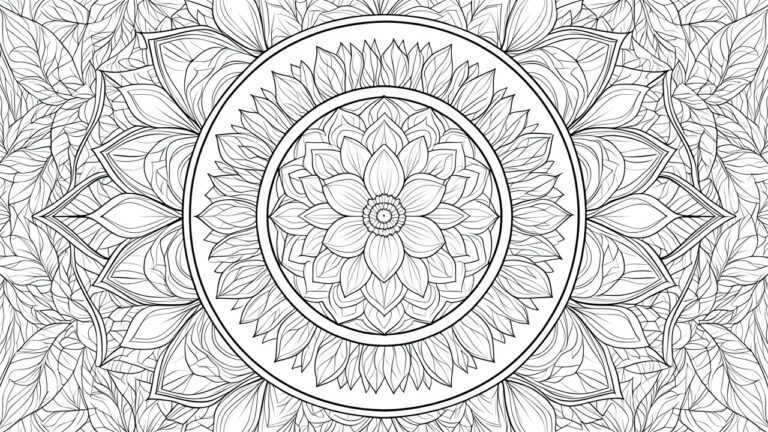
I like coloring mandalas on days when I want something simple to focus on.
I put together these easy pages because they work well for a short break.
Each one has basic shapes that do not require a lot of concentration.
I usually keep a few printed out near my desk for whenever I have a moment.
Layered Floral Mandala with Outer Leaf Ring
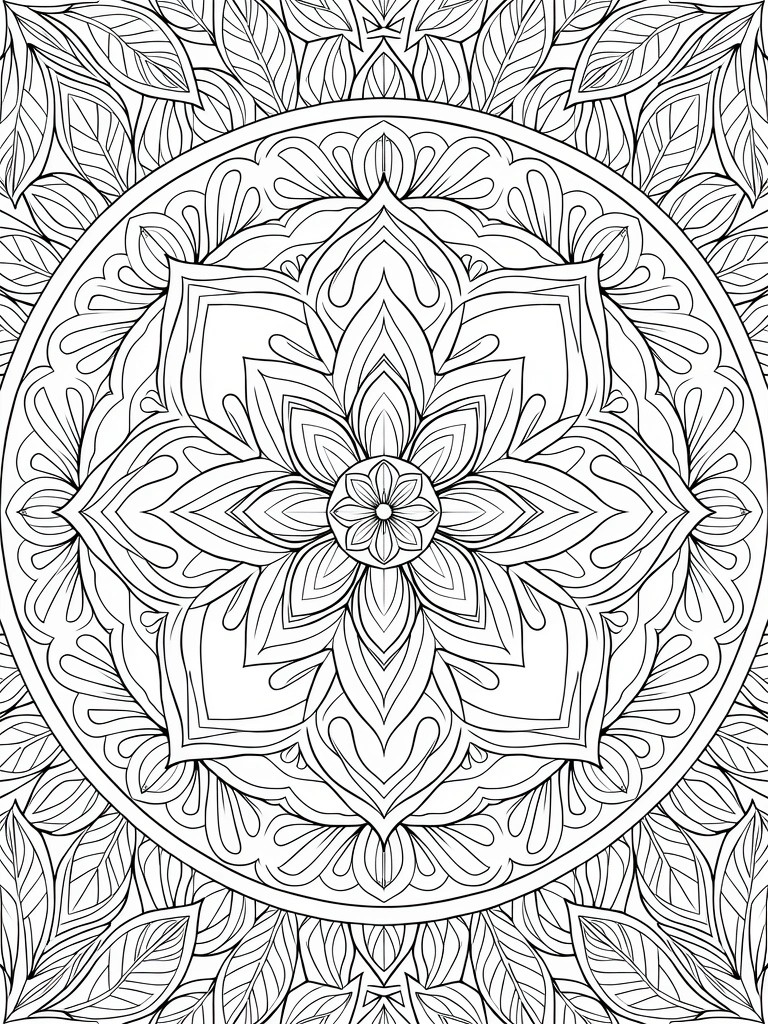
Mandala pages built around a central flower use overlapping petals and concentric rings to create a clear focal point. The design adds a solid circular border that separates the main bloom from the surrounding leaf shapes arranged in even repetition. This structure keeps the pattern balanced so colorers can work from the center outward or fill sections as they go.
The layout makes this easy to color in stages since each ring stays distinct from the next. A page like this works especially well for adults who want steady pattern work without tight spaces or scattered details. The even spacing supports both quick single-color fills and light shading across the repeated shapes.
Layered Floral Mandala with Open Center
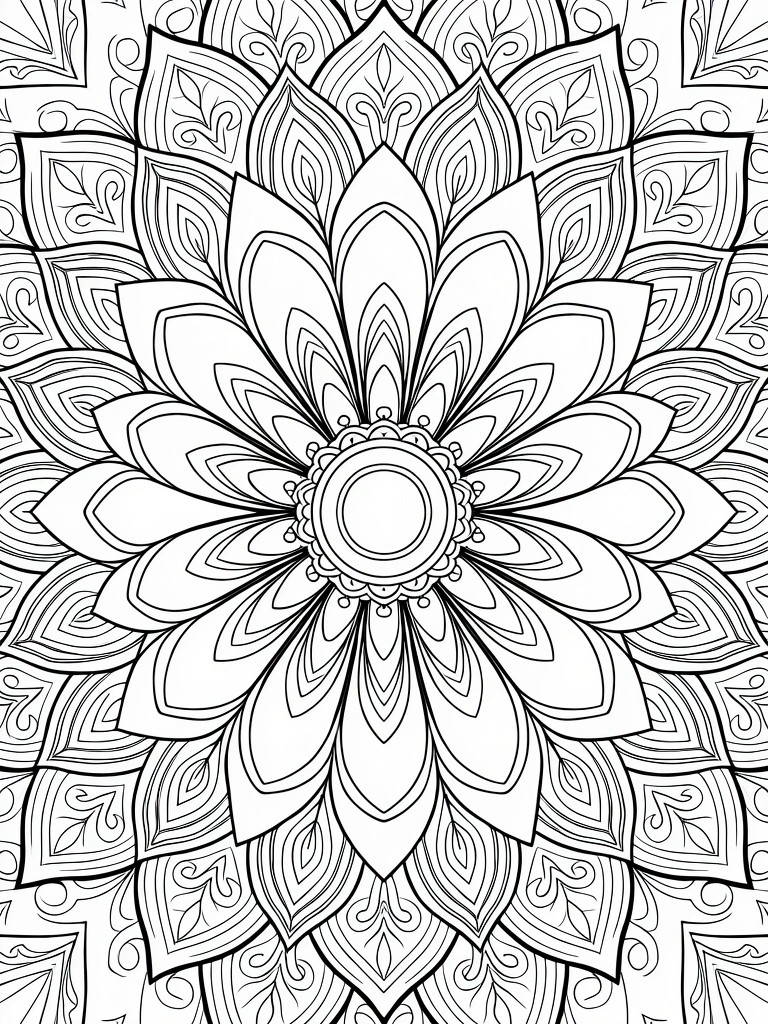
A floral mandala built around one large central bloom offers a clear focal point that expands through repeated petal rings. The design uses bold outlines and consistent spacing to create rings of shapes that move outward from the middle. This radial layout keeps the pattern balanced while giving colorers distinct sections to work on without overlap.
What makes this page useful is the open center circle that serves as a simple starting point before moving into the surrounding layers. The repeating petal shapes let colorers repeat colors or try simple shading without complex planning. For a relaxing session, this kind of page suits adults who want steady progress through a structured but not overwhelming design. The even spacing also makes it easy to print and color in shorter sittings without losing the overall pattern.
Concentric Mandala with Layered Petal Patterns
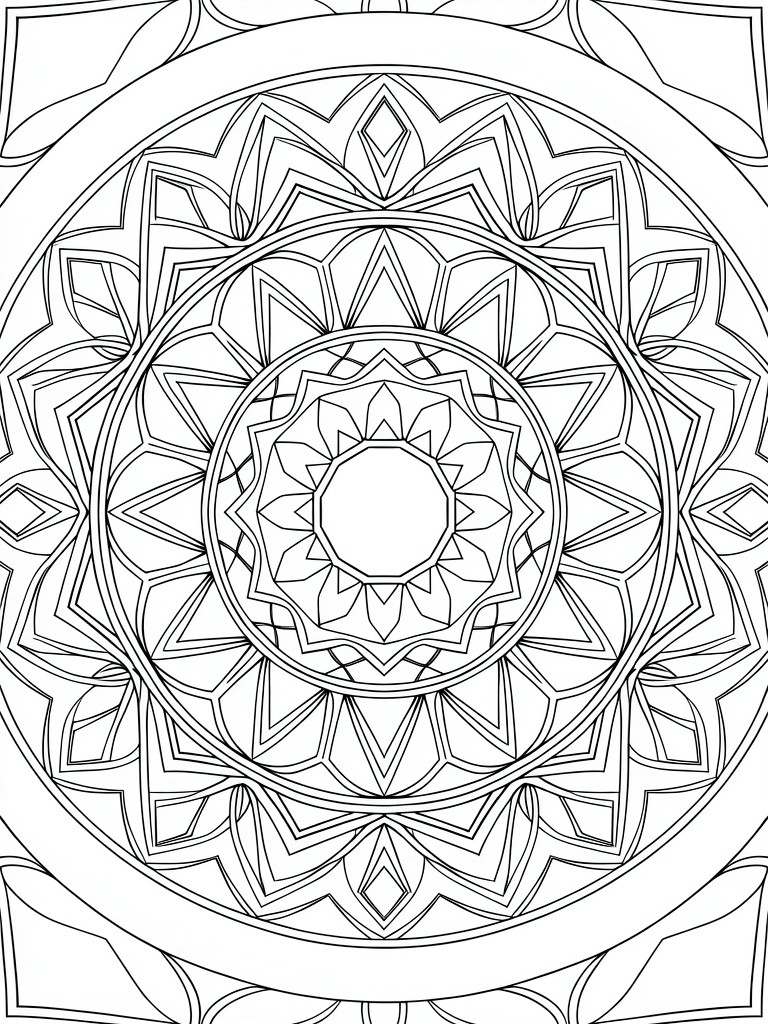
A mandala built from several concentric rings uses repeating petal and diamond shapes to form a balanced circular design. The layout places a small central polygon inside gradually larger bands of symmetrical patterns. This structure gives colorers clear sections to fill while keeping the overall design orderly.
The repeating lines make it straightforward to choose colors without overthinking placement. What makes this page useful is the way each ring offers its own contained pattern, so you can color one layer at a time. A page like this works especially well for beginners who want the meditative feel of a mandala without getting lost in too many tiny details.
Leaf Mandala with Layered Details
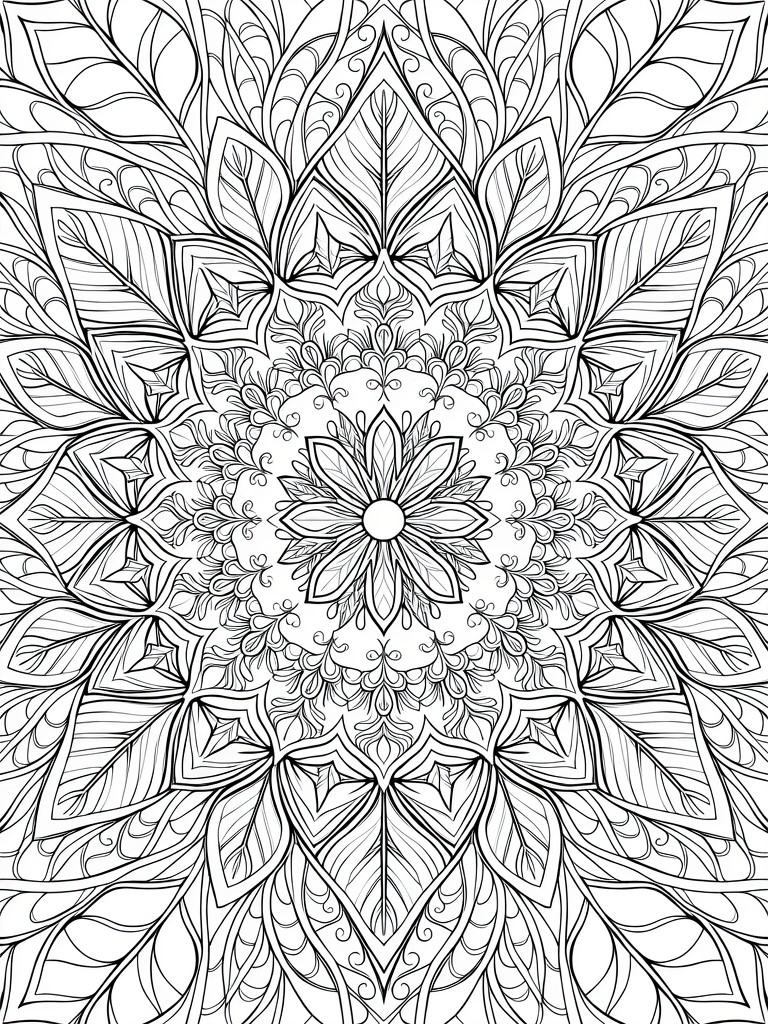
A mandala built from repeating leaf shapes creates the main structure here, with each leaf divided into smaller sections by fine lines. The design places a small flower at the very center and builds outward in rings of similar shapes that stay evenly spaced all the way around. This layout gives colorers a clear path to follow while still offering plenty of separate areas to shade.
What makes this page useful is the way larger leaf outlines sit next to tighter inner patterns, so colorers can switch between broad strokes and smaller work without losing the overall flow. The repeating structure helps keep the session steady once the first few sections are done. For adults looking for a focused but not overly complex mandala, the balanced spacing makes it easy to pick up and put down without losing track of the pattern.
Concentric Ring Mandala with Repeating Borders
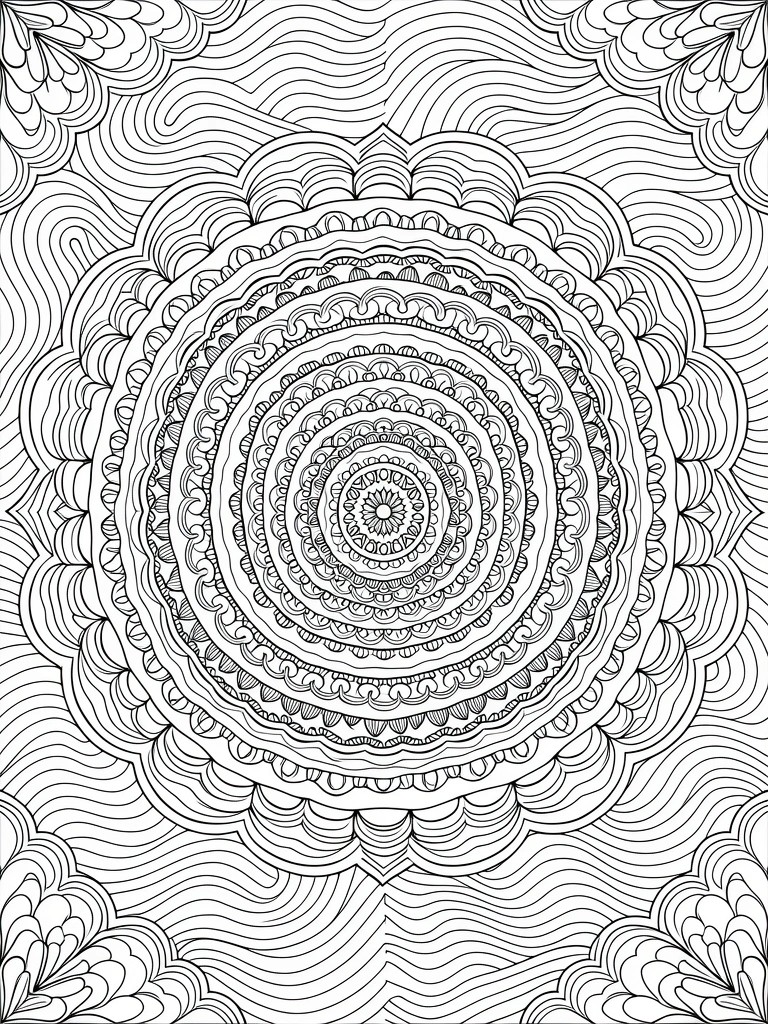
This mandala uses a series of concentric circles that grow outward from a small central flower motif. Each ring carries its own set of repeating shapes such as scallops, waves, and small arches, all contained inside an outer frame of flowing lines and corner flourishes. The radial layout keeps every section balanced so color choices stay consistent across the page.
The layout makes this easy to color in short sessions because the rings can be tackled one at a time. A page like this works especially well for adults who want steady, repetitive work without switching between unrelated subjects. The mix of fine lines near the center and broader shapes farther out gives colorers a natural way to vary how much detail they add. For a relaxing session, this kind of page offers clear structure while still leaving room for personal color decisions.
Layered Star Mandala with Radiating Points
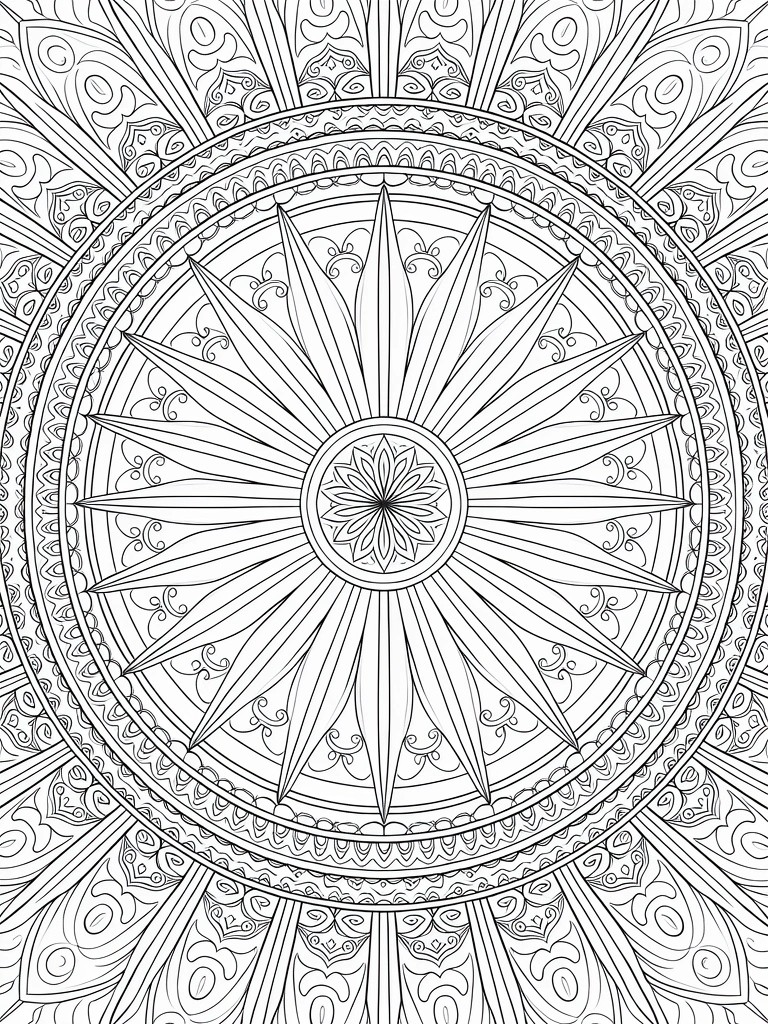
A mandala built around a small central flower that extends into long pointed rays creates a clear radial structure. Multiple circular bands filled with repeating swirls sit between the rays and the outer edge, giving the page distinct zones to color. Larger decorative shapes along the perimeter add framing without filling every gap.
What makes this page useful is the way the rays and rings divide the design into manageable sections. Colorers can work ring by ring or focus on the star shape first for quick progress. The even spacing keeps the page from feeling crowded, which suits a steady, low-pressure session for adults who prefer patterns over loose scenes.
Celestial Constellation Mandala
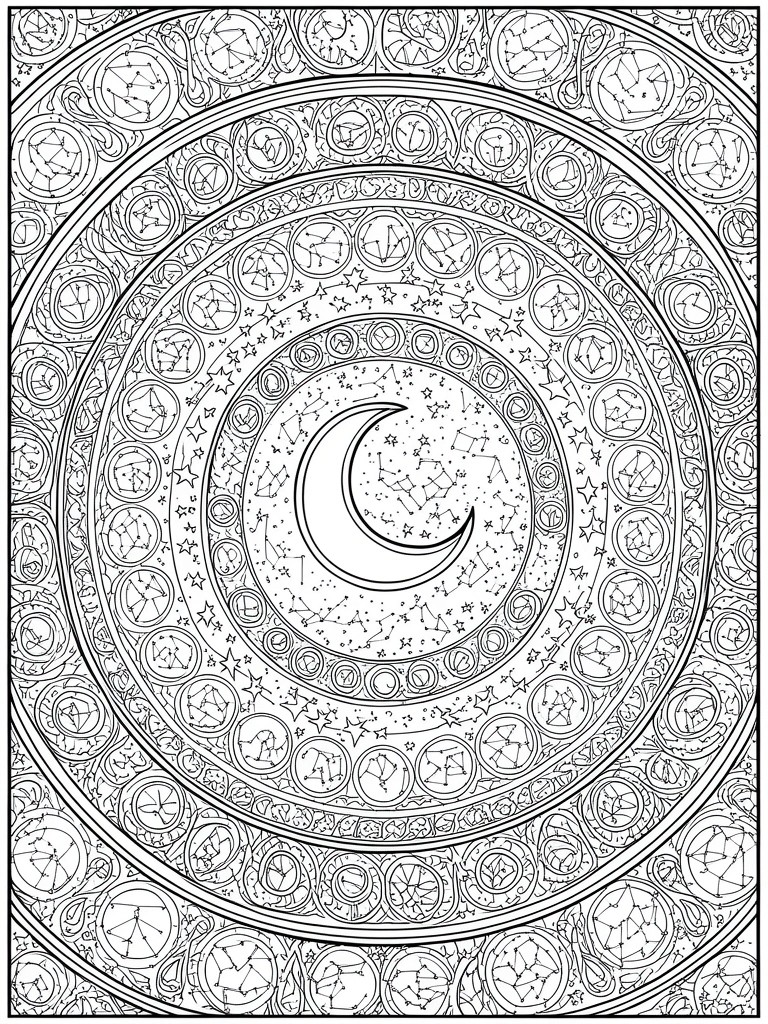
A mandala built from concentric rings of constellation patterns centers on a large crescent moon. The design uses repeating circular frames that each hold small star maps, creating clear sections separated by decorative borders and scattered stars. This layout gives colorers distinct areas to work on while maintaining an overall balanced circular structure.
The detail level makes this a smart pick for adults who like steady progress through patterns without one overwhelming central image. Each ring can be colored separately, which helps break the page into manageable parts. The mix of small constellation shapes and larger open spaces around the moon supports both precise coloring and quicker fills. A page like this stands out for printable collections because the theme stays consistent across the rings.
Concentric Swirl Mandala with Leaf Borders
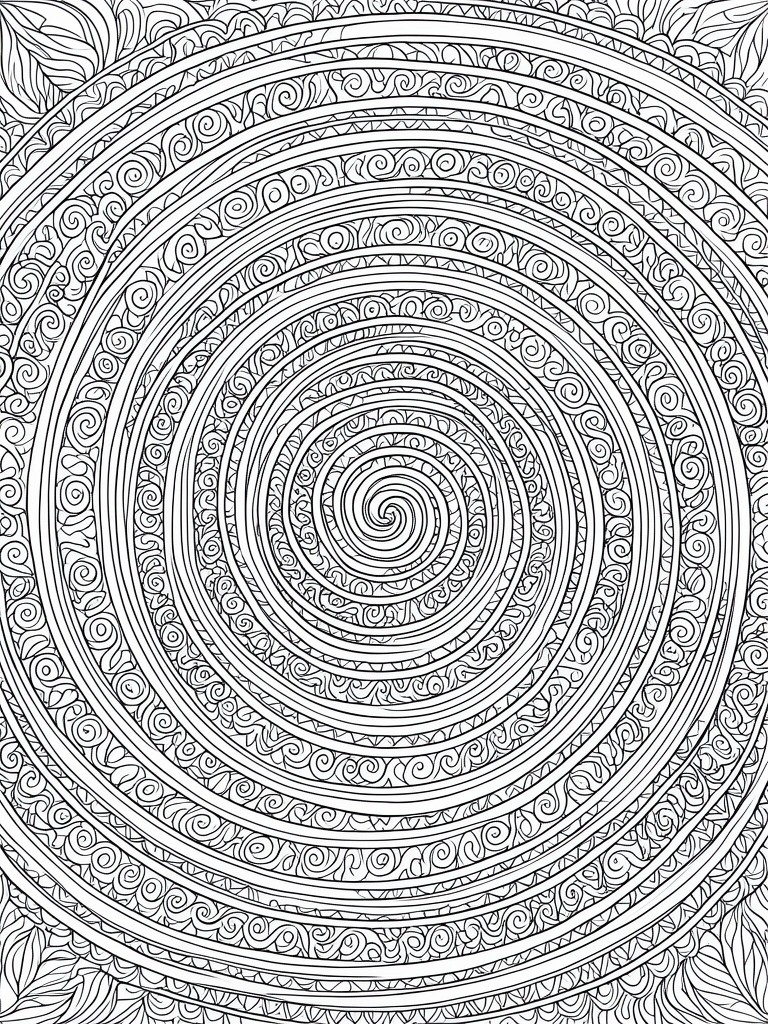
A mandala formed by multiple rings of swirling lines and curved motifs creates a radial pattern that starts tight in the center and widens outward. Each ring uses repeated spiral and wave shapes that stay consistent while growing more detailed toward the edges. Leaf clusters placed in the four corners give the design a soft outer boundary.
The layout makes this easy to color ring by ring without losing track of the overall structure. What makes this page useful is the clear spacing between sections that supports steady progress during a longer session. A page like this works especially well for adults who prefer pattern work over scenes but still want enough variation to keep interest. The repeating elements help the finished page look balanced even if colors are applied simply.
Symmetrical Layered Mandala with Petal Rings
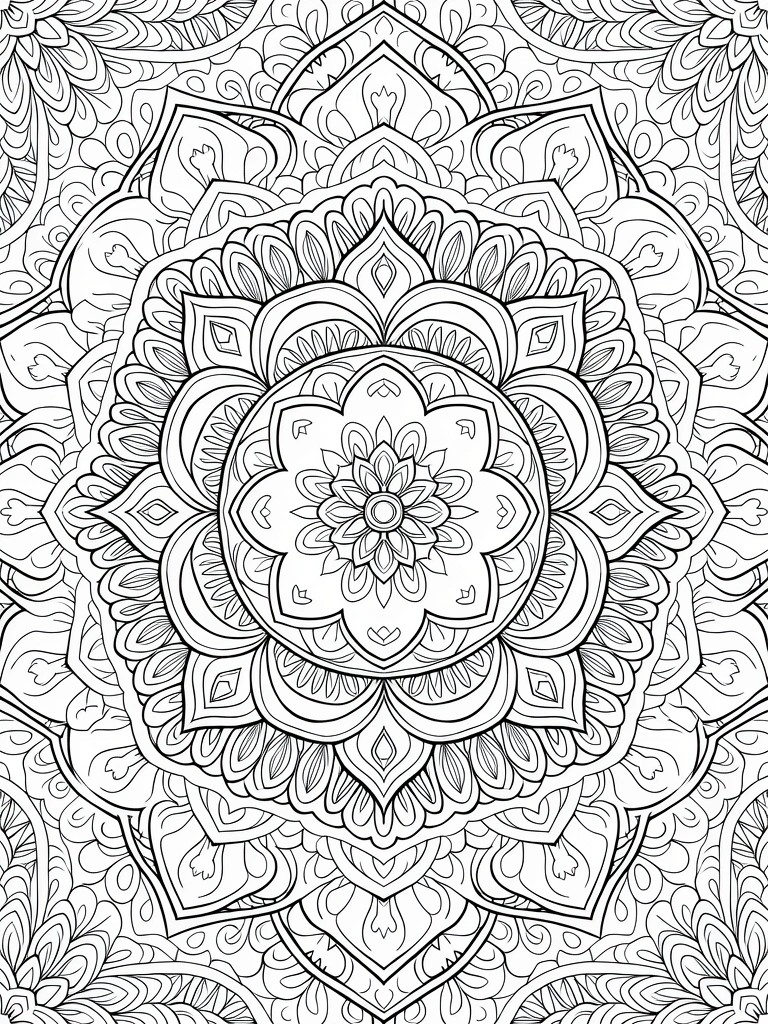
Mandala designs like this one center on a small flower motif that expands through successive rings of curved shapes. Each ring uses similar petal and diamond elements to maintain symmetry across the entire circle. The structure gives colorers clear boundaries to work within while still offering variety in the pattern details.
What makes this page useful is the way the rings separate naturally into manageable coloring zones. Beginners can focus on one layer at a time without losing the overall flow. The moderate level of detail suits a short relaxing session where the goal is steady progress rather than intricate shading.
Layered Floral Mandala with Repeating Leaves
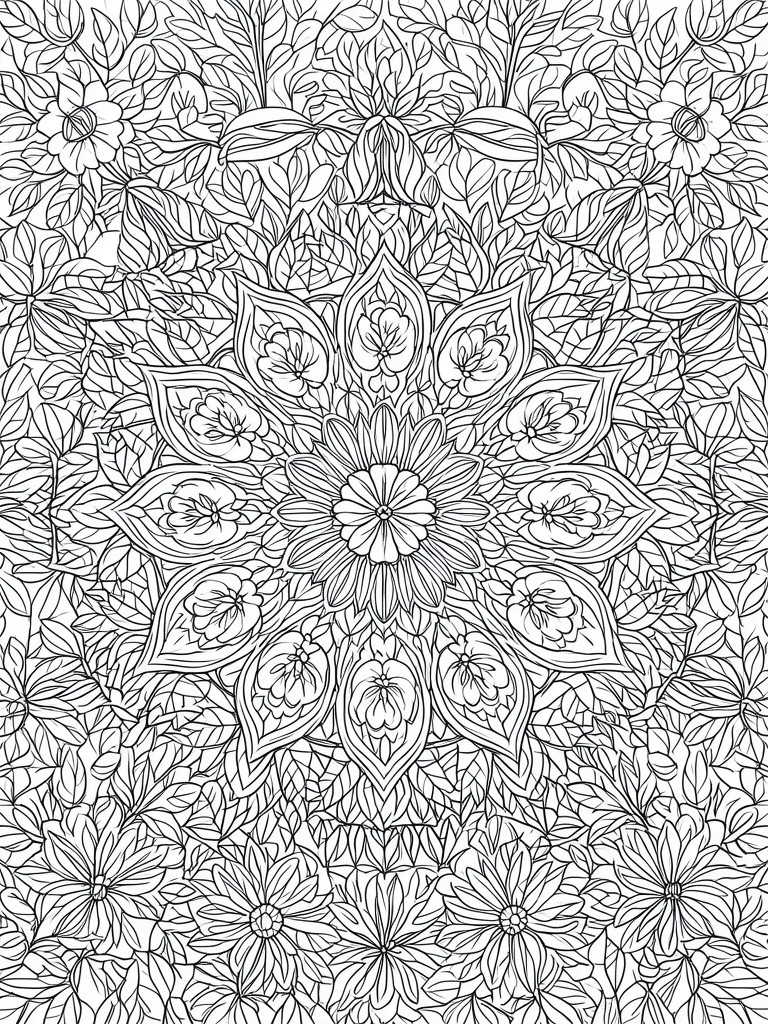
A floral mandala built from a central bloom and successive rings of petals and leaves creates a clear structure for coloring. The design mixes larger open shapes near the middle with tighter leaf clusters toward the edges while keeping everything symmetrical. This arrangement gives colorers distinct zones that still connect into one balanced whole.
The layout makes this easy to color without jumping between unrelated sections. Each ring introduces a fresh set of shapes that keep the session moving at a steady pace. A page like this works especially well for adults who want a pattern-focused mandala that stays relaxing yet engaging from start to finish.
Layered Leaf Mandala with Feather Borders
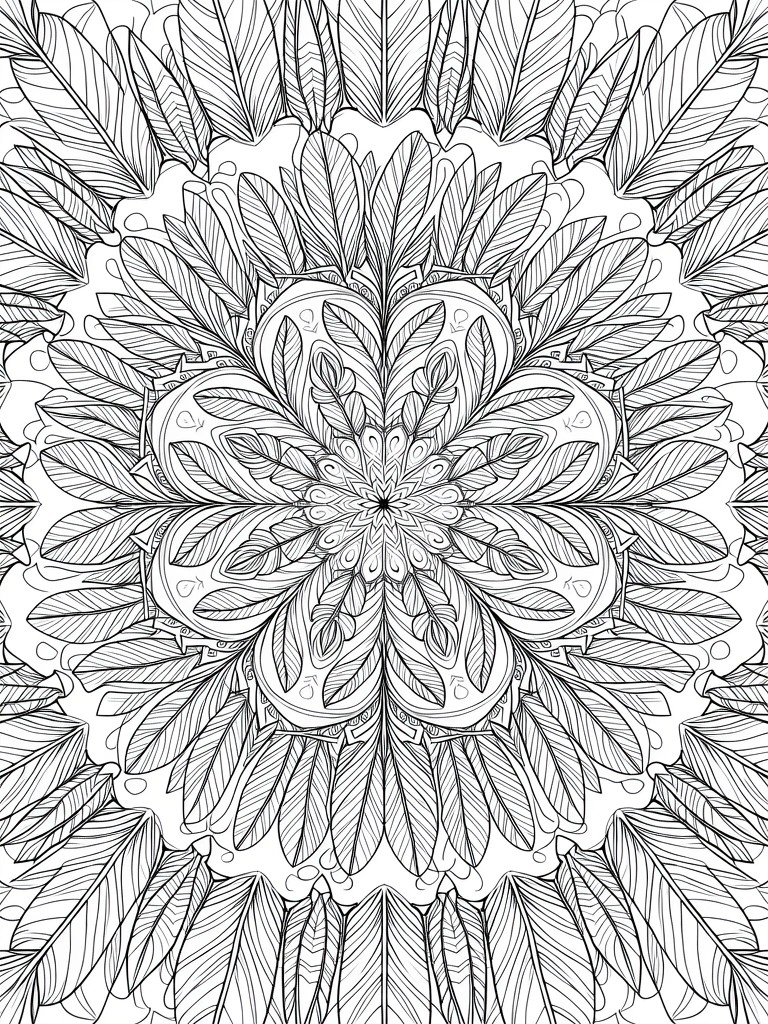
A mandala made from leaf shapes forms the core of this page, with each layer building outward in a repeating circular layout. Feather patterns fill the outer sections and create distinct rings around the center. The fine line work and even spacing let colorers work on one segment at a time while keeping the overall design balanced.
The layout makes this easy to color in sections without losing track of the symmetry. A page like this works especially well for adults who want a pattern-focused session that stays relaxing rather than overwhelming. The mix of larger leaf areas and smaller feather details gives options for both quick fills and finer shading work.
Layered Petal Mandala with Repeating Fills
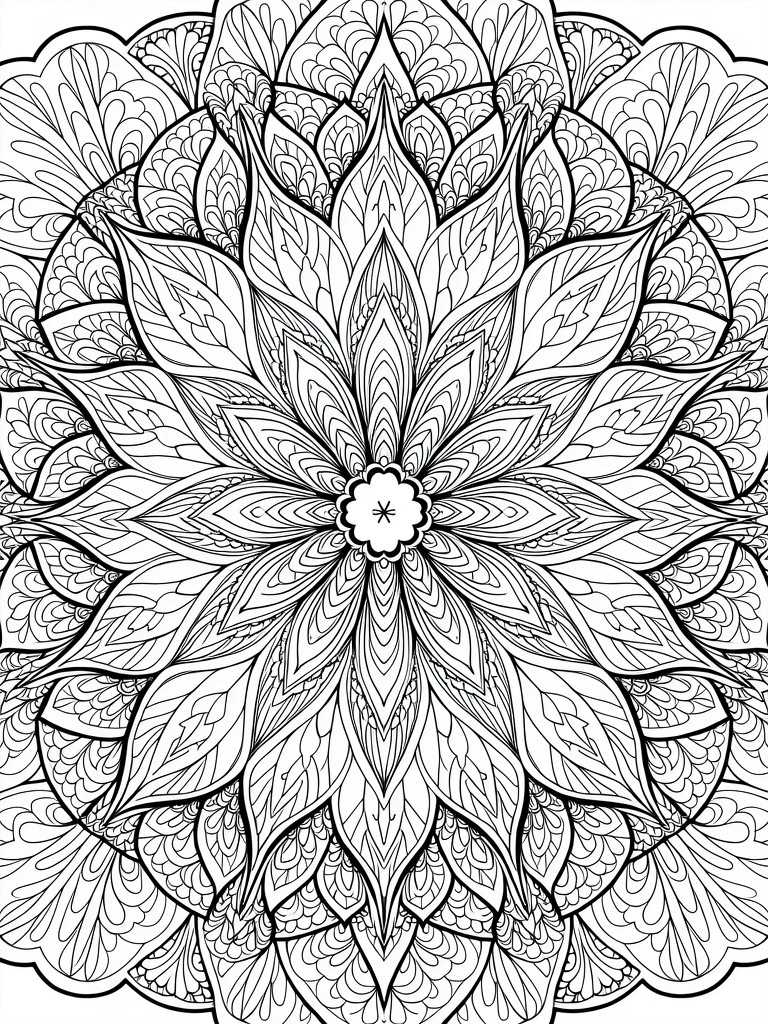
Mandala pages built around a central bloom and expanding rings of pointed petals give colorers clear sections to work through. The design uses tight line work and smaller repeating shapes inside each larger form to keep the eye moving outward in a steady way. This radial setup creates natural stopping points between rings.
The layout makes this easy to color one ring at a time without losing track of the overall pattern. A page like this works especially well for adults who prefer steady repetition over loose scenes. The even spacing between shapes helps color choices stay simple while still giving room for small accents inside the petals.
Mountain Landscape Mandala with Wavy Layers
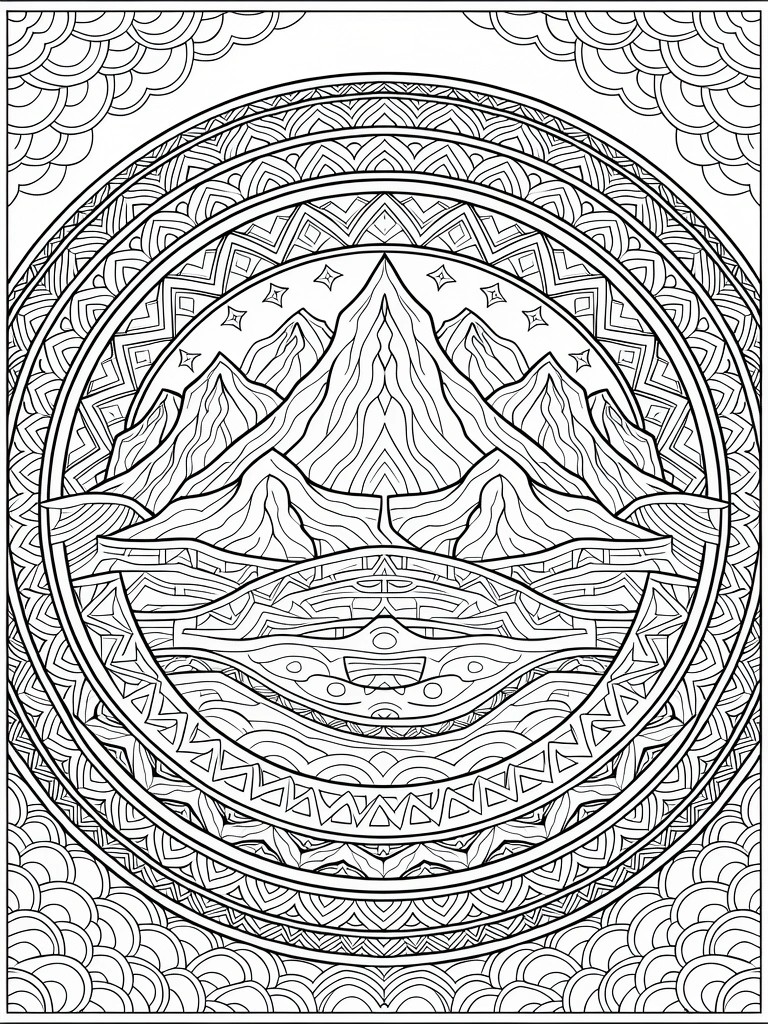
A central mountain range forms the core of this mandala, with peaks rising above several bands of flowing lines that suggest water or hills. Concentric circles frame the scene and hold repeating geometric patterns around the edges. Stars sit above the mountains while cloud shapes fill the outer corners.
The layout makes this easy to color because the main shapes stay bold and separate from the finer border details. Colorers can focus on the mountains first or work through the circular bands one ring at a time. A page like this works especially well for adults who want a mix of landscape and pattern without jumping between unrelated sections. The clear structure helps it stand out when people search for printable mandalas that feel balanced rather than scattered.
Pebble Ring Mandala
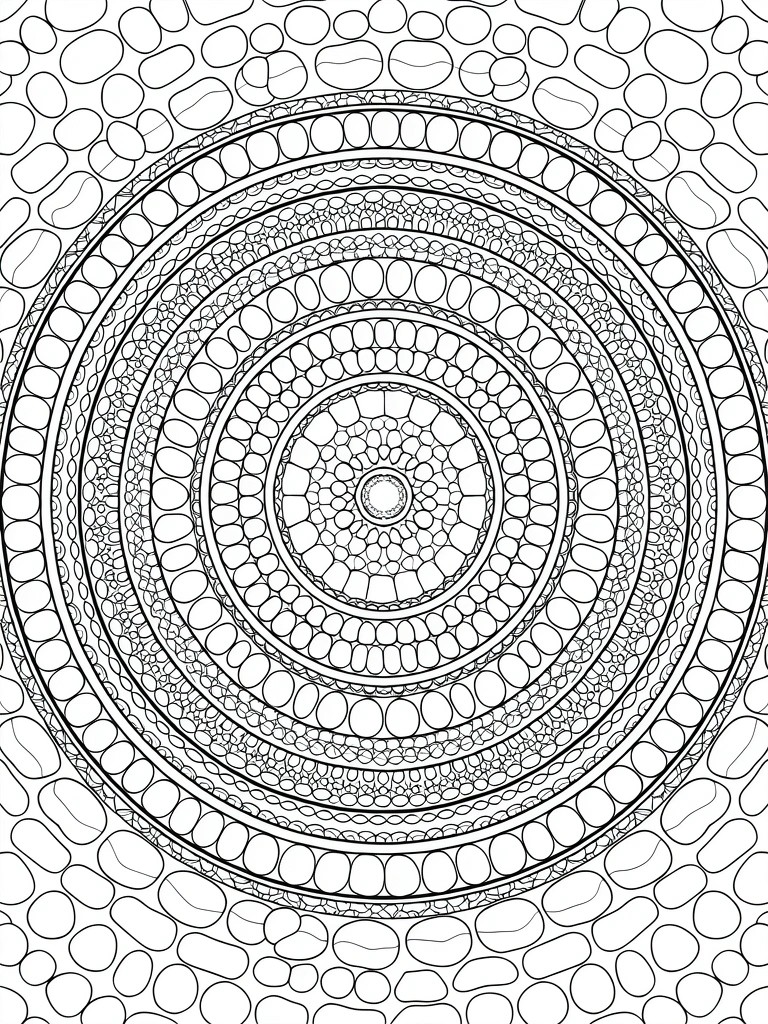
A mandala made from concentric rings of oval shapes forms a steady pattern that builds outward from a small center point. Each ring uses pebble-style forms of varying sizes to create clear bands across the page. The repeating layout keeps the design focused on radial growth and simple repetition.
The layout makes this easy to color by breaking the page into distinct rings that can be filled one section at a time. A page like this works especially well for adults who want a pattern-focused session without fine line work. The open shapes help this feel steady and low-pressure while still giving enough structure to hold attention through the whole design.
Mandala with Layered Swirls and Central Flower
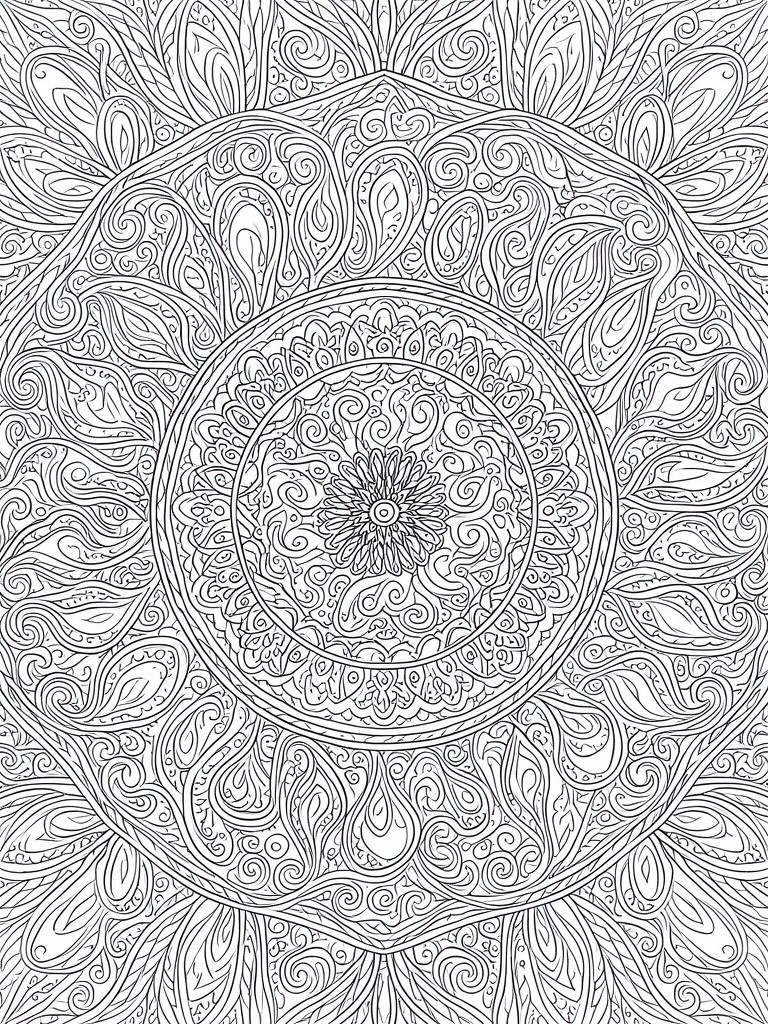
This mandala centers on a small daisy-style flower and builds outward through two distinct rings of repeating curves. The inner ring packs tight spirals and small shapes while the outer ring uses larger paisley and leaf forms to fill the space. The design stays strictly circular with even spacing that keeps every section reachable from the middle.
The layout makes this easy to color because the rings give natural stopping points without crowding the page. A page like this works especially well for adults who want steady repetition rather than open backgrounds or extra elements to plan around. The mix of fine inner lines and broader outer shapes lets colorers switch between detail work and quicker fills without losing the overall pattern.
Layered Rose Mandala with Circular Rings
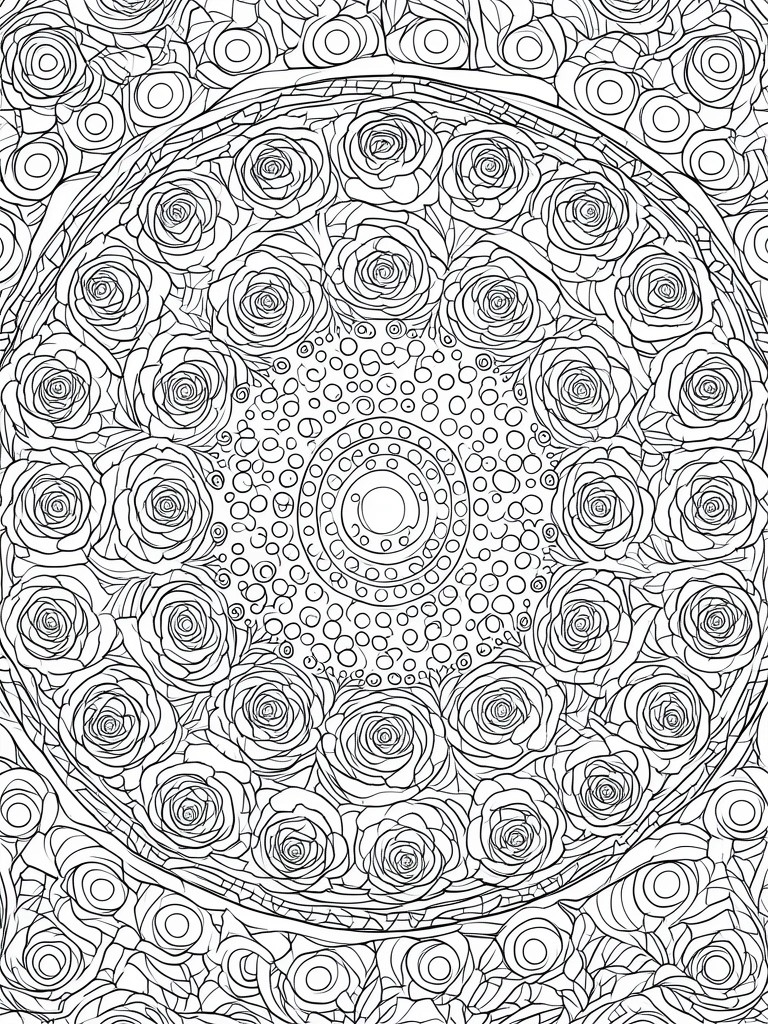
A rose mandala places full blooms in repeating concentric rings that radiate from a central point. The design uses a dotted circle and thin rings at the core while surrounding it with multiple sizes of roses and small leaf accents. This structure creates clear zones that let colorers move from one ring to the next without losing their place.
The layout makes this easy to color in sections because each ring of roses sits apart from the next. A page like this works especially well for adults who want a pattern that feels orderly but still has enough small shapes to keep the session interesting. The even spacing between elements helps prevent the page from looking crowded once color is added.
Concentric Floral Mandala with Border Rings
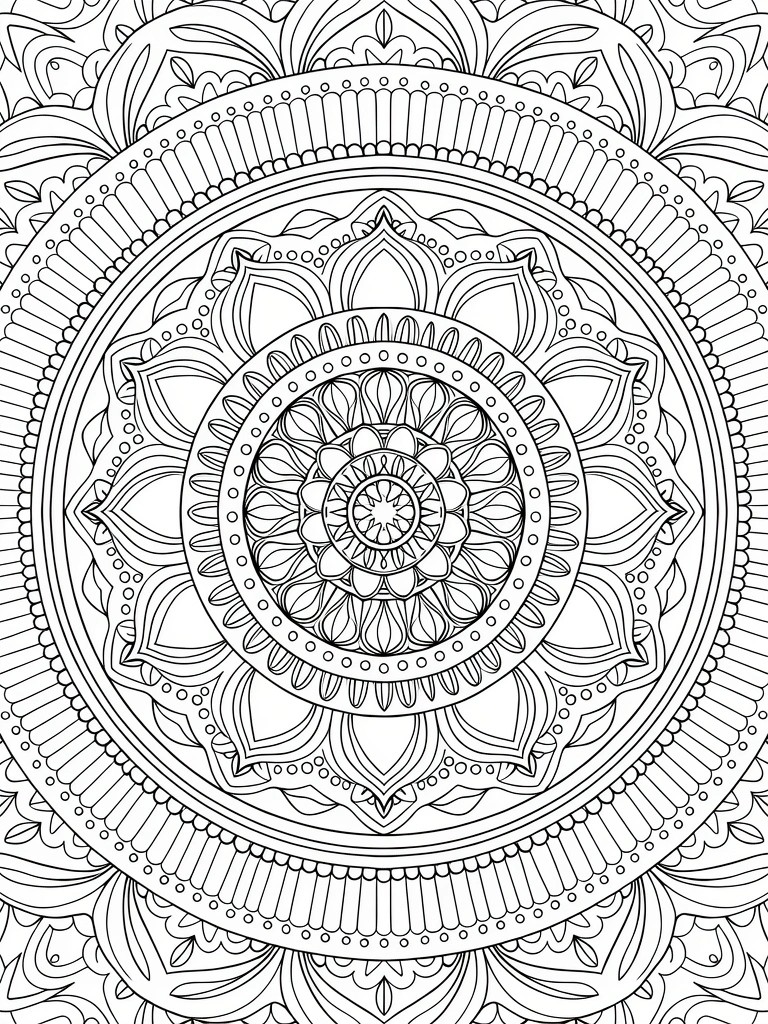
This mandala centers on a small flower core that expands through repeated petal layers into wider rings of geometric and scalloped borders. The design uses radial symmetry with consistent spacing between elements so each ring stands out as its own section. The even line weight and clear boundaries between rings keep the overall pattern orderly while still offering plenty of small shapes to color.
What makes this page useful is the way the rings divide the work into manageable zones that can be colored one at a time. The outer borders give larger areas for quick coverage while the inner layers provide tighter detail for slower focus. A page like this works especially well for adults who prefer a balanced session that feels structured without becoming too dense in any single spot.
Layered Floral Mandala with Concentric Botanical Rings
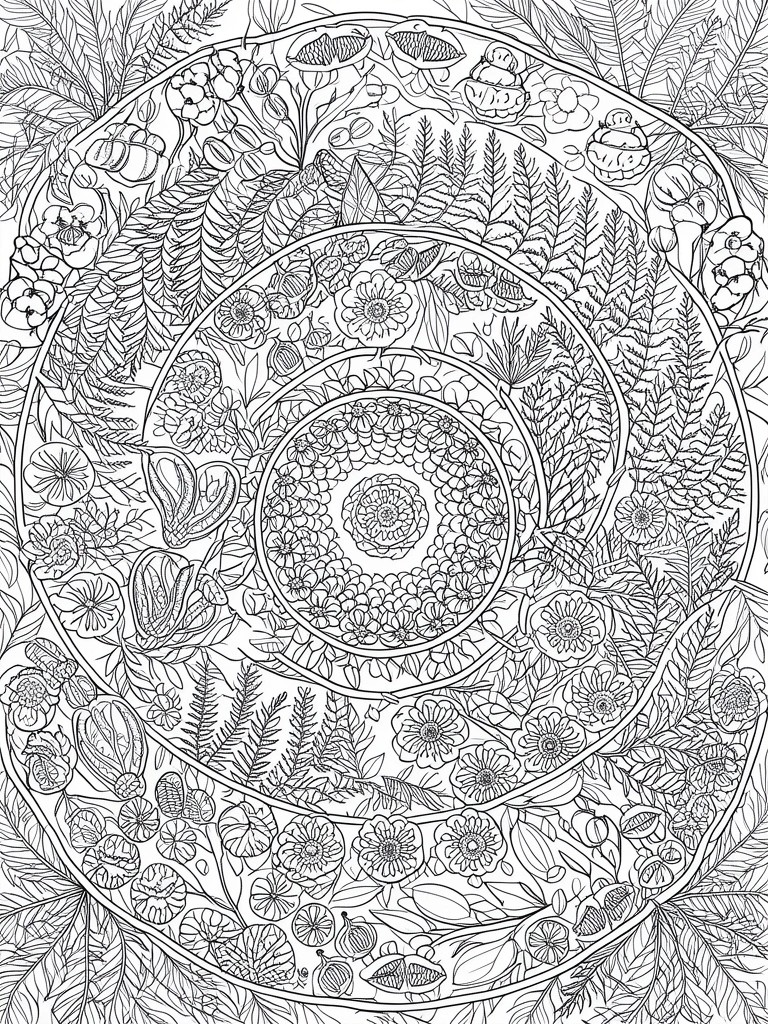
A mandala built from multiple circular rings filled with varied flowers, leaves, ferns, and seed pods creates a radial botanical design. The layout places a small central bloom at the core and expands outward through distinct bands of plant motifs that differ in shape and density. This structure gives colorers clear sections to work through while maintaining an overall balanced pattern.
The ring format breaks the page into natural stopping points that support a steady, low-pressure session. A page like this works especially well for adults who want some detail without a single overwhelming area to fill. The mix of repeating circular order and changing plant shapes keeps the process engaging over multiple sittings.
Layered Floral Mandala with Repeating Petals
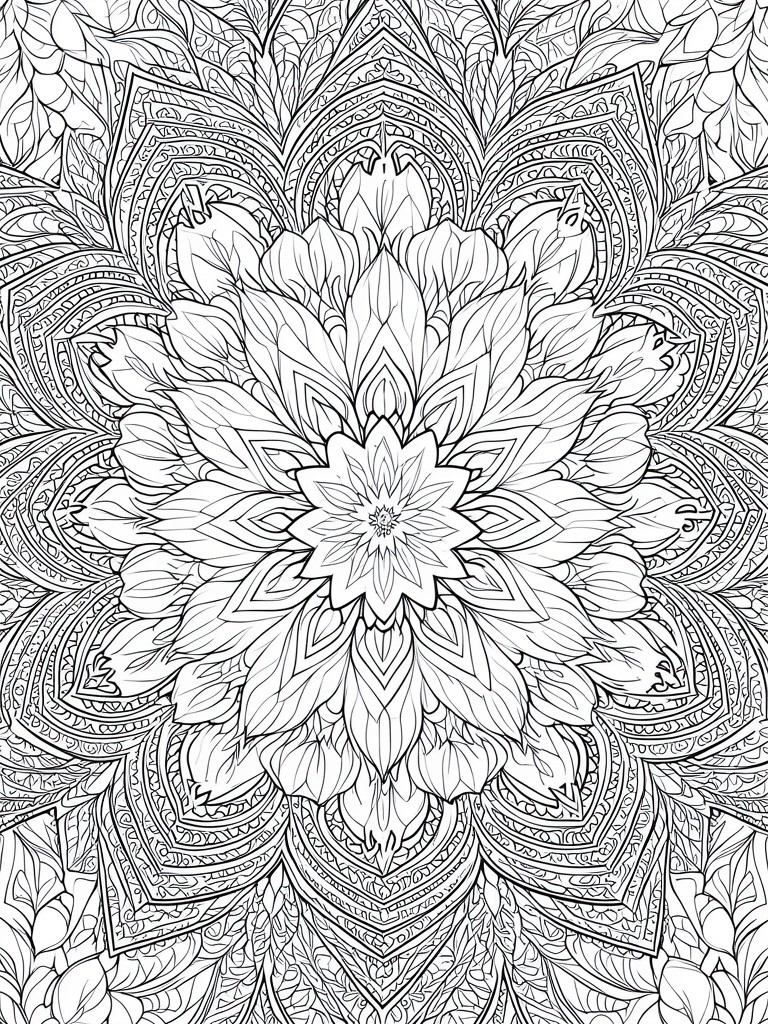
A mandala built from concentric rings of flower petals creates a balanced design that radiates outward from the center. The page uses repeating leaf and petal shapes to fill the circular space without large empty areas. Fine lines separate each section so colors stay contained while still allowing room for shading.
The layout makes this easy to color because the sections are clearly divided by strong outlines. What makes this page useful is the mix of larger petal shapes near the middle with smaller details toward the edges. A page like this works especially well for adults who want a relaxing pattern without jumping between unrelated elements. The radial structure guides the eye naturally so coloring feels steady rather than scattered.
Multi-Layered Mandala with Concentric Floral Rings
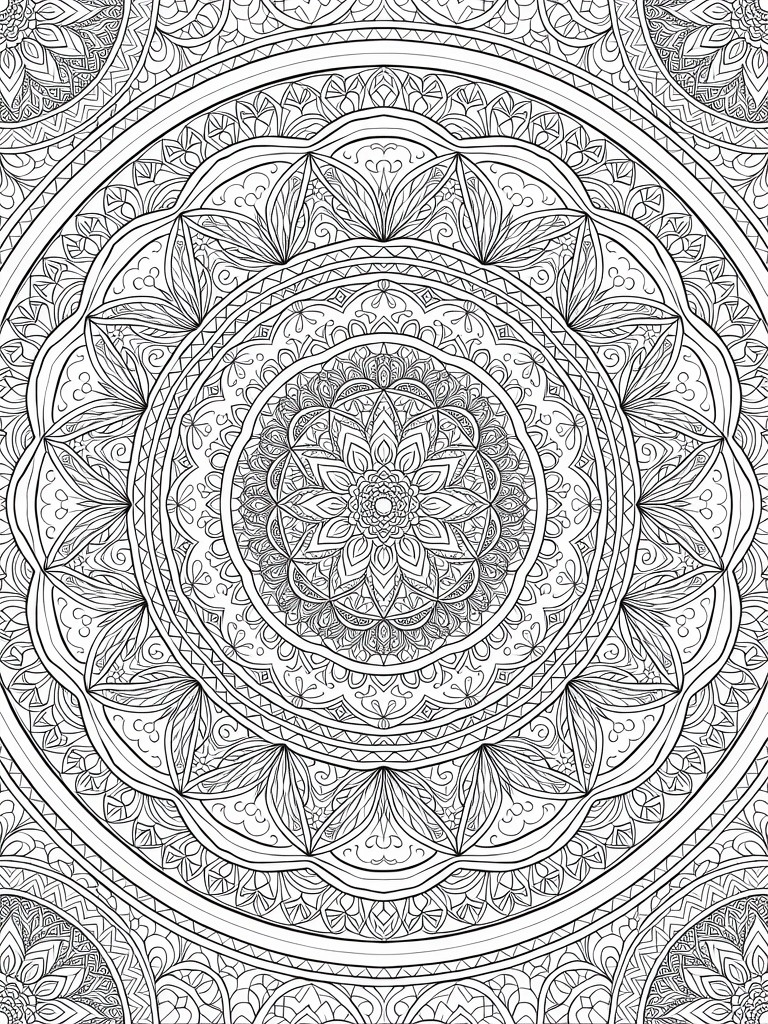
This mandala centers on a small floral core that expands through several rings of repeating petal shapes and geometric fillers. The design uses consistent line weight and clear divisions between sections so each ring stands out on its own. The overall composition stays symmetrical, which keeps the focus on pattern repetition rather than a single focal point.
The layout makes this easy to color because the rings create natural stopping points that let you work in stages. A page like this works especially well for adults who prefer steady, pattern-based coloring over loose scenes. The even spacing and moderate detail level support longer sessions without requiring tiny spaces or heavy shading decisions.
Mandala with Layered Floral Rings and Spiral Patterns
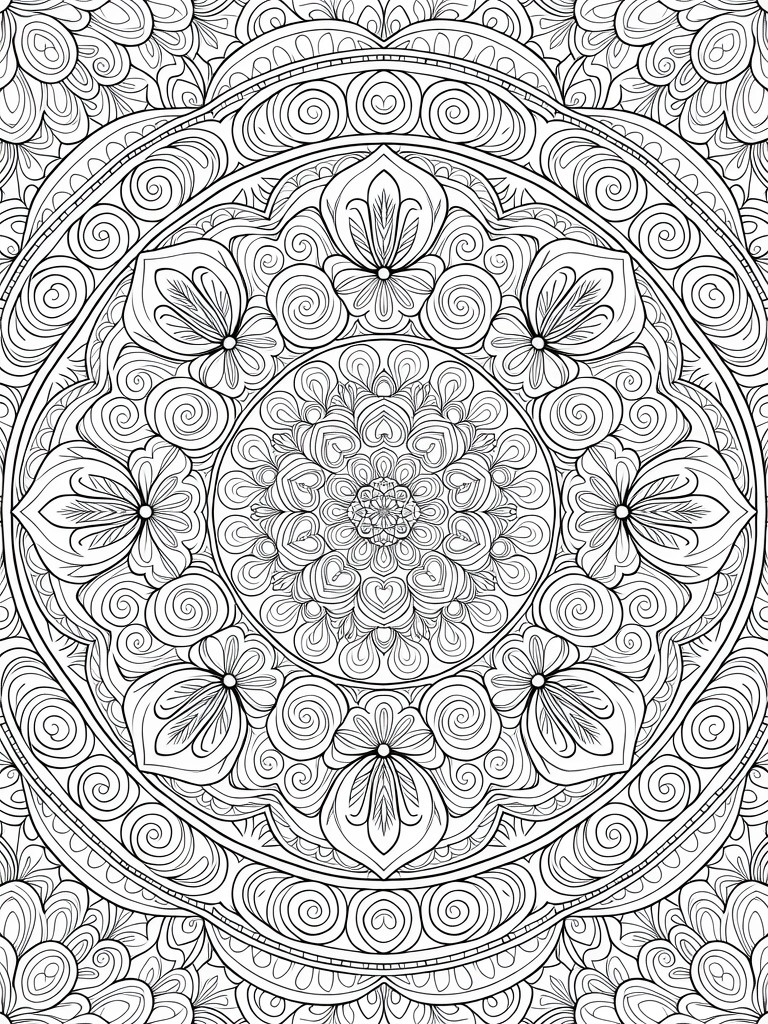
Mandala designs like this one center on repeating flower shapes placed in rings that grow outward from a small detailed core. The layout mixes petal clusters with curved lines and swirls that fill the spaces between each ring. This structure gives colorers clear sections to focus on while keeping the overall page balanced and symmetrical.
The layout makes this easy to color because the rings stay separate enough to finish one at a time. A page like this works especially well for adults who want steady progress without jumping between unrelated shapes. The mix of larger petals and tighter swirls offers both open areas and finer lines in the same design.
Frequently Asked Questions
1. Where can I access and print the 21 easy mandala coloring pages? You can usually find them as free or low cost downloads on the website or platform where the article appears. Look for a link or button near the article that leads to a PDF file. Once downloaded open the file on your computer and print the pages using standard letter size paper for best results. If the pages are not free check the article for any purchase options or sign up requirements.
2. What art supplies work best for these simple mandala designs? Colored pencils offer good control and blending for gentle shading while fine tip markers provide vibrant colors without bleeding through the paper. Start with a basic set of 12 to 24 colors and add gel pens for highlights if desired. Avoid heavy markers on thin paper to prevent smudging and always test your tools on a spare sheet first.
3. How do these easy mandalas support relaxation during coloring sessions? The repetitive circular patterns allow your mind to focus on simple repetitive motions which can lower stress levels over time. Choose a quiet space set a timer for 20 to 30 minutes and color without aiming for perfection. Many people notice improved calm after just a few sessions because the designs are not overly complex.
4. Are the pages suitable for all ages including children and seniors? Yes the easy level makes them accessible for beginners of any age. Children enjoy the large shapes while adults and seniors appreciate the lack of tiny details that require strong eyesight. Supervise young users with markers and consider thicker paper for seniors who may press harder during coloring.
5. What should I do after completing all 21 pages if I want to continue the practice? Search online for additional free mandala printables from reputable art sites or consider buying a dedicated coloring book with similar gentle designs. You can also create your own variations by tracing basic circles and adding simple lines. Keep a journal of how you feel after each session to track ongoing benefits.
