

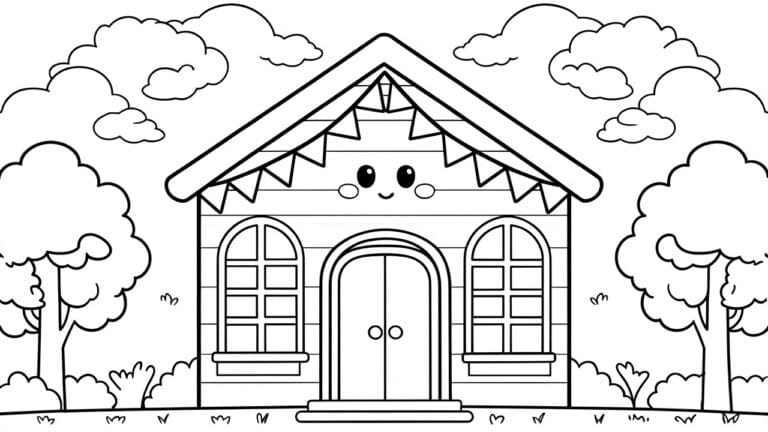
I like to have a few coloring pages ready for the first days of school when things feel a bit unsettled.
They give kids something to do while they settle into the classroom and meet new friends.
Over the years I have collected quite a few back to school designs that go beyond the usual pencils and books.
This list includes 18 pages with creative themes that might spark some imagination.
I have used similar pages with my own students and they tend to keep everyone occupied for a little while.
Cute Apple Resting on a Stack of Smiling Books
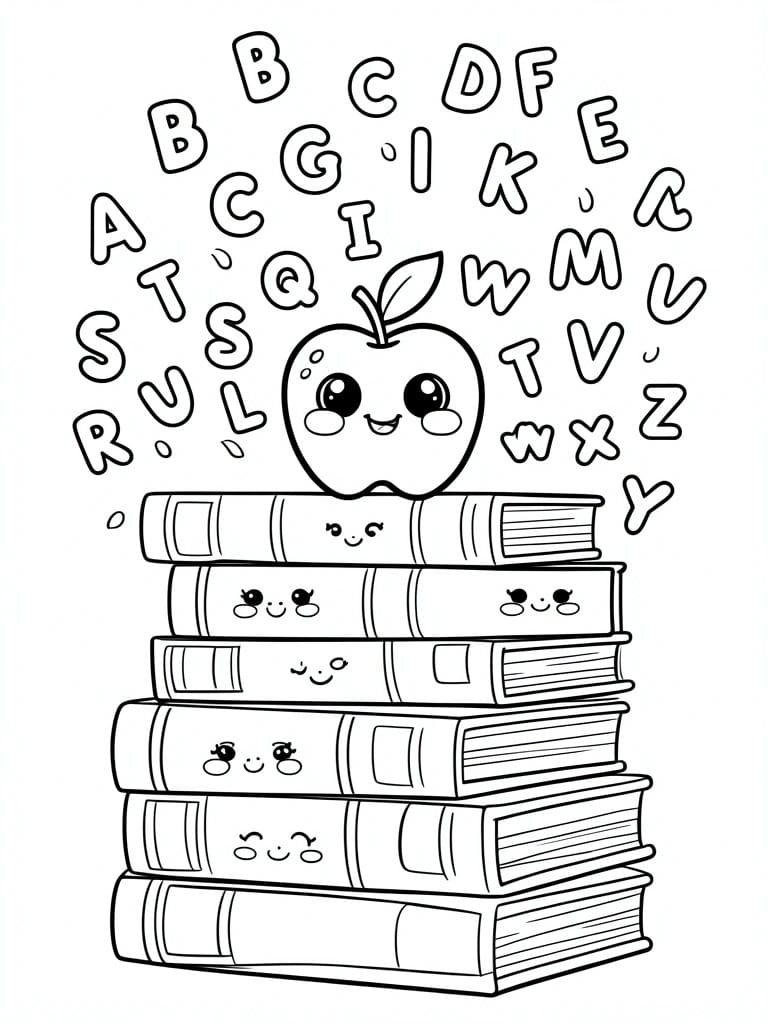
A back to school coloring page idea built around a central stack of books with simple faces drawn on their spines and covers. An apple character sits on top, and uppercase letters float loosely around the edges to fill the remaining space. The composition keeps most of the detail in the middle while leaving the outer letters spaced out for quicker coloring sections.
The layout makes this easy to color because the main shapes are bold and separated without tight patterns. Kids can finish the page in one sitting or color the letters separately during short classroom breaks. A page like this works especially well for the first week of school when teachers want something that connects to reading and the alphabet without requiring fine detail work.
Cute Whiteboard Mascot with School Banner
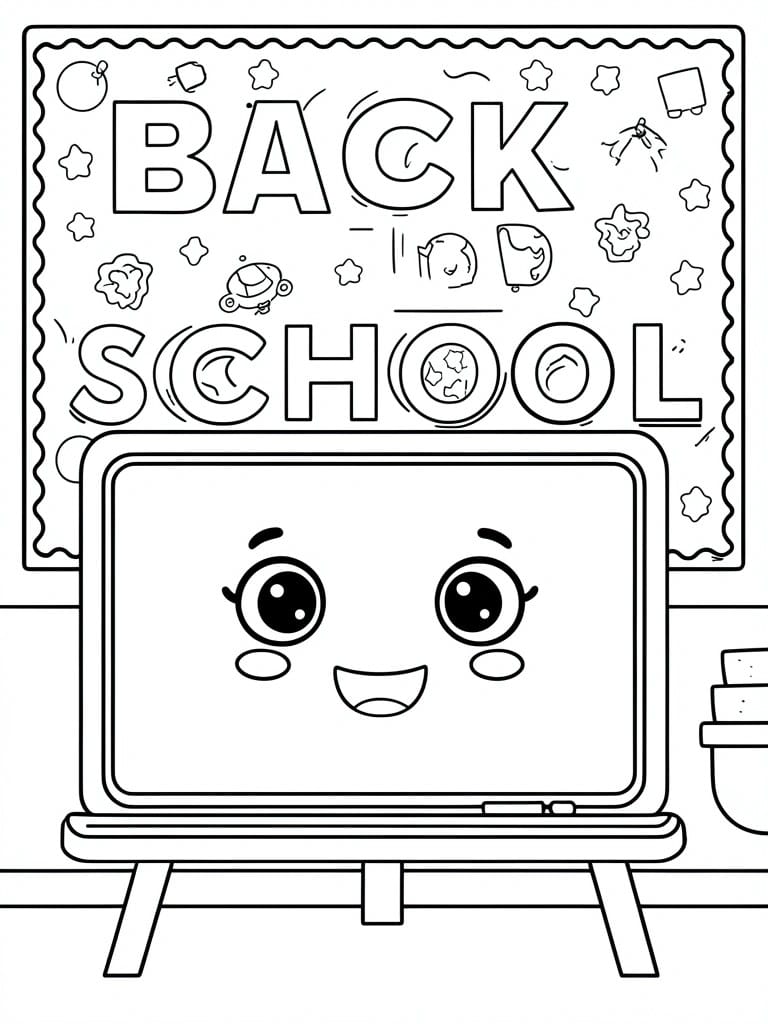
A back to school coloring page centers on a cartoon whiteboard character with large eyes and a simple smile set on an easel. Behind it sits a full chalkboard sign spelling out BACK TO SCHOOL in bold letters that include globe patterns inside some shapes. The layout places the main character in the lower half with scattered school icons like stars, apples, and books filling the upper space around the text.
What makes this page useful is the clear separation between the large face area and the smaller surrounding doodles. Kids can finish the main character quickly while still having room to color extra details without feeling overwhelmed. The bold lines and open sections help the page print cleanly and stay satisfying even for shorter coloring sessions.
Graduation Globe with Floating Shapes
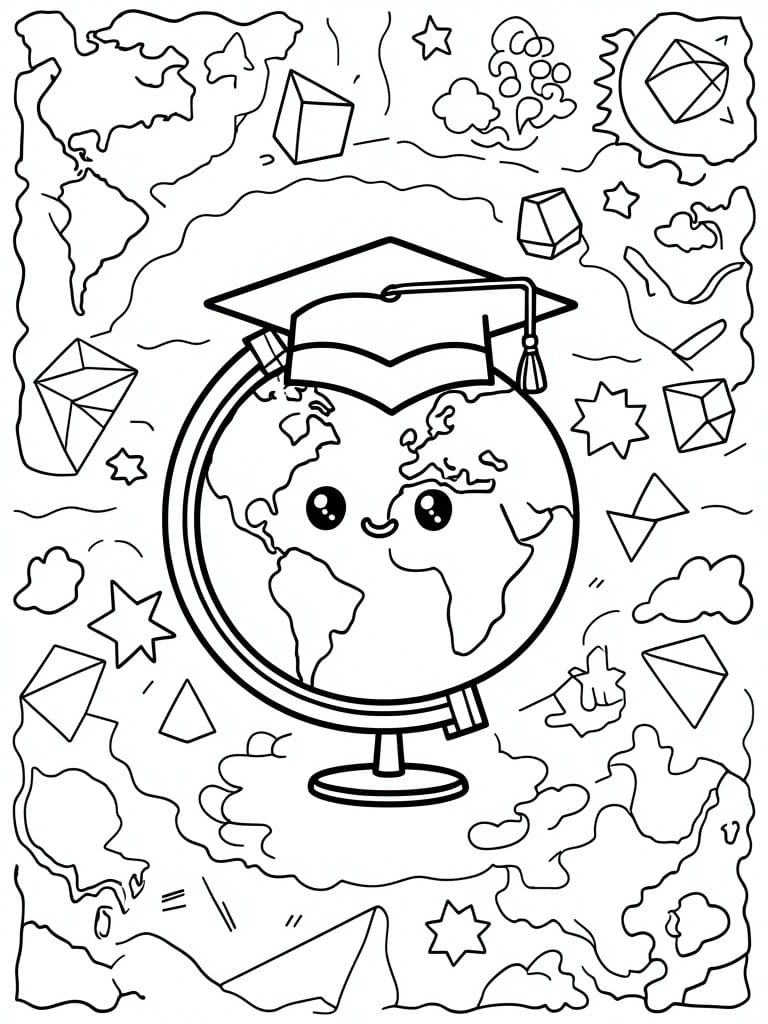
A graduation cap sits on a globe that displays clear continent outlines along with simple facial features at the center. The surrounding area fills with scattered three dimensional shapes, stars, and cloud forms that stay evenly spaced from the main subject. This arrangement keeps the focus on the globe while giving colorers distinct sections to work on in any order.
The layout makes this easy to color because bold lines define the globe and cap while the background pieces remain separate and uncomplicated. Kids can finish the central figure quickly and then add color to the smaller shapes without feeling overwhelmed. A page like this works especially well for first week classroom activities since it combines a geography element with back to school symbols in one printable.
Cartoon Lockers with Faces
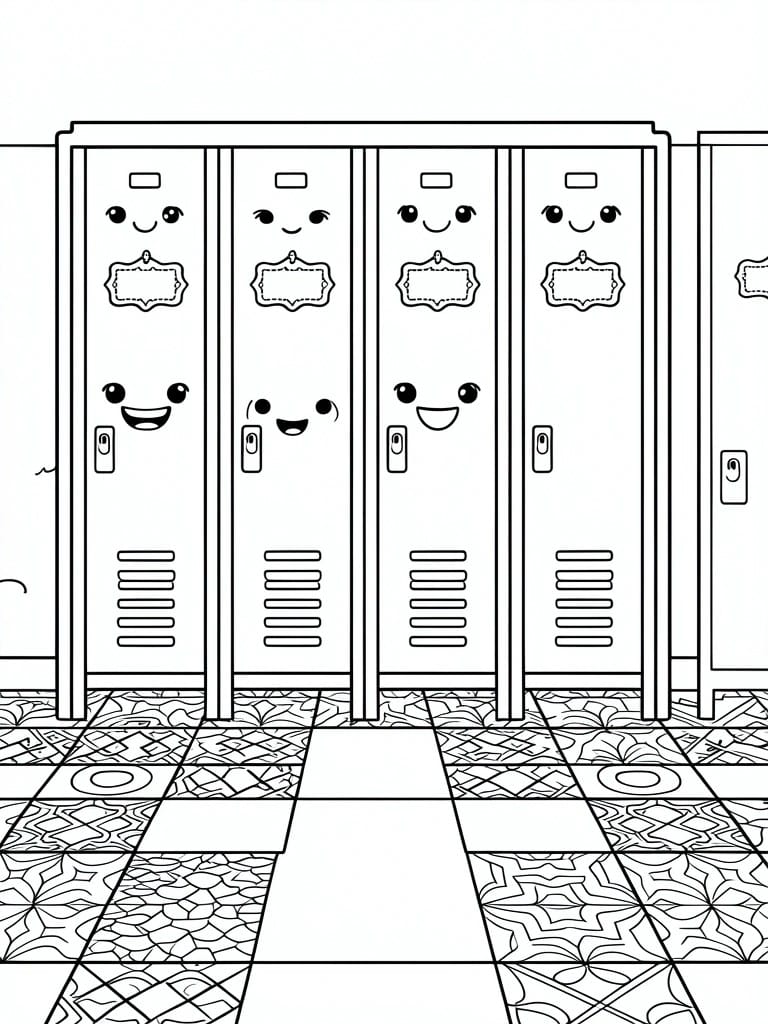
Lockers with different facial expressions line up side by side to create the main focus. Each locker includes a small label area, a lock, and bottom vents while the floor shows a repeating tile pattern stretching down the hallway. The faces vary slightly in eye and mouth shapes but stay simple enough to color quickly.
What makes this page useful is the clear separation between the lockers and the floor pattern. Kids can color the main figures first and then fill in the tiles without needing to switch between too many small details. The bold outlines keep the activity straightforward for classroom use during the first week of school.
Notebook Group Scene with Bunting and Stars
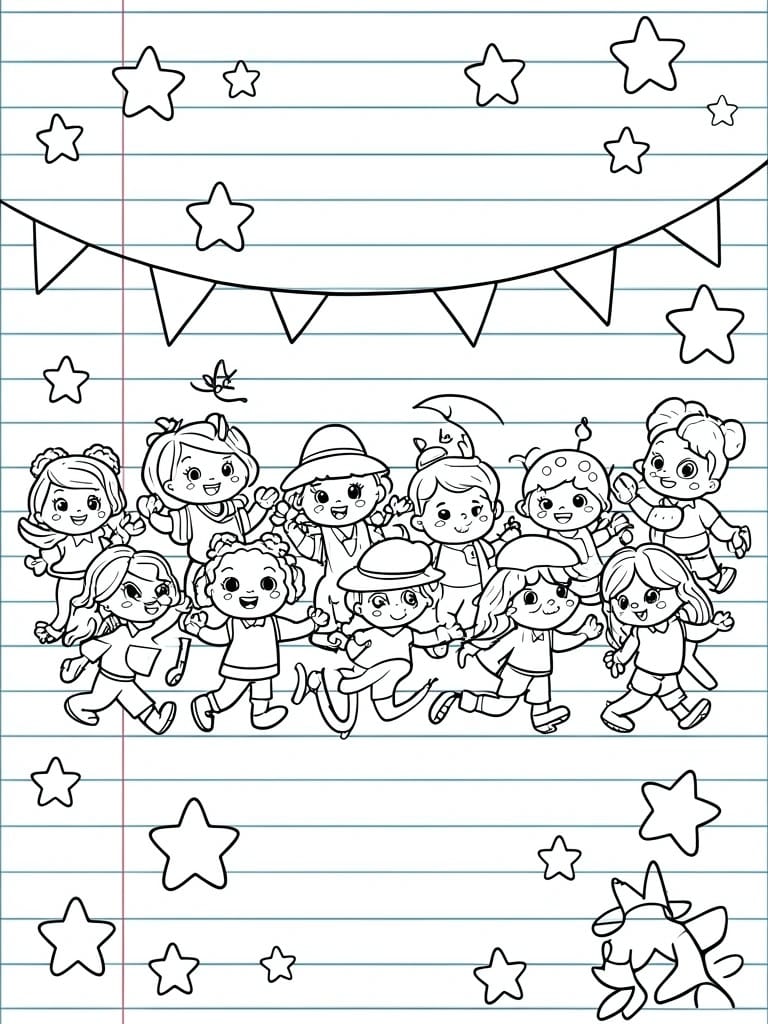
A coloring page built around a large group of school children works well for back to school printables. The idea places the kids across lined paper with bunting flags above and scattered stars around the edges. This creates a single scene with multiple figures plus simple background shapes that keep the focus on the children.
The layout makes this easy to color because each child has clear outlines and clothing areas that do not overlap much. Kids can work on one figure at a time or share the page in small groups. The mix of characters and light background details gives enough variety without feeling crowded or too simple.
Number Faces Grid for Classroom Counting
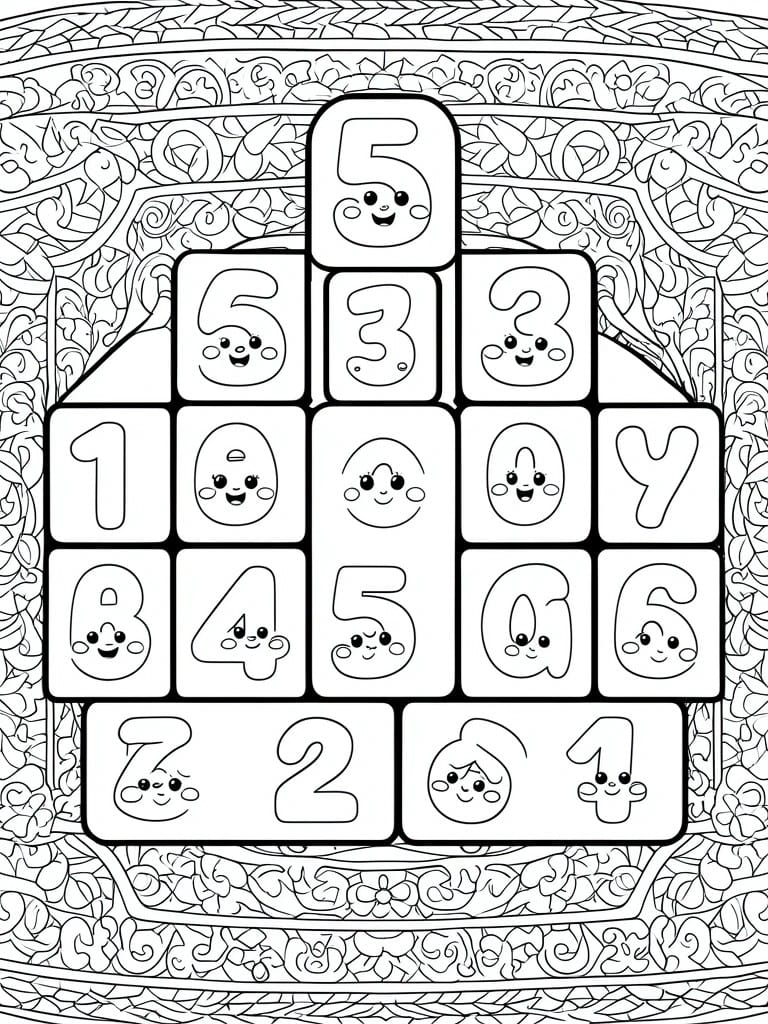
This coloring page features individual number tiles, each drawn with a simple cartoon face, arranged in a structured grid layout. The design centers on digits from zero to nine, giving kids a clear focus on number shapes while the surrounding decorative borders provide additional areas to color. The block-style arrangement keeps each number separate, which helps with both recognition and staying inside the lines.
What makes this page useful is the mix of large, open number shapes that suit beginners and the patterned frame that adds interest without crowding the main elements. The layout makes this easy to color in short sessions, whether during morning work or as a quiet first-week activity. A page like this works especially well for first graders who need extra practice with numbers alongside a creative task.
Classroom Desk Scene with Books and Calendar
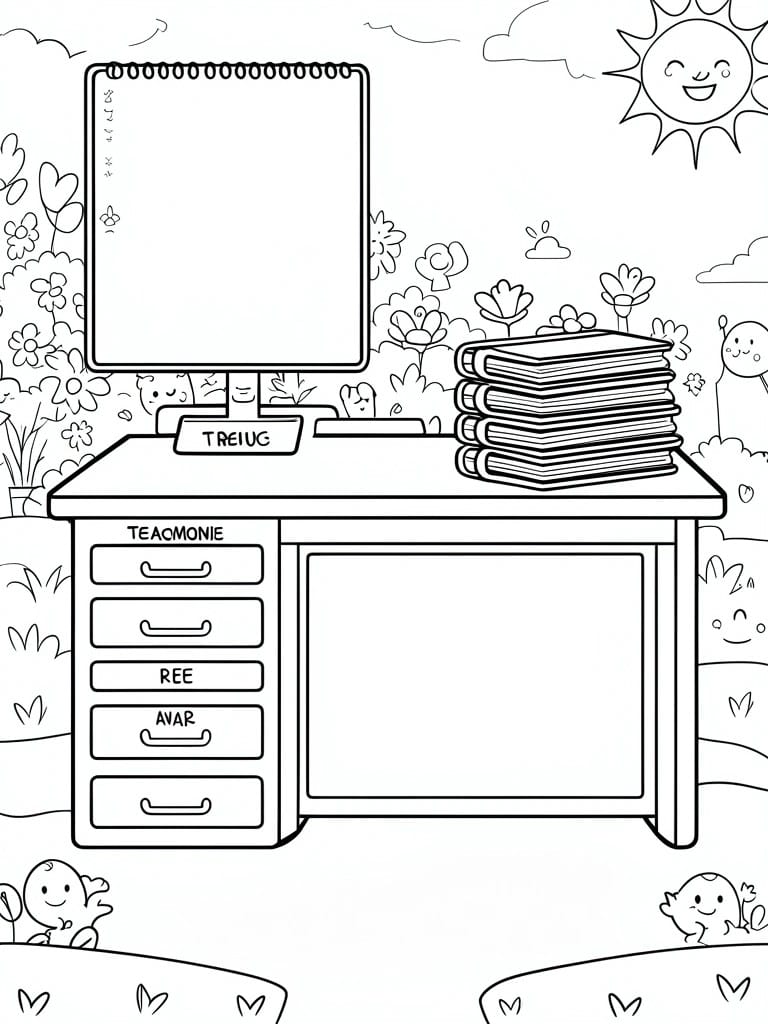
A school desk serves as the main subject here, complete with a large spiral planner standing upright, a tall stack of books on the right, and several drawers across the front. The background adds a garden setting filled with flowers, a smiling sun, and small characters scattered around the edges. Open areas on the desktop and simpler shapes in the furniture give the page a clear structure that works well for coloring.
The layout makes this easy to color because the main objects sit in the center with enough space around them to avoid crowding. Kids can focus on the books and drawer labels first, then fill in the lighter background details as they go. A page like this works especially well for classroom activities since the school supplies stay recognizable even with basic coloring. The mix of larger shapes and smaller accents keeps the session moving without feeling overwhelming.
Library Scene with Toast-Shaped Characters
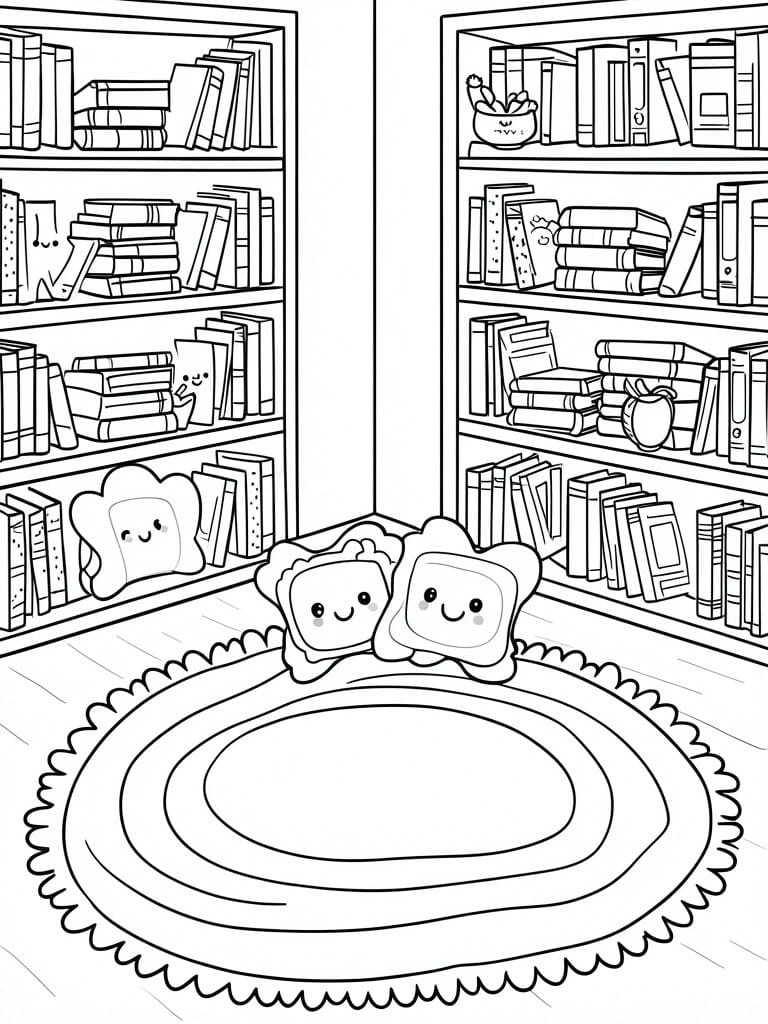
This coloring page centers on a school library with tall bookshelves packed with books in different sizes and stacks. Several toast-shaped characters with simple faces sit together on a large oval rug, while one more peeks out from between the lower shelves. The layout uses clear foreground and background layers so the shelves recede naturally behind the rug area.
The layout makes this easy to color because the main shapes stay distinct and the open rug space gives kids a simple starting point. A page like this works especially well for classroom use since the book theme connects directly to reading activities without adding complicated patterns. The mix of repeated book lines and larger character shapes lets students finish sections at their own pace.
Apple Mascot with Student Name Posters
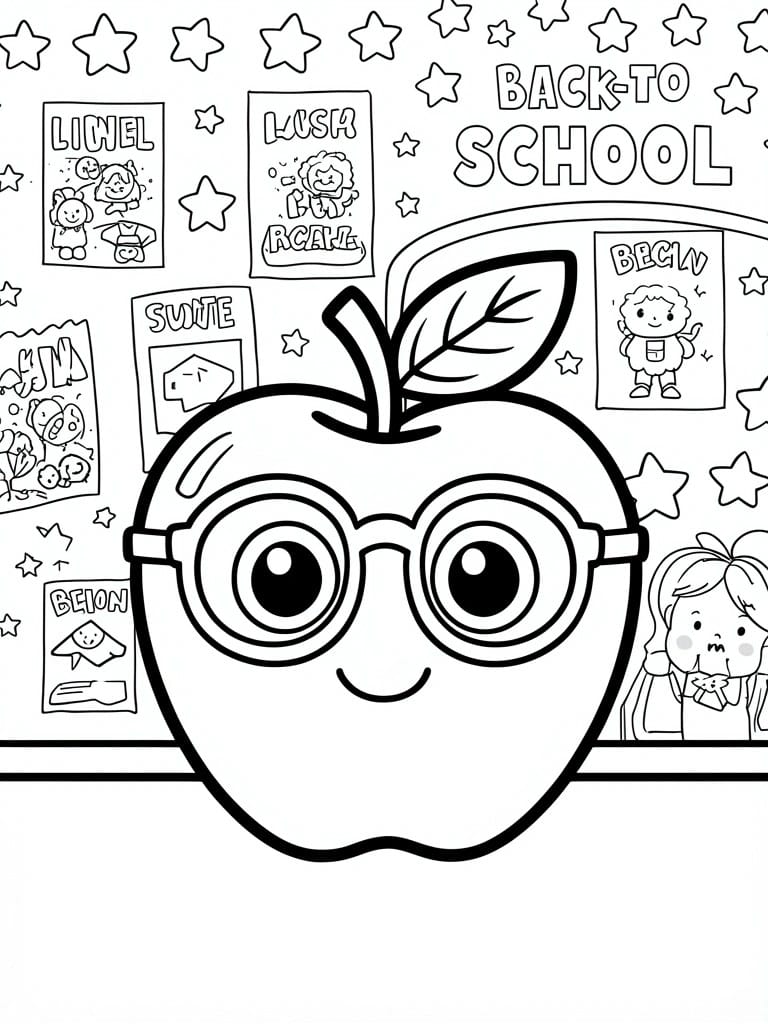
A back to school coloring page uses a large central apple wearing glasses as the main subject. Posters with student names and simple kid drawings fill the space around it along with scattered stars and the phrase back to school at the top. The mix of one bold shape and several smaller rectangular sections creates a balanced layout that keeps the page interesting without crowding any area.
The layout makes this easy to color because the apple offers a big open space while the posters give colorers smaller zones to fill with different colors. Kids can work on the page in stages and add their own name ideas to the blank poster areas if they want. A page like this works especially well for first week classroom time since it ties directly to the school theme and stays simple enough for quick completion.
School Playground Scene with Name Label
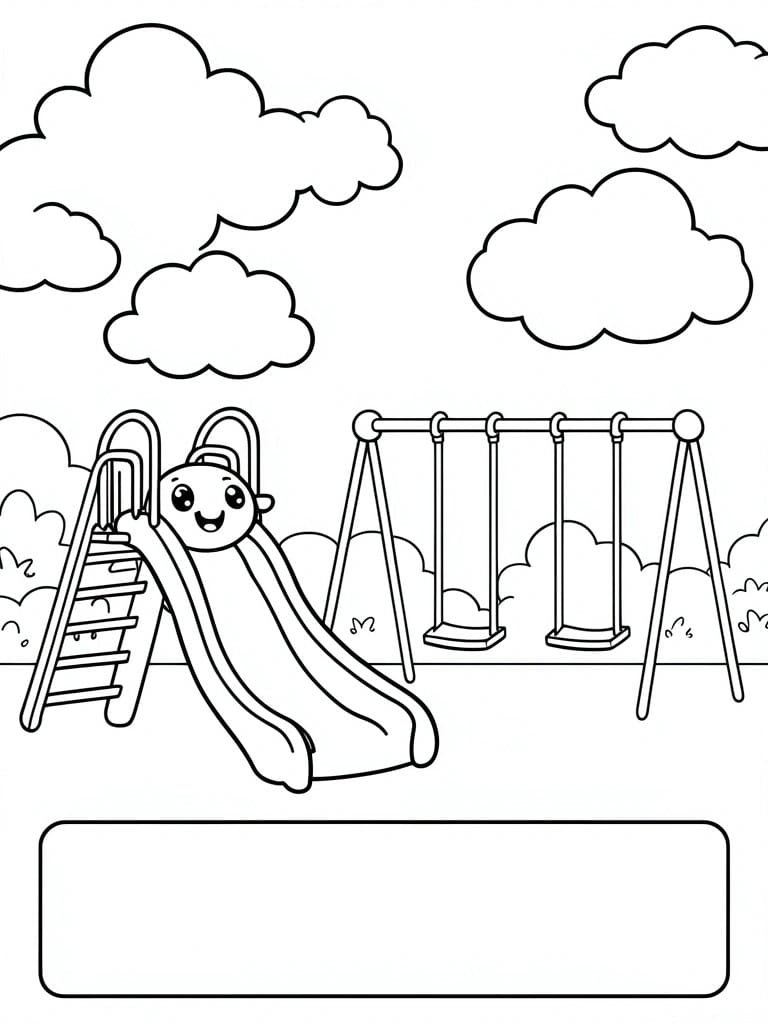
A playground theme pairs a slide and swingset under open sky with scattered clouds. Bold outlines keep the main equipment and character shapes easy to follow while leaving large open areas across the slide and swing seats. The empty rectangle at the bottom adds a practical spot for a name or short message.
The layout makes this easy to color because separate elements sit with clear space around them. Kids can complete the page in one short session without needing many small details filled in. A page like this works especially well for classroom use during the first week when quick activities help settle the room.
Crayons with Faces on a Lined Notebook
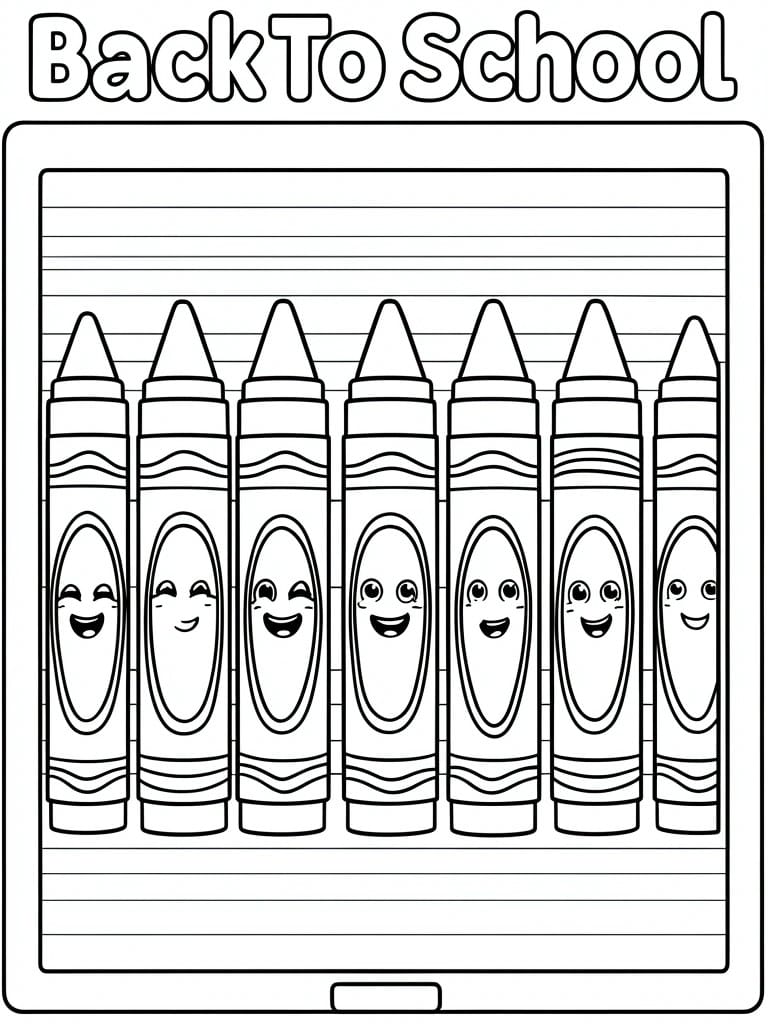
A back to school coloring page idea pairs a row of crayons given simple cartoon faces with a lined notebook background. The crayons stand upright in a straight line, each with its own expression, while the paper lines run behind them to tie the scene together. This setup keeps the focus on the school supplies without adding extra objects or busy patterns.
What makes this page useful is the straightforward layout that lets kids finish the page in one short sitting. The large shapes on the crayons and the repeating lines give clear edges to follow, which helps beginners stay inside the lines. A page like this works especially well for classroom use because it needs only basic colors and still looks complete when the faces get different shades.
Cute Flower Garden with House
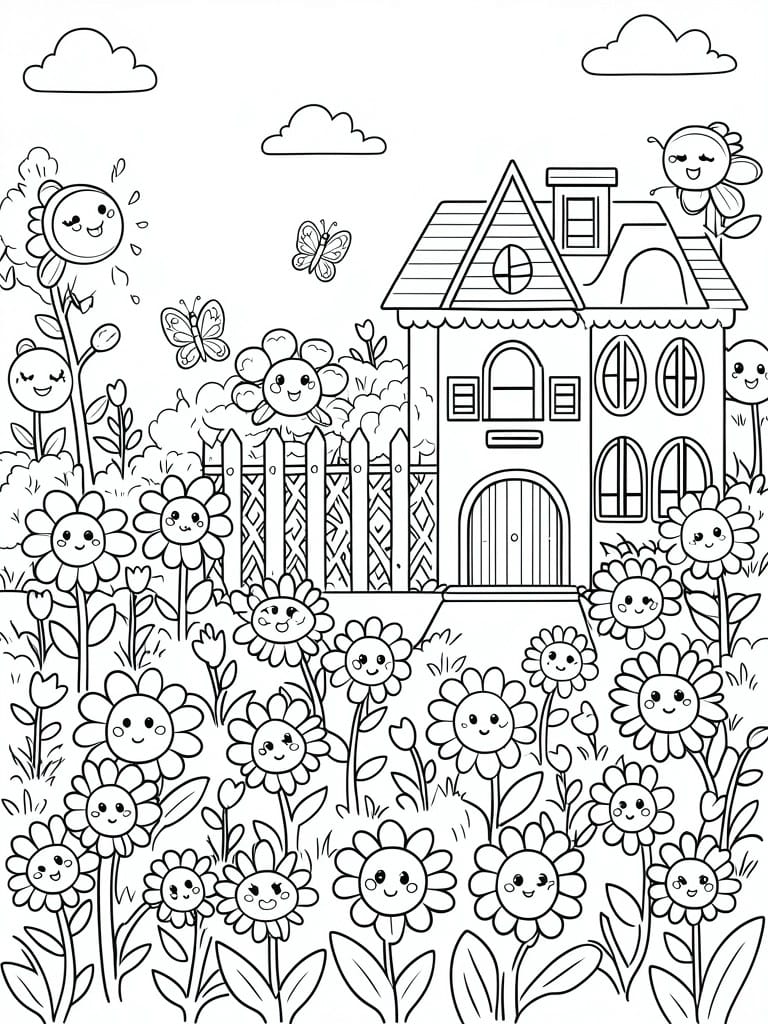
A garden scene built around a central house gives kids a full outdoor setting to color with repeating flower shapes as the main focus. The page uses bold outlines and a mix of larger background elements like the house and fence alongside clusters of smaller flowers that fill the lower half. This creates a balanced composition where colorers can work on individual flowers or tackle bigger sections like the roof and sky.
The layout makes this easy to color by separating the house from the dense flower patches so colorers can switch between simple and busier areas. A page like this works especially well for first week classroom use because the cute faces on the flowers let kids add quick personality without needing advanced skills. The repeating flower patterns also make it a good fit for Pinterest because the overall design prints clearly and shows up well in thumbnails.
Stopwatch Door with Starry Background
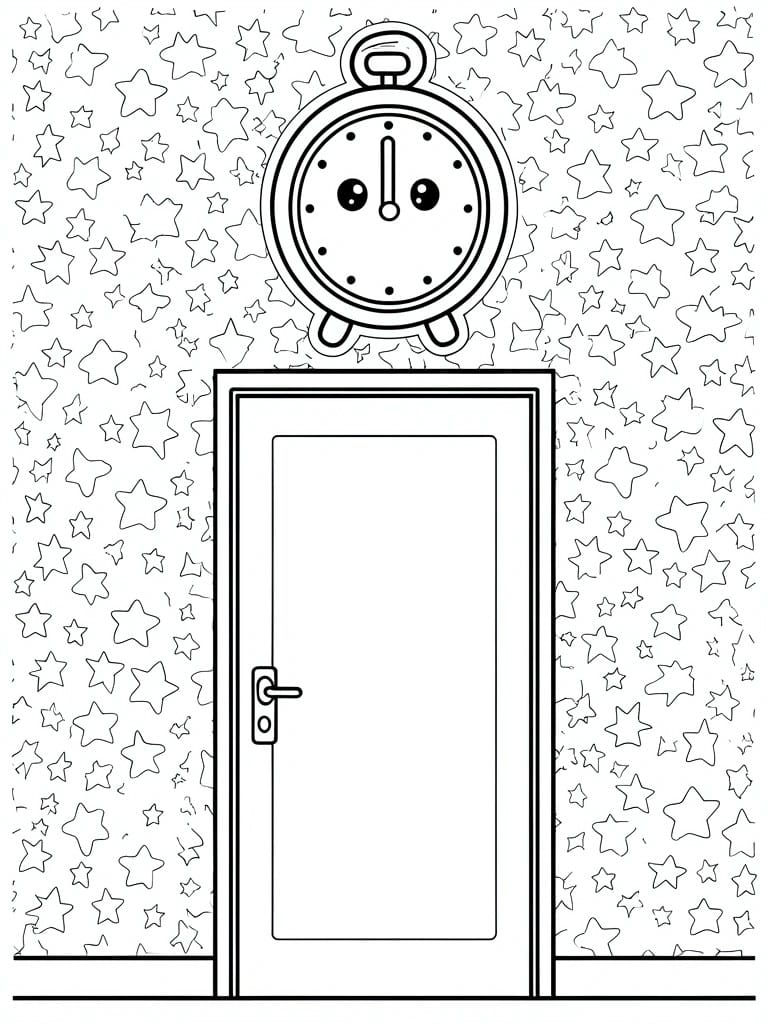
A back to school coloring page centers on a plain door topped by a large stopwatch that has a simple cartoon face. Stars of varying sizes fill the space around the door and clock to create a full background pattern. The design uses bold outlines and leaves the door surface mostly open.
The layout makes this easy to color because the door offers a large unbroken area while the stars and stopwatch provide smaller repeated shapes. Kids can finish the page in one short session without getting overwhelmed by tiny details. A page like this works especially well for quick first-week classroom activities where students need something structured but not too demanding.
Kawaii Science Lab Coloring Page

Science themed coloring pages like this center on a large flask filled with liquid and place it among scattered test tubes, atoms, and bubbles. The style uses simple cartoon lines with faces on most objects to create a playful lab scene. A dense background of small items fills the space around the flask without overlapping.
The layout makes this easy to color because each object sits in its own clear space. Kids who like science topics can finish sections quickly while still having many small areas to fill. The mix of big and little shapes gives beginners a full page without tiny details that take too long. This kind of design prints well for classroom use since it stays recognizable even with basic coloring.
Xylophone Music Notes Coloring Page
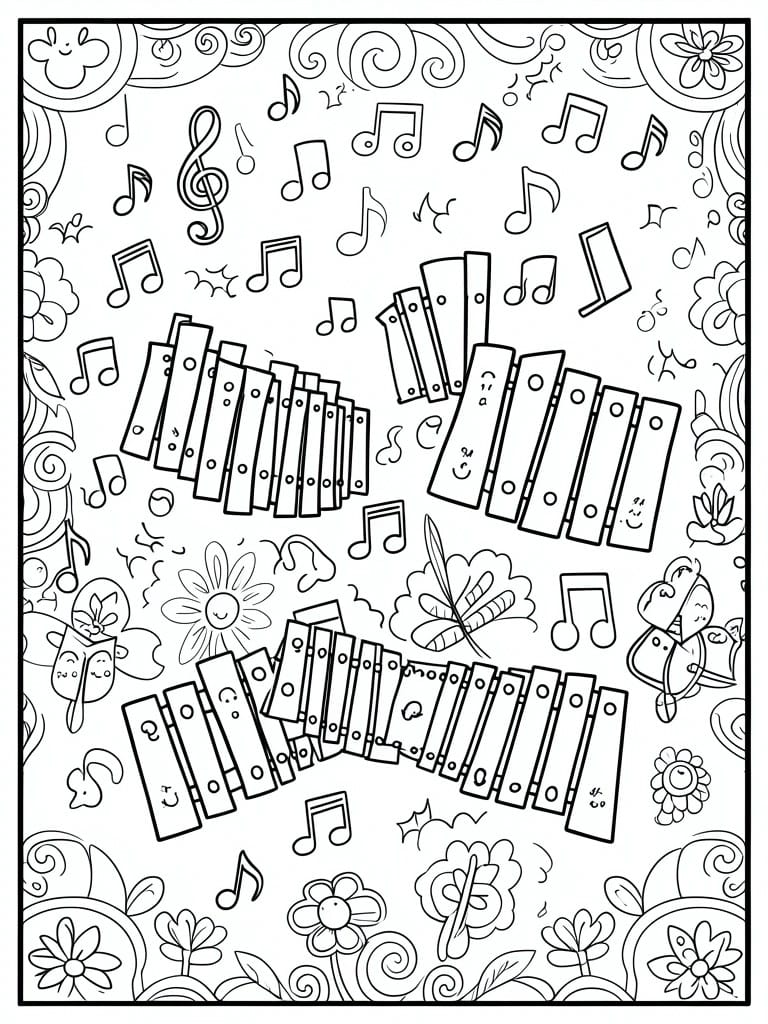
Music themed pages like this focus on multiple xylophones scattered across the sheet with musical notes filling the gaps around them. The design mixes larger instrument shapes with smaller notes and some flower and butterfly accents in the corners. This creates separate sections that color at different speeds without crowding the whole page.
What makes this page useful is the clear separation between the xylophones and the background notes. The layout makes this easy to color in short sessions since the main shapes stay simple while the smaller notes add quick detail work. For kids, the simpler shapes here suit a first week classroom activity tied to music class. The mix of sizes keeps the page from feeling repetitive once the larger areas are done.
School Hallway Footprint Path
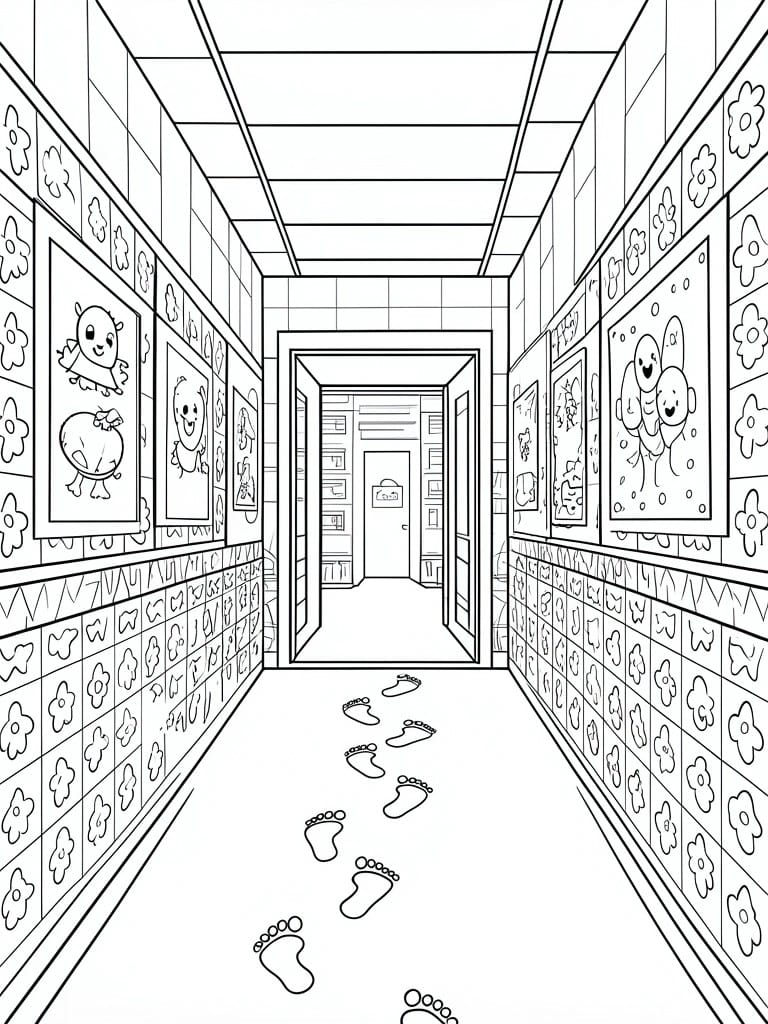
A school hallway coloring page centers on a trail of footprints running down the middle of a corridor toward open doors. Framed cartoon drawings line the walls above repeating flower and shape patterns on the lower tiles. The perspective layout gives colorers a clear path to follow while filling in separate sections on each side.
What makes this page useful is the mix of a simple central path with smaller framed areas that can be colored one at a time. The repeating tile patterns add structure without overwhelming the main scene. A page like this works especially well for first week classroom activities because the school setting matches the back to school theme directly. Kids can finish the footprints quickly and then spend more time on the pictures and borders.
Lunchbox Characters Filling Classroom Desks
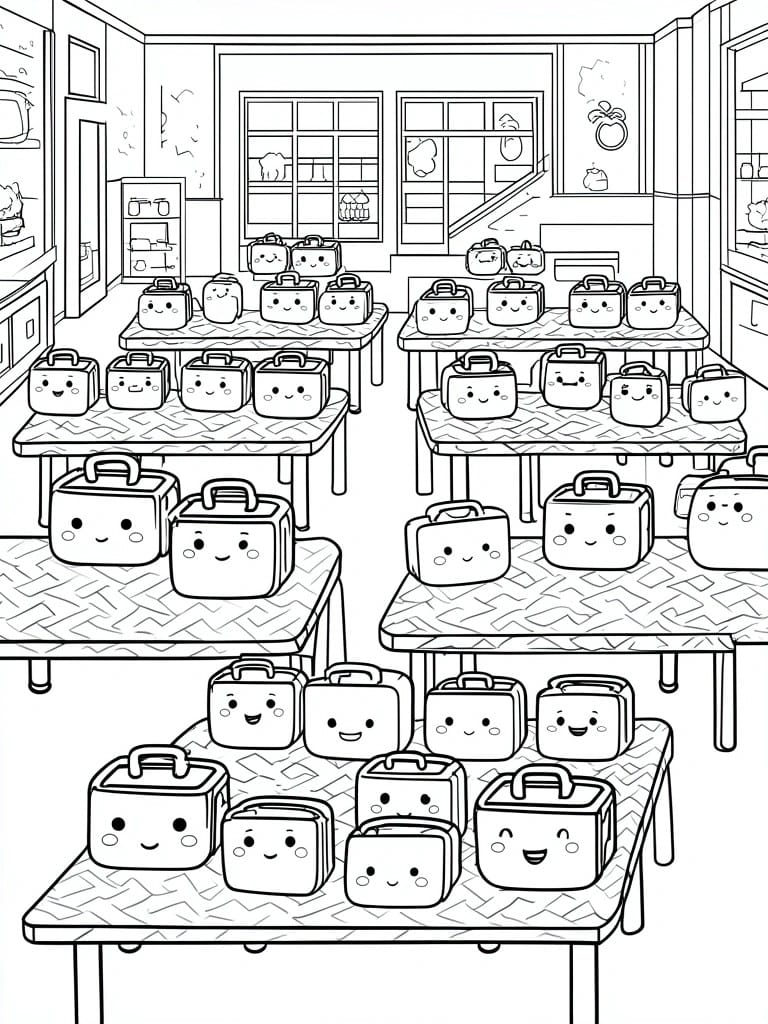
A back to school coloring page idea that places rows of simple faced lunchbox figures across multiple school desks in a standard classroom layout. Clean outlines define each character along with the table patterns and basic room features like windows and storage. The composition repeats the same core shape with slight face variations to create a full scene without complex details.
What makes this page useful is the even spacing of small shapes that lets colorers work section by section at their own pace. The clear table lines and grouped figures create natural stopping points so the page stays manageable even for younger kids. A page like this works especially well for quick classroom activities since the subject connects directly to the first week of school without requiring advanced coloring skills.
First Day Classroom with Balloons and Banner
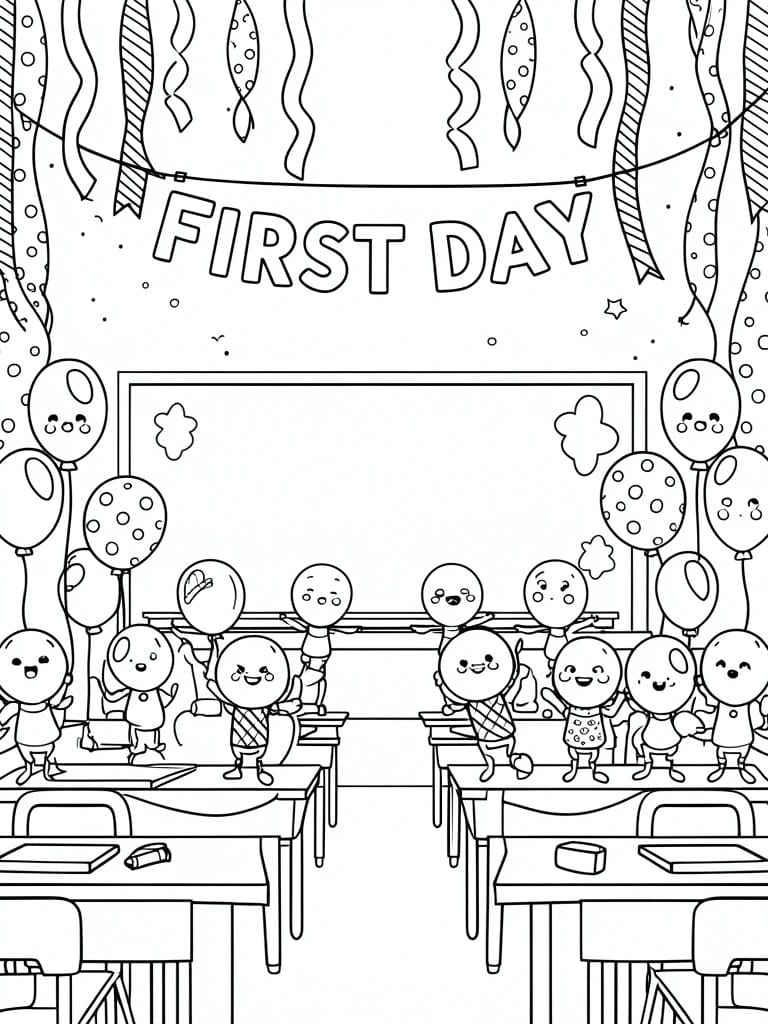
A first day of school theme centers on a classroom full of cartoon kids holding balloons under a large overhead banner. Simple line art with some dotted and striped patterns on the balloons and clothing gives the page clear sections to fill. The desks and streamers create a balanced layout with open areas that keep the focus on the main figures.
The layout makes this easy to color because the characters sit at a comfortable size with plenty of space between them. Kids can work through the page at their own pace without getting stuck on tiny details. A page like this works especially well for the first week of class when students want something quick and festive to complete together.
Frequently Asked Questions
1. How can I use these coloring pages to build classroom community in the first week? Select pages with themes like friendship or school routines and pair students to color together. Follow the activity with a short sharing circle where each child describes one detail they added. This approach helps students learn names and interests quickly while keeping the focus on creative expression.
2. What printing and supply options work best for these pages? Print on standard copy paper for everyday use or switch to cardstock if you want pages that hold up to markers. Stock crayons, colored pencils, and washable markers so students can choose based on their preference. Laminate a few finished examples to display as classroom art throughout the year.
3. How do I match the pages to different skill levels in one class? Review the set ahead of time and group simpler outline designs for younger or less confident students while offering pages with finer details to those ready for a challenge. Provide the same theme across levels so the whole class discusses the topic together even if their coloring tasks differ.
4. What follow-up lessons can extend the value of these coloring activities? After coloring, invite students to write one sentence about their summer or a classroom goal on the back of the page. Turn the finished work into a bulletin board display or a class book that students can read during quiet time. These steps turn a quiet task into a springboard for writing and speaking practice.
5. How should I manage time so the coloring stays engaging without taking over the day? Set a clear 15 to 20 minute window and use a visual timer so students know when to finish. Offer an optional early-finisher task such as adding labels or small drawings around the border. This keeps the activity structured and prevents it from stretching into other planned lessons.
