

I have been coloring mandalas for a few years and I notice that the ones with clear symmetry tend to hold my attention longer.
Repetition in the patterns gives me something steady to follow without needing to plan too much.
I picked out 25 pages that keep those two things in mind.
They are all fairly straightforward so you can work on them at your own pace.
I usually color a few of them when I want a quiet activity in the evening.
Layered Mandala with Repeating Petal Rings
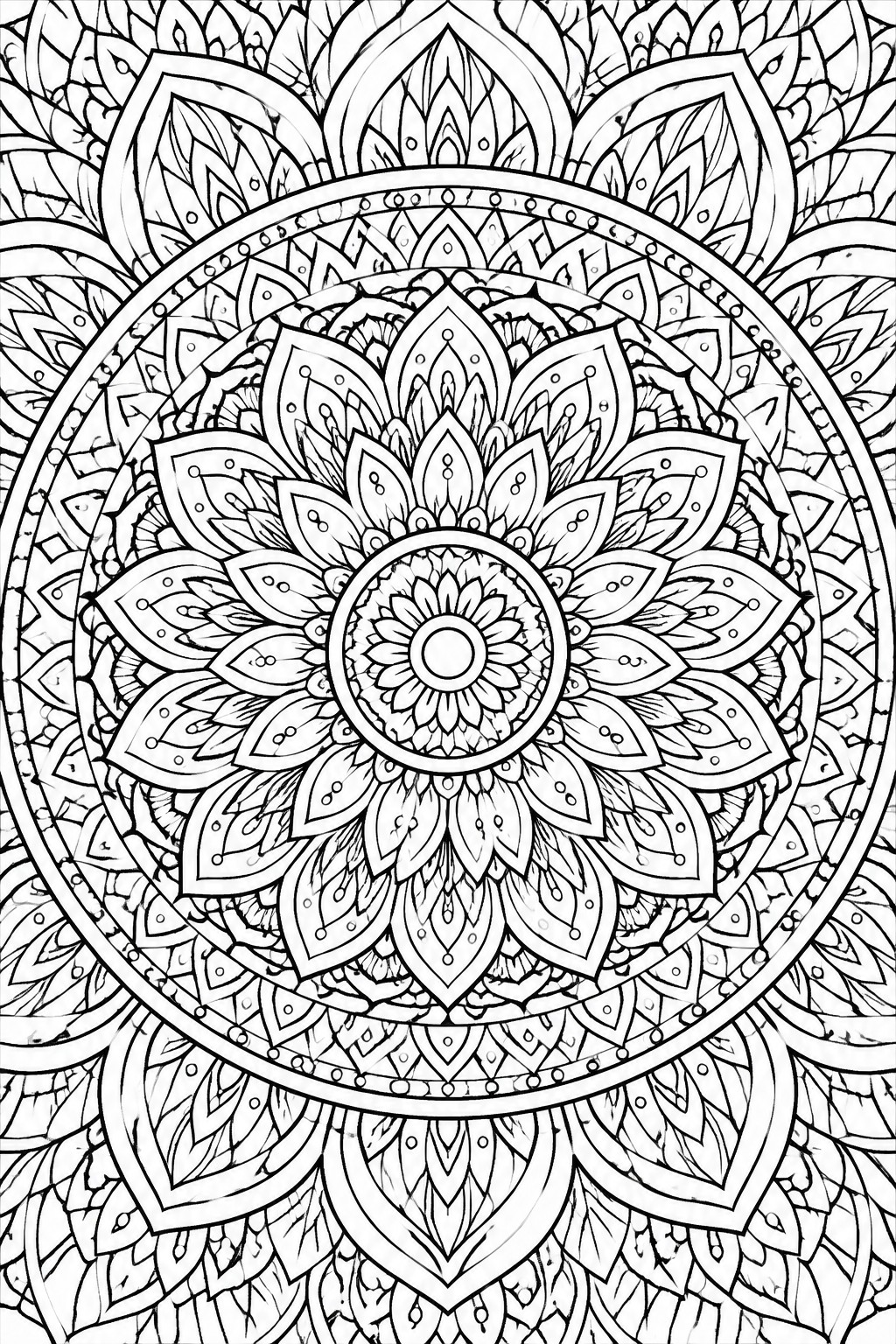
A mandala built around a small central bloom expands through several concentric rings of identical petal and leaf shapes. Strict radial symmetry keeps every section an exact match to the others around the circle. The even spacing between layers creates clear zones that let color choices repeat without constant new decisions.
The layout makes this easy to color because each ring stays separate and follows the same pattern. What makes this page useful is the chance to reuse colors across matching shapes while still working through plenty of detail. A page like this works especially well for adults who want a pattern-focused session that stays organized rather than scattered.
Layered Floral Mandala with Radial Leaf Patterns
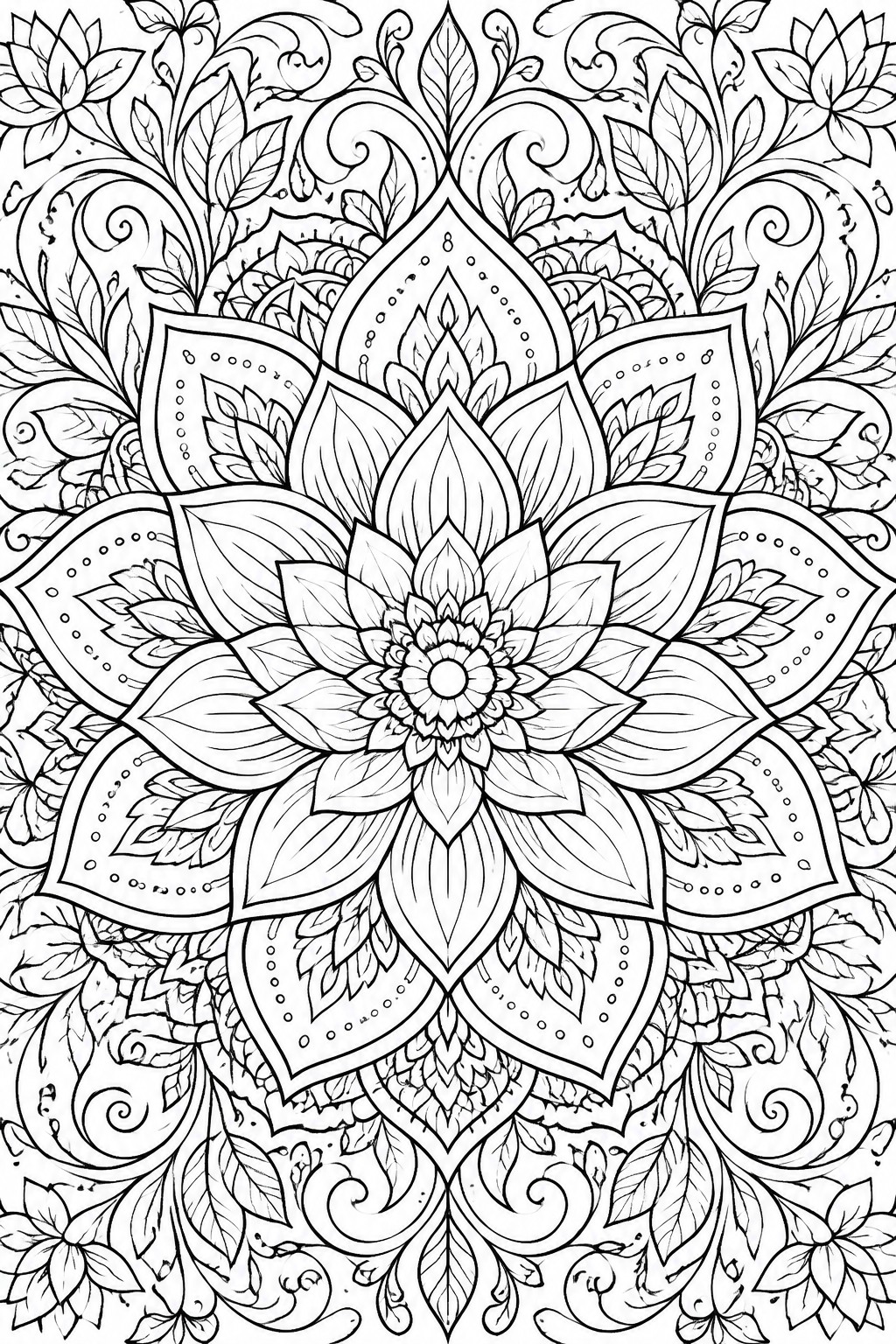
A mandala built around one large central flower forms the core of this page. Multiple rings of pointed petals expand outward in perfect symmetry, while clusters of leaves and curved stems fill the outer areas with repeating shapes. The line work includes small dot accents along petal edges and swirling stems that create consistent rhythm across the design.
The layout makes this easy to color section by section because each petal ring stays clearly separated from the next. A page like this works especially well for adults who want a pattern-focused session that still offers enough detail to hold attention. The repeating leaf shapes let colorers repeat similar tones without losing variety in the overall composition.
Hexagram Mandala with Layered Geometric Patterns
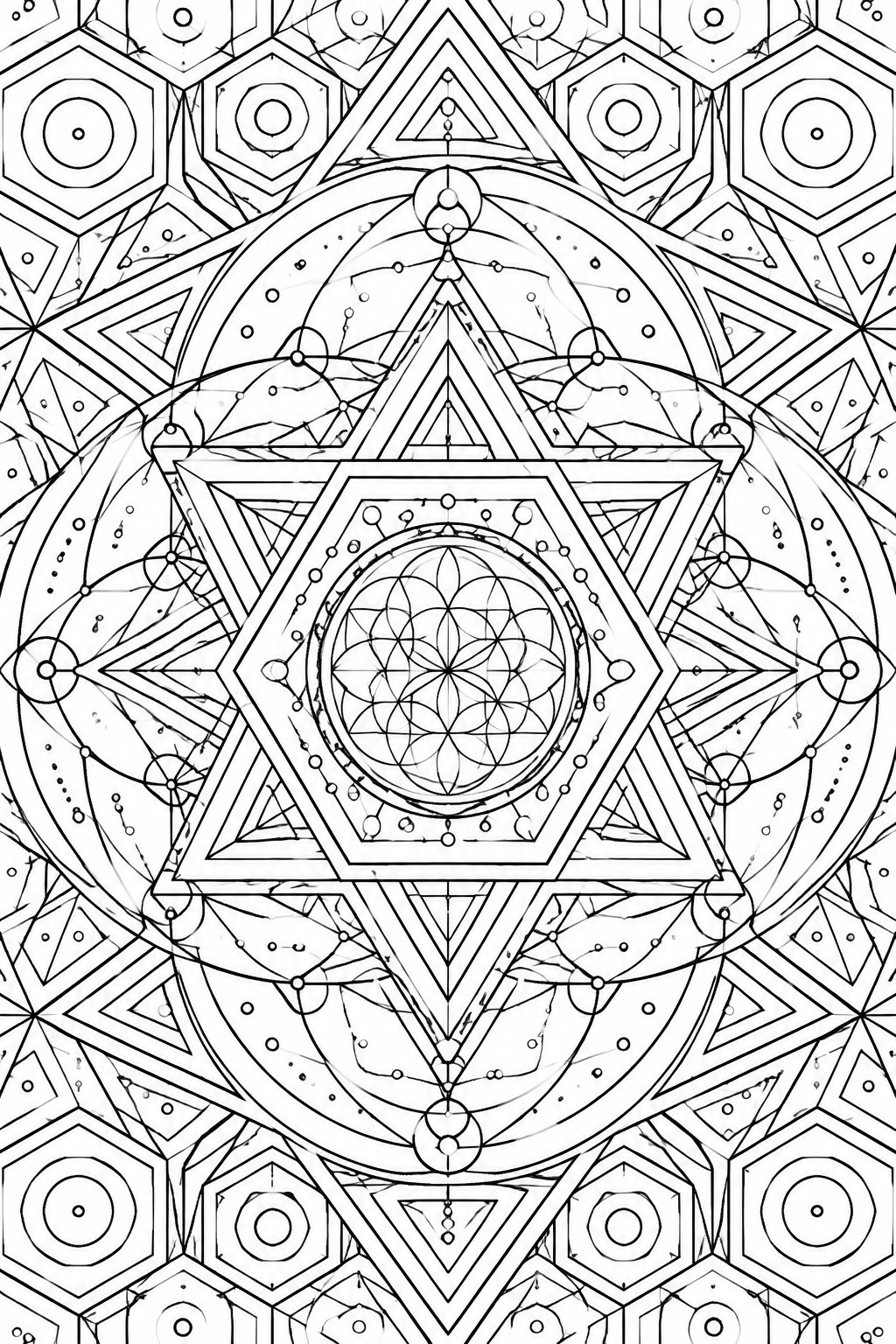
A mandala built around a central hexagram gives colorers a clear starting point with strong symmetry. The star encloses a flower of life motif while outer rings repeat triangles, circles, and hexagons in even intervals. Fine dots and connecting lines fill the spaces between shapes, creating consistent rhythm across the page.
The layered geometric structure makes this page a solid choice for focused coloring sessions. Repetition lets colorers work section by section without losing track of the design. The mix of larger open shapes and tighter inner details suits adults who want medium complexity rather than simple outlines or extreme fine work. Pages like this hold up well for repeated use because the balanced layout guides color choices naturally.
Layered Star Mandala Built on Radial Symmetry
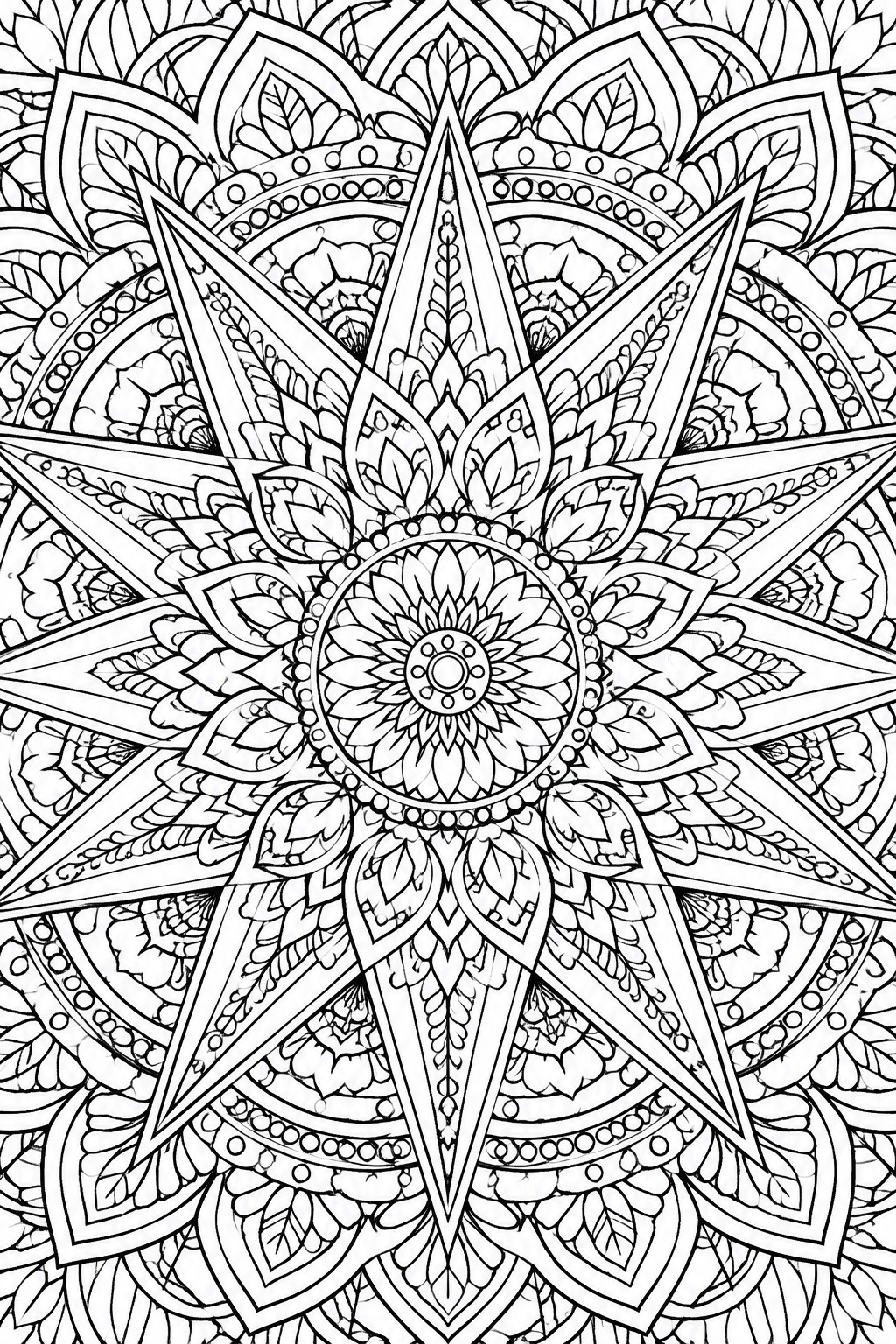
A mandala focused on an eight-pointed star overlaid on concentric rings creates a strong sense of repetition through mirrored points and circular bands. The design places a central flower at the middle and fills the extending sections with repeated leaf clusters and petal shapes. This structure gives colorers distinct zones to fill while the symmetry keeps the overall pattern balanced.
What makes this page useful is the clear separation between the star points and the surrounding rings that helps colorers work section by section. The medium-to-high detail level in the leaves and dots suits adults who want a pattern-focused session without overwhelming open space. A page like this works especially well for anyone looking to practice consistent coloring across repeated motifs.
Symmetrical Paisley Mandala with Repeating Floral Clusters
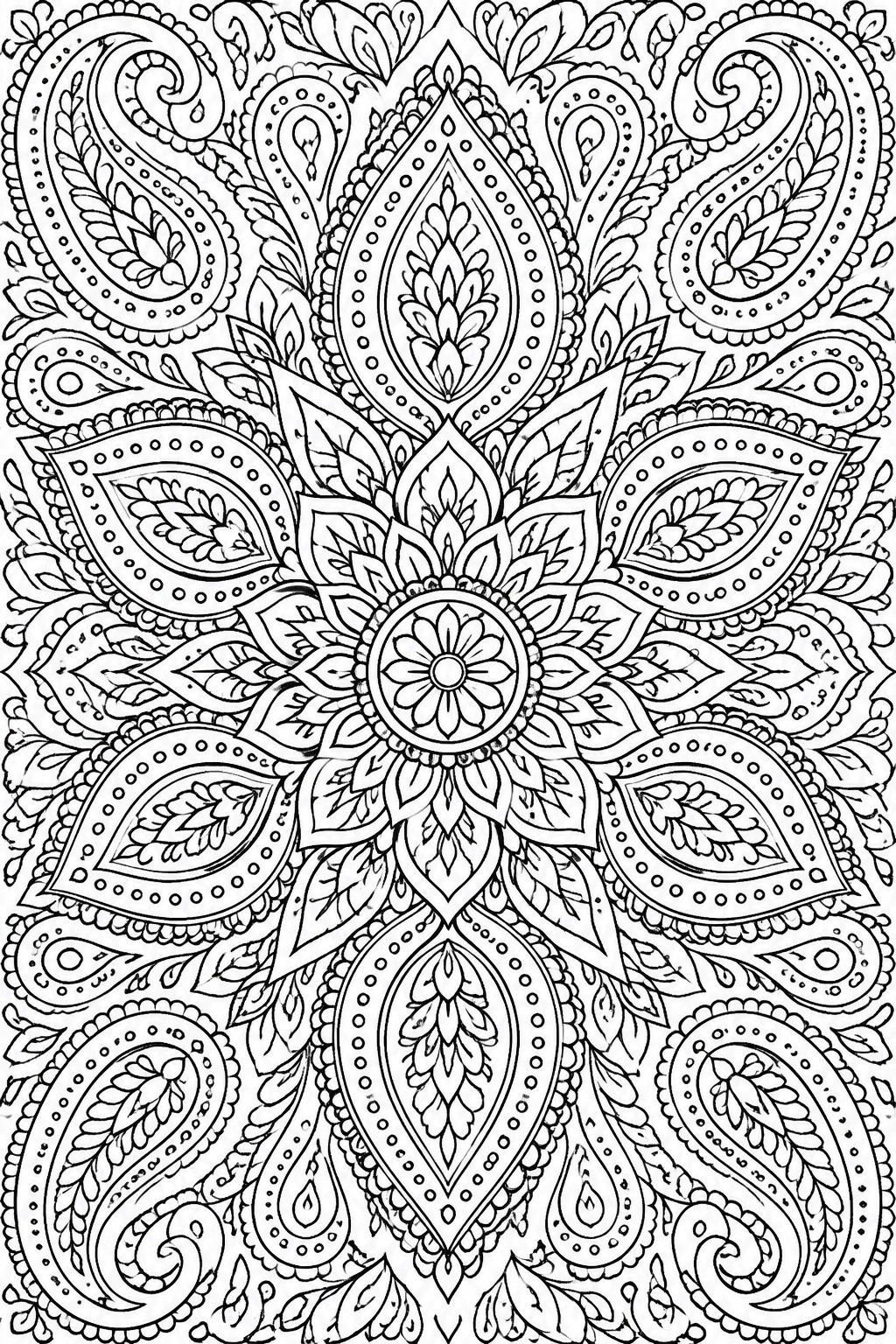
This mandala idea combines paisley shapes with layered floral and leaf motifs in a radial layout. The design repeats these elements around a central flower to create balanced sections filled with dots, curves, and small petal details. The repeating patterns give colorers clear boundaries to work within while building outward from the middle.
The layout makes this easy to color because the sections stay distinct and the line work stays consistent. A page like this works especially well for adults who prefer medium detail over large empty spaces. The symmetry lets colorers repeat color choices across opposite sections without needing to plan too far ahead. This kind of page stands out for printable collections because the motif repetition shows up clearly even in a small preview image.
Concentric Spiral Mandala with Floral Layers
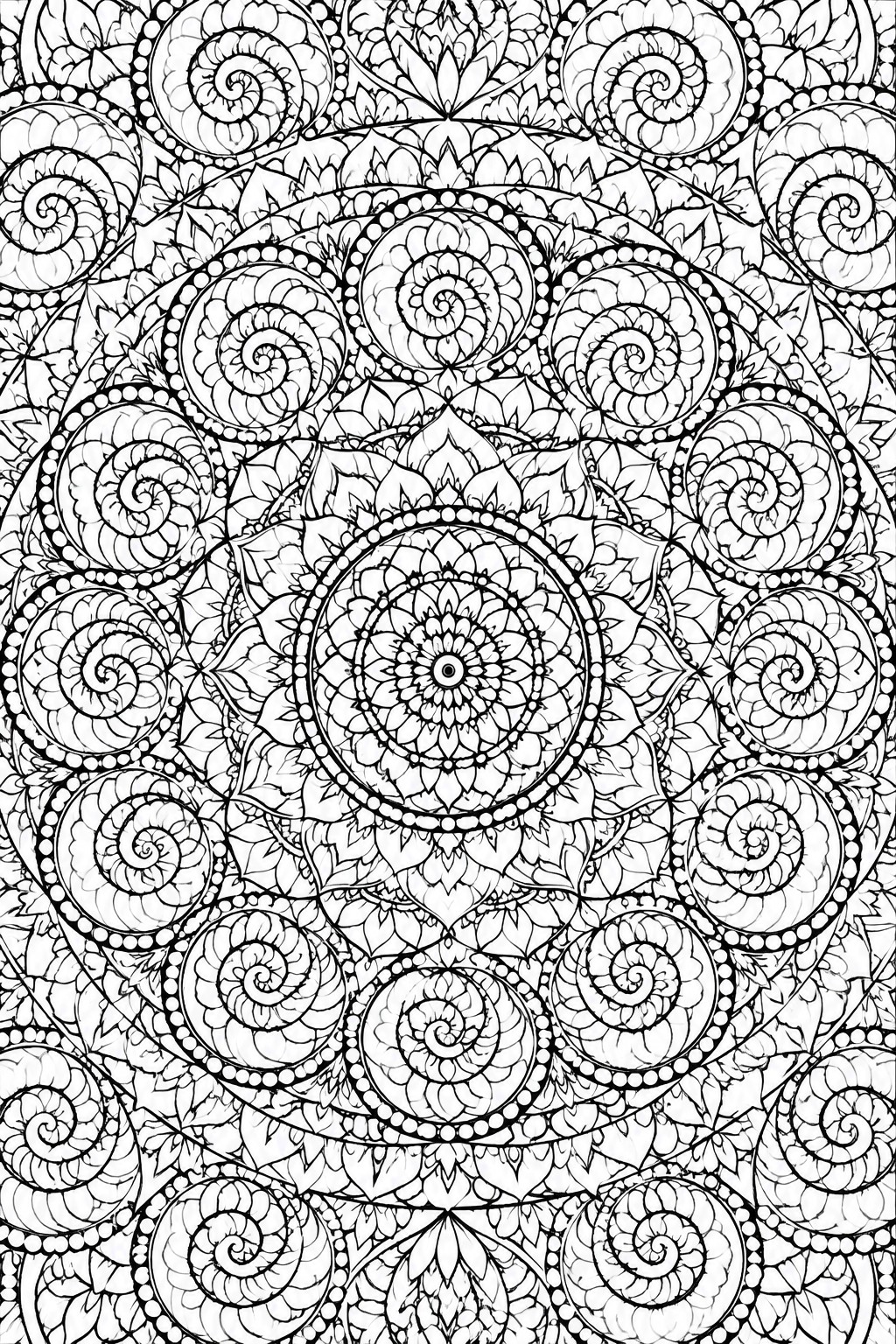
Mandala pages built around spirals use repetition to create movement from the center outward. This design places spiral circles of different sizes in rings around a central flower, with leaf shapes and dotted borders filling the spaces between them. The strong radial layout keeps the focus on pattern rather than on separate objects.
What makes this page useful is the clear repeating units that let colorers work section by section without planning new shapes. The density of spirals and petals suits adults who want a longer session with steady progress. A page like this stands out on Pinterest because the symmetry produces a finished look even when only a few colors are used.
Symmetrical Floral Mandala with Concentric Flower Rings
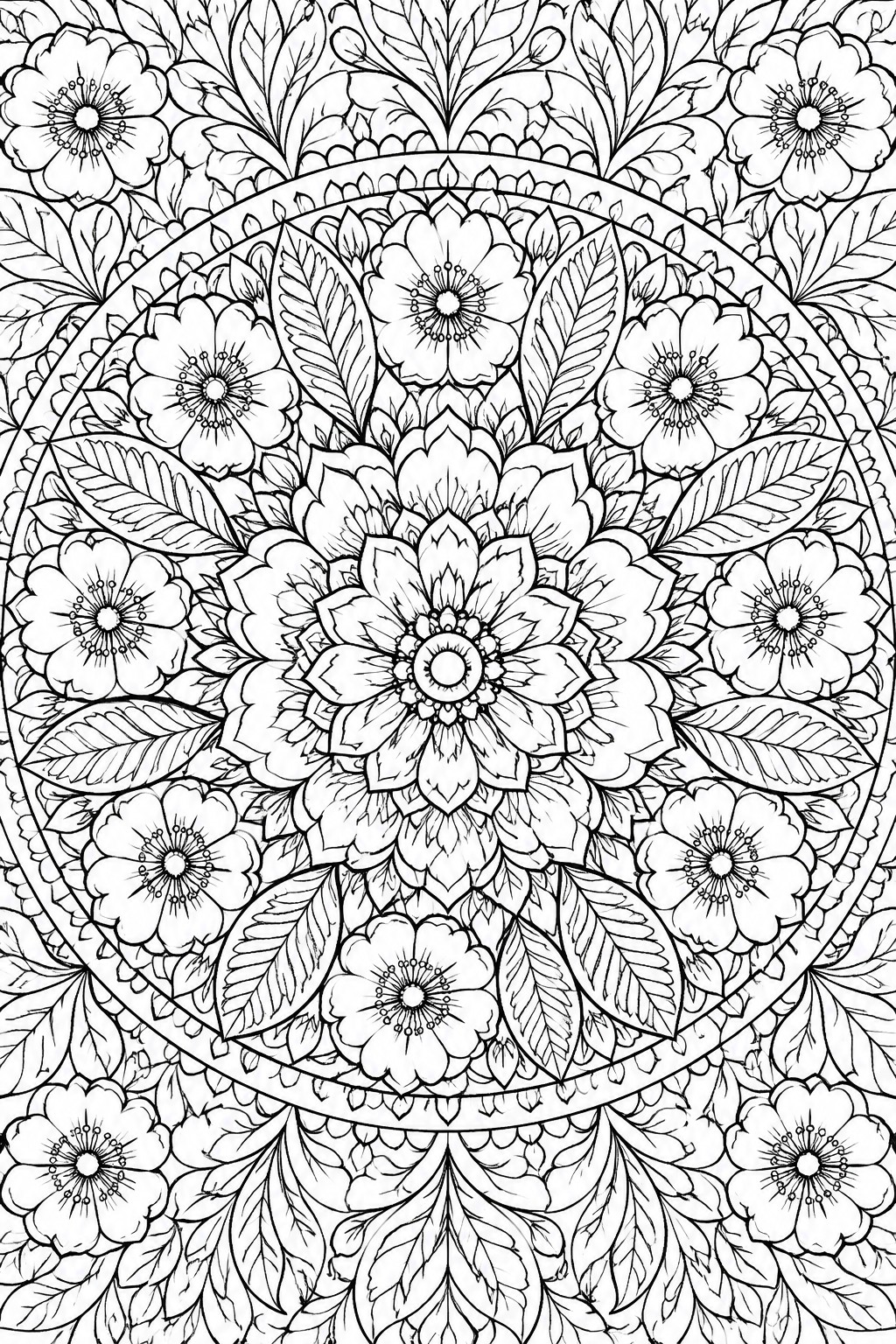
A mandala built from repeated flower clusters and leaf shapes creates clear radial symmetry that starts at the center and moves outward in rings. The page relies on bold outlines and evenly spaced blooms to form distinct sections that repeat around the circle. This layout gives colorers a structured pattern to follow while still offering room for personal color choices in each ring.
The detail level makes this a smart pick for adults who prefer steady, focused coloring sessions over quick fills. Clear separation between petals and leaves keeps the work manageable even with fine lines. Repeating motifs let you test different color combinations without losing the overall balance of the design.
Celtic Knot Mandala with Concentric Braids
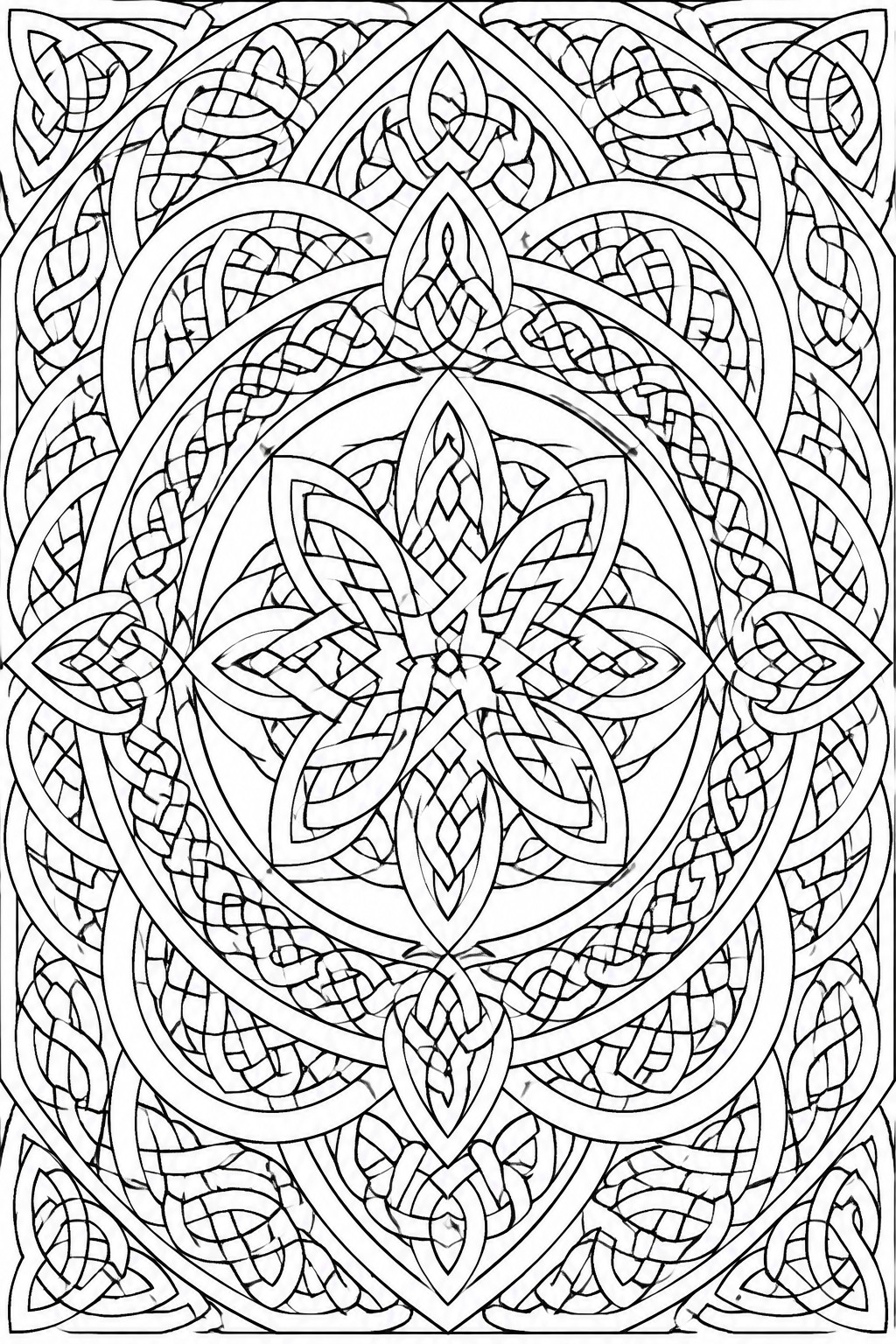
Celtic knot patterns form the core idea here through tight interwoven loops arranged in perfect circular layers. The design builds from a small star center outward with repeated braid sections that fill each ring evenly. This creates a steady rhythm where each band of knots mirrors the next.
What makes this page useful is the clear ring structure that lets colorers finish one section before moving to the next. The dense braids give plenty of small spaces for focused work while the overall symmetry removes any need to plan the layout. A page like this works especially well for adults who enjoy pattern repetition without extra detail decisions.
Layered Radial Mandala Built from Repeating Petal Rings
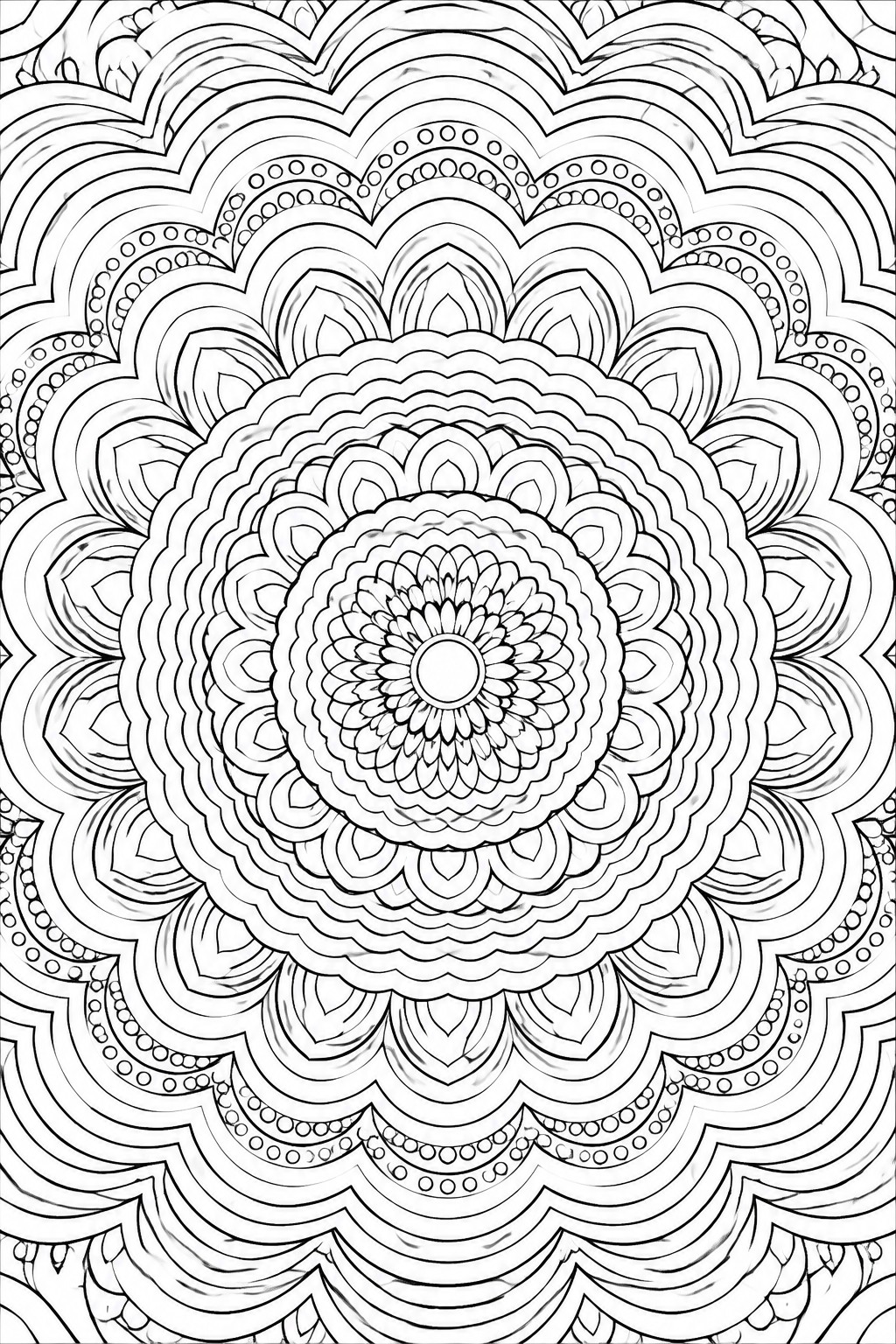
This mandala centers on a small flower motif that expands through multiple concentric rings of petals, dots, and scalloped edges. The design uses strict radial symmetry so each layer mirrors the others exactly, creating clear sections that repeat around the circle. Even spacing between elements keeps the patterns distinct while still connecting into one continuous whole.
The layout makes this easy to color because the rings give natural stopping points between sections. A page like this works especially well for adults who want steady repetition without jumping between unrelated shapes. The mix of larger petal areas and smaller dot details lets colorers shift between broad strokes and finer work as the session goes on.
Paisley Mandala with Layered Floral Centers
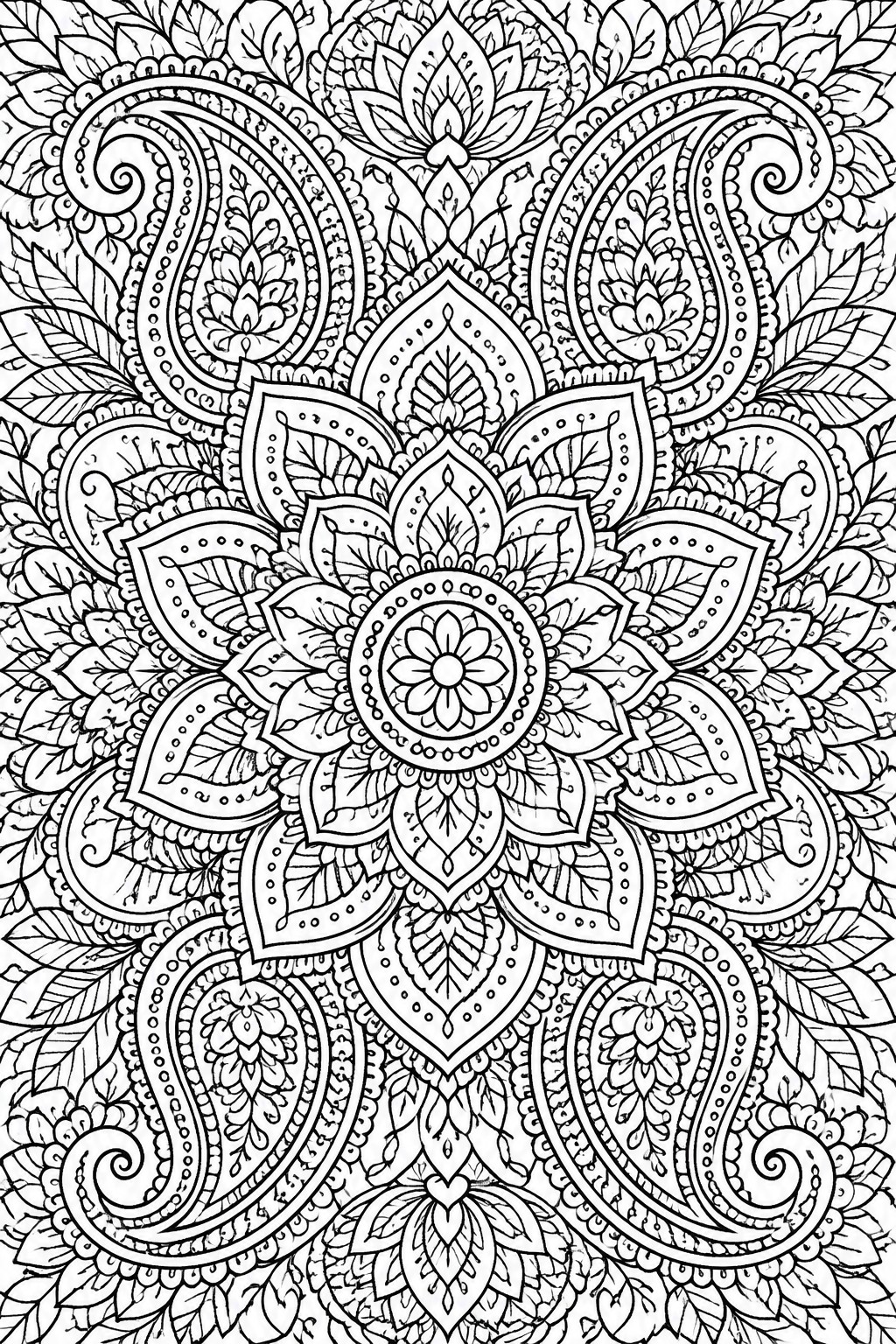
Mandala pages that combine paisley shapes with a central lotus flower create strong symmetry through repeated curved outlines and matching inner patterns. The design places a small flower at the very center, then builds outward with teardrop petals, dotted borders, and large paisley forms that each hold smaller flowers and leaves. This radial layout uses consistent spacing so every section mirrors the others, which makes the repetition easy to follow while coloring.
The detail level makes this a smart pick for adults who want a focused session without jumping between unrelated subjects. Large paisley areas give room for solid color while the smaller motifs inside them support finer work in the same sitting. What makes this page useful is the clear structure that lets colorers finish one ring or one paisley at a time and still see steady progress across the whole design.
Concentric Mandala with Repeated Floral Rings
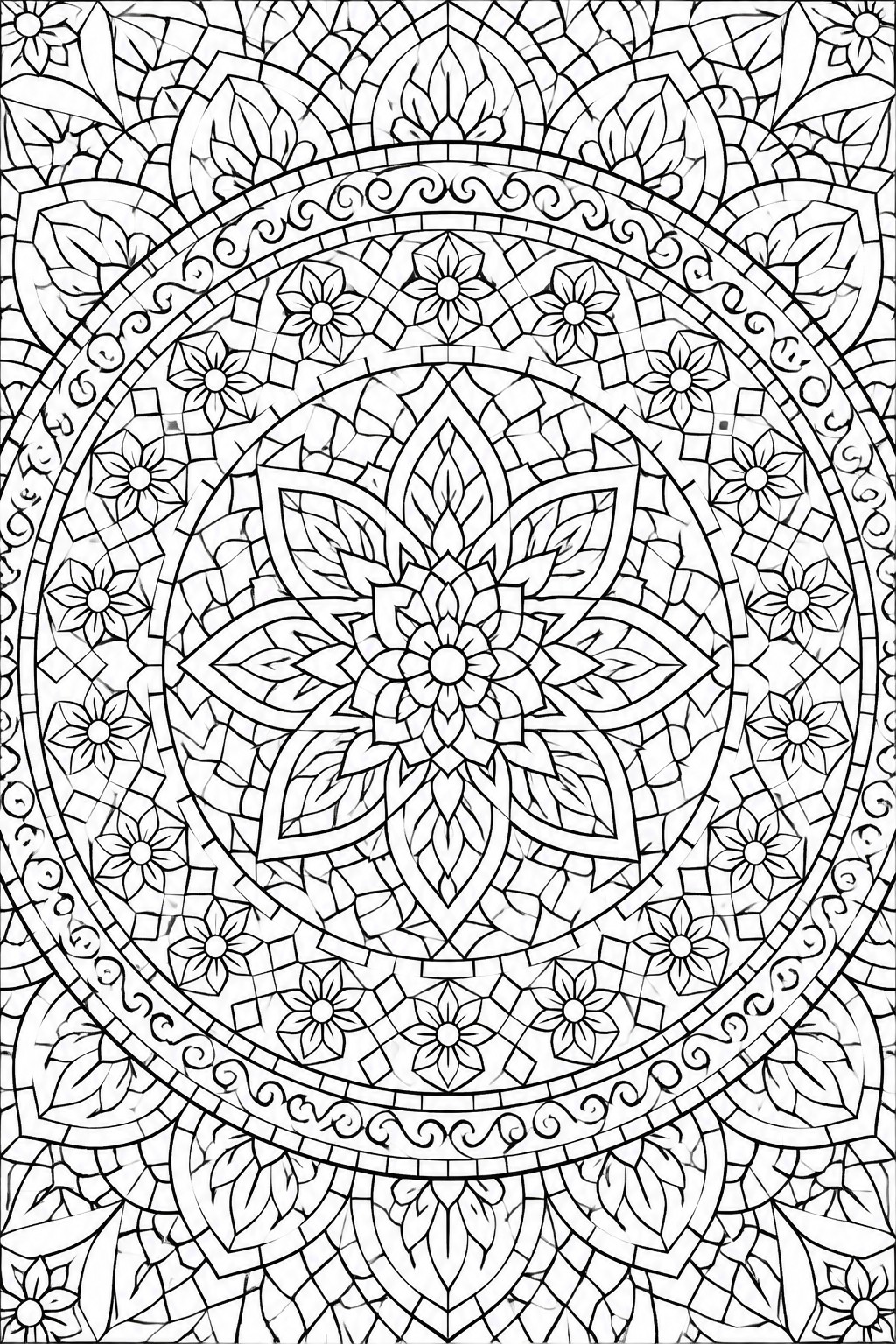
Mandala pages like this build outward from a central multi-petaled flower into successive rings of smaller flowers and pointed leaves. Strict radial symmetry keeps every element mirrored so the design stays balanced no matter which section gets colored next. The mix of organic shapes and geometric dividers creates clear zones that support steady, repetitive coloring.
The layout makes this easy to color because the rings separate naturally into manageable sections. Repetitive motifs let color choices carry across matching shapes without extra planning. A page like this works especially well for adults who want a focused but not overwhelming session. The detail level rewards slow, methodical work while still leaving room for color variation inside each repeated element.
Layered Circular Mandala with Repeating Petal and Dot Motifs
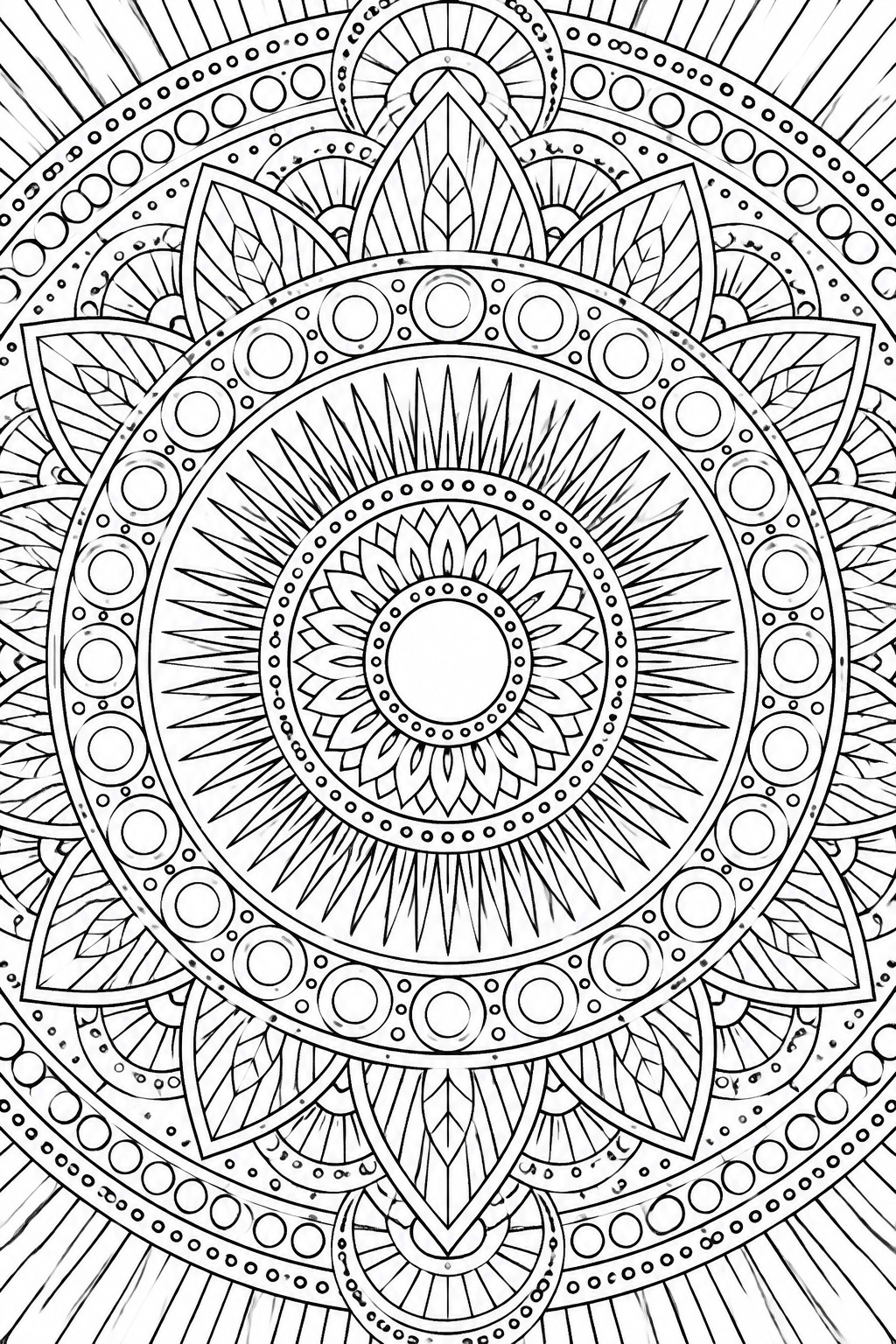
Mandala pages built around concentric rings give colorers a clear structure to follow while still offering room for variation. This design places a small central flower at the core, then expands through bands of pointed rays, leaf shapes, and dotted circles that repeat around the page. The even spacing between layers keeps the focus on pattern repetition rather than freeform drawing.
The layout makes this easy to color because each ring can be tackled one at a time without overlapping decisions. A page like this works especially well for adults who want a steady, pattern-focused session instead of loose scenes. The consistent line weight and balanced symmetry also make it a strong choice for testing color combinations or gradients across matching sections.
Symmetrical Mandala with Layered Floral Rings
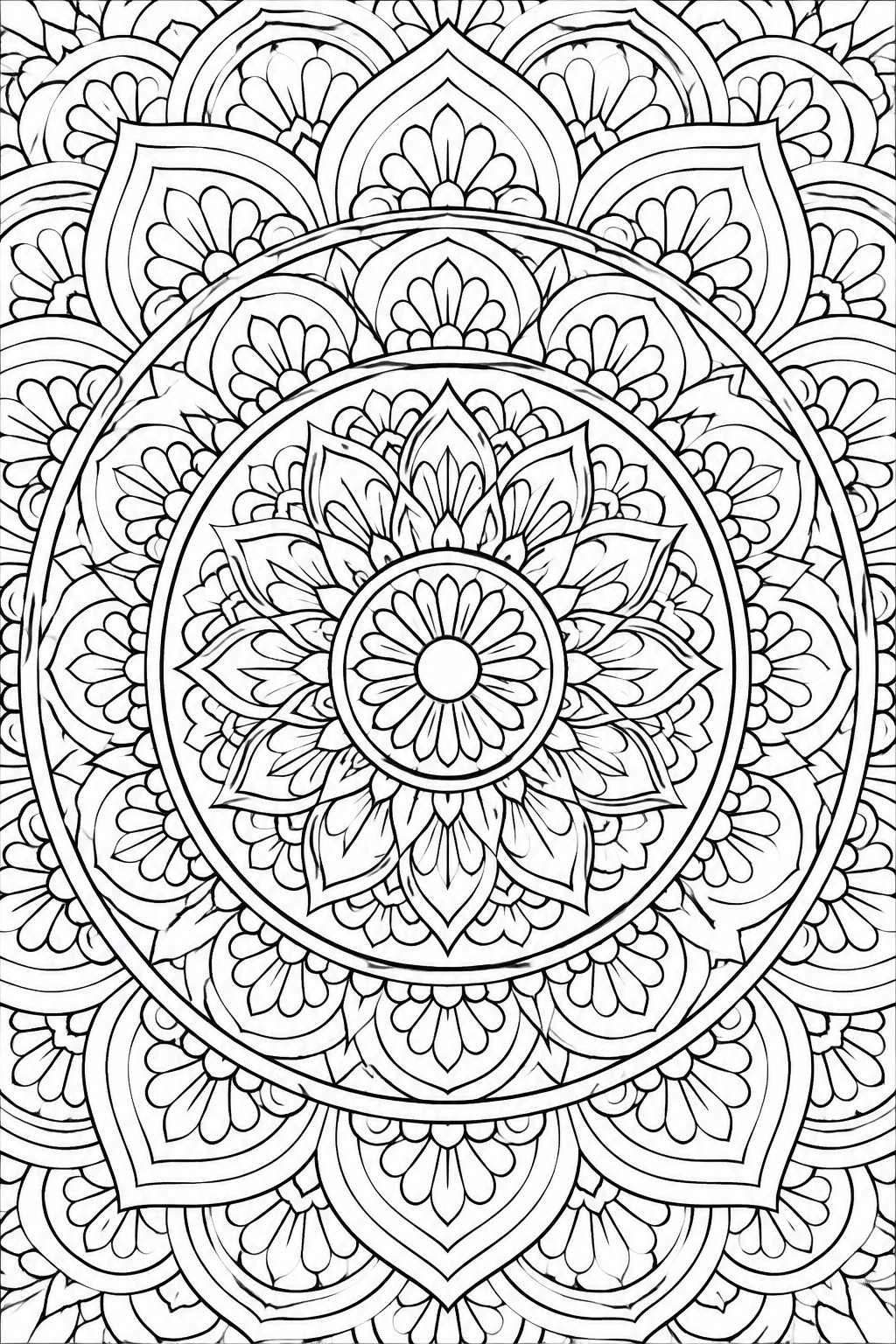
Mandala designs like this one build outward from a central point using repeated petal shapes and circular bands. The page arranges these elements in clear concentric rings that alternate between dense floral clusters and simpler scalloped borders. This structure creates a balanced layout where matching sections repeat around the circle.
What makes this page useful is the clear ring divisions that let colorers tackle one band at a time. The detail level works well for adults who want an intricate pattern without tiny isolated shapes. The repeated motifs also make it easy to test different shading techniques on identical elements while keeping the overall design cohesive.
Layered Mandala Built from Repeating Floral Rings

Mandala pages like this use a central circle as the starting point and build outward with identical petal shapes arranged in several rings. Dotted borders separate each ring and reinforce the radial pattern so color placement stays organized. The repeating floral forms create natural sections that let colorers focus on small details without large empty areas to fill.
What makes this page useful is the consistent petal repeats that allow the same color scheme to be tested across multiple rings for a balanced look. The medium line density suits adults who prefer steady pattern work over quick fills. A page like this works especially well for practice sessions where symmetry guides color decisions and reduces the chance of uneven results.
Concentric Mandala Built from Repeating Lotus Rings
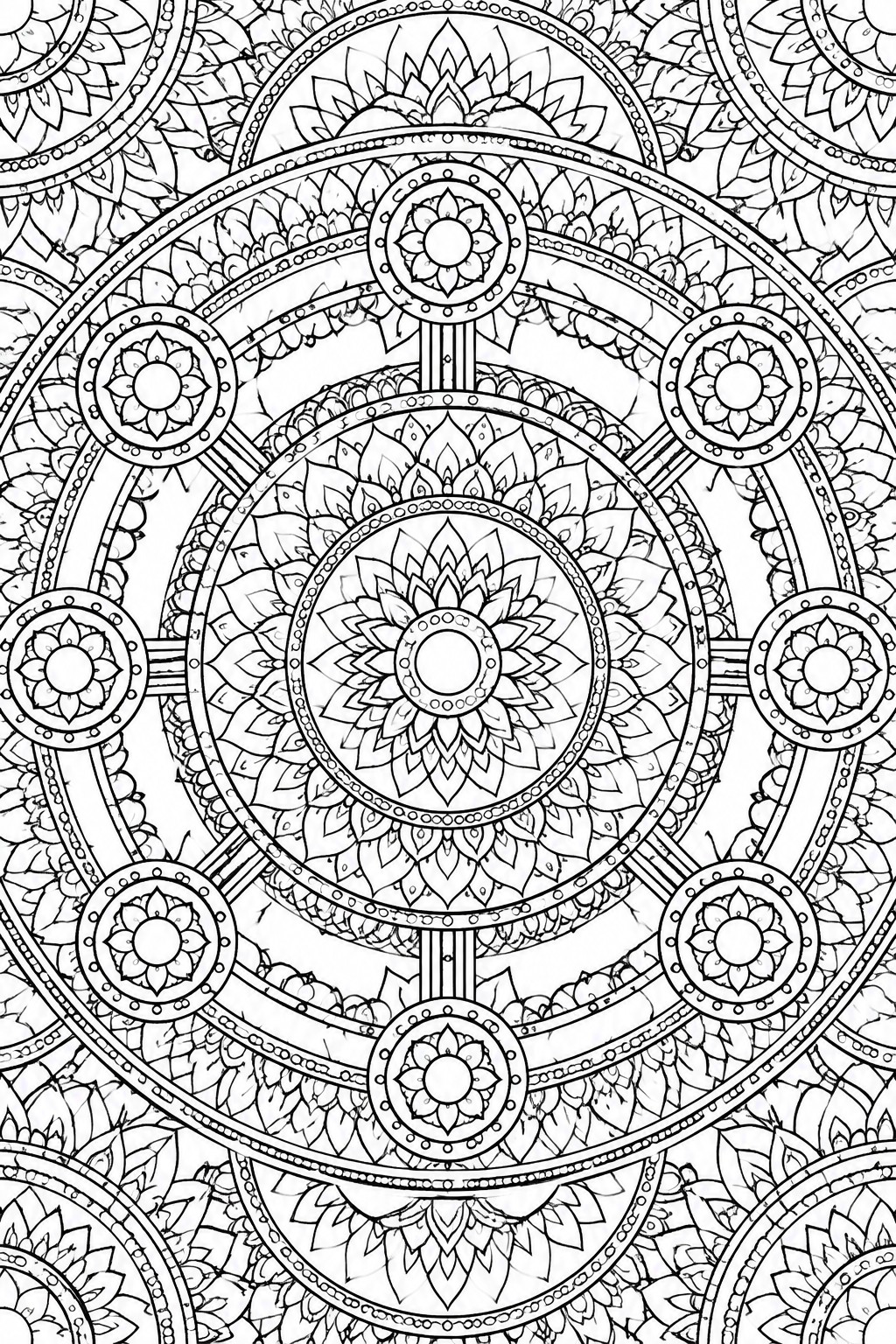
Mandala pages like this center on a series of circular layers where each ring repeats the same petal and flower shapes at a different size. The design places smaller circular motifs between the main rings to keep the symmetry consistent from the middle outward. This structure gives colorers distinct bands to fill while the repeating forms guide choices about color placement.
The layout makes this easy to color in sections without losing track of the overall pattern. A page like this works especially well for adults who want a steady rhythm rather than a quick finish. The even spacing between elements keeps the work from feeling crowded so progress shows up clearly as each ring is completed.
Concentric Petal Mandala with Dotted Ring Separators
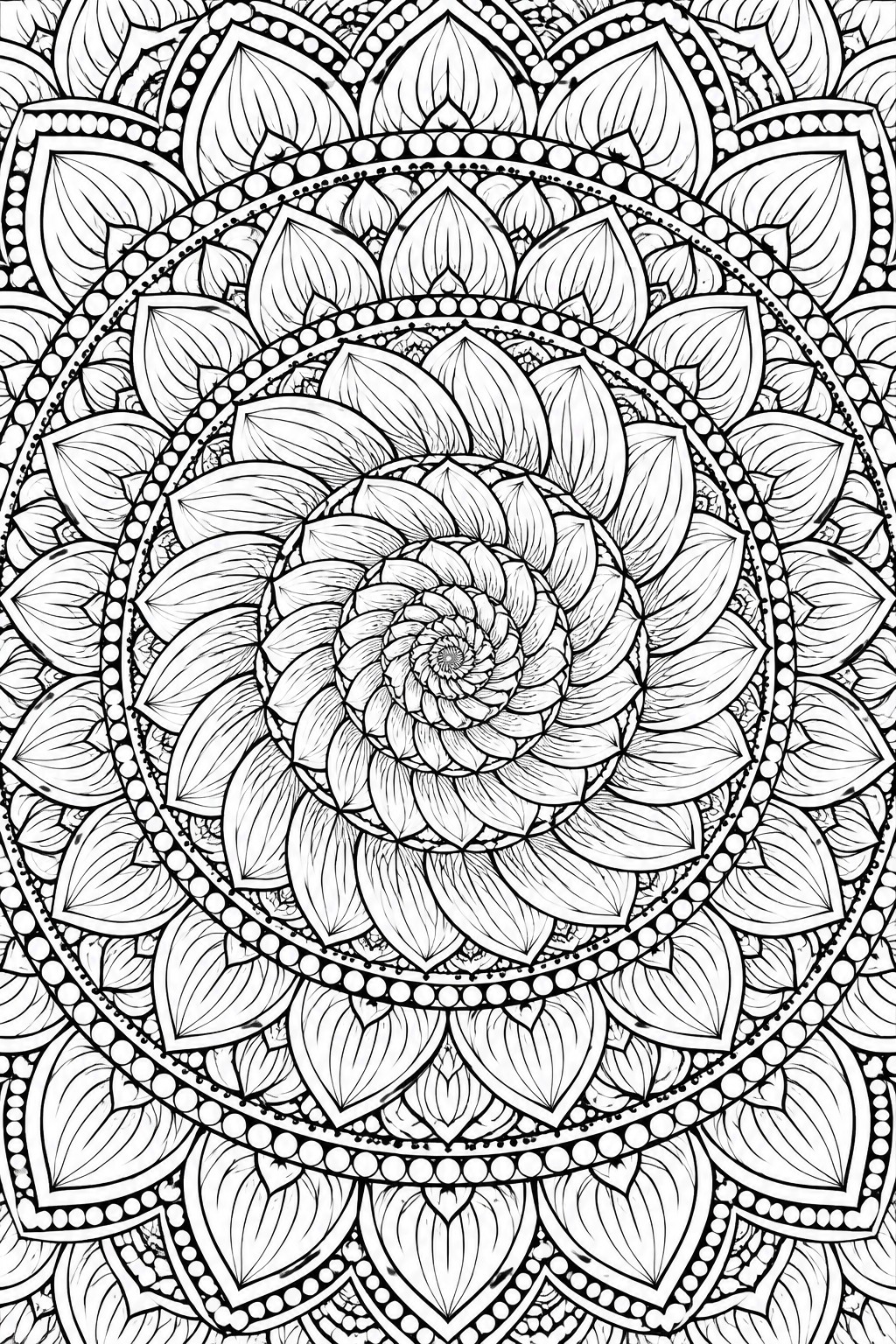
Mandala pages built this way use a single petal shape repeated in tight rings that expand from the center. Dotted lines mark each ring so the design stays organized even as the layers get larger. The repetition gives colorers a clear path to follow while the slight angle changes in each ring keep the pattern from feeling flat.
The layout makes this easy to color because each ring can be tackled one at a time without losing track of the overall design. Colorers can use the same hues across matching petals or shift tones ring by ring for contrast. A page like this works especially well for adults who want a meditative session that stays focused on pattern rather than complex scenes. The clear boundaries also help the finished page look neat even when different colors meet at the dotted lines.
Concentric Mandala with Repeating Floral Rings
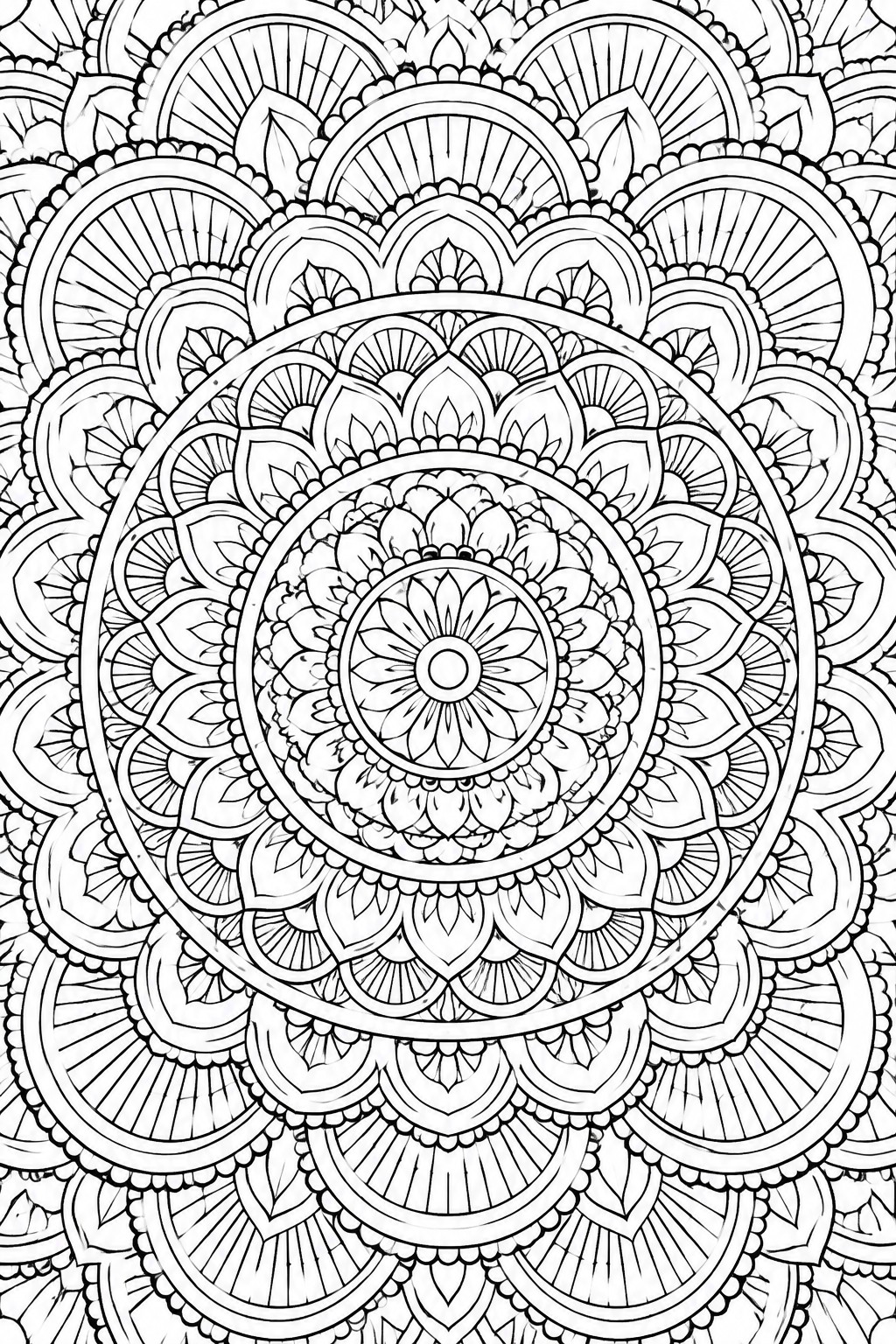
Mandala designs like this one center on strict radial symmetry where every section mirrors the ones around it. The page arranges multiple rings of petals, leaves, and fan shapes that grow outward from a small central flower. This structure turns the coloring process into a series of repeated decisions that stay consistent all the way around each ring.
The layout makes this easy to color because each ring stays separate from the next. A page like this works especially well for adults who enjoy pattern work and want to practice even shading or color gradients across matching shapes. The detail level makes this a smart pick for longer sessions since the small sections give clear stopping points. What makes this page useful is the way the repetition encourages steady progress without requiring creative choices about composition.
Symmetrical Floral Mandala Built from Repeated Petals and Vines
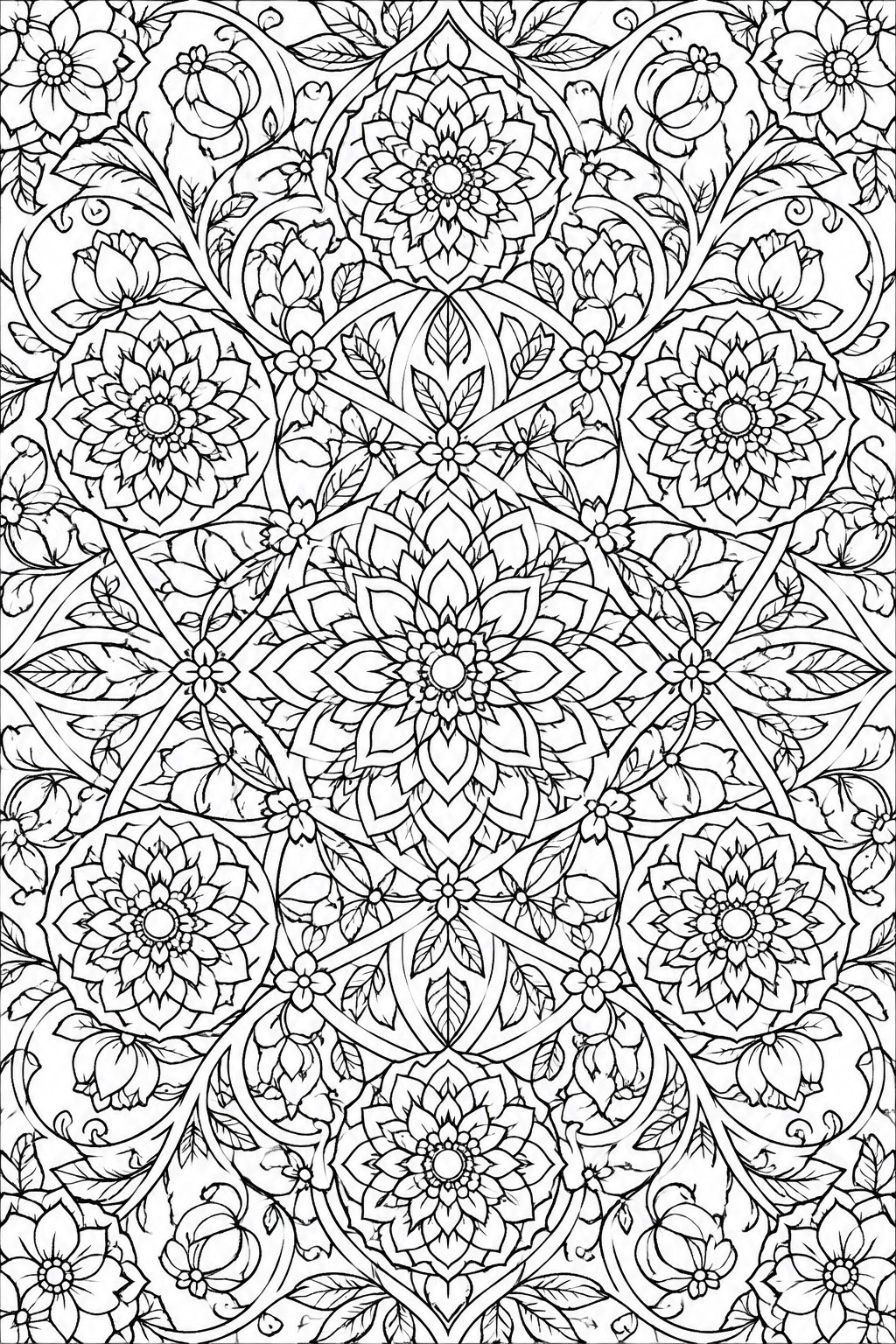
This coloring page idea uses a large central mandala as the core, with identical smaller flower clusters placed around it in a balanced circular layout. The design repeats the same petal shapes, leaf clusters, and curving vine lines in every section, creating clear patterns that guide the coloring process. The style stays focused on fine line work that divides the page into many small, repeatable areas rather than one single scene.
The layout makes this easy to color because the symmetry lets you repeat the same color choices across matching sections without constant decision making. A page like this works especially well for adults who want a detailed but structured project that still feels manageable in stages. The repeating motifs stand out on Pinterest because they show the finished result will look orderly even when multiple colors are used.
Compass Rose Mandala with Leaf Borders
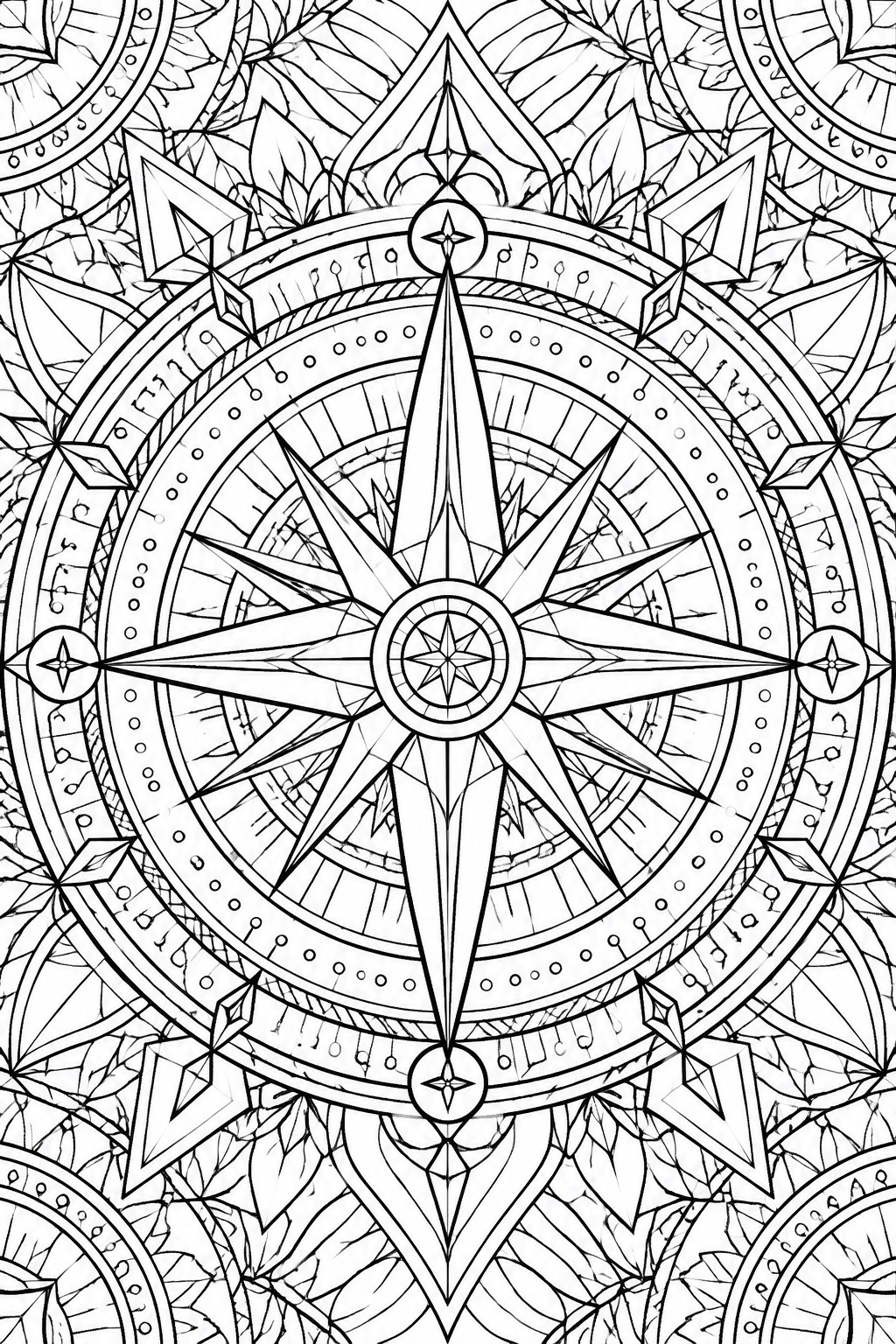
A mandala centered on a compass rose uses radial symmetry to organize the page into clear sections that repeat around the circle. Concentric rings with dots and lines create steady patterns, while leaf shapes fill the outer areas and maintain the same balanced layout. This structure gives colorers distinct zones to work through without losing the overall flow.
The layout makes this easy to color because the repeating rings and points let you match colors across opposite sides as you go. What makes this page useful is the mix of bold central lines and finer outer details, which suits adults who want a pattern-focused session that stays engaging but not scattered. For a relaxing session, this kind of page works well when you want repetition to guide your choices instead of starting from a blank space.
Symmetrical Mandala Built from Repeating Floral Rings
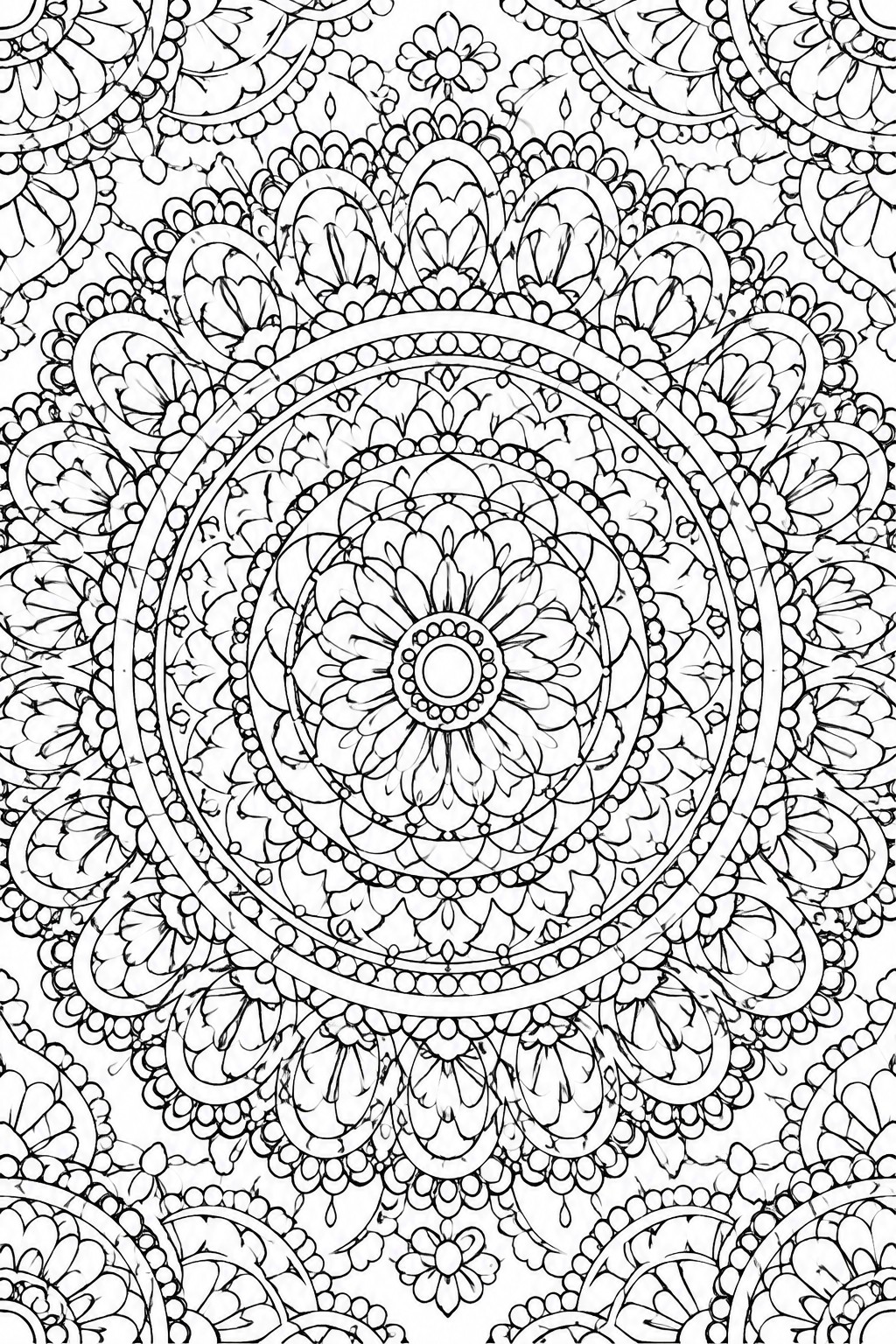
Mandala pages like this one focus on a single centered design that expands outward through repeated shapes and balanced layers. The structure uses a small flower at the middle, then adds ring after ring of petals, dots, and curved forms that match on every side. This repetition turns the page into a series of connected sections that stay organized even as the pattern grows more complex.
What makes this page useful is the clear ring structure that lets colorers work inward or outward without losing their place. The detail level makes this a smart pick for adults who want a longer session with small shapes and steady line work. A page like this works especially well for testing color combinations because each repeated element gives the same space to try different shades while the symmetry keeps the whole design looking finished.
Fern Mandala with Circular Seed Patterns
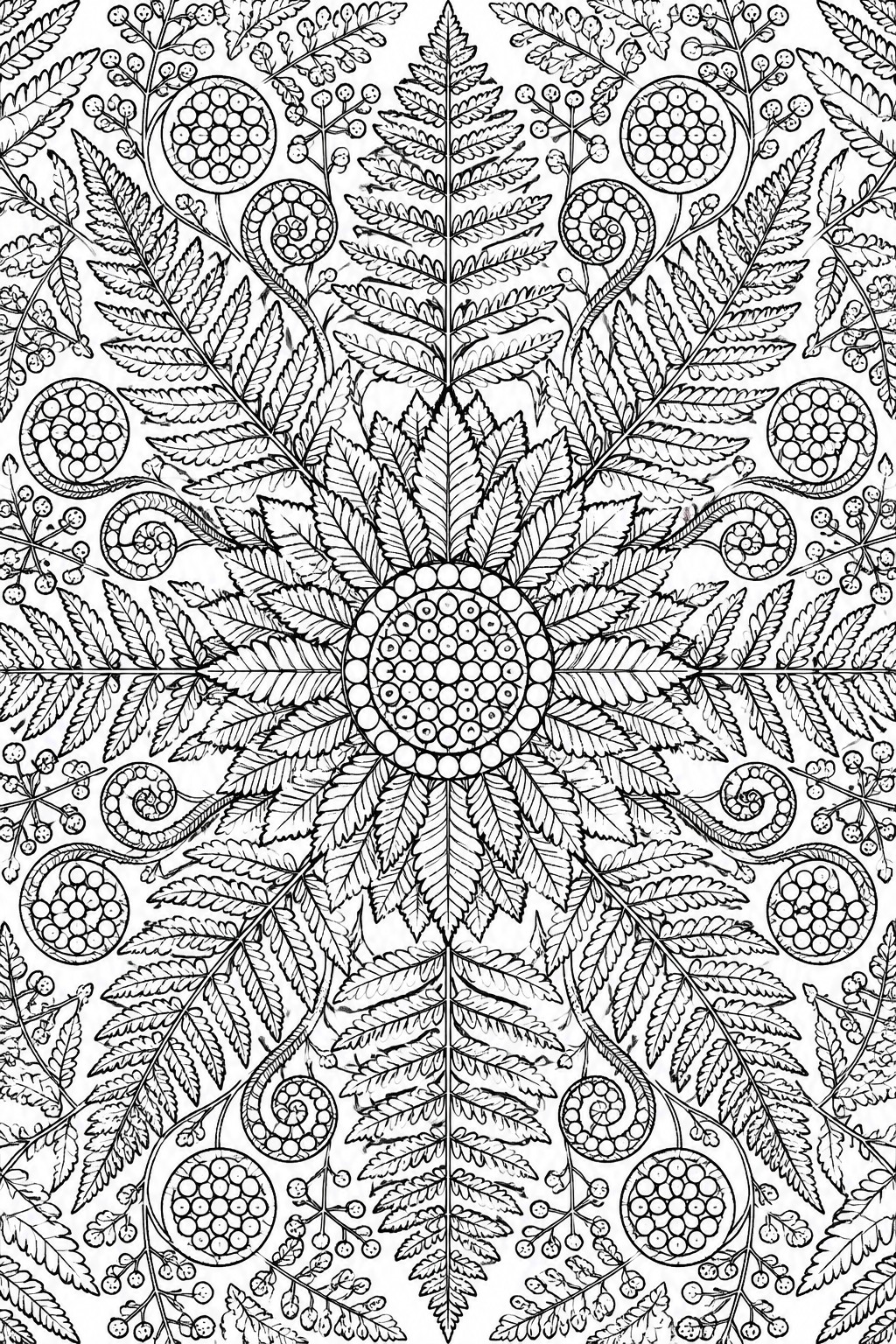
A mandala built around fern fronds and repeating circular motifs forms the core idea here. The design layers symmetrical leaves and spiral stems around a central dotted circle, with identical elements placed at regular intervals to create a balanced radial layout. The consistent line work and repeated shapes give colorers clear sections to work through without needing to plan the overall structure.
What makes this page useful is the high repetition of similar leaf and circle forms that support steady progress during a longer coloring session. The layout makes this easy to color because the symmetry lets you repeat the same color choices across opposite sections without constant decision making. A page like this works especially well for adults who prefer detailed pattern work over loose scenes. The even spacing between elements also helps the finished page look orderly even if some areas receive lighter shading.
Mandala Built Around Repeating Floral Diamonds in Concentric Rings
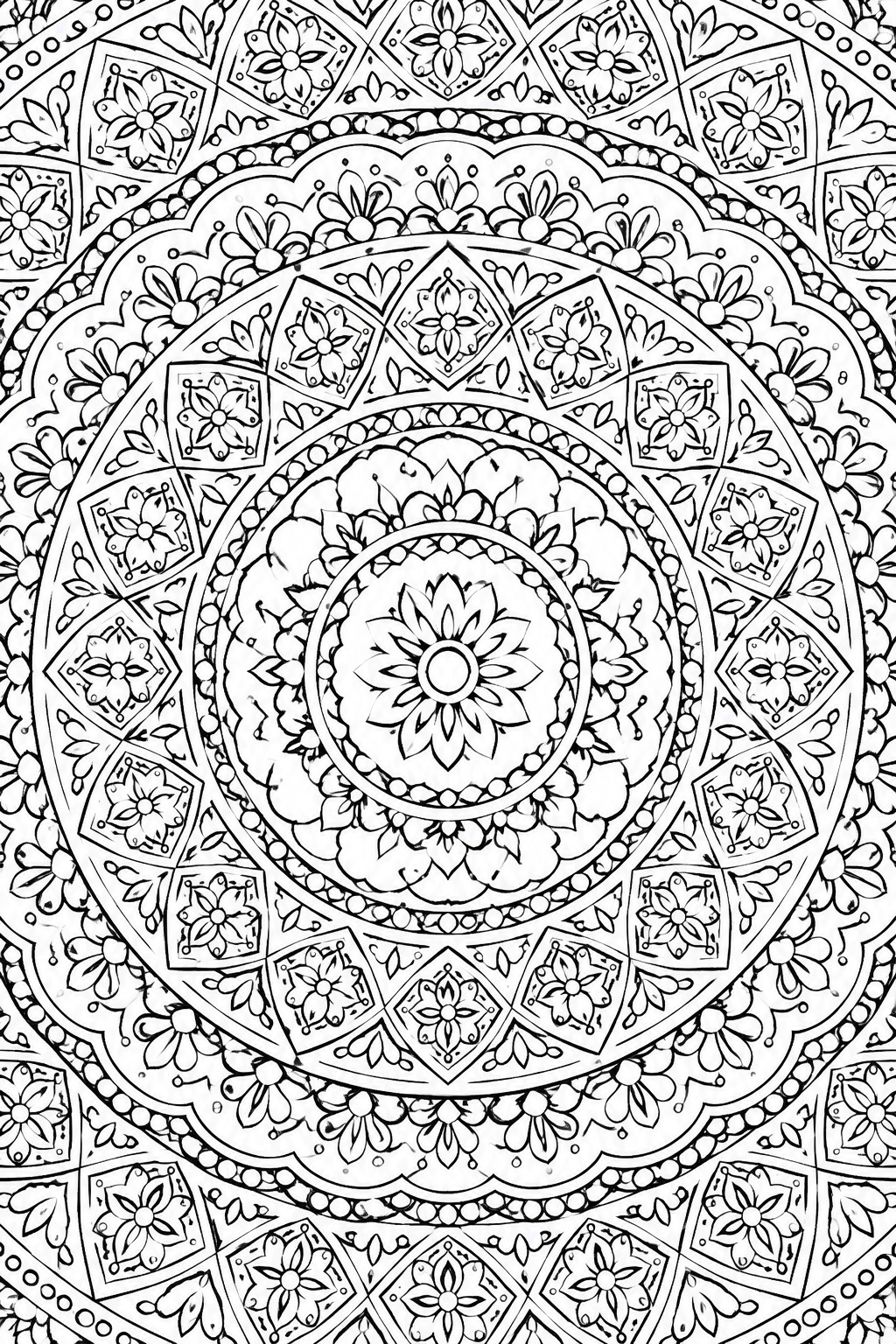
A mandala design like this centers on radial symmetry where identical floral clusters and diamond frames repeat around the circle. The layout stacks multiple rings of the same motifs so each section mirrors the others exactly. This structure turns the page into a set of matching areas that invite consistent color choices across the whole design.
What makes this page useful is the clear repetition that lets you build a color pattern once and then repeat it without guessing. The detail level makes this a smart pick for adults who like working on small shapes within a larger balanced layout. The open ring structure also helps keep sections distinct so progress feels steady as each layer gets filled.
Symmetrical Mandala Built from Layered Floral and Leaf Patterns
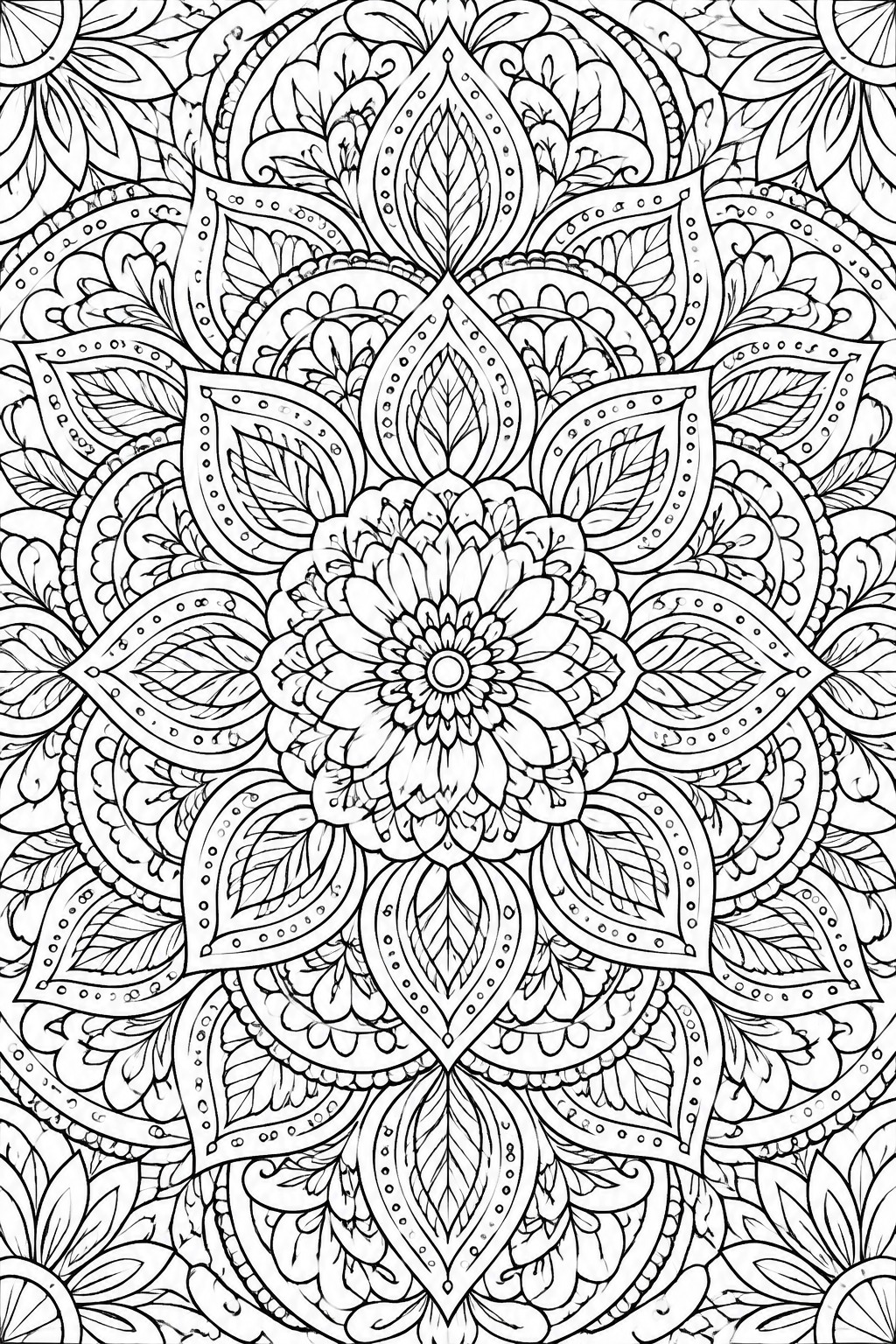
This coloring page centers on a mandala that expands outward through repeated rings of leaves and petals. The design uses a clear central flower as the starting point, then adds matching shapes in balanced sections that grow more detailed toward the edges. Fine lines create consistent spacing between each layer so colorers can work methodically without the patterns overlapping.
The layout makes this easy to color in sections while keeping the overall symmetry intact. A page like this works especially well for adults who prefer pattern-focused designs over simple outlines. The repetition in the leaf shapes lets someone practice the same coloring approach across multiple areas without the page feeling repetitive or boring.
Concentric Mandala with Checkered Rings and Vine Details
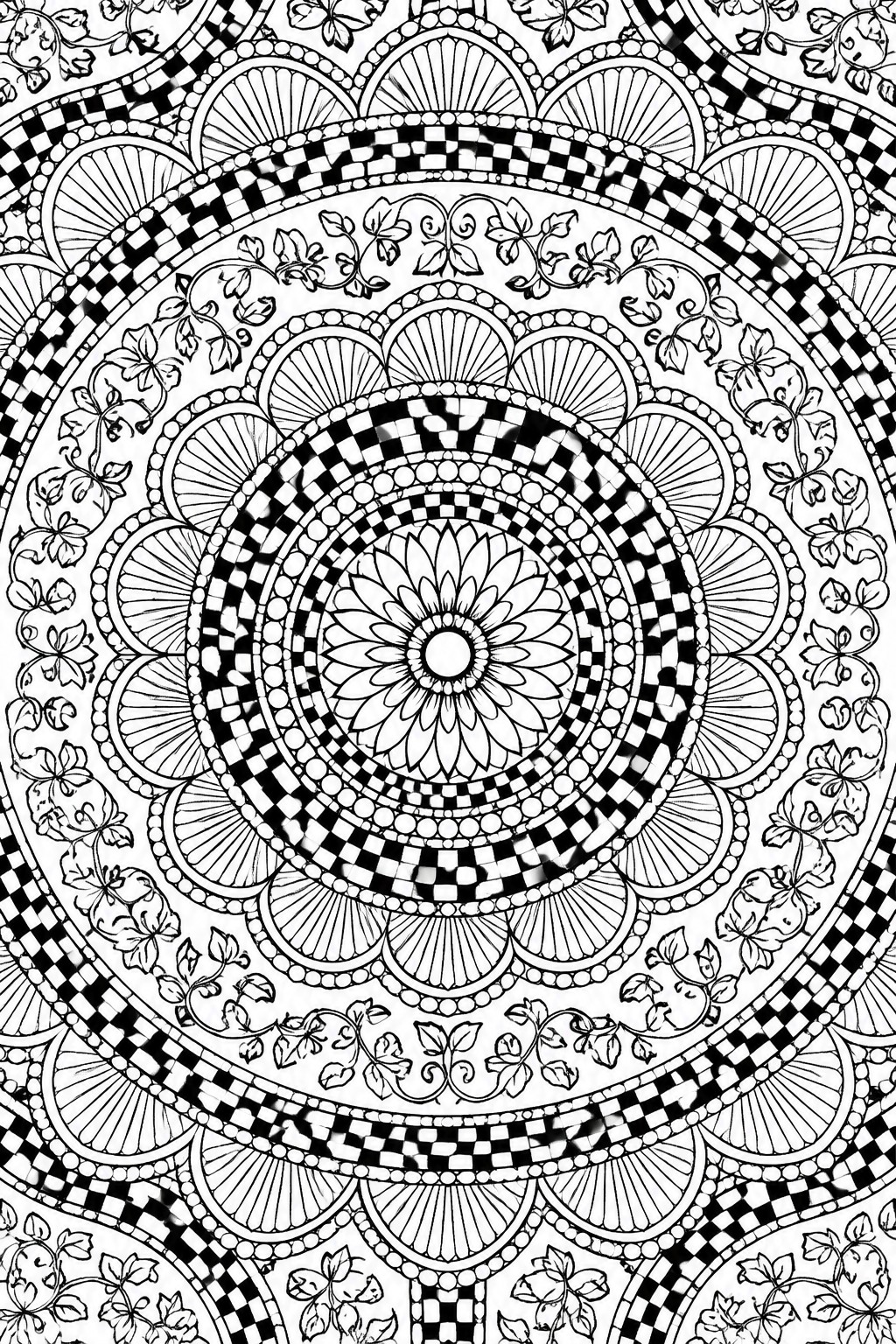
This mandala builds outward from a central flower using repeated rings of radiating petals and dotted lines. Checkered bands separate each layer while leafy vines fill the outer spaces between the circular sections. The strong symmetry and clear ring divisions create a structured pattern that guides coloring choices without requiring freehand decisions.
The layout makes this easy to color ring by ring or section by section. A page like this works especially well for adults who prefer pattern repetition over loose scenes. The checkered areas give quick visual contrast once colored, which helps the finished page stand out in a collection. For a focused session, the repeating motifs keep the work steady without becoming repetitive in a boring way.
Celtic Knot Mandala Built on Concentric Repeating Patterns
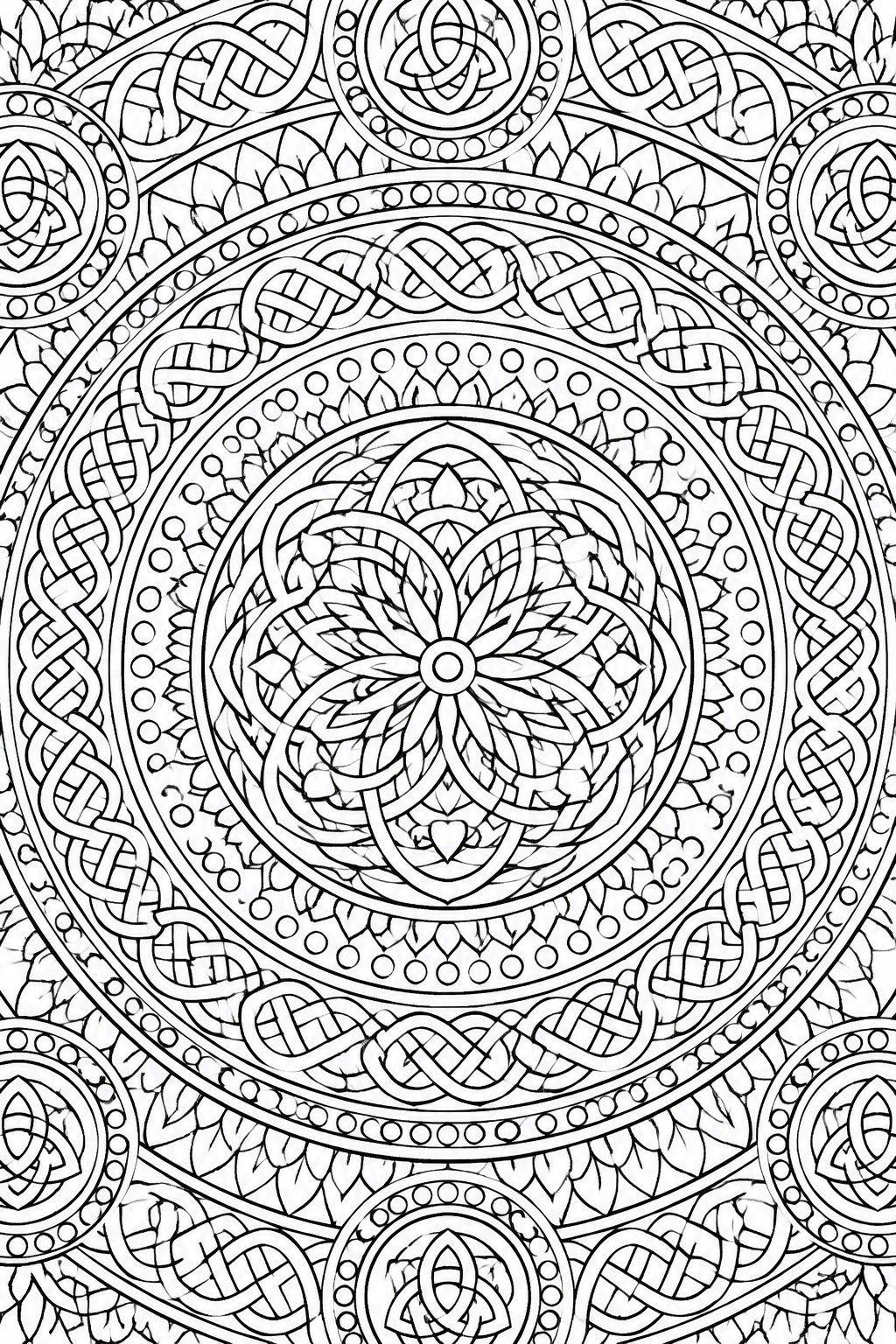
Mandala designs like this center on Celtic knotwork that repeats around the circle in layered rings. The composition mixes tight interwoven lines with a flower shape at the very middle to anchor the whole pattern. Repetition of the same knot style across multiple bands creates a steady rhythm that supports focused coloring sessions.
The layout makes this easy to color because each ring offers a similar pattern to repeat without needing new ideas. A page like this works especially well for adults who enjoy detailed work and want to build color gradually from the center outward. The consistent spacing between elements helps keep the design balanced as you fill in sections one ring at a time.
Frequently Asked Questions
What makes these mandala coloring pages especially meditative compared to other designs?
These pages emphasize balanced symmetry and repeating patterns that guide the mind into a focused rhythm. As you color, the consistent shapes help quiet mental chatter and encourage present-moment awareness, turning the activity into a form of moving meditation rather than a simple creative task.
How does focusing on symmetry and repetition support stress relief during coloring?
Symmetry creates visual harmony that mirrors inner balance, while repetition allows the brain to enter a flow state through predictable motions. This combination reduces anxiety by providing structure without overwhelming detail, helping users achieve deeper relaxation with each section they complete.
Are these pages suitable for beginners or only experienced colorists?
The set includes a range of complexity levels within the 25 designs, starting with simpler symmetrical motifs and progressing to more intricate repetitions. Beginners can start with larger sections to build confidence, while the clear guidelines of symmetry make it easy to maintain balance even without advanced skills.
What tools and techniques work best for coloring these pages effectively?
Colored pencils offer precise control for fine symmetrical lines, while gel pens add vibrant layers to repeating elements. Begin at the center and work outward to follow the natural repetition, using light pressure for shading and varying hues within similar shapes to enhance the meditative flow without breaking concentration.
How can someone incorporate these coloring pages into a regular mindfulness routine?
Set aside 15 to 20 minutes daily in a quiet space, perhaps after breathing exercises, and treat the session as dedicated time for focus. Track progress across the 25 pages by noting how symmetry helps sustain attention, which builds a consistent habit that strengthens overall mental clarity over time.
