

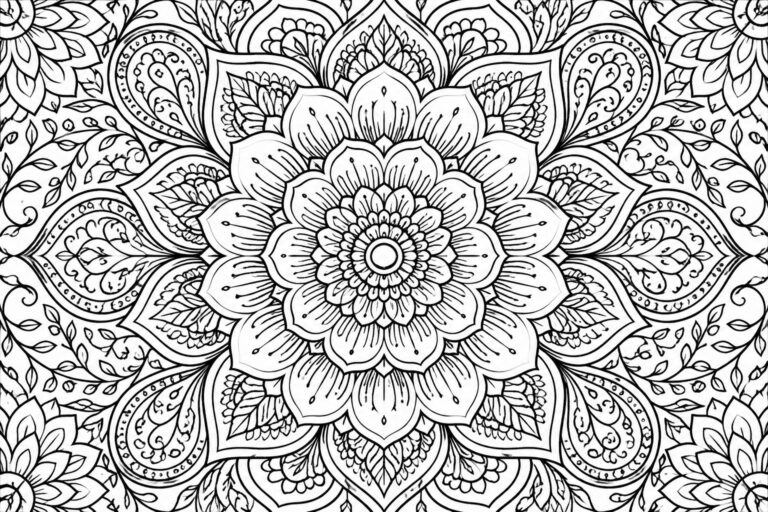
I like to keep some mandala pages on hand for afternoons when I need a break from screens.
Coloring them helps me slow down and pay attention to small details.
I have gathered 18 designs that I think work well for these quiet times.
They are straightforward and do not require a lot of setup.
I usually print a few and keep them in my craft drawer for whenever the mood strikes.
Layered Floral Mandala with Repeating Leaf and Petal Patterns
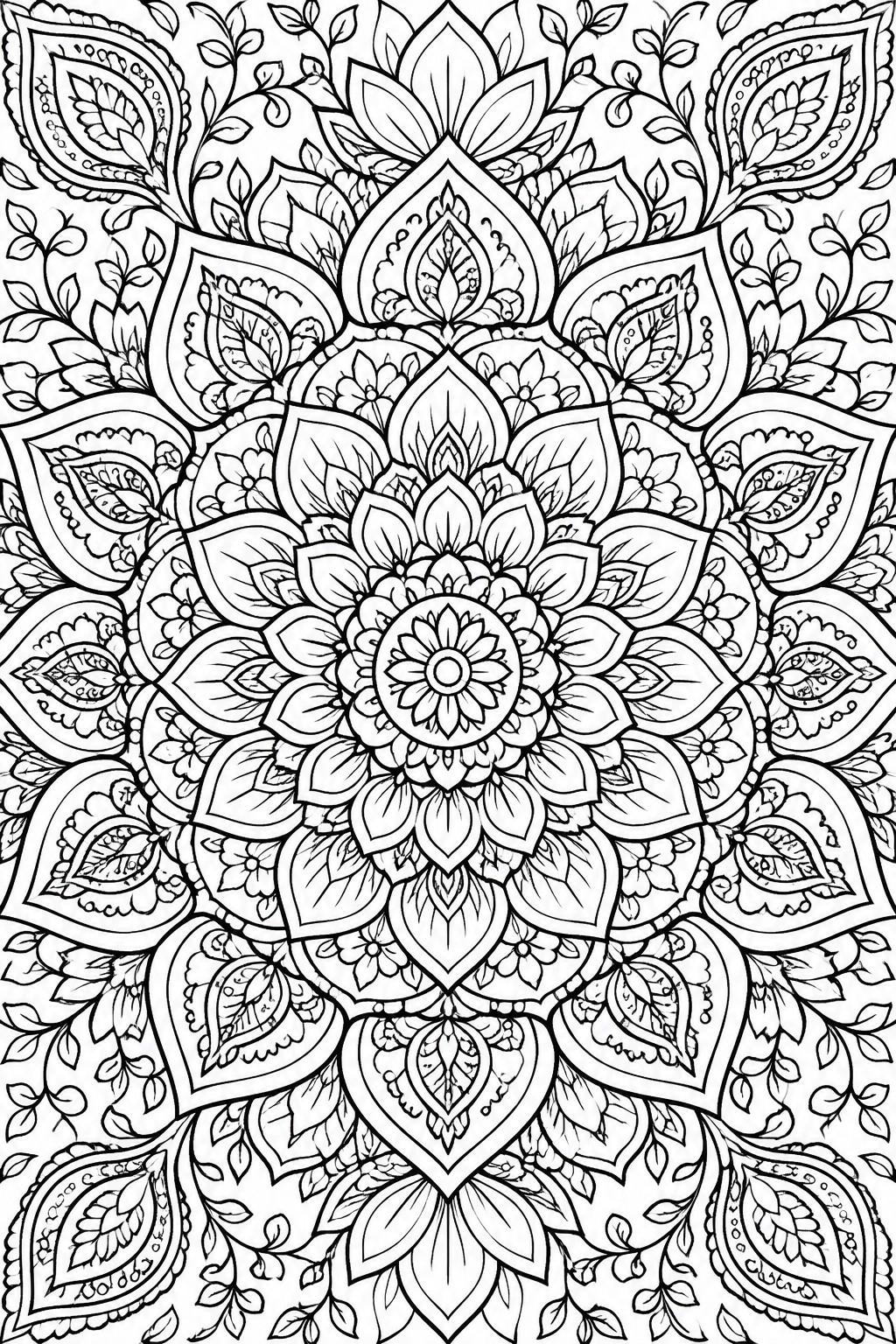
A mandala built from concentric rings of pointed petals and leaf shapes creates a structured yet varied coloring surface. Each ring adds smaller internal patterns that break larger areas into manageable sections without losing the overall circular flow. The design mixes bold outlines with fine line work inside individual shapes to guide color choices across the page.
What makes this page useful is the clear progression from the simple center flower outward to more complex outer layers. The detail level makes this a smart pick for adults who prefer pattern work over loose scenes. The layout keeps similar motifs repeating at different scales so color decisions stay consistent while still offering enough variation to hold interest through a full session.
Detailed Radial Mandala with Layered Star and Leaf Rings
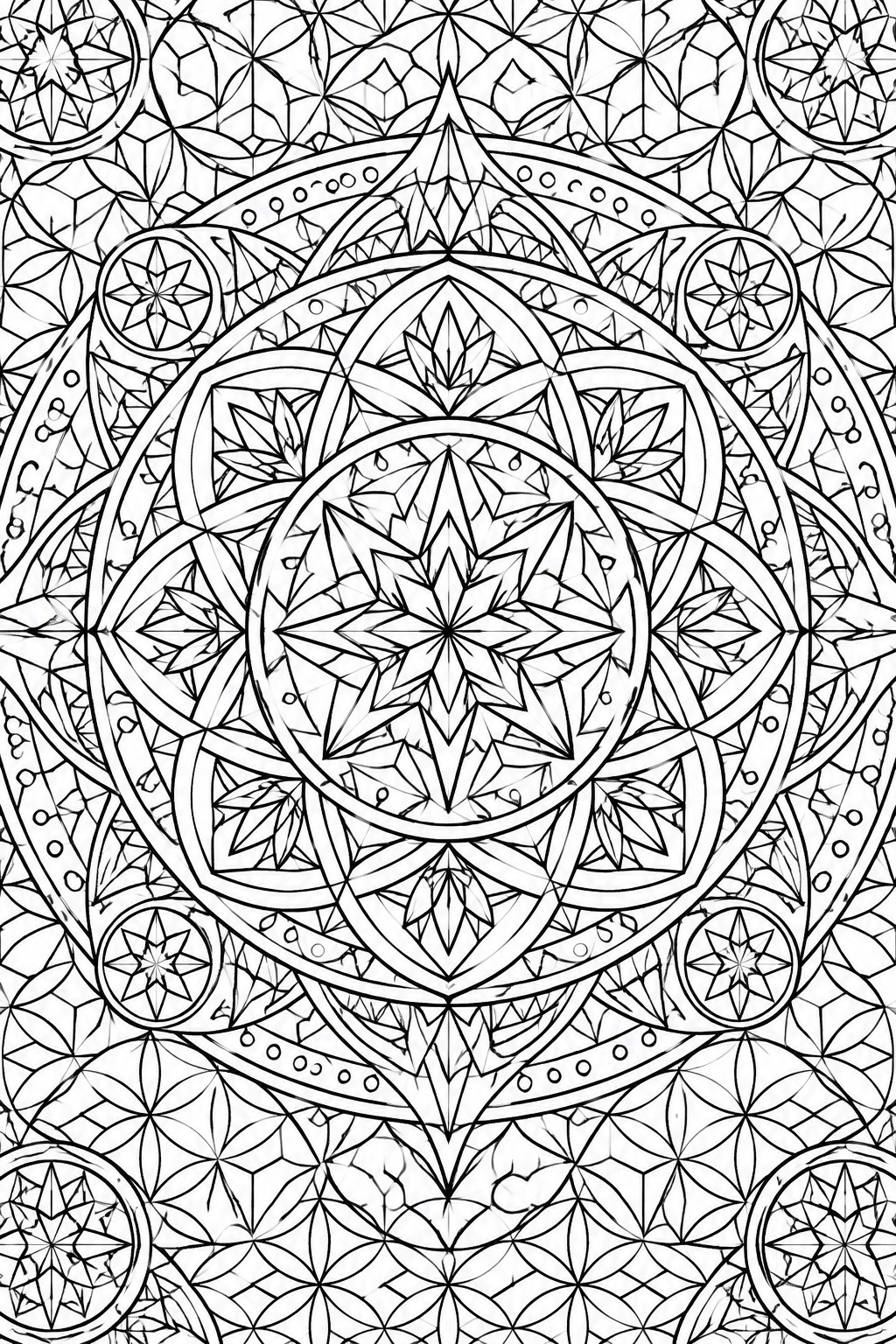
A mandala built around a strong central star that expands through multiple rings of pointed leaf shapes and arched frames creates a structured yet varied coloring surface. The design repeats smaller star motifs in circular frames around the outer edges to keep the entire page balanced and filled. This kind of radial layout gives clear sections that progress from tight detail near the middle to slightly broader shapes farther out.
The layout makes this easy to color because the overlapping rings naturally divide the page into manageable rings and wedges. A page like this works especially well for adults who prefer steady progress without jumping between unrelated elements. The even spacing and consistent line weight help the finished piece look orderly even if you color different sections at different times.
Floral Mandala Built Around a Central Spiral Bloom
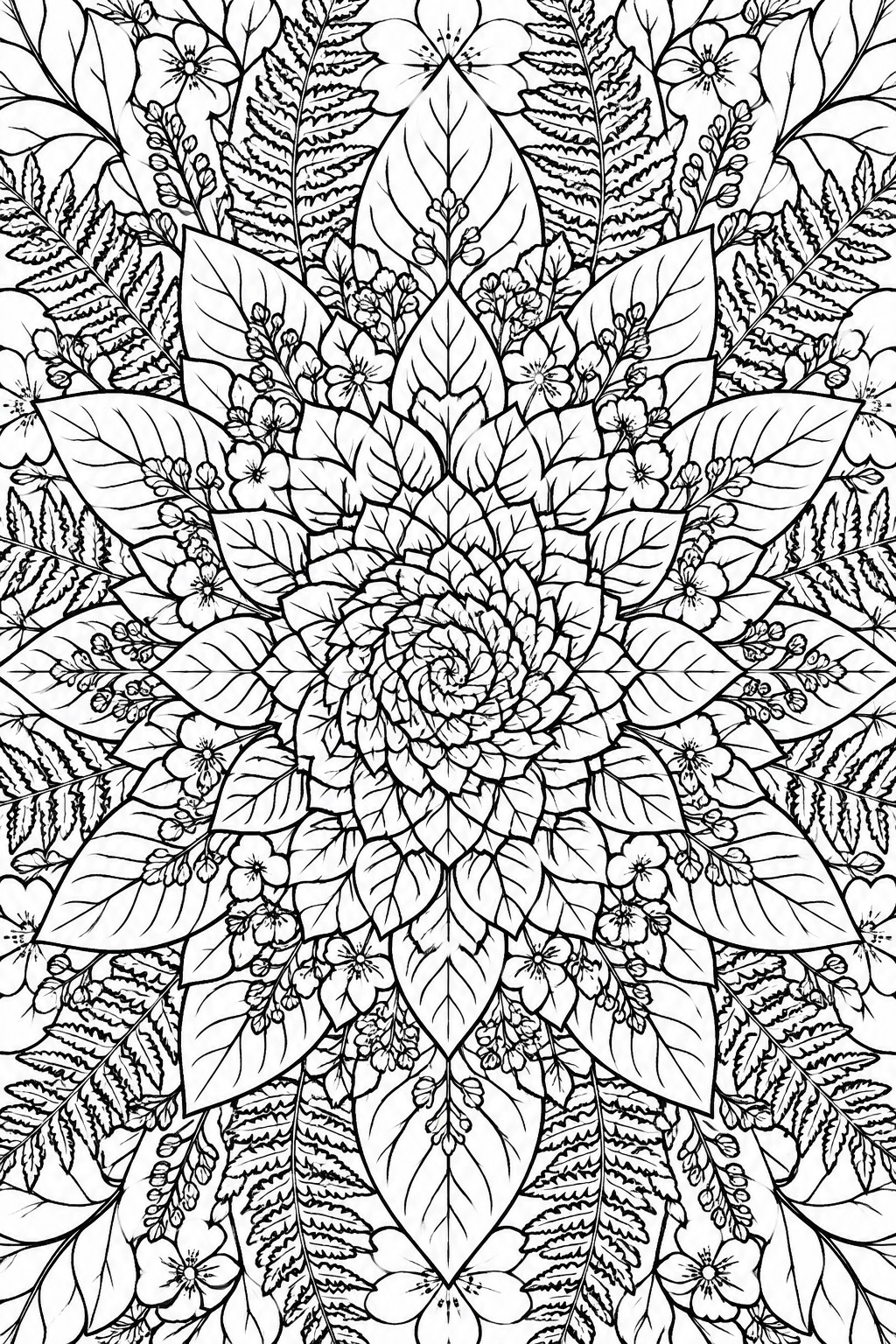
This design uses a tightly wound central flower as the core, then builds outward with broad pointed leaves, small five-petaled blooms, berry clusters, and fern fronds arranged in repeating rings. The radial layout keeps every section evenly spaced so color choices stay organized as the pattern expands. Large leaf shapes sit next to finer flower and fern details, giving clear boundaries without crowding any single area.
The layout makes this easy to color because the symmetry shows exactly where one section ends and the next begins. What makes this page useful is the mix of bigger open shapes for faster progress and tighter details that reward slower work. A page like this works especially well for adults who want a complete mandala without needing to invent their own structure. The balanced density also prints cleanly on standard paper with no tiny gaps that cause frustration.
Celestial Mandala with Sun and Moon Phases
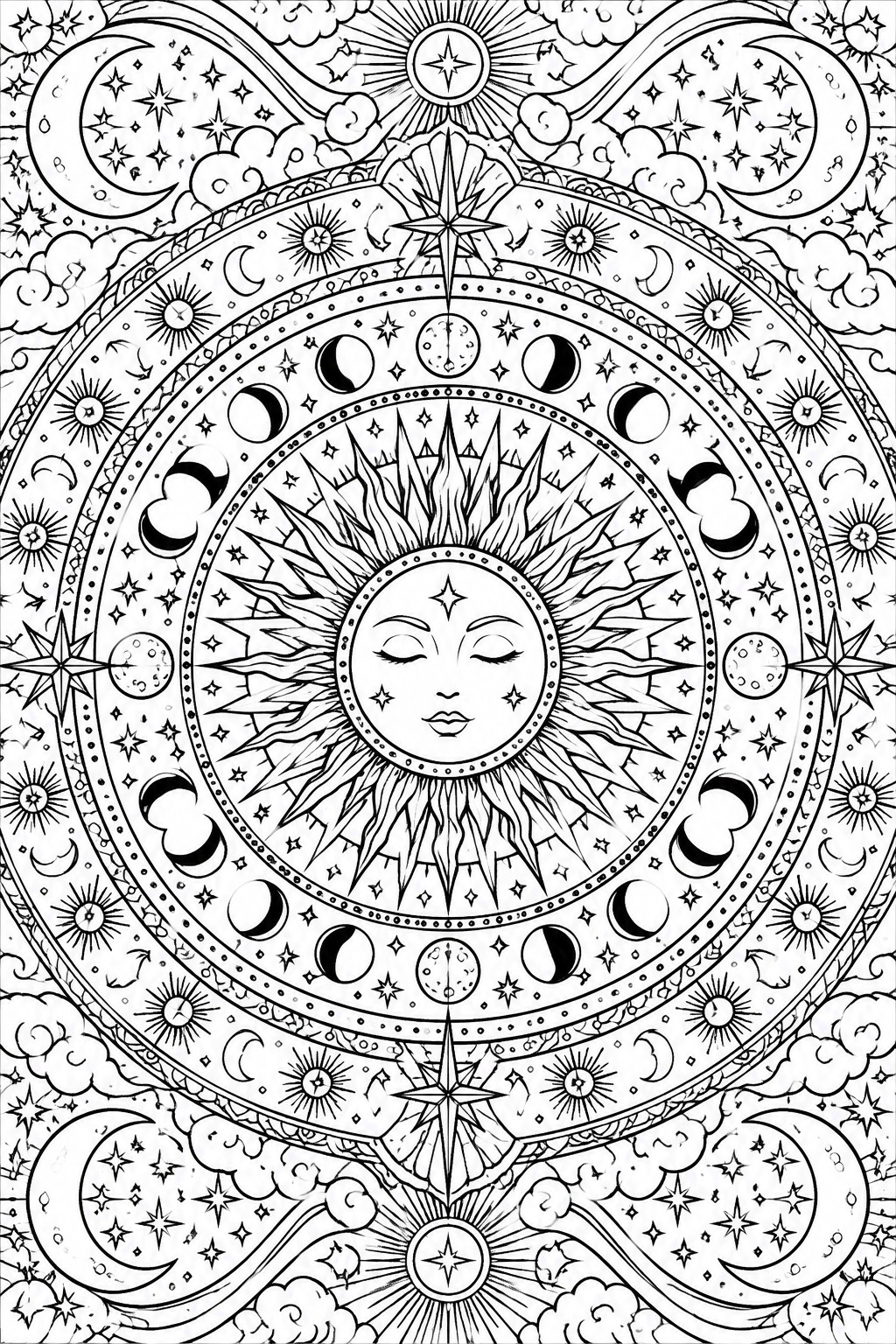
A central sun with a calm face anchors this mandala, with rings of moon phases and stars radiating outward in even layers. The design mixes bold rays around the sun with smaller repeating shapes like crescents and dots to fill the circular space. This creates a clear path for coloring that moves from the middle out while keeping patterns consistent across each ring.
The concentric layout makes this easy to color in sections without losing track of the overall design. Adults who prefer detailed mandalas will find the mix of larger sun rays and finer background stars useful for longer sessions. The balanced spacing helps color choices stand out without crowding, which makes the finished page look structured even when using a simple palette.
Butterfly Mandala with Layered Wings and Foliage
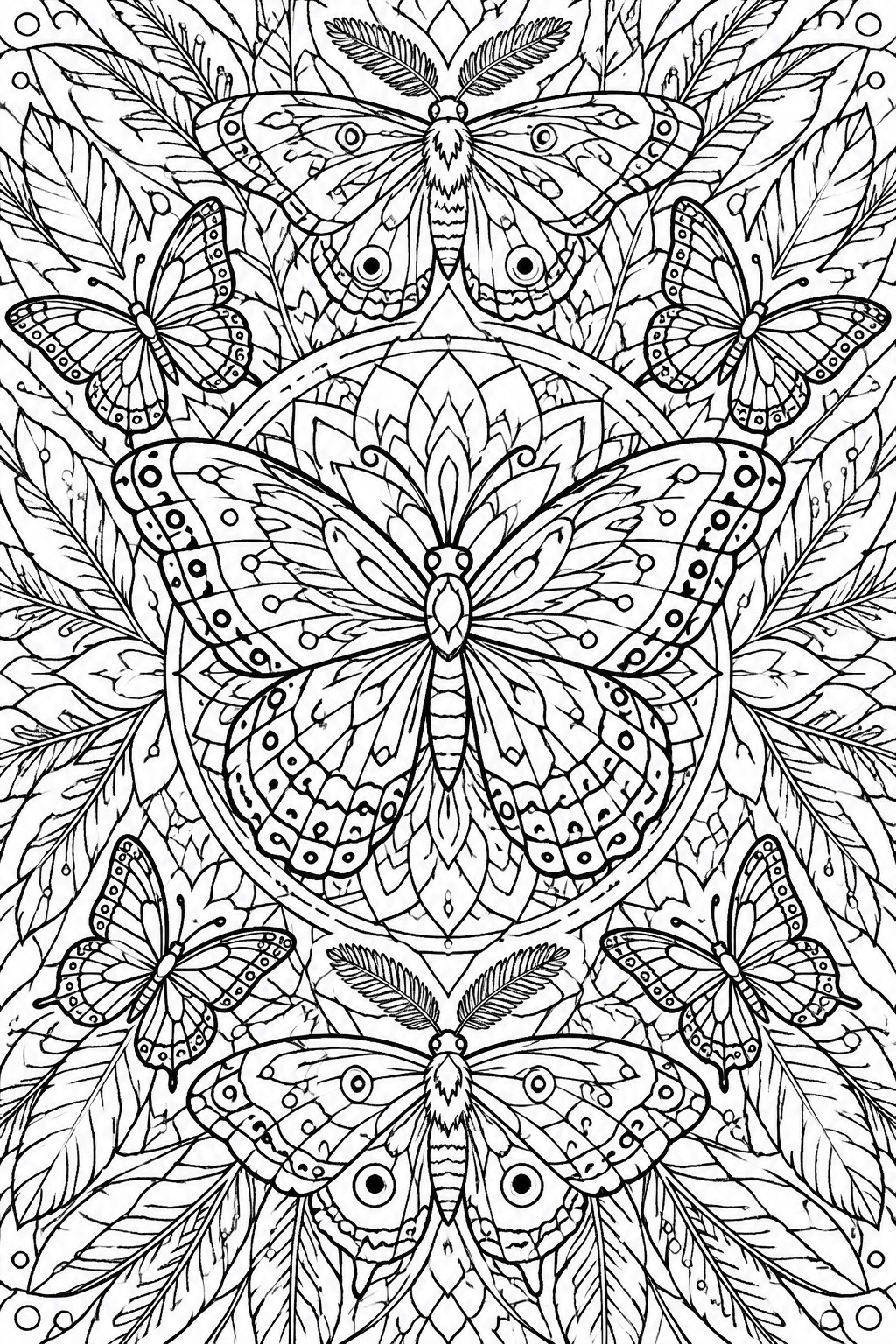
Butterflies form the main subject in this mandala layout, with their wings carrying repeated spots, lines, and scale patterns that create natural sections for coloring. A large central butterfly sits inside a circular frame while smaller ones fill the outer areas alongside leaves and feathers. The design keeps a clear radial balance so color choices on one side can mirror or contrast with the other without losing structure.
What makes this page useful is the way wing details stay contained within each butterfly shape, which helps colorers work section by section without lines running together. The layout makes this easy to color because the leaves and circular frame give breathing room between the busier insect areas. A page like this works especially well for adults who want a nature theme that stays engaging over multiple short sessions. The different sizes of butterflies also let someone begin with the simpler outer ones before moving to the more patterned center.
Wave Pattern Mandala with Shell Details
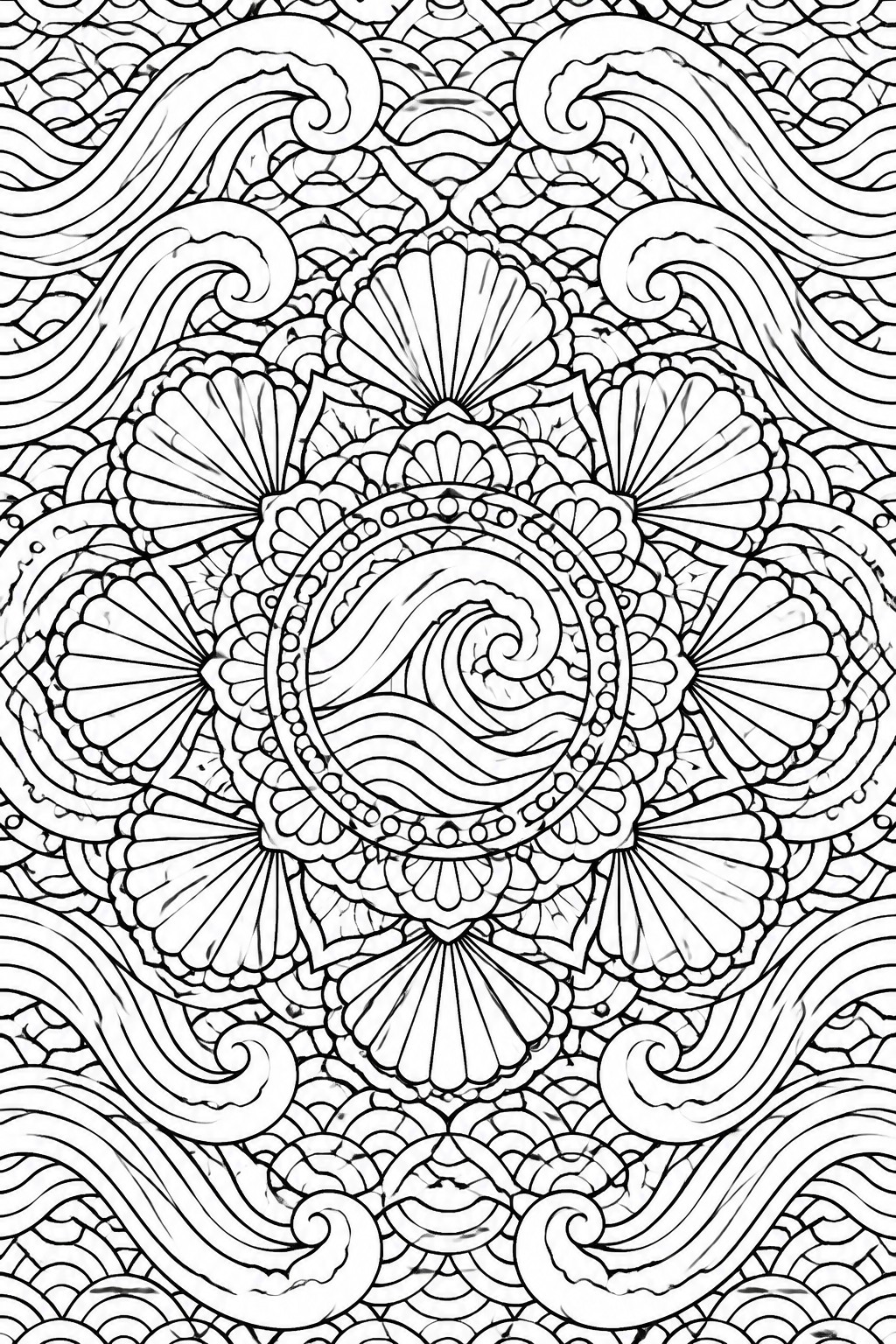
Mandala pages built on wave motifs use repeating curved lines and shell shapes to form a balanced circular layout. The center holds a tight spiral of flowing waves while outer rings add fan-shaped sections and border swirls that echo the same movement. This structure gives colorers clear sections that still link together through the shared curves.
The layout makes this easy to color because the connected lines let one shade choice carry across multiple areas without starting over each time. Detail stays high enough to hold attention for a full session yet stays organized so progress shows quickly in the rings. A page like this works especially well for adults who want pattern work without scattered small shapes that break focus.
Layered Floral Mandala with Concentric Rings
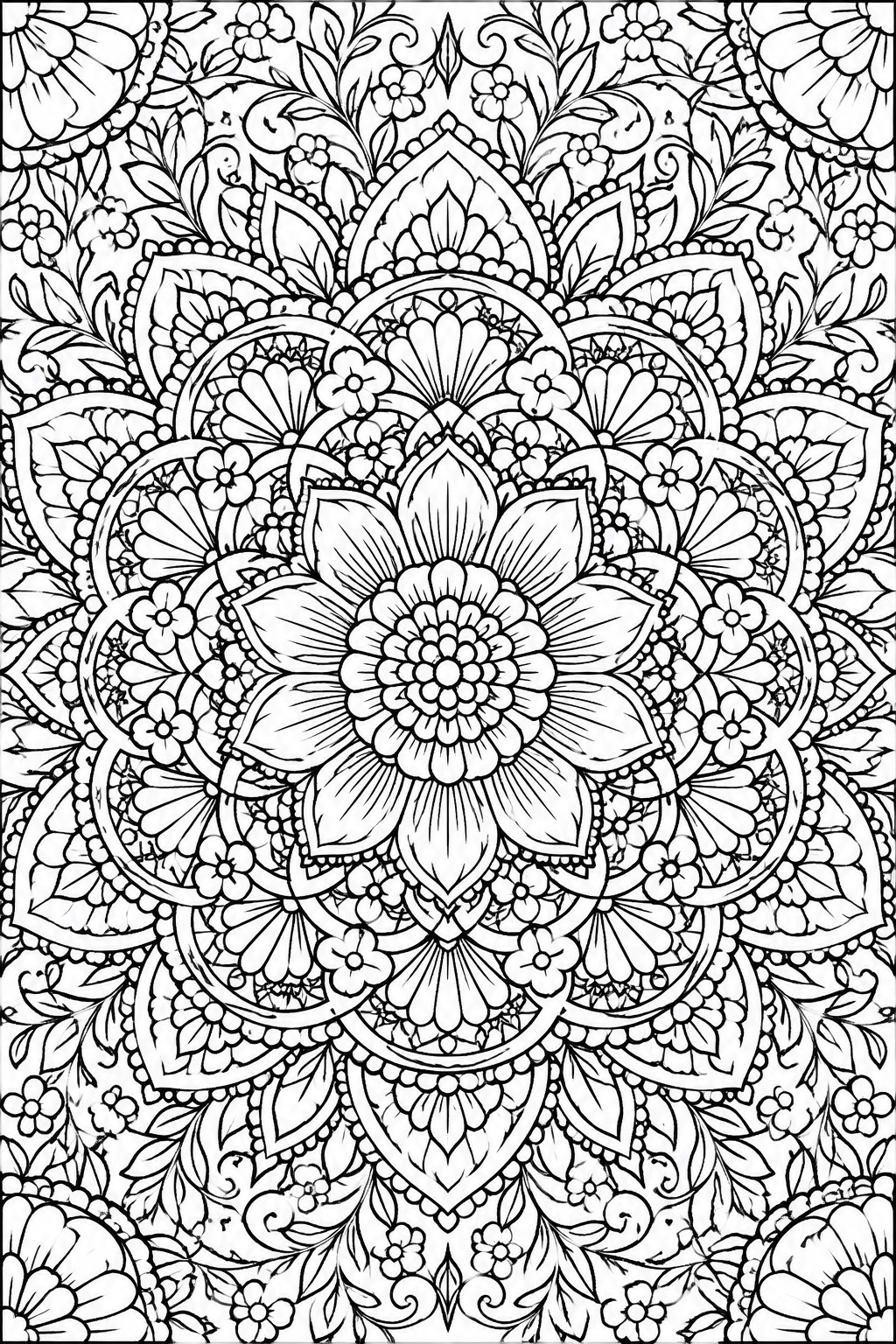
A floral mandala builds from a central multi-petaled flower and expands through several circular bands of smaller flowers, leaves, and geometric shapes. The symmetrical layout repeats the same motifs in each ring so colorers can follow a steady rhythm from the middle outward. Clear line work separates each section without crowding the page.
The dense but organized rings give adults a focused coloring session that still feels approachable in sections. Colorers can finish one ring at a time or move between larger petal areas and finer dot patterns depending on how much time they have. This type of page works well for Pinterest because the balanced structure photographs cleanly even when only partially colored.
Succulent Mandala with Geometric Hexagon Frames
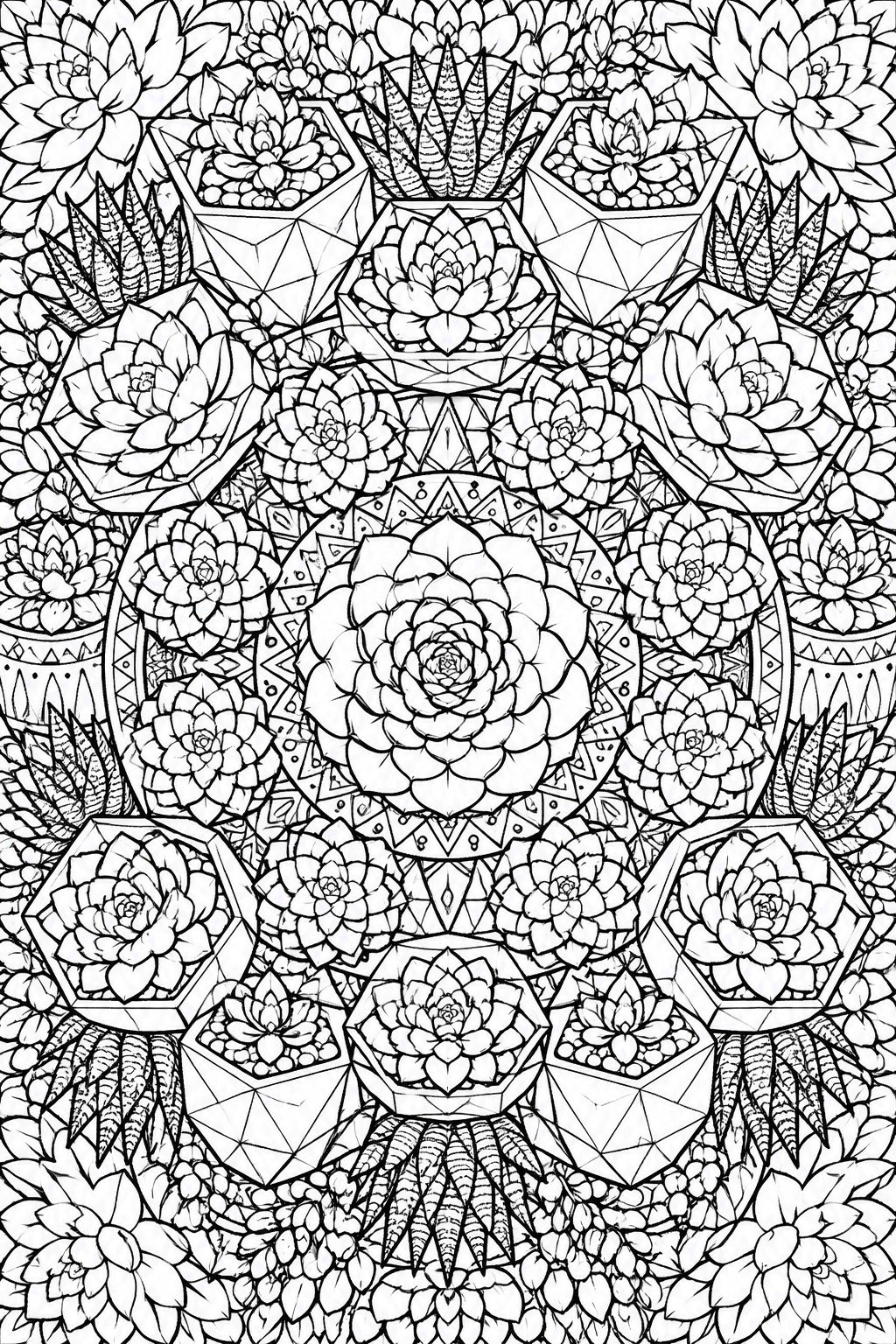
Succulent rosettes and small cacti sit inside faceted pots that repeat in a circular mandala layout. The design layers a large central bloom with rings of matching plants, using both organic leaf shapes and sharp geometric edges to divide the page into clear sections. The repeating pots and surrounding patterns give colorers distinct areas to work on without losing the overall symmetry.
The layout makes this easy to color because each succulent and container has strong outlines that keep sections separate. What makes this page useful is the balance between detailed leaf layers in the center and simpler geometric shapes toward the edges. A page like this works especially well for adults who want a medium-length session with both pattern work and shading practice on the petals. The symmetry also helps guide color placement so the finished page stays balanced even if different shades are used throughout.
Layered Floral Mandala with Repeating Petal Rings
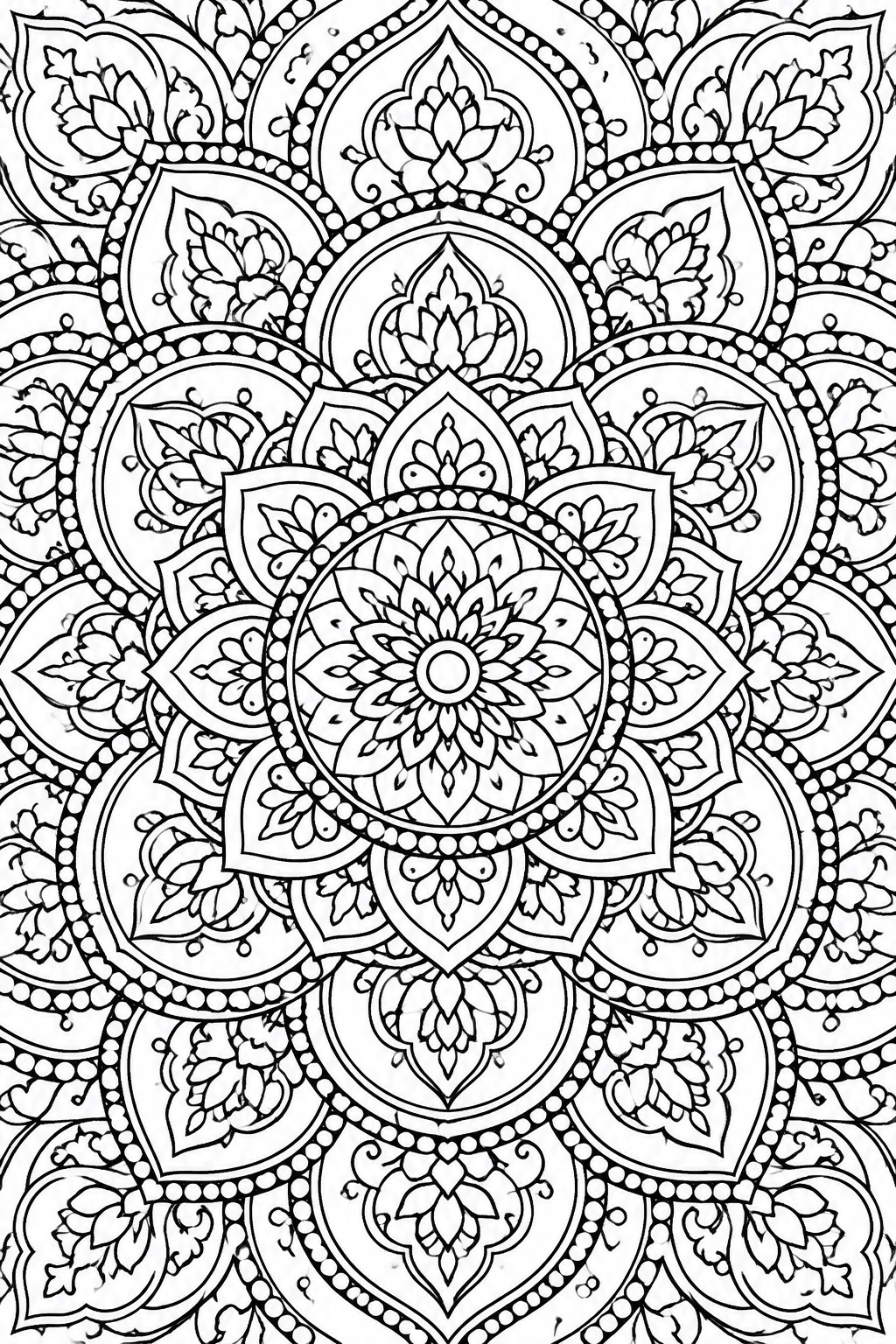
A mandala built from concentric rings features floral and leaf motifs that repeat symmetrically around a central flower. Fine lines divide the design into many small sections across multiple layers, with pointed petals and dotted borders creating distinct zones. The repeating patterns give colorers clear structure while still leaving room for personal color choices inside each ring.
The layout makes this easy to color in stages since each ring stands on its own. A page like this works especially well for adults who enjoy detailed pattern work. The dense arrangement supports longer sessions without feeling scattered.
Stacked Stone Lotus Mandala
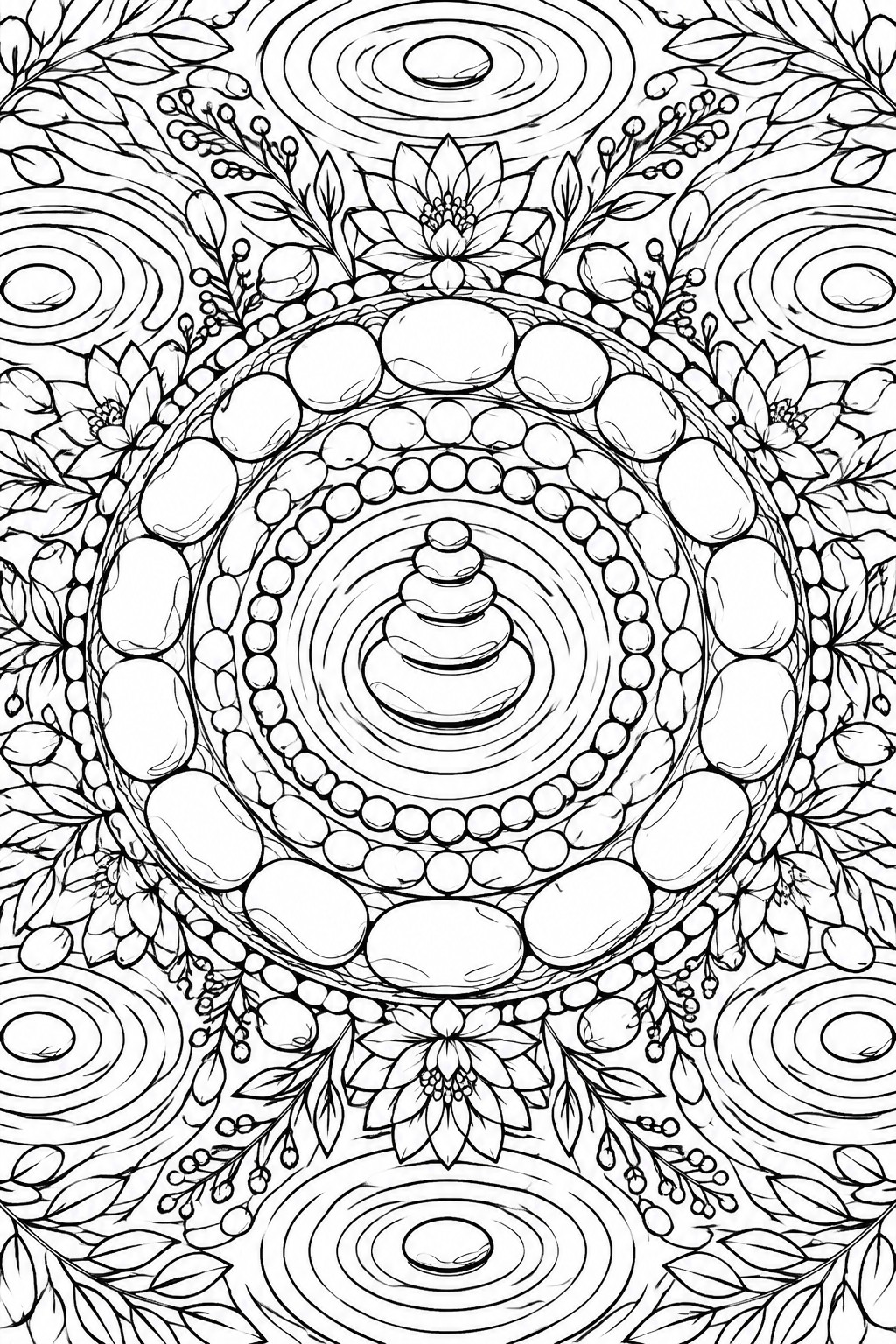
This mandala builds around a central cairn of balanced stones with lotus blooms placed at the top and bottom. Rings of smaller pebbles and berry sprigs separate the layers while concentric circles create a ripple effect outward. The design mixes solid stone shapes with finer leaf and flower lines so colorers can switch between broad areas and tighter detail work.
What makes this page useful is the clear separation between the stone stacks and the surrounding rings which lets you color in sections without losing track of the pattern. The layout makes this easy to color because the larger pebble shapes give quick coverage while the flowers and leaves add just enough detail to keep the session interesting. A page like this works especially well for adults who want a nature-based mandala that feels structured yet still open enough for relaxed coloring.
Layered Botanical Mandala with Lavender and Pods
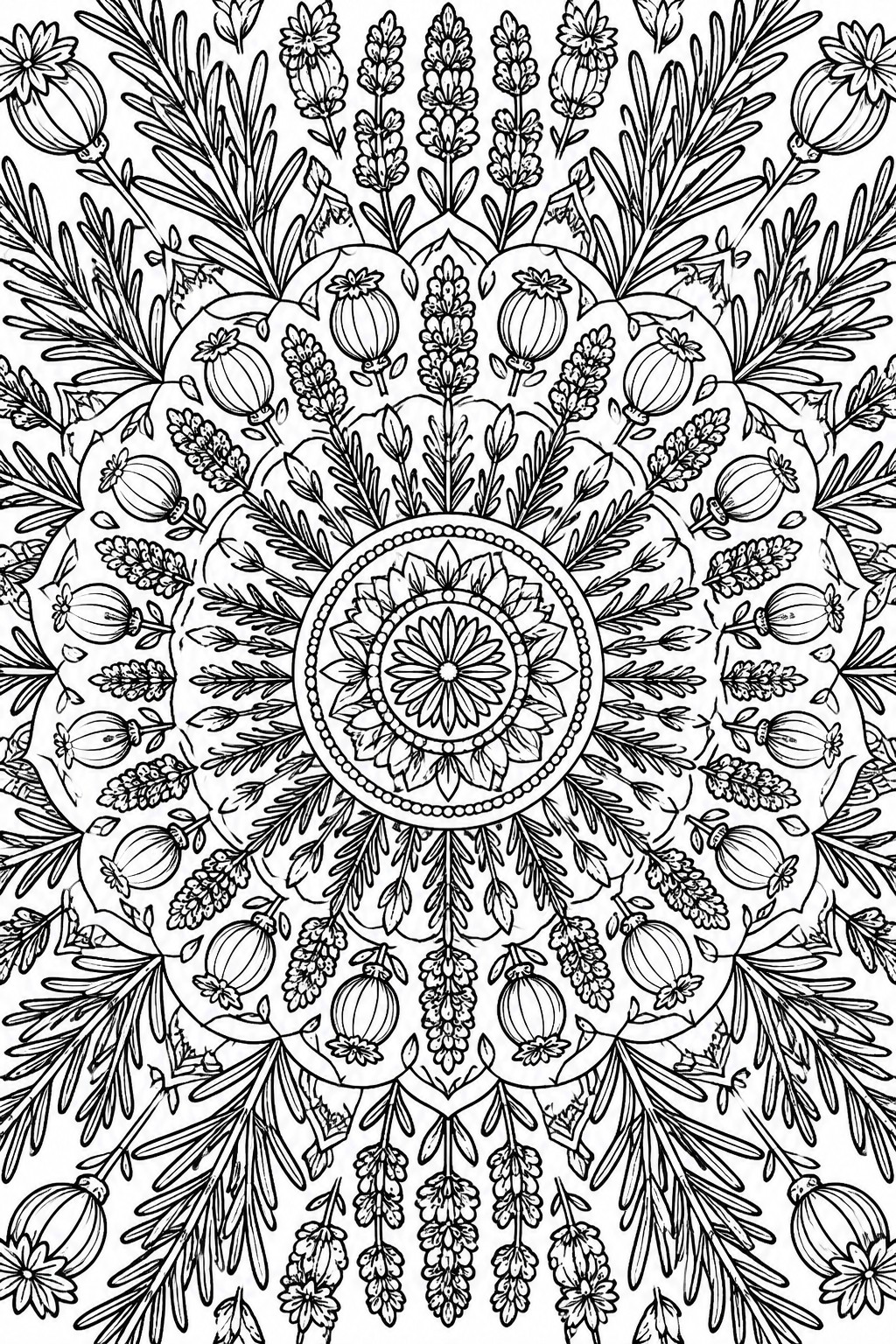
This mandala builds outward from a central flower through repeating rings of lavender stalks, rounded seed pods, and leafy branches. The design uses clear radial sections that separate each type of element into its own ring. Fine outlines keep the shapes distinct while the overall circle stays balanced and contained.
The layout makes this easy to color one ring at a time without losing track of the pattern. A page like this works especially well for adults who want medium detail and a steady rhythm. The mix of round pods and narrow leaves gives colorers simple areas to shade alongside more textured spots. The even spacing also helps the finished page look neat even if some sections receive lighter coloring.
Symmetrical Butterfly and Flower Mandala
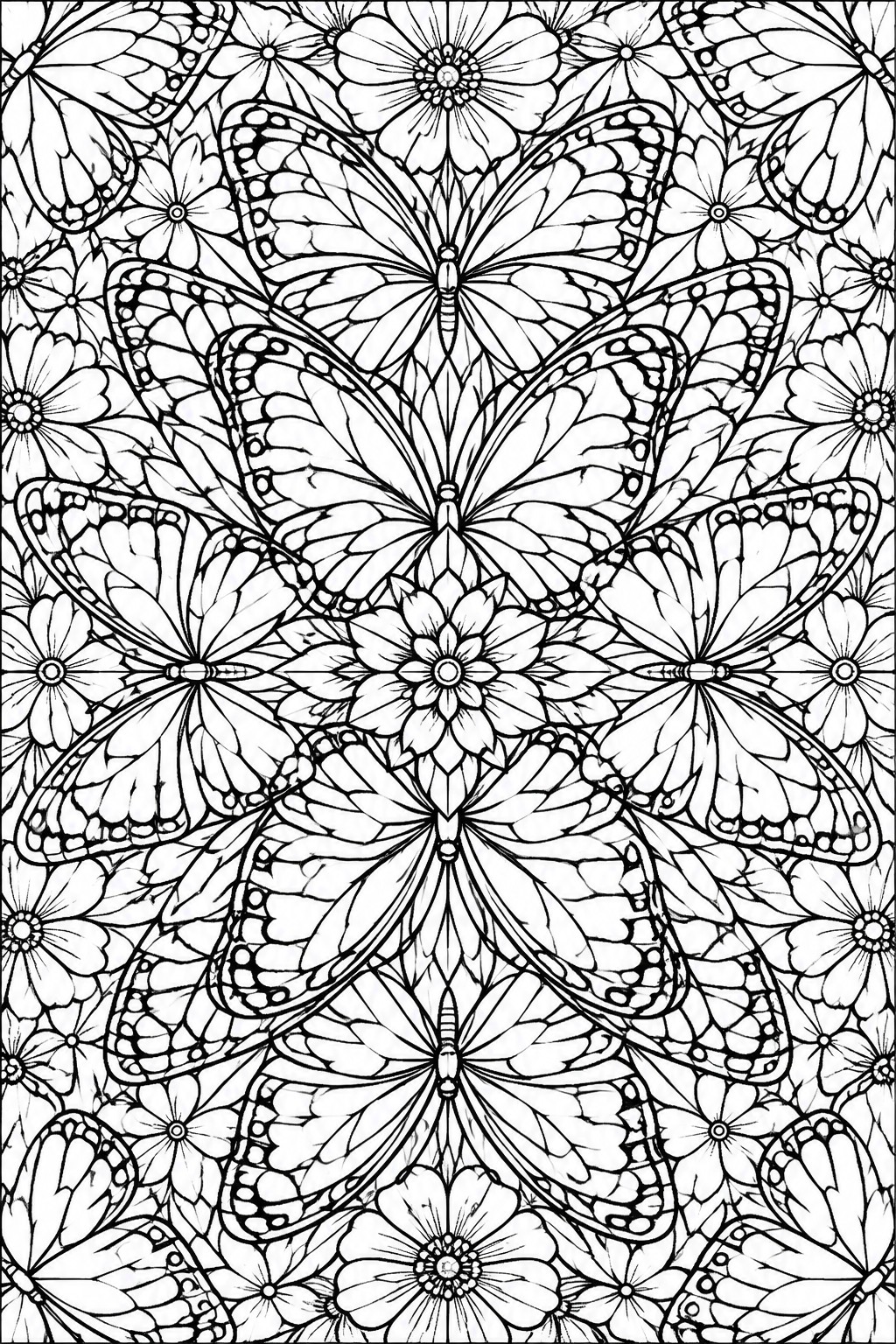
Butterflies form the main repeating element in this mandala, arranged around central flowers with their wings creating overlapping layers. The design uses radial symmetry so each butterfly and flower section mirrors the ones beside it. Fine lines inside the wings and petal details add smaller areas that require steady focus during coloring.
The layout makes this easy to color in sections because the symmetry provides natural stopping points. A page like this works especially well for adults who prefer intricate patterns over simple shapes. The dense arrangement of wings and flowers leaves little empty space, which supports longer coloring sessions without quick completion. This level of detail stands out for printables that reward slow, repeated color choices across matching sections.
Mushroom and Acorn Mandala Design
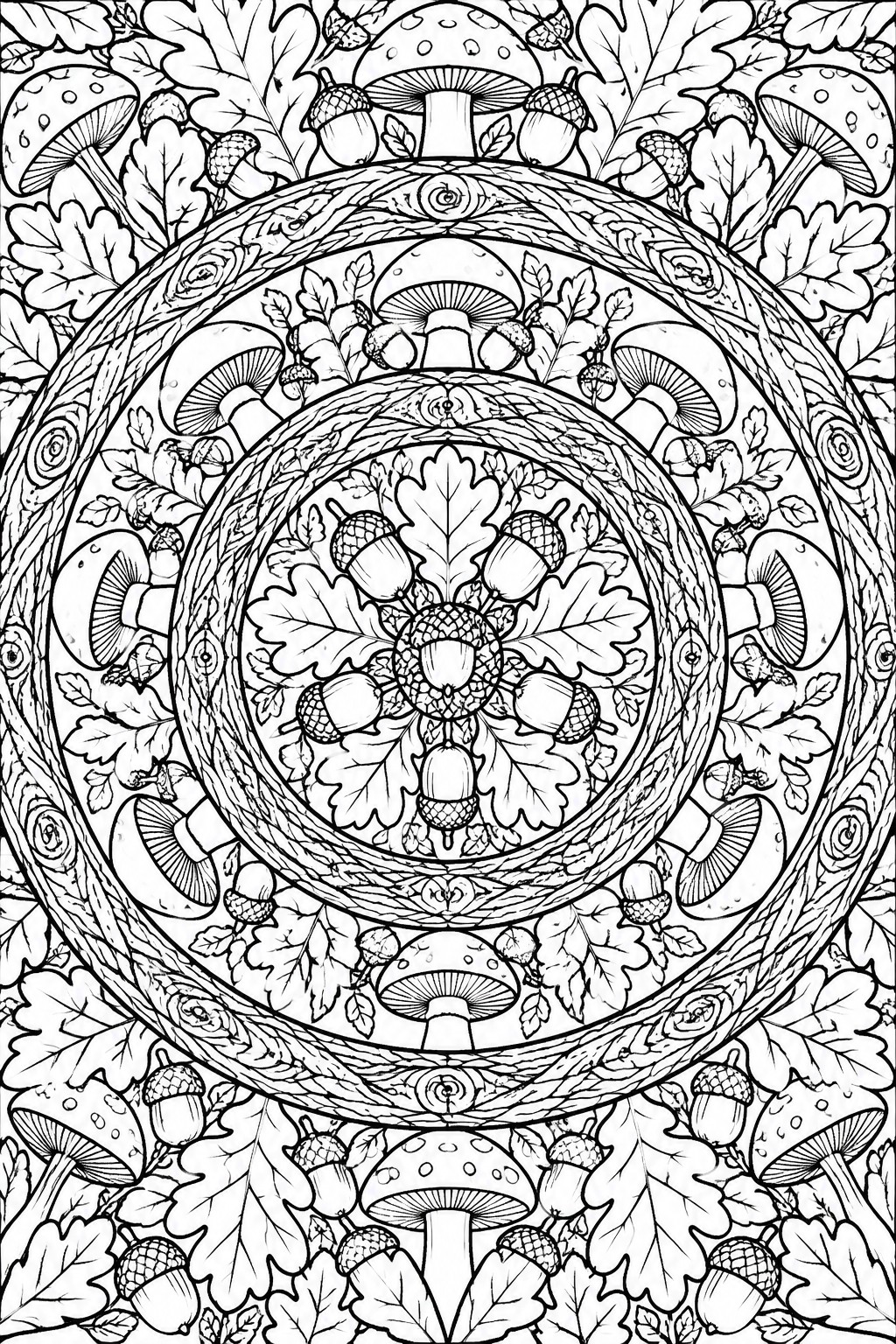
This coloring page centers on a circular mandala built from repeating woodland motifs. Mushrooms, acorns, and oak leaves fill concentric rings that radiate outward from a central cluster of acorns and leaves. The design uses clear line work and balanced spacing so colorers can move section by section without losing the overall pattern.
The layout makes this easy to color because each ring offers its own contained area while still connecting to the next. A page like this works especially well for adults who enjoy detailed but structured work rather than loose scenes. The repeating shapes give colorers a chance to experiment with shading and color changes without needing to plan an entire background.
Central Lotus Mandala with Layered Petals
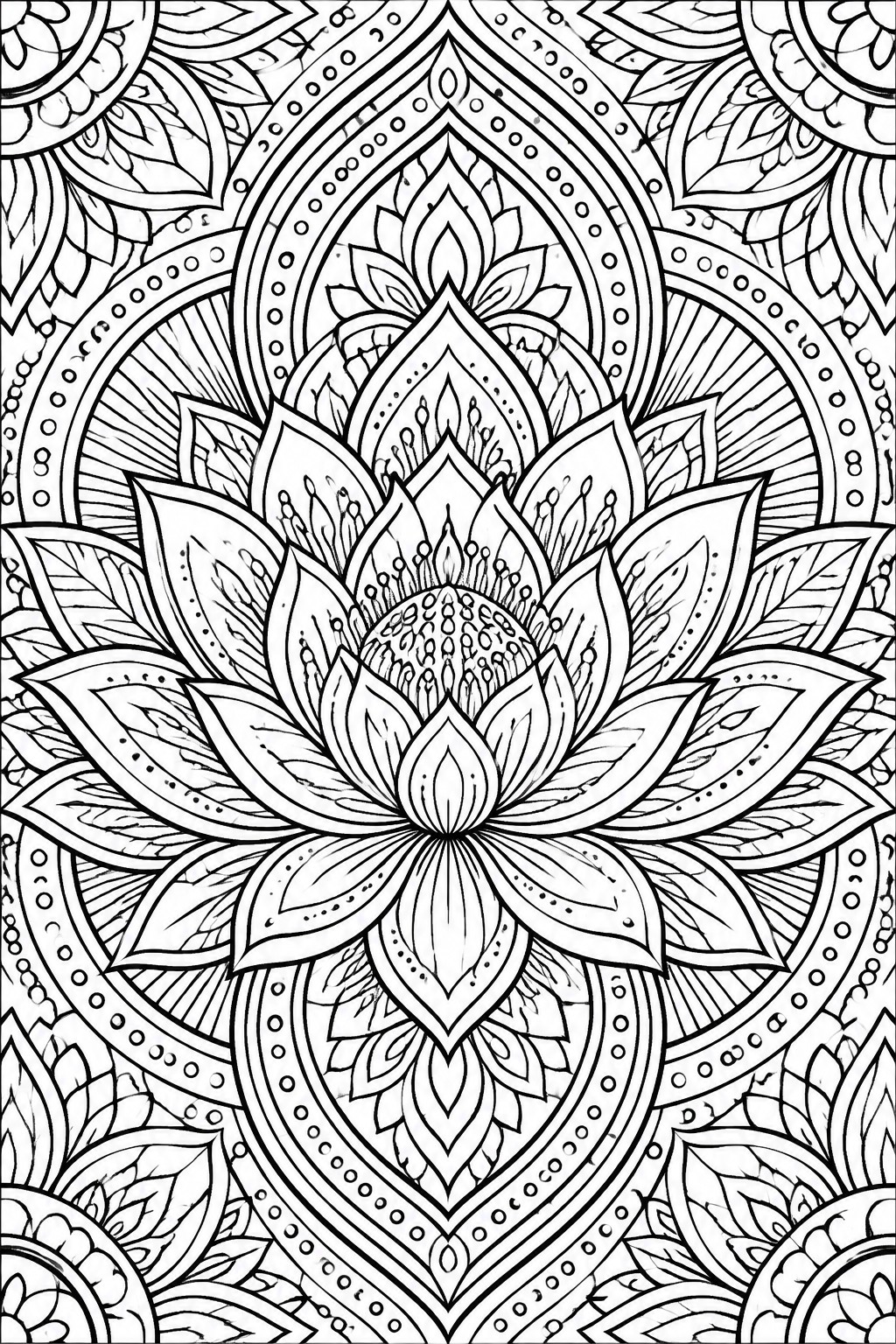
A mandala built around a large lotus flower gives colorers a clear focal point with rows of overlapping petals that grow more detailed toward the center. The design adds rings of smaller leaves, curved shapes, and dotted borders that keep the eye moving outward in even layers. This setup creates both wide petal surfaces and tighter pattern zones so the page stays interesting from start to finish.
The layout makes this easy to color because the main petals offer bigger spaces while the surrounding rings supply smaller sections for steady progress. A page like this works especially well for adults who prefer one cohesive image over scattered motifs. The repeating circular structure helps the finished piece look complete even if color choices vary across different rings.
Layered Floral Mandala with Central Bloom
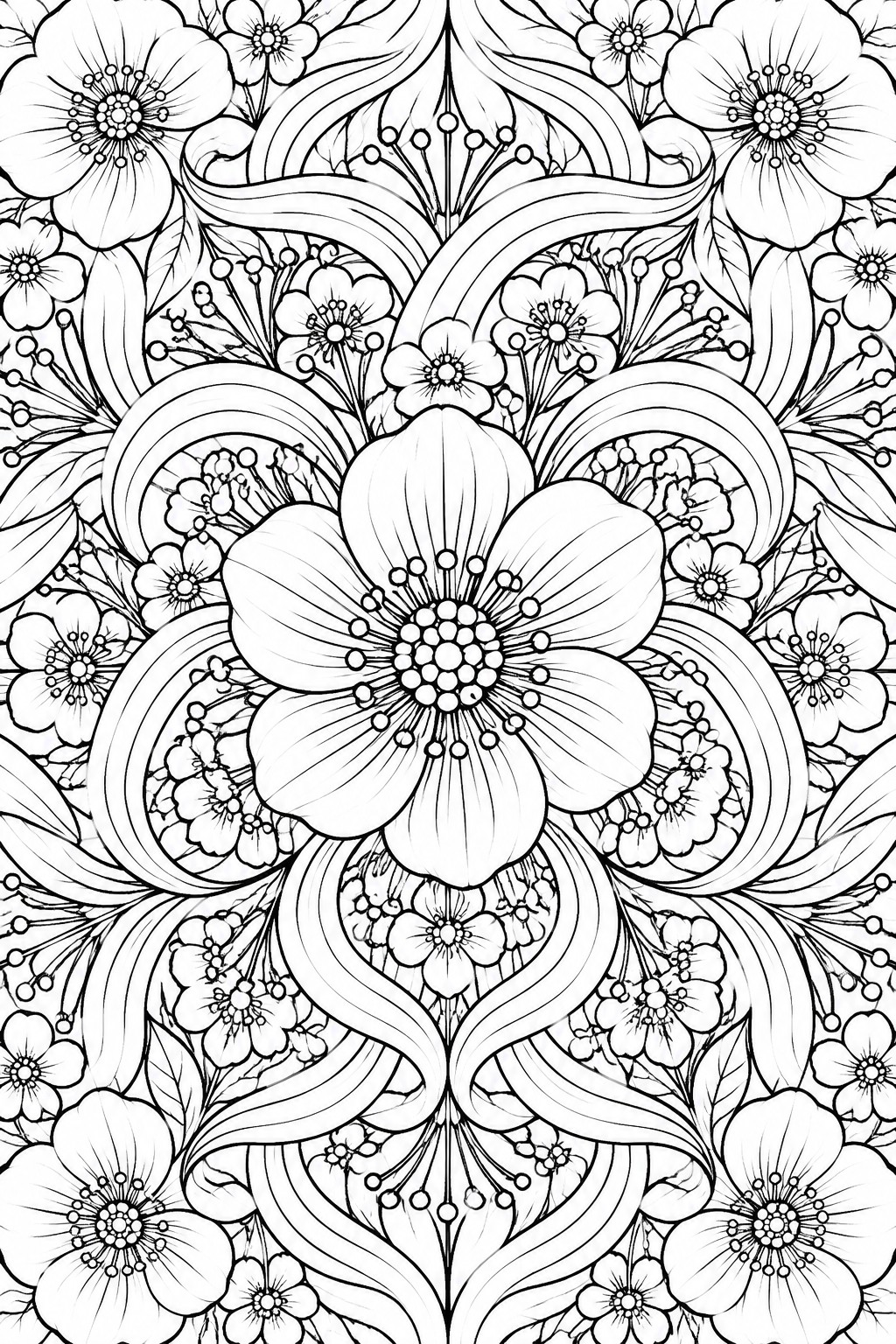
This coloring page uses a classic mandala structure built around one large flower at the center. Smaller blooms, leaves, and curved stems fill the space around it in repeating rings. The design mixes wide open petals with tighter clusters of dots and lines to create different levels of detail.
What makes this page useful is the strong central point that helps colorers work outward in sections. The mix of large petals and finer surrounding elements gives options for both quick fills and slower detailed work. A page like this suits adults who want a focused session without jumping between unrelated subjects. The repeating patterns also make it easy to pick up again after a break.
Intricate Concentric Floral Mandala
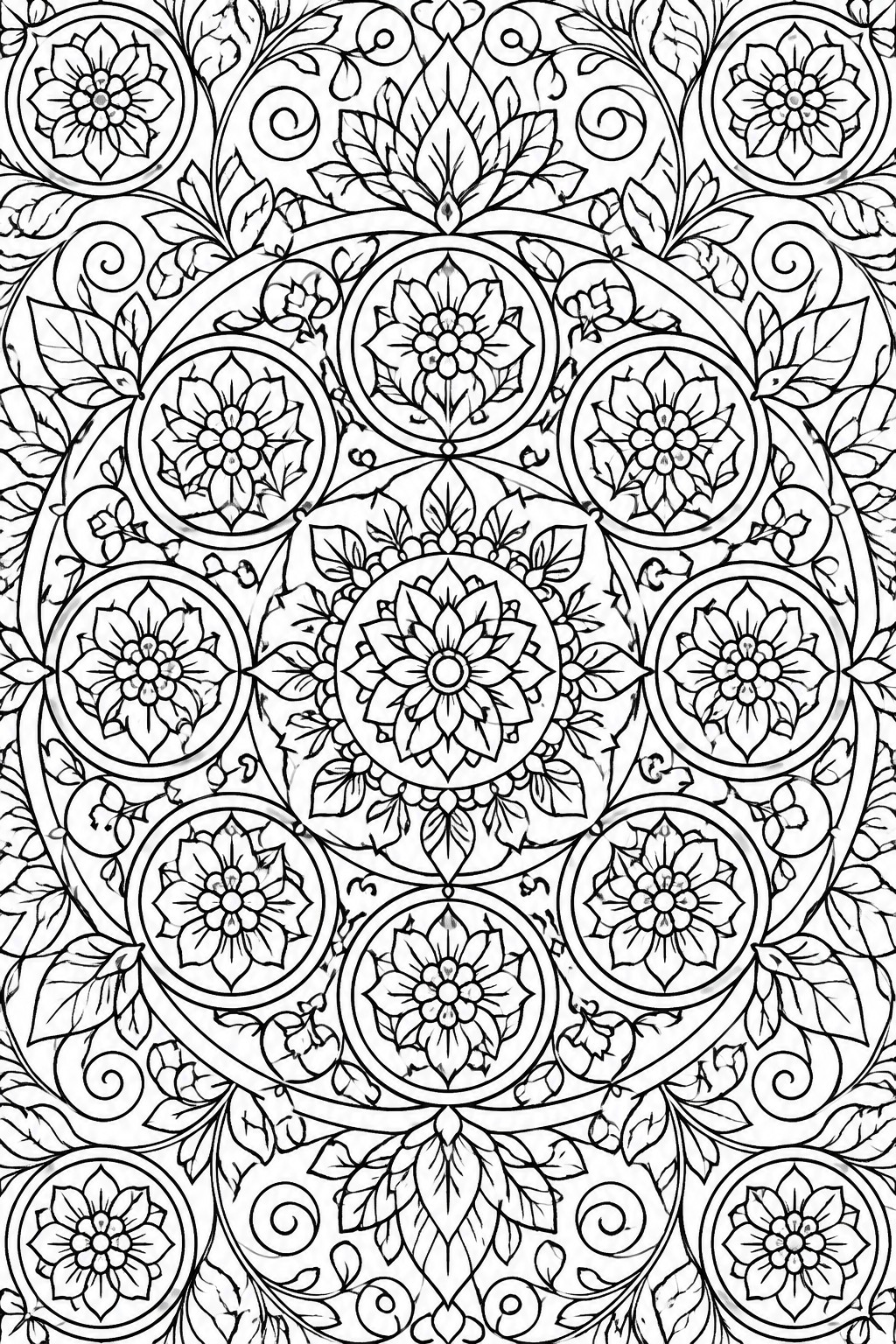
Mandala pages built around repeating floral rings give colorers a clear structure to follow while filling in each layer. The design uses a central bloom surrounded by successive circles of smaller flowers, leaves, and connecting vines that maintain consistent spacing throughout. Clean outlines and balanced symmetry let people focus on one ring or section without losing the overall pattern.
The layout makes this easy to color because the circular divisions act as natural stopping points between areas. A page like this works especially well for adults who want a steady session with repeating shapes that support color variation and shading practice. The even spacing between elements reduces the chance of colors running together while still leaving room to add depth in the petals and leaves.
Concentric Mandala with Tassels and Floral Center
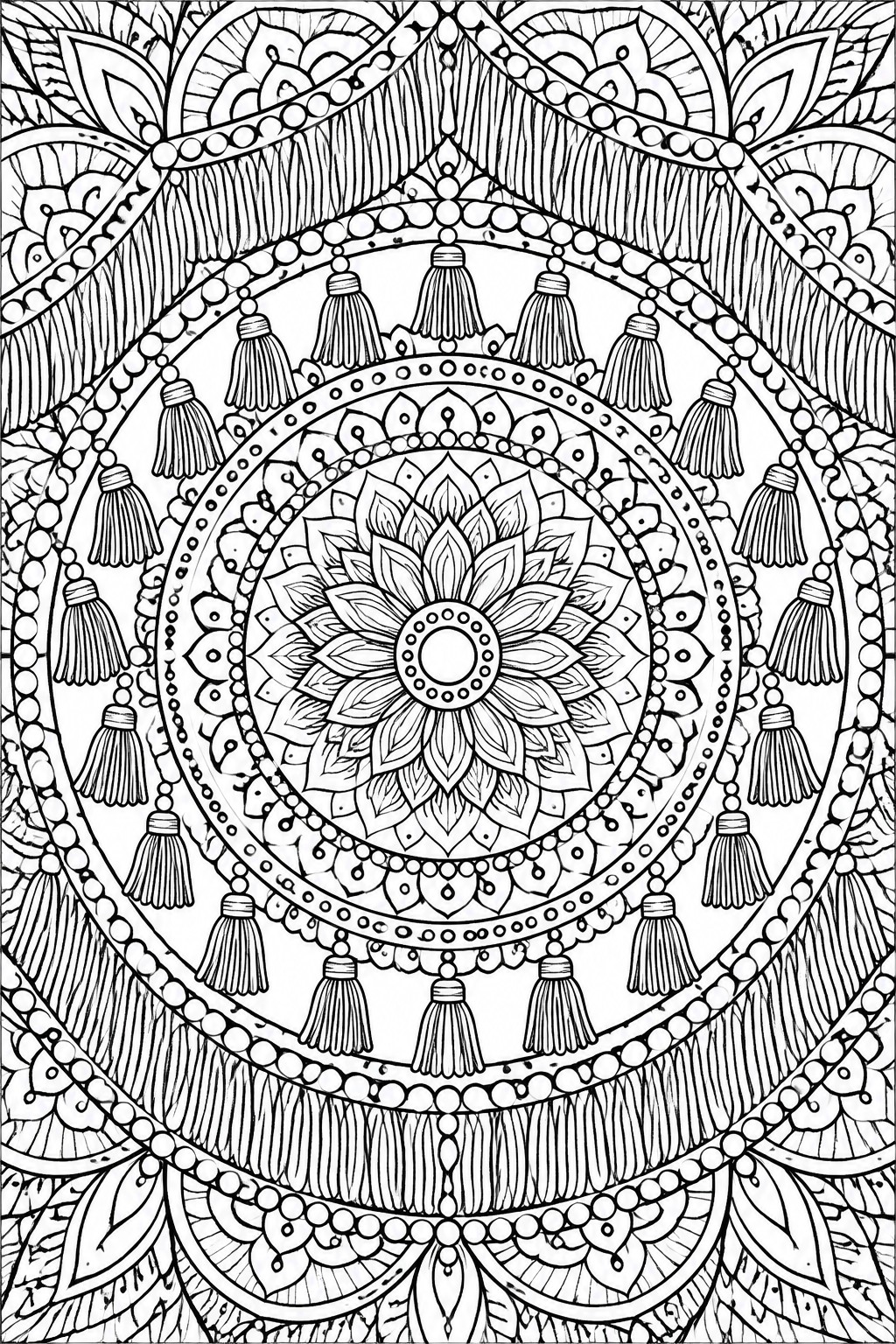
A mandala built around a central flower gives colorers a clear core to start from before moving outward through successive rings. Each ring adds new repeating elements such as petals, dotted borders, and tassel shapes that create distinct zones to color. Leaf clusters along the outer edge close the circle and give the design a finished frame.
The layout makes this easy to color in stages since each ring can be tackled separately without overlap. Repeating tassel and bead motifs let colorers practice the same shape multiple times while still varying colors. A page like this works especially well for adults who want a structured yet detailed pattern to fill during a focused session.
Layered Floral Mandala with Concentric Rings
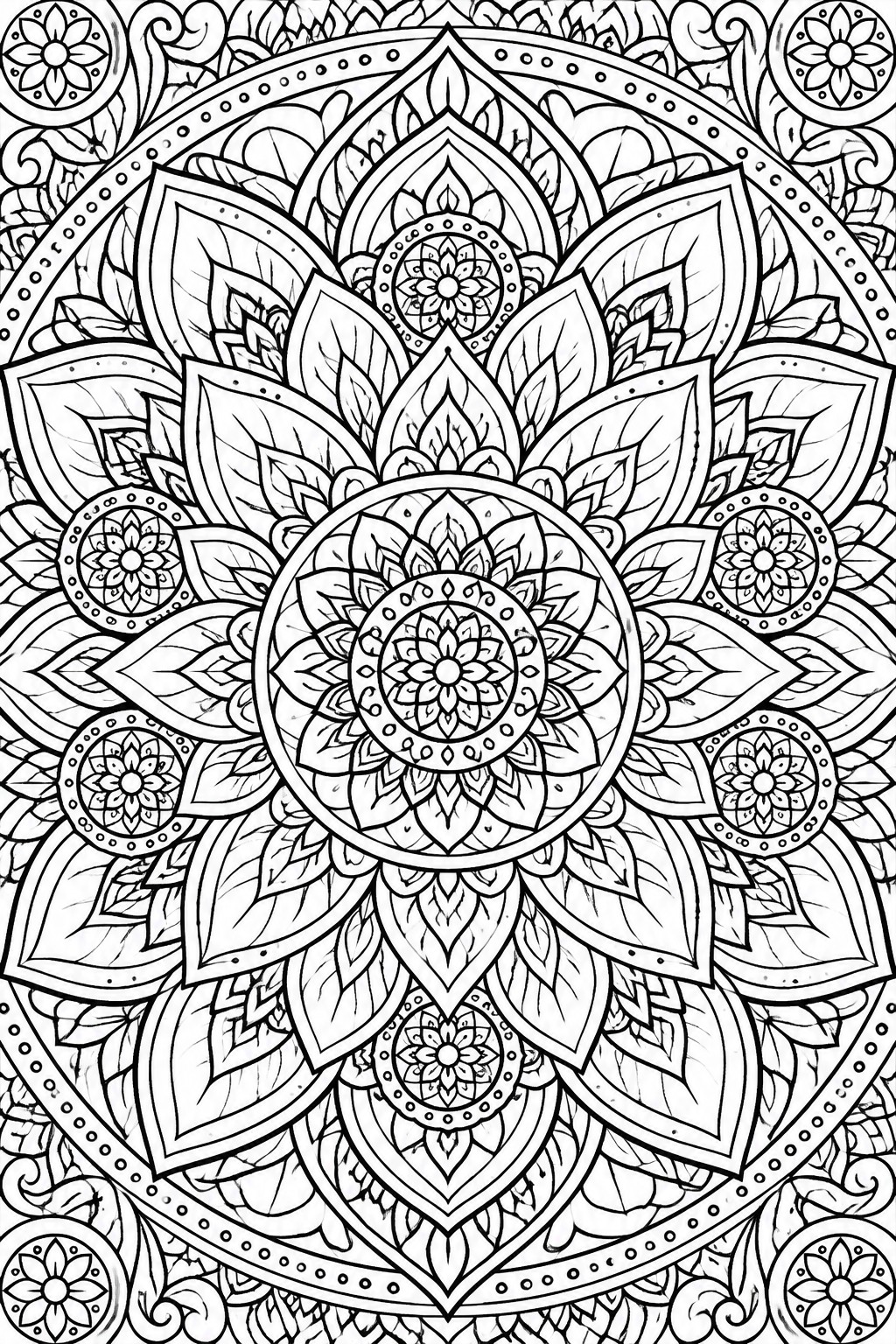
This mandala centers on a repeating floral motif built from overlapping petals and leaves. Multiple rings of patterns surround the core flower, each ring adding smaller shapes and dotted borders. The outer edge includes scattered circular flowers that break up the main circle while keeping the overall symmetry intact.
What makes this page useful is the range of space sizes across the design. Colorers can fill large petal areas quickly or spend time on the tiny repeating details in the rings. The layout works well for adults who want a single page that takes more than one session to finish. The balanced structure also makes it simple to test different color combinations without losing the overall look.
Frequently Asked Questions
1. What makes these mandala coloring pages therapeutic for quiet breaks? Coloring mandalas encourages mindfulness because the symmetrical patterns help focus attention and quiet racing thoughts. The 18 pages provide a structured yet creative outlet that reduces stress without needing any special skills, making each session a gentle way to recharge mentally.
2. How long should a typical coloring session last to get the full benefits? Aim for 15 to 30 minutes per session to allow the mind to settle without feeling rushed. Using one of these mandala pages during a short break can improve mood and concentration, and repeating this practice daily builds lasting habits for better emotional balance.
3. What supplies work best for coloring these therapeutic mandala pages? Colored pencils or fine-tip markers offer good control for detailed areas while gel pens add smooth color without bleeding through paper. Keep a few options nearby so you can switch based on the mood of the design and enjoy the process fully.
4. Can beginners or people without artistic experience use these pages effectively? Yes, these mandala designs suit all skill levels because the repetitive shapes guide the eye and hand naturally. The therapeutic effect comes from the act of coloring itself rather than perfect results, so anyone can gain relaxation and a sense of calm from the 18 pages.
5. How can I make these coloring breaks a regular part of my routine? Place the printed pages in a dedicated folder near your workspace or bedside and schedule short sessions at set times like midafternoon or before sleep. Tracking which designs you finish helps maintain motivation and turns the activity into a reliable tool for daily creative renewal.
