

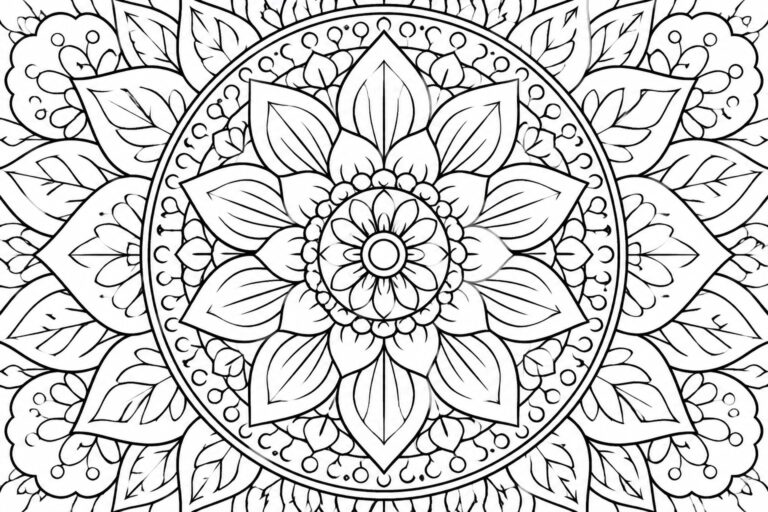
I often find myself wanting to color but only having a few minutes to spare.
These mandala pages are set up so I can finish one without needing a long stretch of time.
I picked designs that feel relaxing and not too detailed for those shorter moments.
In my experience coloring has a way of settling my mind even in small doses.
I hope these pages fit into your day the same way they do for me.
Layered Floral Mandala with Concentric Rings
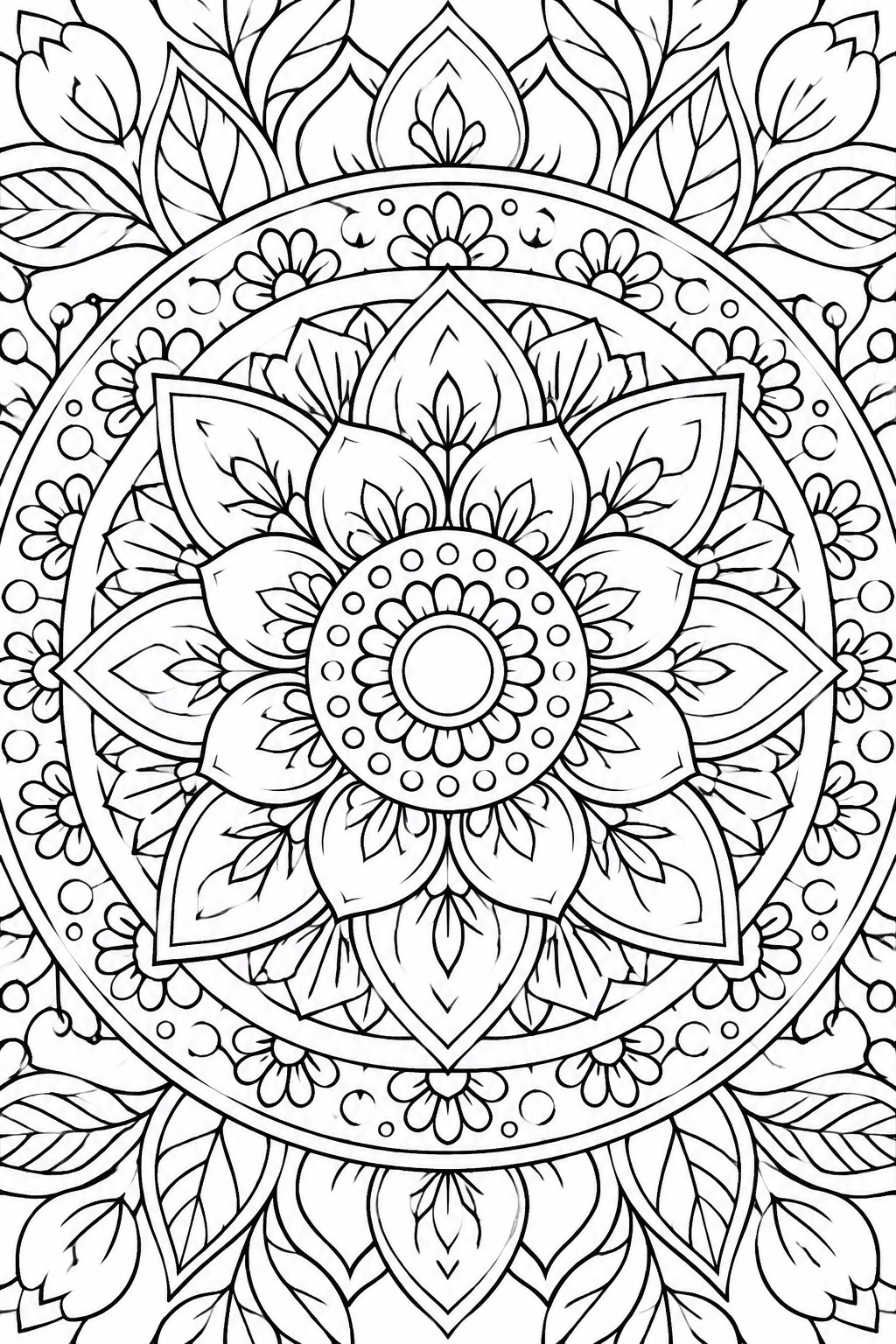
Mandala designs like this one build outward from a central flower using repeated petal shapes and leaf clusters arranged in clear circular bands. The page mixes larger pointed leaves with smaller daisy-style flowers and dotted accents to fill each ring without crowding. This creates a balanced pattern where color can move ring by ring while keeping the overall symmetry intact.
The layout makes this easy to color because each ring acts as its own contained section. Colorers can finish one band of petals or leaves and stop without losing progress or breaking the design flow. For adults who want a pattern-focused page that still fits into a short session, the medium density of lines gives enough structure to stay engaged without requiring a long stretch of time.
Mandala with Layered Rings and Geometric Petals
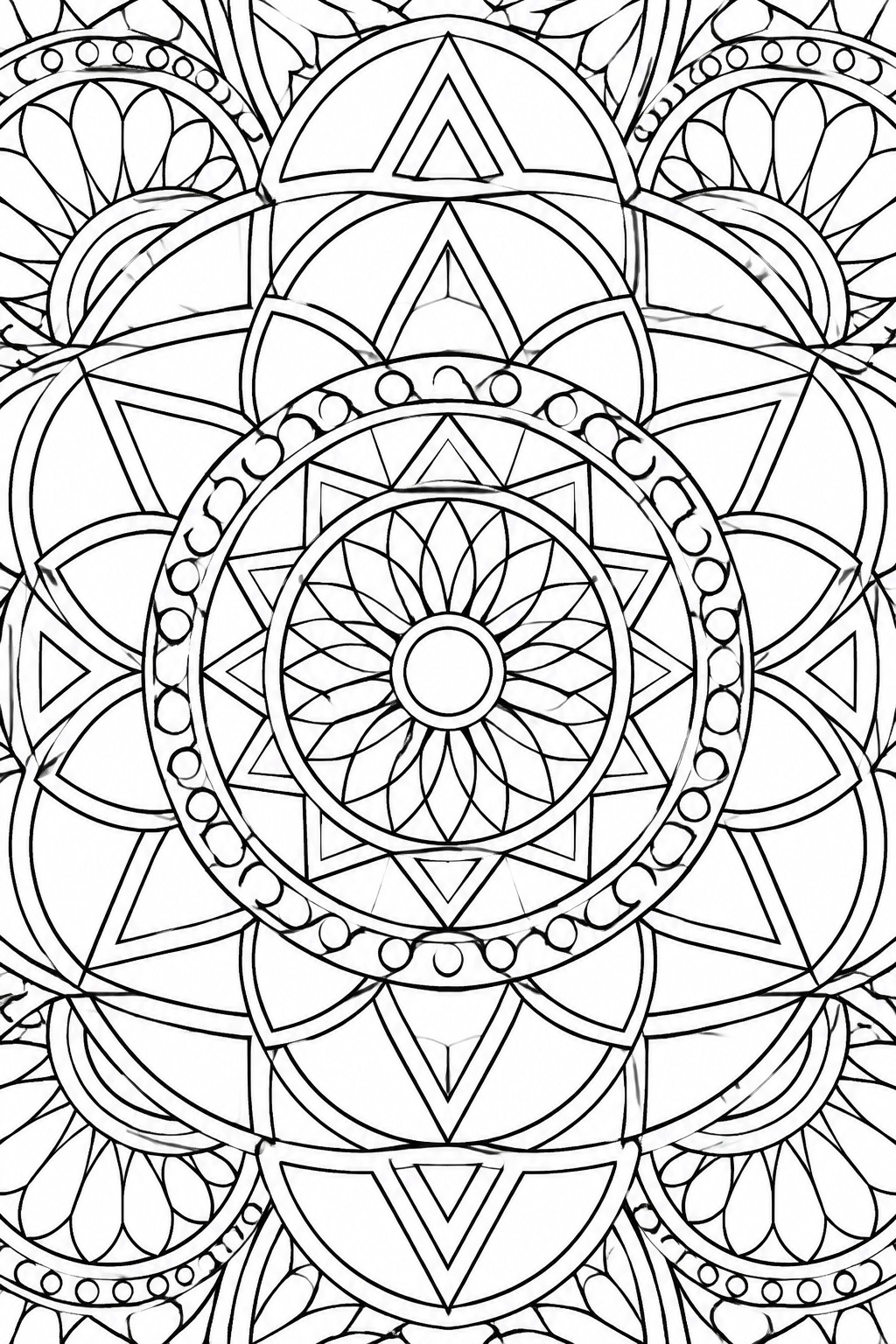
Mandala pages built around a central flower motif use rings of triangles, dots, and curved segments to create clear sections for coloring. The design places a small detailed core inside multiple circular bands, then expands outward into larger petal and scallop shapes that repeat around the edge. This radial layout keeps the focus on pattern repetition rather than a scene or story.
The layout makes this easy to color in short bursts since each ring or petal section can stand on its own. A page like this works especially well for adults who want a contained pattern session without loose ends or background filler to manage. The mix of small detailed rings and bigger open shapes lets colorers move between fine lines and quicker fills depending on time available.
Lotus Mandala with Concentric Rings and Corner Accents
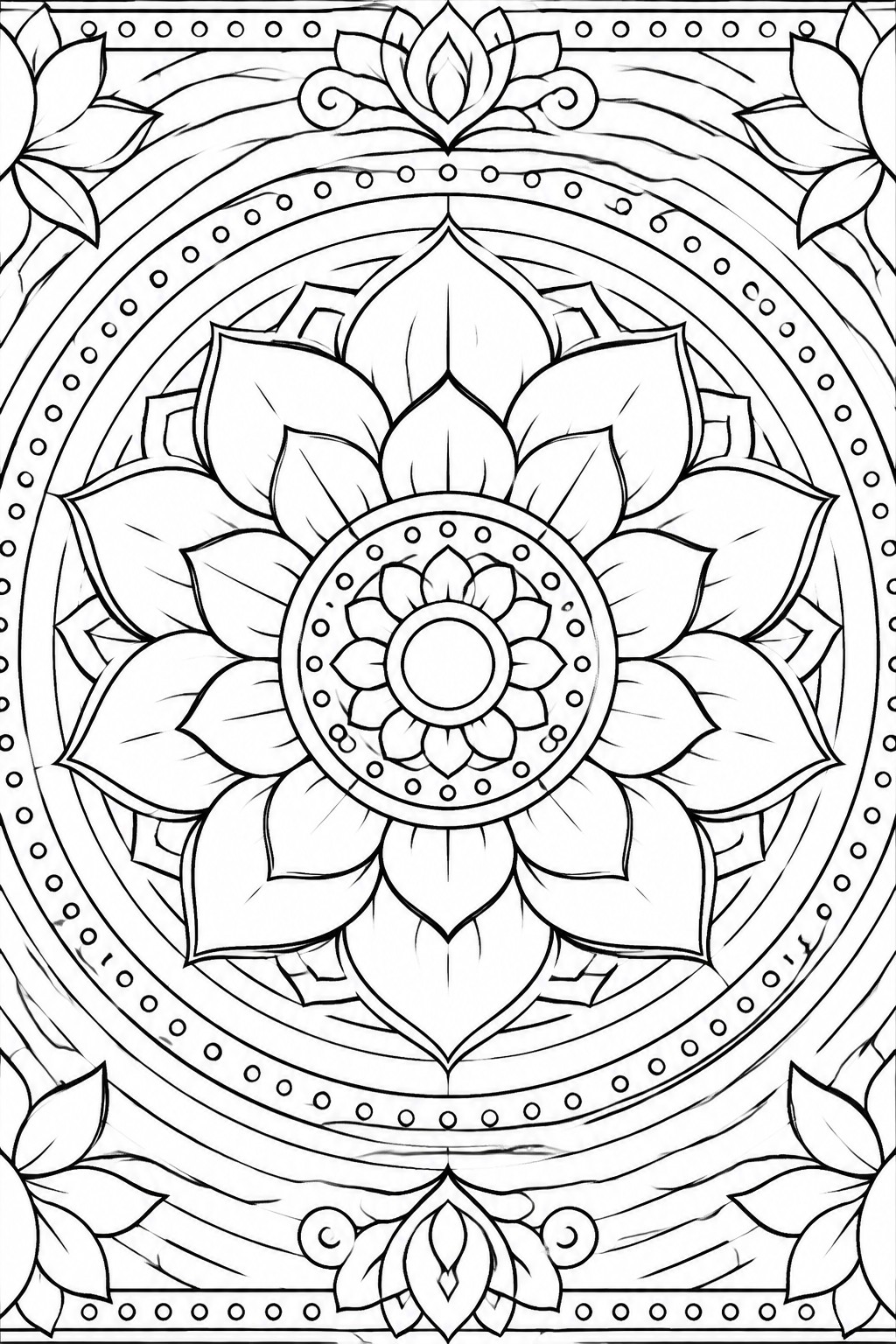
A mandala built around a central lotus uses repeating layers of petals that radiate outward in clear sections. Concentric circles marked with small dots create natural stopping points between each ring of petals. Corner lotus motifs and a bordered edge keep the design contained while leaving space to color without crowding.
The layout makes this easy to color because the rings and petals form distinct zones that can be tackled one at a time. Short sessions fit well since finishing a single ring or a few petals gives a sense of progress without needing the whole page. The mix of larger open shapes and finer dot work offers flexibility for both quick fills and light detail work.
Seashell Mandala with Wave Borders
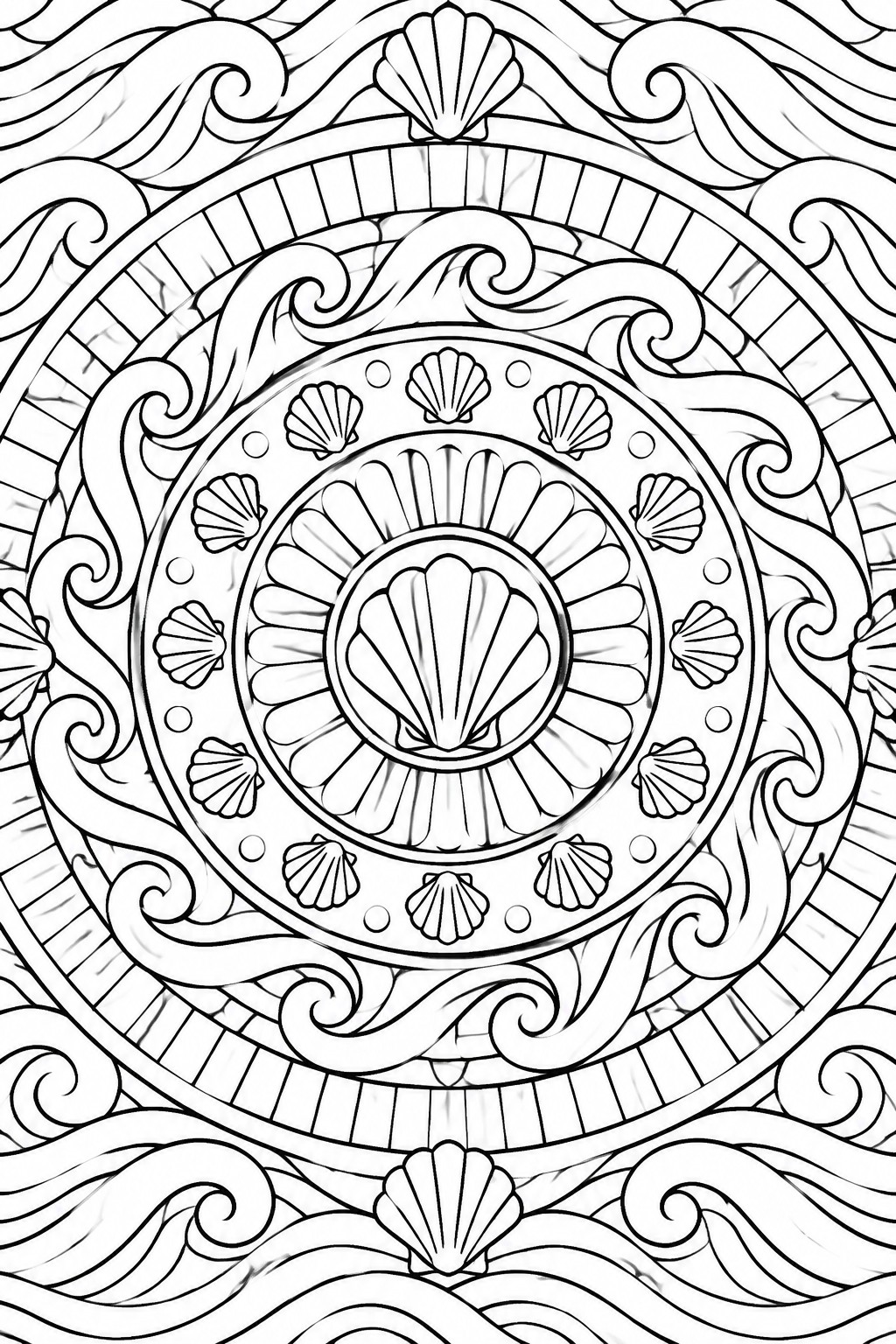
This coloring page uses a classic mandala layout built from concentric rings of seashells, with a large central shell as the focal point. Smaller shells fill the middle rings while curved wave lines create borders at the top and bottom. The design mixes tight repeating shell shapes with longer flowing lines, giving colorers distinct zones to work on without constant switching between tiny details.
What makes this page useful is the clear ring structure that lets you color one section at a time during a short session. The shells are spaced evenly enough to avoid crowding, while the outer waves add movement without adding extreme complexity. A page like this works especially well for adults who want pattern repetition but still need some open areas to finish quickly. The medium detail level makes it a smart pick for someone who likes mandalas but does not want to commit to hours of tiny work.
Celestial Sun and Moon Mandala with Concentric Rings
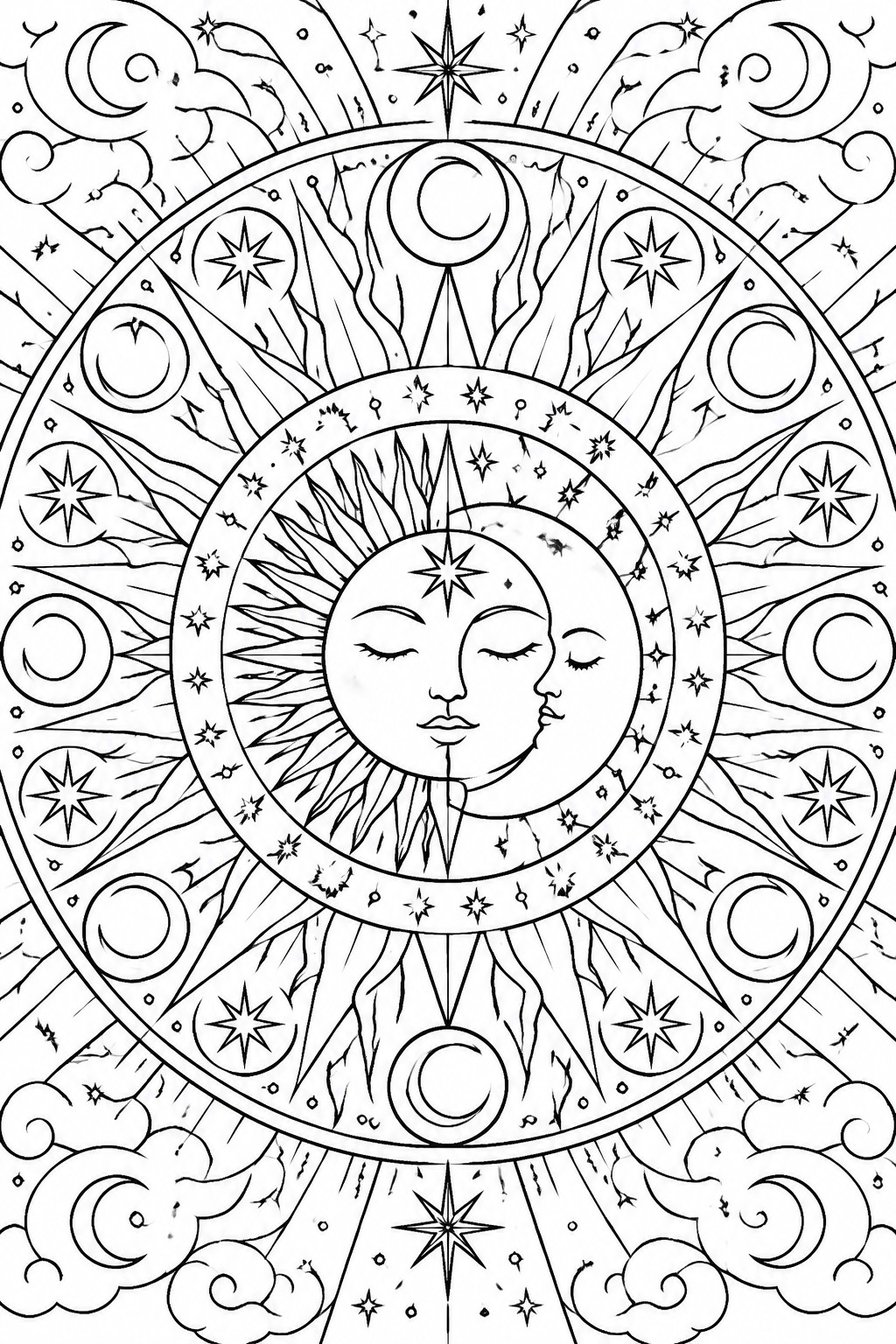
This mandala builds its design around a central sun and moon sharing a single face. Multiple rings radiate outward with stars, crescent moons, and pointed rays that fill the space evenly. The outer sections add clouds and smaller celestial shapes to complete the circular layout.
The layout makes this easy to color because the rings create natural stopping points. A page like this works especially well for adults who prefer a structured pattern over freeform designs. The clear separation between elements lets colorers finish one section in a short session without losing their place. The balanced mix of bold central faces and smaller repeating shapes gives the page enough detail to stay interesting while remaining approachable for a quick coloring break.
Leaf Mandala with Concentric Nature Rings
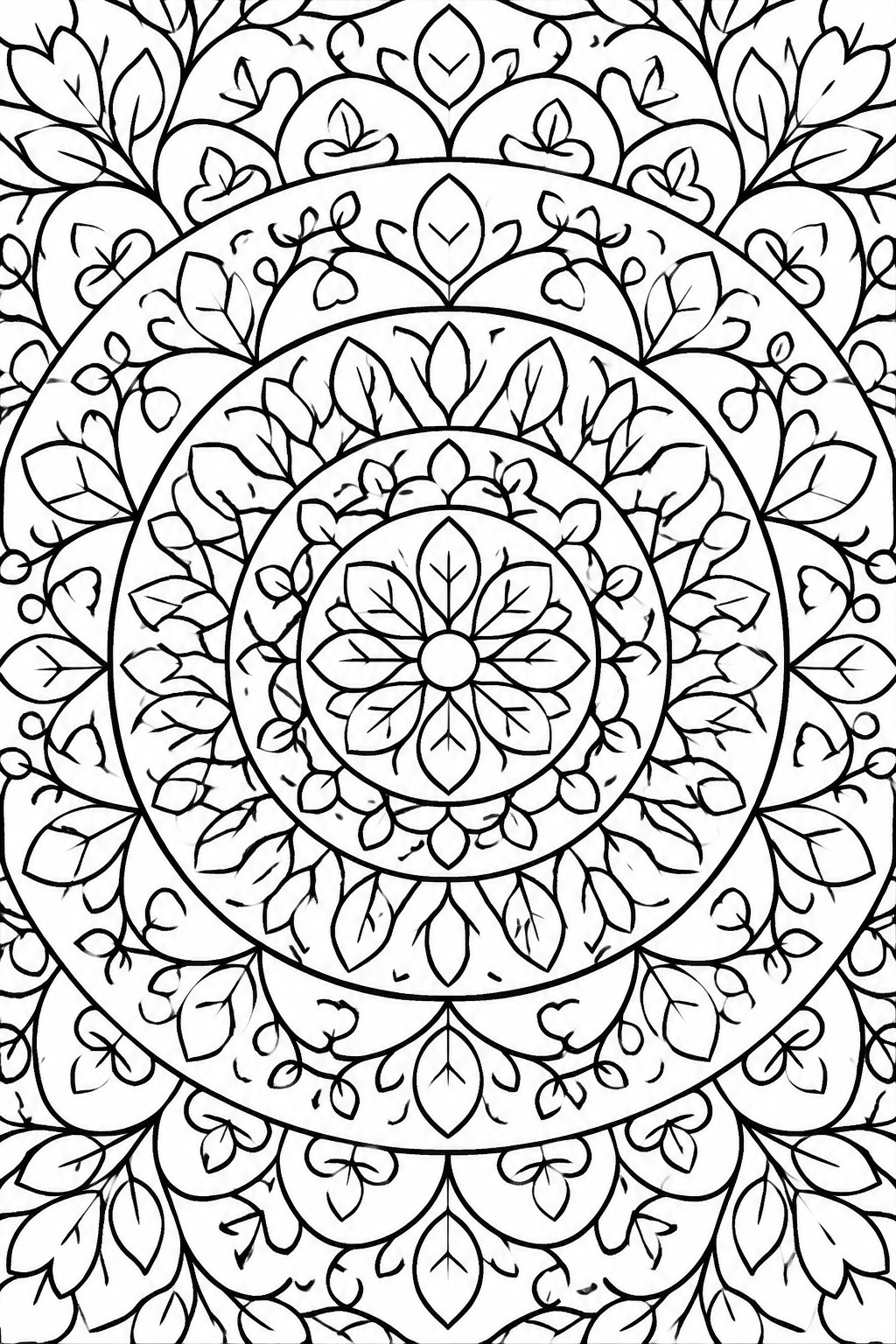
A mandala built from layered leaf and petal shapes creates a focused coloring project centered on natural motifs. The design uses repeating leaf patterns arranged in concentric circles around a central flower. This structure gives colorers clear sections to work on without needing to plan the whole page at once.
The layout makes this easy to color because each ring can be tackled separately during a short session. What makes this page useful is the balance between repeating elements that feel familiar and enough variation in leaf shapes to keep interest going. For adults, the extra detail in the inner rings works well when time is limited but some focus is needed.
Feather Mandala with Radial Layers
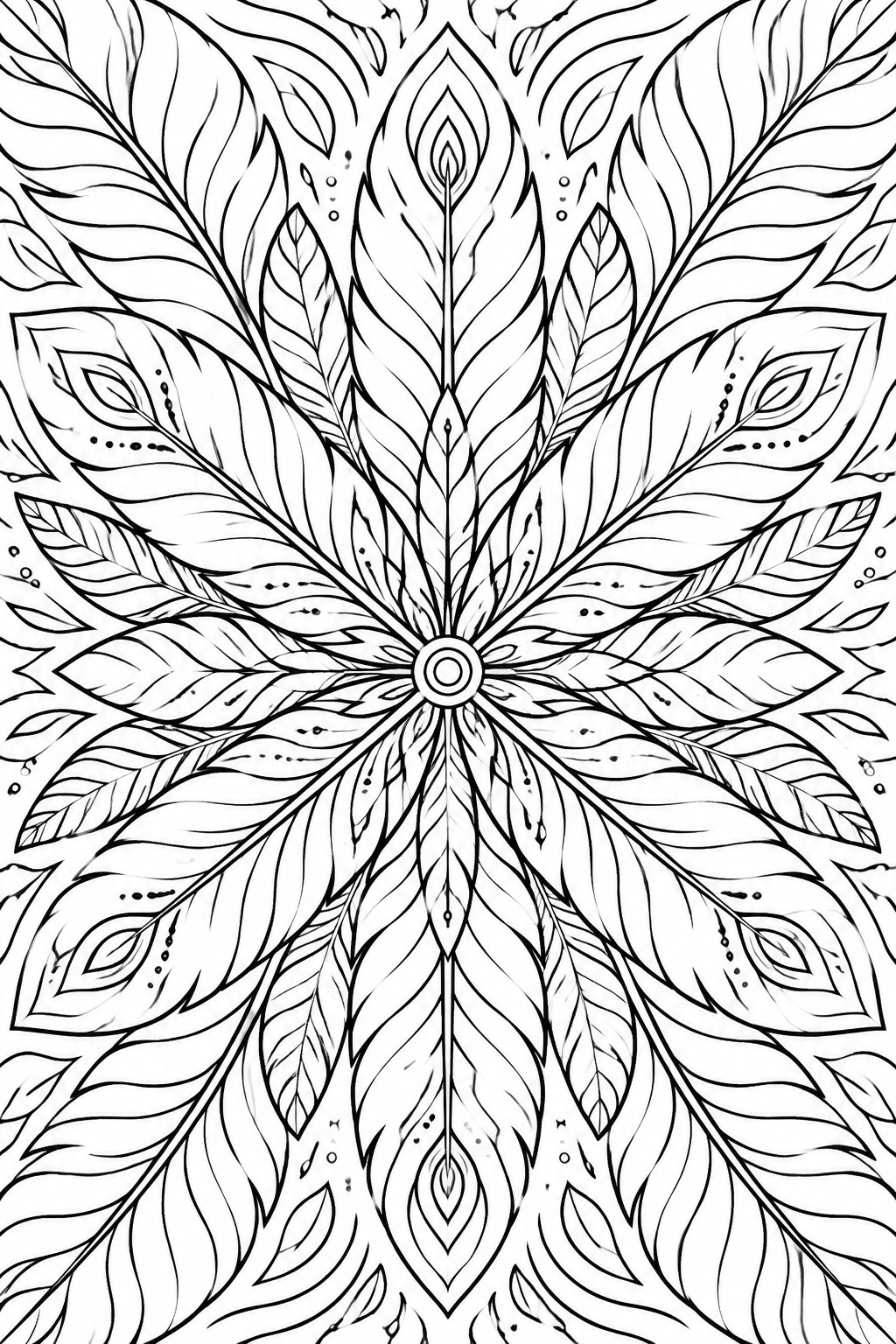
This coloring page uses a mandala structure built entirely from stylized feathers arranged in repeating rings around a small central circle. The feathers vary slightly in size and angle but follow the same basic shape with inner details and dotted accents along the edges. The design fills the page through symmetry rather than dense background elements.
The layout makes this easy to color in short bursts because each feather acts as its own contained section. You can finish one or two feathers per session without losing track of the overall pattern. The clear line work and moderate detail level suit adults who want something structured but not overly time-consuming. A page like this stands out for its balance between repetition and variation, which helps colorers maintain focus without needing to cover large empty spaces.
Butterfly Mandala with Concentric Rings
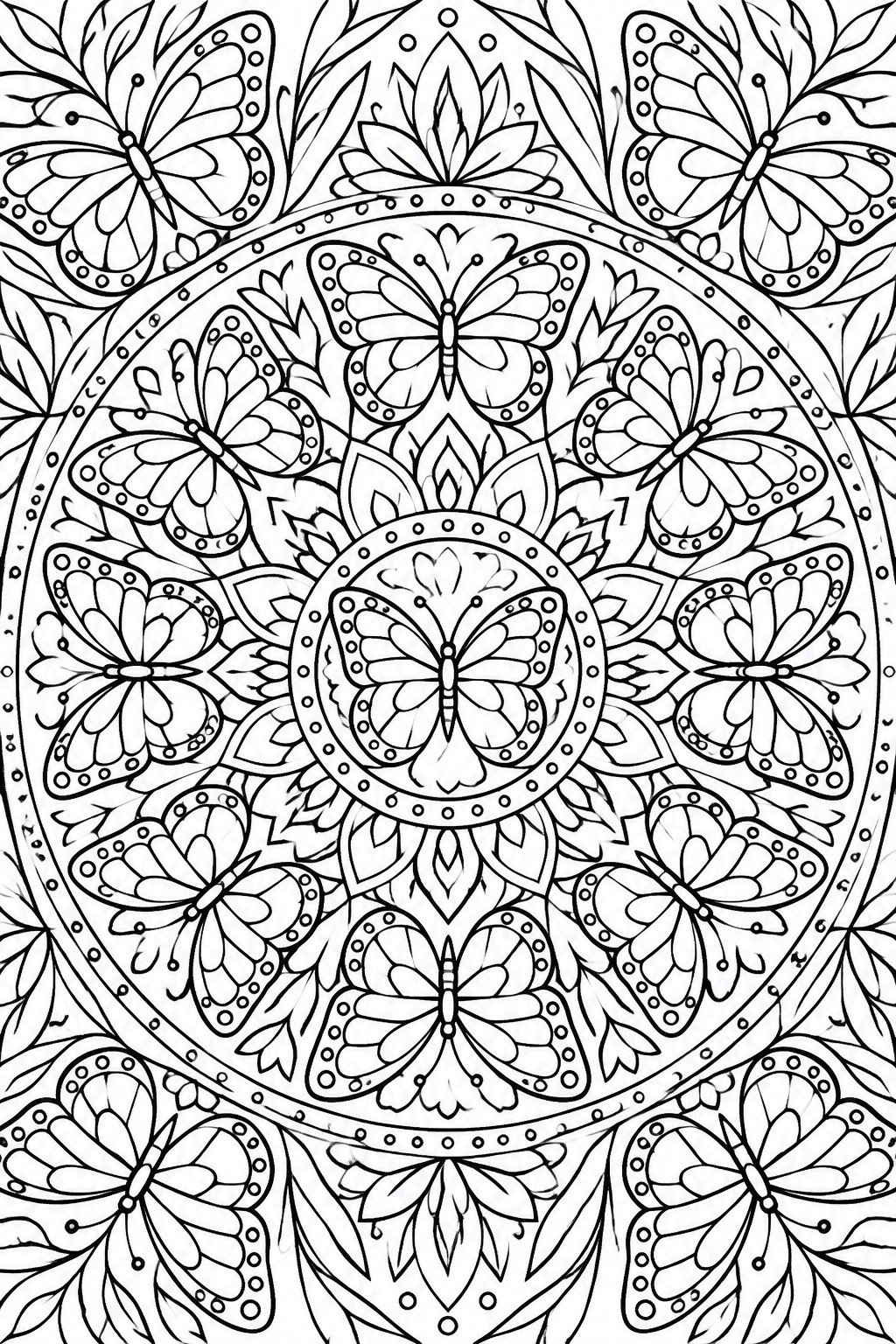
A butterfly mandala builds its design from repeated butterfly shapes placed in circular layers around a central motif. Leaves fill the gaps between the insects while small dots and wing patterns add texture across each ring. The radial layout keeps the focus on symmetry rather than a single scene.
What makes this page useful is the clear ring structure that lets colorers finish one section at a time. The mix of large and small butterflies offers both quick areas and finer details without overwhelming the whole page. For a relaxing session this kind of repeating pattern works well because color choices can repeat across matching shapes. The layout makes this a smart pick for short coloring sessions since the design stays contained within the circle.
Celtic Knot Mandala with Central Flower Motif
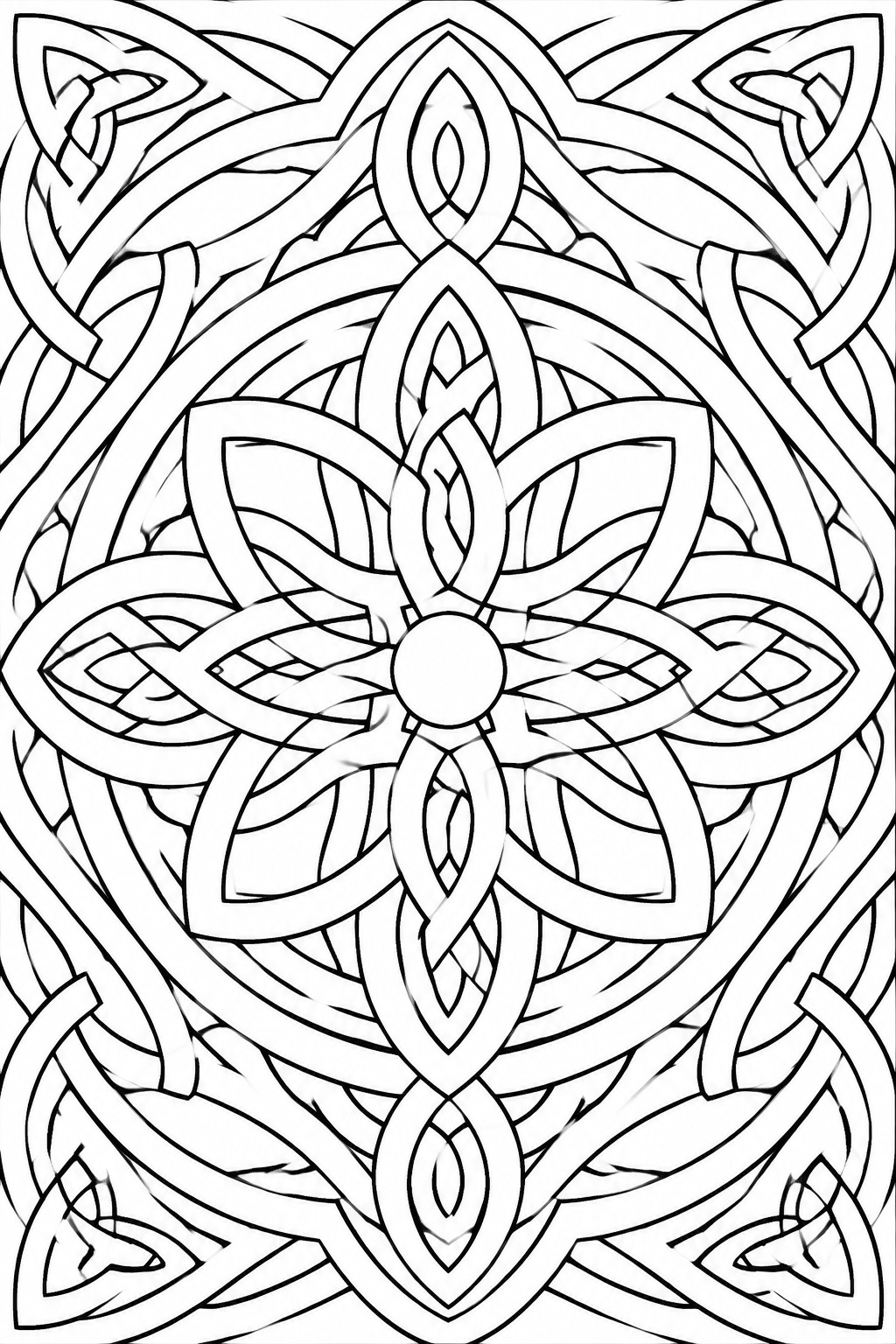
This design uses traditional Celtic knotwork arranged in a mandala format around a central flower shape. Thick interwoven lines create repeating loops and pointed diamond forms that build outward in clear layers. The radial symmetry and defined sections give colorers distinct areas to work on without needing to plan the whole page at once.
What makes this page useful is the way the knot patterns form natural segments that work well for short sessions. The open loops and consistent line weight make it straightforward to fill sections quickly while still providing enough structure to stay focused. Adults who prefer pattern-based designs will find the balanced layout easy to pick up and finish without losing momentum.
Hexagon Flower Mandala with Repeating Centers
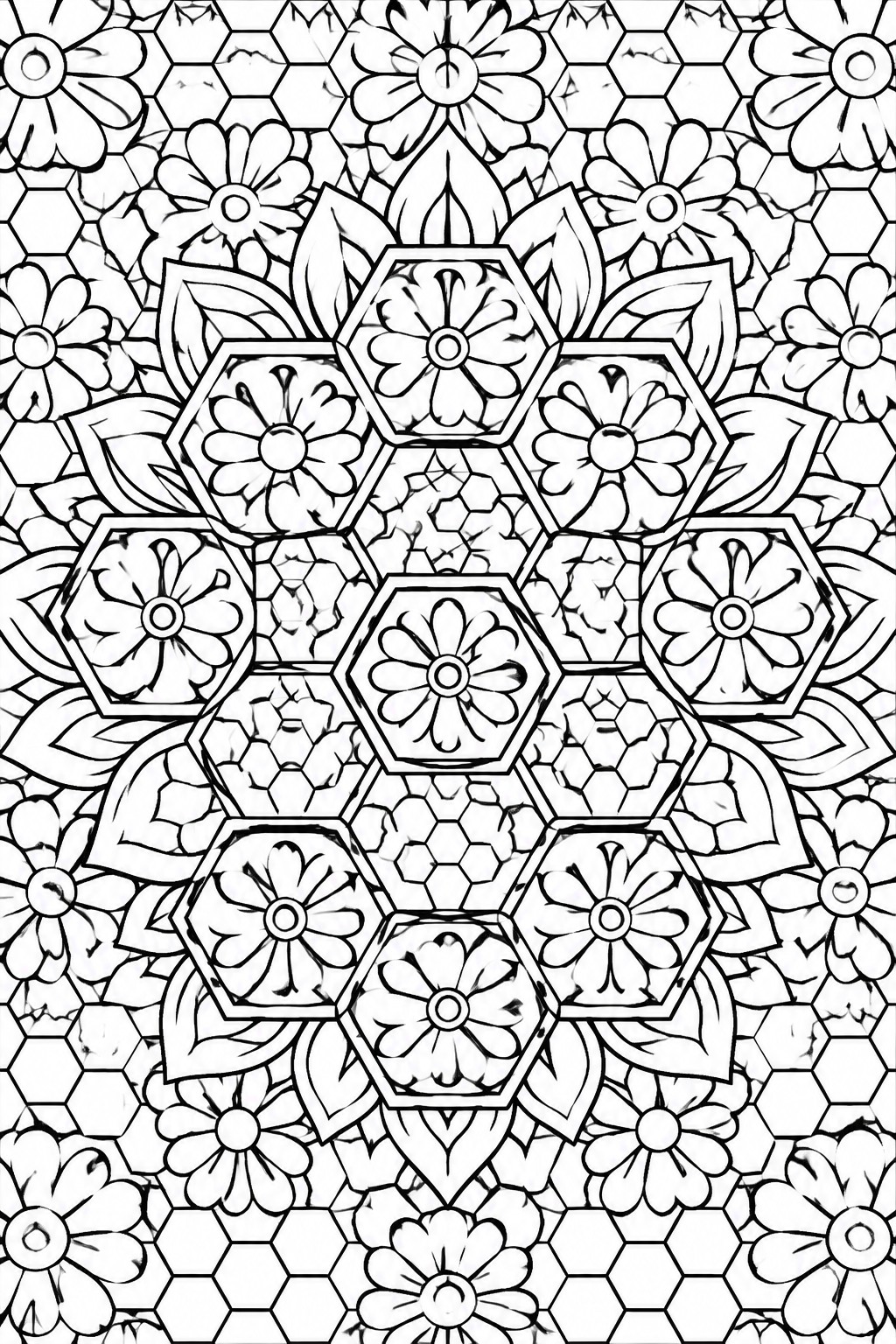
A mandala built from interlocking hexagons gives this page a clear grid structure. Each hexagon frames a simple daisy-style flower at its center while leaves and extra blooms fill the spaces between the shapes. The honeycomb texture in the background adds another layer of pattern that stays contained within the overall circular layout.
The layout makes this easy to color because the hexagons break the design into small, repeatable sections. A page like this works especially well for short sessions since the lines stay bold and the motifs repeat without becoming overly complex. The mix of geometric frames and floral details gives enough variety to hold interest while still feeling approachable for most skill levels.
Layered Floral Mandala with Spiral Center
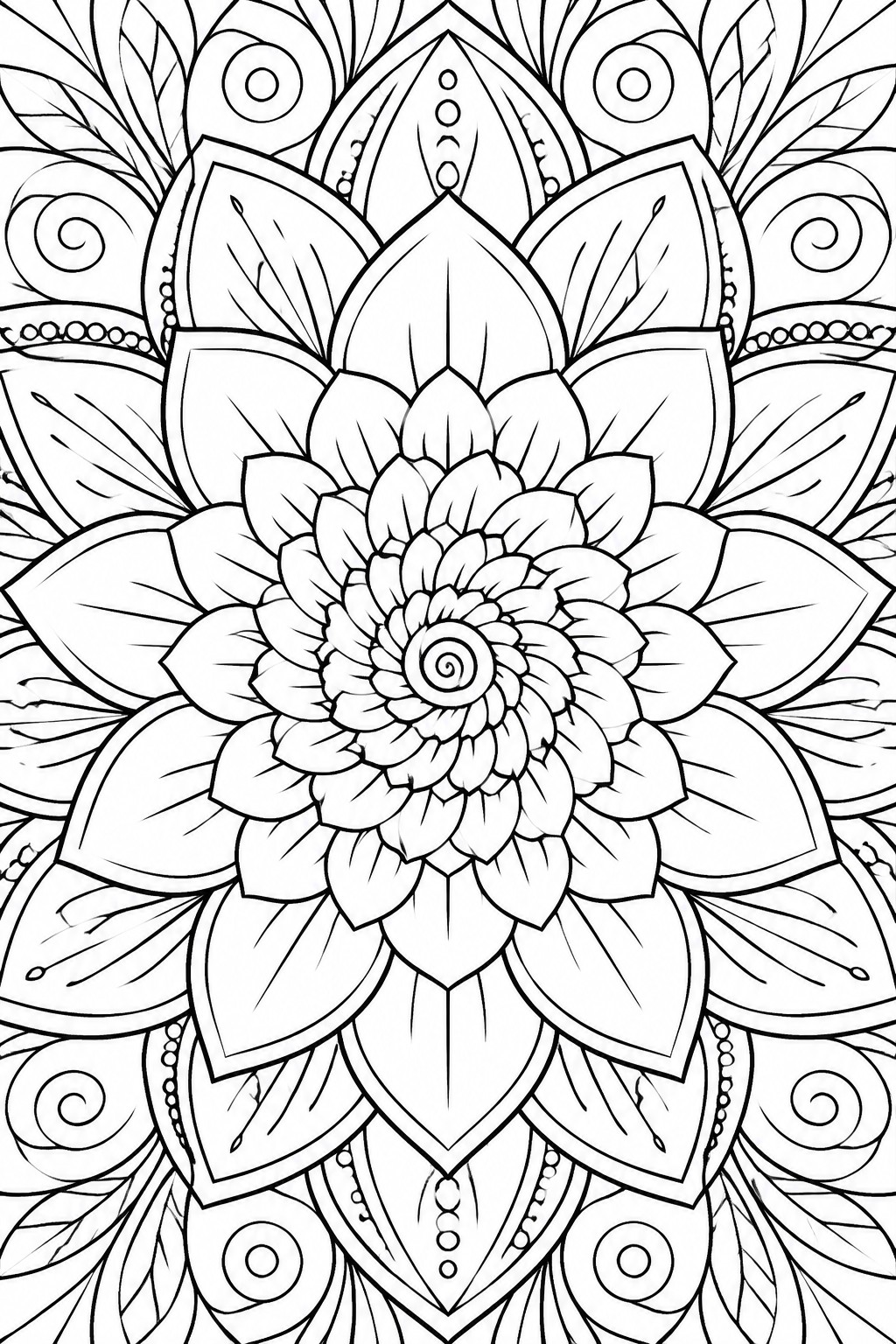
A mandala built around a central spiral flower expands outward through repeated rings of pointed petals. The layout adds leaf shapes and beaded borders between each ring while outer swirls fill the remaining space in a symmetrical pattern. Coloring moves from the tight center coils to the broader outer petals and accents.
What makes this page useful is the clear ring structure that breaks the design into manageable sections for a short session. The combination of larger petal areas and smaller dotted lines gives options for quick bold fills or light detail work. A page like this works especially well for adults who want a contained pattern without tiny spaces that drag on. The radial layout keeps the focus steady so progress shows quickly as each ring is completed.
Crystal Mandala with Faceted Gem Layers
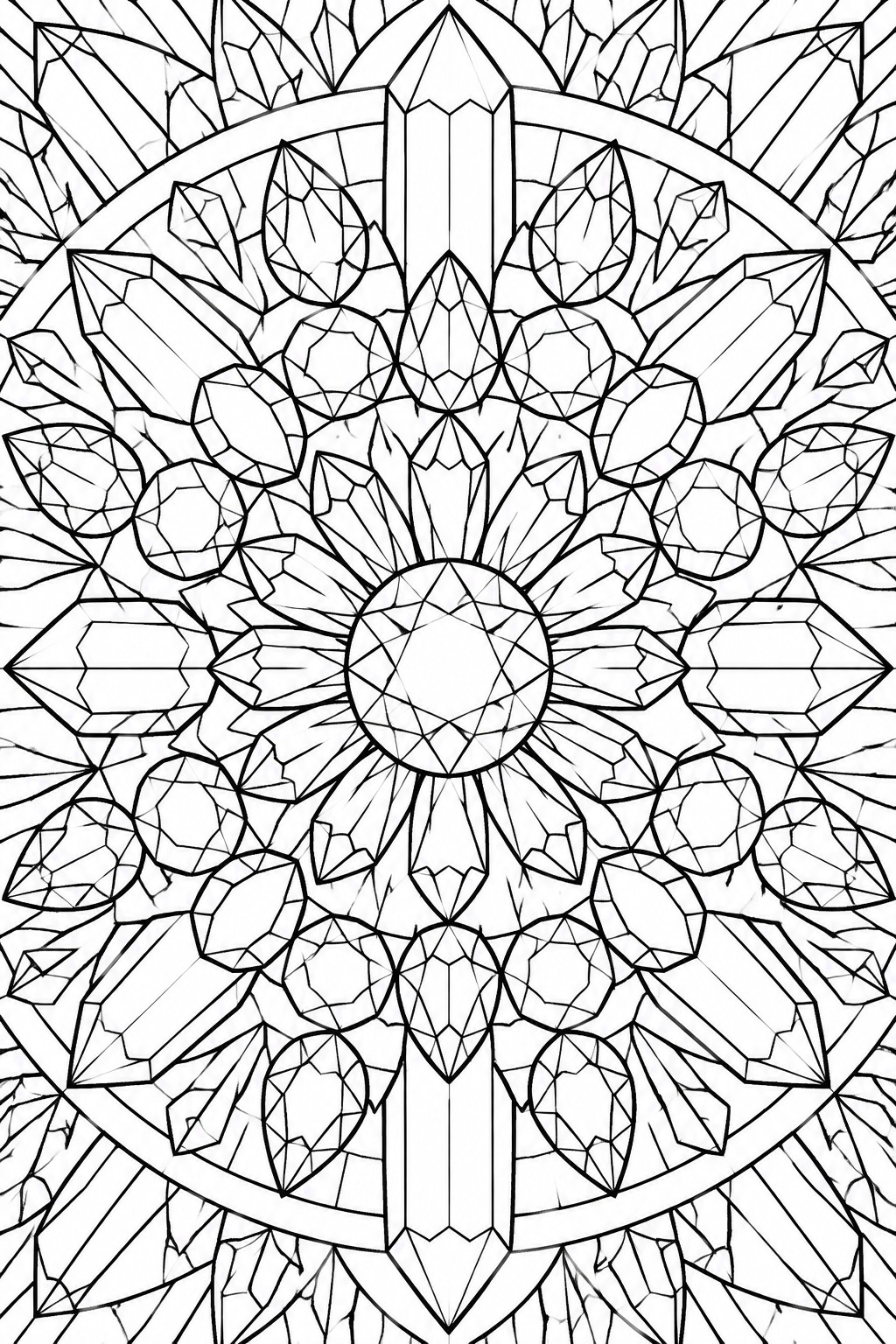
A mandala built entirely from crystal forms places a solid central circle at the core and builds outward with rings of pointed stones and faceted shapes. Each crystal section uses straight lines and angles to create clear boundaries that separate one area from the next. The repeating pattern of elongated gems and rounded clusters gives the page a balanced structure that supports steady coloring without constant decision making.
The layout keeps each ring self contained so a colorer can finish one section and stop without losing the overall design. This works especially well for short sessions because the facets provide built in shading guides that add interest fast. The geometric style also makes the page useful for adults who prefer precise lines over loose shapes and want a finished look after limited time at the table.
Peacock Feather Mandala with Repeating Eye Motifs
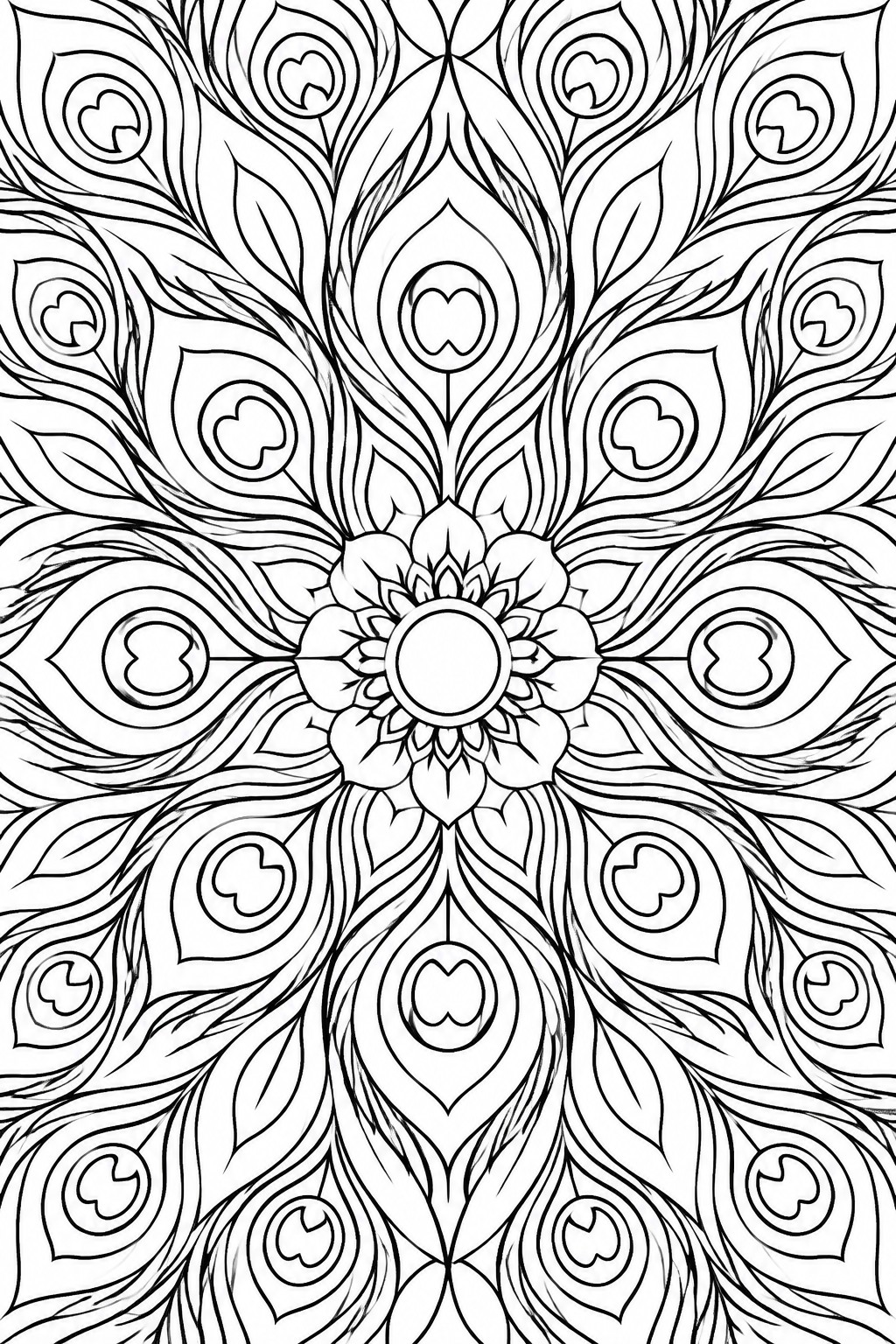
This mandala uses a circular arrangement of peacock feathers that radiate outward from a central flower. Each feather contains an eye spot and layered barbs that create repeating shapes around the page. The design organizes these elements into clear rings that give colorers distinct zones to work on without jumping between unrelated areas.
The layout makes this easy to color in short sessions because the feathers break the page into manageable sections. A page like this works especially well for adults who prefer pattern repetition over scattered details. The moderate line density lets someone finish a full ring or two without committing to a long sitting.
Stacked Stone Cairn Mandala
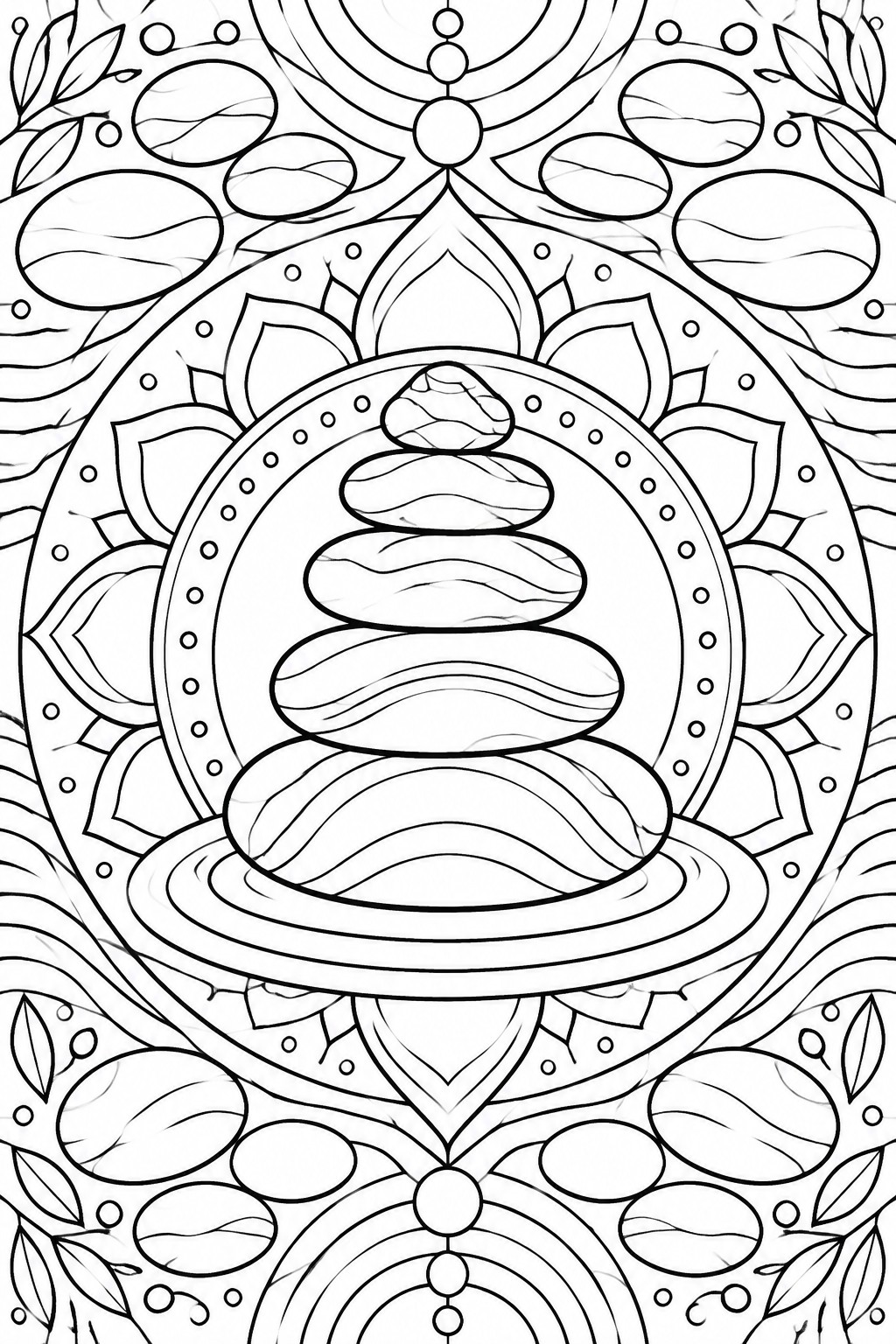
A stack of balanced stones forms the clear center of this mandala design. The page uses a symmetrical circular layout with leaf shapes and oval patterns radiating outward from a dotted ring around the stones. Wavy lines define each stone while the surrounding elements stay spaced to avoid tight clusters.
The layout makes this easy to color in short bursts since the central stones give an obvious place to begin. A page like this works especially well for adults who want a steady rhythm without switching between tiny sections. The combination of smooth stone forms and broader leaf details creates enough variety to hold attention yet stays open enough to finish in one sitting. For a relaxing session, this kind of page keeps the focus on filling shapes rather than hunting for small gaps.
Sunflower Mandala with Layered Petals
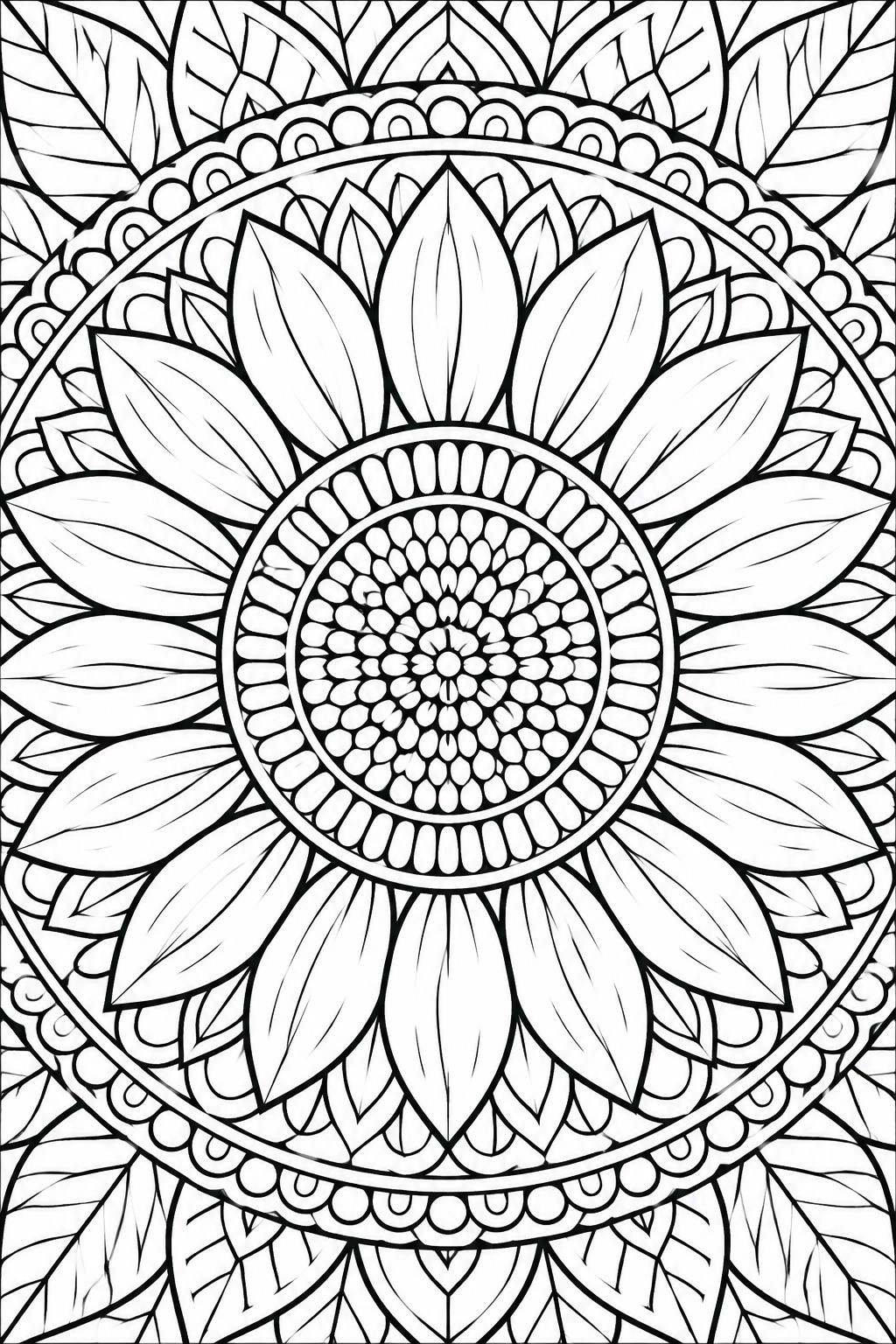
A mandala built around a central sunflower uses large overlapping petals to form the main ring and a dense circle of small shapes in the middle. A border of pointed leaves sits outside the main ring while additional leaf shapes appear in the corners. The design breaks into clear rings so colorers can move from one section to the next without losing track of the pattern.
The layout makes this easy to color in short bursts because the bigger petals take less time than the fine center details. A page like this works especially well for adults who want a recognizable floral focus inside a traditional mandala structure. The outer leaves give colorers simple shapes to finish quickly if the session runs short.
Water Drop Mandala Built Around Ripples and Petals
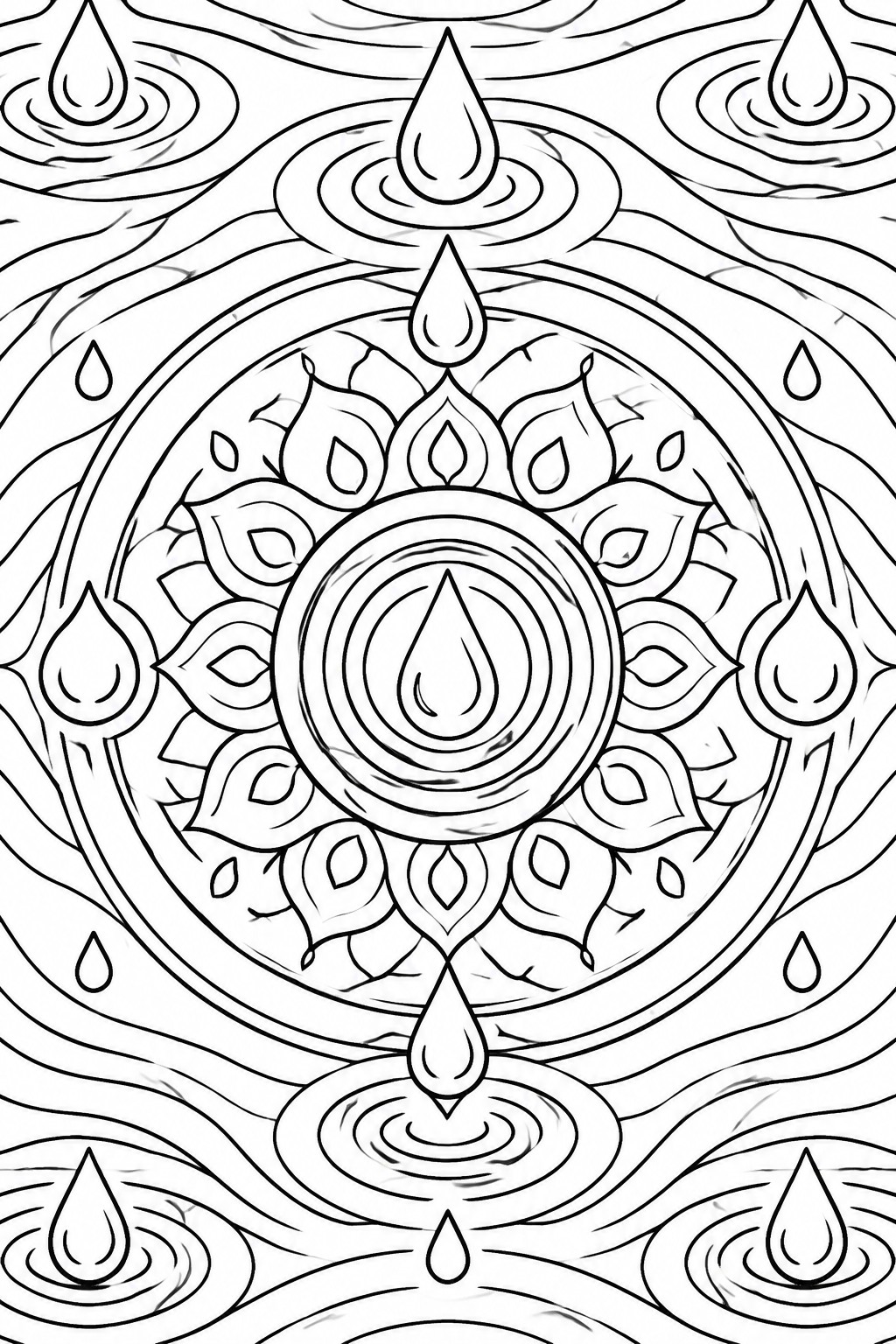
A water drop mandala places a single large droplet at the center inside multiple concentric rings. Smaller drops fill petal shapes that radiate outward, while wave lines and scattered droplets create a repeating border around the whole design. The layout mixes a tight central pattern with more open outer sections.
The layout makes this easy to color in short bursts since the center gives clear lines to follow while the outer ripples offer simpler areas to finish quickly. A page like this works especially well for adults who want a balanced mandala that stays interesting without requiring hours of fine detail work. The repeated drop shapes keep the design cohesive even when only the middle section gets completed in one session.
Succulent Rosette Mandala
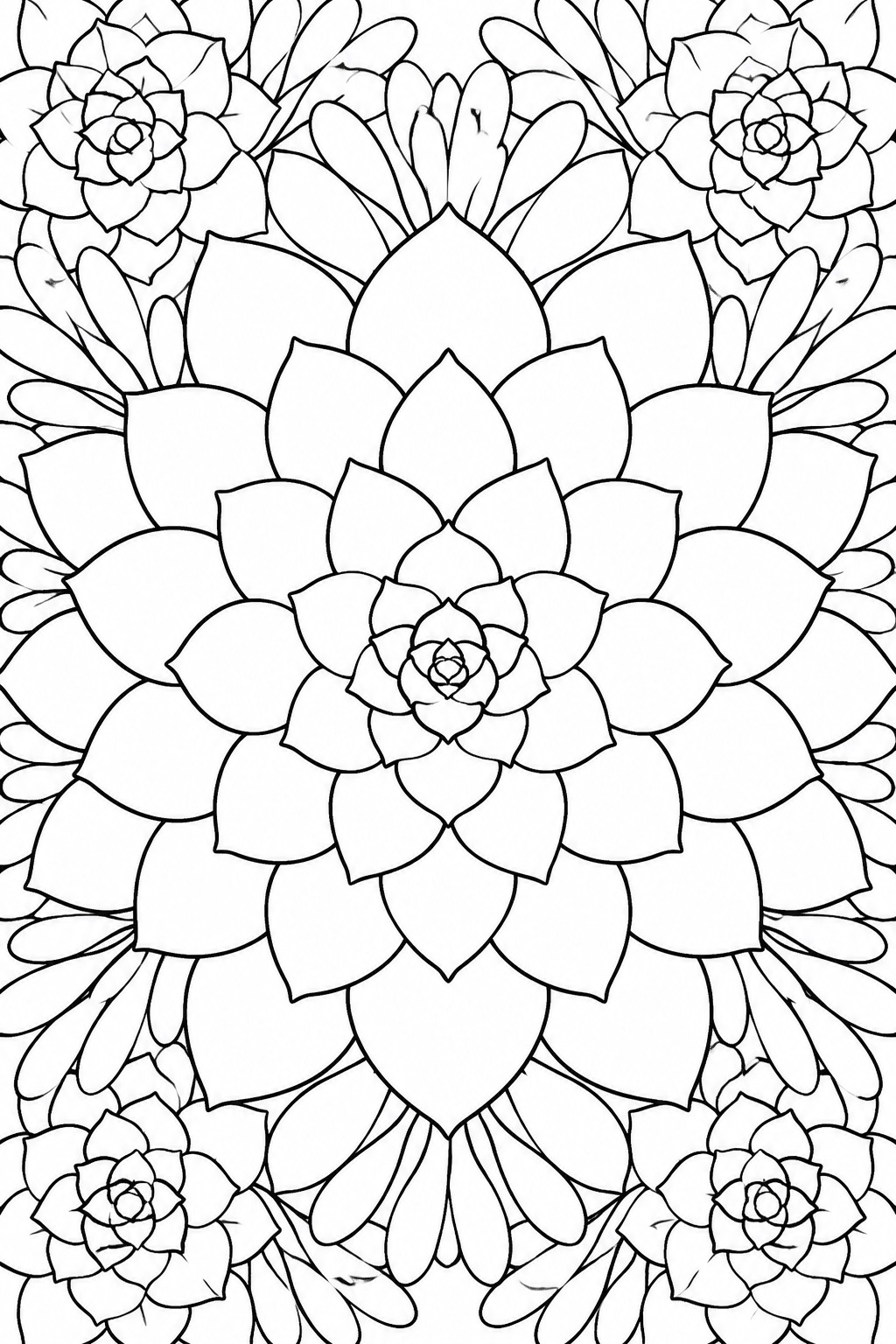
A mandala composed of succulent rosettes uses repeating petal layers to form a symmetrical circular design. The layout places a large central bloom with progressively larger rings of leaves around it, while smaller rosettes fill the outer spaces. This creates distinct sections that follow a natural growth pattern rather than strict geometric lines.
The layout makes this easy to color in short bursts since each rosette works as its own contained area. A page like this works especially well for adults who want a mandala without heavy symmetry rules or tiny repeating motifs. The open leaf shapes give enough room to add simple shading or color variation without requiring fine detail work.
Snowflake Mandala with Crystal Accents
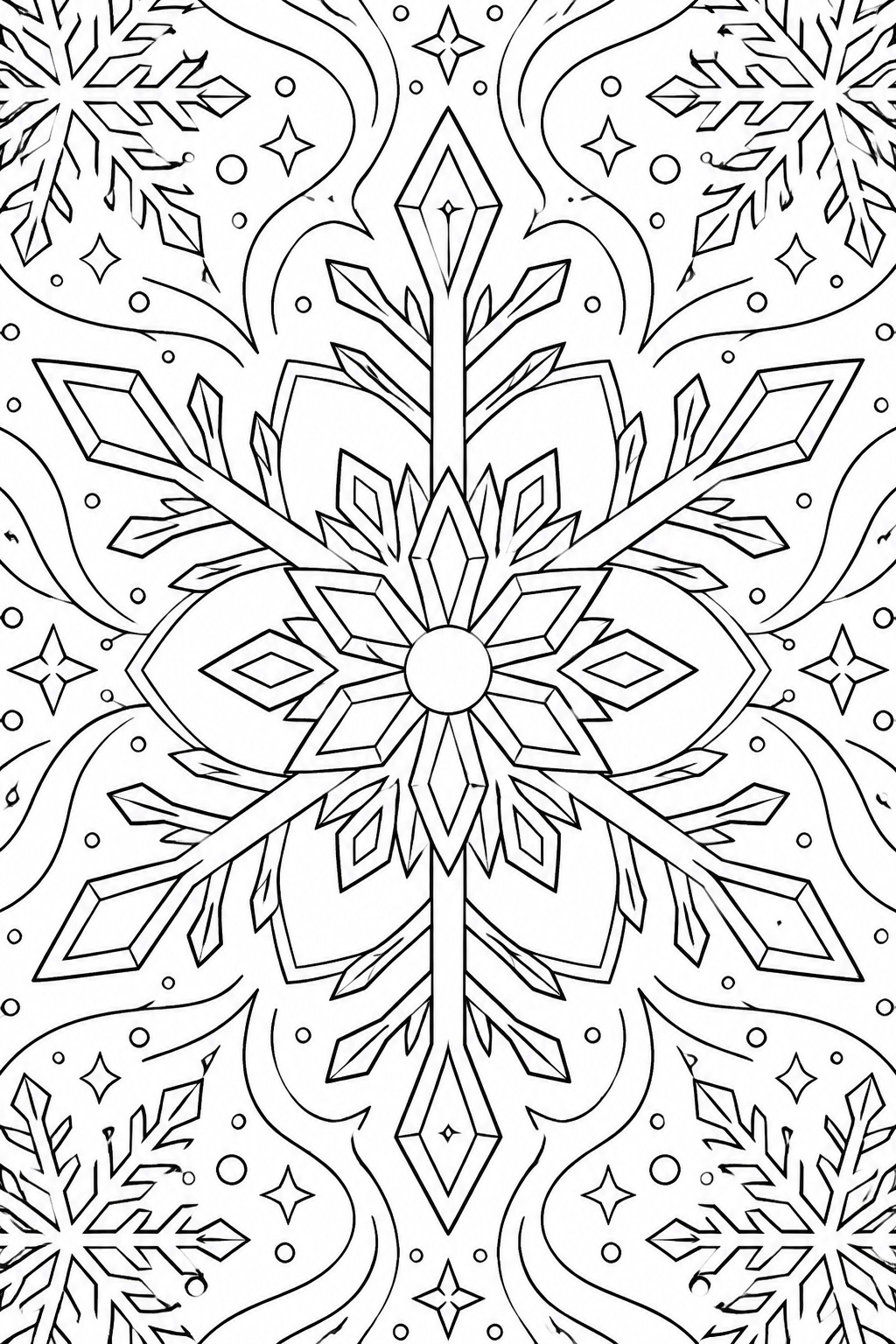
A snowflake mandala centers on one large geometric snowflake with faceted crystal arms that extend outward in perfect symmetry. Smaller snowflakes, stars, and flowing lines fill the surrounding space to create a balanced circular pattern. The clean outlines and repeated shapes let colorers focus on individual sections without needing to plan the whole page at once.
The layout makes this easy to color in short sessions because the symmetry helps decide where to place similar colors. What makes this page useful is the balance between bold central shapes and finer edge details that hold attention without requiring long stretches of time. A page like this works especially well for adults who want a seasonal design that still feels contained and structured.
Layered Floral Mandala with Berry Clusters
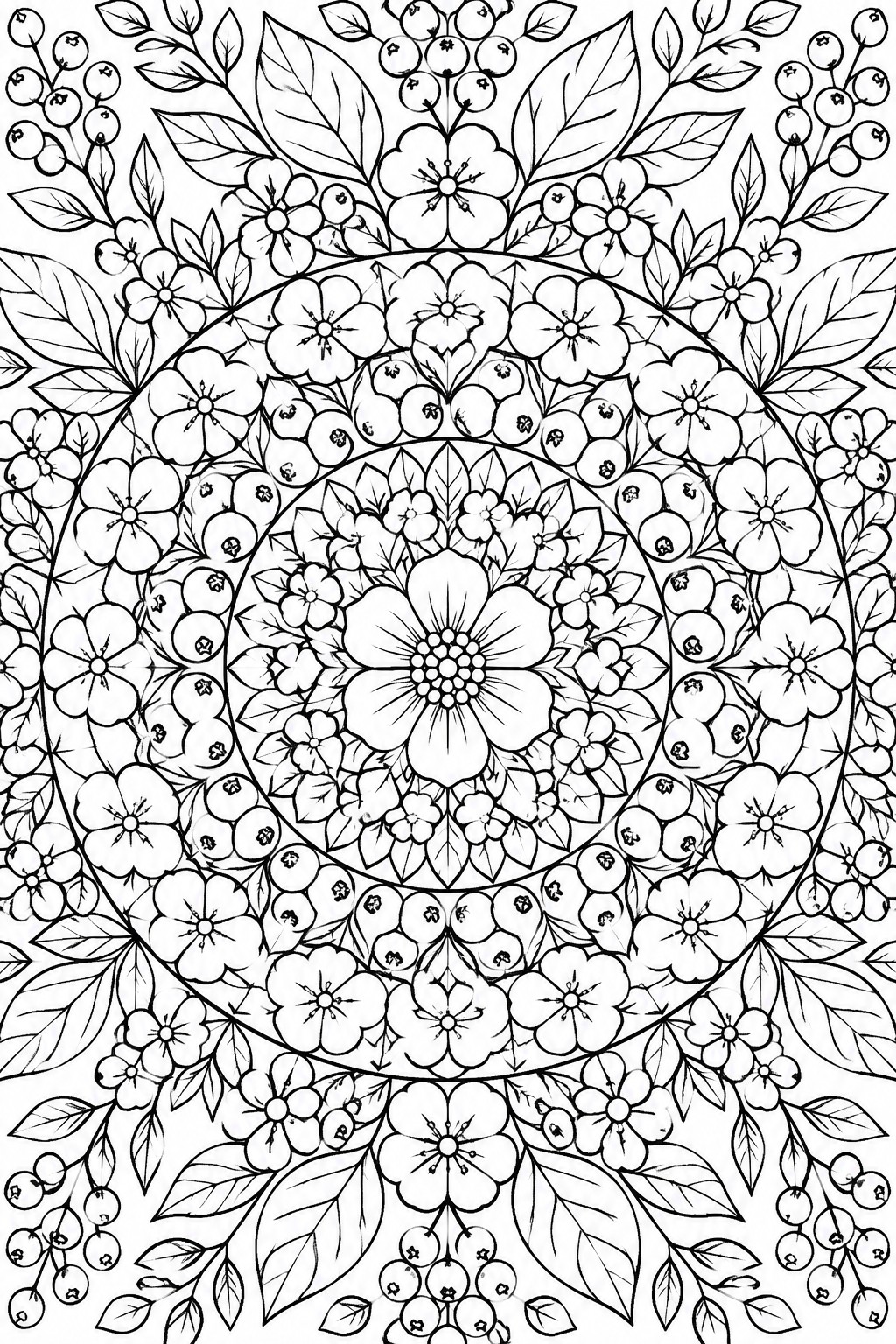
A mandala built from concentric rings of flowers, leaves, and berry clusters forms the core idea here. The central flower sits at the middle while smaller blooms and round berry groups repeat outward in balanced layers. This ring structure creates natural stopping points that let colorers complete one section at a time.
The layout makes this easy to color in short sessions because each ring stands out clearly from the next. Adults who like moderate detail can finish one or two layers without committing to the whole page. The even spacing between elements avoids tight spots that usually slow progress on denser mandalas.
Central Flower Mandala with Concentric Rings
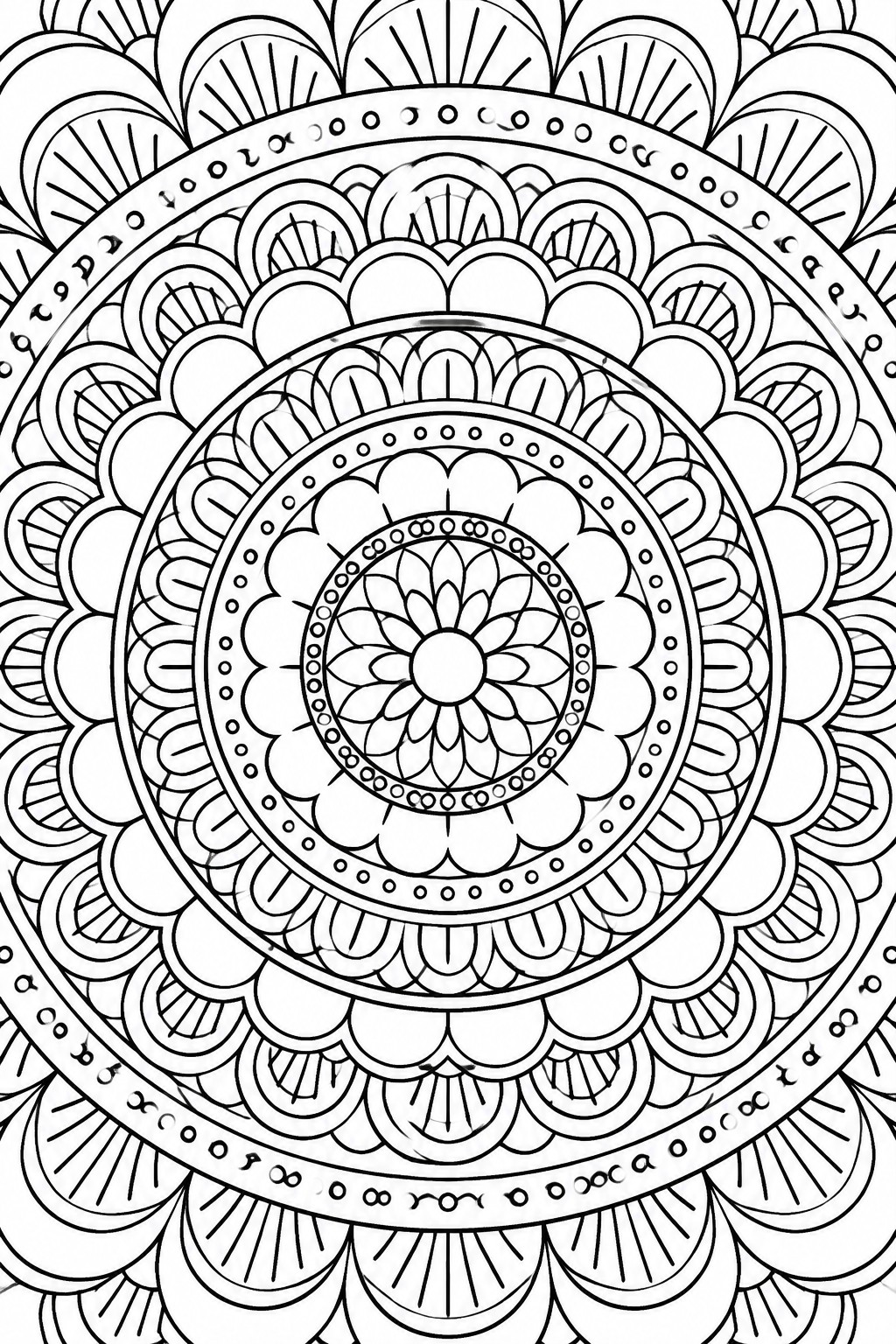
Mandala designs like this center on a single flower shape that radiates outward through successive rings of curved and dotted elements. The style relies on strict radial symmetry with scalloped edges and small circular accents creating distinct bands. This setup gives colorers clear sections to work within while building a complete circular pattern.
The layout makes this easy to color because each ring forms its own contained area. Colorers can complete one band during a short session and return later without losing the overall structure. The detail level makes this a smart pick for adults who enjoy repetitive patterns but prefer not to tackle overly dense areas all at once.
Botanical Mandala with Central Flower and Seed Pods
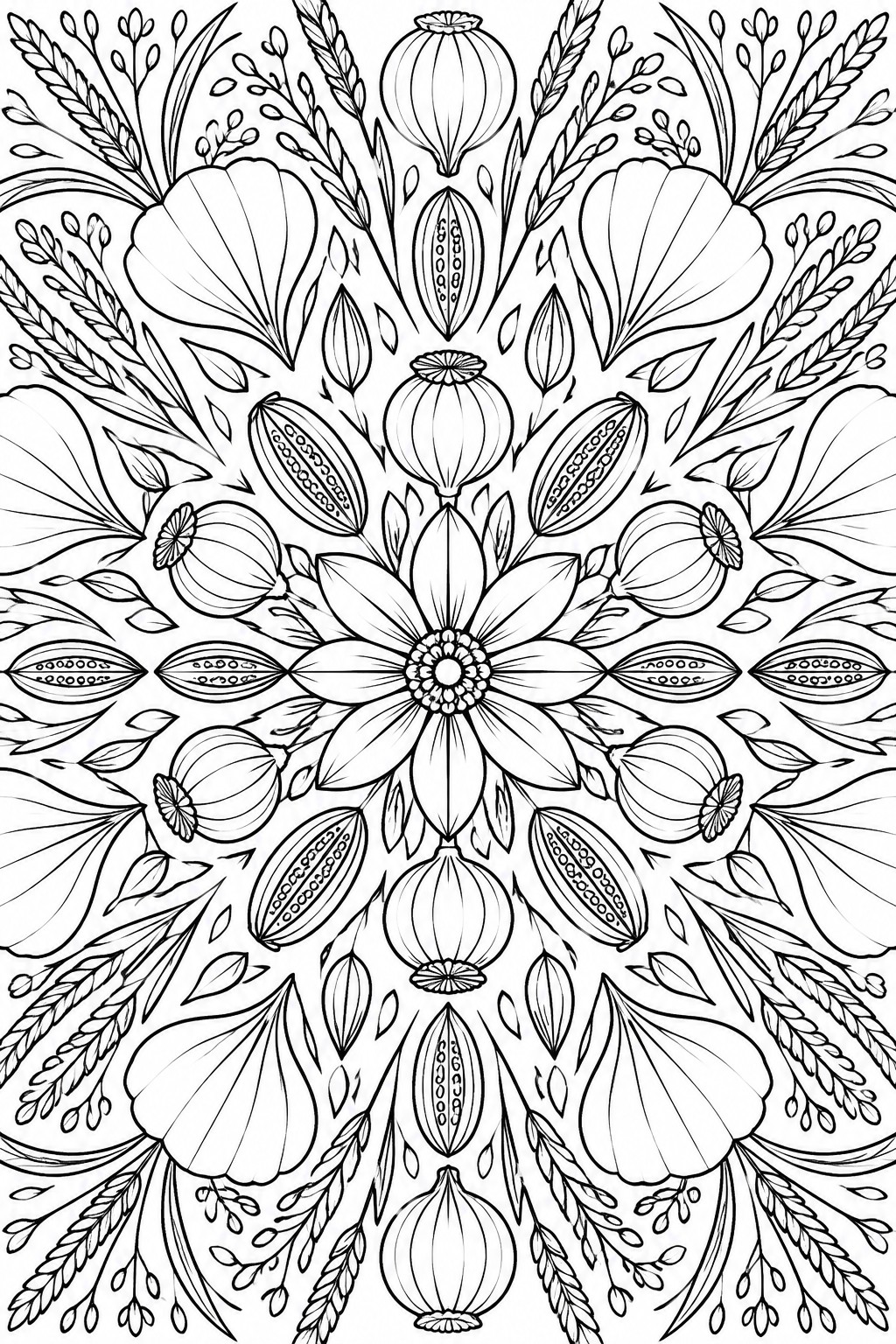
This coloring page idea centers on a symmetrical mandala made entirely of botanical elements. A large flower sits at the core, surrounded by layered seed pods, leaves, and smaller blooms that repeat in a balanced radial pattern. The clean line work and varied shapes give colorers distinct sections to fill without requiring constant zooming in on tiny details.
What makes this page useful is the way larger open forms alternate with patterned pods, which keeps the session moving at a steady pace. The symmetry lets colorers reuse the same color choices across matching elements and finish without overthinking placement. A page like this works especially well for adults who want a focused but contained mandala that fits into a short break. The moderate density stands out on Pinterest because it looks complete without appearing too heavy to start.
Concentric Floral Mandala with Layered Rings and Leaf Accents
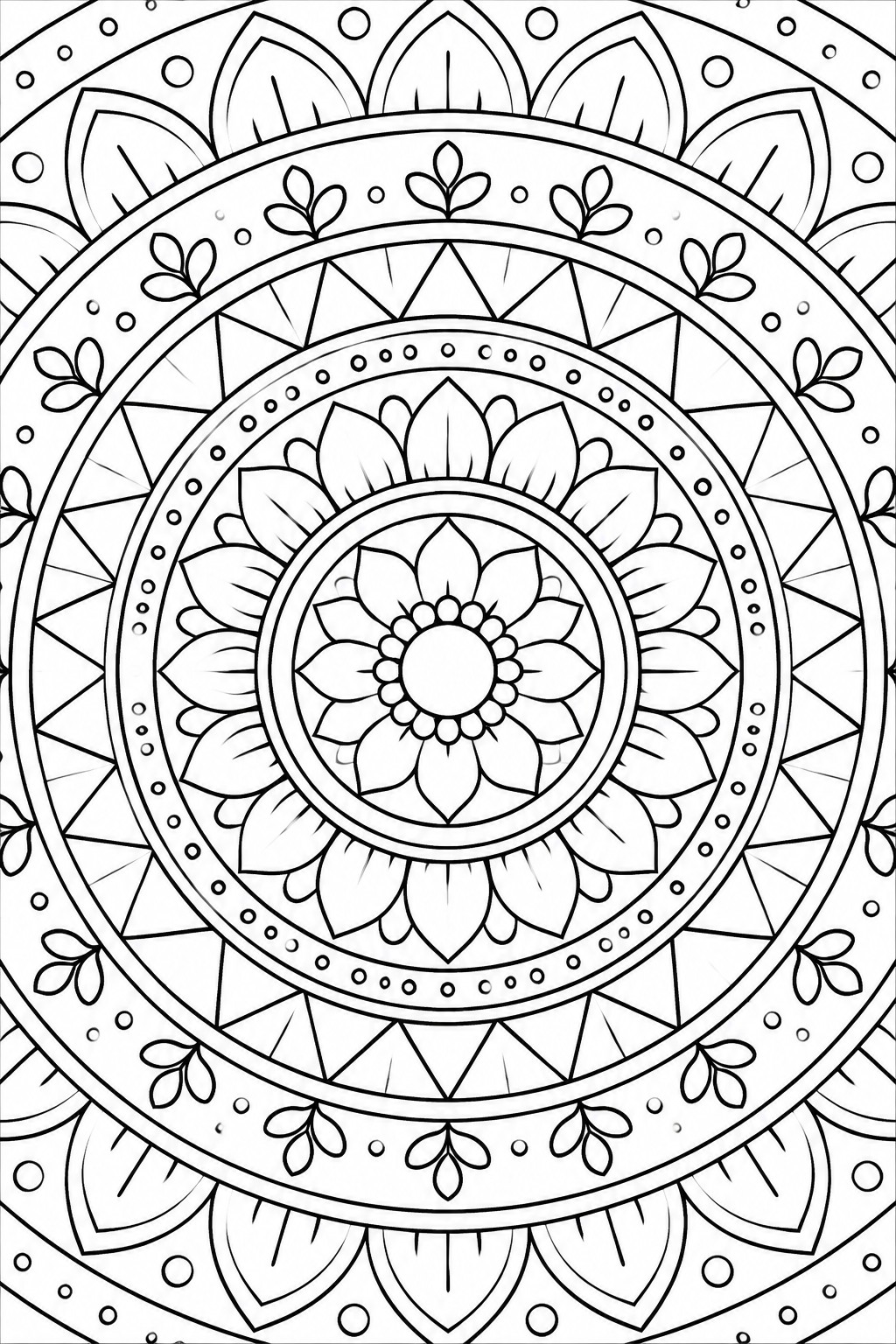
This mandala uses a central flower as the core, then builds outward through rings of petals, leaves, dots, and triangular shapes. Each ring introduces a new pattern that stays consistent around the circle, giving clear sections to color one at a time. The mix of larger open petals and smaller repeating details creates a balanced flow that holds interest without crowding the space.
What makes this page useful is the ring structure that lets you finish a full layer in one short session. The layout keeps larger shapes near the center and finer elements farther out, so you can choose how much detail to add. A page like this works especially well for adults who want a complete mandala feel without needing a long block of time. The even spacing and repeating motifs also make it easy to achieve a polished look quickly.
Frequently Asked Questions
1. What makes these mandala coloring pages suitable for short sessions? These pages feature simplified mandala designs that focus on smaller sections and fewer intricate details. This allows you to complete a satisfying portion in 10 to 15 minutes without feeling rushed or leaving large unfinished areas. The structure supports quick entry into a calm state while fitting easily into a busy day.
2. What coloring tools work best for these pages? Colored pencils or fine tip markers provide the most control and precision on the detailed lines of mandalas. Start with a basic set of 12 to 24 colors to avoid decision fatigue during short sessions. Avoid heavy markers or crayons that might bleed through standard paper and disrupt the relaxing flow.
3. How can I get the most calming benefit from these pages in limited time? Begin by taking three deep breaths before starting to center your mind. Focus on one small section at a time rather than the whole page. Use repetitive circular motions with your coloring tool to enhance the meditative effect. This approach turns even a brief session into an effective stress relief practice.
4. Are these pages appropriate for all ages and skill levels? The designs balance simplicity with enough pattern to engage both beginners and experienced colorists. Adults often use them for mindfulness while children enjoy the creative freedom. No prior artistic experience is needed since the pages guide the eye naturally through symmetrical shapes.
5. Can I print these pages multiple times or use them digitally? Most versions come as printable PDFs that you can reproduce as needed on standard letter size paper. For repeated use consider printing on thicker cardstock. Digital options allow coloring on tablets with stylus tools if you prefer a paper free approach while maintaining the same calming patterns.
