

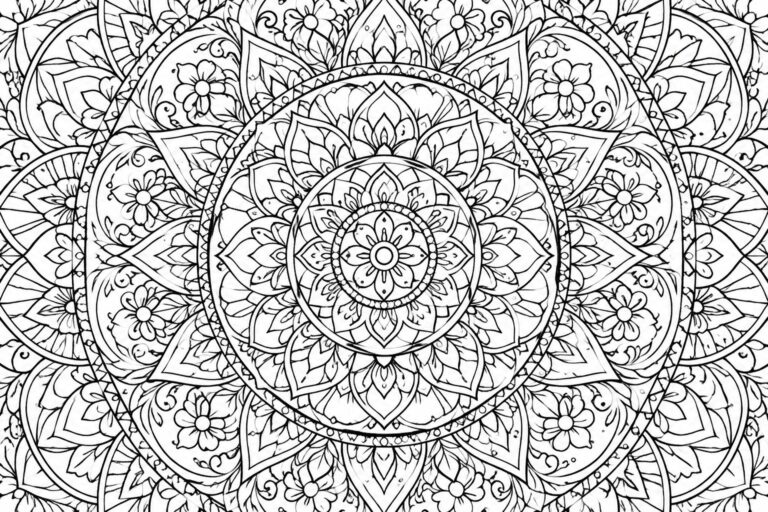
I have been coloring on and off for years and lately I keep coming back to pages with repeating patterns.
They give me something steady to follow without needing too many choices at once.
I put together 22 of these pages for this article because they seem to suit quiet afternoons or evenings when I just want to fill in shapes.
Most of them use the same motifs spaced out so the work stays even from start to finish.
You can print whichever ones look useful and keep them on hand for whenever you feel like sitting with a page.
Symmetrical Mandala with Repeating Floral Rings
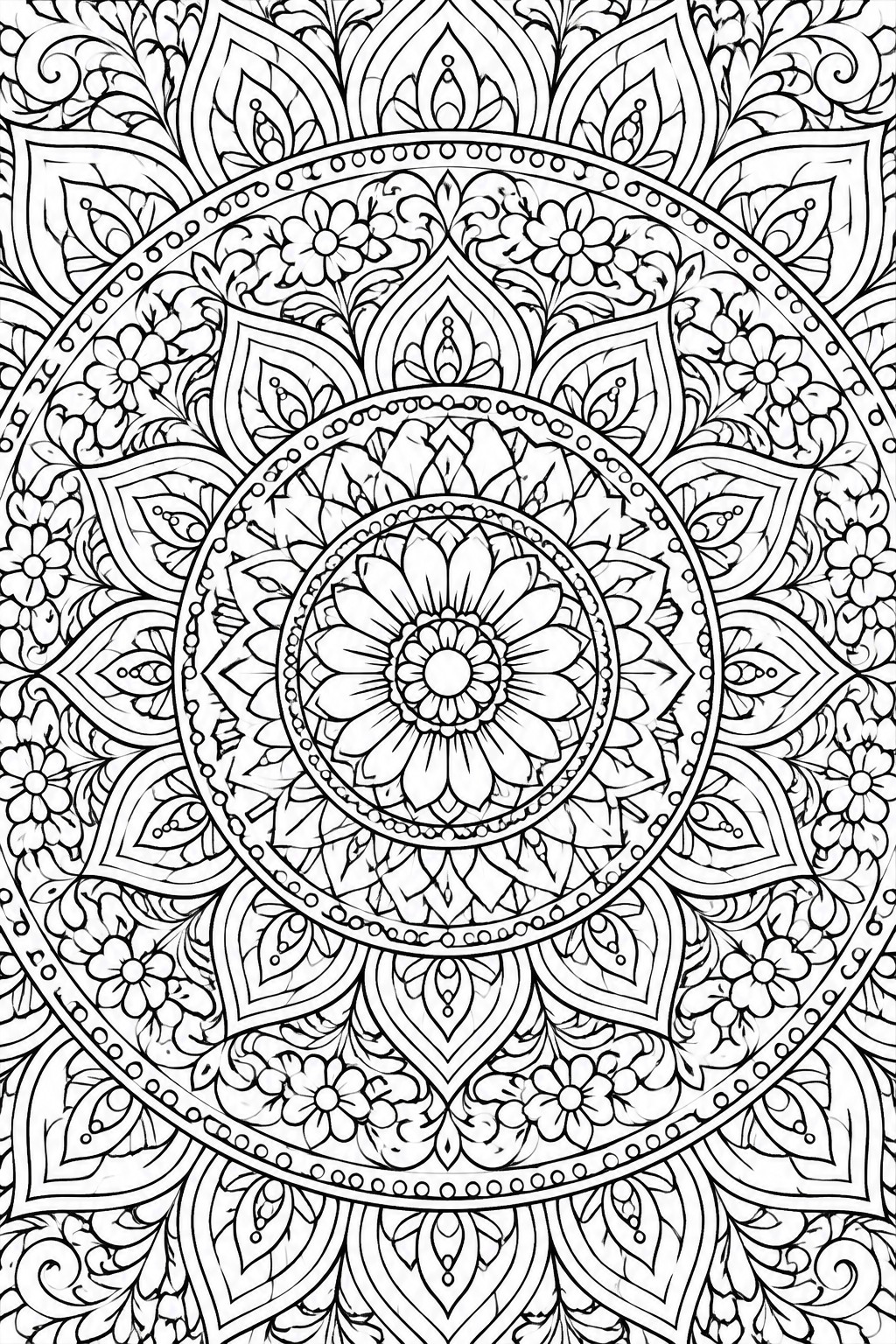
This coloring page idea uses a classic mandala structure built from concentric circles and layered rings. Each ring contains repeating flower and leaf motifs that create a balanced, radial layout. The fine lines and dotted borders help keep sections distinct while the overall symmetry gives colorers a clear path from center to edge.
The layout makes this easy to color one ring at a time without losing track of the design. A page like this works especially well for adults who prefer pattern-focused work that stays engaging through repetition. The consistent level of detail across the page supports longer sessions where progress feels steady and visible.
Repetitive Mandala with Layered Petal and Border Designs
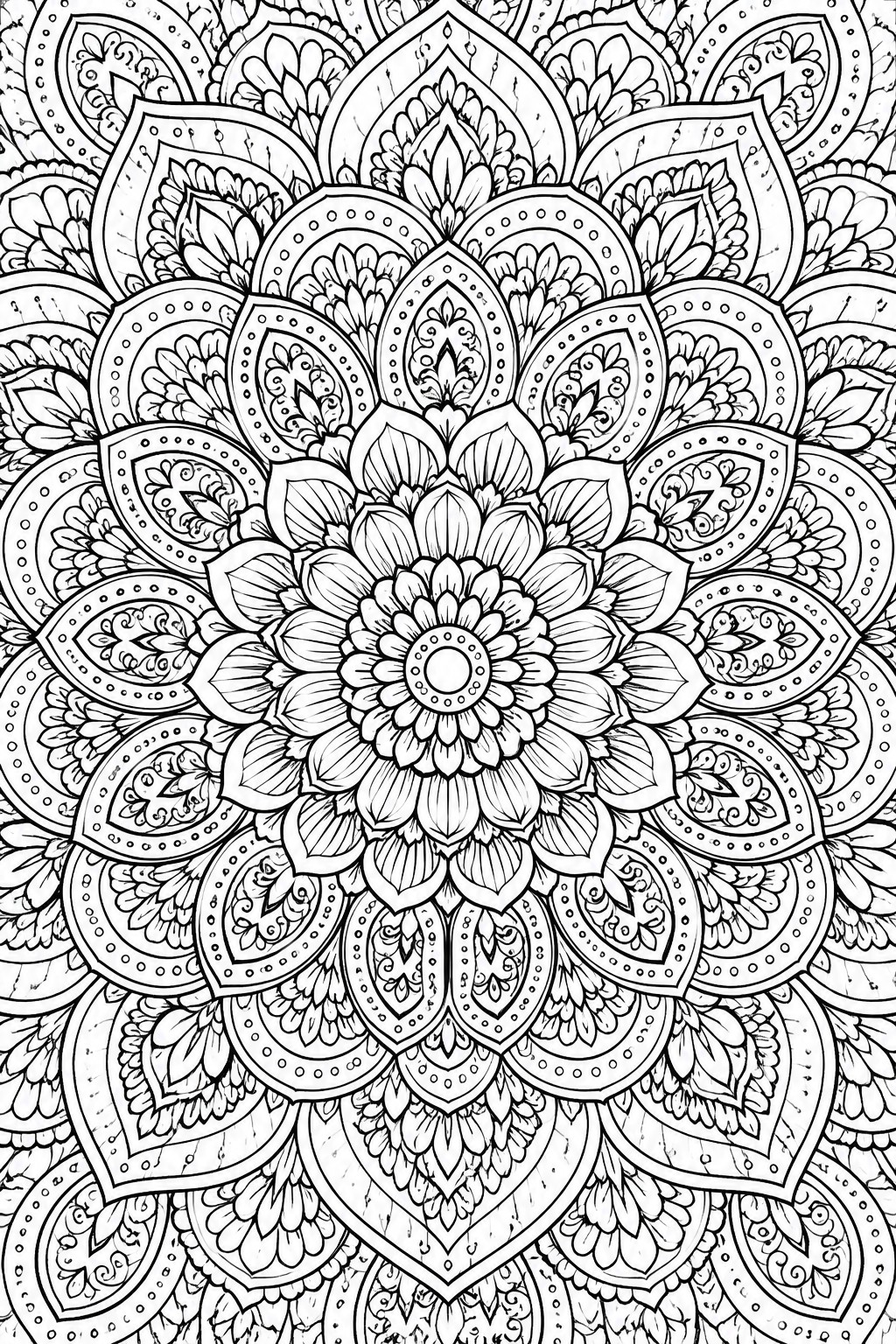
Mandala pages like this one rely on a central point with rings of matching shapes that grow outward in even steps. Each ring mixes petal forms, leaf clusters, and dotted accents so the same motifs appear in different sizes. The result is a full page of small repeatable sections that stay organized by the strong circular layout.
The layout makes this easy to color because the symmetry keeps sections aligned even when working inward toward the center. A page like this works especially well for adults who want a steady rhythm without switching between unrelated subjects. The fine repeated lines also let colorers test gradients or color shifts across matching shapes while keeping the overall pattern clear.
Layered Circular Mandalas with Repeating Floral Motifs
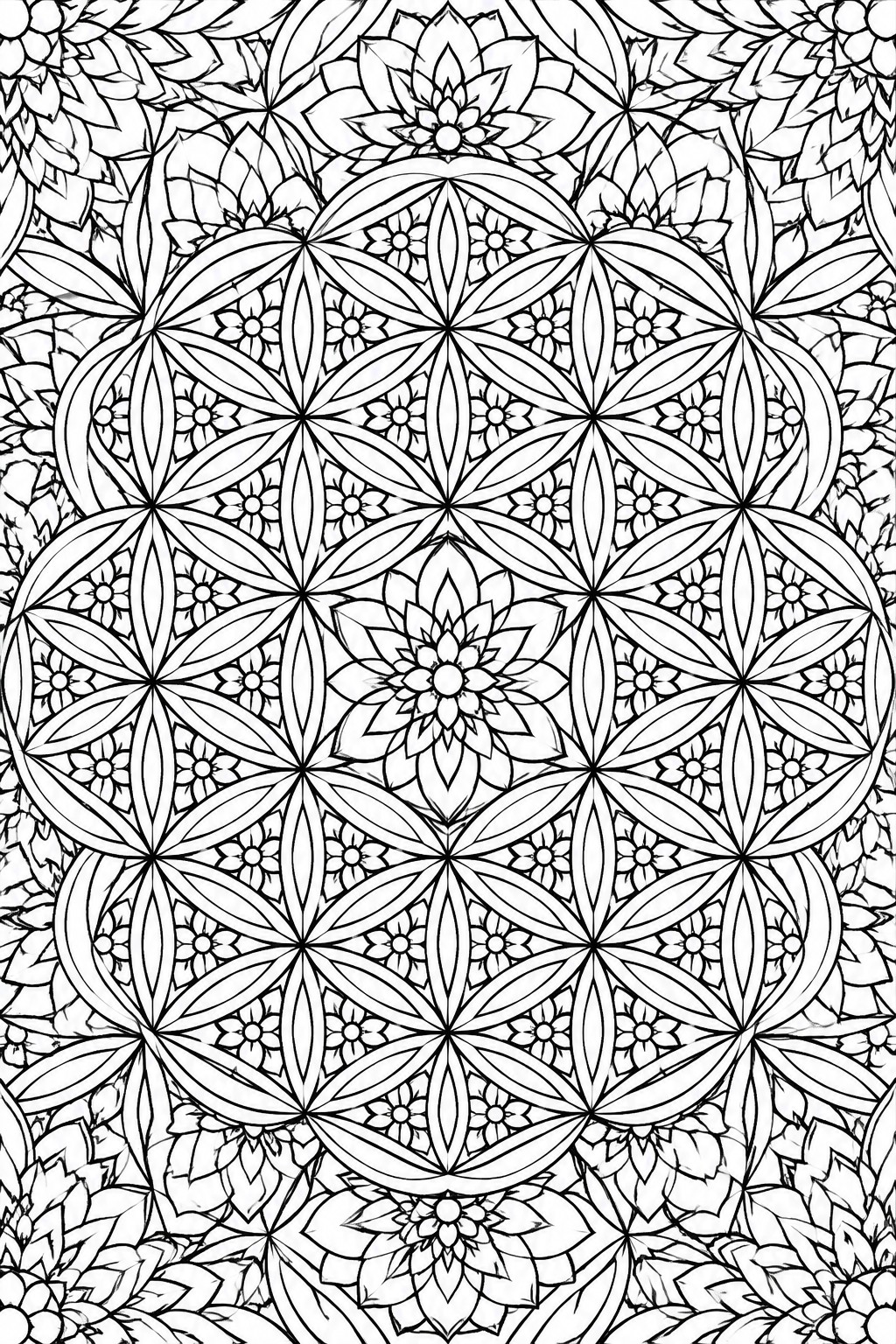
This coloring page idea uses large overlapping circles as the core structure, each divided into symmetrical petal sections with smaller flowers and dots filling the spaces between. The design repeats these circular units across the full page while adding leaf clusters around the edges to connect everything. The combination of bold outer rings and finer inner patterns creates a consistent rhythm that works well for steady coloring sessions.
What makes this page useful is the clear repetition in the circular forms, which lets colorers repeat the same techniques without constant decision making. The detail level fits adults who want something structured but not overwhelmingly varied. A page like this works especially well for pattern-focused coloring because the symmetry helps guide the eye and keeps the process engaging from one section to the next.
Repeating Geometric Stars and Floral Motifs
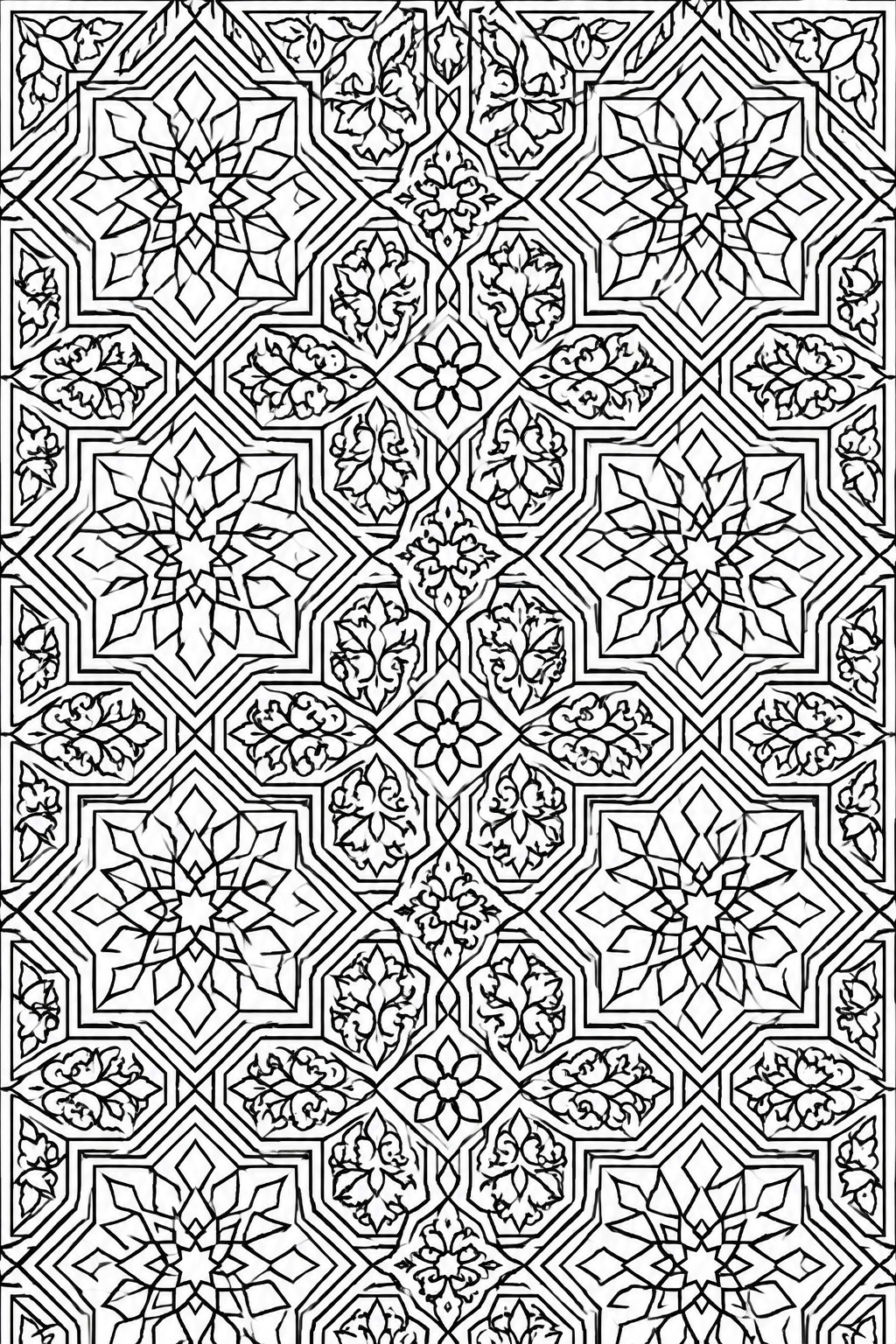
This coloring page uses a grid of eight-pointed stars framed by octagons and filled with leaf and flower clusters. The design repeats the same motifs across the page in a tight symmetrical arrangement. The consistent shapes let colorers repeat color choices without needing to plan new elements.
What makes this page useful is the built-in repetition that supports steady progress in sections. The detail level makes this a smart pick for adults who like pattern work over open scenes. The layout makes this easy to color because similar shapes appear at regular intervals and reduce decision fatigue.
Paisley Motifs Filled with Layered Floral Patterns
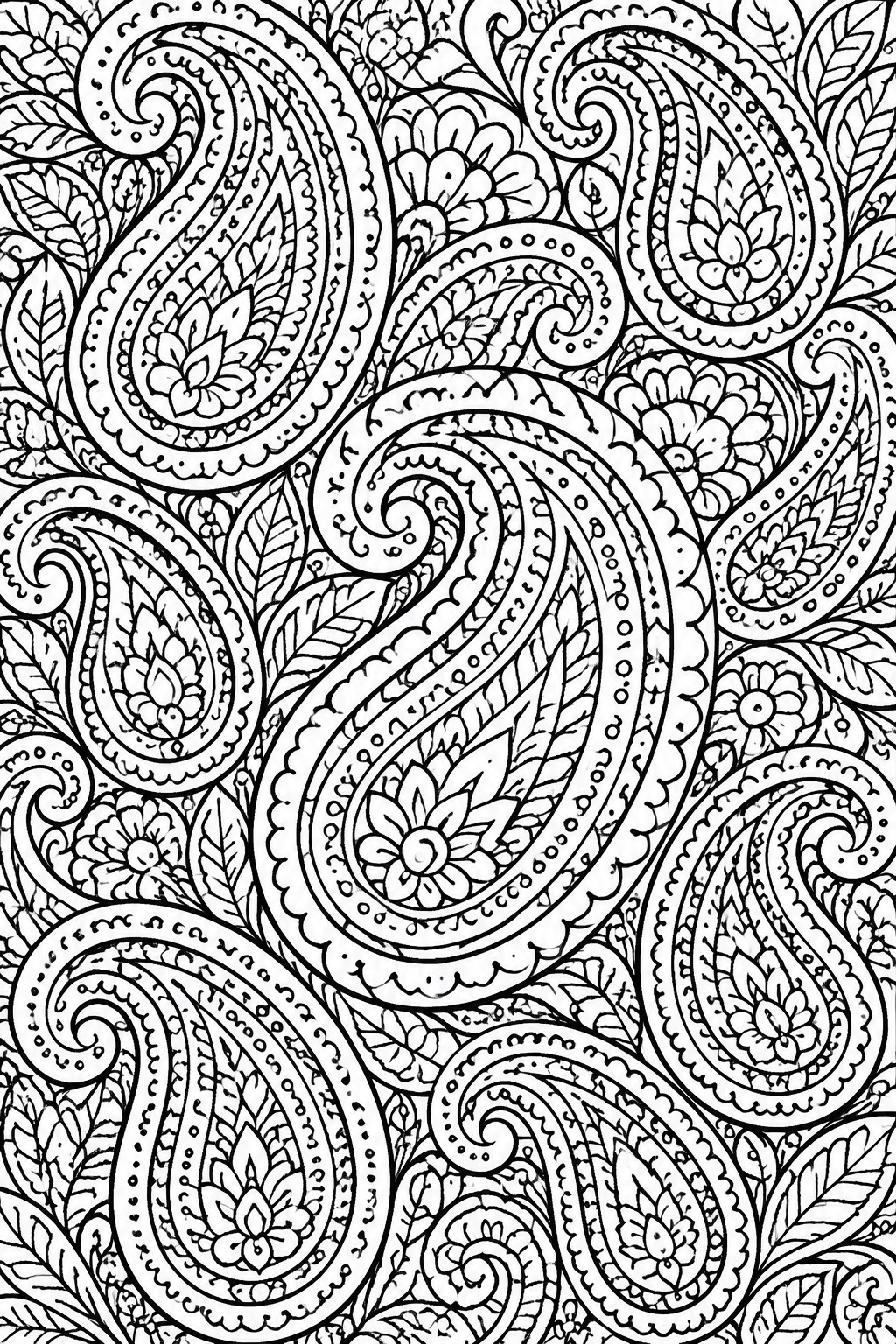
Paisley shapes serve as the main structure here, each one packed with smaller flowers, leaves, and curved line work that repeats across the page. The design places these teardrop forms at different angles so the swirls and stems connect naturally without large gaps. This setup keeps the focus on steady pattern work rather than building a single scene.
What makes this page useful is the repeating paisley layout that breaks the coloring session into manageable sections. The fine inner details inside each shape suit adults who want longer sessions without switching designs. The consistent line weight holds up well when printed and gives clear boundaries for staying inside the lines.
Overlapping Feather Patterns for Detailed Coloring
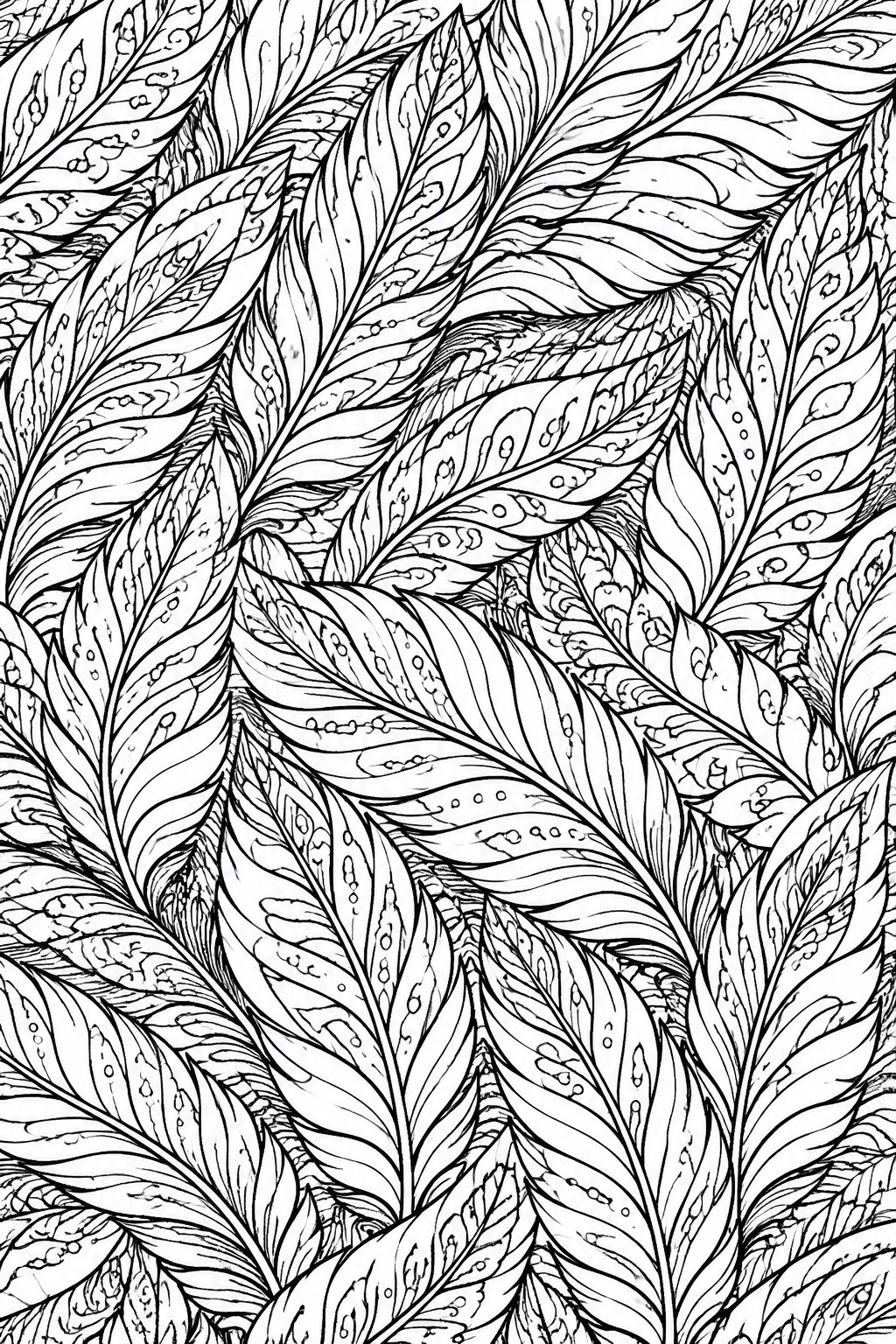
Repetitive feather shapes create the main focus of this page. The design layers feathers at different angles to fill the entire space with a consistent motif. Fine lines and small dotted accents give each feather its structure without adding extra elements.
The layout makes this easy to color one section at a time while keeping the overall pattern intact. A page like this works especially well for adults who prefer pattern-based designs over single subjects. The repeated shapes support a steady coloring pace and stand out as a clean, printable option for focused sessions.
Hexagon Floral Grids with Repeating Motifs
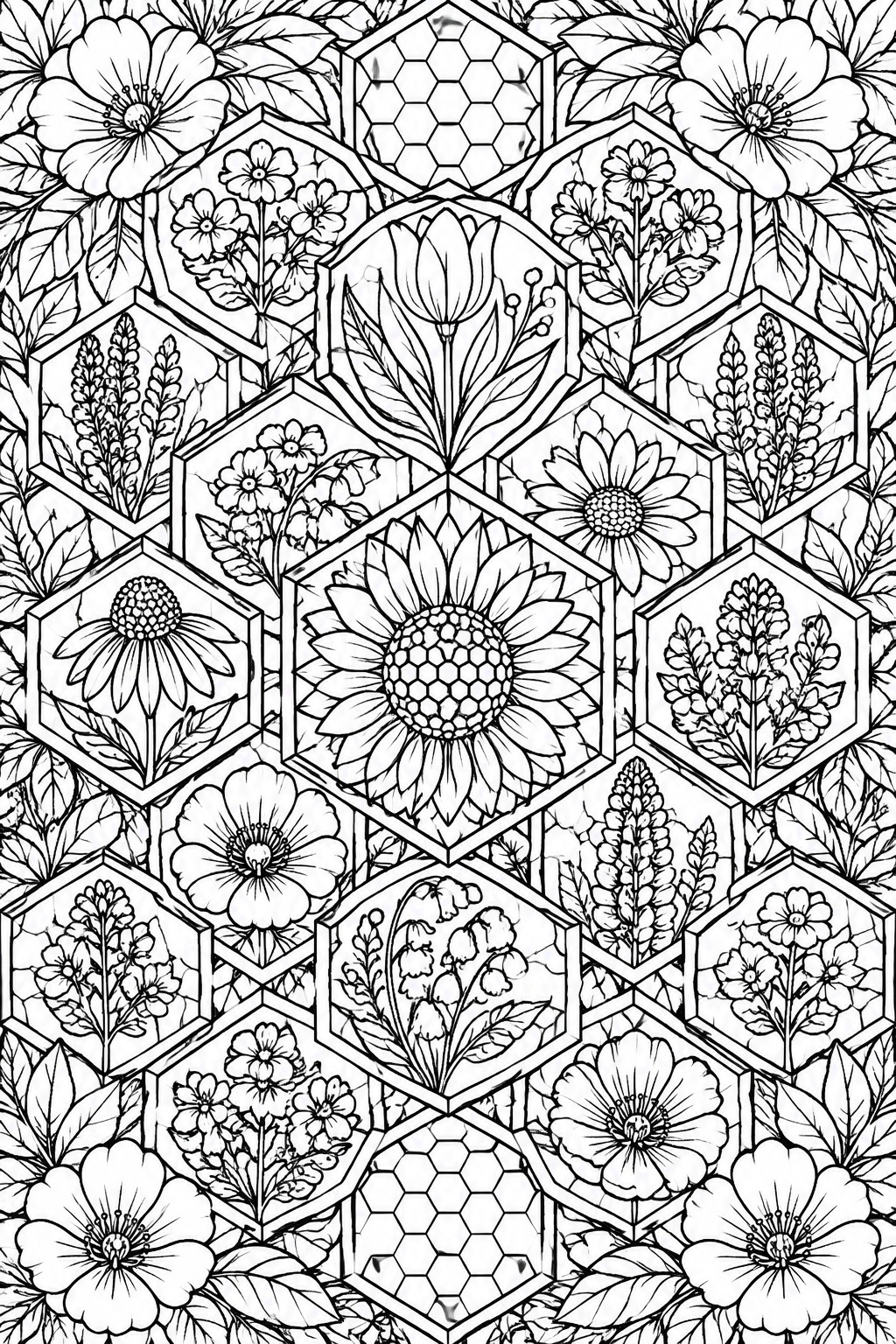
Floral elements sit inside a network of hexagons that repeat across the page to form a tiled pattern. Each hexagon holds a different bloom such as a sunflower, tulip, or daisy, along with leaves and smaller flowers that fill the space. The steady geometric lines create clear sections while the changing flower details inside them keep the design from feeling too uniform.
The layout makes this easy to color hexagon by hexagon without needing to plan the whole page at once. A page like this works especially well for adults who want a pattern focused session that stays organized yet still offers variety. The balance of bold outlines and finer flower centers gives enough detail to stay engaged without requiring extreme precision.
Repeating Stylized Wave Patterns
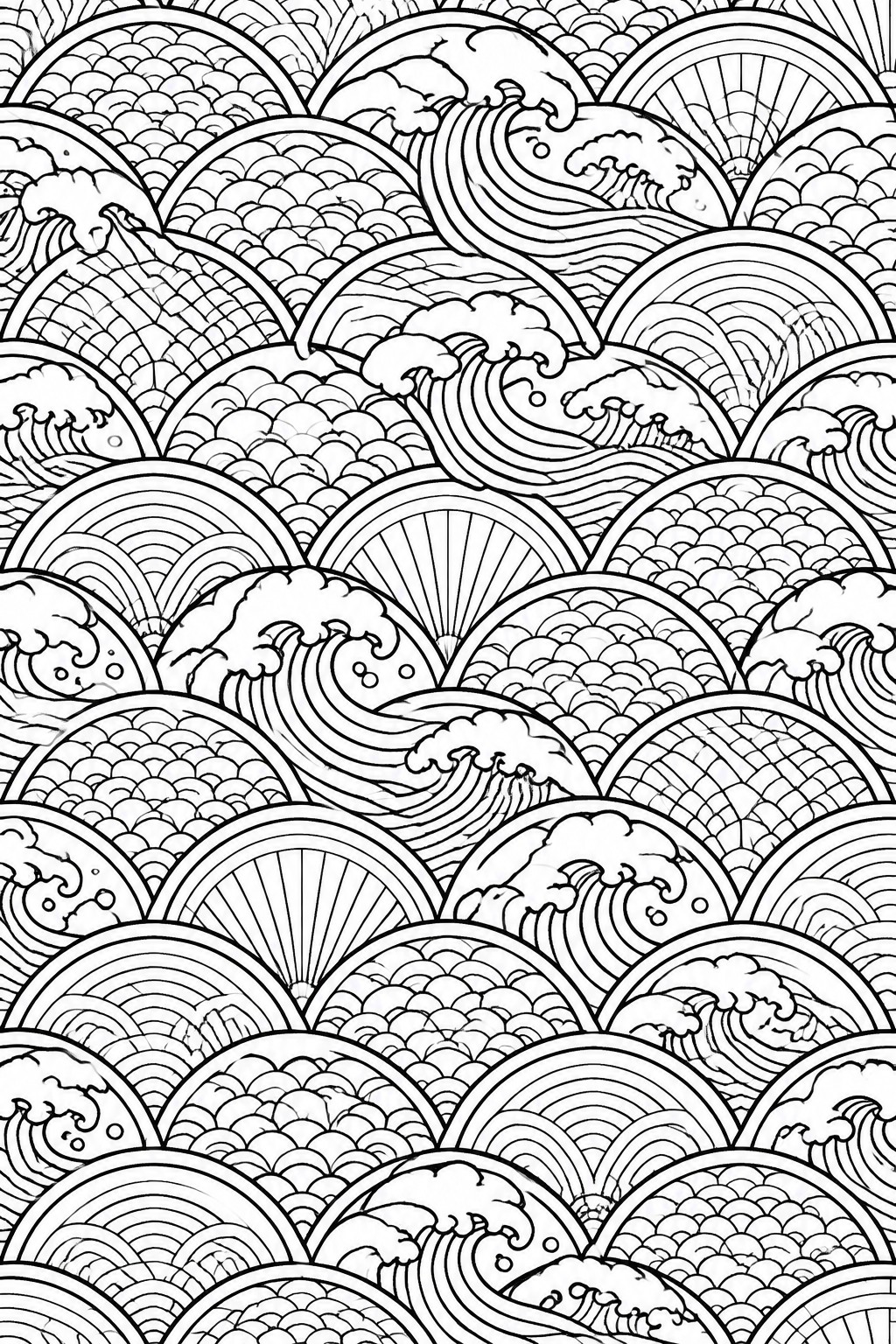
Stylized waves form the core of this pattern-based coloring page. The design repeats curved wave shapes with added foam details and scale-like textures throughout the sheet. This creates a continuous field of similar elements that works well for pattern-focused coloring.
The layout makes this easy to color because each wave section stands alone yet connects visually to the next. Adults often pick this style when they want something detailed but not overly complex in terms of subject matter. For a relaxing session this kind of page keeps the hand moving in steady loops and arcs without requiring decisions about larger composition.
Celtic Knot Lattice Patterns
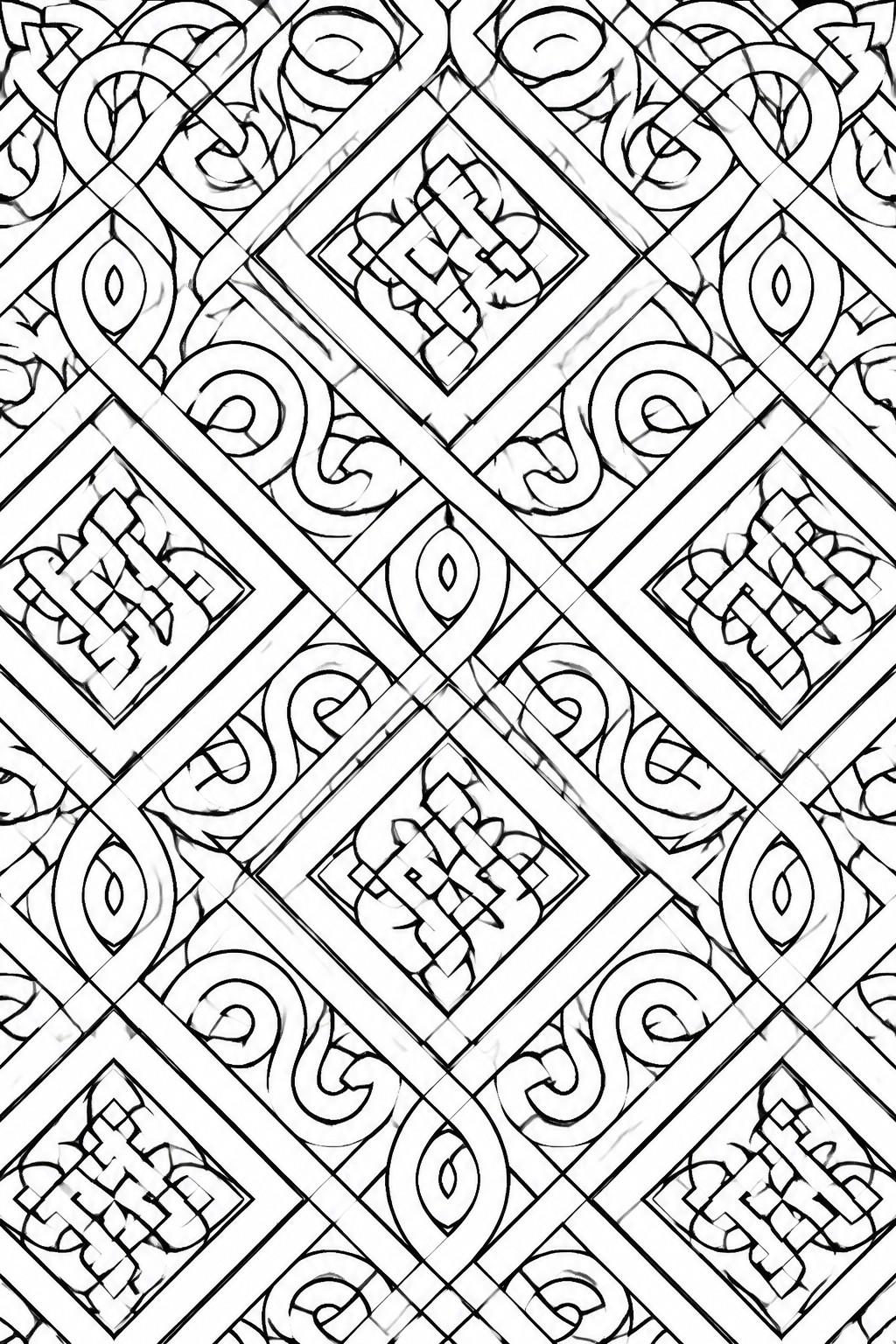
Celtic knot designs form the core of this page through tightly interwoven loops and spirals arranged in repeating squares and diamonds. Flowing curves link each framed section into one continuous lattice that covers the full page. The mix of enclosed knot centers and open connecting lines gives colorers both compact details and longer strokes to work with.
What makes this page useful is the clear grid structure that supports coloring one section at a time without losing the overall pattern. The detail level makes this a smart pick for adults who prefer pattern-focused pages over scenes. Open swirls next to dense knots create natural variety in how long each area takes to finish. A page like this works especially well for longer sessions where the goal is steady progress rather than quick completion.
Art Deco Fan Pattern
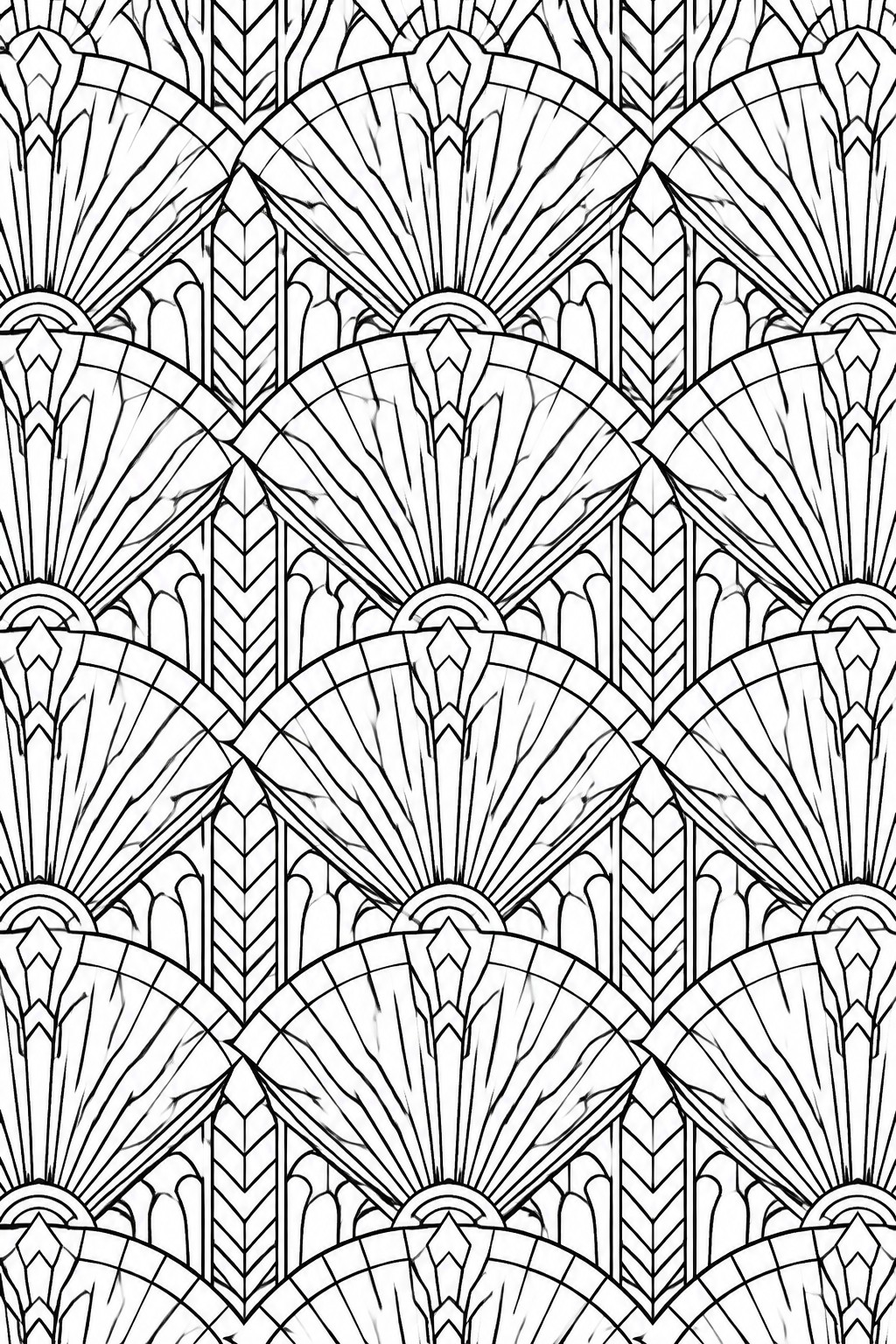
Repetitive Art Deco fans form the core of this design, each built from radiating lines, layered chevrons, and scalloped edges. The motifs tile across the page in offset rows to create a continuous all-over pattern. Consistent line weights and balanced spacing keep the repeats clear and easy to follow section by section.
The layout makes this easy to color in blocks without losing the overall rhythm. A page like this works especially well for adults who prefer pattern-focused coloring and want to practice shading or color repeats. The medium detail level gives enough structure to stay engaged while still leaving room for personal color choices.
Dense Repeating Botanical Patterns
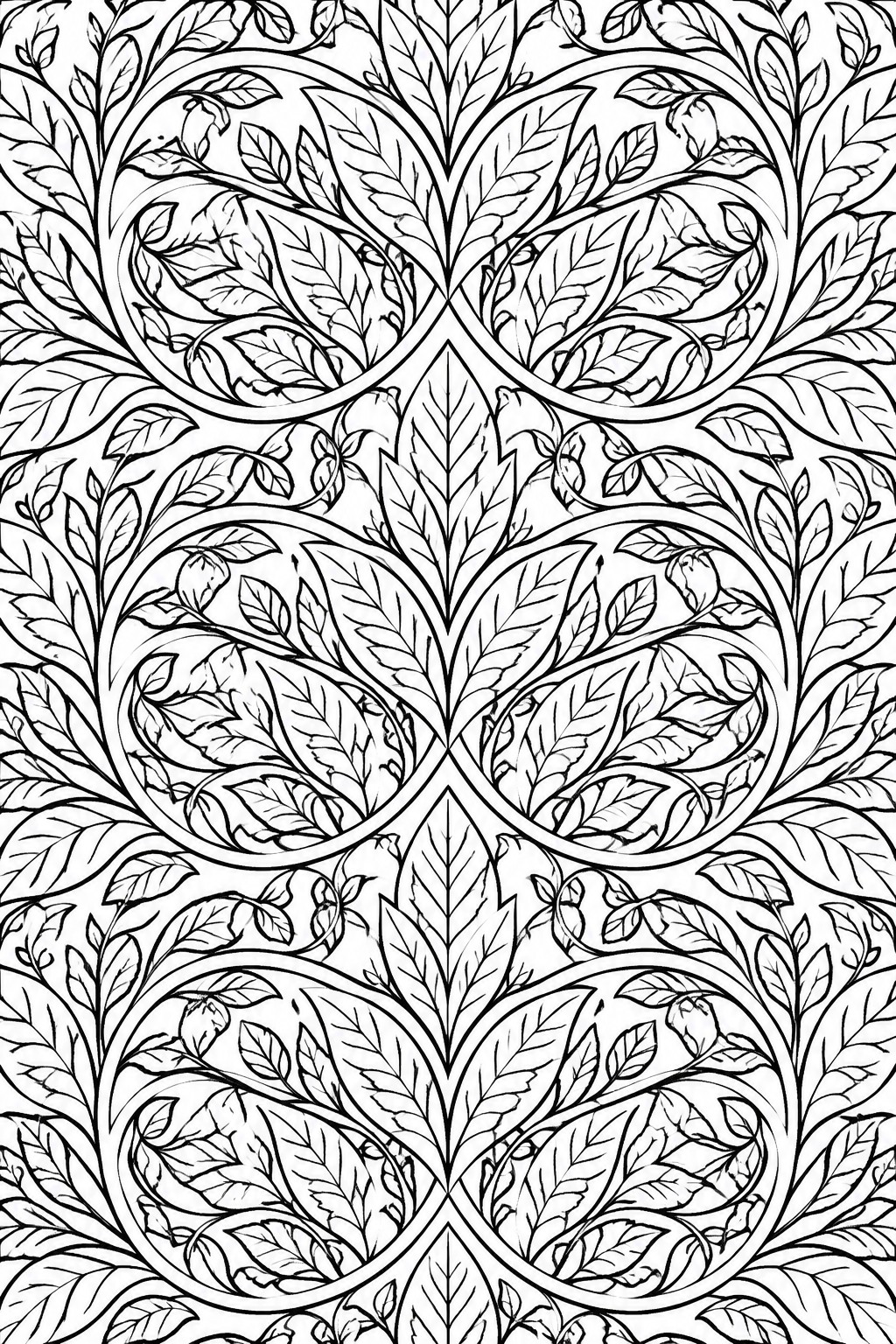
This coloring page centers on a symmetrical arrangement of curving vines, layered leaves, and small buds that repeat in four matching circular sections. The design uses a tight, interconnected layout where each vine and leaf cluster mirrors the ones beside it, creating a strong overall pattern rather than a single focal scene. The fine line work and consistent spacing between elements make it easy to apply the same colors or shading techniques across similar shapes without constant decision-making.
What makes this page useful is the repetitive structure that supports a steady coloring rhythm once the first section is started. The high level of detail and small spaces between lines suit adults who enjoy longer, focused sessions over quick pages. A page like this works especially well for pattern-focused coloring where the goal is even coverage and balanced color choices across the full sheet.
Tiled Mandala Patterns with Floral Centers
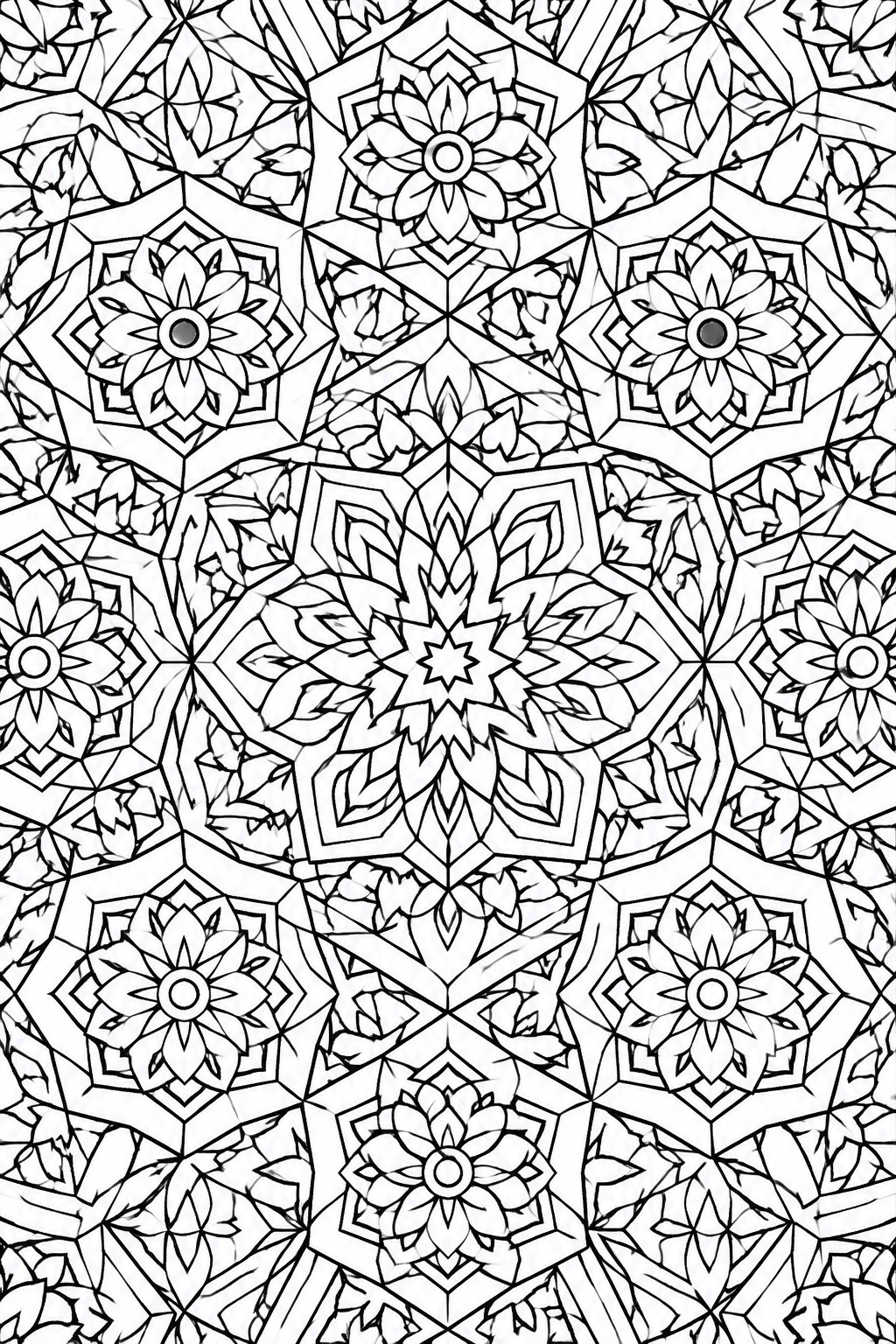
Repetitive mandala designs fill the page with identical flower based motifs arranged in a grid layout. Each motif combines a central circle with layered petals and surrounding geometric frames that repeat across the full sheet. The symmetry lets colorers apply the same palette to matching sections or switch shades without disrupting the overall balance.
What makes this page useful is the self contained sections that still connect into one larger pattern. The layout makes this easy to color because the lines stay clear and the spaces remain consistent from one motif to the next. A page like this works especially well for adults who prefer pattern work over single illustrations. The detail level makes this a smart pick for longer sessions where steady progress feels rewarding.
Dense Spiral Seashell Pattern
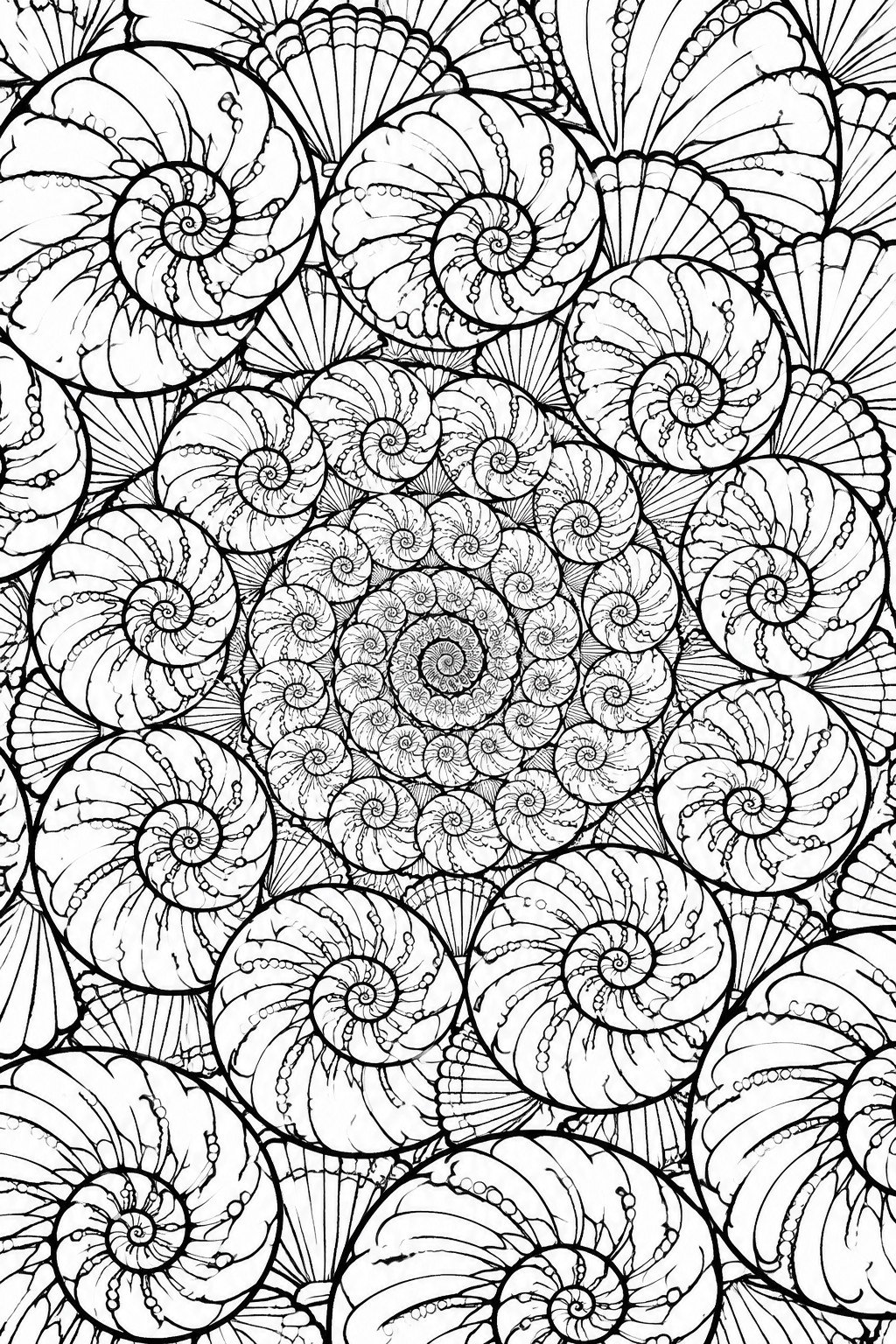
This coloring page centers on a tight cluster of spiral seashells in multiple sizes, with fan-shaped shells placed in the gaps to fill the space. The design relies on repeating circular forms and curved lines that create a consistent pattern across the whole page. Colorers can work through the shells one section at a time, following the natural ridges and bead-like details along each edge.
What makes this page useful is the steady repetition of similar shapes that keeps the focus on pattern rather than story. The layout makes this easy to color in short sessions since each shell stays self-contained. A page like this works especially well for adults who want detail without needing to plan a larger scene. The even line work also prints clearly for repeated use.
Repeating Peacock Feather Pattern
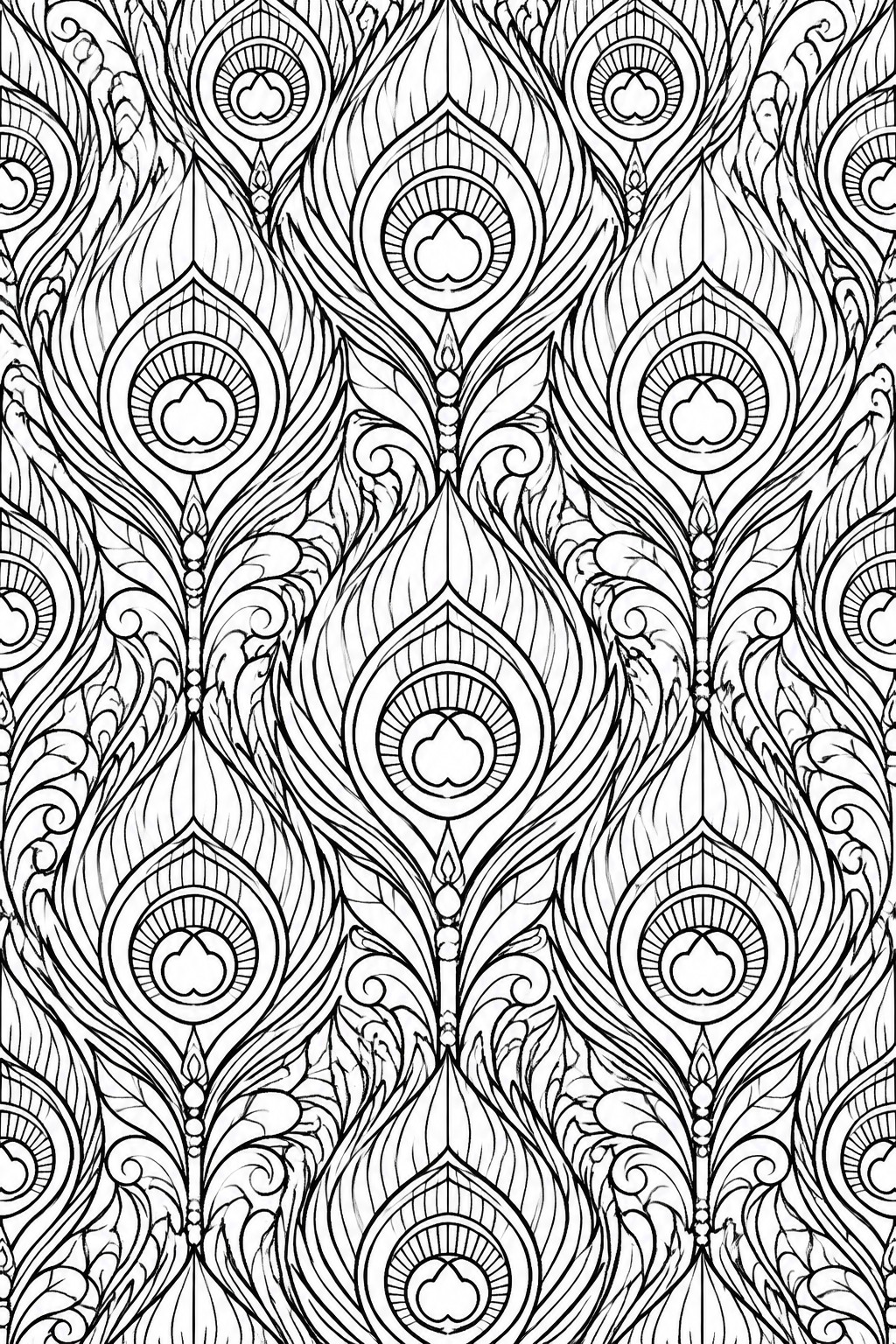
Peacock feathers form the core of this design through a tightly repeating arrangement that covers the full page. Each motif includes an eye spot with inner shapes, fine radiating lines, and curved plumes that link into neighboring feathers. The consistent structure creates a grid-like flow where color choices can repeat or shift gradually across the surface.
What makes this page useful is how the repetition supports steady progress without constant decision making. The layout makes this easy to color in blocks since the connected plumes guide the eye from one area to the next. A page like this works especially well for adults who prefer pattern work that holds attention through small details. The fine line work rewards slow, deliberate coloring with colored pencils or gel pens.
Intricate Repeating Floral Medallions
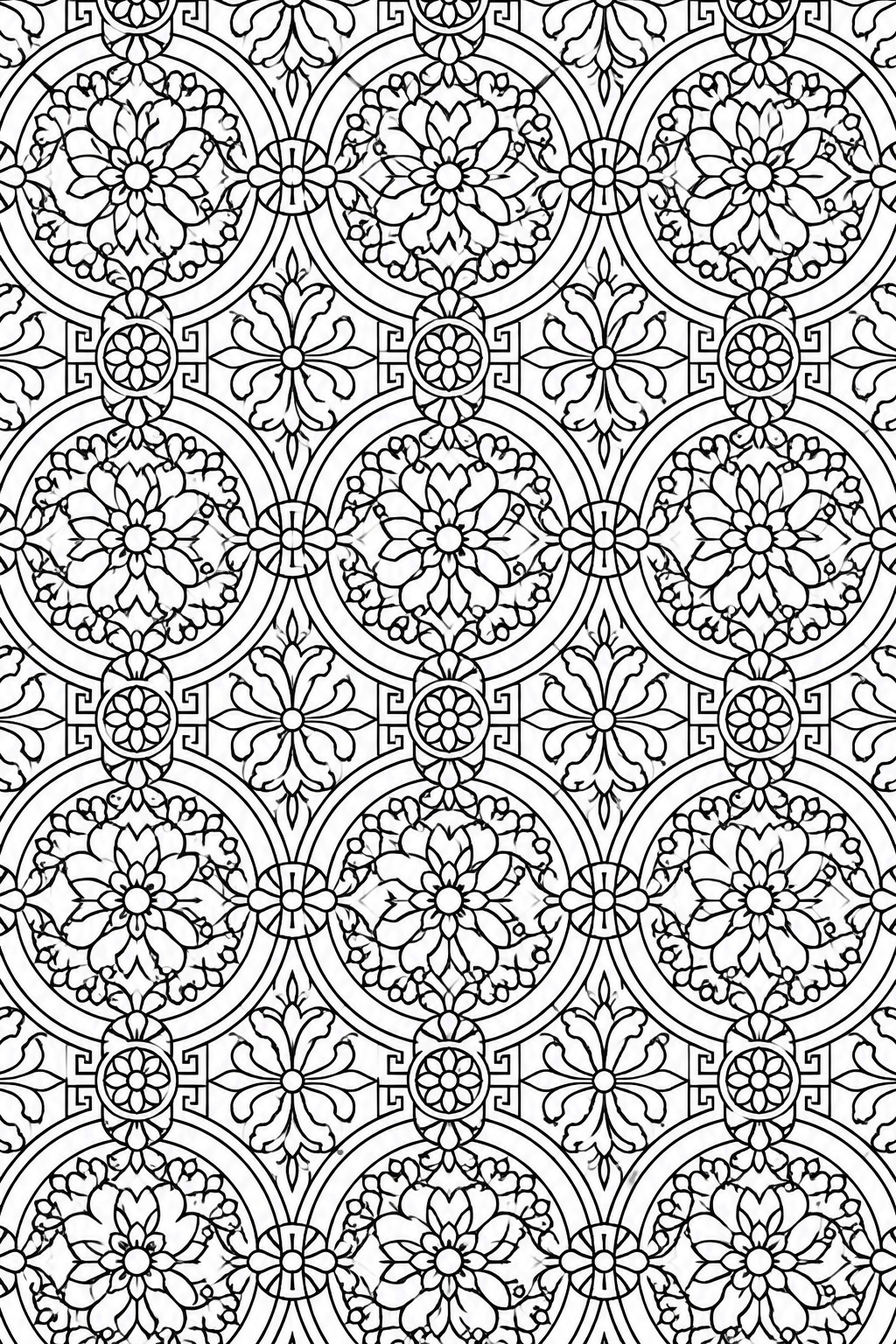
Intricate repeating patterns of circular floral medallions form the main idea behind this coloring page. The design places rows of large flower filled circles connected by smaller repeating motifs and geometric accents to create a seamless grid effect. Colorers can apply the same color schemes across matching elements to build a cohesive finished result.
What makes this page useful is the predictable repetition of shapes that supports steady progress through the design. The detail level makes this a smart pick for adults who enjoy pattern focused coloring because each medallion contains multiple layers to fill. The layout makes this easy to color in one section at a time while maintaining visual balance across the page. A page like this works especially well when the goal is a finished piece with consistent coloring throughout.
Overlapping Circular Mandalas with Floral Rings
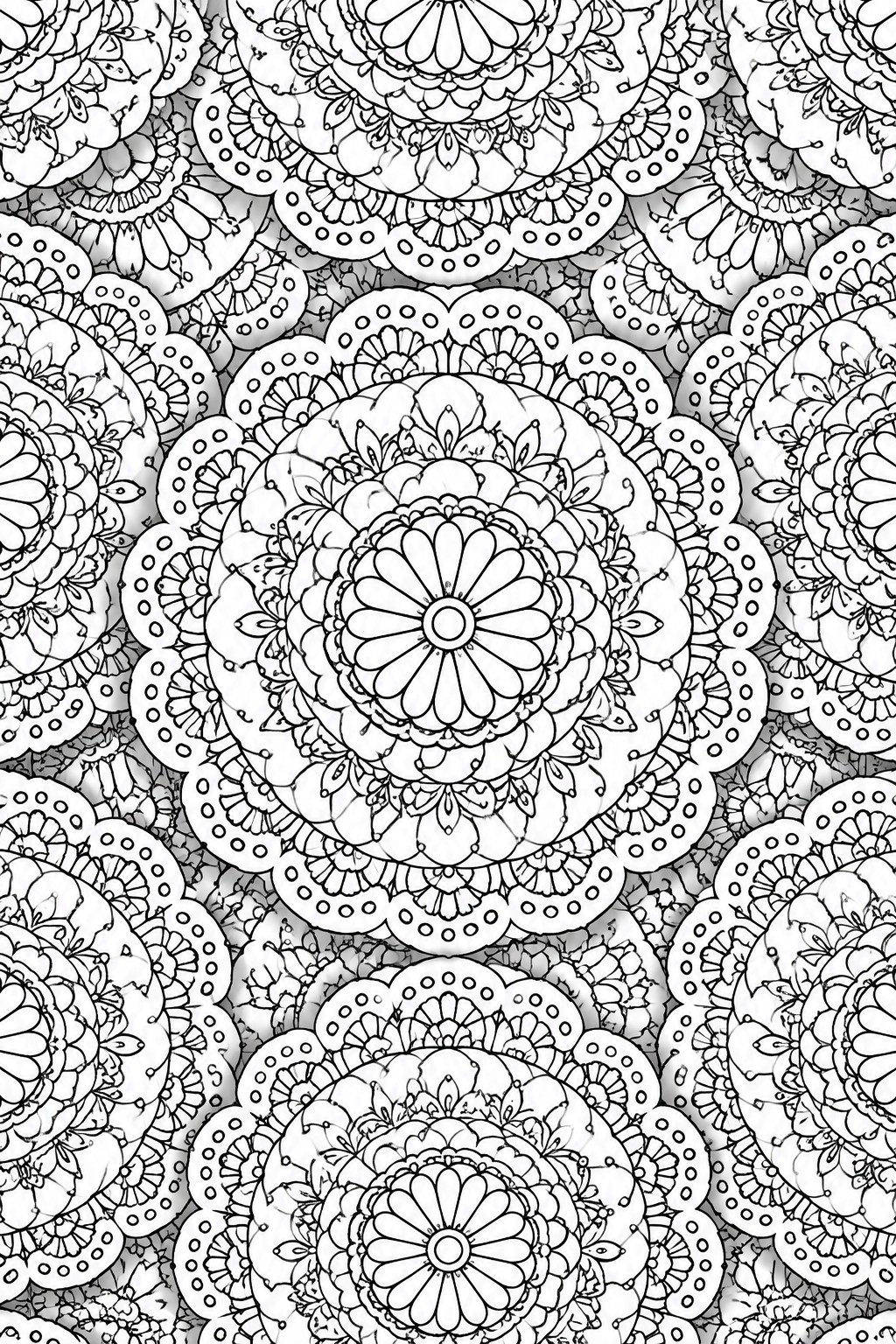
Multiple circular mandalas cover the page through overlapping forms, each built from concentric layers of petals, dots, and leaf shapes. The centers feature simple flower patterns with rounded petals around a small core, while outer rings repeat the same motifs in tighter arrangements. This setup creates a full page of symmetrical sections that repeat without large empty gaps.
The layout makes this easy to color one mandala at a time while still covering the whole sheet. A page like this works especially well for adults who want steady pattern work rather than open scenes or single subjects. The tight spacing and consistent line style let colorers switch between fine details and larger petal areas without losing the overall structure.
Banded Geometric Patterns with Mixed Motifs
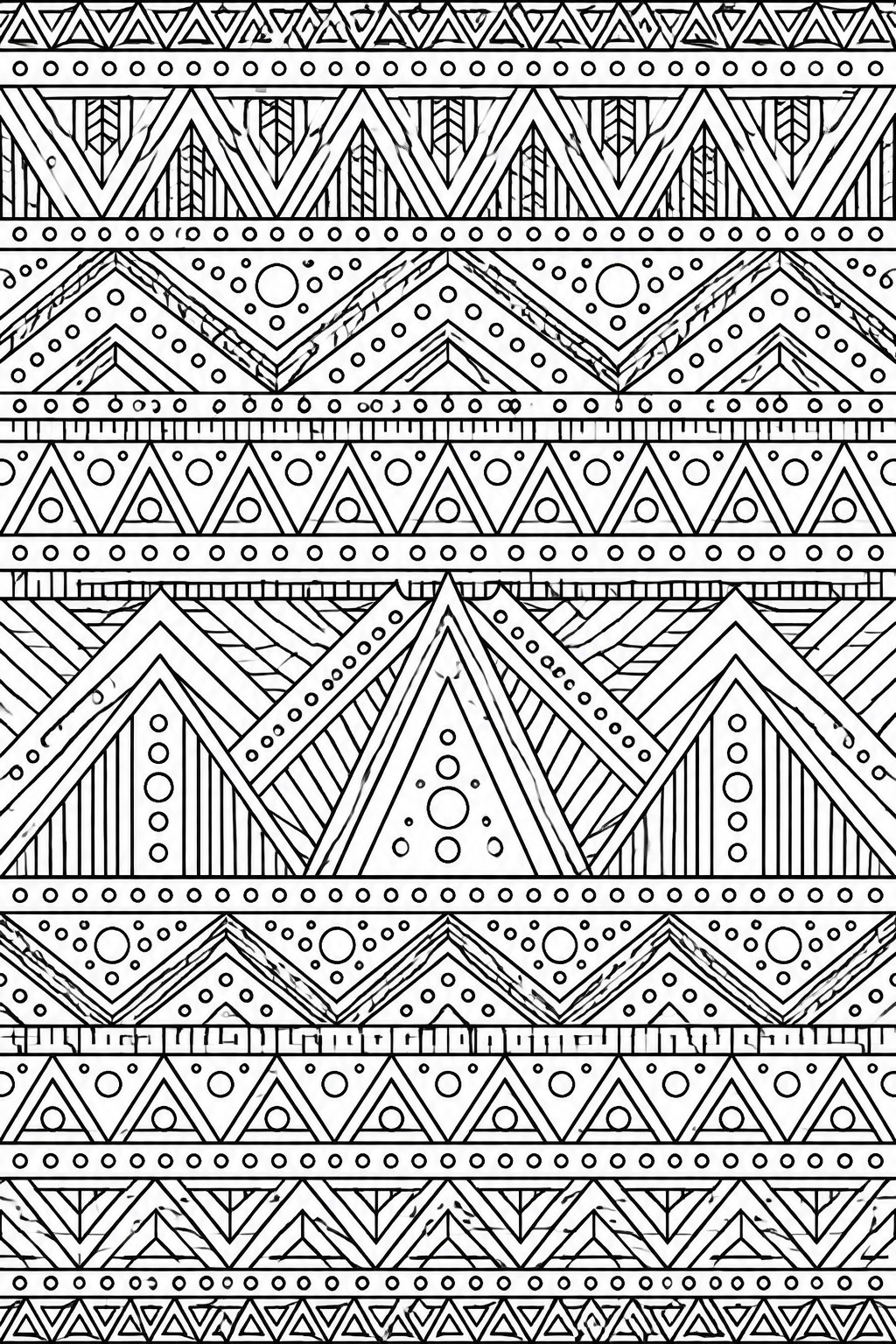
This coloring page centers on horizontal rows of repeating geometric designs that include triangles, zigzags, circles, and dots. The layout stacks different pattern bands one above the other, with some rows using tight clusters of small shapes and others leaving more open space between larger forms. The mix of line weights and motif sizes gives colorers a chance to work across both broad areas and finer details within the same page.
What makes this page useful is the clear division into separate bands that can be tackled one at a time. The combination of simple shapes and smaller dotted elements suits adults who want a pattern-focused session without a single overwhelming focal point. The horizontal structure also makes it easy to print and color in shorter sessions while still offering enough variety to hold interest across multiple sittings.
Lotus Pond Repetitive Pattern Design
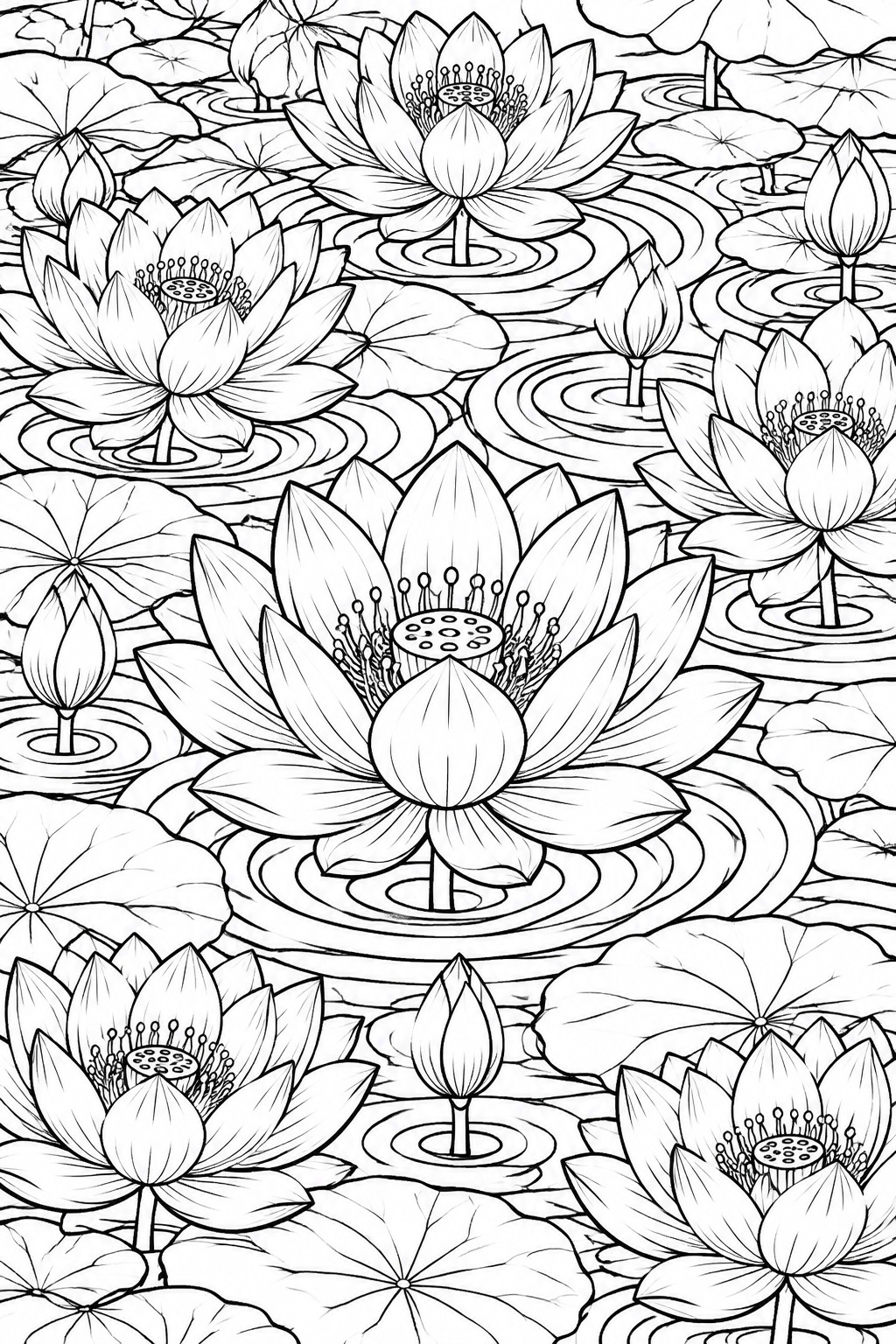
Lotus flowers and lily pads arranged across a pond surface form the core of this coloring page. The design repeats open blossoms, closed buds, and broad leaves connected by water ripples in concentric circles. This creates a layered scene where the eye moves naturally from one flower cluster to the next through consistent line work.
The layout makes this easy to color in sections without feeling overwhelmed by a single large element. A page like this works especially well for adults who enjoy intricate but structured patterns. The mix of large petals and smaller details in the centers gives colorers room to experiment with shading while keeping the overall composition balanced.
Interlocking Hearts with Floral Lattice
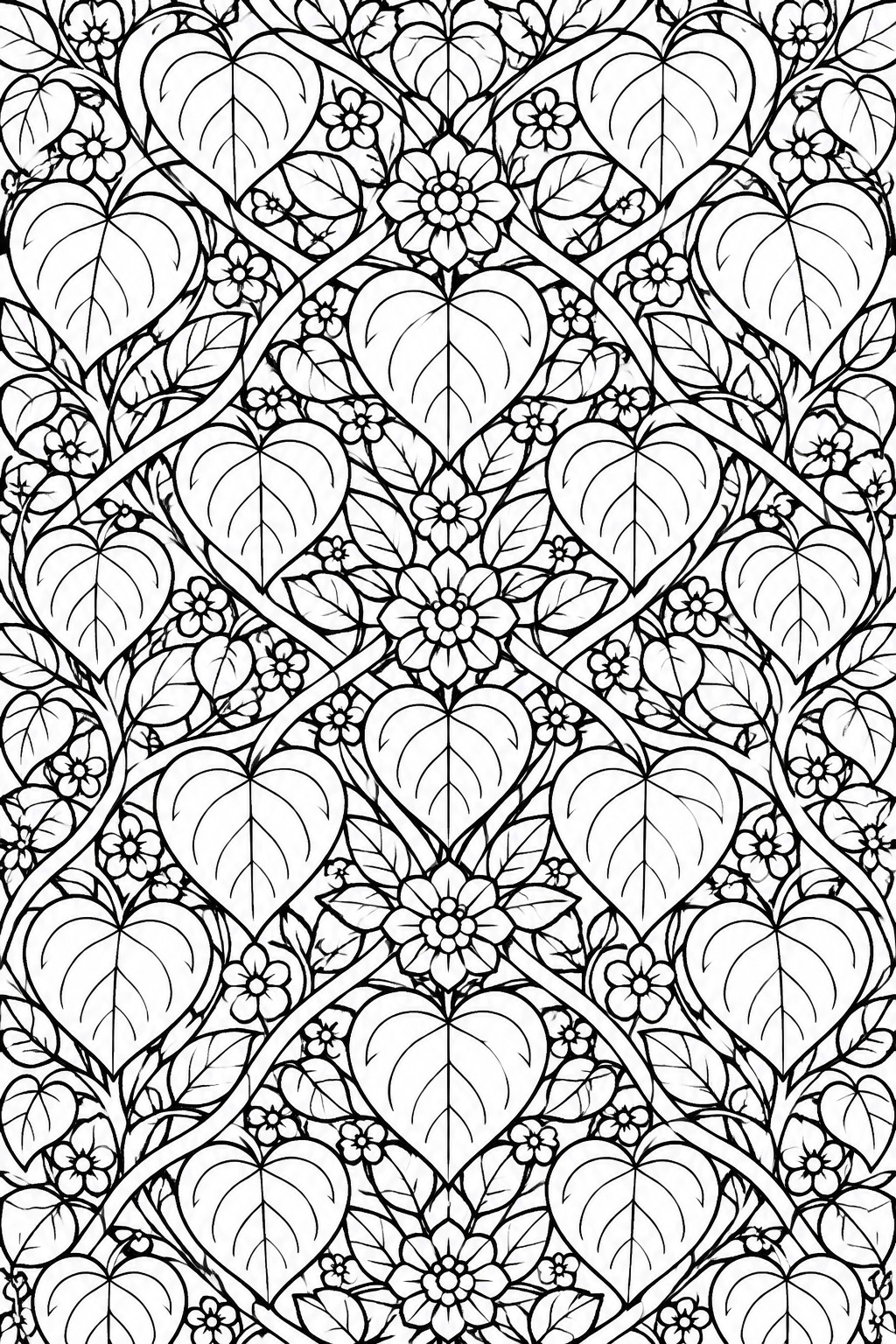
A repeating pattern of heart shapes forms the core of this page, with each heart framed by pointed leaves and connected through curving vines. Small daisy style flowers fill the spaces between the hearts, creating a tight grid that repeats evenly across the full sheet. The result is a balanced design where colorers can work on individual hearts or follow the vine lines to build larger sections.
The layout makes this easy to color in short bursts since the repeating units stay consistent from top to bottom. A page like this works especially well for adults who prefer pattern focused sheets and want to try color repeats or shading variations without planning a full scene. The clear outlines and moderate detail level keep the page from feeling too sparse or overly crowded.
Repeating Mandala Floral Patterns
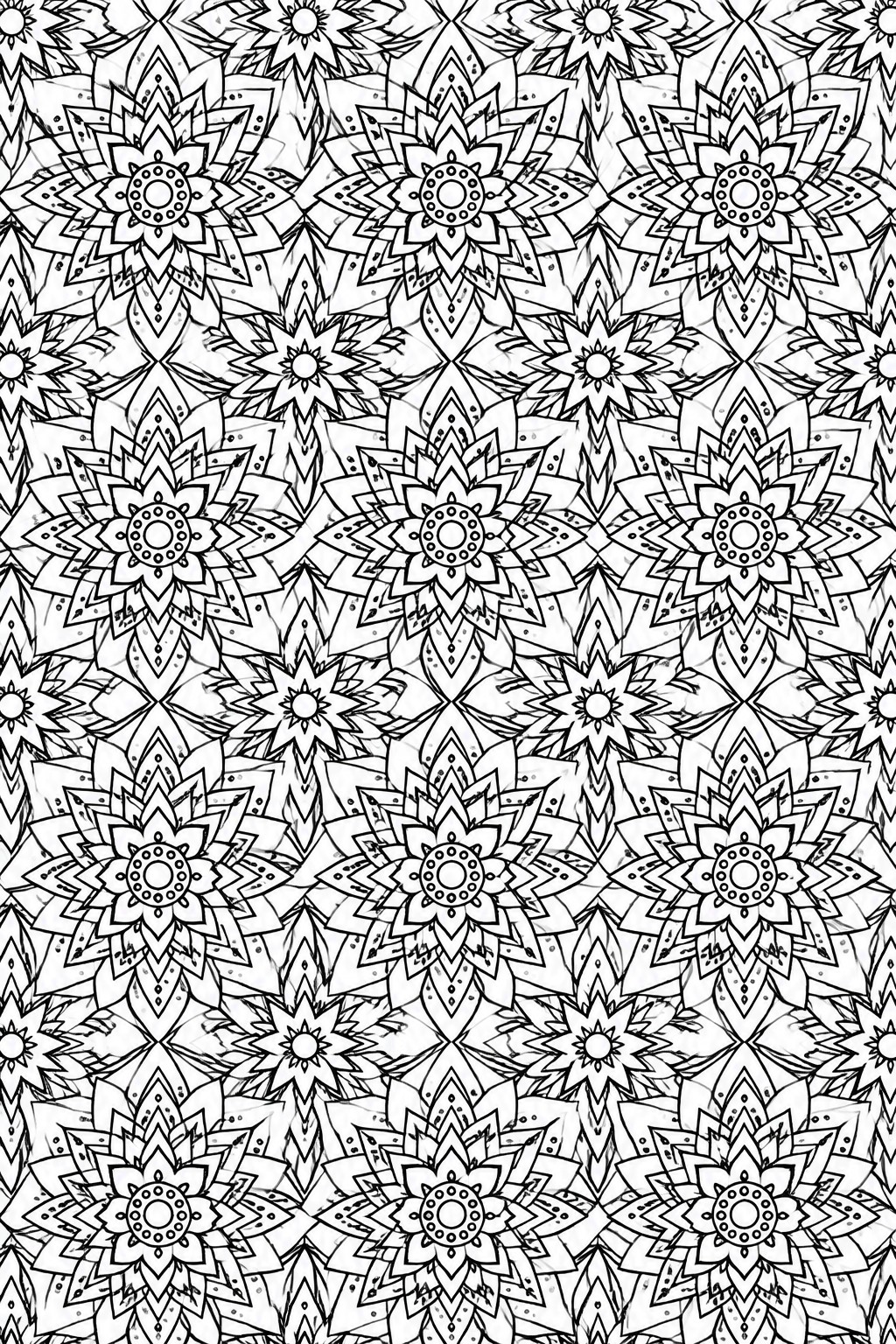
Mandala flower designs repeat across the full page in a tight, symmetrical grid. Each motif uses layered petals, dotted centers, and fine line details that stay consistent from one shape to the next. This creates a pattern focused page where colorers can work on one section at a time while still seeing the overall repeat take shape.
The layout makes this easy to color in short sessions since each mandala sits at a similar size and complexity. A page like this works especially well for adults who prefer pattern based designs over single scene illustrations. The dense repeats also give colorers room to test different color schemes across matching shapes without starting from scratch each time.
Dense Fern Fiddlehead Patterns
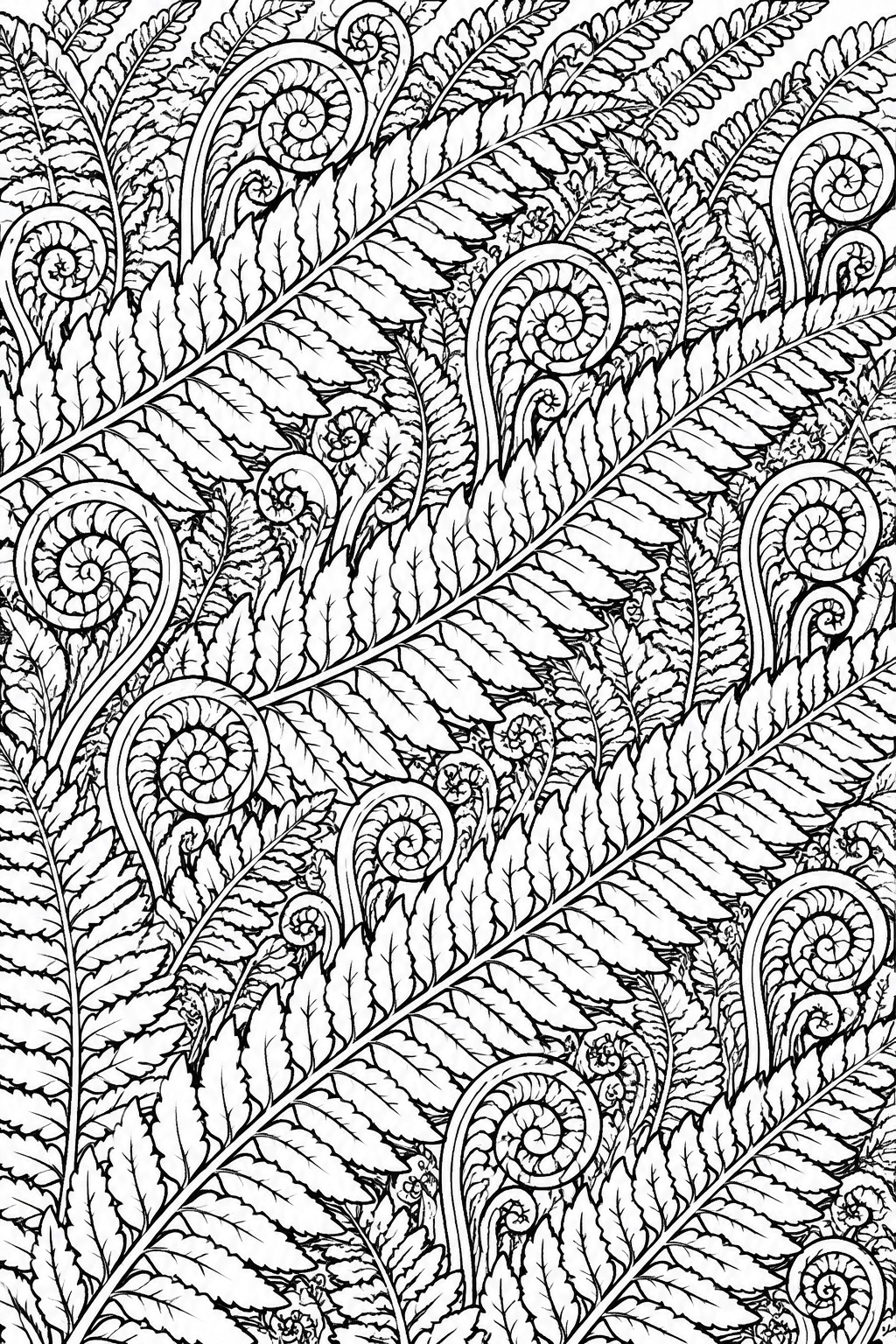
Fern foliage with repeated spiral coils and layered fronds creates the main subject here. The design fills the entire page with overlapping leaves and unfurling stems arranged in a tight, continuous pattern. This approach gives colorers many similar shapes to work with while still varying slightly in size and angle.
What makes this page useful is the consistent level of detail across the whole surface. The layout makes this easy to color section by section without large empty zones to fill. A page like this works especially well for adults who enjoy pattern-based botanical designs and want to practice shading on small repeated elements. The dense arrangement also prints clearly for repeated use.
Interlocking Infinity Knot Patterns
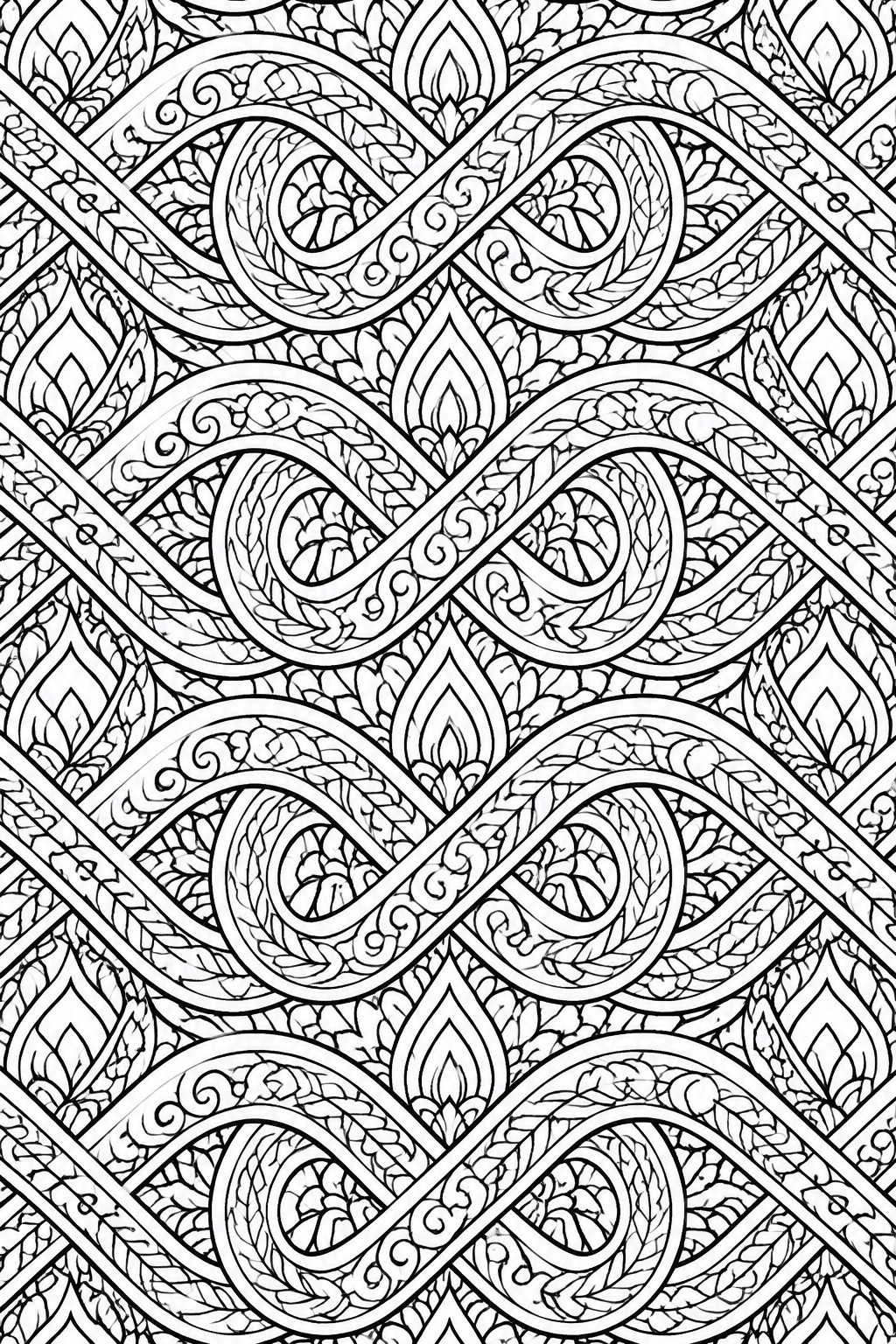
Interwoven loops form a repeating design that runs across the full page. Each main shape holds braided lines and small leaf or flower details inside. Thick outlines separate the knots from the background fills of repeating leaves and swirls.
The layout makes this easy to color one enclosed section at a time. A page like this works especially well for adults who prefer detailed pattern work. The closed loops keep colors contained and reduce the need for careful edge work.
Frequently Asked Questions
What are the main benefits of using repetitive pattern designs for adult coloring?
These designs promote mindfulness by encouraging steady, rhythmic coloring motions that help quiet racing thoughts. The repeating motifs create a sense of order and predictability, which can lower anxiety levels over time. Many users report improved focus and a gentle meditative state after completing even a small section of a page.
How do I choose the right coloring tools for these intricate repetitive patterns?
Start with fine-tip markers or colored pencils that offer precision without bleeding through the paper. Test a few shades on a spare sheet first to see how they layer. Gel pens work well for adding highlights on darker areas, while softer pencils suit those who prefer blending effects across the repeating shapes.
Are these pages suitable for people new to adult coloring?
Yes, the repetitive nature makes them approachable because you can focus on one small motif at a time rather than tackling a complex overall scene. Beginners often find the patterns forgiving, as slight variations in shading still look intentional. Start with simpler pages from the set and build up to denser ones as your confidence grows.
How long should I spend on each page to gain the full therapeutic effect?
There is no fixed time requirement. Many people color for 15 to 30 minutes per session to fit the activity into a daily routine. The key is consistency rather than finishing an entire page in one sitting. Shorter, regular sessions can still deliver relaxation benefits and help form a calming habit.
Where can I print or access high-resolution versions of these 22 pages?
Check the original article source or the creator’s website for downloadable PDFs that maintain crisp lines. If printing at home, select a matte cardstock setting to prevent ink from spreading. Some libraries or community centers also offer free printing services for therapeutic resources like these.
