

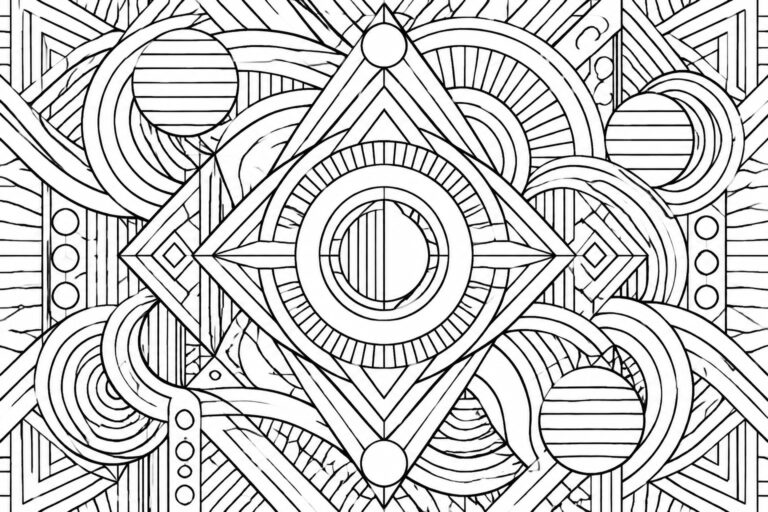
I have always liked coloring pages that use unusual shapes instead of the usual patterns.
These abstract ones stood out to me because the lines feel more open and less fixed in place.
I tried coloring a couple myself and found that the bold designs gave me room to experiment without feeling too rigid.
They make a nice change from the more detailed pages I often reach for.
I gathered 19 examples that show this style well.
Interwoven Triangles and Concentric Rings
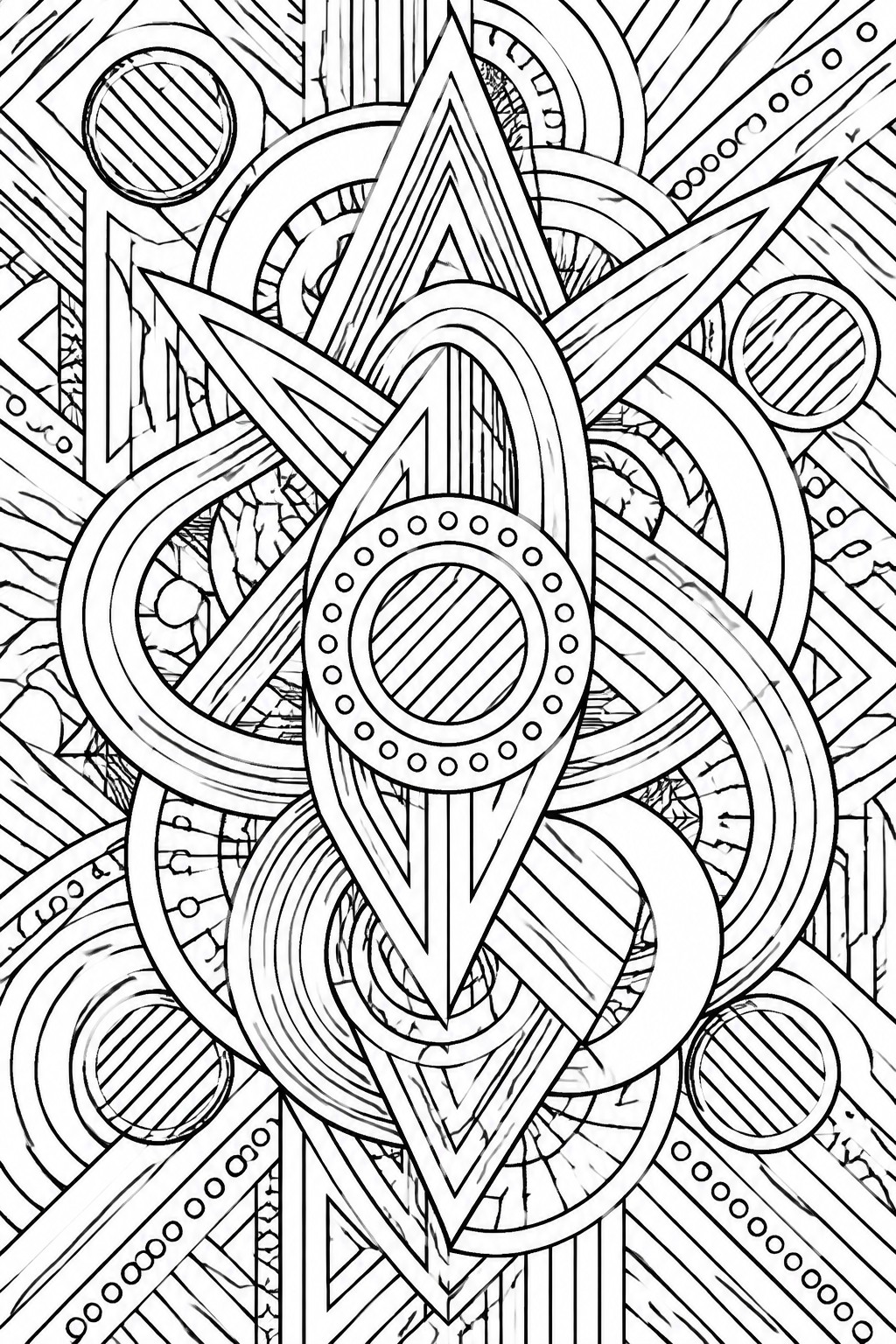
This coloring page idea uses a central pointed form surrounded by overlapping circles and sharp star shapes that radiate outward. The design relies on bold outlines combined with repeating elements like striped circles, dotted borders, and layered curves to divide the page into distinct areas. The overall layout creates a balanced geometric pattern that encourages colorers to work from the middle out or tackle individual sections one at a time.
The detail level makes this a smart pick for adults who like structured abstract designs without loose filler space. What makes this page useful is the clear separation between thick shapes and finer line patterns, which lets you alternate between quick fills and more precise coloring. A page like this works especially well for longer sessions where you want variety in the same design.
Dense Swirls of Abstract Organic Shapes and Circular Motifs
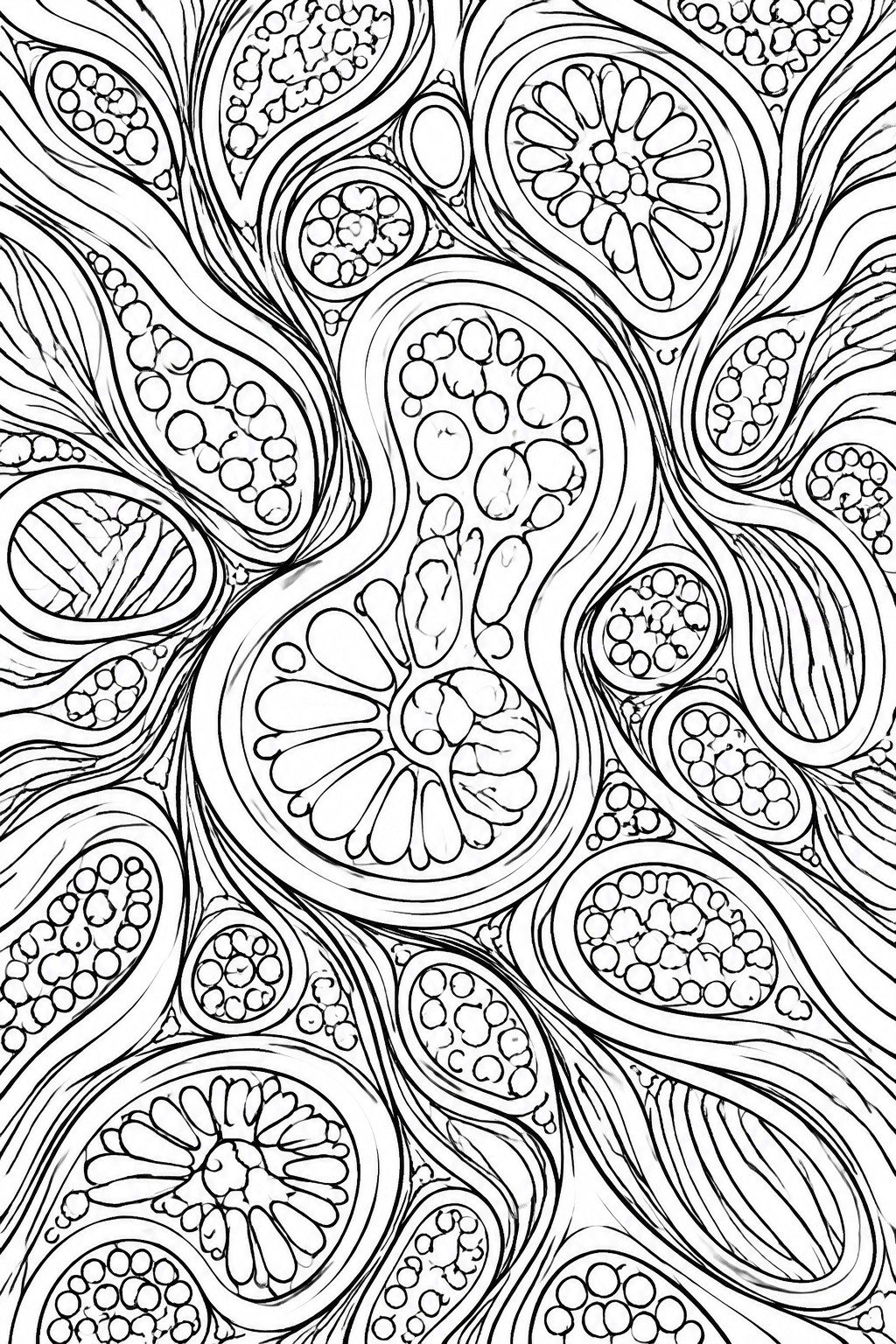
Bold abstract designs like this combine flowing curved lines with repeated circular and floral elements to form a layered pattern. The composition uses a central focus that radiates outward through connecting swirls and varied bubble groupings. Colorers get a mix of detailed small shapes and broader line areas that hold interest across the whole page.
What makes this page useful is the balanced density of patterns that suit longer coloring sessions. The detail level makes this a smart pick for adults who prefer intricate work over simple outlines. Open spaces between the clusters allow color to stand out without crowding every inch.
Spiral Mandala with Layered Concentric Forms and Textured Bands
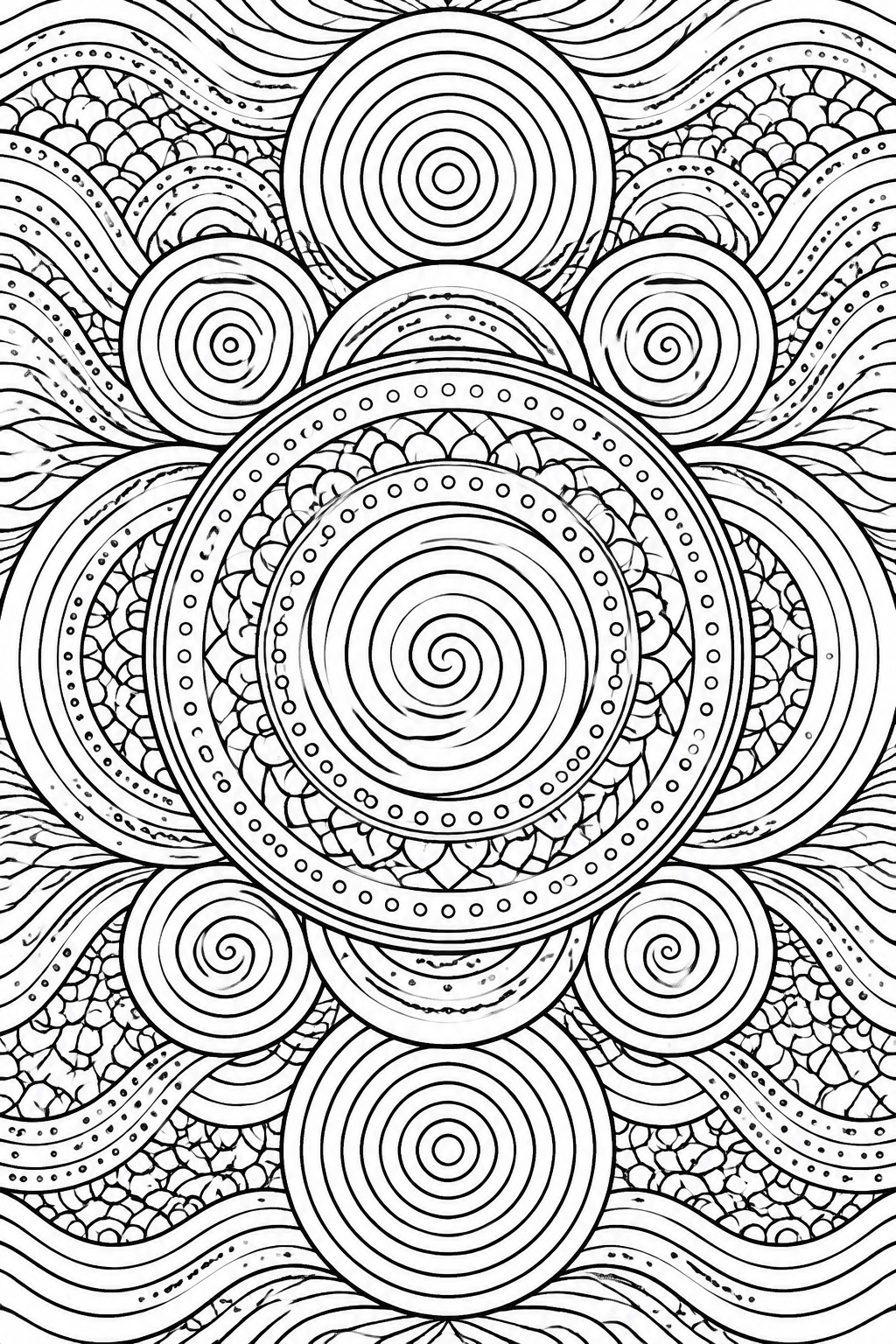
An abstract mandala built around a large central spiral uses multiple concentric circles and smaller spirals to create a strong radial structure. Wavy bands filled with pebble patterns and dotted lines add texture and separate the circular elements into distinct zones. The combination of tight spirals and broader open rings gives colorers clear areas for both detailed work and larger color blocks.
The layered arrangement of spirals gives this page a strong focal point that guides coloring naturally. The repeating motifs and varied pattern density make it easy to color in stages without needing to plan ahead. A page like this works especially well for adults who want a pattern-focused session that still leaves room for creative color choices. The bold linework holds up well even with heavier markers or multiple layers of color.
Radial Abstract Star with Segmented Patterns
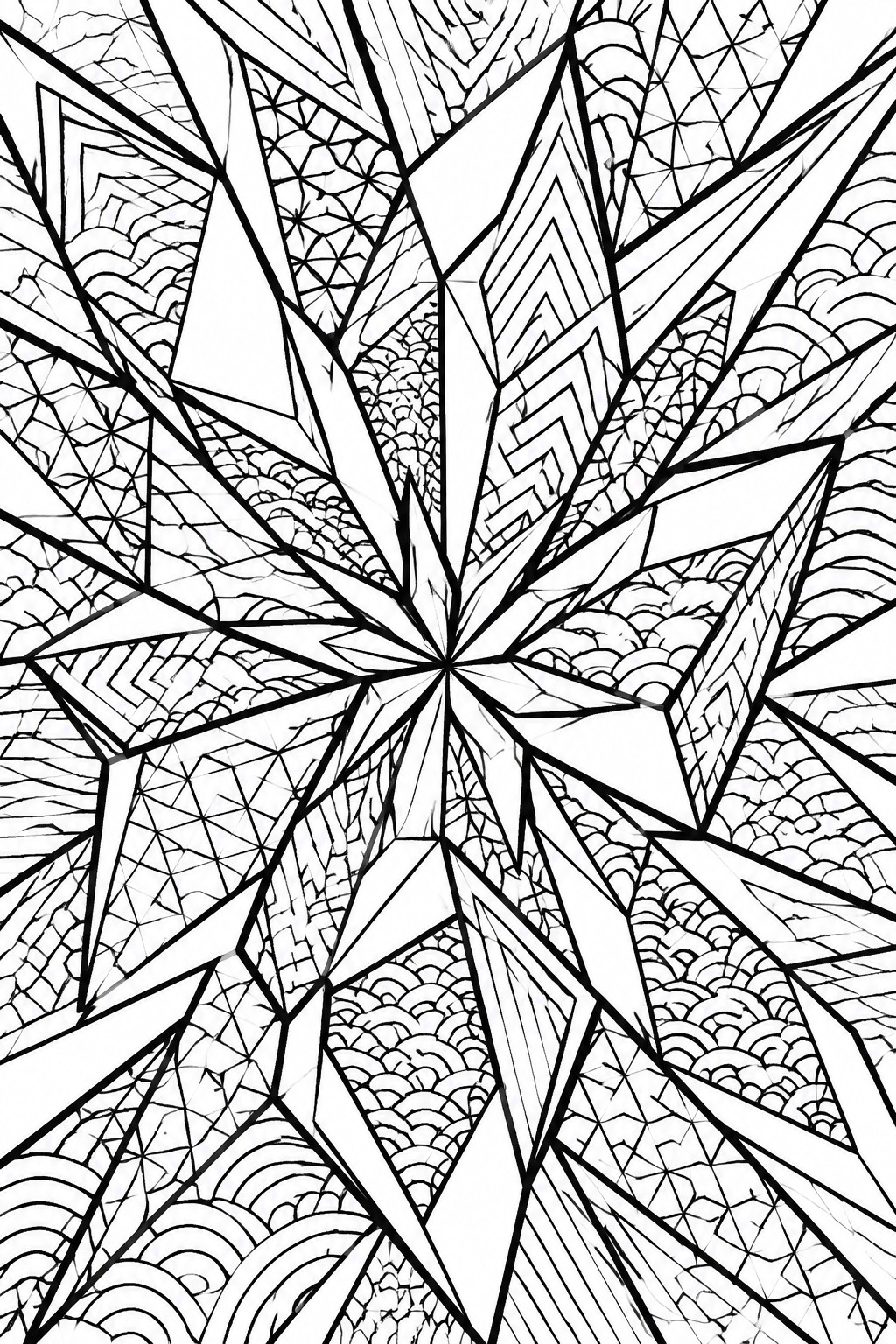
A radial star design sits at the center of this page, with long pointed arms stretching outward in all directions. Each arm and the spaces between them hold separate pattern blocks filled with waves, triangles, zigzags, and cracked textures that repeat in distinct sections. The strong symmetry combined with the variety of line styles gives colorers clear zones to work within while still offering room for creative choices in shading and color placement.
What makes this page useful is the way the segments radiate from the middle, which keeps the design organized even when many patterns are present. Colorers can finish one area at a time without losing their place. The detail level makes this a smart pick for adults who want an intricate abstract page that still feels guided rather than scattered.
Contour Line Mountain Peaks
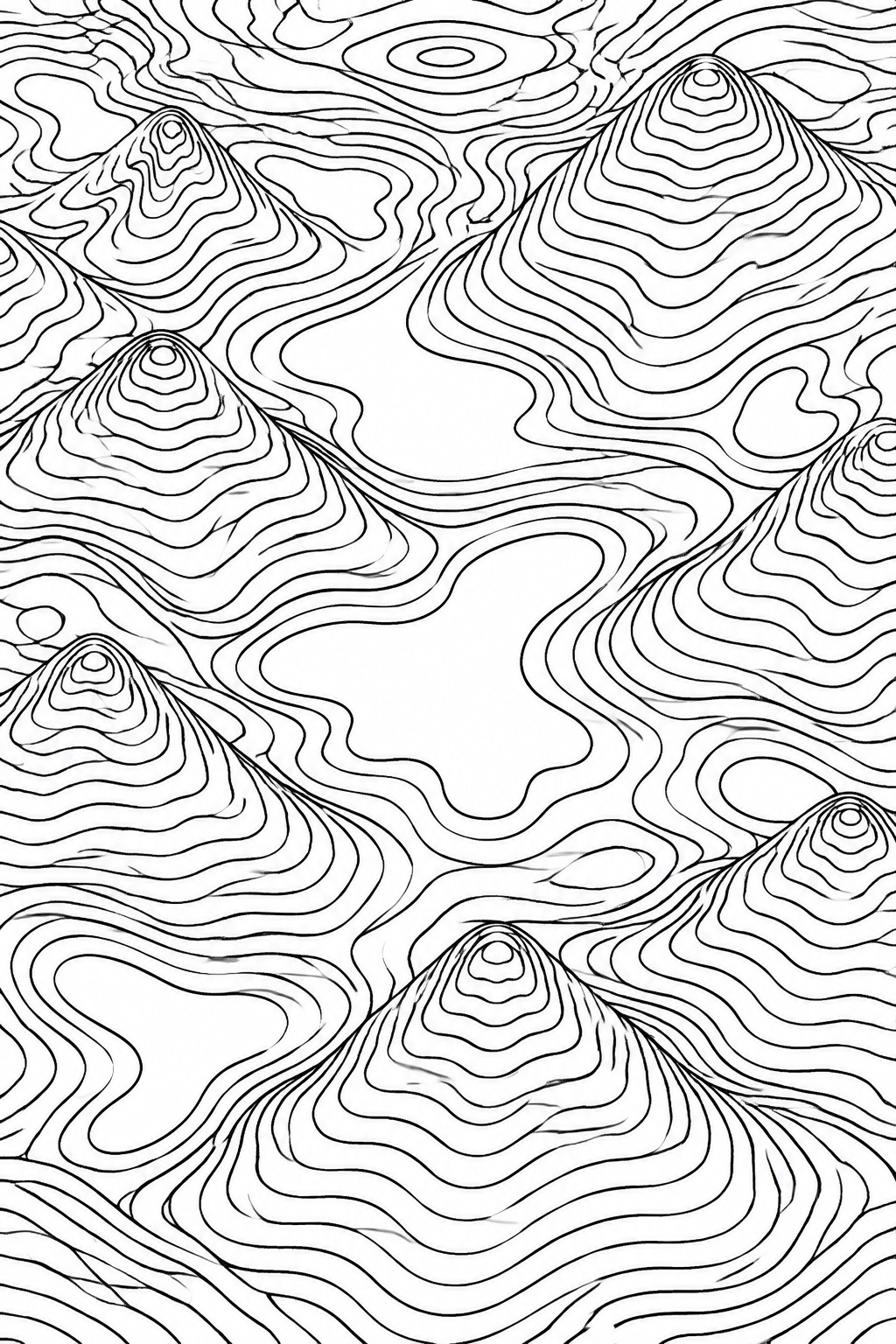
Abstract contour mountain pages build a scene from stacked lines that rise into peaks and roll between them like topographic maps. The layout scatters several layered peaks across the page with open areas in between so the design stays balanced rather than crowded. This approach turns a simple landscape idea into a pattern that invites color to follow the ridges or fill the spaces between them.
The layout makes this easy to color in sections without feeling overwhelming. What makes this page useful is the way the lines naturally create shading zones along each peak. For adults who like pattern work, the repeating contours give enough detail to stay engaged while still leaving room to breathe. A page like this stands out on Pinterest because the clean linework translates well into both bold color choices and subtle gradients.
Twisting Ribbon Bands with Mixed Fill Patterns
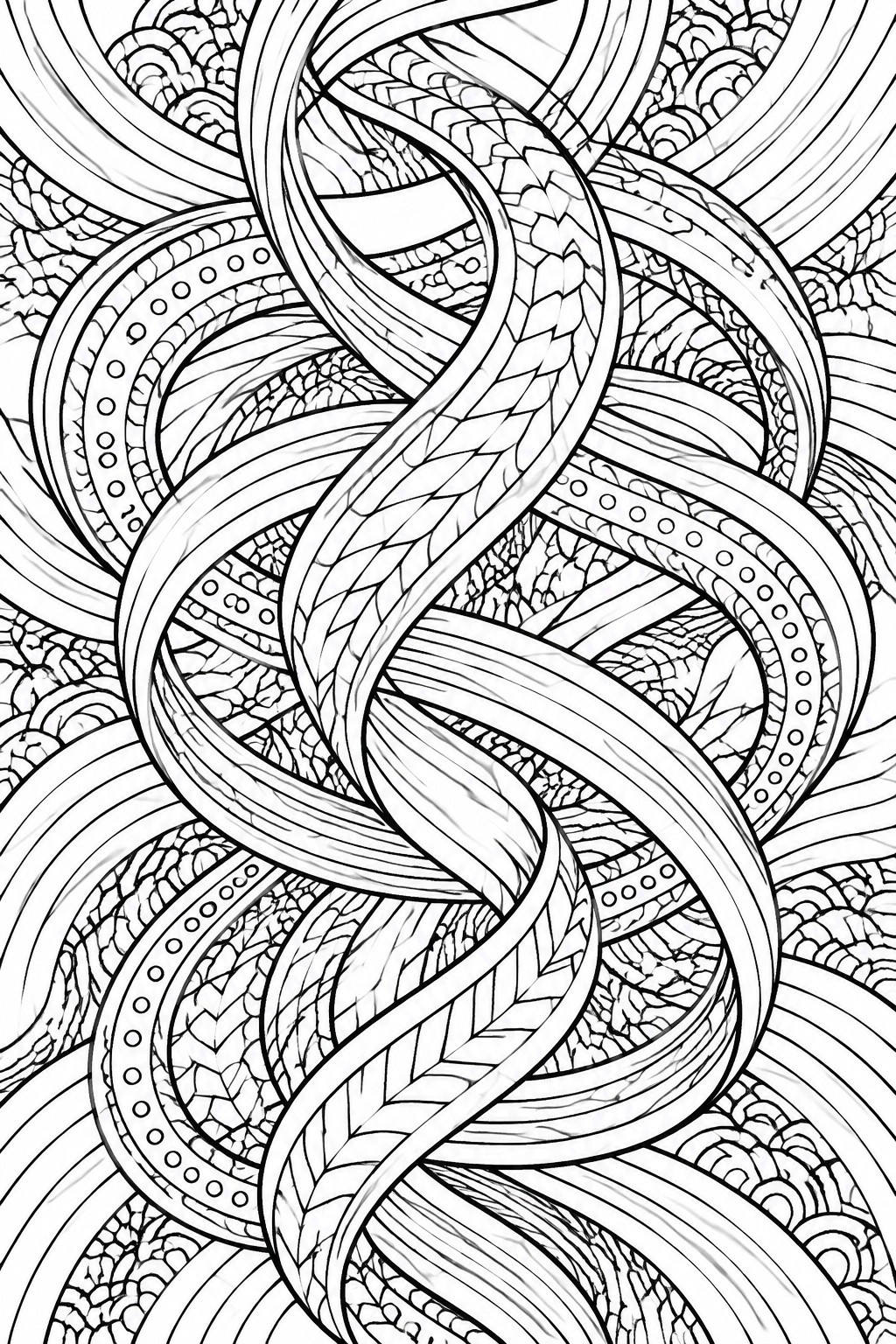
Abstract pages built around thick curving bands let colorers play with overlapping layers that twist and cross without a clear center. Each band holds its own repeating texture such as scales, braids, dots, or cracked lines, so the eye moves along the curves from one pattern to the next. The style stays strictly linear and experimental, using only the bands and their internal details to fill the space.
What makes this page useful is the built-in variety of section sizes inside a single design. A page like this works especially well for adults who like medium to high detail without switching between multiple images. The changing patterns along each ribbon give clear places to shift color or value, which helps the finished page show contrast quickly.
Layered Geometric Mandala Built from Interlocking Stars and Polygons
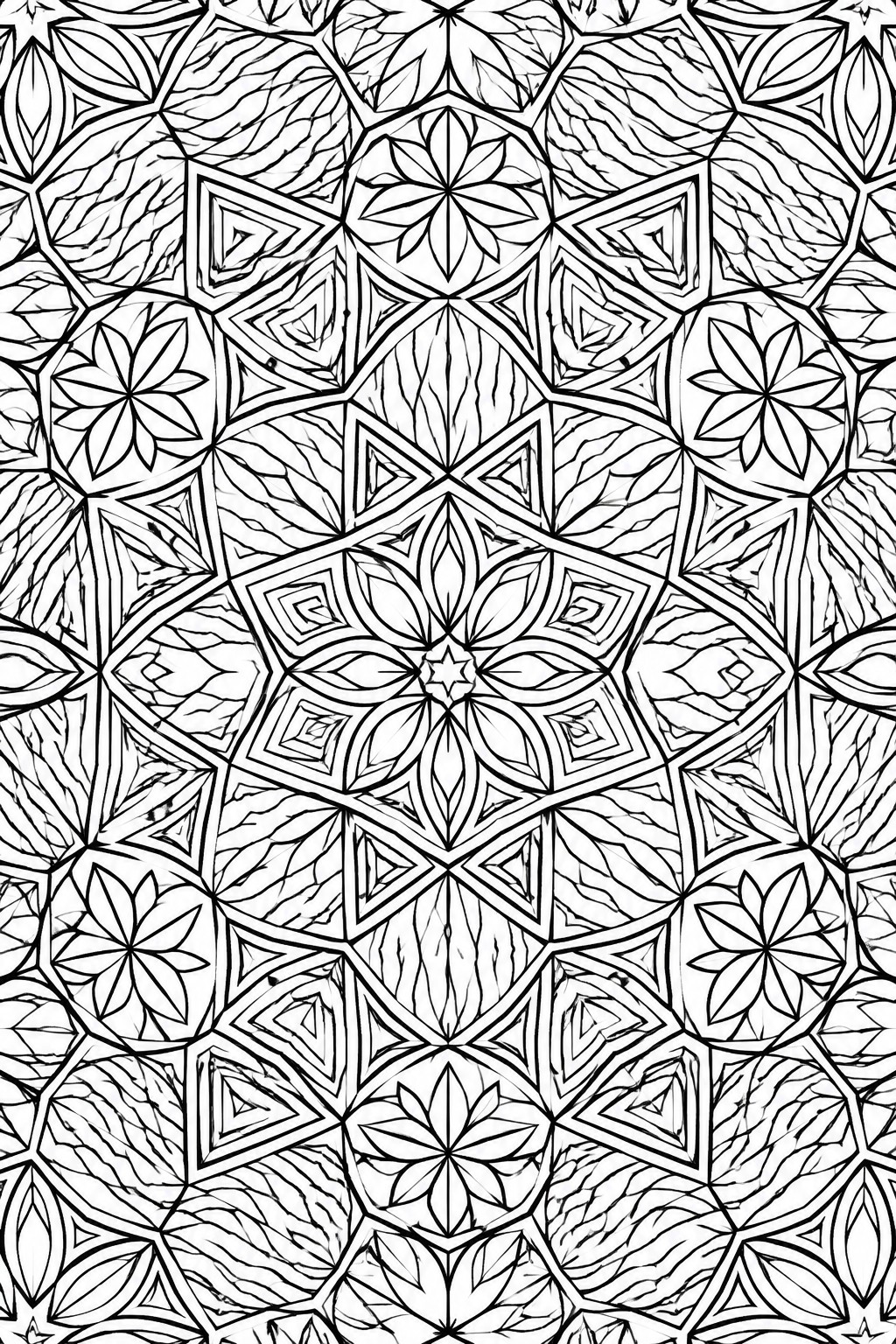
This coloring page centers on a radial abstract design that repeats star forms, triangles, and diamond shapes in a tight symmetrical grid. The style mixes bold outlines with finer internal linework that creates textured sections across each segment. The composition fills the page with connected shapes that leave almost no empty space, giving colorers many small areas to work within a single overall pattern.
What makes this page useful is the way the repeating sections let you test different color combinations without starting from scratch each time. The detail level suits adults who want a focused session that still feels structured rather than random. The strong geometric framework keeps the design clear even when using multiple colors side by side, which helps the finished page read as one cohesive piece. A page like this works well when you want something bold enough to stand out in a feed of printable options.
Layered Architectural Forms Filled with Geometric Patterns
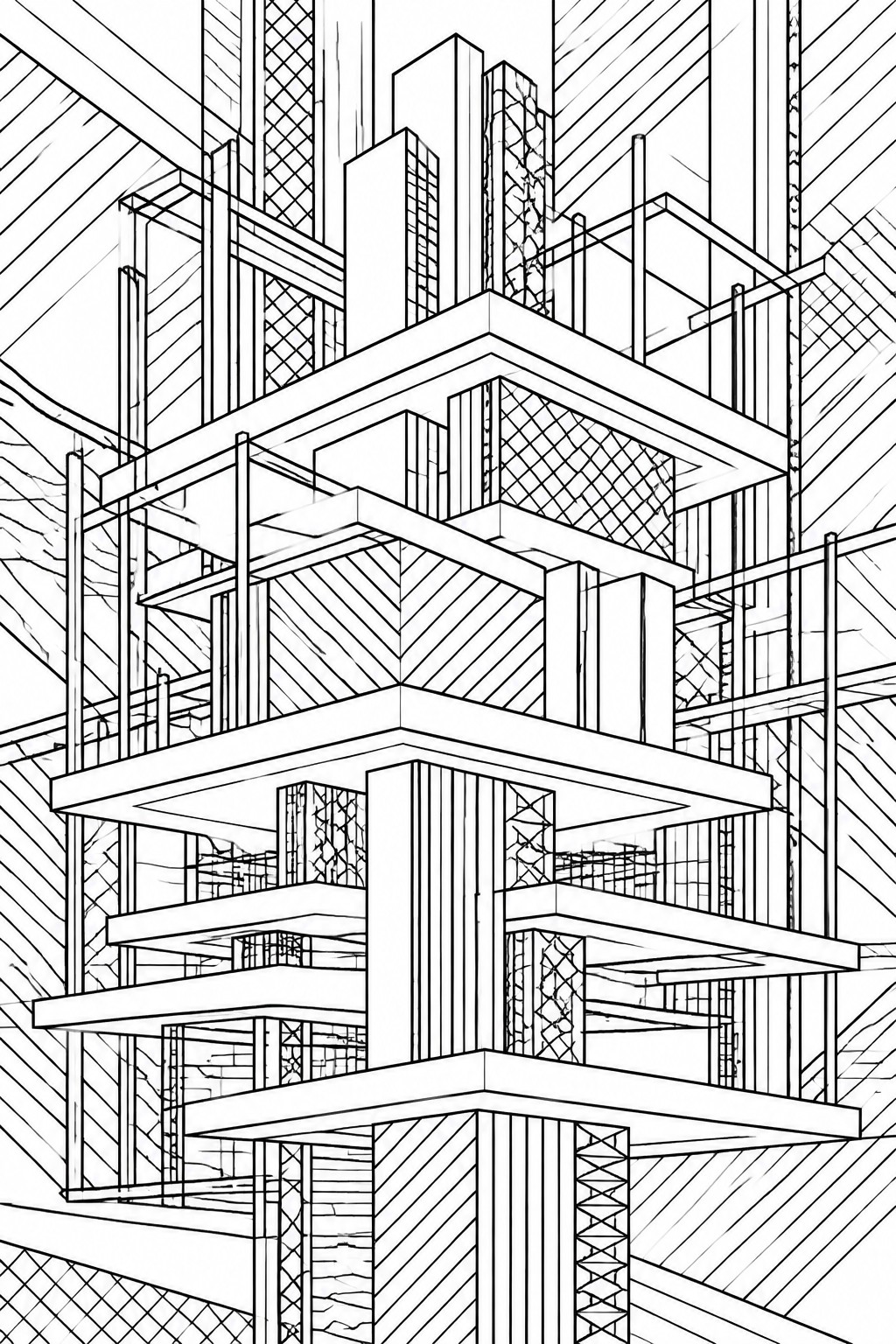
This coloring page idea centers on an abstract multi level building made from stacked platforms, vertical columns, and connecting beams. The design uses a range of line patterns including grids, diagonal hatching, and cross hatching to add texture across surfaces. The perspective composition stacks these elements to create depth and repeated structural shapes that organize the page into distinct coloring zones.
The detail level makes this a smart pick for adults who prefer intricate work. Different pattern areas let colorers switch techniques without filling large empty spaces. The layout makes this easy to color because the lines create natural sections that guide choices and keep progress visible. A page like this works especially well for longer sessions where the focus stays on building up contrast across the structure.
Layered Mandala with Radiating Petals and Geometric Accents
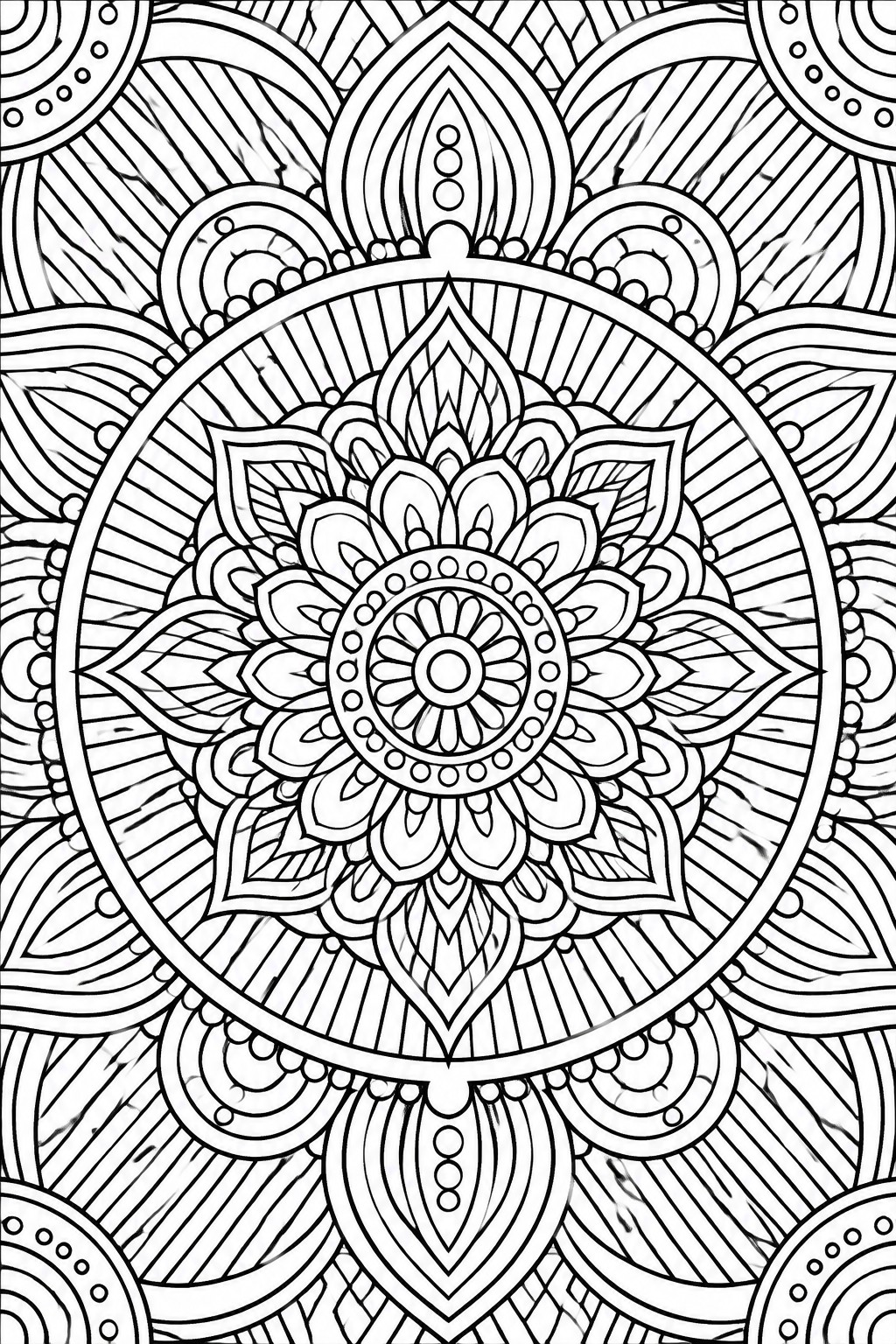
This coloring page centers on a mandala built from overlapping floral layers and circular frames. The design uses repeating petal shapes, dotted rings, and striped sections that expand from a small center flower outward. Experimental linework mixes curved leaves with straight radiating lines to create clear zones for coloring.
The layout makes this easy to color because the symmetry lets you repeat color choices across sections without constant decisions. A page like this works especially well for adults who want a detailed but contained project that can be finished in stages. The contrast between open petal areas and denser line patterns gives enough variety to keep the session interesting without feeling scattered.
Interlocking Circles and Diamonds in Bold Abstract Linework
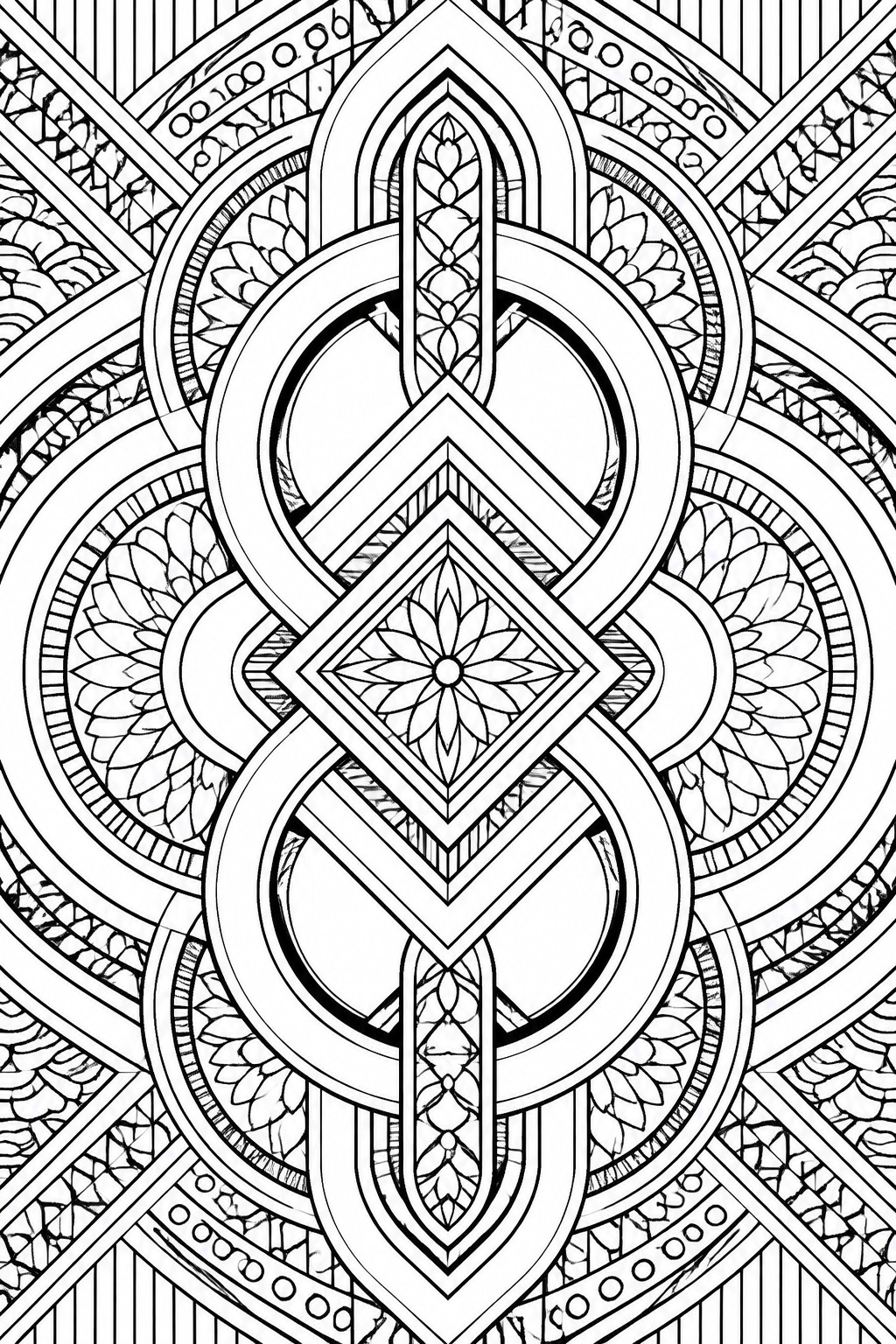
Abstract geometric designs like this one center on overlapping rings, pointed arches, and a central diamond motif filled with layered petals. The experimental linework creates repeated shapes that radiate outward while maintaining clear boundaries between sections. Colorers get a mix of large open rings and smaller detailed areas that support both broad strokes and finer shading work.
The layout makes this easy to color without constant zooming in on tiny spots. A page like this works especially well for adults who prefer pattern-focused designs over simple scenes. The dense linework stands out on Pinterest because the symmetry and variety give finished pages strong visual impact even with basic color choices.
Circuit Board Abstract Linework
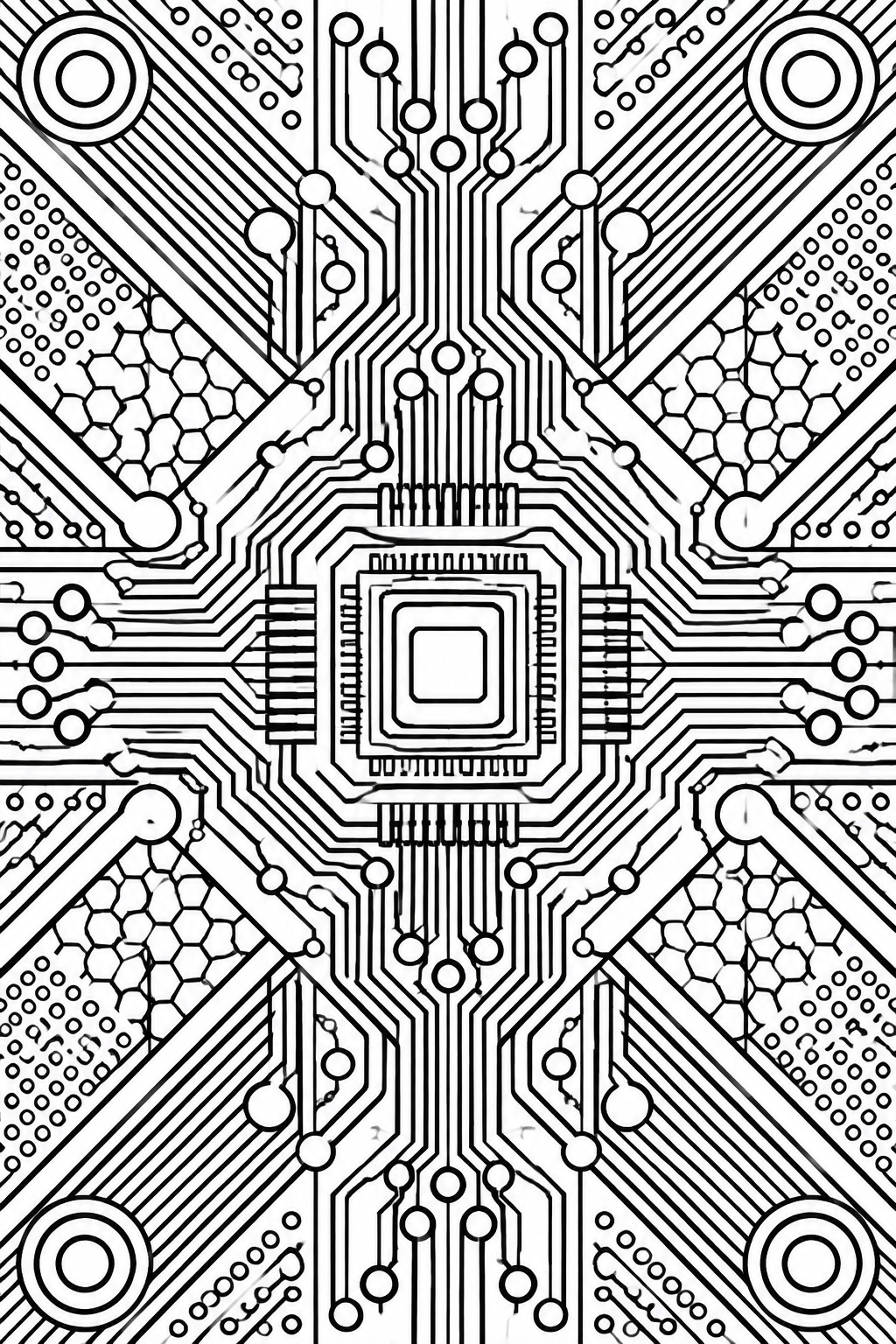
An abstract circuit board design forms the core idea here, built around a central processor chip with traces that radiate outward in precise geometric patterns. The page mixes straight technical lines with honeycomb fills and circular nodes, creating an experimental layout that feels both structured and freeform. This combination gives colorers clear paths to follow while leaving room for creative color choices in the repeating shapes.
The layout makes this easy to color in focused sections without feeling overwhelming. A page like this works especially well for adults who enjoy technical or pattern-based designs. The varied line weights and fill areas let colorers decide how much detail to add in each part. This kind of structured abstract page tends to stand out on Pinterest because it reads as modern and graphic even before color is added.
Interlocking Organic Shapes with Radial Centers
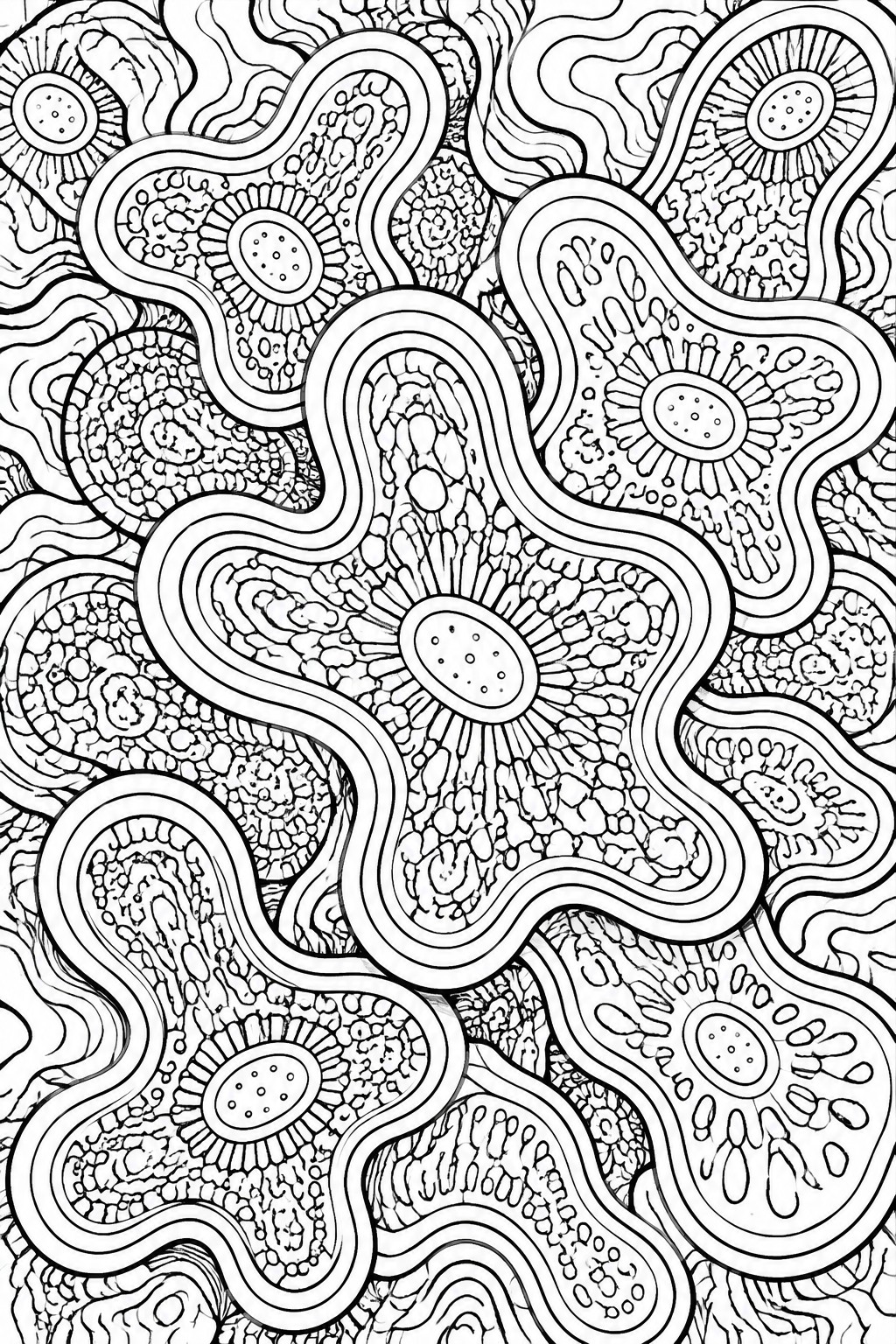
Abstract organic forms create the core idea here through bold curving outlines that link together in a repeating all-over pattern. Central ovals with dotted details sit inside each shape while short radiating lines and varied textures fill the surrounding areas. The dense layout gives colorers plenty of small sections to work with alongside larger open shapes.
The detail level makes this a smart pick for adults who enjoy intricate abstract designs. Mixed line weights and pattern densities let colorers switch between quick fills and finer work without feeling overwhelmed. A page like this stands out on Pinterest because the experimental shapes invite creative color experiments rather than realistic approaches.
Mandala Built from Layered Petal Shapes and Rings
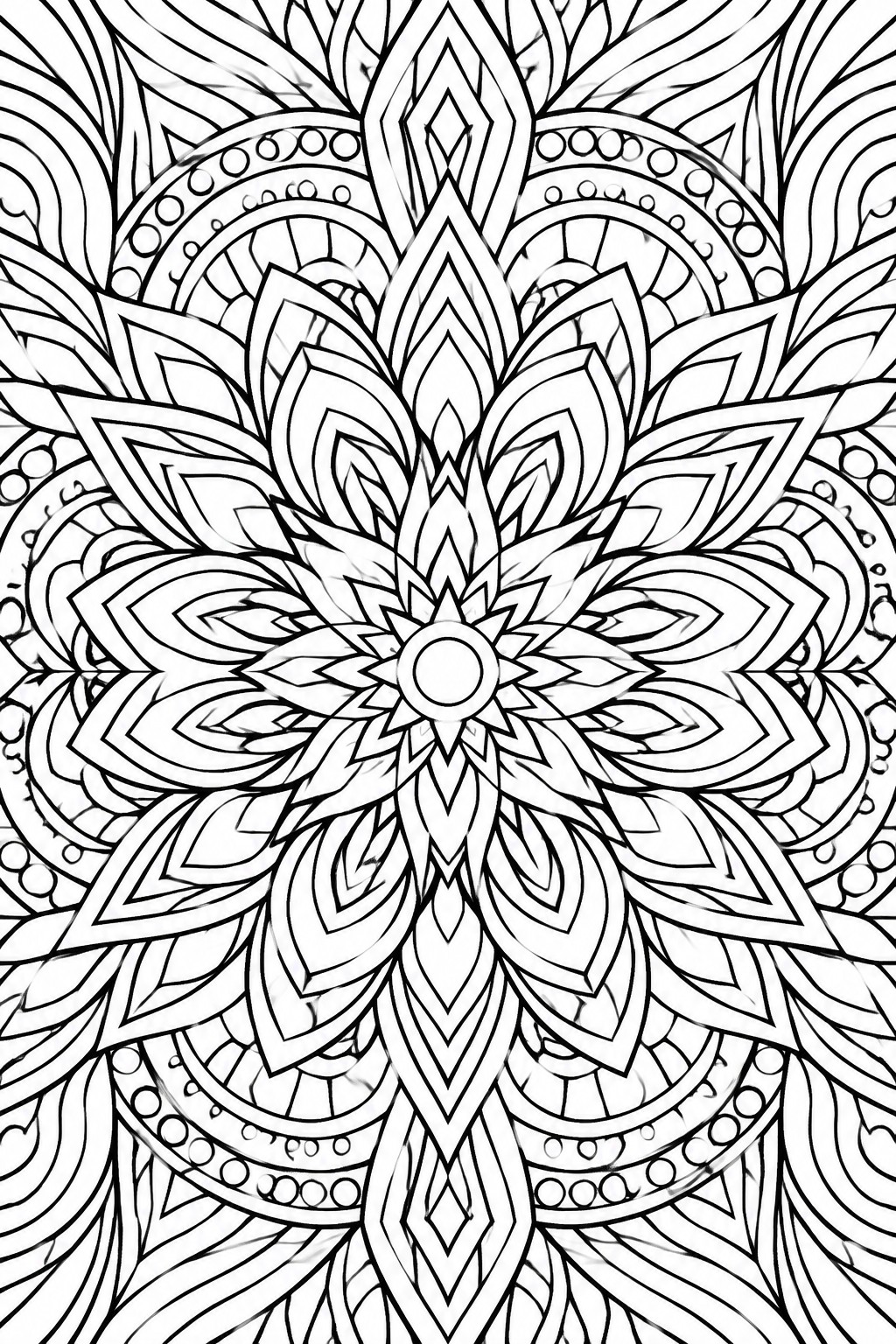
This coloring page uses a central mandala made of pointed petal forms that overlap in repeating layers around a small core circle. Bold lines separate each petal while rings of dots and curved segments fill the outer sections. The even spacing between shapes gives colorers clear areas to fill with single colors or gradual shading.
What makes this page useful is the balance of large petal sections and tighter ring details that support both quick coloring and finer work. The layout makes this easy to color because the repeating structure helps track color placement without constant reference to a plan. For adults who like pattern pages, the design offers enough complexity to stay engaged across multiple sessions. The bold outlines also help the finished piece stand out when shared online.
Interconnected Organic Shapes Filled with Contrasting Patterns
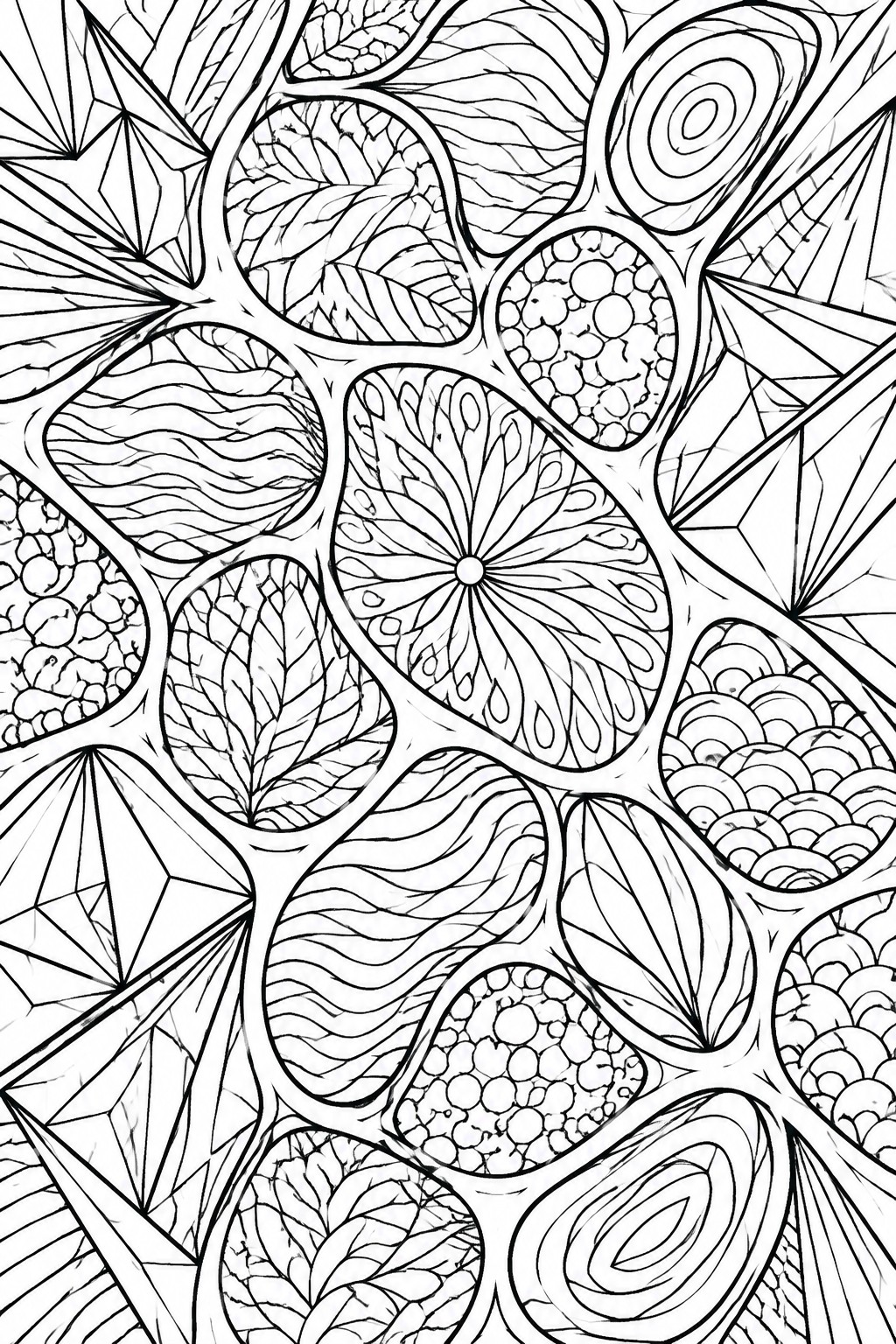
This coloring page idea centers on a network of irregular rounded forms that overlap and connect across the page. Each section holds its own distinct pattern such as waves, leaf veins, stacked circles, or faceted lines. The variety in texture and the clear separation between areas create an abstract design that rewards switching between different coloring approaches.
What makes this page useful is the range of pattern complexity that lets colorers alternate between quick fills and slower detailed work. The open layout with defined boundaries keeps the design manageable even though it contains many elements. A page like this works especially well for adults who prefer pattern-based abstracts but want built-in variety instead of one repeated motif. The mix of open and dense areas also makes it easy to test different color combinations without committing to the entire page at once.
Wavy Abstract Designs with Circular and Mesh Patterns
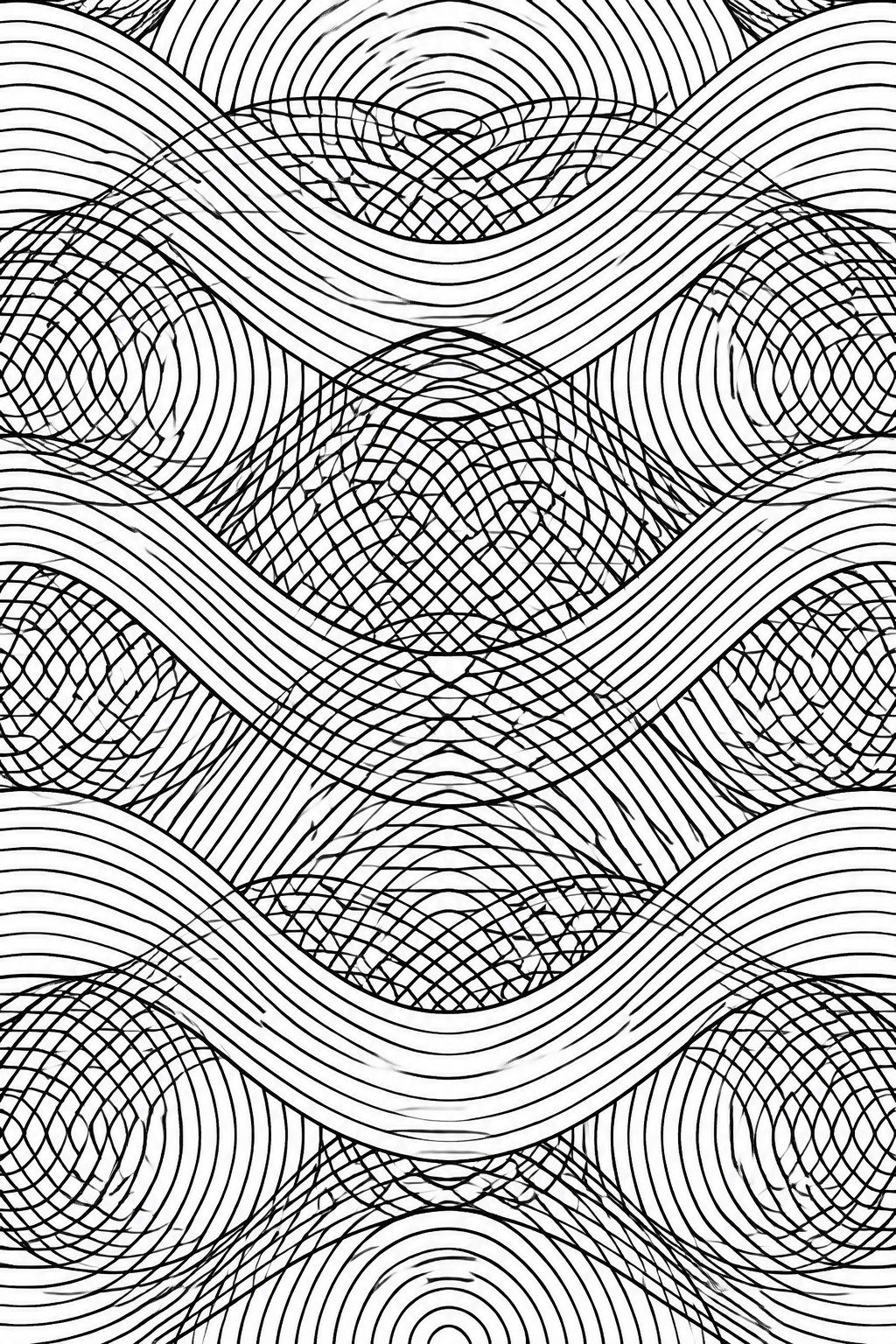
Abstract wave forms sweep across the page in thick curving bands that rise and fall in repeating layers. These bands are interrupted by clusters of concentric circles and sections filled with tight diamond grid patterns. The combination creates clear zones where colorers can shift between broad strokes on the curves and finer work inside the mesh areas.
The layout makes this easy to color in stages without losing track of the overall flow. A page like this works especially well for adults who prefer pattern based designs over scenes or objects. The mix of open curves and detailed fills gives options for both quick coverage and slower textured work.
Stained Glass Bird with Mountain Backdrop
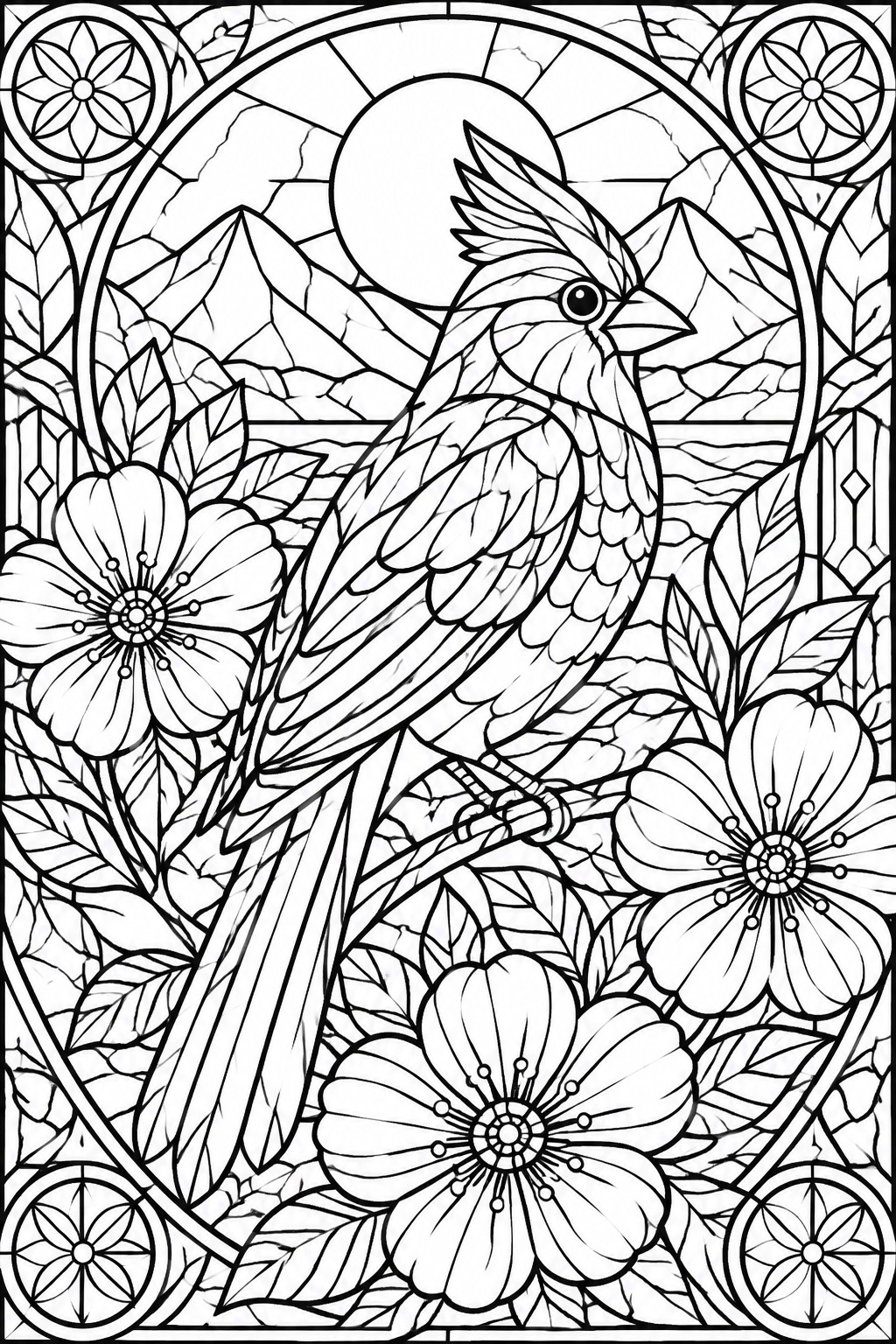
A nature scene built around a central bird uses thick dividing lines to create a stained glass effect across the entire page. The bird sits on a branch surrounded by large flowers, with mountains and a sun visible behind it, all held inside an arched frame that adds circular motifs at the corners. This segmented layout turns the page into a series of distinct color zones that support experimentation with shading and contrast.
The layout offers both broad open areas in the petals and feathers alongside tighter patterns in the leaves and borders. What makes this page useful is the balance of larger shapes for quicker sections and finer line details that hold attention. For adults who enjoy structured designs, the window style keeps the focus on color decisions rather than deciding what to draw next.
Interconnected Organic Shapes with Varied Pattern Fillers
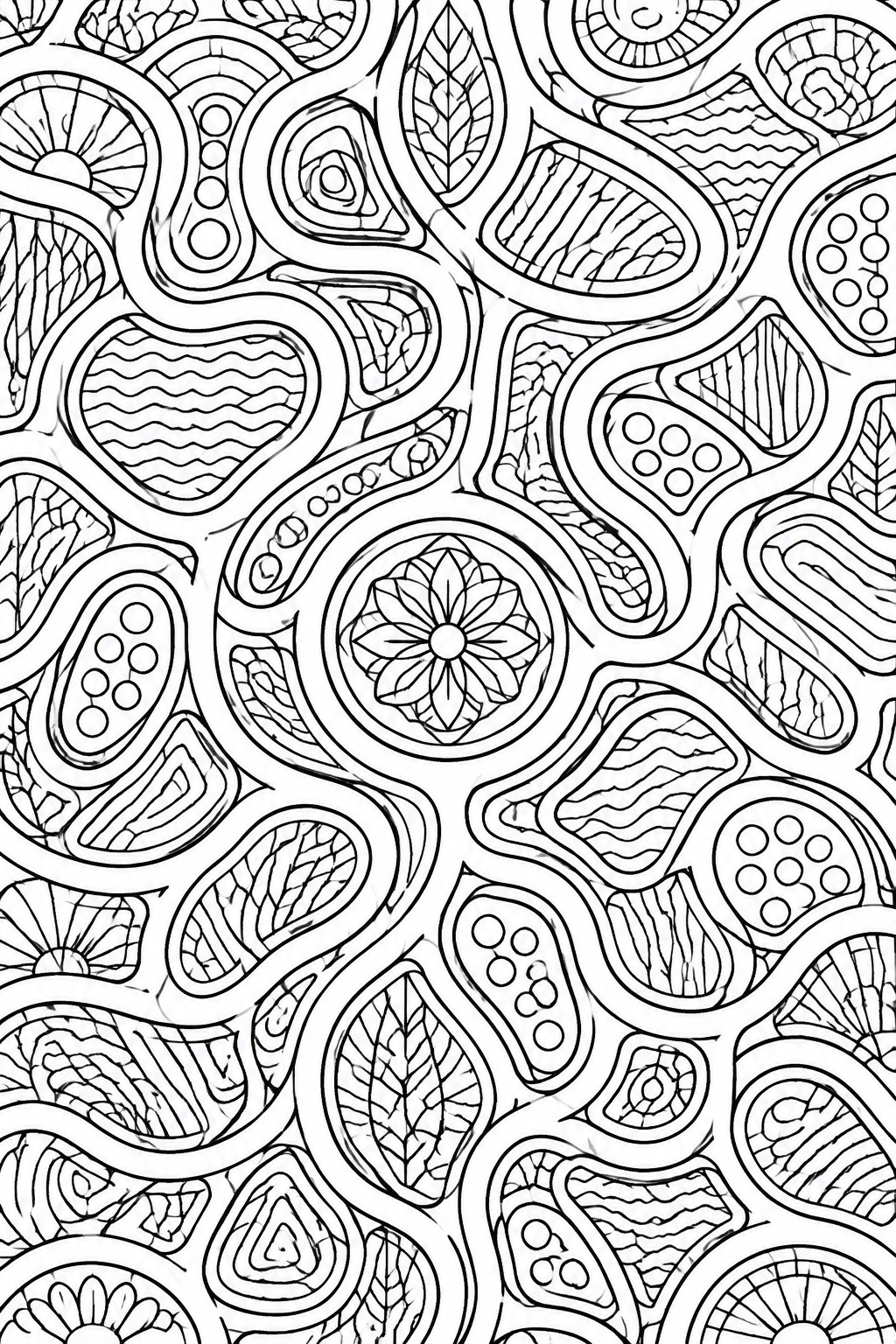
This abstract coloring page idea uses flowing curved forms that connect across the full page to create one continuous design. Each form holds a different internal pattern such as waves, dots, leaves, or small floral centers, which gives the page a mix of textures rather than one repeated motif. The experimental linework keeps every section distinct while the overall layout stays balanced and fills the space evenly.
The layout makes this easy to color because the shapes stay separate enough to work on one at a time without losing track of the whole design. A page like this works especially well for adults who want detail but also some variety in how long each section takes to finish. The mix of dense and open patterns inside the forms helps the page stand out when shared on Pinterest as an option for more advanced abstract coloring.
Abstract Portrait with Circular Shapes and Flowing Linework
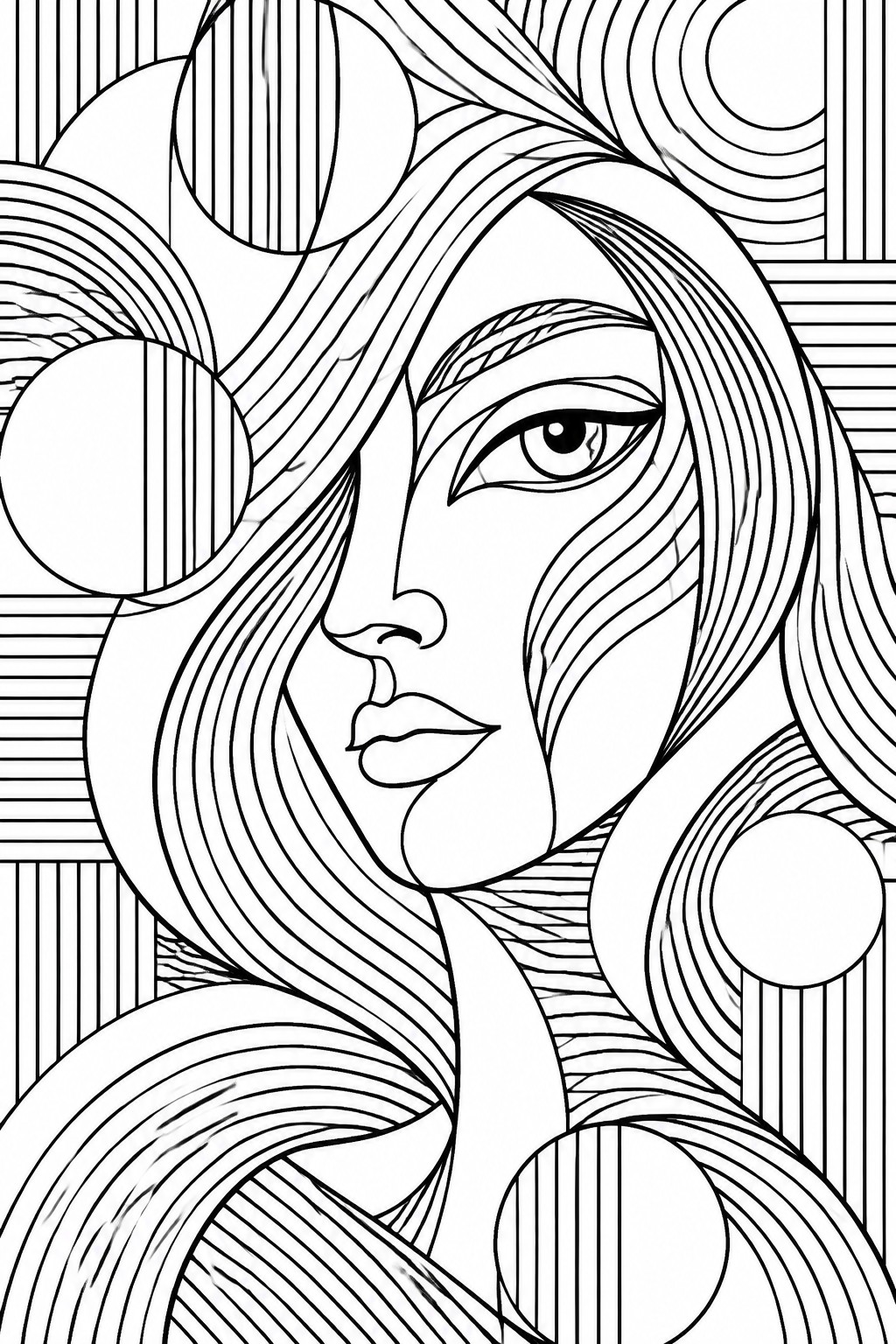
An abstract portrait idea places a woman’s profile at the center while surrounding it with oversized circles, curved stripes, and layered line patterns that blend into the hair and background. The style mixes clean facial outlines with experimental geometric forms that create distinct zones for different coloring approaches. The composition works well because the face provides clear focal points while the surrounding shapes offer space for pattern work and contrast.
What makes this page useful is the way the larger circles break up the busier line sections and give colorers places to rest or experiment. The detail level makes this a smart pick for adults who want a mix of precision around the eyes and mouth with freer choices on the abstract elements. The layout supports trying bold color blocks against fine line shading without feeling overcrowded.
Symmetrical Flowing Forms with Organic Linework
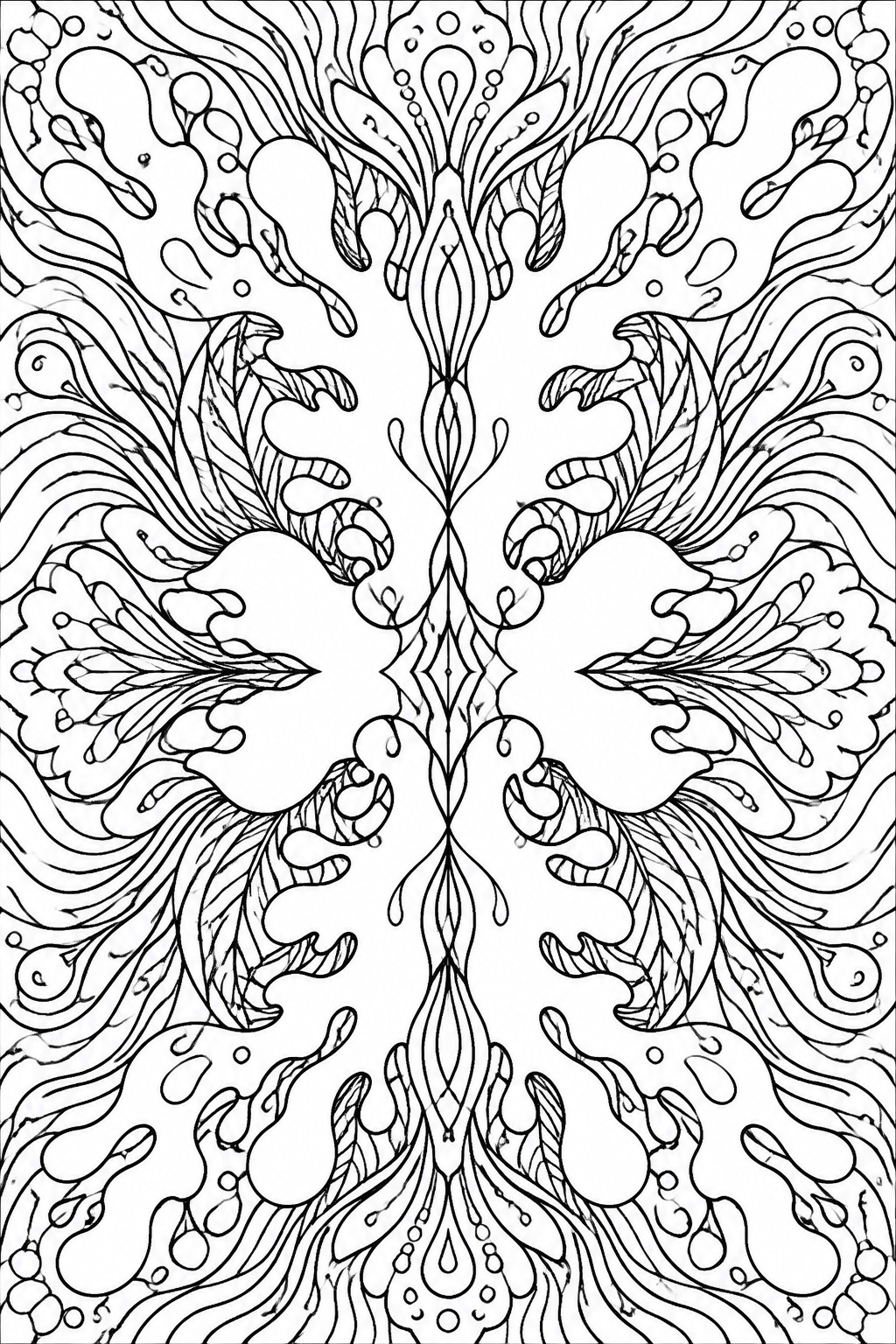
This abstract coloring page idea uses a strong vertical axis to mirror swirling shapes and experimental curves across both halves of the page. The design mixes leaf-like clusters, droplet trails, and bold flowing lines that repeat in a balanced pattern from top to bottom. Large open areas sit next to tighter line sections so colorers can switch between broad strokes and finer detail work.
What makes this page useful is the clear central symmetry that helps color placement stay consistent without feeling rigid. The mix of bold outlines and varied interior spaces suits adults who want an intricate pattern but still need room to layer shades or test new color combinations. A layout like this works especially well for Pinterest because the mirrored structure keeps the finished result looking intentional even when using experimental color choices.
Frequently Asked Questions
What makes these abstract coloring pages stand out from traditional designs? These pages feature bold lines and unconventional shapes that encourage freeform creativity rather than following strict patterns. Readers often find they spark new ways to experiment with color combinations and shading techniques that feel less rigid than floral or mandala styles.
How should I choose colors to bring out the experimental shapes and linework? Start by picking a limited palette of three to five hues that contrast sharply against each other. Apply light layers first to test how the shapes interact then build depth with darker tones in overlapping areas. This approach highlights the bold linework without overwhelming the abstract forms.
Can beginners successfully color these 19 pages or are they better suited for experienced artists? Beginners can enjoy them by focusing on one section at a time and using simple color blocks. The experimental nature actually helps new colorists practice without fear of making mistakes since there are no expected outcomes. Advanced users may add gradients or patterns within the shapes for extra complexity.
What type of paper and tools give the best results with these bold designs? Thick cardstock or mixed media paper prevents bleed through when using markers or gel pens. Pair it with alcohol based markers for vibrant fills or colored pencils for precise control along the experimental lines. Avoid thin printer paper if you plan heavy layering.
How do these coloring pages support creativity and relaxation at the same time? The lack of representational subjects lets the mind wander freely while the repetitive linework provides a calming focus. Many people report reduced stress after completing a page because the process blends mindful coloring with opportunities for personal artistic decisions.
