

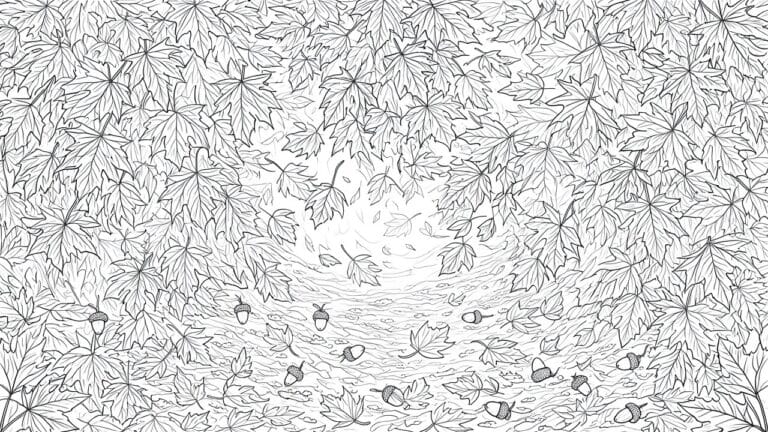
I often reach for my coloring supplies when fall arrives.
The changing leaves and plants outside give me ideas for new pages.
I created these botanical designs with autumn in mind.
They feature things like dried flowers and seed pods that match the season.
I think they work well for a relaxed evening at home.
Maple Leaves and Acorns in a Layered Autumn Scene
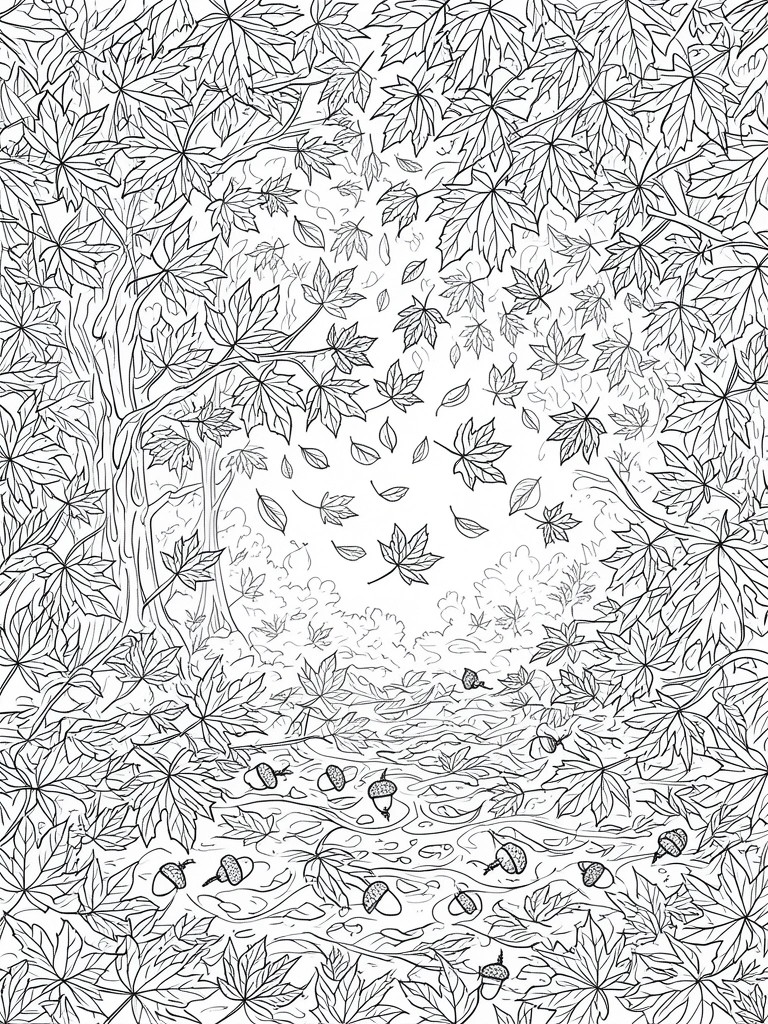
This coloring page idea uses a vertical stack of maple leaves on branches at the top that transition into scattered leaves and acorns at the bottom. The design relies on overlapping foliage to create a sense of depth while keeping individual leaves and acorns as separate shapes. Fine lines define the leaf veins and acorn textures without crowding every area.
The layout makes this easy to color because the branches stay mostly at the top and the ground elements stay mostly at the bottom. A page like this works especially well for adults who want a seasonal theme with moderate detail rather than tiny patterns. The open spaces between some leaves give colorers room to add shading or background color without fighting tight spots.
Falling Ginkgo Leaves Over Tall Grass
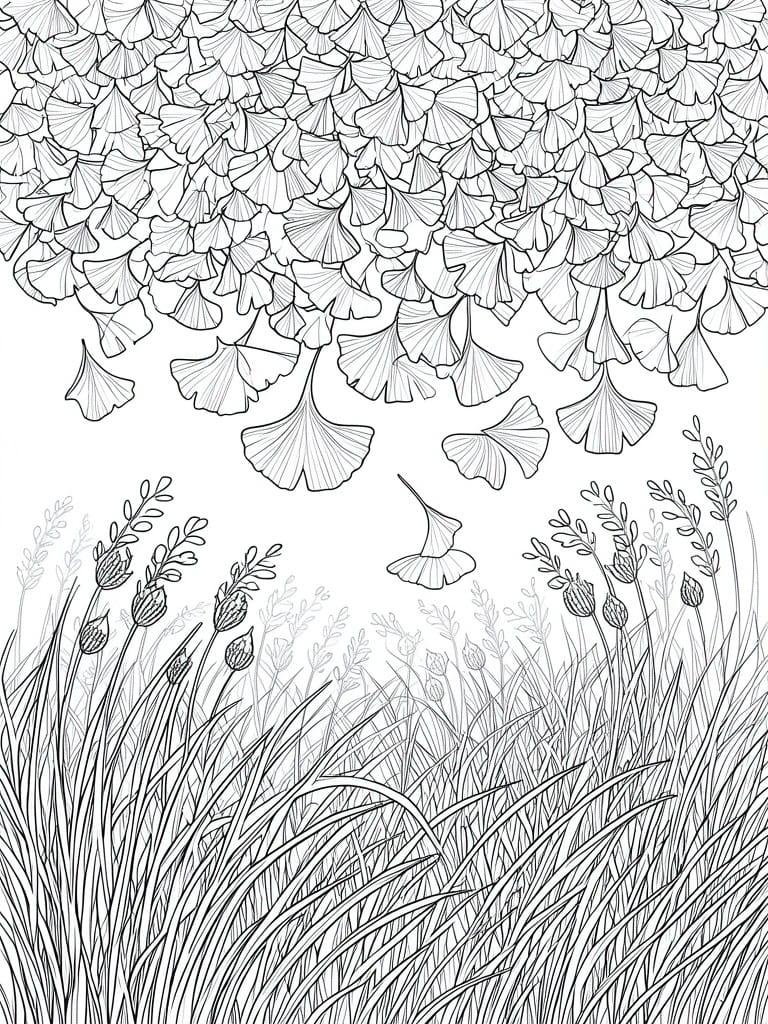
Ginkgo leaves fill the upper section of this page in a thick overlapping cluster. Several single leaves drift down through the open middle area toward a foreground of tall grass blades and scattered seed heads. The design pairs a repeating leaf motif with simpler grass lines to create a clear top-to-bottom layout.
The layout makes this easy to color because the leaves offer consistent shapes with visible veins while the grass stays more open. A page like this works especially well for adults who enjoy botanical autumn themes without extreme detail density. The mix of pattern work in the canopy and lighter foreground strokes gives colorists a balanced session that still feels seasonal.
Oak Leaf and Acorn Wreath
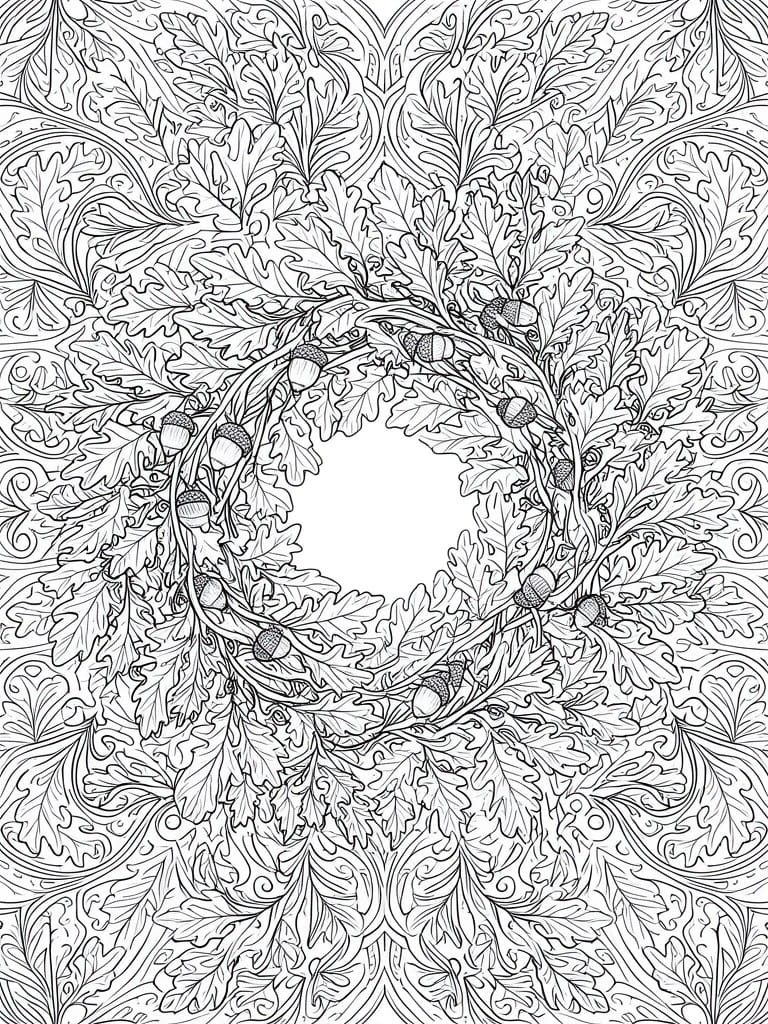
Oak leaves and acorns form a circular wreath set against a dense background of swirling foliage patterns. The design uses repeating botanical elements to create a balanced mandala style layout with a clear open center. This approach gives colorers a mix of larger leaf shapes and smaller acorn details to work with across the page.
The layout makes this easy to color in sections without losing track of the overall shape. A page like this works especially well for adults who want a seasonal design with moderate detail. The acorns provide natural stopping points that help break up the leaf work and keep the session engaging.
Wildflower Meadow with Layered Daisies
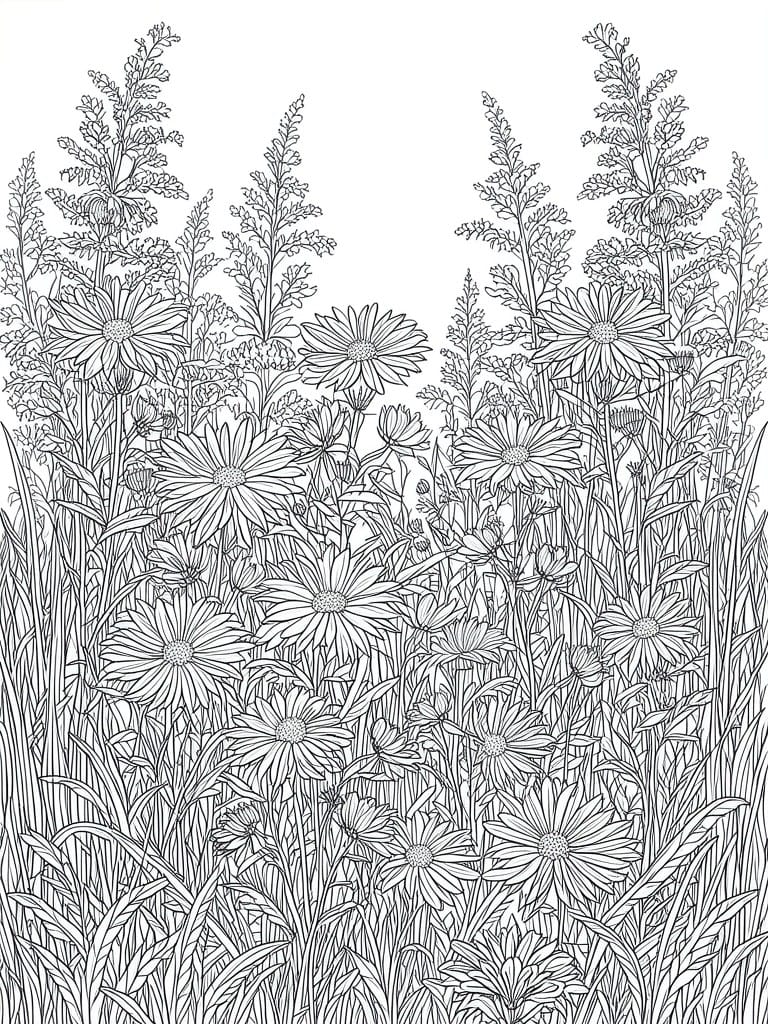
A botanical coloring page built around a dense cluster of daisies mixed with smaller blooms and tall leafy stems creates a full meadow scene. Fine lines outline each petal and leaf while the stems overlap to give depth without a solid background. The composition packs many separate flower shapes into one page so colorers can work across different sizes and patterns in a single sitting.
The layout makes this easy to color because the flowers sit close together yet stay distinct through clear outlines. A page like this works especially well for adults who want moderate detail that still leaves room to finish in one or two sessions. The varied petal counts and leaf clusters help the design stand out when shared on Pinterest as a ready-to-print botanical option.
Chrysanthemum with Layered Leaves and Border
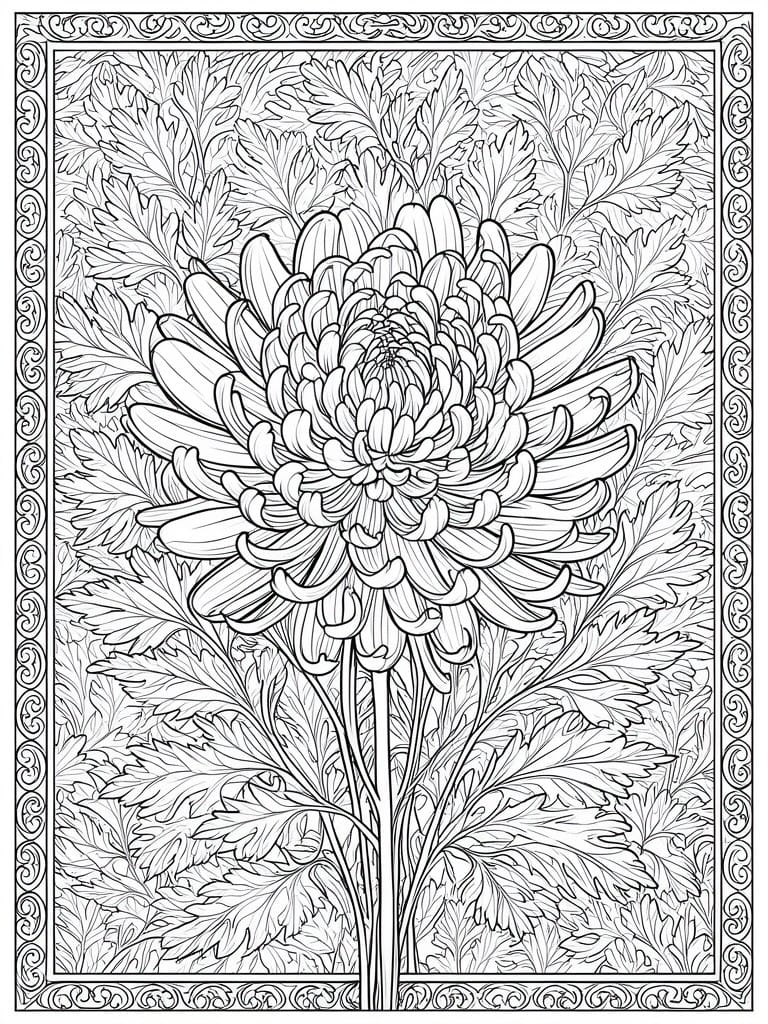
A large chrysanthemum forms the clear center of this page with its many overlapping petals creating a dense flower shape. Dense foliage surrounds the bloom on all sides and fills the space with varied leaf clusters. An ornate rectangular border holds the entire botanical arrangement together.
The layout makes this easy to color by letting the main bloom stand out as the first area to work on while the leaves provide smaller sections for added detail. A page like this works especially well for adults who prefer focused botanical designs over scattered patterns. The border adds a finished frame without requiring extra drawing.
Twisting Vines Covered in Leaves and Berries
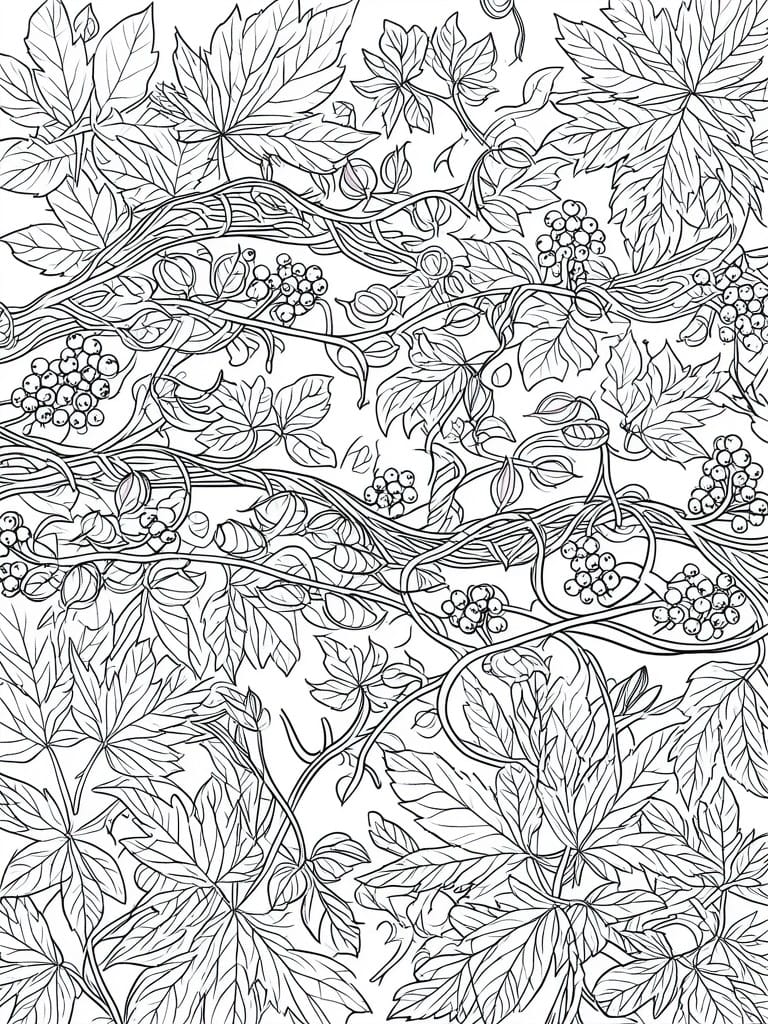
This coloring page centers on a dense network of vines that wind across the page with clusters of round berries and multiple leaf shapes mixed in. The line work stays consistent and fine throughout, creating many small enclosed areas where leaves overlap stems and fruit bunches sit against the vines. The overall layout packs the space tightly so colorers can move from one section to the next without large blank zones interrupting the flow.
What makes this page useful is the steady level of detail that supports longer coloring sessions without feeling overwhelming. The overlapping vines and berries give natural places to add depth through shading or color changes. A page like this works especially well for adults who want a seasonal botanical subject that stays focused on plant forms rather than loose patterns. The compact arrangement also prints clearly on standard paper and holds up well to fine-tip markers.
Clustered Persimmons on Leafy Branches
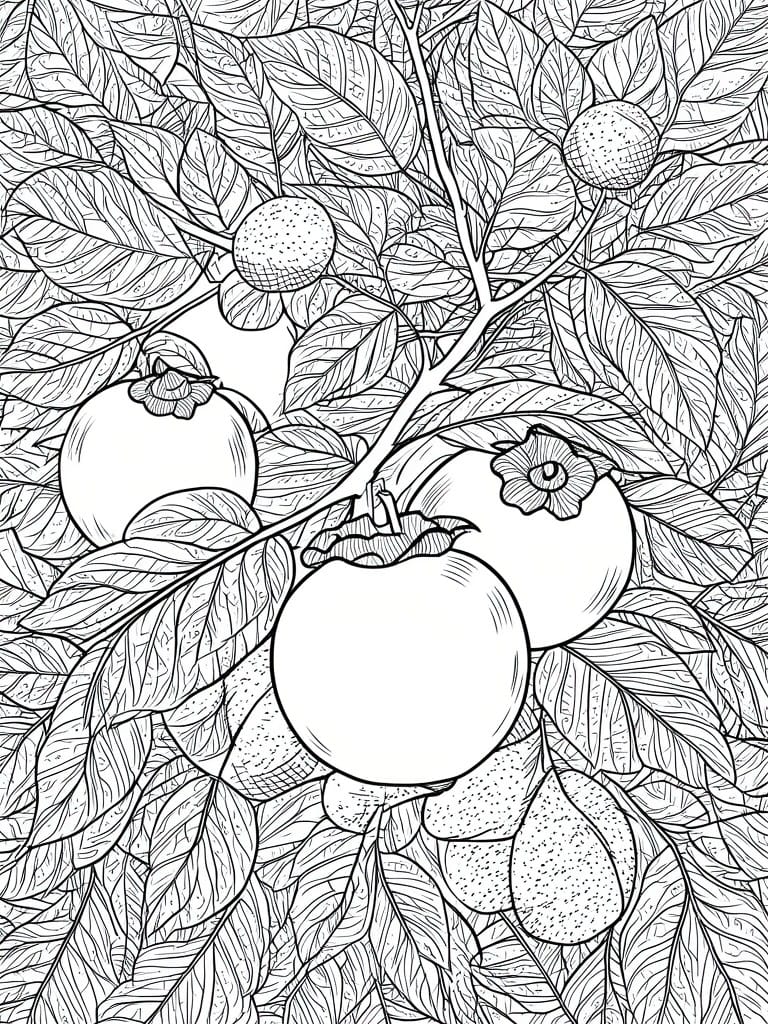
Botanical pages built around fruit clusters pair round persimmon shapes with dense overlapping leaves along thin branches. The line work includes vein patterns in the foliage and small surface details on the fruits to guide shading choices. This arrangement packs the page with connected elements that let colorers move between larger fruit areas and finer leaf sections.
The layout makes this easy to color without constant repositioning since the branches connect most of the elements. A page like this works especially well for adults who prefer seasonal designs that support both quick base colors and slower texture work. The mix of open fruit centers and patterned leaves keeps the session varied while staying focused on one plant type.
Layered Autumn Leaves Mixed with Fern Fronds
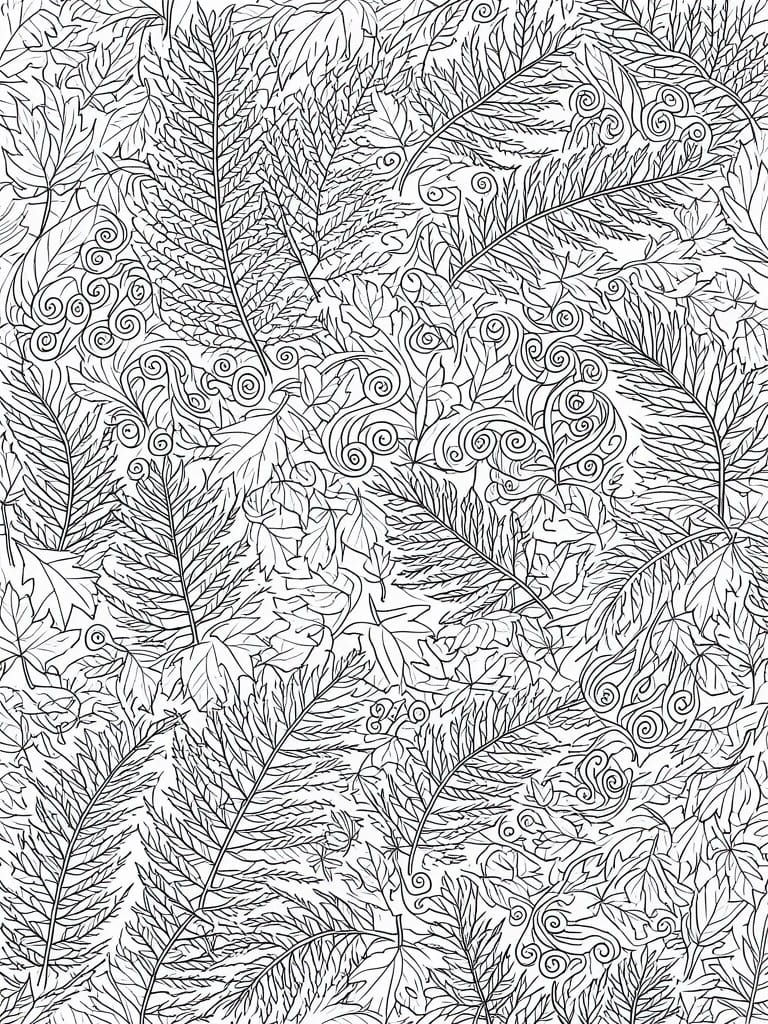
A dense botanical pattern fills the page with overlapping leaf shapes and fern fronds of different sizes. Fine lines define each plant form while small spiral accents add extra detail in the gaps. The arrangement stays fully covered from edge to edge with no borders or empty zones.
The high detail level suits adults who want a longer coloring session with room for shading. Varied leaf edges and vein patterns let colorers switch techniques across different sections. The continuous layout makes the page feel finished even when some areas receive less attention. This type of full coverage design prints well on standard paper and holds up to repeated handling.
Meadow of Umbel Flowers with Wavy Lines
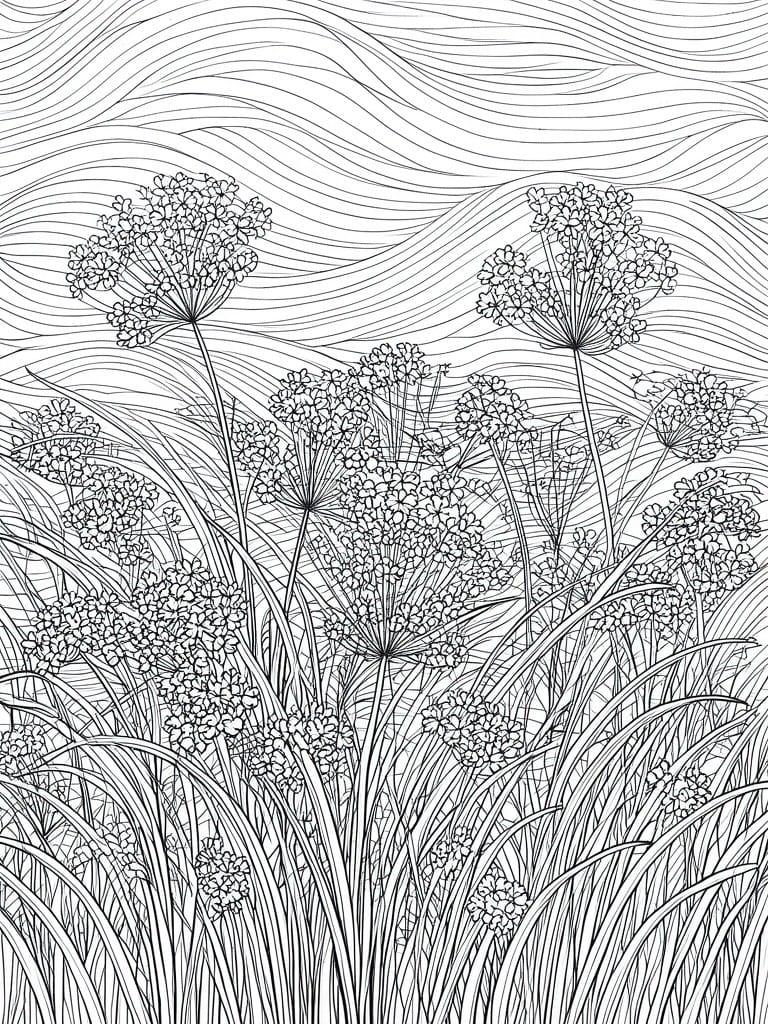
This coloring page features a field of tall plants topped with rounded clusters of small flowers. The style relies on fine line work to show layered stems and dense bloom heads set against flowing horizontal background lines. The composition places larger flower groups at different heights to create a natural meadow scene that still leaves open spaces between the plants.
The detail level makes this a smart pick for adults who like focused work on repeating patterns. What makes this page useful is the way the flower clusters break into manageable sections while the grass below stays simpler. A page like this works especially well for longer coloring sessions where the goal is steady progress without overwhelming empty space. The background waves add structure without adding extra objects to fill in.
Dense Mushroom Grove Among Forest Foliage
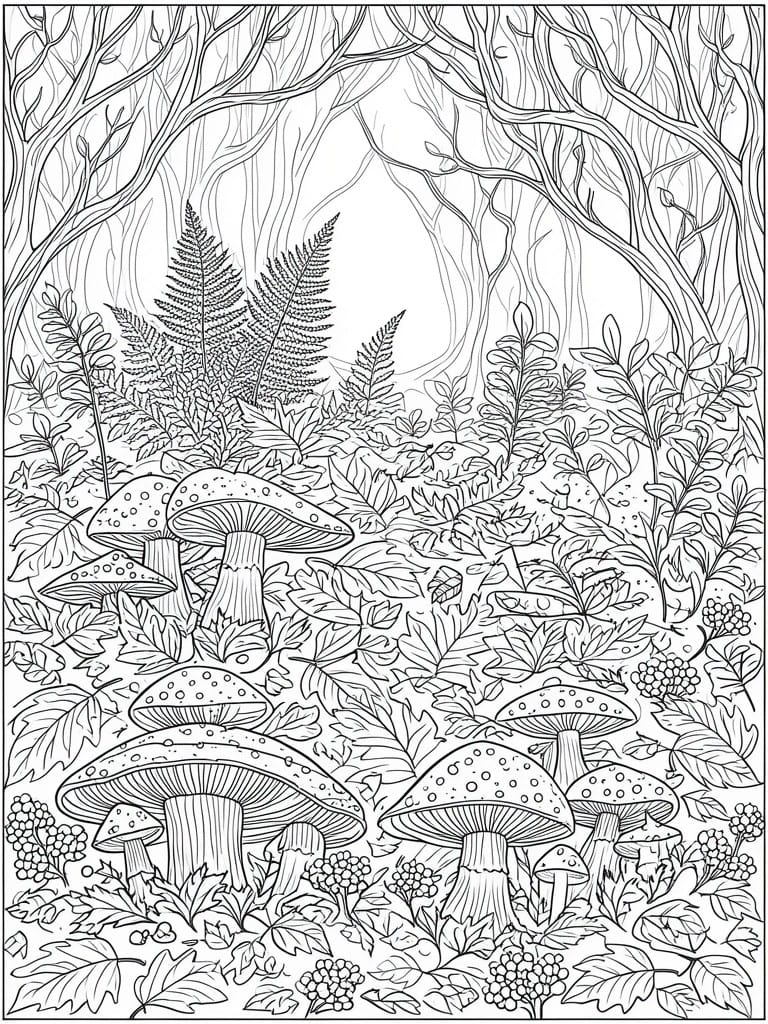
A botanical autumn coloring page idea built around clusters of mushrooms on a woodland floor works well when the design layers different sizes of fungi with surrounding ferns, leaves, and overhead branches. The style uses fine line work to define caps, stems, and varied leaf shapes that fill most of the page without large empty gaps. This type of composition creates natural sections that let colorers focus on one plant group at a time while still covering the full sheet.
The layout makes this easy to color because the elements sit in clear groups with enough space between them for different shading techniques. A page like this works especially well for adults who want a seasonal design that feels detailed but not overly tight. The mix of spotted mushroom tops and smaller background plants gives options to use multiple colors without needing extreme precision on every edge.
Dense Berry Bush Coloring Page
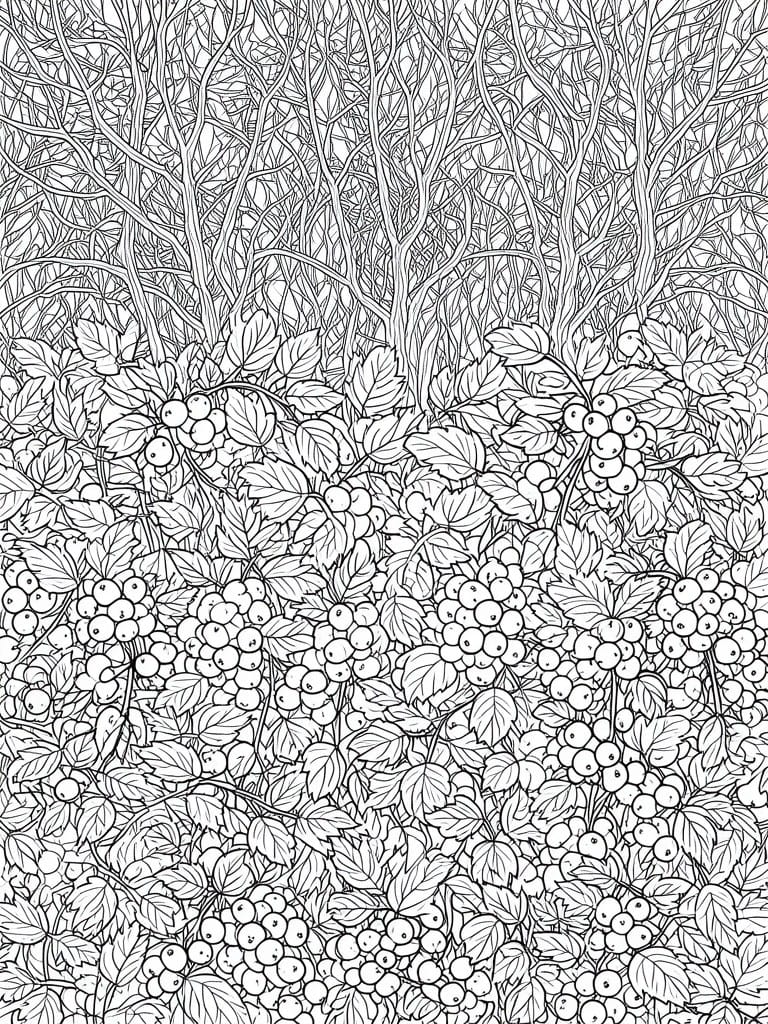
Berry bushes packed with round fruit clusters make up the main subject here. Thin branches and pointed leaves overlap in a layered arrangement that fills the entire page with repeating natural shapes. The fine line work creates many small sections that encourage varied shading across the berries and foliage.
The layout makes this easy to color in sections without large empty spaces to fill quickly. Adults who enjoy detailed work will find plenty of small berry groups and leaf edges for blending colors or adding depth. This kind of page prints well for a longer session focused on one plant type.
Tree with Swirling Background and Exposed Roots
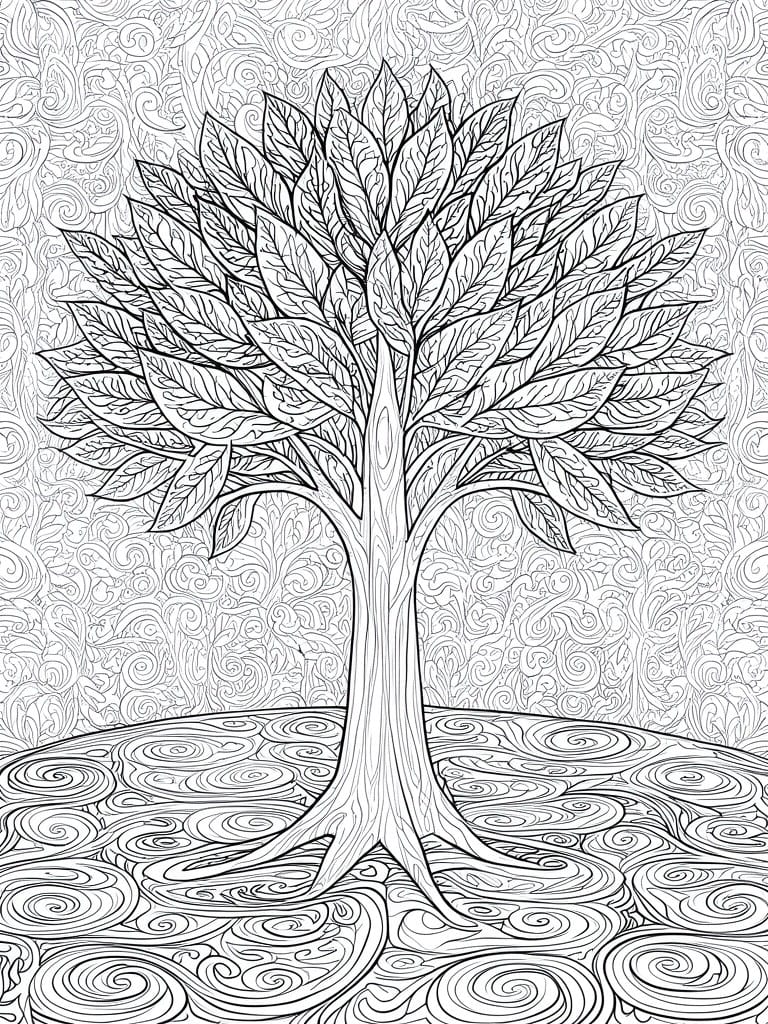
A coloring page built around a single large tree shows a full canopy of varied leaves, a textured trunk, and roots that spread outward across the bottom of the page. Swirling patterns fill the background and the ground area, creating a repeating motif that frames the tree without overlapping it. The design separates the organic shapes of the tree from the geometric swirls, giving clear zones for different coloring approaches.
The layout makes this easy to color by keeping the tree elements distinct from the surrounding patterns. Leaves and trunk provide shapes that reward gradual shading while the swirls allow quicker, repetitive work. A page like this works especially well for adults who want a botanical subject with added pattern detail rather than a plain tree outline. The contrast in line density helps the page stay engaging without becoming overwhelming.
Pumpkin Vines Twisting Through Autumn Foliage
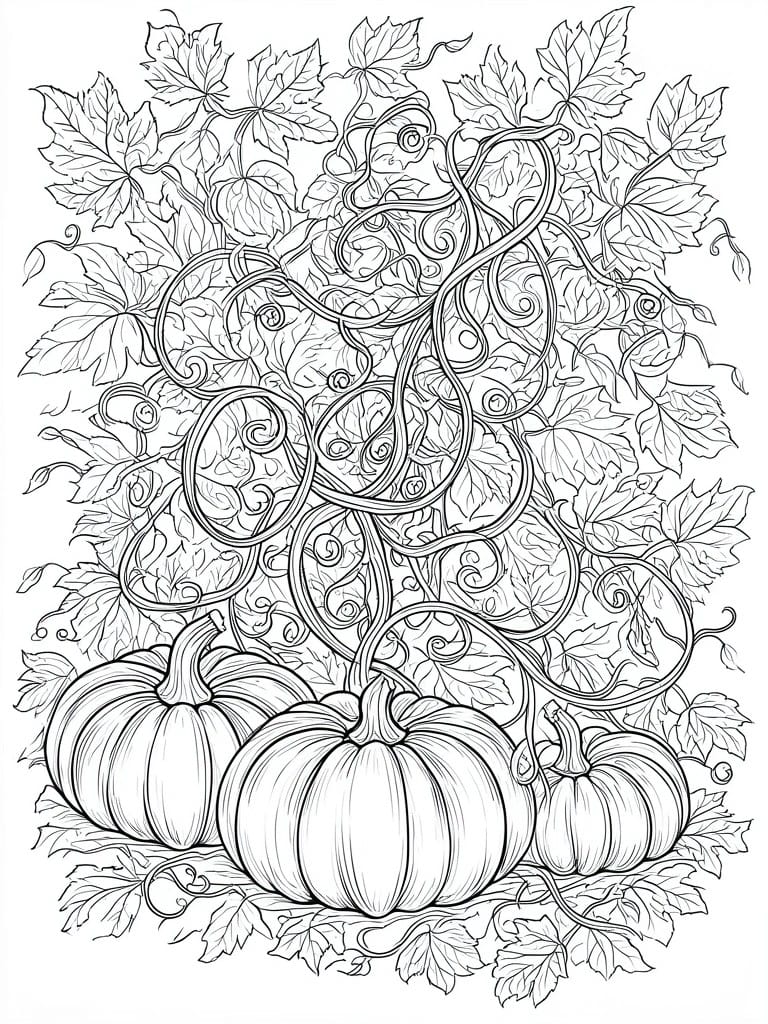
A coloring page idea built around pumpkins uses a cluster of them at the base with long curling vines that loop and twist upward. Maple-style leaves fill the spaces around the vines to create a full botanical arrangement. The repeating curves in the vines give colorers clear paths to follow while the pumpkins offer larger areas that contrast with the finer leaf details.
The layout makes this easy to color because the main shapes stay distinct even when vines cross over leaves. A page like this works especially well for adults who want a seasonal design without extreme density in every section. The mix of bold pumpkin outlines and thinner vine lines lets colorers switch between broad strokes and smaller details as they go.
Autumn Wildflower Stems with Open Blooms and Seed Heads
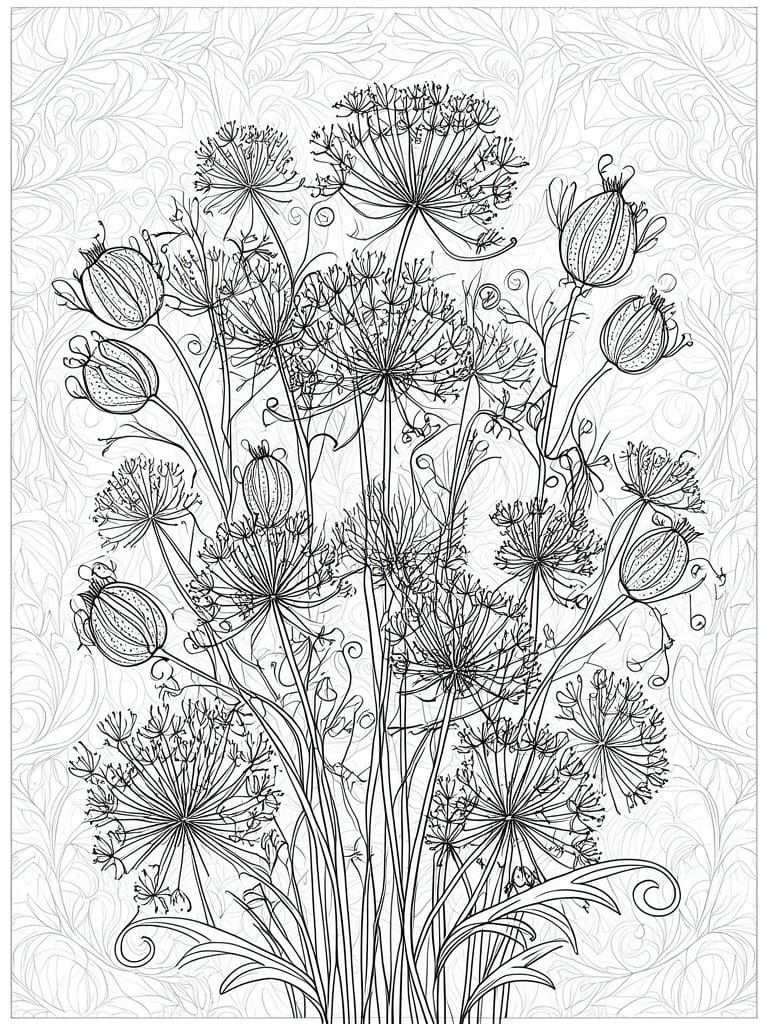
This coloring page centers on a tall cluster of umbelliferous plants that show both delicate open flower heads and striped seed capsules. The vertical arrangement stacks multiple stems with varying bloom stages, while a background of repeating swirls fills the negative space around the main subjects. Fine line work creates plenty of small areas to color within the flower clusters and pods without crowding the page.
The layout makes this easy to color in sections since the stems divide the page into clear zones. What makes this page useful is the balance between detailed flower heads and larger pod shapes that let colorers switch between fine work and quicker fills. A page like this works especially well for adults who want a seasonal botanical design that still leaves room for creative color choices in the background patterns.
Ivy Vines Over Lattice Trellis
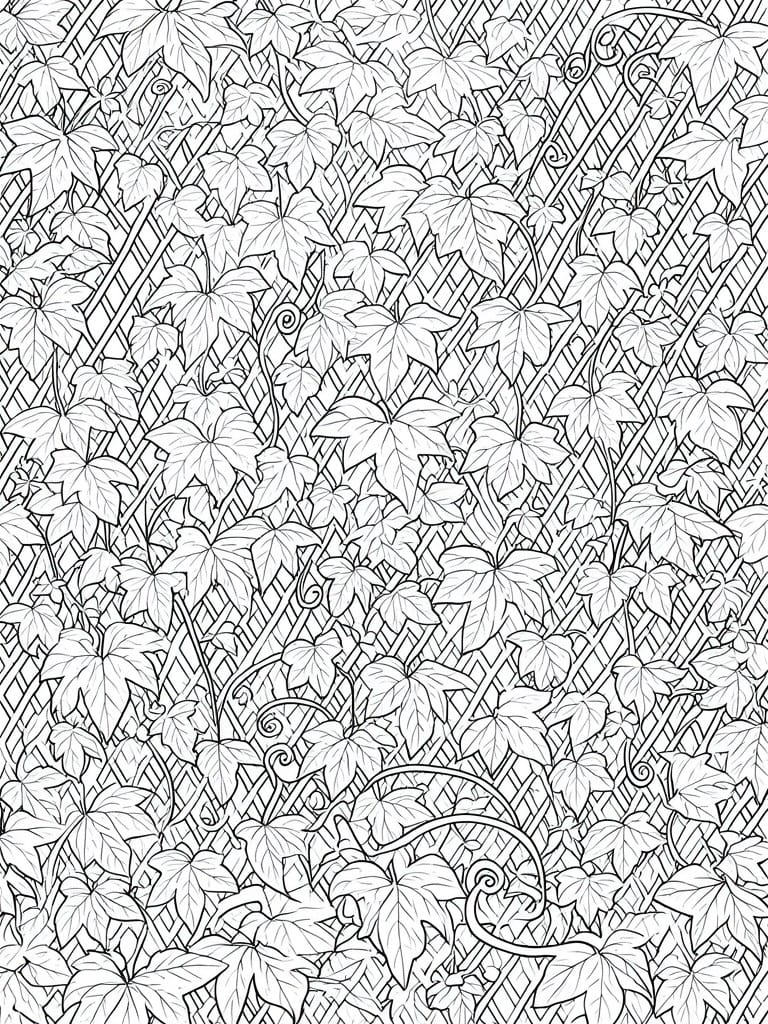
Ivy forms the core subject through many overlapping leaves and curling tendrils spread across a diamond lattice. The style uses fine lines for leaf veins and stems that wind through the grid to create a full coverage scene. This setup gives colorers clear sections to work on while the repeating lattice adds structure for contrast between plant and background.
The detail level makes this a smart pick for adults who want a botanical pattern with steady focus. A page like this works especially well when colorers want to build depth through shading on layered leaves rather than simple outlines. The dense layout keeps the session engaging without large blank spaces to fill.
Dense Wildflower Meadow Layout
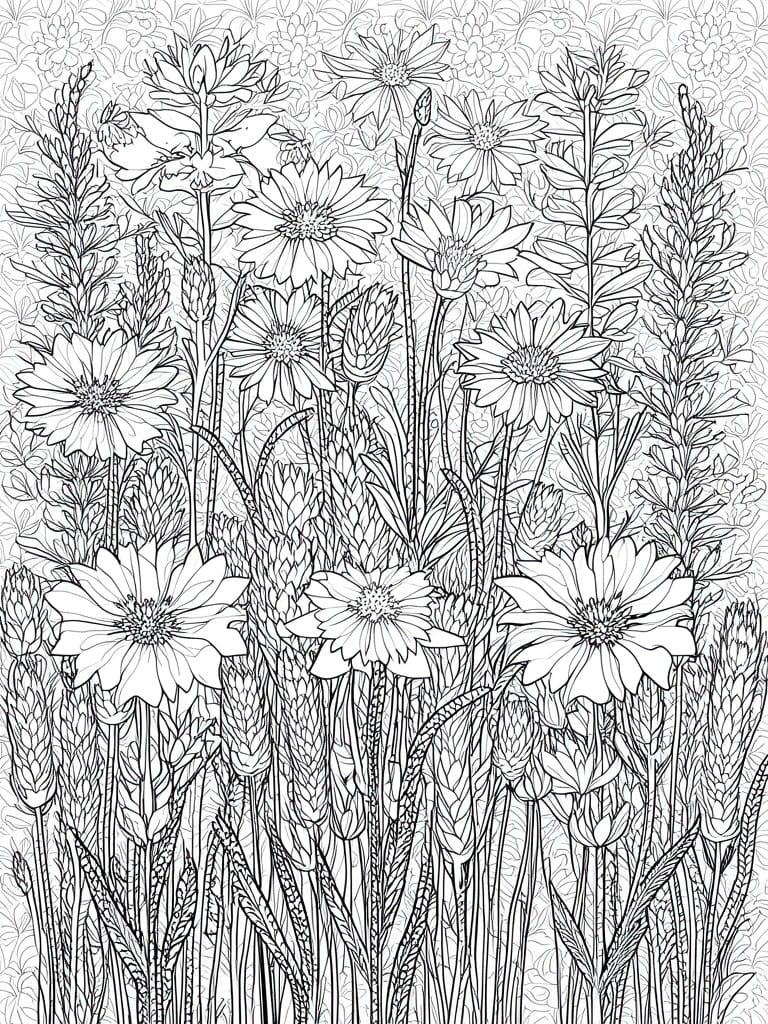
A coloring page built around a thick cluster of daisies, lavender stalks, and wheat-like grasses forms a complete botanical illustration. Fine lines separate each petal, leaf, and stem so the plants overlap naturally in a tall vertical arrangement. The variety of shapes and sizes gives colorers many small sections to fill without needing extra patterns or borders.
The detail level makes this a smart pick for adults who want a focused but not overwhelming project. Different plant heights let you color in stages, moving from larger flowers to thinner stems as you go. The layout makes this easy to color with markers or colored pencils since the lines stay clear and consistent throughout.
Dense Berry and Acorn Branches
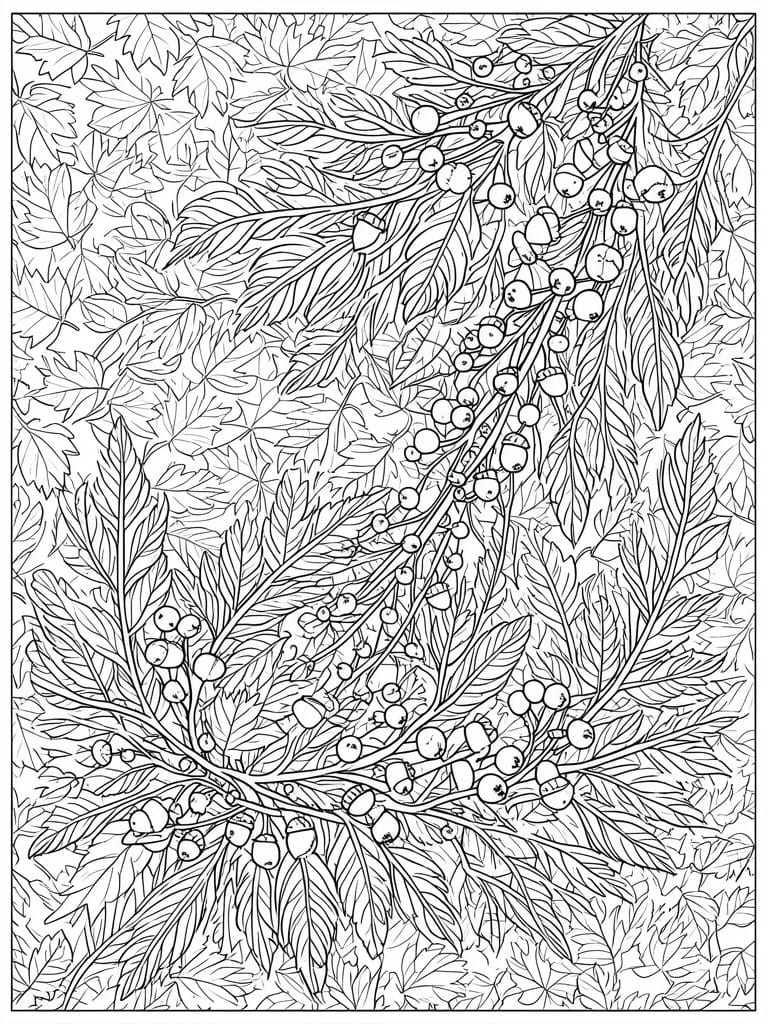
This coloring page idea features tightly packed branches covered in small berries and acorns, mixed with multiple leaf shapes in a full-frame arrangement. Fine outlines create distinct sections of round fruits, pointed leaves, and slender stems that overlap throughout the design. The dense layout gives colorers many small shapes to work with while keeping the overall scene connected and natural.
The layout makes this easy to color because the elements stay grouped into clear clusters without large blank areas. Detail level makes this a smart pick for adults who want a seasonal page that rewards steady progress across many small forms. A page like this works especially well for focused sessions where colorers can vary pressure on the berries versus the leaves.
Intricate Autumn Foliage with Berries
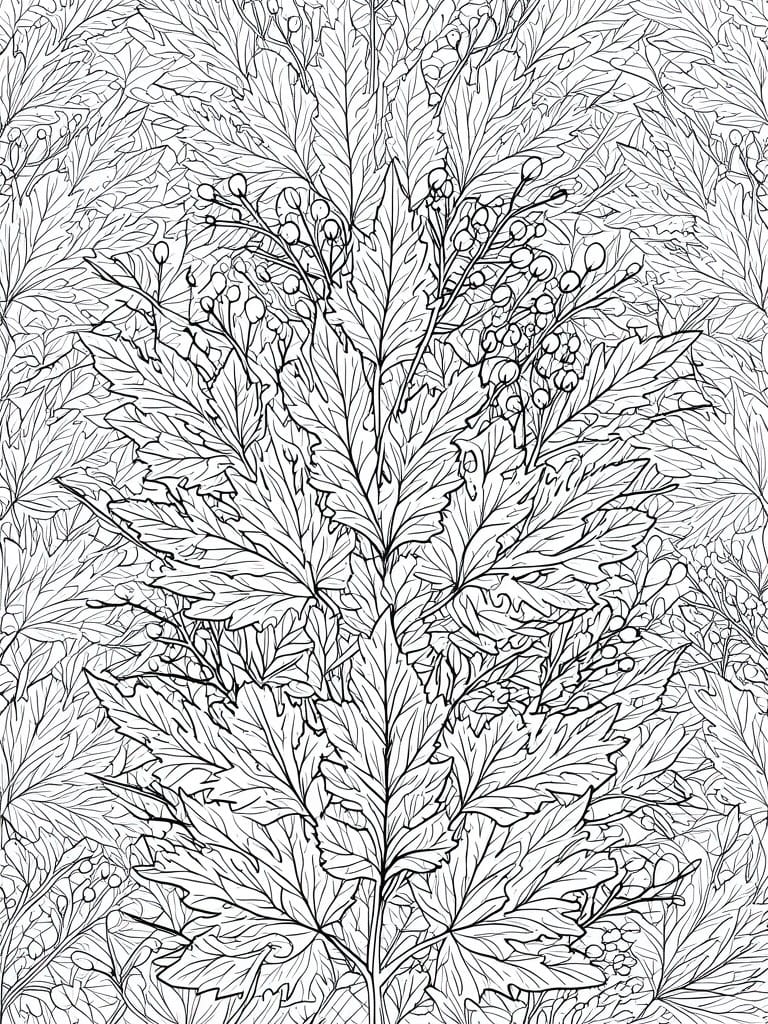
A dense mix of lobed leaves and thin stems carrying clusters of small round berries forms the core of this coloring page. Fine lines define leaf veins and berry outlines while the elements overlap across the full page to create a layered plant scene. The variety of shapes and the compact layout give colorers many distinct sections to work with at once.
The layout makes this easy to color in sections without feeling scattered. A page like this works especially well for adults who want a detailed botanical subject rather than broad open spaces. The tight arrangement of leaves and berries supports shading and color blending to show depth in the finished result. This kind of design stands out for printable collections because it captures a full seasonal plant view in one frame.
Frequently Asked Questions
What types of plants are featured in the 18 botanical autumn coloring pages? These pages showcase a variety of seasonal plants including maple leaves, oak branches with acorns, pumpkin vines, chrysanthemums, pinecones, and berry clusters like hawthorn and elderberry. Each design highlights intricate details such as vein patterns and natural textures to capture the essence of fall foliage and harvest elements.
Are the designs suitable for different skill levels? The collection includes a mix of complexity levels with some pages offering larger open areas for easier coloring and others featuring finer details like overlapping leaves and delicate stems. Beginners can start with simpler botanical motifs while more experienced colorists can tackle the denser arrangements for extended creative sessions.
What coloring tools work best with these pages? Colored pencils provide excellent control for shading the fine botanical lines and building layers of autumn hues like oranges and deep reds. For bolder effects markers or gel pens work well on thicker paper but test for bleed through first and consider blending with colorless blenders to achieve smooth gradients on plant forms.
How can I access and print the coloring pages? The pages are typically available as downloadable PDF files from online marketplaces or artist websites. Print them on standard letter size paper or upscale to larger formats using a home printer or local print shop ensuring the settings are set to actual size to preserve the detailed plant outlines without distortion.
What benefits come from coloring these autumn botanical designs? Coloring these pages encourages mindfulness by drawing attention to natural patterns in leaves and flowers which can lower stress levels. It also sparks creativity through experimenting with color palettes that evoke fall seasons while improving focus and providing a satisfying sense of completion upon finishing each intricate plant illustration.
