

I have always liked coloring mandalas because the patterns feel balanced and steady.
These pages focus on symmetry so each section mirrors the next.
Repetition plays a big role too and it makes the designs easier to fill in without much planning.
I chose these particular ones because they show those elements clearly.
In my experience they work well for a relaxing session at the table.
Central Lotus Mandala with Concentric Pattern Rings
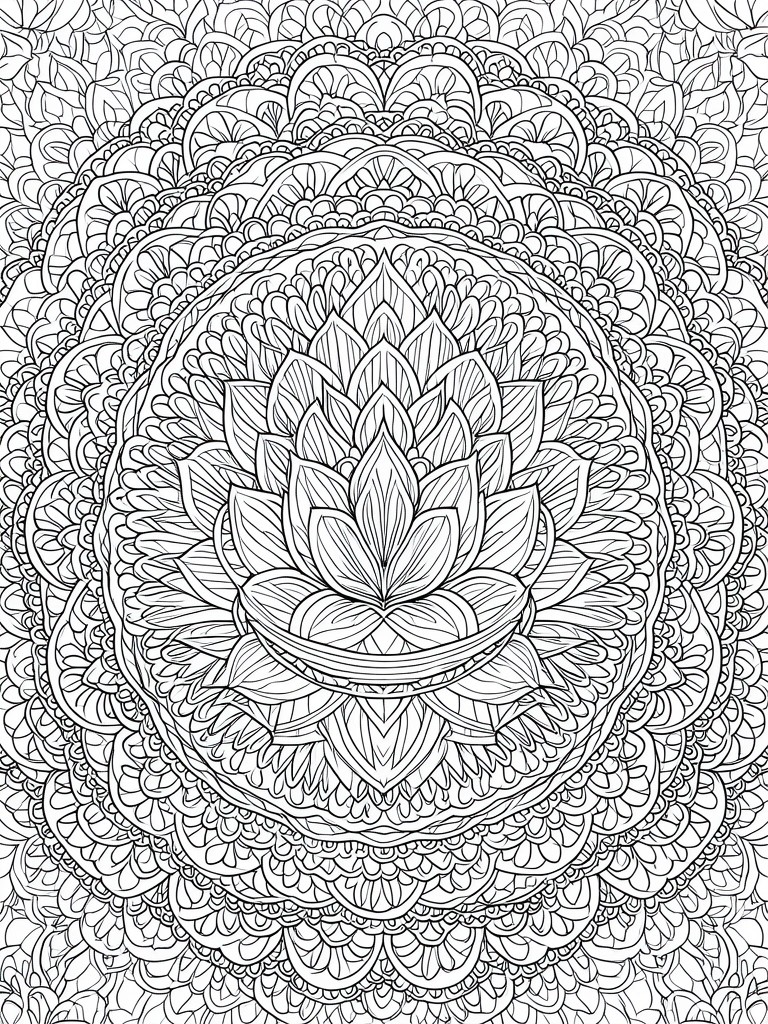
A lotus flower sits at the center of this mandala and serves as the starting point for rings of repeating floral and geometric shapes. The design uses fine lines to build outward in balanced layers that emphasize symmetry through mirrored petals and leaves. The layout keeps the focus tight on the center while the outer bands fill the page with consistent motif repeats.
What makes this page useful is the clear progression from a detailed core to simpler outer sections that let colorers shift pace as they work. The strong repetition gives the page a structured feel that suits adults who prefer pattern-based designs over loose scenes. For longer sessions this kind of layout holds attention because each ring offers a new but familiar task. The overall balance also makes the finished page look clean even if some areas receive lighter shading.
Layered Mandala Built from Repeating Geometric Motifs
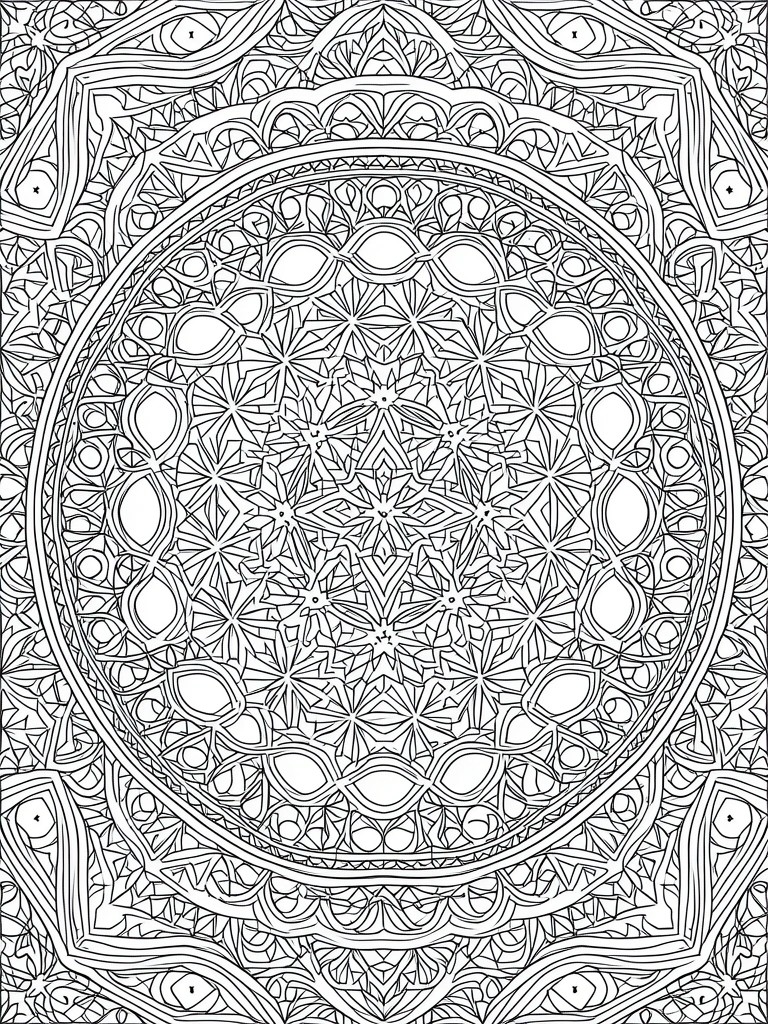
Mandala pages centered on symmetry use concentric rings to organize repeating shapes into a balanced whole. This design fills each ring with identical starbursts, teardrop forms, and curved segments that mirror across the circle. The tight spacing and consistent line weight let color choices create new patterns without disrupting the structure.
What makes this page useful is the clear division into rings that support section-by-section coloring. The high detail level suits adults who prefer pattern-focused work over simple outlines. Matching shapes across the design make it straightforward to test color repeats or subtle shifts while keeping the overall balance intact. The layout stands out for printers looking for pages that reward steady progress toward a complete symmetrical result.
Radial Mandala Built on Repeating Petals
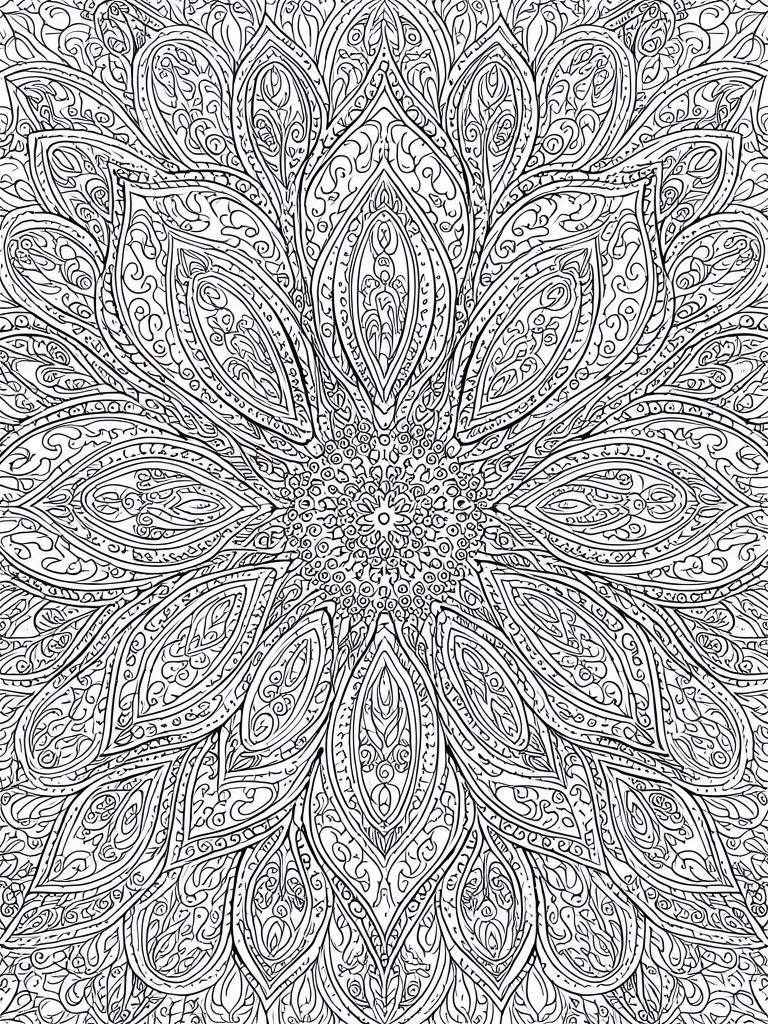
Radial symmetry organizes this mandala into identical wedges that expand from a small central flower. Each wedge stacks pointed outer petals over curved inner shapes filled with matching swirls and dots. The repetition creates clear sections that guide color choices across the whole design.
The layout makes this easy to color because matching areas let you reuse the same colors without planning new combinations each time. A page like this works especially well for adults who want steady progress through detailed patterns. The balanced spacing between fine lines and larger shapes keeps the session focused without crowding. This kind of mandala stands out for printables because the symmetry shows up clearly even after basic coloring.
Layered Mandala with Repeating Floral Rings
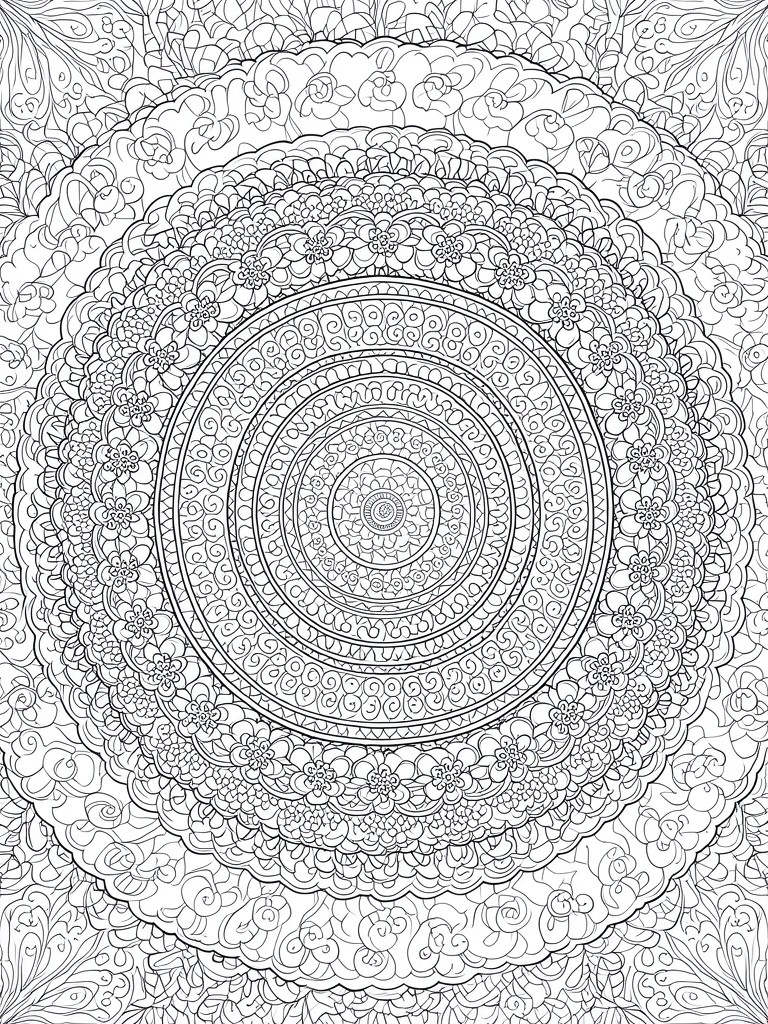
Mandala pages centered on symmetry use repeating rings that expand outward from a single point. This design fills each ring with floral shapes and curved lines that match across the circle. The even spacing between layers lets colorers repeat the same pattern choices or switch them up ring by ring.
The layout makes this easy to color one ring at a time while keeping the full design balanced. A page like this works especially well for adults who prefer pattern-focused work over loose scenes. The repeating elements give clear spots to test color combinations without needing to plan the whole page at once.
Celestial Mandala Built from Repeating Rings and Rays
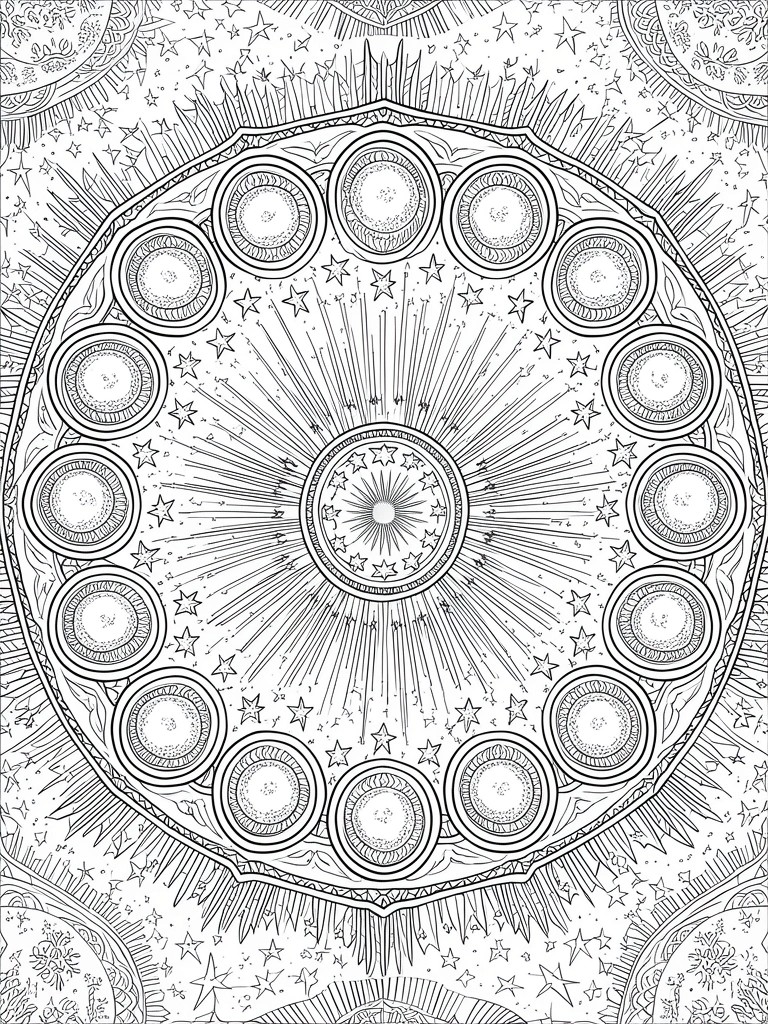
Mandala pages like this use a central point with radiating lines and stars to establish a clear repeating structure across the entire circle. Multiple rings of identical smaller circles are placed at even intervals, creating layers that mirror each other in shape and spacing. The addition of scattered stars between those rings reinforces the symmetry while giving colorers distinct areas to treat as separate patterns.
The layout makes this easy to color because each repeated element can be approached with the same color scheme or shading style. A page like this works especially well for adults who prefer intricate designs, since the fine line work and dense star details fill space without leaving large empty regions. The balanced repetition also helps the page stand out when shared online, as the finished result shows clear order even with varied color choices.
Circular Mandala of Repeating Leaf Rings
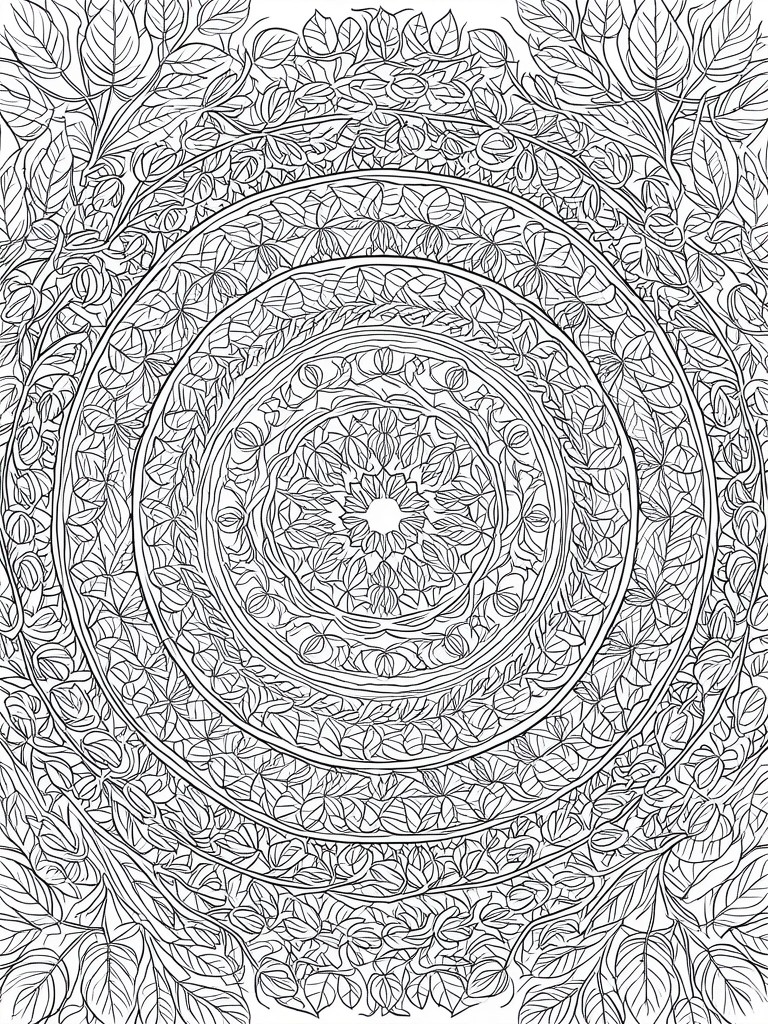
This mandala centers on a small floral core that expands through multiple rings of leaves and vines. Each ring repeats the same foliage shapes with tight symmetry, creating a clear radial structure from center to edge. The consistent leaf patterns give colorers a built-in guide for repeating colors or varying them slightly without losing the overall balance.
The layout makes this easy to color because each ring stands out as a separate section while the repetition keeps decisions simple. A page like this works especially well for adults who want steady detail work without extreme complexity in every area. The leaf shapes provide enough small spaces for shading practice but stay large enough to finish in one sitting if needed.
Celtic Knot Mandala with Repeating Braids
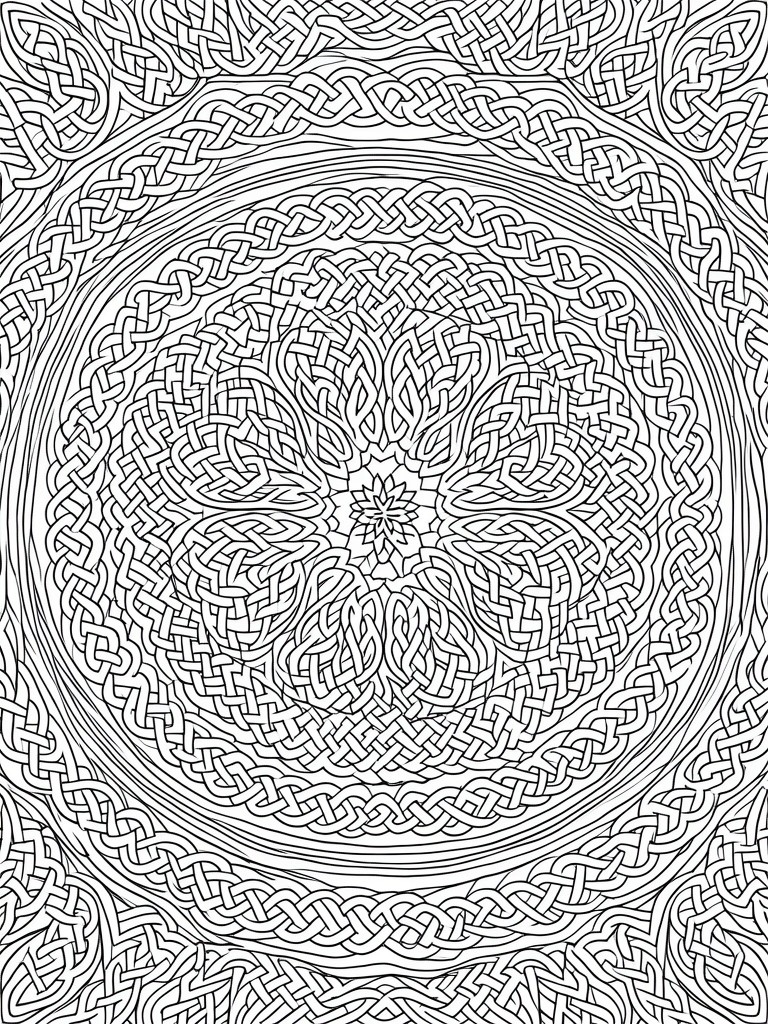
A mandala built from Celtic knot patterns uses tight interwoven lines to create a fully symmetrical design. The page centers on a small star motif with eight surrounding petal shapes, then fills outward through multiple rings of consistent braid work. This approach keeps the focus on repetition while giving colorers distinct sections to complete one ring at a time.
The layout makes this easy to color because each braid section stays contained within its own circle or petal. It offers a detailed experience that works well for adults who prefer longer sessions spent on small repeating shapes. The knot style also shows off color changes at the overlaps, which helps the finished page gain depth without extra effort.
Concentric Spiral Mandala
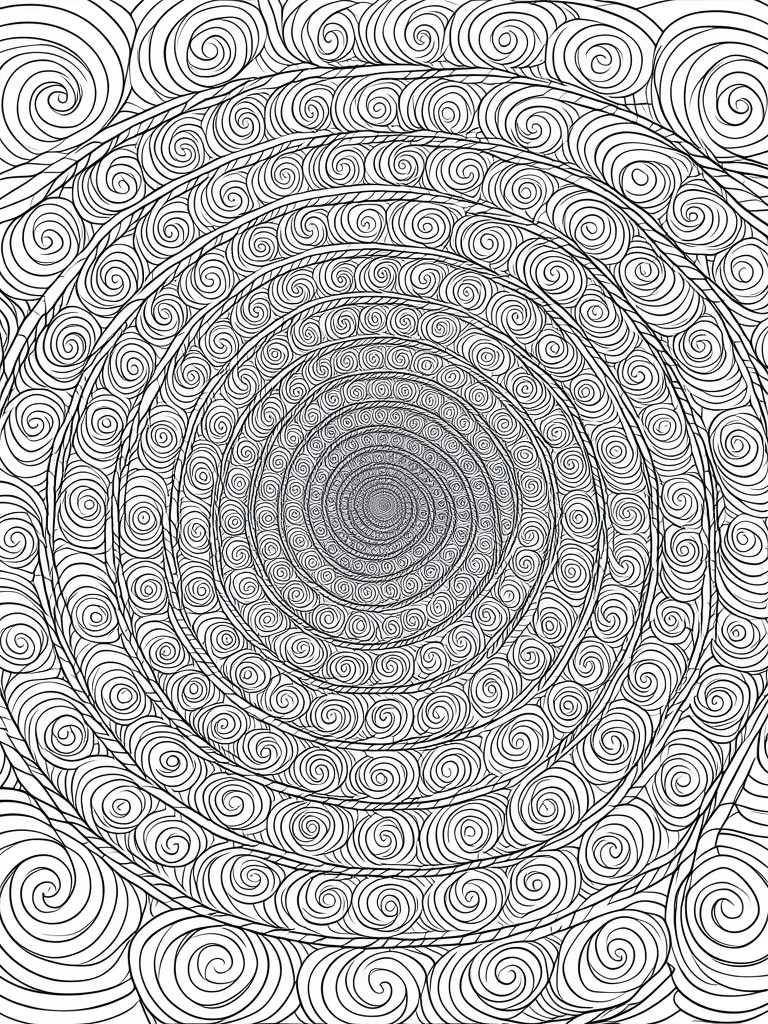
A mandala built from repeating spiral motifs arranged in tight concentric rings creates a strong focus on symmetry and gradual pattern shifts from outer edge to center. The design uses consistent line work with spirals that vary slightly in size and spacing as they move inward, forming a radial layout that emphasizes repetition over any single focal point. This structure gives colorers clear sections to fill while maintaining the overall balance through identical motifs repeated around each ring.
The layout makes this easy to color by letting you complete one ring at a time without disrupting the larger pattern. A page like this works especially well for adults who prefer detailed, pattern-focused designs over open scenes. The increasing density toward the center adds a natural progression that keeps the session engaging from start to finish.
Layered Mandala with Central Floral Motif and Repeating Borders
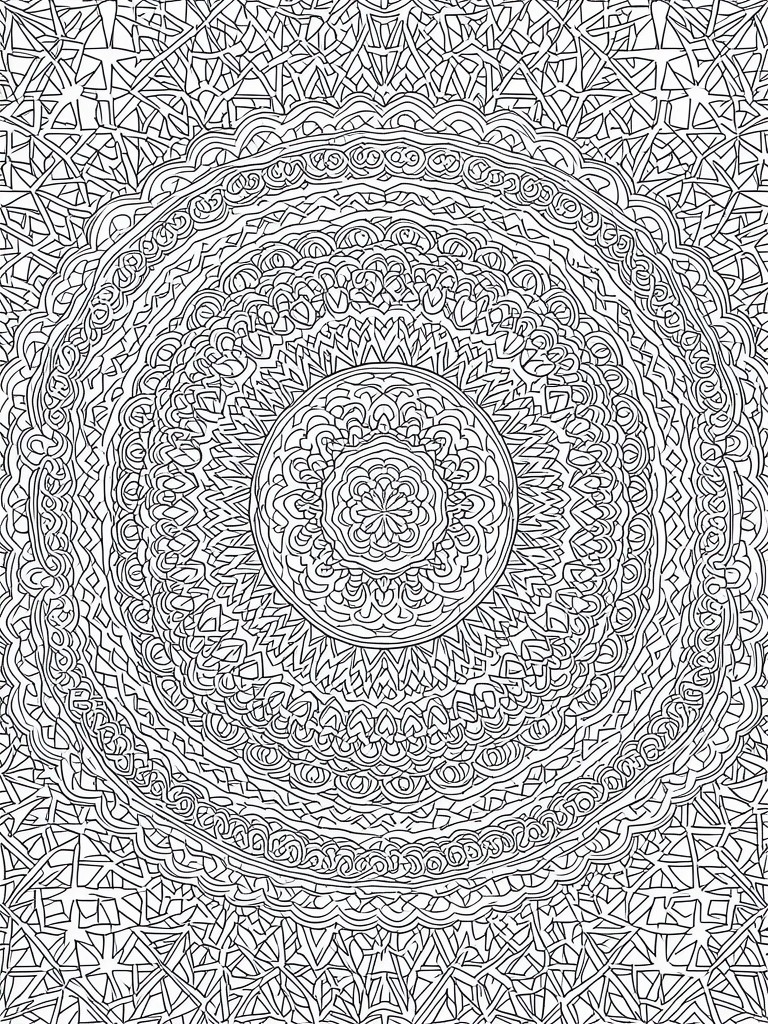
Mandala pages built around radial symmetry place a small floral center inside multiple rings of repeating shapes. Each ring uses curved lines, pointed forms, and looped patterns that mirror across the circle. The outer edge adds a separate band of angular shapes that frames the whole design without overlapping the inner layers.
The layout makes this easy to color because the rings stay separate and let color choices stay consistent within each band. A page like this works especially well for adults who prefer pattern-focused work over loose scenes. The repeating shapes support steady progress without constant decisions about new elements. For a relaxing session this kind of page keeps the focus on filling lines rather than planning a full picture.
Radial Feather Mandala with Central Patterns
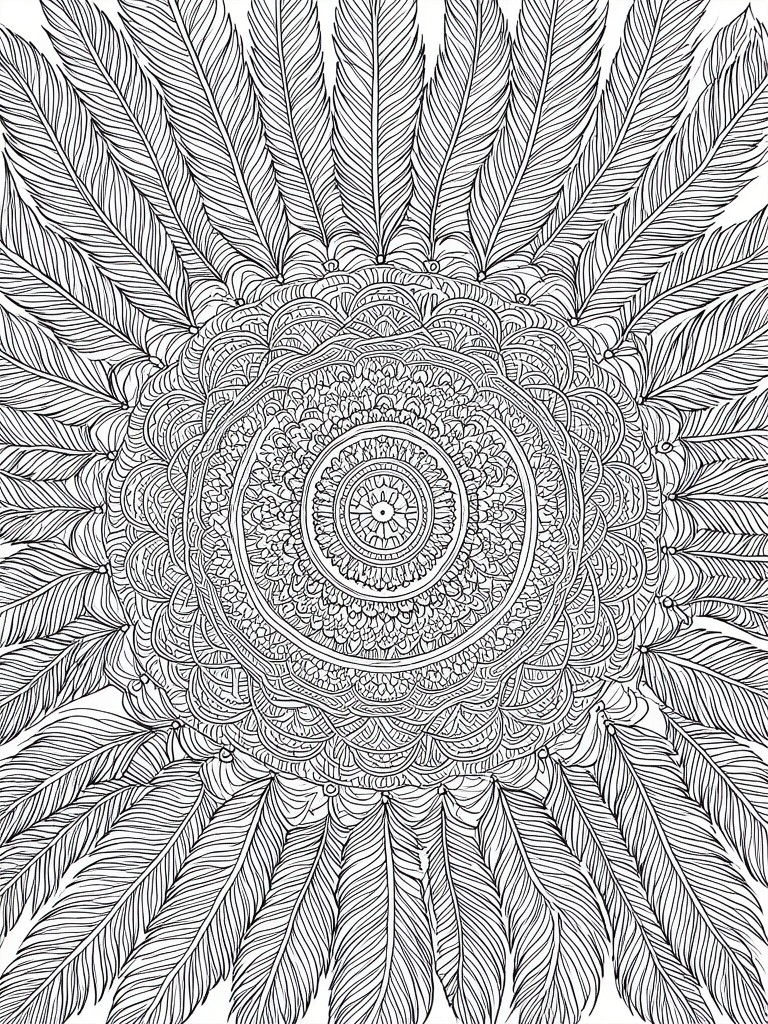
This coloring page idea uses a mandala built around repeating feather shapes that radiate outward in perfect symmetry. The feathers frame a series of smaller concentric circles filled with their own repeating motifs and fine line work. The layout keeps the focus on balanced repetition so colorers can work section by section without losing the overall structure.
What makes this page useful is the clear separation between the larger feather outlines and the tighter inner patterns. Colorers can finish the outer feathers fairly quickly before shifting to the more detailed center rings. The layout makes this easy to color for adults who prefer pattern-focused designs over loose scenes. A page like this stands out on Pinterest because the strong symmetry reads clearly even in a small preview image.
Radial Sun and Wave Mandala
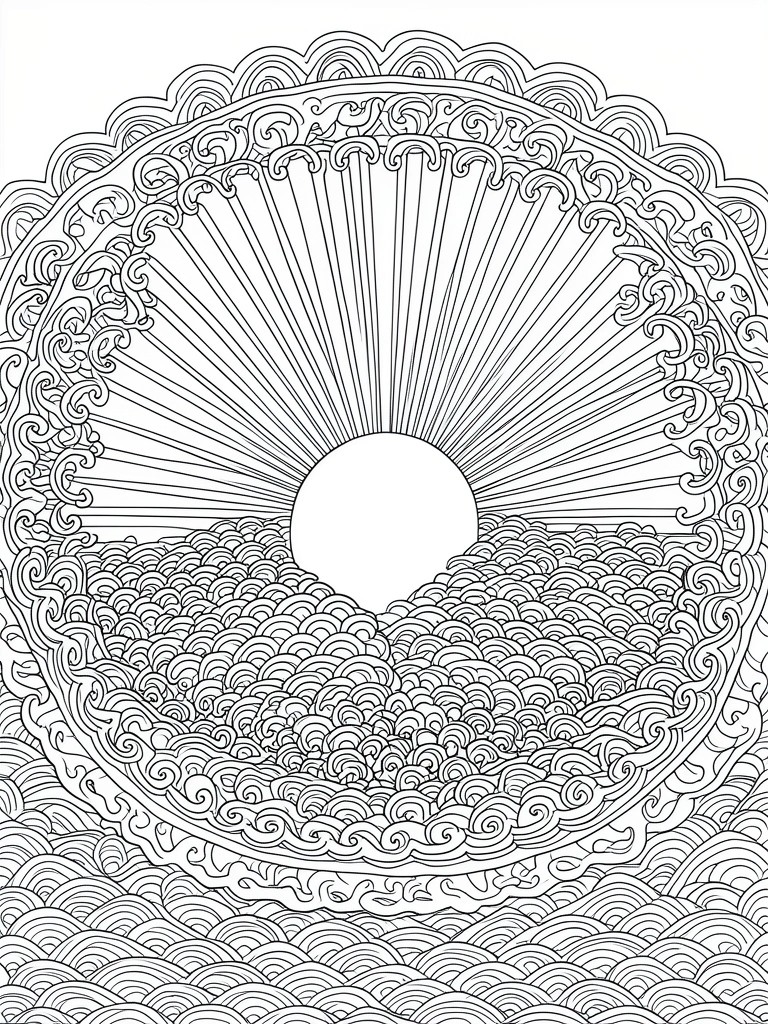
A mandala design built around a central sun with straight radiating lines sits above rows of repeating curved wave shapes. The circular frame uses layered swirls and ornate borders that mirror each other on all sides to highlight symmetry. This setup combines a natural scene with geometric repetition so colorers can focus on filling consistent patterns across the page.
The layout makes this easy to color because the rays and wave rows create natural sections that keep lines clear. A page like this works especially well for adults who want a mix of bold shapes and finer details without switching between unrelated elements. The repeating wave patterns let colorers try shading techniques while the outer border frames the whole design neatly.
Central Star Mandala with Repeating Geometric Layers
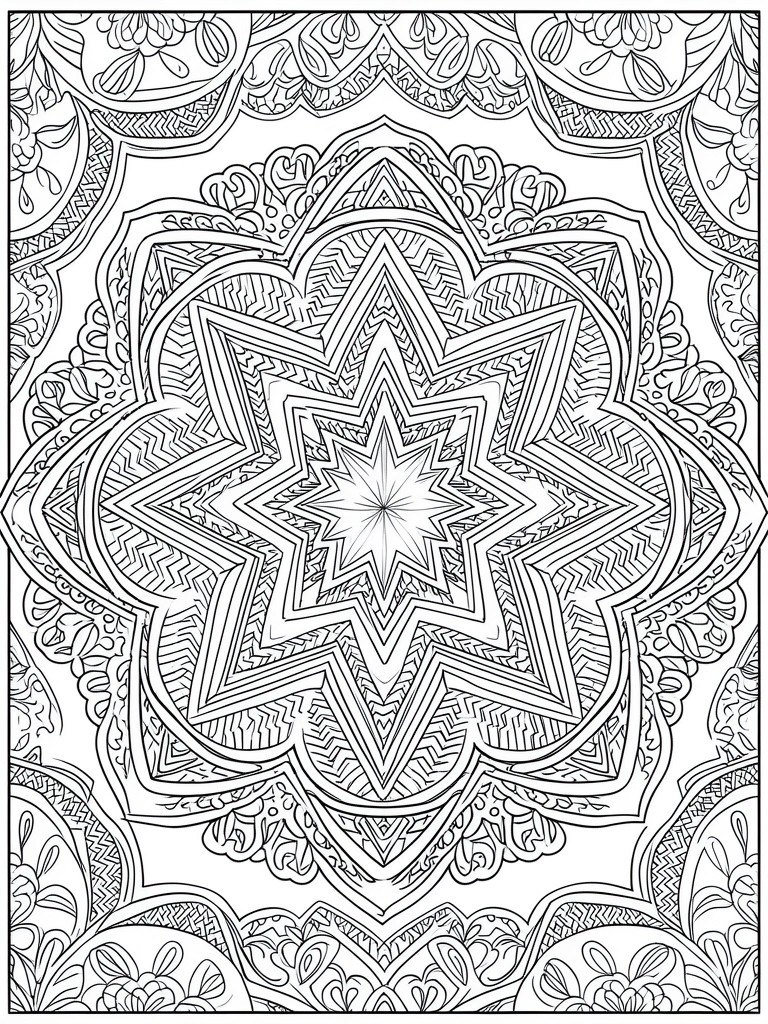
This mandala centers on an eight-pointed star built from multiple concentric layers of lines and shapes. The design repeats the same angles and curves around the circle so each section mirrors the others exactly. Outer rings add curved frames and smaller motifs that follow the same balanced spacing.
What makes this page useful is the clear repetition that lets you apply the same color sequence in each matching area. The layout makes this easy to color section by section while keeping the symmetry intact. A page like this works especially well for adults who want a structured pattern without loose or random shapes to fill. The even line spacing also supports steady color blending across identical elements.
Central Mandala with Radial Floral Rings
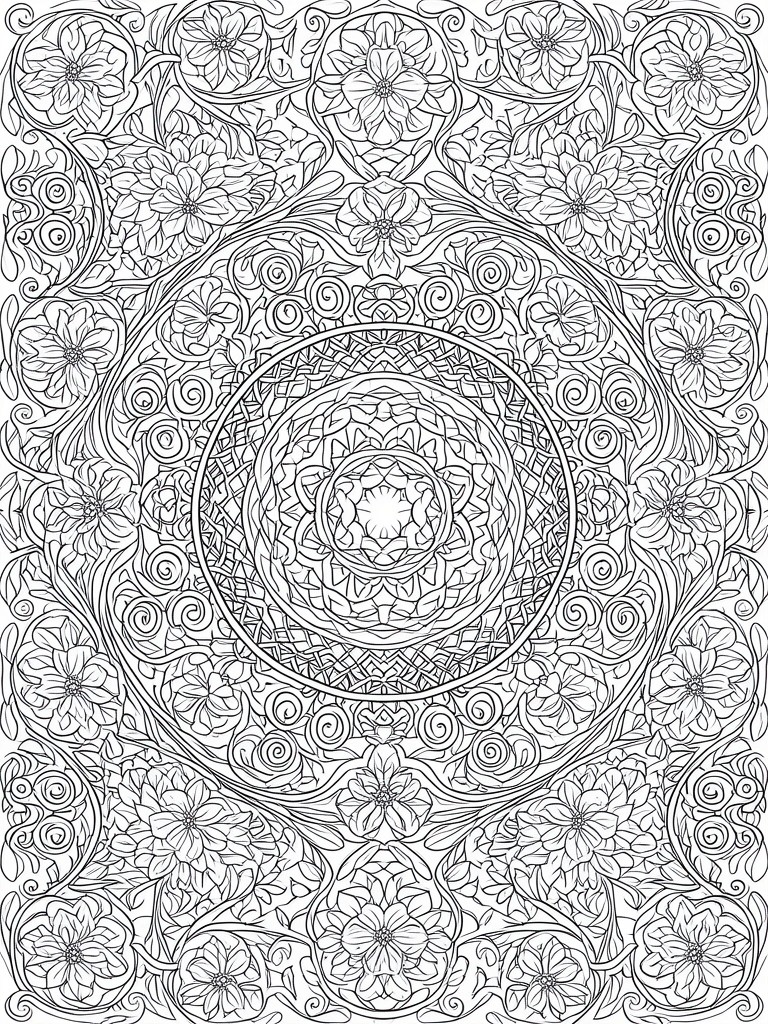
A mandala design built from a tightly detailed center circle expands outward through repeating flower clusters and vine scrolls. The layout uses strong radial symmetry to place identical motifs around the core, with the density increasing near the middle and loosening toward the edges. This structure creates a clear focal point while giving colorers repeated shapes to work with across the full page.
The layout makes this easy to color by breaking the design into distinct rings that can be tackled one section at a time. A page like this works especially well for adults who want medium to high detail without a single overwhelming area. The repeating flower and swirl elements support consistent coloring choices while still allowing small variations in shading or color placement.
Concentric Mandala Built from Repeating Geometric Shapes
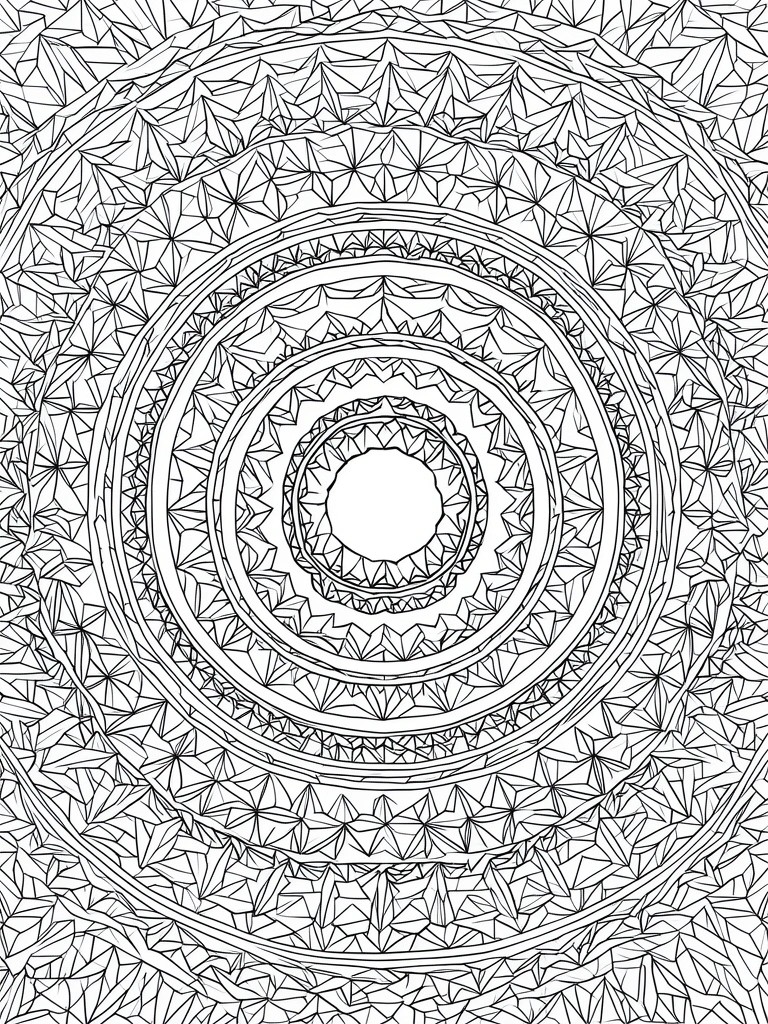
Mandala designs like this center on a series of nested circles that hold repeating angular motifs. The page uses sharp triangular forms arranged in rings to emphasize perfect radial balance. This setup creates a structured pattern that rewards careful color placement across the layers.
What makes this page useful is the clear division into rings that let colorers work section by section without feeling overwhelmed. The high level of repeating detail suits adults who prefer intricate designs over loose sketches. A page like this stands out for its focus on symmetry which guides the eye naturally during coloring sessions.
Layered Mandala with Repeating Floral and Geometric Rings
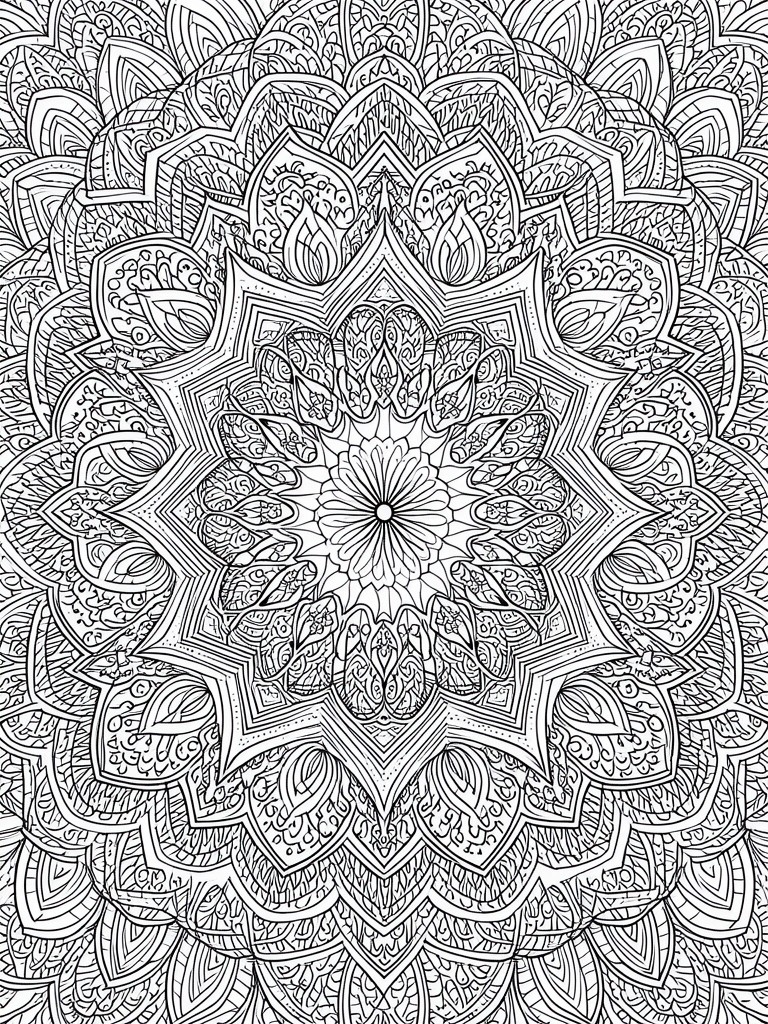
Mandala pages centered on symmetry use repeating shapes that build outward in balanced rings from the center. This design stacks petal forms, leaf outlines, and small geometric details across multiple layers to fill the space evenly. The result is a pattern-focused layout where each ring mirrors the others, giving colorers consistent shapes to work with at every level.
The detail level makes this a smart pick for adults who enjoy focused pattern work over quick sessions. What makes this page useful is the clear repetition, which lets colorers repeat color schemes across matching sections without constant new decisions. A page like this works especially well for testing gradients and texture techniques on similar motifs that appear throughout the design.
Symmetrical Snowflake Mandala with Insect Motifs
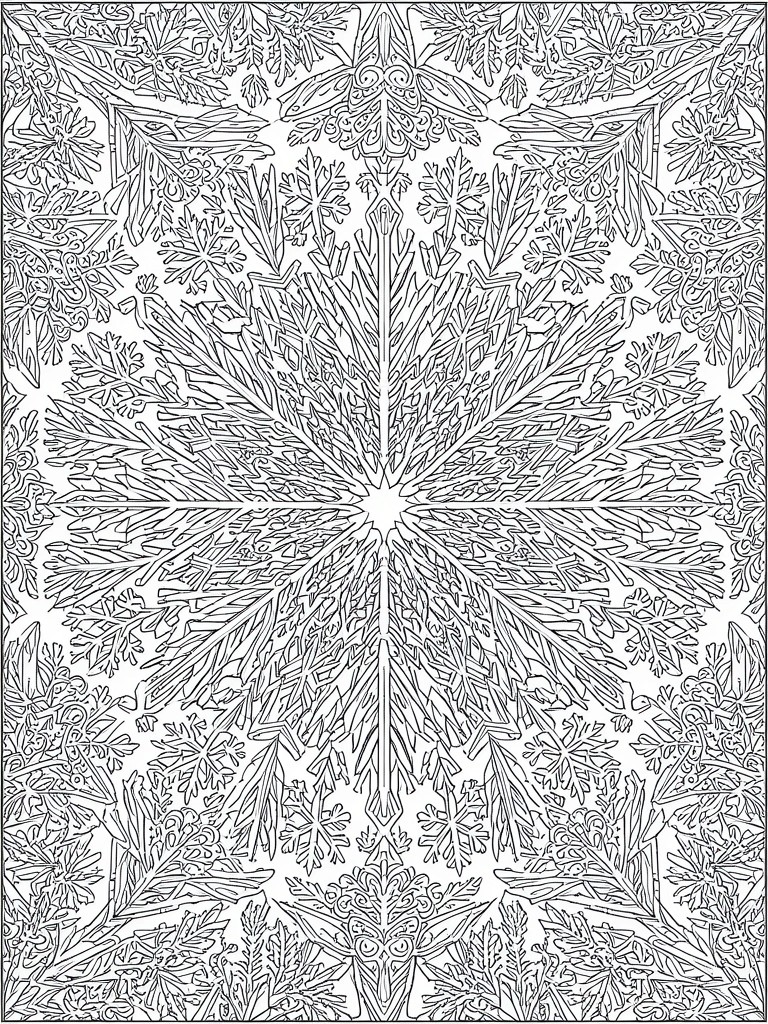
This mandala builds around a central point with repeating snowflake and pine needle patterns that extend outward in balanced sections. Insect shapes sit at the outer edges to break up the circular layout while still following the same radial lines. The design uses dense line work in some areas and larger open shapes in others to create variety within one consistent pattern.
The layout makes this easy to color because the symmetry lets you repeat the same color choices across matching sections without constant decisions. Detail level suits adults who prefer longer sessions over quick pages since the smaller snowflake clusters take time to fill. A page like this works especially well for winter themes and can be printed to test different color schemes on the repeated elements.
Rose Mandala Built from Repeated Floral Rings
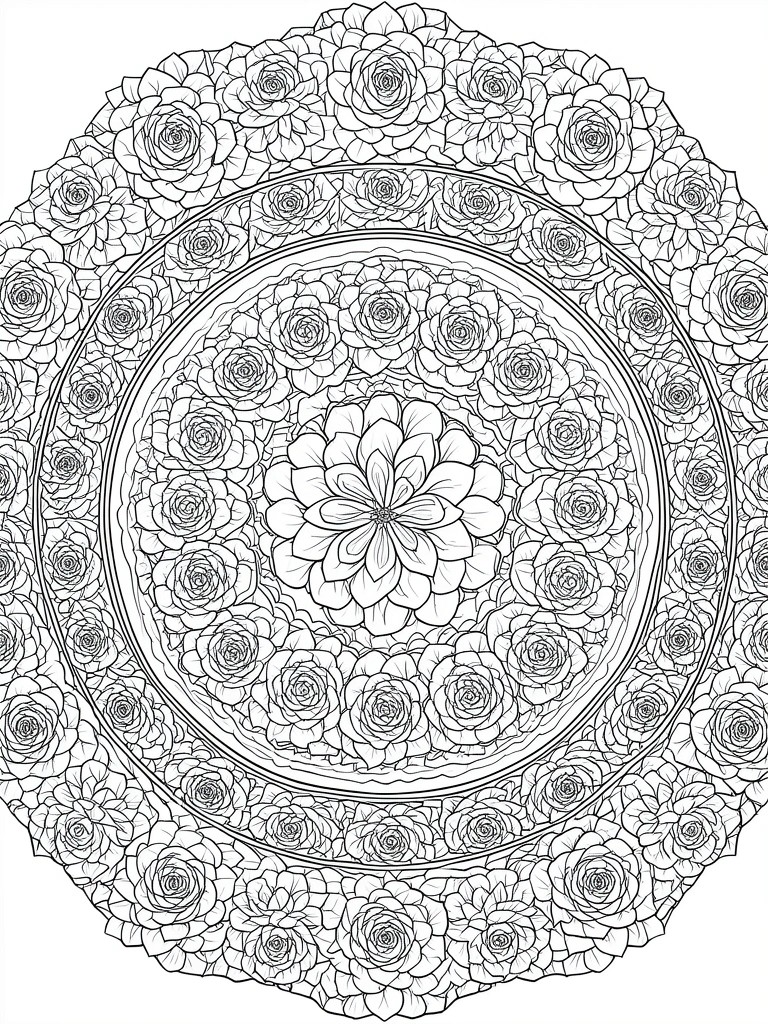
This mandala uses rings of rose shapes that repeat around a central flower to create a clear pattern of symmetry. The design places identical motifs in concentric layers so each ring mirrors the ones beside it. Clean outlines separate the rings and let color choices stay consistent across matching shapes.
The layout makes this easy to color because the repeated flowers let you apply the same technique without starting over each time. A page like this works especially well for adults who want a pattern-focused session that still has enough detail to hold attention. The even spacing between rings helps track progress as sections get filled in.
Concentric Rings Mandala with Repeating Motifs
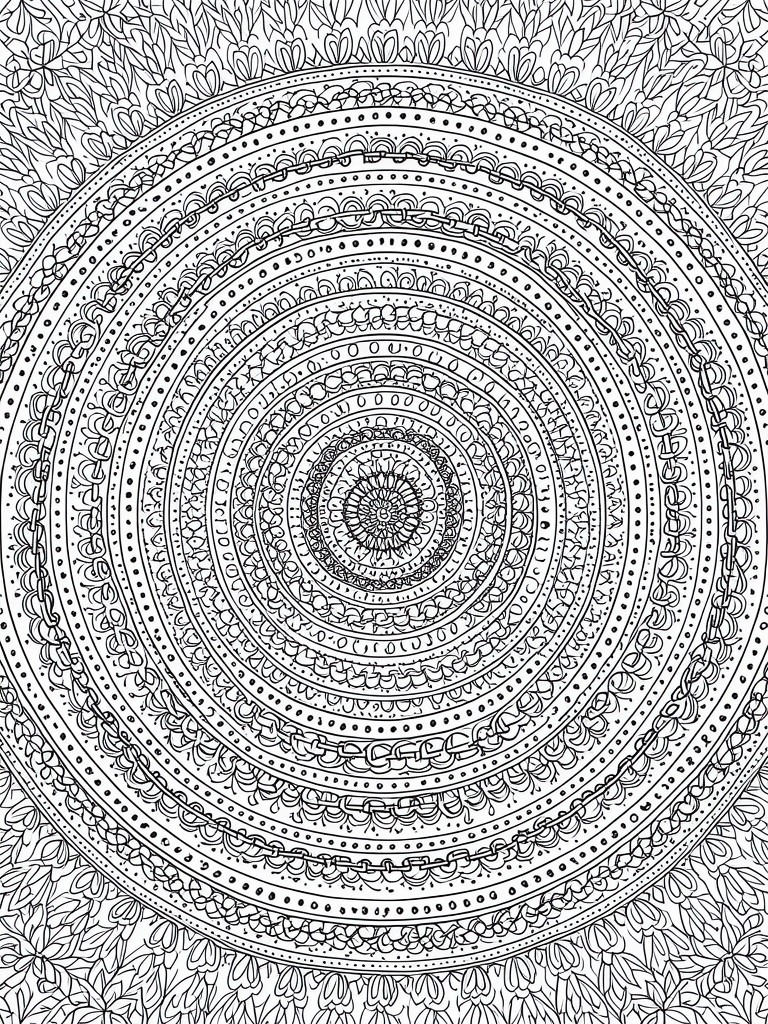
A mandala built from layered circular rings creates a clear structure for exploring symmetry through repeated shapes and line patterns. Each ring introduces new variations with dots, curves, and small motifs that maintain the overall balance while adding visual interest as the design expands outward. The outer border uses a consistent floral repeat to enclose the central layers and complete the circular composition.
The layout makes this easy to color ring by ring without losing track of the larger pattern. What makes this page useful is the even spacing between sections, which supports steady progress even when working on fine details. A page like this works especially well for adults who prefer intricate repetition over loose scenes. The dense line work rewards careful color choices across multiple sessions.
Frequently Asked Questions
What is the importance of symmetry in these mandala designs? Symmetry creates a balanced visual structure that guides the eye naturally around the page. This focus helps colorists develop steady hand movements and a sense of order while filling in sections. Many people find that coloring symmetrical patterns encourages mindfulness because each mirrored element requires consistent attention and decision making.
How does repetition enhance the coloring experience in these pages? Repetition builds rhythmic patterns that make it easier to choose colors and maintain flow across the design. By repeating shapes and motifs, the pages allow colorists to experiment with color variations without feeling overwhelmed. This approach often leads to a meditative state as the repeated elements create a predictable yet creative process that reduces stress.
Are these mandala coloring pages suitable for beginners? Yes, the emphasis on symmetry and repetition makes them accessible because the structured layouts provide clear guidelines for where colors can go. Beginners can start with simple sections and build confidence gradually. The designs also work well for more experienced colorists who want to explore advanced shading techniques within the repeating frameworks.
What materials work best for bringing out the details in these pages? Colored pencils or fine tip markers are ideal because they allow precise application in the intricate symmetrical areas. Gel pens can add vibrant highlights to repeated motifs without bleeding through paper. Using a light touch with blending tools helps maintain the clean lines that define both symmetry and repetition throughout each page.
How can coloring these pages support relaxation and focus? The combination of symmetrical balance and repeated elements creates a calming rhythm that slows racing thoughts during the activity. Colorists often report improved concentration as they match colors across mirrored sections. This process turns coloring into a form of active meditation that leaves users feeling refreshed and mentally clear afterward.
