

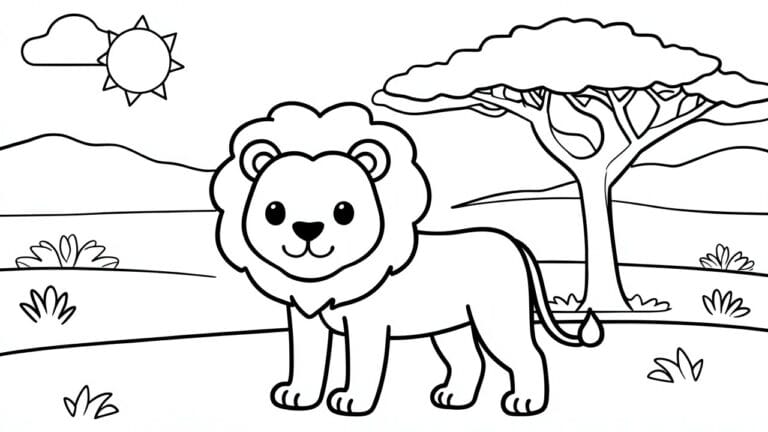
I often look for coloring pages that can tie into what kids are learning in school.
These animal ones seem helpful because they can spark questions about where animals live and what they eat.
I have used similar pages with my own kids and it usually leads to some interesting chats.
It feels like a simple way to mix art time with a bit of science without making it feel like a lesson.
Savanna Lion Coloring Page for Habitat Lessons
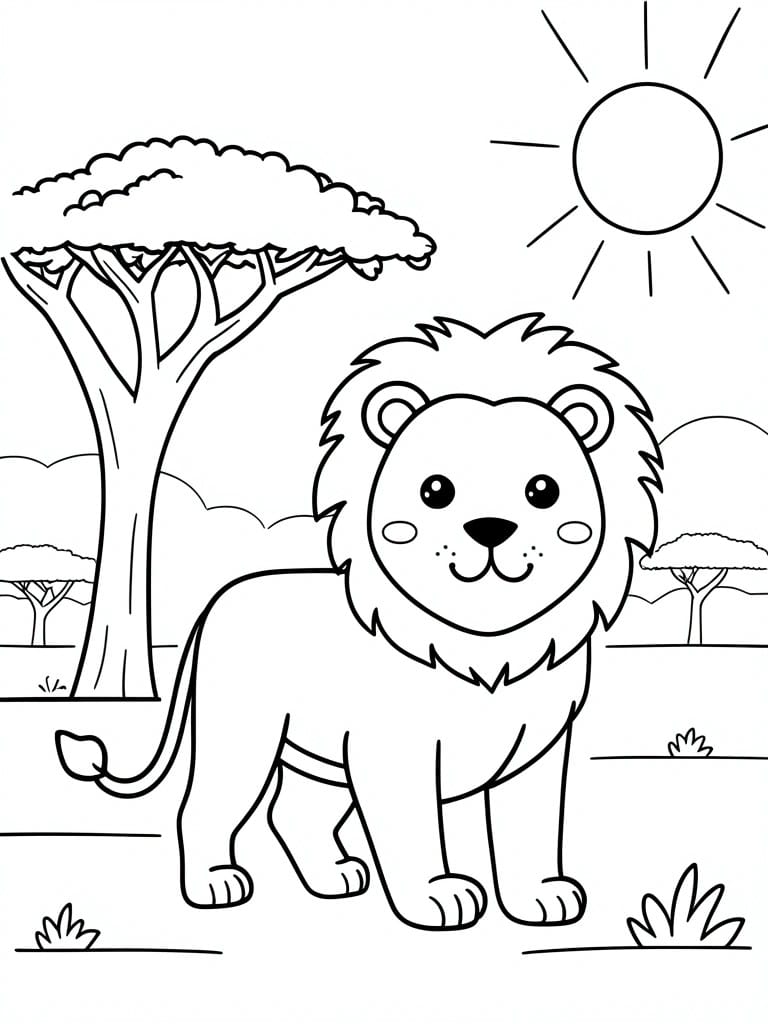
A lion coloring page set against a savanna background pairs the animal with basic habitat elements like an acacia tree, distant hills, and a sun. The design uses clear, bold outlines and open spaces that keep the focus on the lion while adding just enough context to show where it lives. This approach turns a standard animal subject into a simple scene that supports early talks about grasslands and wildlife.
The layout makes this easy to color because the shapes remain large and distinct with minimal overlapping lines. Kids can color the lion first and then fill in the background without feeling overwhelmed. A page like this works especially well for kindergarten groups since the moderate detail level matches short attention spans while still offering room for color variety.
Penguin Habitat Scene for Science Talks
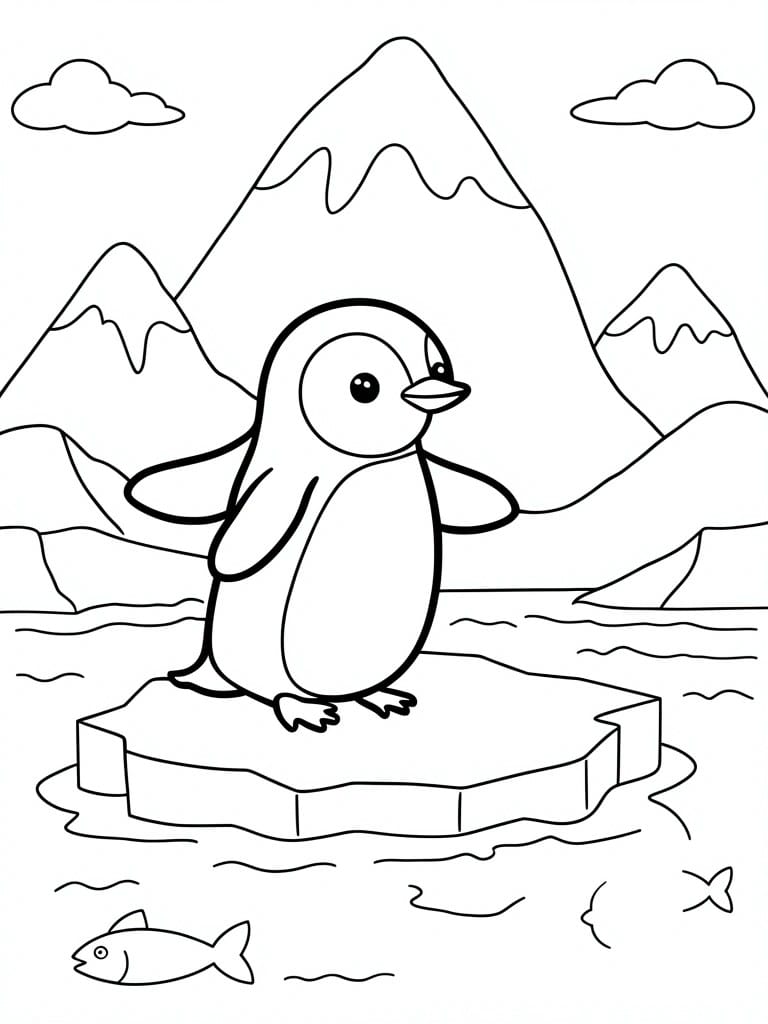
A penguin centered on a floating iceberg forms the core of this coloring page, placed against a backdrop of mountains and open water. Clean bold outlines define the animal and its surroundings in a simple cartoon style that keeps the focus on the main subject. The layout includes a fish in the water and scattered clouds, giving the page a complete but uncluttered habitat view that leaves plenty of space to color.
What makes this page useful is the clear connection between the animal and its environment, which helps start conversations about where penguins live. The basic shapes and open areas let kindergarteners color comfortably while still seeing the full scene. A page like this works especially well for early science activities because the single animal and setting invite questions about ice, water, and food sources without adding extra complexity.
Pond Frog and Tadpole Coloring Page
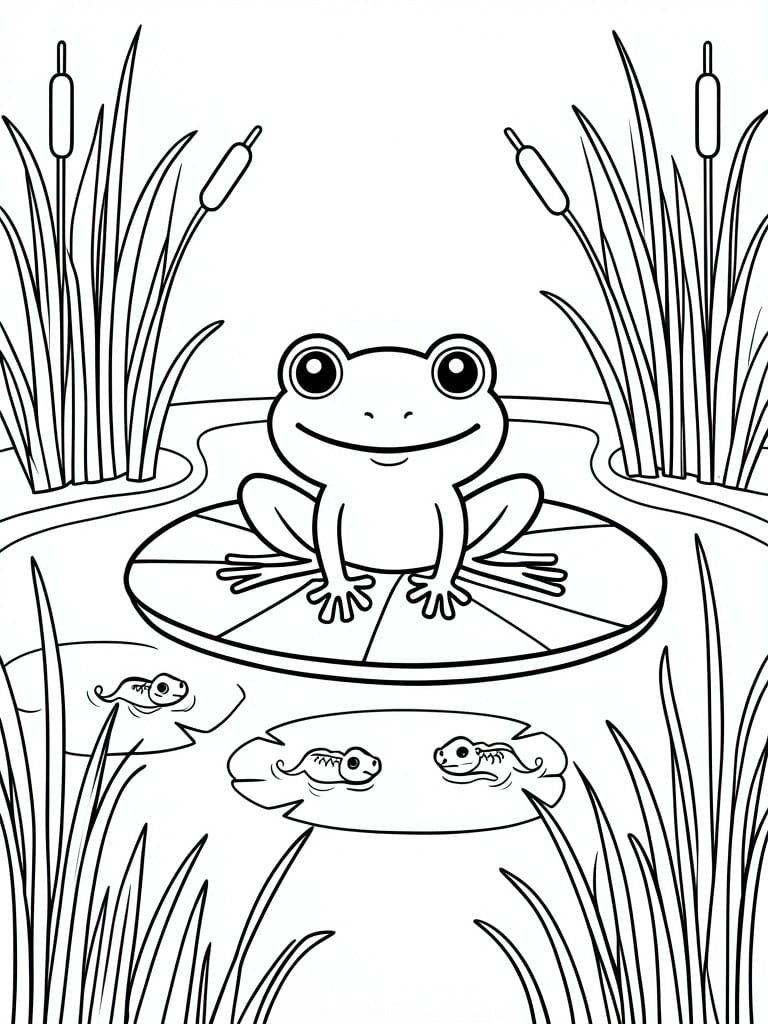
A frog life cycle scene places a large frog on a lily pad with tadpoles nearby in the water. The layout uses simple outlines and separate sections for the main animal, the smaller swimmers, and the surrounding reeds. This setup keeps the focus on the animals while leaving clear areas for color.
What makes this page useful is the straightforward shapes that let beginners color without frustration. The open water areas and distinct plant lines make it easy to finish in one sitting. A page like this works especially well for kindergarten science talks because the tadpoles and adult frog appear together on the same sheet. The spacing avoids tiny details so young colorers can focus on the habitat idea instead of precision work.
Butterfly Life Cycle Coloring Page
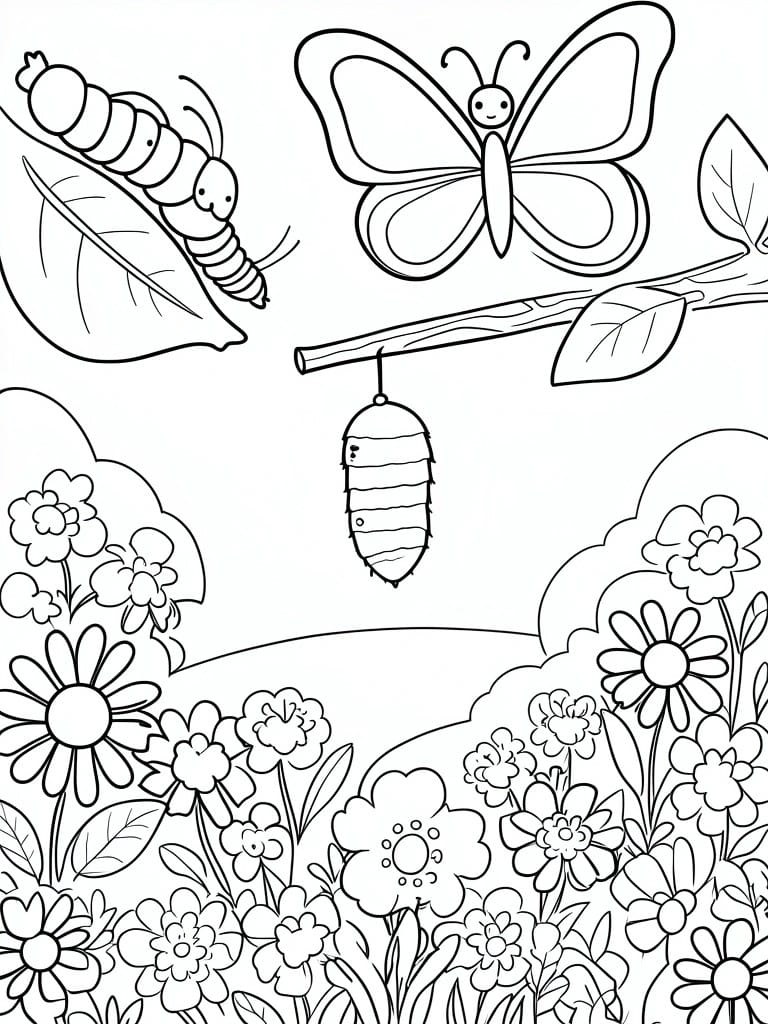
This coloring page centers on the stages of butterfly metamorphosis set against a garden backdrop. The design places the caterpillar, hanging chrysalis, and adult butterfly in separate areas above a dense row of flowers. Clear outlines separate each stage while the lower flowers fill the remaining space with repeating petal and leaf shapes.
What makes this page useful is the way the three insect stages sit apart from one another, making it simple to talk about each one during a science lesson. The flowers create a steady pattern that is easy to color without crowding the main subjects. For kindergarten classrooms, the mix of larger open shapes and smaller flower details gives kids a choice between quick coloring and more careful work. The page prints clearly on standard paper and works well for short sessions focused on insect changes.
Bee Flying Through a Flower Meadow
A bee serves as the central subject in this meadow scene filled with multiple flower types and a distant hill line. The style relies on clear outlines and open areas between blooms rather than tight patterns or heavy background fill. The composition places the insect near several large flowers while leaving sky and field space for color choices.
The layout makes this easy to color because the main shapes stay distinct and spread out. Kids can focus on the bee and bigger petals first before filling smaller stems and leaves. A page like this works especially well for quick sessions since the design avoids tiny details that require fine control.
Bird Nest Scene for Discussing Animal Homes
A nesting bird offers a direct example of animal homes and parenting behaviors for young learners. The design places the bird and nest at the center with surrounding branches and leaves filling the rest of the page. Speckled eggs and the textured nest give colorers clear spots to practice staying inside lines while adding patterns.
The layout makes this easy to color because the main subjects sit in the middle with plenty of space around them. Leaves provide large areas for quick color while the nest lines invite smaller strokes. For kindergarten science talks this page connects well to lessons on where birds live and how they protect eggs.
Whale and Fish Ocean Scene for Marine Life Lessons
A large whale swims beside a striped fish through rolling waves under a sky with scattered birds. The design uses bold outlines and flowing water lines to separate the main animals from the background. This creates clear areas for color while keeping attention on two sea creatures side by side.
What makes this page useful is the simple shapes that let kindergarteners focus on the animals without extra patterns. The layout makes this easy to color quickly during short classroom sessions. A page like this works especially well for pairing with basic facts about whales and fish living in the same habitat. The open wave sections help beginners build confidence before moving to more detailed pages.
Sea Turtle Coral Reef Page
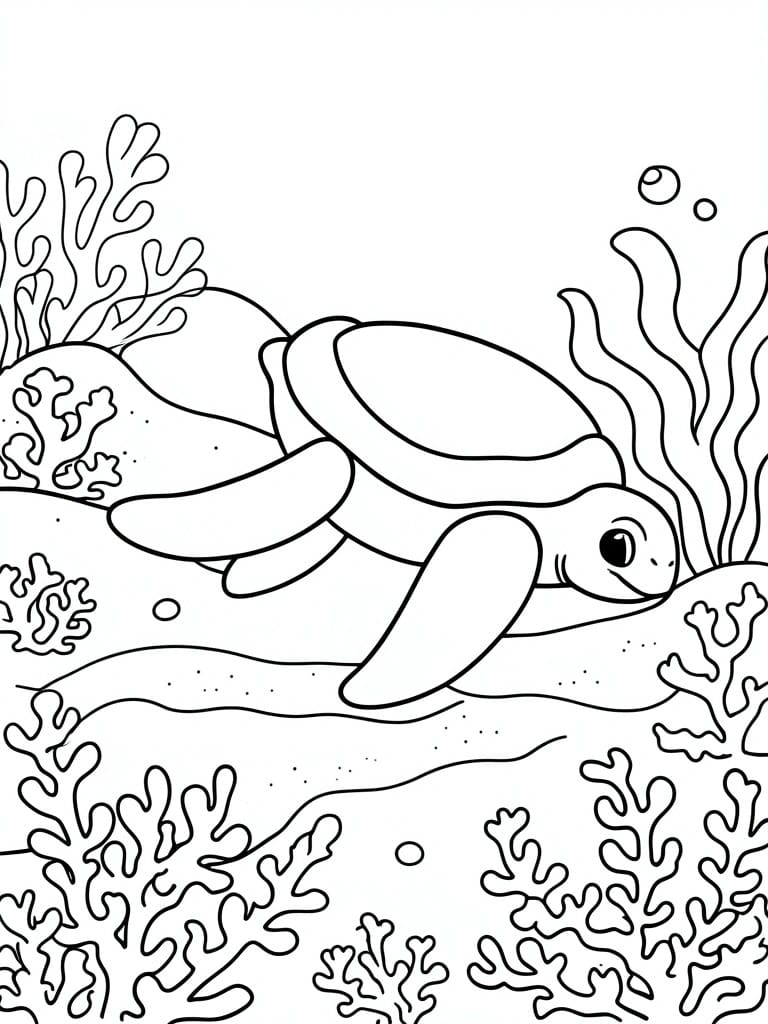
A sea turtle coloring page centers on a large turtle moving through an underwater setting surrounded by coral clusters and tall seaweed. The design uses simple outlines with scattered bubbles and open water space to show motion without crowding the main subject. Coral shapes vary in size and pattern along the edges while the turtle remains the clear focal point in the middle.
The layout makes this easy to color since the main shapes stay separate and the background elements leave room for quick fills. A page like this works especially well for kindergarten science talks about ocean animals because the subject stays recognizable even with basic coloring. The mix of flowing lines and dotted details keeps the page interesting without requiring fine control.
Ladybug on a Leaf in a Garden Setting
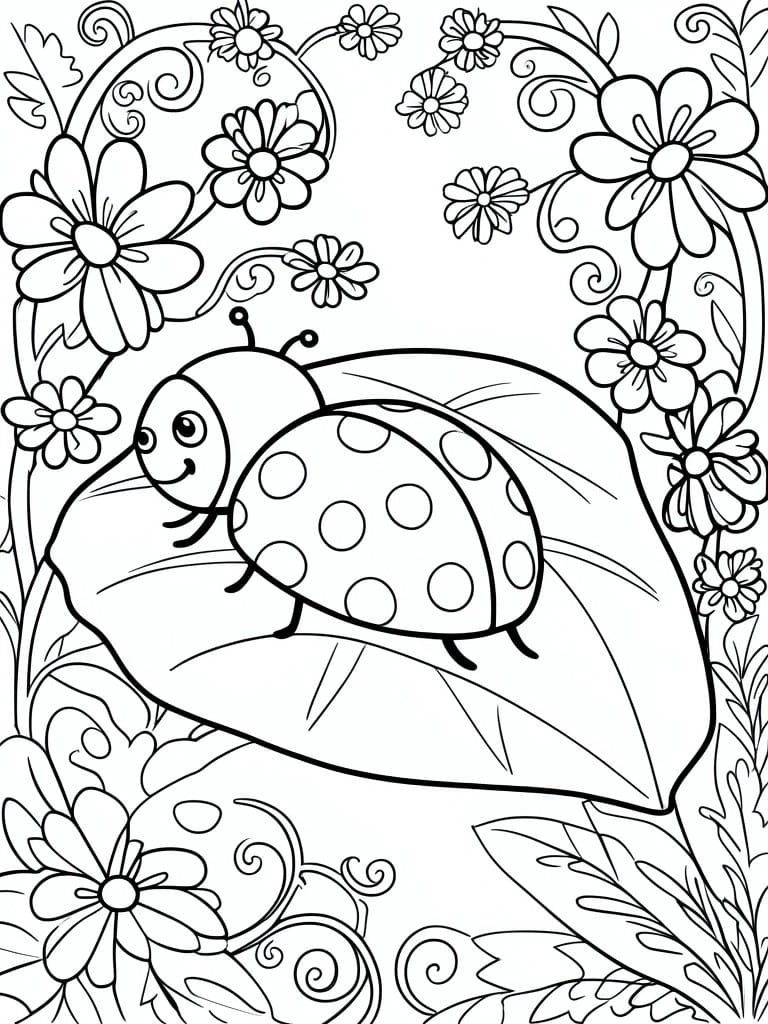
A ladybug coloring page places the insect as the central subject on a large leaf with visible veins and spots across its back. The style uses bold outlines and a nature scene filled with flowers and curling vines that frame the main figure without crowding it. Open spaces around the petals and leaves give clear sections for adding color while the ladybug’s simple shape keeps the focus easy to find.
The layout makes this easy to color because the main shapes stay large and separate from the surrounding plants. Kids can finish the ladybug quickly and then spend more time on the flowers if they want. A page like this works especially well for kindergarten science talks since the insect stands out clearly against the garden background. The balance of bold spots and lighter line work helps the page print cleanly for repeated use.
Owl in a Nighttime Setting
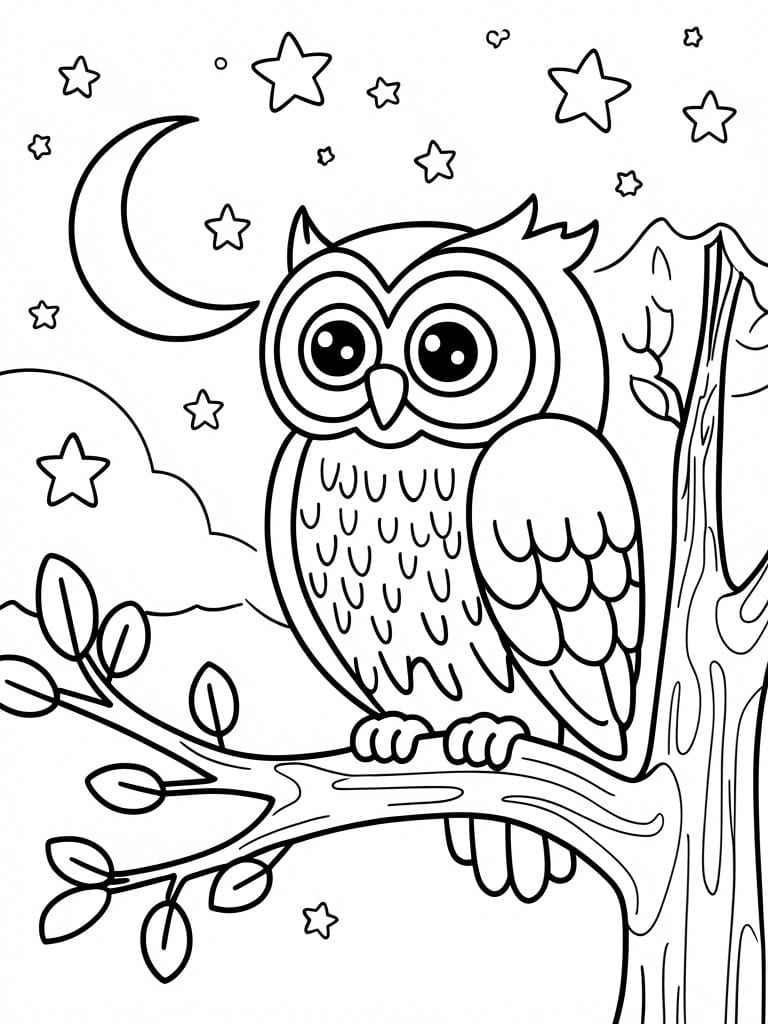
An owl serves as the main subject here with a nighttime sky that includes a crescent moon and stars around it. The page uses simple line work with repeated curved lines for the feathers and open areas in the background. This creates a clear composition centered on the owl perched on a branch with leaves and a tree trunk on one side.
What makes this page useful is the way it pairs an animal with basic night sky elements that fit early science talks about owls and when they are active. The layout makes this easy to color since the main shapes stay large while the feather lines give kids something extra to fill without crowding the page. For kindergarten use the design keeps the focus on one animal in its setting so it prints clearly and stays engaging for short coloring sessions.
Rabbit Leaping in a Meadow Scene
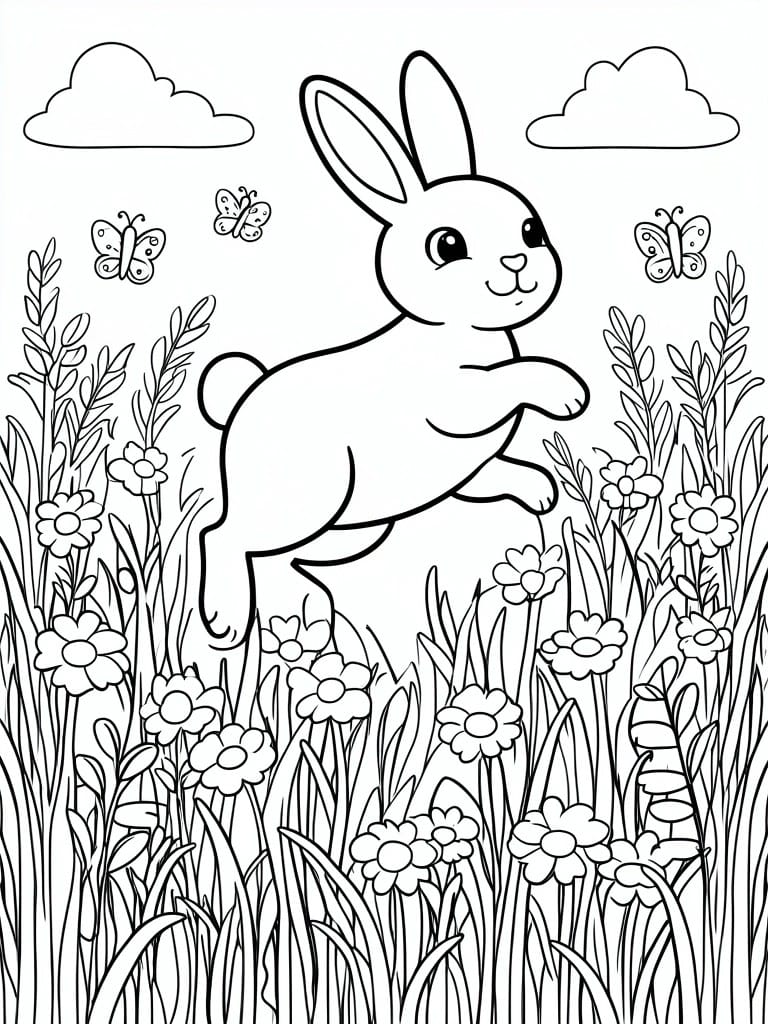
A central rabbit in mid-hop anchors this coloring page amid tall grass, scattered flowers, and a handful of butterflies. The style uses bold clean outlines with open areas in the petals, leaves, and sky so colorers can fill shapes without tight spots. Clouds sit lightly at the top to frame the outdoor setting while keeping the focus on the animal and plants below.
The layout makes this easy to color because the rabbit stays large and separate from the background elements. Kids can work on the main figure first then add color to the flowers and grass in any order they choose. A page like this works especially well for short sessions since the shapes remain simple and the overall scene does not feel crowded. The mix of one animal with repeating plant patterns also gives a natural topic for talking about rabbits and spring growth.
Mother and Baby Elephants in a Palm Tree Habitat
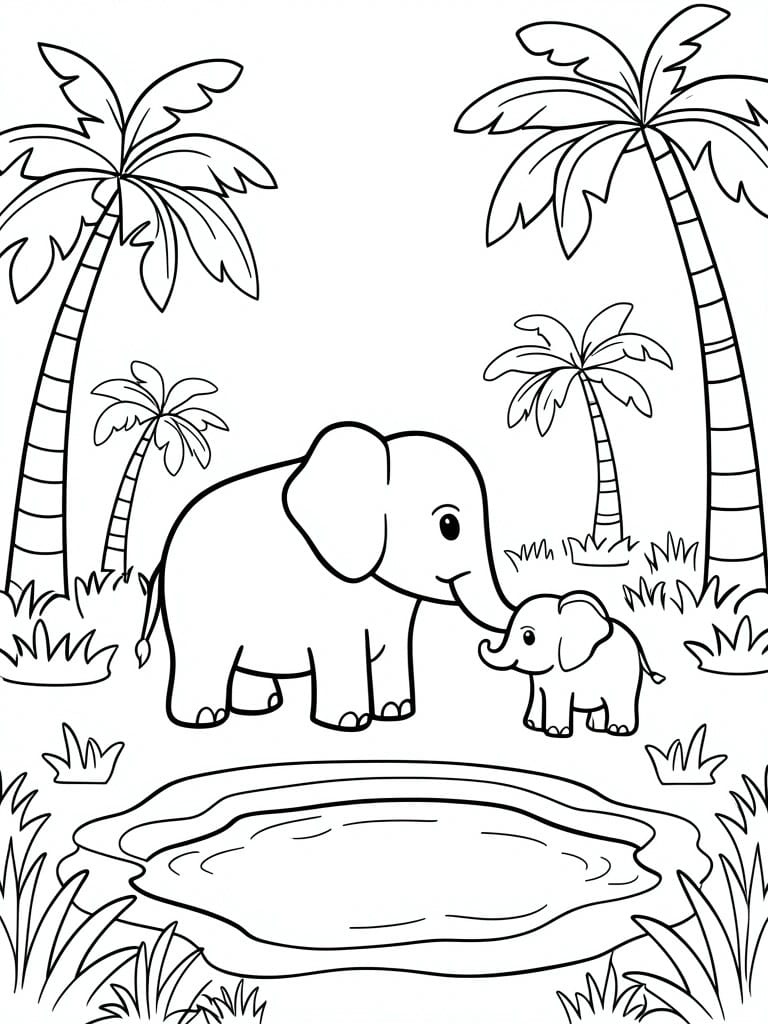
This coloring page centers on two elephants of different sizes standing side by side in an open space. Tall palm trees frame the scene on both sides while a pond stretches across the bottom. The clean outlines and spread-out composition give colorers room to work on the animals first before adding the surrounding plants and water.
What makes this page useful is the clear size difference between the two elephants, which supports simple conversations about animal growth. The layout makes this easy to color because the main subjects have large, unbroken areas and the background trees stay separate. A page like this works especially well for kindergarten age because the shapes stay basic while still showing a habitat with water and trees. The open pond area also lets kids practice filling bigger spaces without tight patterns getting in the way.
Chameleon Among Patterned Leaves
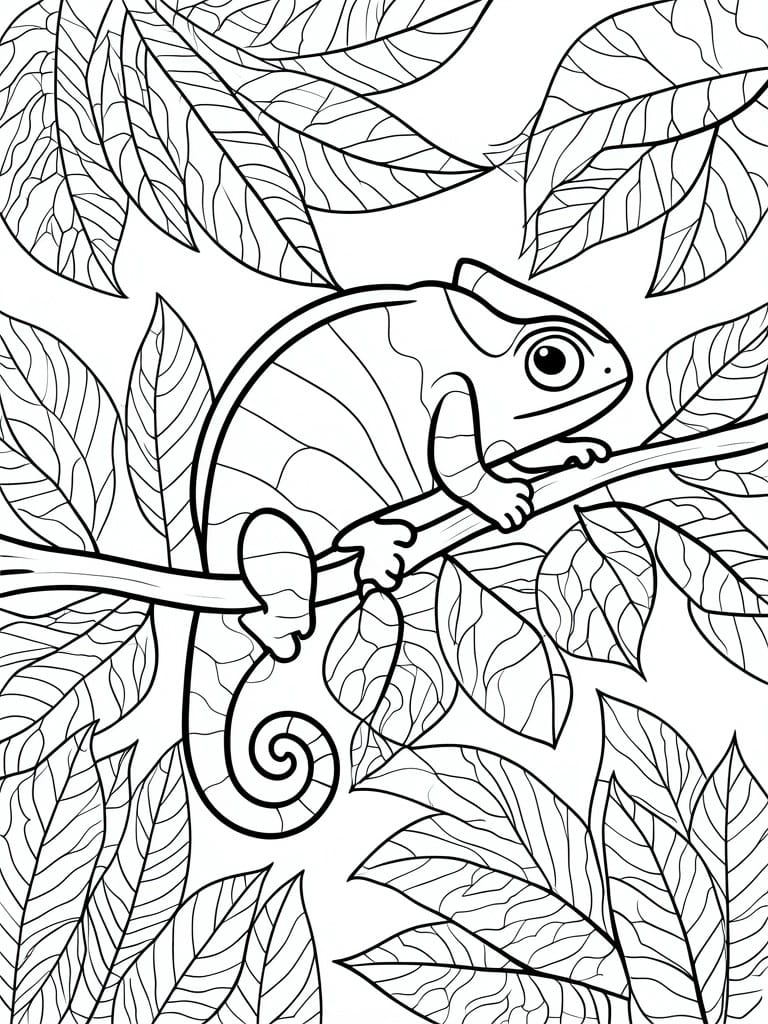
A coloring page built around a chameleon gives kids a clear view of reptile body parts like the curled tail and gripping feet. The layout places the animal on a branch with leaves filling the rest of the space, each leaf carrying simple vein lines that repeat across the page. This arrangement keeps the focus on the animal while adding enough background structure to make the whole sheet feel complete.
The layout makes this easy to color because the main shapes stay large and the extra lines stay contained inside the leaves. Kids can start with the chameleon and then fill the surrounding patterns without switching between tiny sections. A page like this works especially well for early science talks since the single animal stands out clearly against the foliage.
Clownfish Coral Habitat Page
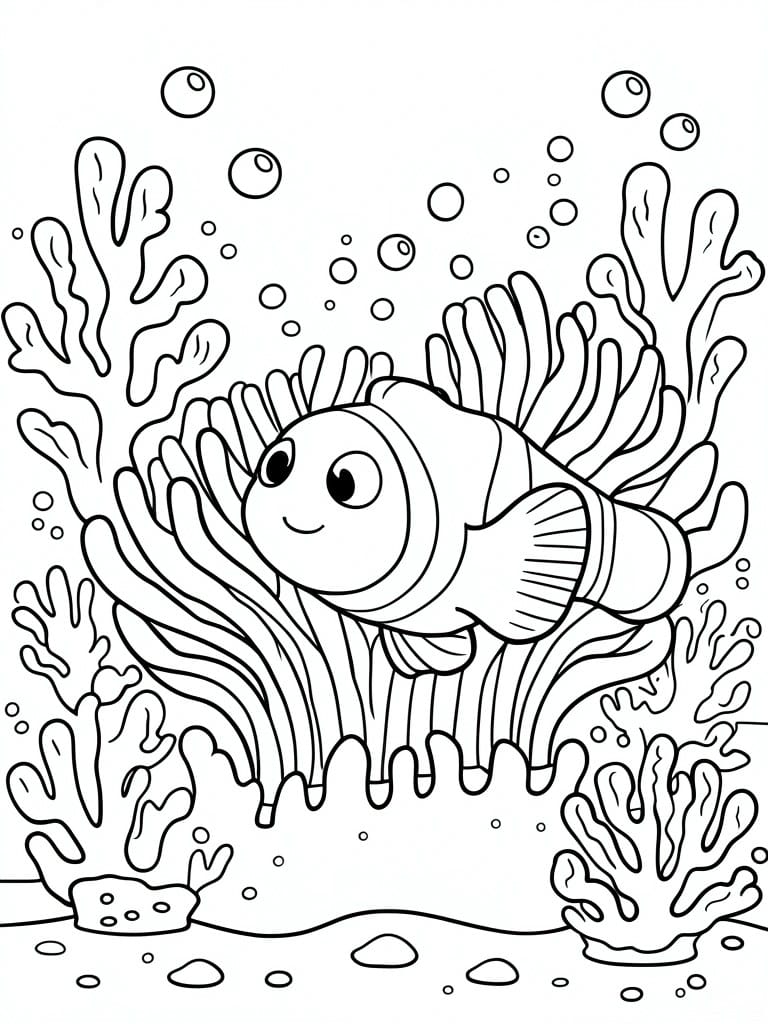
A clownfish coloring page centers on one fish swimming through an underwater setting filled with layered coral and seaweed shapes. The page uses bold outlines and open areas around the main subject with scattered bubbles and smaller sea plants filling the background. Different coral forms create natural sections that let colorers switch between larger spaces and smaller details without crowding the layout.
What makes this page useful is the clear central subject that stays easy to spot while the surrounding elements add light variety. The layout makes this easy to color because the lines stay thick and separate, reducing the chance of going outside the edges. A page like this works especially well for kindergarten groups since the shapes stay recognizable and the overall design avoids tight patterns. The open water areas give beginners room to practice without frustration while still showing a complete ocean scene.
Deer in a Pine Forest with Mushrooms
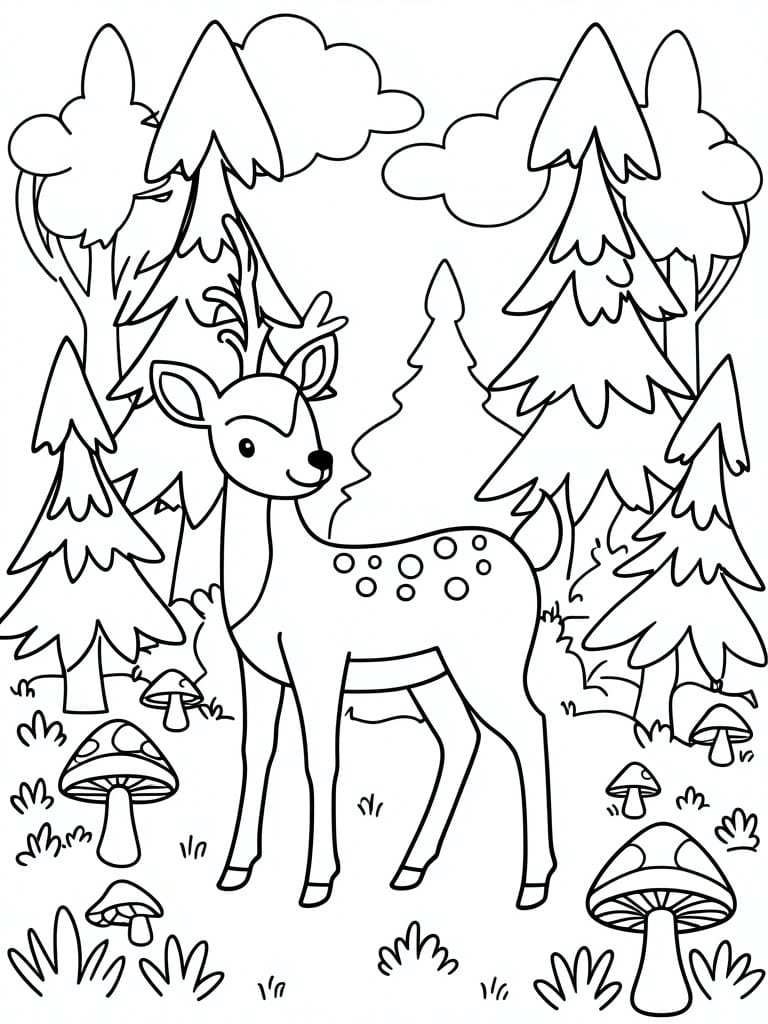
A woodland deer coloring page centers on a young deer surrounded by tall pine trees and various mushrooms scattered at ground level. The design uses clear outlines with simple spots on the deer and repeated tree and fungi shapes to build a full forest setting. This kind of page combines one main animal with habitat elements so children can color both the subject and its surroundings in one go.
The layout makes this easy to color because the deer takes the middle space while trees and mushrooms fill the sides without crowding each other. Kids can use a few colors for the repeated pine shapes and switch to different shades for the mushrooms and grass patches. A page like this works especially well for kindergarten science talks since it shows a common forest animal next to the plants and fungi it lives among.
Woodland Squirrel with Acorn
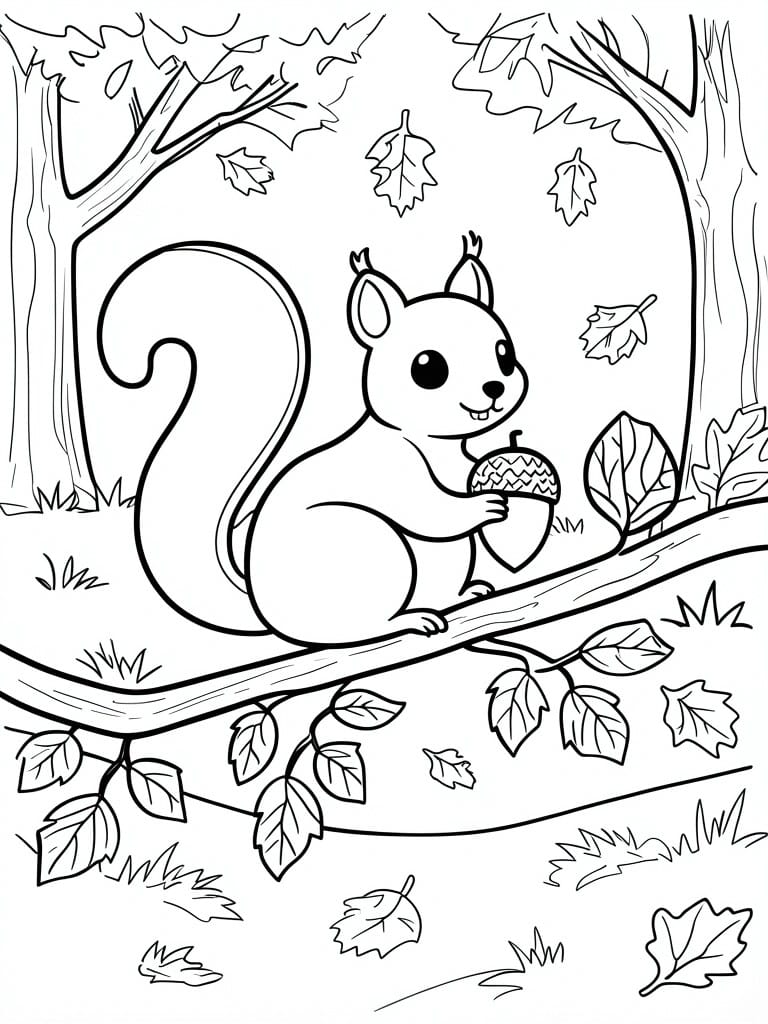
A squirrel holding an acorn on a tree branch serves as the main subject in this forest scene coloring page. Trees frame the sides while leaves scatter across the background and foreground to suggest an outdoor setting. The design uses bold outlines and open areas that keep the focus on the central animal without dense patterns.
The layout makes this easy to color because the squirrel and branch create clear shapes with room around them for filling in colors. What makes this page useful is how the single animal subject pairs with simple background elements to support short talks about animals and seasons. For kindergarten groups, the moderate detail level works well since it avoids tiny spaces while still giving enough to color.
Kangaroo Mother and Joey Habitat
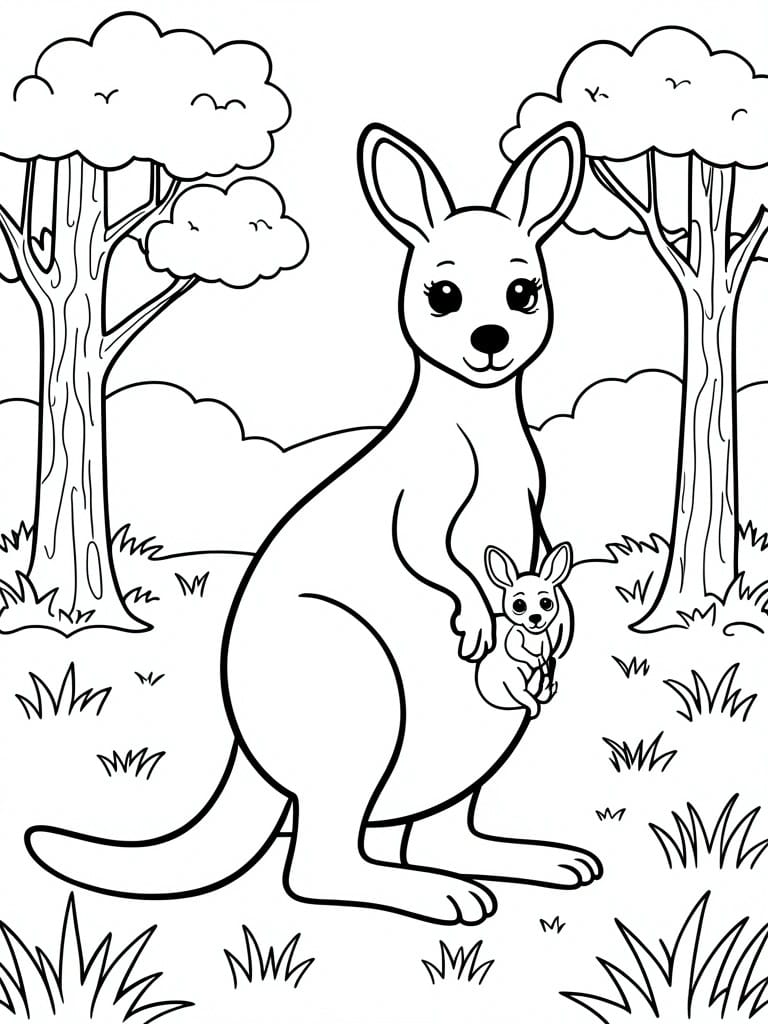
Kangaroo coloring pages centered on family pairs work well for early lessons about marsupials and their care habits. This design uses a simple cartoon style with thick lines that separate the adult kangaroo, the joey in the pouch, and the surrounding trees and grass into clear sections. The full scene layout places the animals in the middle with background trees and ground details filling the space without crowding the main subjects.
What makes this page useful is the balanced mix of animal focus and habitat elements that support short science talks. The layout makes this easy to color because the shapes stay large and the lines stay distinct. A page like this works especially well for kindergarten groups since the open spaces let kids add color quickly while still practicing control. The single animal pair keeps the activity short enough to finish in one sitting.
Snail in a Garden Habitat Coloring Page
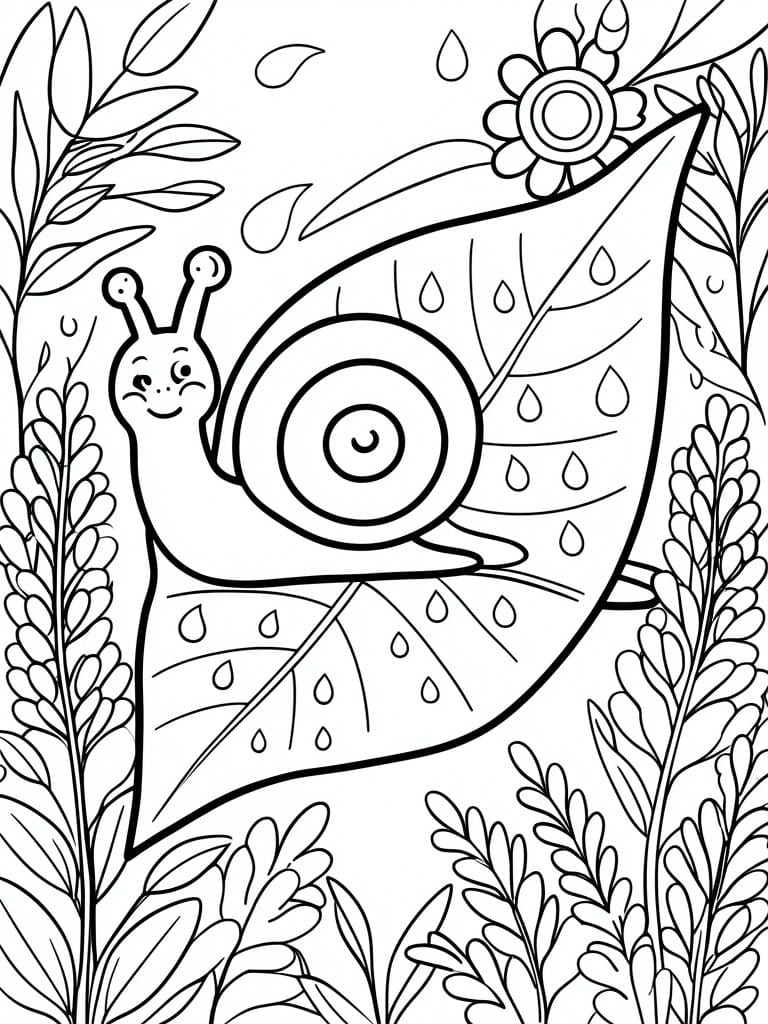
A snail with a clear spiral shell sits on a large leaf marked with raindrops and simple veins. The page places this single animal among surrounding plants and one flower to form a complete outdoor scene. Bold outlines and repeated drop shapes create distinct sections that stay easy to follow during coloring.
What makes this page useful is the way it combines one main animal with habitat elements like leaves and moisture. The layout leaves enough open space on the leaf and background for steady coloring without tight spots. A page like this works especially well for kindergarten groups because it supports quick talks about where snails live and what they need. The mix of big shapes and small details also gives beginners room to practice while still offering something extra for those who want to add patterns.
Fox and Crystal Landscape for Nature Lessons
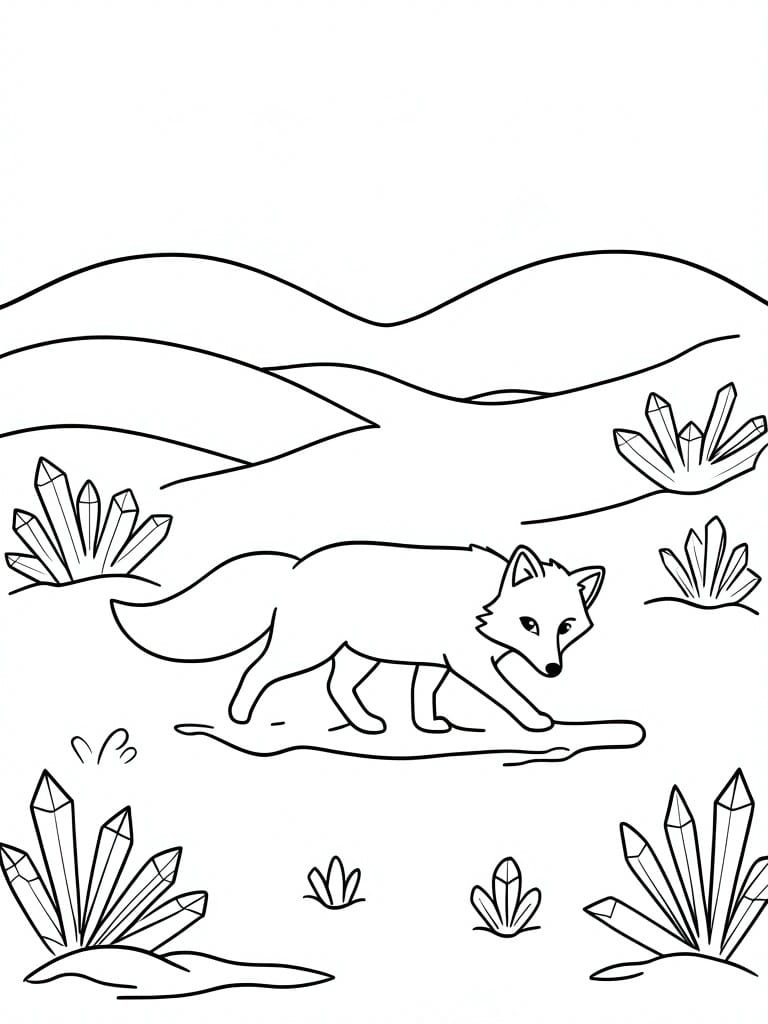
A fox moves across open ground surrounded by clusters of crystals and gentle hills in the distance. The page mixes one central animal with angular mineral shapes placed at varying distances to create a balanced scene. Clean lines and open areas let colorers focus on the fox body while filling in the geometric crystals around it.
The layout makes this easy to color because the fox stands out as the main subject without crowding the page. Kids can color the animal first and then try different shades on the crystals to match simple lessons about rocks and wildlife. A page like this works especially well for kindergarten printables since the subject matter connects directly to basic science topics on animals and natural materials.
Frequently Asked Questions
What age range works best for these animal coloring pages in a classroom or home setting? These pages suit children ages 4 to 6 who are in kindergarten or preschool. The simple outlines allow young hands to color comfortably while the animal themes open doors to basic science talks about habitats, diets, and movement. Parents or teachers can pair each page with short questions like where the animal lives or what it eats to build early observation skills without overwhelming the child.
How can adults turn coloring time into meaningful science conversations? Start by asking open questions as the child colors, such as what body parts help the animal move or how its colors might help it hide. Follow up with simple facts about the animal after the page is done, then encourage the child to draw or act out the animal’s behavior. This approach keeps the activity fun while reinforcing concepts like animal adaptations and ecosystems through repeated short discussions.
Are there any tips for printing and preparing the pages for group use? Print on standard letter size paper using a home printer or school copier for clear lines that do not bleed. Laminate a few copies if the group will reuse them with dry erase crayons. Prepare a small set of related props like toy animals or picture cards to place nearby so children can compare the real features to their colored versions and extend the science talk naturally.
What learning benefits do these pages offer beyond basic coloring practice? The pages combine fine motor development with science exposure by featuring animals that prompt talks about life cycles, environments, and survival needs. Children practice naming body parts, comparing sizes, and noticing patterns while coloring, which builds vocabulary and curiosity. Over time this supports early STEM readiness by linking creative play to real world observations about nature.
How can families extend these coloring activities into ongoing science exploration at home? After finishing a page, take a short walk outside or watch a short nature video about the same animal to compare drawings with live examples. Keep a simple journal where the child adds one new fact each week and colors another page to match. Rotate through the full set of 20 pages over several weeks while tracking seasonal changes, such as birds migrating, to create a steady rhythm of discovery without extra materials.
