

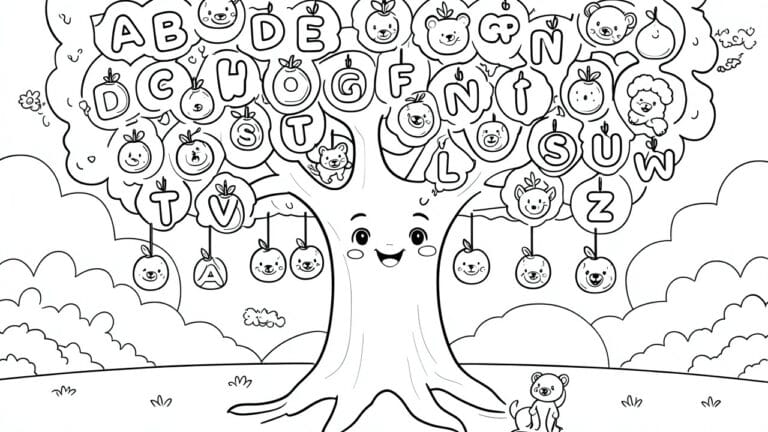
I like to create coloring pages that help kids practice their letters and numbers without making it feel like a lesson.
My collection this time includes twenty different designs aimed at kindergarten level skills.
Each page combines simple coloring with tracing or matching activities for the alphabet and counting.
I find that kids stay interested when the practice is part of something they already enjoy doing.
This set came together from ideas I’ve tested with a few groups of children.
Tree Scene with Letters Hidden in the Branches
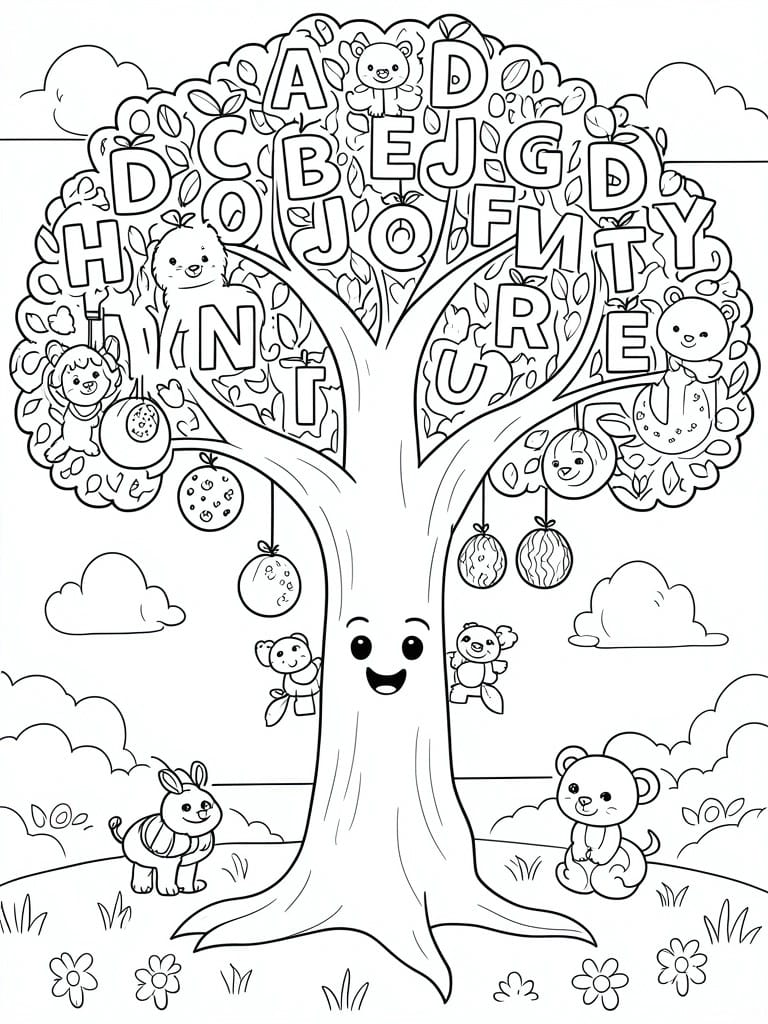
A large tree serves as the main subject, with uppercase letters placed throughout the leaves and branches instead of being listed separately. Animals, hanging fruits, and a smiling trunk fill out the rest of the page, creating one connected outdoor scene. The letters sit at different angles and sizes, so the page combines letter practice with a standard coloring activity.
What makes this page useful is the way letters are scattered across a single picture rather than lined up in grids. Kids can hunt for specific letters while coloring the tree, animals, and ground elements. The mix of open spaces around the trunk and simpler shapes near the bottom keeps the page manageable for short coloring sessions. A page like this works especially well for kindergarten printables because it turns letter review into part of a bigger picture.
Number Train in a Starry Sky
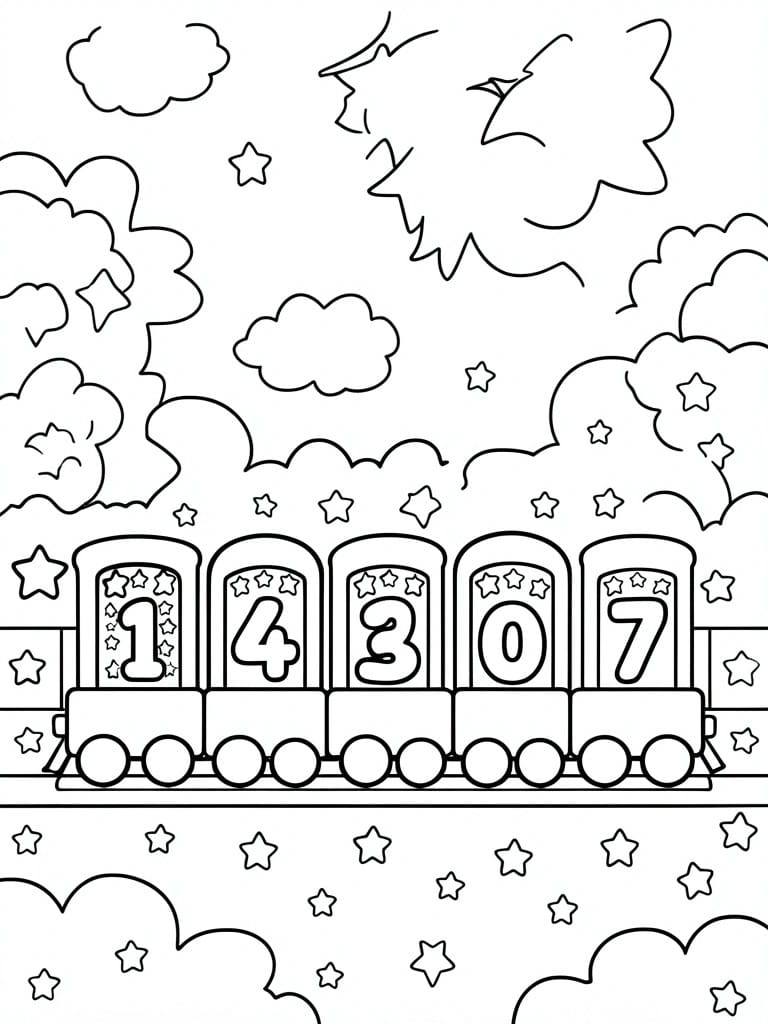
A train made of separate cars each displaying one large number turns number practice into a single connected activity. The page arranges the cars in a straight line across the middle with stars and clouds placed above and below the tracks. Bold outlines around the digits and the repeated star shapes inside the windows give clear areas to color while keeping the numbers easy to read.
The layout makes this easy to color because each number sits inside its own car with enough space around it. Kids can work on one digit at a time without the page feeling crowded. A page like this works especially well for early number lessons since the train theme links the digits together in one simple scene.
Sunflower Petals Labeled with Alphabet Letters
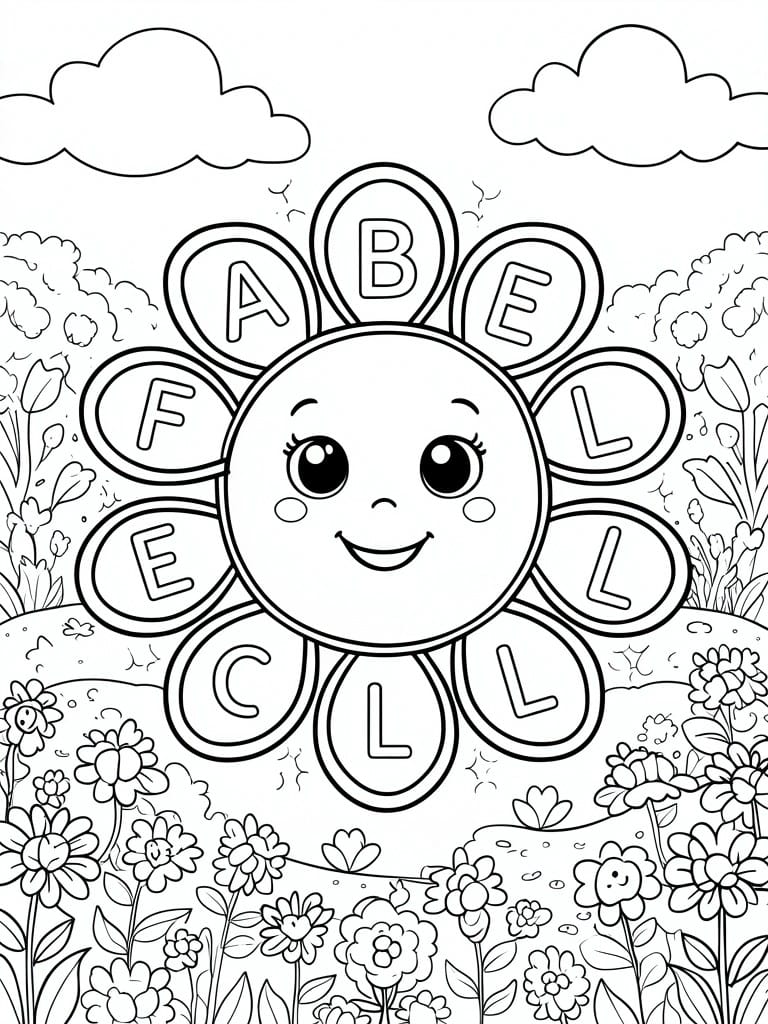
A central sun face with simple features sits at the middle of a flower whose petals each carry one large letter. The letters sit inside rounded petal outlines arranged evenly around the circle, while a basic garden background of smaller flowers and clouds fills the rest of the page. This format places letter practice directly inside a recognizable flower shape so children color the petals while seeing each letter clearly.
The layout keeps every letter separated by enough white space that young colorers can stay inside the lines without crowding. Petal shapes stay large and open, which makes the page quick to finish yet still gives a complete picture when colored. A page like this works especially well for short alphabet review sessions because the letters are the main focus rather than background detail.
Farm Animals with Integrated Alphabet Letters
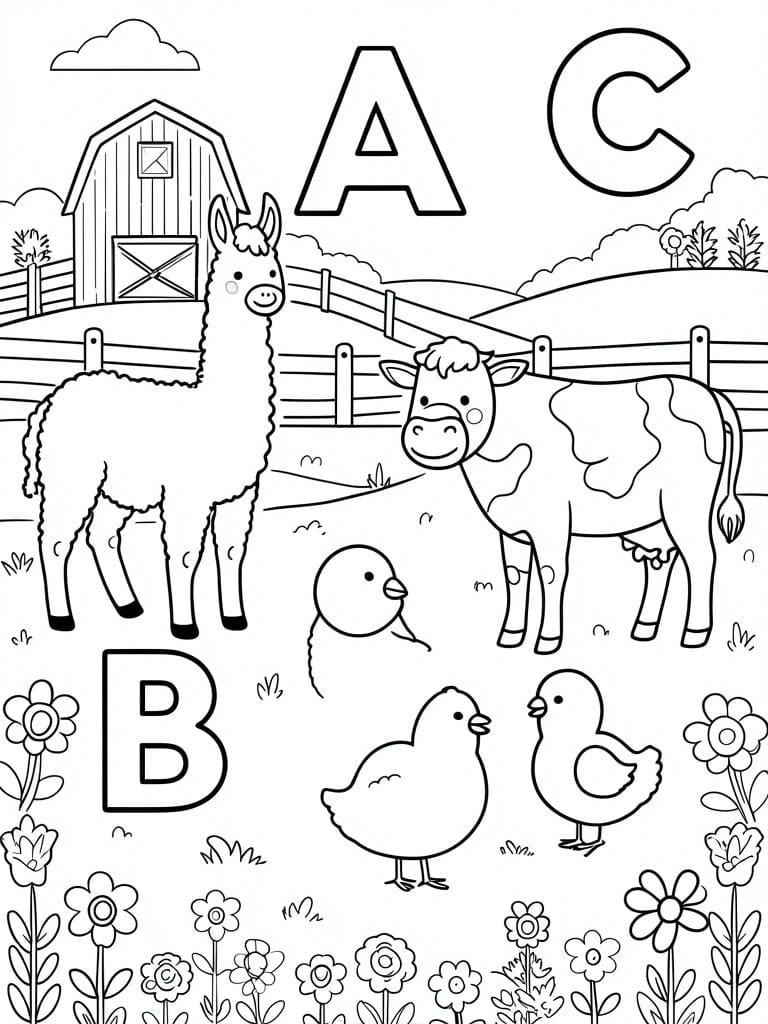
A coloring page that places large block letters A B C and D directly into a farm scene lets kids practice letter recognition while filling in animals and surroundings. The layout spreads the letters across different areas with a barn fence and open fields creating natural spaces around them. Simple line drawings of a llama cow and chicks keep the focus on both the letters and the animals without crowding the page.
What makes this page useful is the clear separation between the big letters and the farm elements so children can color one without overlapping the other. The layout makes this easy to color by leaving wide open areas around each animal and letter shape. For kindergarten letter practice this kind of page works especially well because the letters stand out as the main targets while the surrounding scene adds light interest without extra detail. The mix of large shapes and smaller background items gives beginners room to experiment with colors at their own pace.
Fish Counting Page with Numbers 1 Through 3
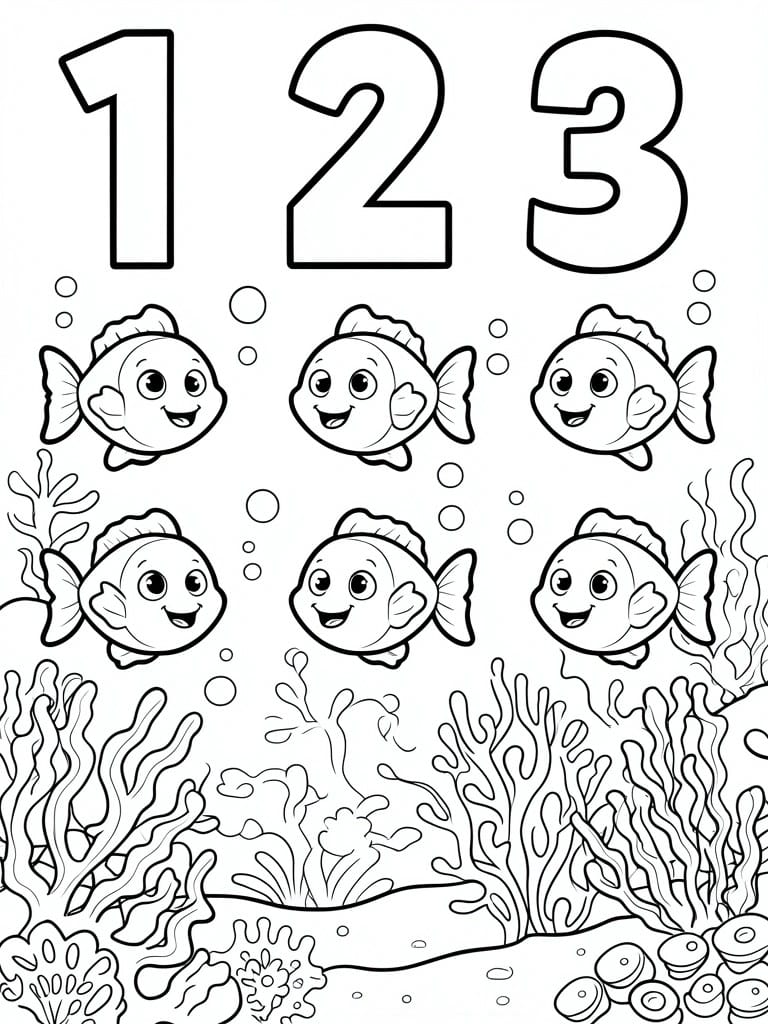
Large numerals sit across the top while fish appear in groups below them against a simple ocean floor. Coral, seaweed, and scattered bubbles fill the remaining space with basic line work. The layout keeps each number and fish shape separate so colorers can focus on one section at a time.
The layout makes this easy to color because the fish stay clear and uncluttered. Kids can match the count of fish to each number while filling in the outlines. A page like this works especially well for short practice sessions that combine counting and coloring without extra steps.
Alphabet Letters Framed by Garden Elements
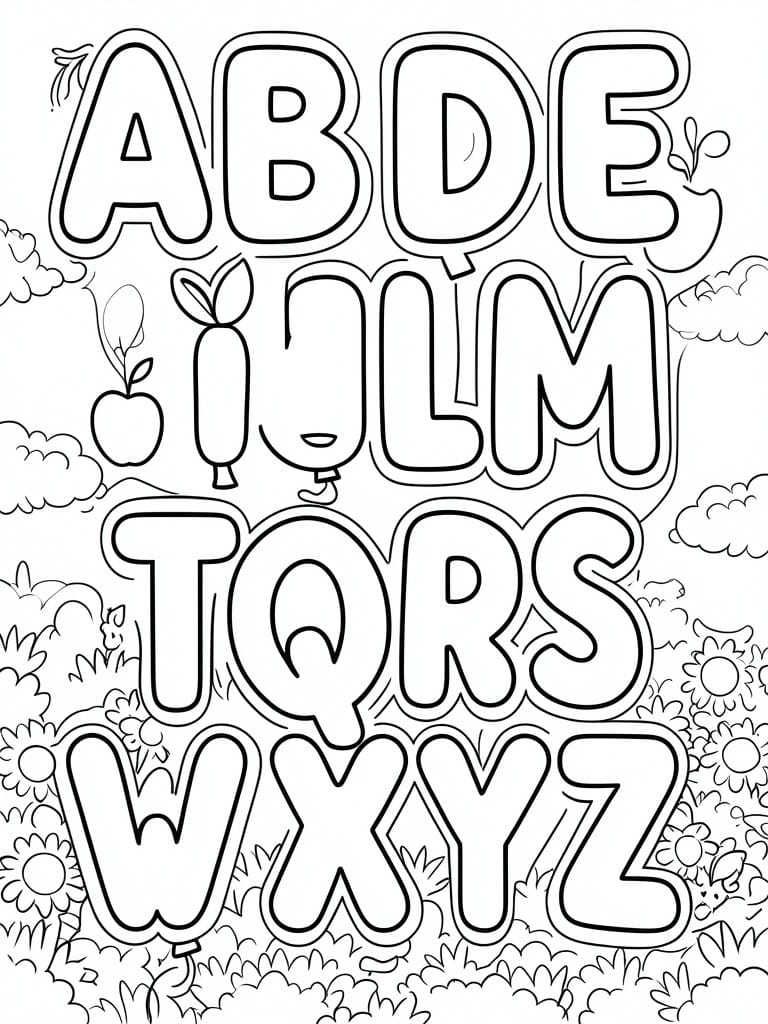
Large bubble-style letters fill this page in grouped rows, each surrounded by simple plant drawings, flowers, clouds, and small vegetable shapes. The letters stay bold and widely spaced so the outlines remain the main focus while the garden details sit in the background areas. This setup keeps the activity centered on letter shapes rather than complex scenes.
The layout makes this easy to color since the thick letter strokes give clear boundaries and the background elements stay light enough not to compete. Kids working on letter recognition can move through the page one section at a time without feeling overwhelmed by tiny spaces. A page like this works especially well for short classroom sessions or quick home practice because it combines letter work with just enough decoration to hold attention.
Numbered Rockets for Early Counting

Three rockets marked with the numbers 1, 2, and 3 form the main subject, placed side by side against a scattered field of stars and soft cloud shapes. The page uses clean, bold outlines with open spaces on the rocket bodies and plenty of negative space around the stars. This setup keeps the focus on the numbers while giving colorers room to work without tight spots or overlapping lines.
The layout makes this easy to color because each rocket sits apart from the others, letting kids finish one before moving to the next. Simple background elements avoid clutter so the numbers stay the main point of attention. A page like this works especially well for kindergarten number practice since the clear shapes support quick coloring sessions without extra steps.
Garden Flowers with Letters in the Centers
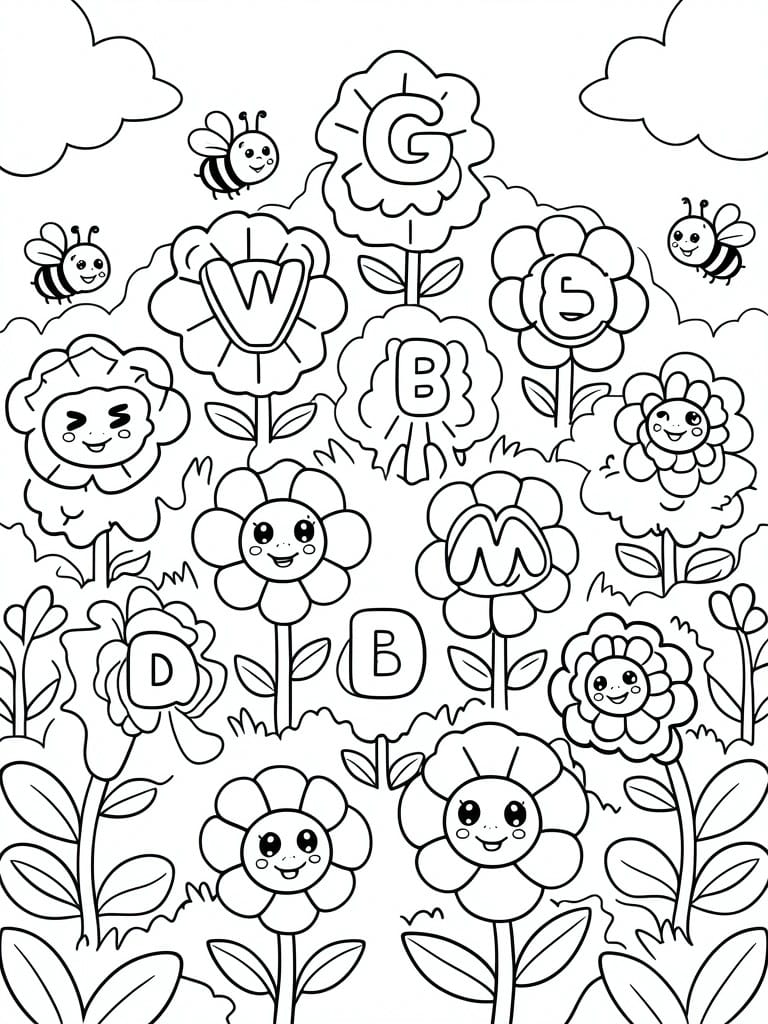
This coloring page uses a garden full of flowers where each bloom holds a large letter right in the middle. Bees and simple cloud shapes fill the open areas around the flowers to create a complete scene without crowding the page. The flowers vary in size and petal shape so the letters stand out clearly against the surrounding lines.
What makes this page useful is the direct placement of letters inside the flowers so kids can practice recognition while they color. The layout makes this easy to color because the main shapes stay bold and separate from one another. A page like this works especially well for kindergarteners who need repeated letter exposure in a familiar outdoor setting. The open spaces around each flower keep the activity from feeling too busy for early learners.
Pyramid Cupcakes for Number Practice
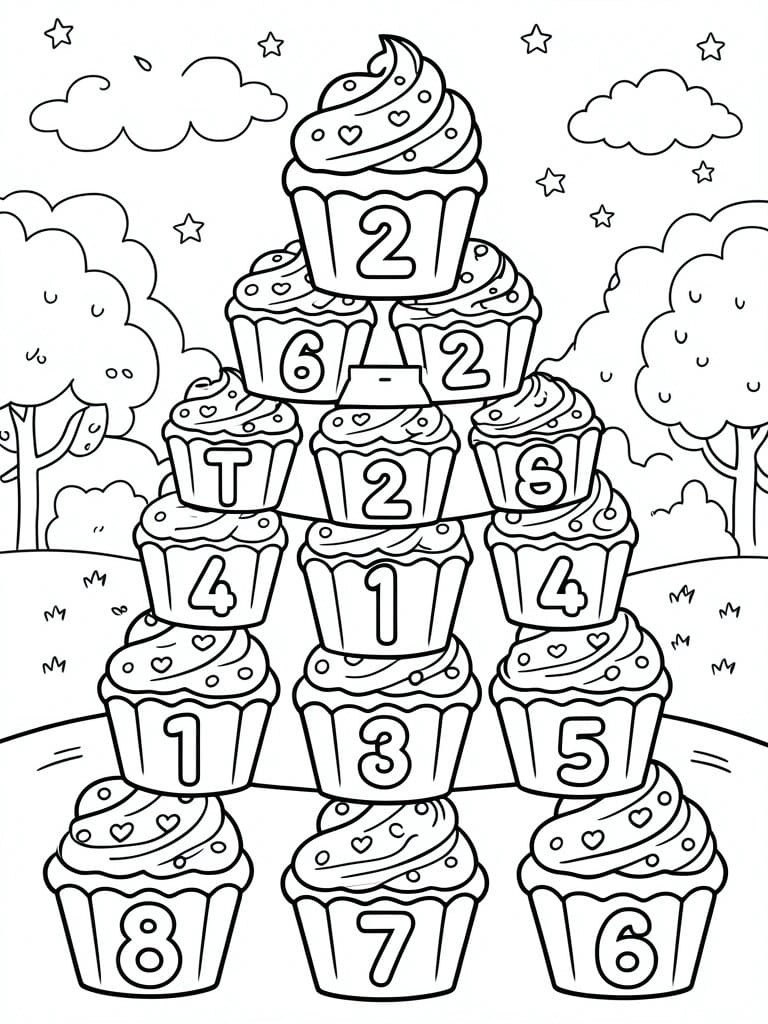
Cupcakes arranged in a stacked pyramid each display a bold number on the wrapper or frosting top. The page uses clean outlines with numbers placed directly on the cupcakes so children can color and count at the same time. Light background trees and stars keep the focus on the main structure while adding simple scene details.
The layout makes this easy to color because each cupcake sits in its own clear space with room around the edges. Kids can match the numbers while filling in the shapes without getting overwhelmed by tiny details. A page like this works especially well for quick number recognition sessions during kindergarten math time.
Puzzle Piece Letter Matching Activity
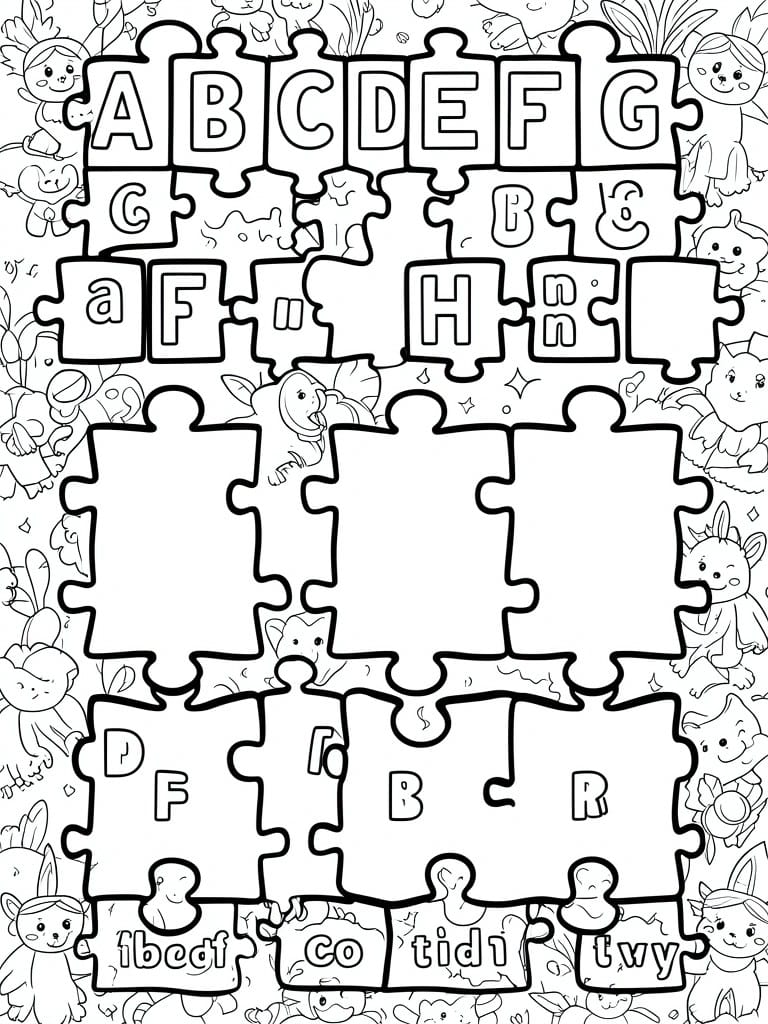
This coloring page uses interlocking puzzle shapes to present uppercase and lowercase letters for identification practice. Letters appear in scattered puzzle pieces across the page, with open sections that invite filling in or coloring around the forms. Cute animal outlines fill the spaces between pieces, creating a playful background that supports the letter focus without crowding it.
The layout makes this easy to color because the puzzle outlines provide clear boundaries while leaving room for simple shading or letter tracing. A page like this works especially well for kindergarteners who need repeated exposure to letter shapes in a hands-on format. The mix of filled and blank puzzle areas adds a light matching element that turns coloring into an active learning step. For a quick printable, this kind of page stands out because it combines basic coloring with early alphabet skills in one sheet.
Animal Surrounded Letter Tracing Sheets
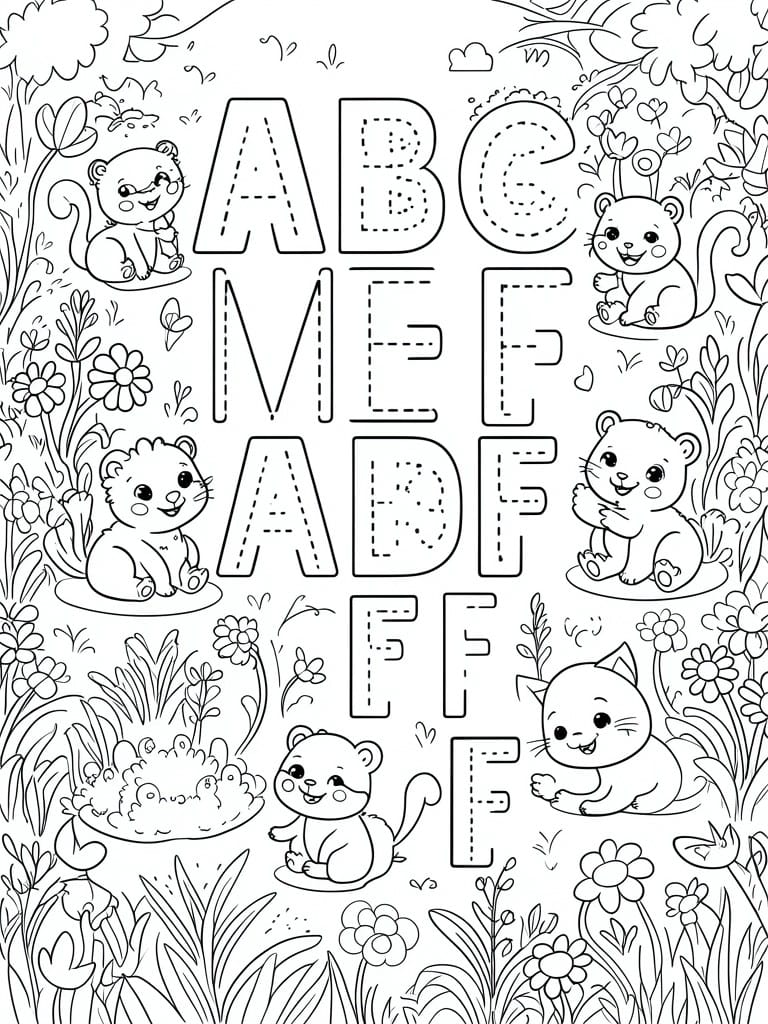
Large traceable letters sit alongside small animal figures that fill the spaces between them on this page. The layout places the letters in a scattered grid while simple animal shapes and surrounding plants create natural separation between each section. Bold outlines and dashed lines keep the focus on letter formation while the background elements add light detail without overlapping the main shapes.
What makes this page useful is the way it combines tracing practice with coloring in a single activity. Kids can work through the letters first then fill in the animals and plants at their own pace. The clear spacing between sections helps beginners stay organized and reduces the chance of getting overwhelmed by too many elements at once. A page like this works especially well for short classroom sessions or quick take-home practice.
Counting Building with Numbered Smiley Windows
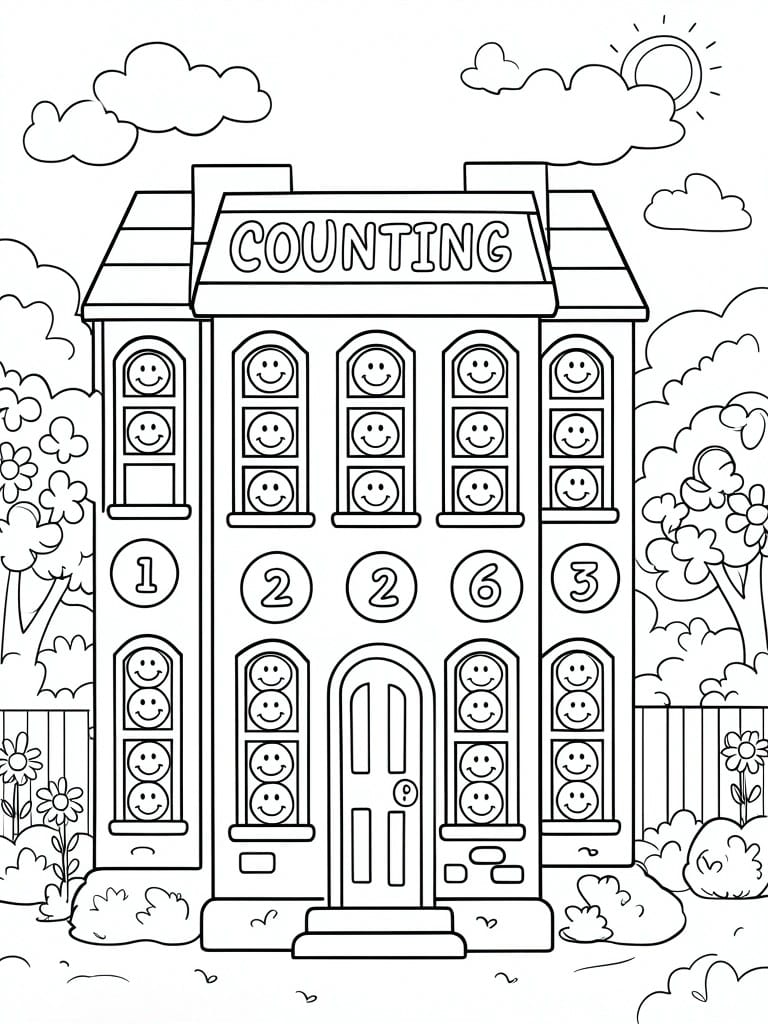
This coloring page uses a building facade as the main subject to practice early number skills. Each vertical section shows a different group of smiley faces arranged in windows, with a numeral placed directly below five of those sections. The simple line style and repeated face shapes give kids clear areas to color while they count and match quantities to the printed numbers.
What makes this page useful is the direct connection between the visible groups of faces and the numbers underneath, which supports basic counting without extra instructions. The layout makes this easy to color because the window frames create natural sections that keep coloring contained. A page like this works especially well for short math centers or take-home practice sheets where kids need quick number reinforcement alongside a coloring activity.
Animal Park Scene with Oversized Letters
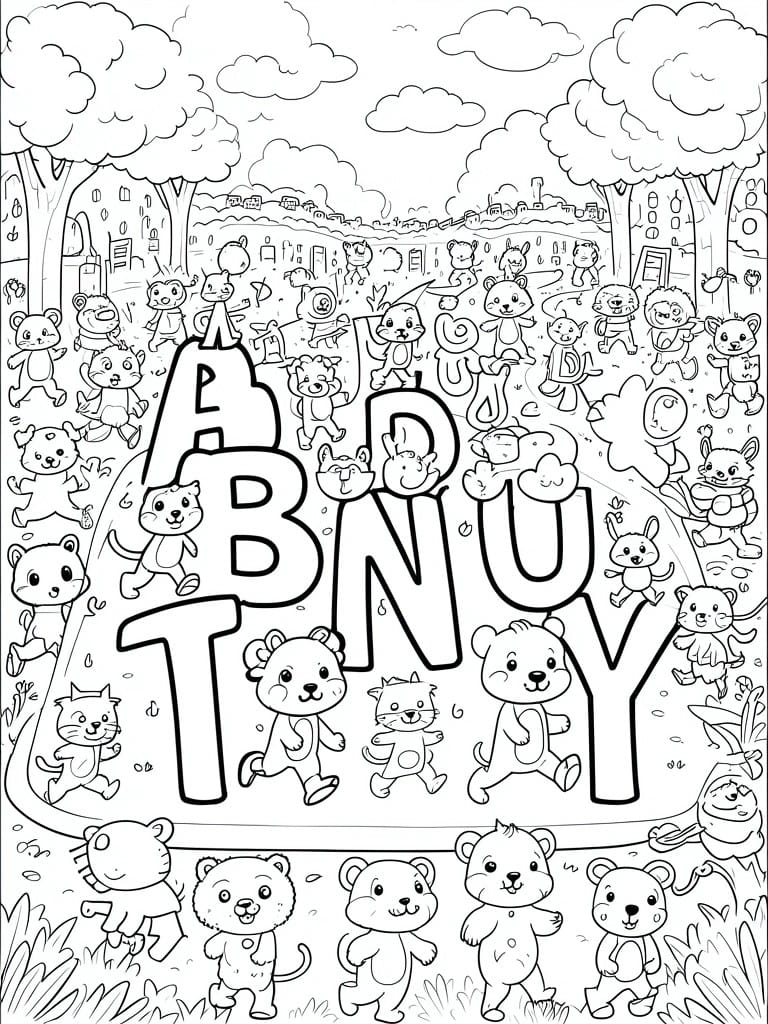
Large alphabet letters sit at the center of this coloring page while dozens of small animal figures move through an outdoor park setting. Trees line the sides, a simple city skyline runs across the back, and the animals appear at different sizes both inside and around the letter shapes. The open spaces within each letter keep the main focus on letter recognition rather than tiny details.
The layout makes this easy to color because the bold letters create clear sections that stand apart from the surrounding animals. Kids can color the letters first for quick letter practice then move to the smaller figures for extra time on the page. A page like this works especially well for kindergarten classrooms since the repeated animal shapes give beginners plenty of similar forms to fill without requiring advanced skills.
Shapes Labeled with Numbers One to Three
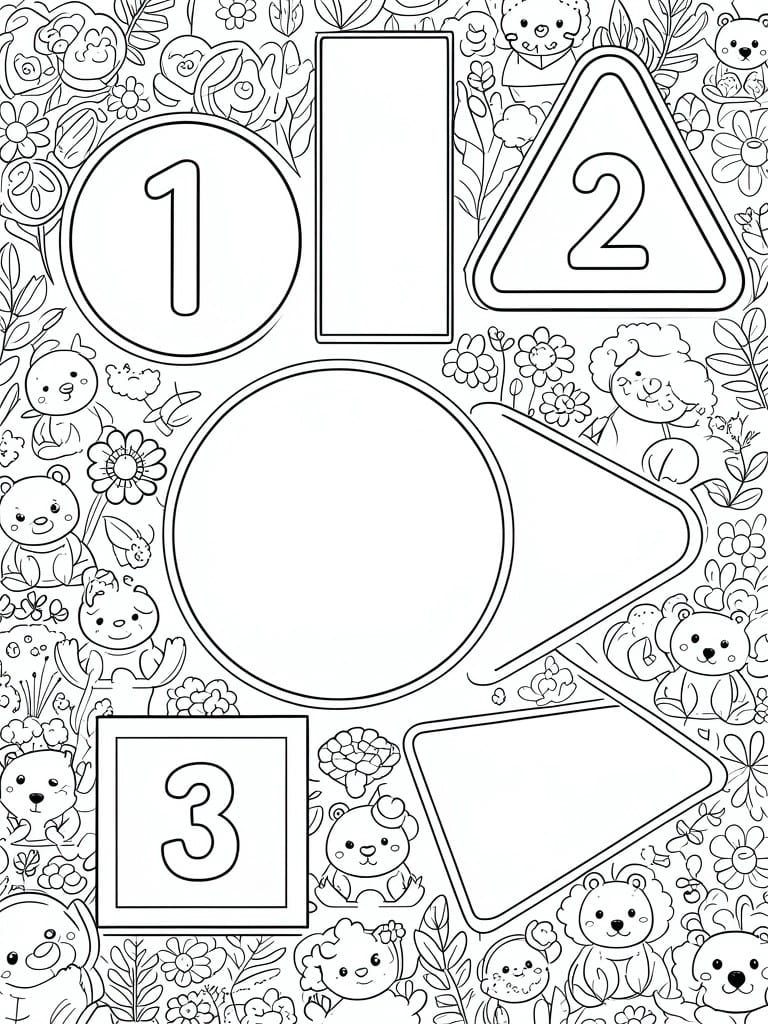
This coloring page places the numbers one, two, and three inside large geometric shapes like circles, a triangle, and a square. The shapes sit among clusters of flowers, leaves, and small animal figures that fill the rest of the page. The layout keeps the numbered shapes as the clear focus while the surrounding line work gives extra areas to color.
What makes this page useful is the direct link between number practice and shape coloring. The empty centers inside each shape stay simple enough for young kids to fill without frustration. The scattered background elements add variety without crowding the main numbers, so the page stays practical for short practice sessions.
Monkey Jungle Scene for Number Recognition Practice
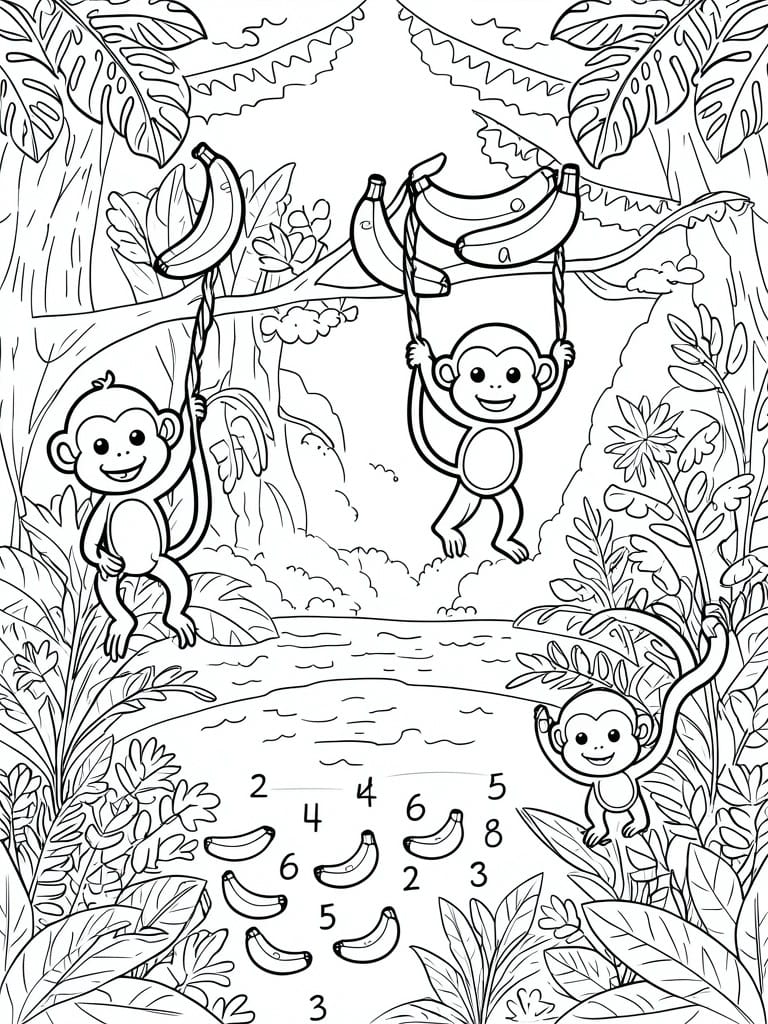
Monkeys swinging from vines with banana bunches form the central activity in this jungle setting. Numbers from 2 to 8 sit alongside small banana drawings in the lower half of the page, creating a built-in counting element. The upper area stays focused on the animals and hanging fruit while the bottom section leaves room for the number practice.
What makes this page useful is the clear split between the coloring area and the number activity. Kids can fill in the monkeys and leaves first, then use the banana outlines to match or count the digits shown. The layout makes this easy to color without crowding and gives teachers a single sheet that covers both art and early math. A page like this works especially well when printed for small groups who are still learning to identify numbers up to ten.
Turtle Shell Numbers for Early Counting
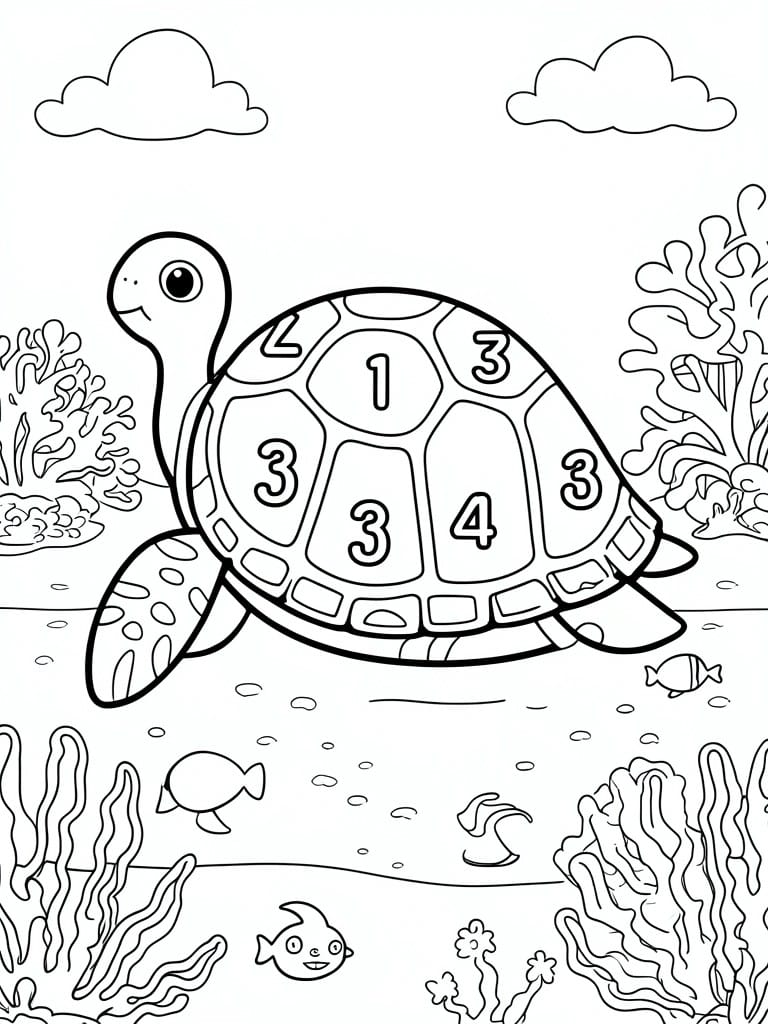
A turtle coloring page uses the shell segments as built-in number spots so children practice recognizing and counting while they color. The ocean background adds fish, coral, and simple water details without crowding the main subject. This setup turns number work into part of a complete scene that still leaves large areas open for coloring.
The layout makes this easy to color because the numbers sit inside clearly outlined shapes on the shell. Kids can focus on one number at a time or color the whole turtle first before moving to the surrounding fish and plants. A page like this works especially well for kindergarten number practice since the numbers stay visible even after coloring starts. The mix of counting and coloring gives the page a practical edge when printed for classroom or home use.
Pyramid of Alphabet Blocks for Letter Practice
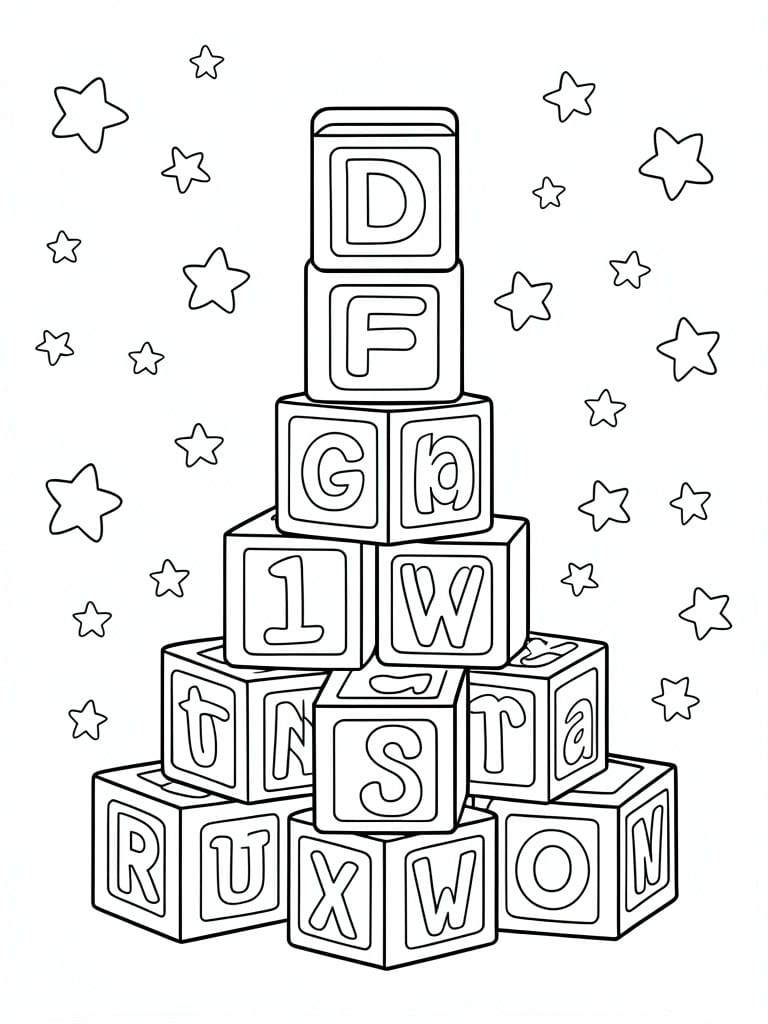
Building blocks stacked into a pyramid shape give kids a clear way to focus on individual uppercase letters while coloring. Each cube holds one letter in a simple square frame, with the blocks arranged in decreasing rows from bottom to top. Scattered stars fill the empty space around the stack without adding extra patterns or details.
The layout makes this easy to color since the blocks sit side by side with clean lines separating each one. A page like this works especially well for kindergarteners who are just learning to recognize letters. The open areas inside each block let kids practice staying inside the lines while still offering enough space to use different colors.
Numbered Stepping Stones in a Garden Path
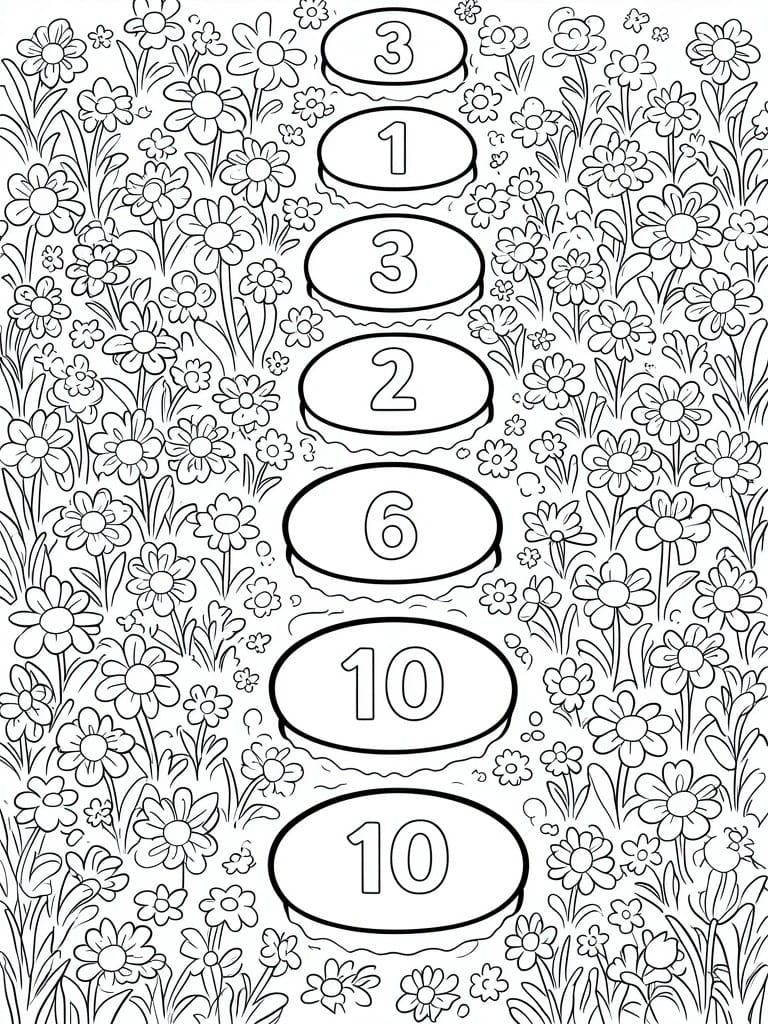
Kindergarten number practice works well when numbers sit inside a clear path that kids can follow while coloring. This page places seven oval stepping stones in a vertical line, each marked with a single number, and surrounds them with simple flower stems and grass. The stones create a direct route from top to bottom, so the numbers stay easy to spot and trace without extra clutter.
The layout makes this easy to color because the stones are large and separate from the background flowers. Kids can focus first on filling the numbers, then add color to the surrounding plants at their own pace. A page like this works especially well for short practice sessions where counting and coloring happen together. The straightforward line work also prints cleanly for classroom use.
Owl with Scattered Letters and Numbers for Dual Practice
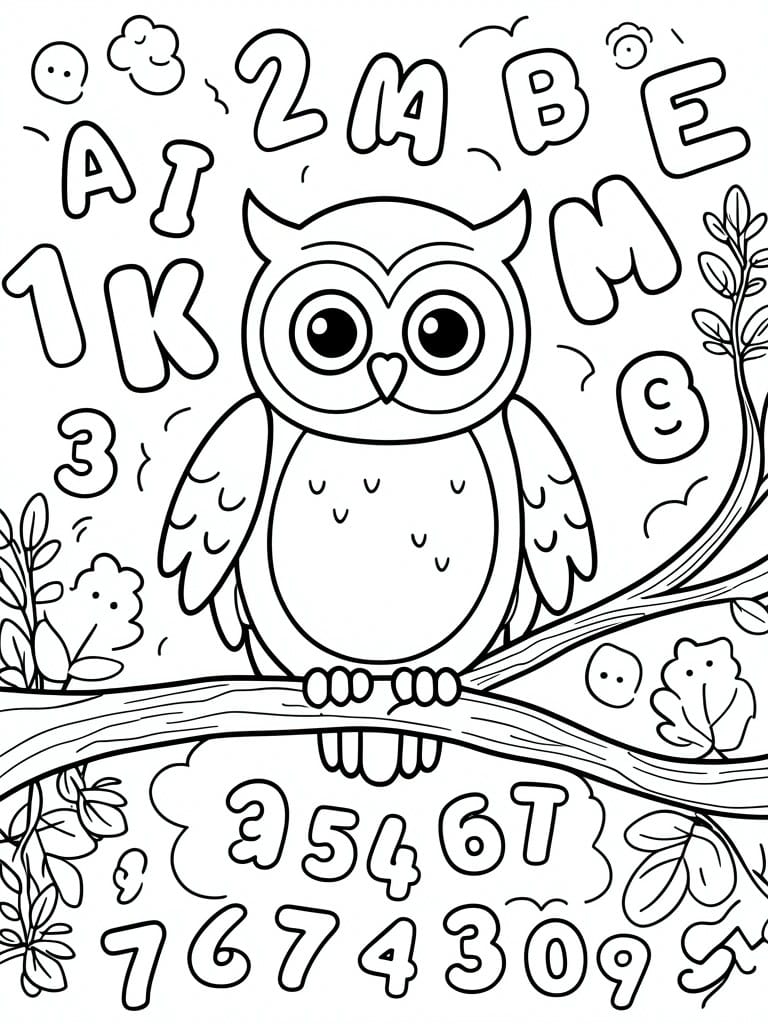
Kindergarten coloring pages like this combine a central animal with individual letters and numbers placed around it to support early recognition skills. The design centers on an owl perched on a branch while letters such as A, B, C, I, K, and M plus numbers including 0 through 7 appear in separate open areas with light foliage accents. Simple bold outlines and even spacing keep each element distinct so the page stays easy to navigate.
What makes this page useful is the balanced mix of one main figure and multiple learning targets without overlap or clutter. The layout makes this easy to color because each letter or number sits in its own clear zone, allowing kids to finish the owl first and then work through the characters. A page like this works especially well for short practice sessions where both alphabet and counting goals need to be addressed together.
Frequently Asked Questions
What age range are these coloring pages best suited for? These pages work well for children ages four to six who are building their first skills with letters and numbers. The designs keep activities simple and engaging so younger learners stay focused while practicing recognition without frustration.
How do the pages combine coloring with actual learning? Each page shows large clear letters or numbers that children color while also tracing the shapes or spotting related pictures. This approach uses movement and sight together to help kids remember the forms and sounds more effectively than coloring alone.
Can the pages be printed at home and used multiple times? Yes they print easily on standard paper with any home printer. For longer use print on thicker cardstock and place sheets in clear sleeves so children can color with dry erase markers then wipe clean for practice again and again.
How should parents or teachers introduce the pages to keep kids motivated? Begin with one page at a time and let the child choose the colors while naming the letter or number out loud. Pair the activity with short games such as finding objects around the room that start with the same letter to turn practice into a fun daily habit.
What skills besides letter and number recognition do these pages support? The coloring actions help strengthen hand muscles and pencil grip while the simple layouts encourage focus and following directions. Over time children also gain confidence in early writing strokes and learn to connect visual symbols with sounds.
