

I’ve been enjoying these minimal aesthetic coloring pages lately.
They feature a gentle balance that keeps things simple and calm.
I put together 19 of them for anyone who wants to unwind with some coloring.
They’re straightforward to print and color at your own pace.
Give them a try if you’re in the mood.
Monstera Leaves Cluster
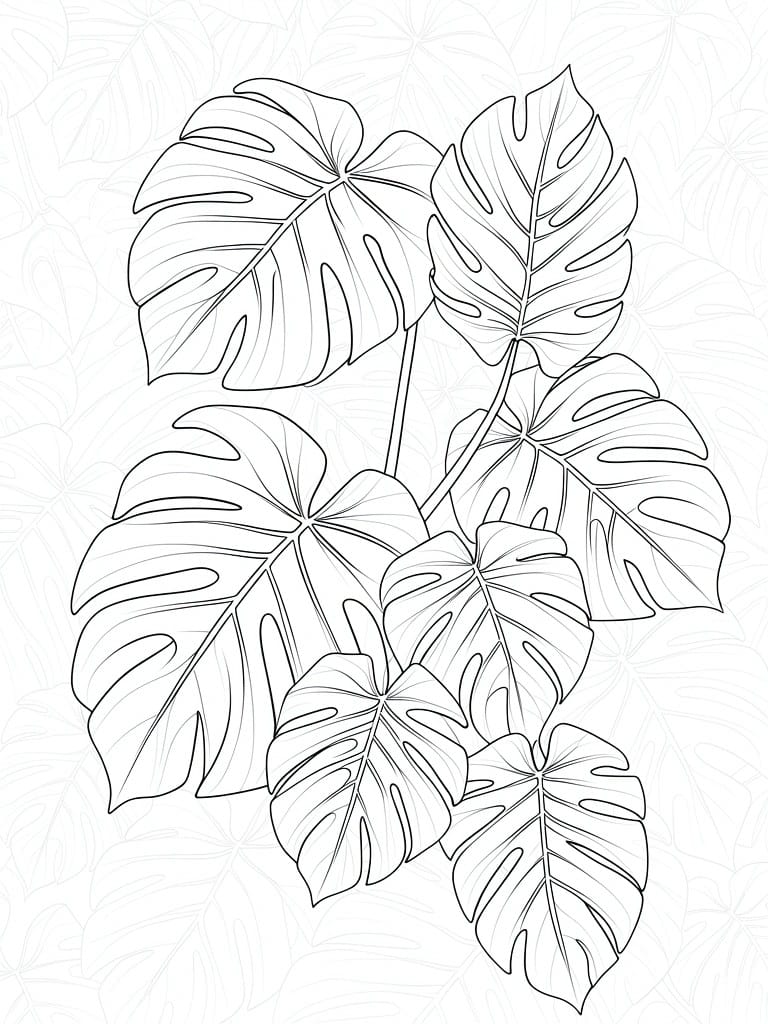
Monstera leaves arrange in a loose cluster with stems connecting some shapes. Clean outlines highlight the plant’s deep splits and oval fenestrations for natural texture. The layout spreads leaves across the page with even spacing that balances open white space and defined edges.
The detail in leaf veins and holes offers focused coloring without tight constraints. Spacious gaps between leaves speed up sessions and reduce fatigue. A page like this fits beginners building confidence or adults seeking low-stress botanicals.
Vase of Spreading Leaf Branches
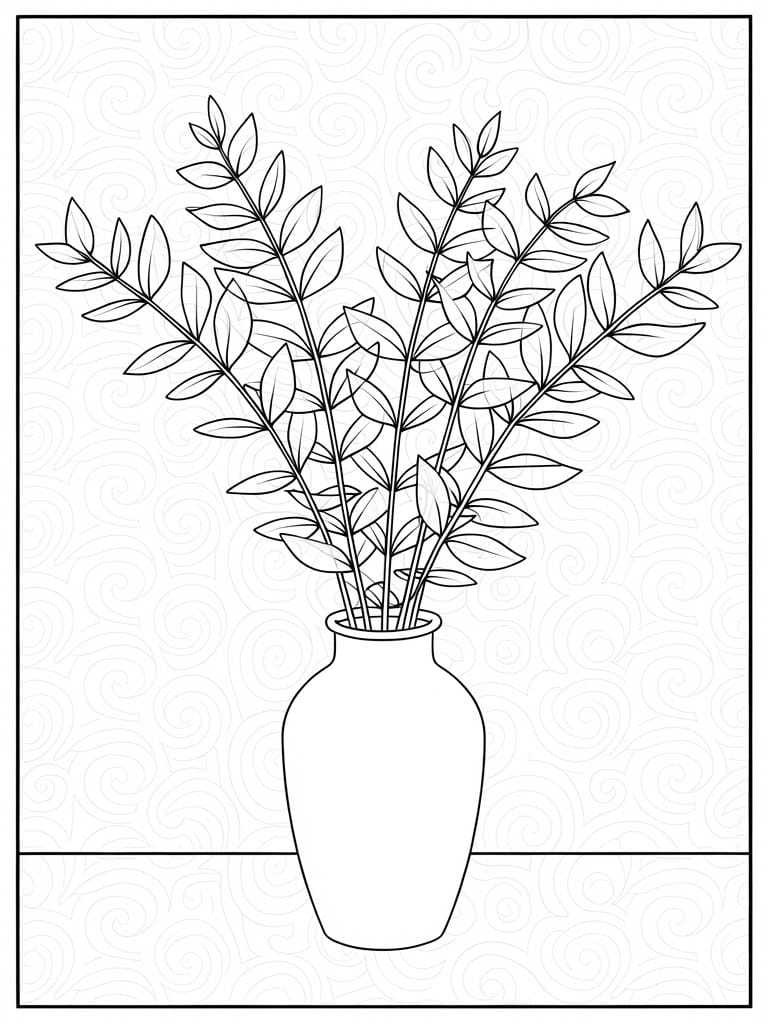
A vase cradles multiple stems of leaves that fan out in loose clusters. The design uses thin, fluid lines to capture the natural sway of foliage without extra clutter. Open areas between leaves invite varied shading for depth.
The layout keeps lines clean and contained for a fast, low-stress coloring session. Beginners handle the simple shapes easily, while adults add gradients to the leaves for subtle interest. Minimal elements like this pop on Pinterest amid busy mandala trends.
Symmetrical Lotus Mandala Over Rippling Water
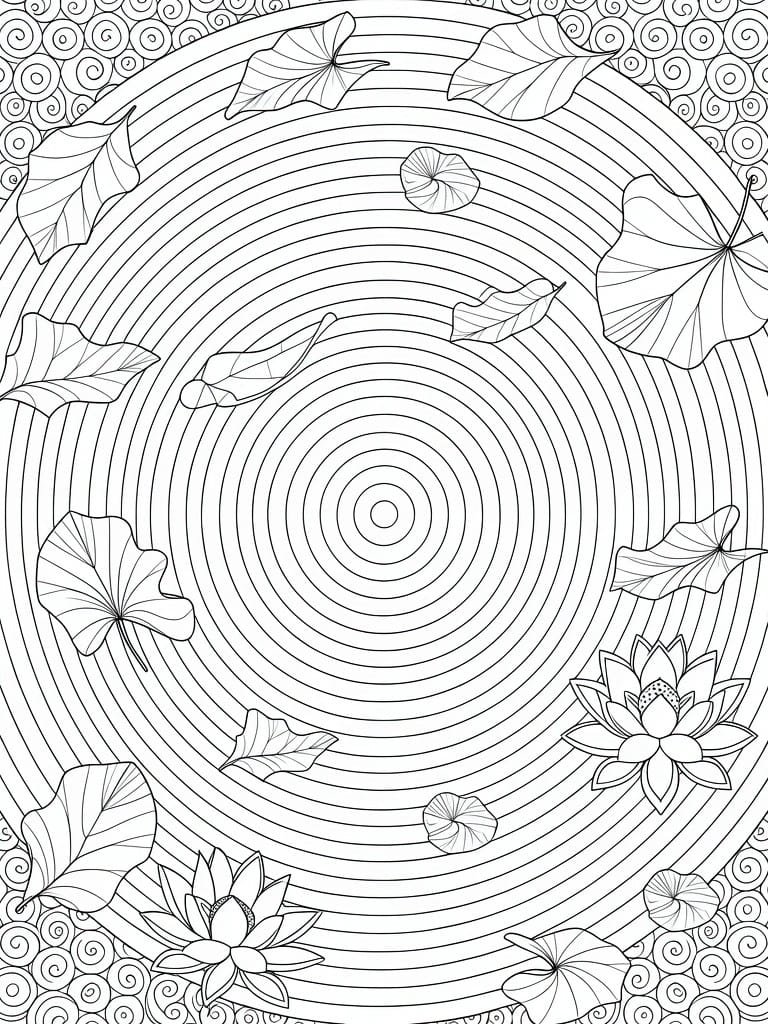
The design builds a central lotus bloom amid concentric circles that mimic pond ripples. Floating leaves and buds drift around it in balanced clusters. Fine, flowing lines create intricate petal edges and subtle wave patterns. This setup delivers a harmonious water garden focal point.
The layout makes this easy to color in focused sections. Detailed florals pair with spacious rings for gradient fills. Adult colorers find the symmetry meditative yet engaging. Its clean minimalism stands out in printable mandala collections.
Celestial Moon Mandala Pattern
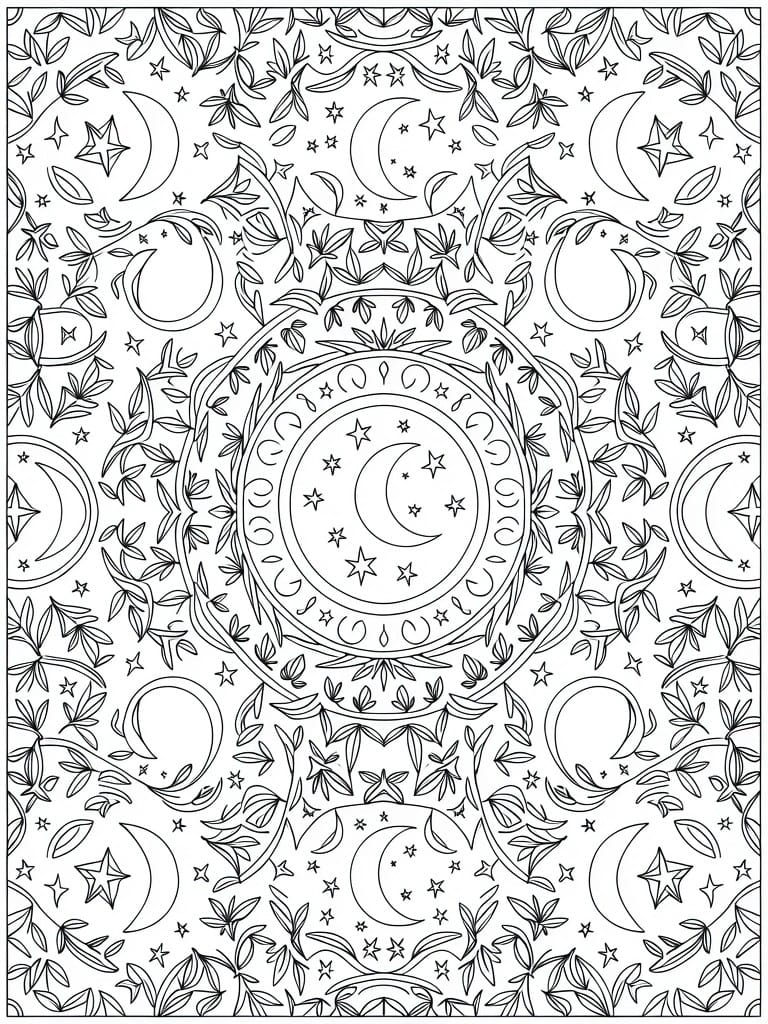
Celestial mandalas draw from moon phases and star clusters arranged in tight symmetry. Vines weave through repeating crescents, full orbs, and dotted stars to form a dense central circle that expands outward. The radial layout balances fine lines with clustered shapes, rewarding colorers who enjoy matching patterns across the page.
The detail level makes this a smart pick for adults who like focused, meditative coloring sessions. Symmetry simplifies decisions on color placement while the variety of moon sizes invites shading experiments. Open vine spaces keep it from feeling overwhelming, and the full-page pattern stands out in printable collections for its rhythmic flow.
Sunset Waves Among Reeds
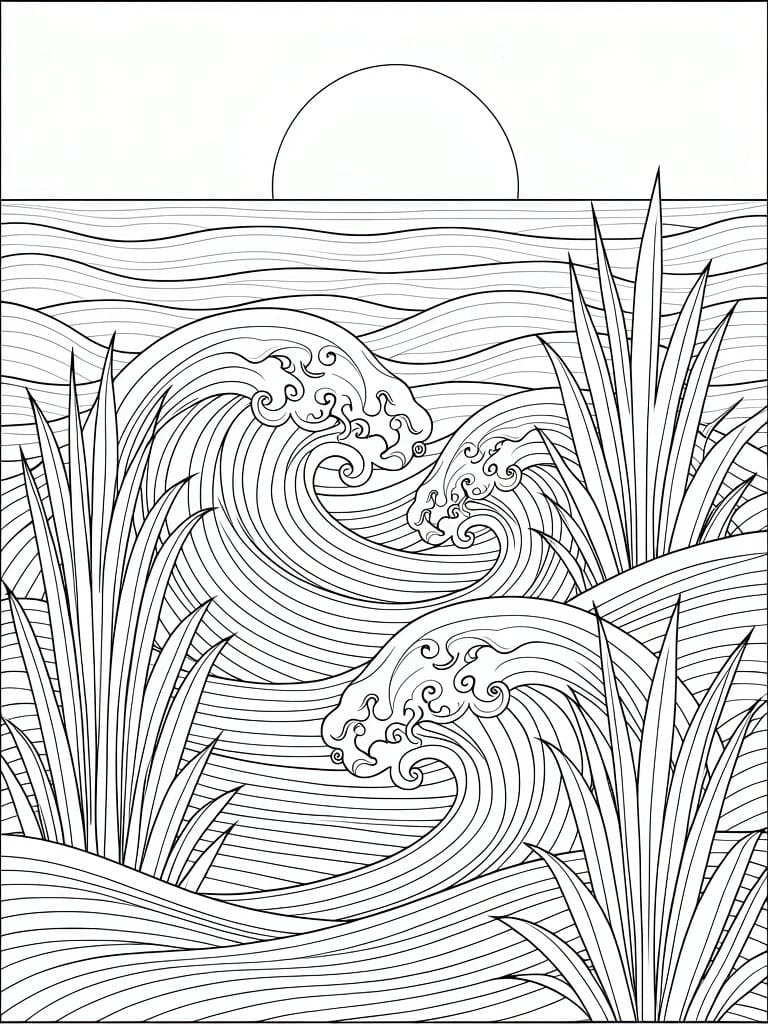
Flowing waves curl through tall reeds under a rising or setting sun. The design layers intricate, wavy patterns in the water and plants against open sky space. Continuous line work creates natural movement and balance across the page.
The layered scene gives this page a rhythmic coloring flow from detailed foreground reeds to smoother wave sections. Moderate detail suits adults or intermediate colorers who enjoy patterns without overwhelm. Generous spacing around the sun keeps it beginner-friendly for experimenting with gradients.
Symmetrical Radial Swirls in Four Quadrants
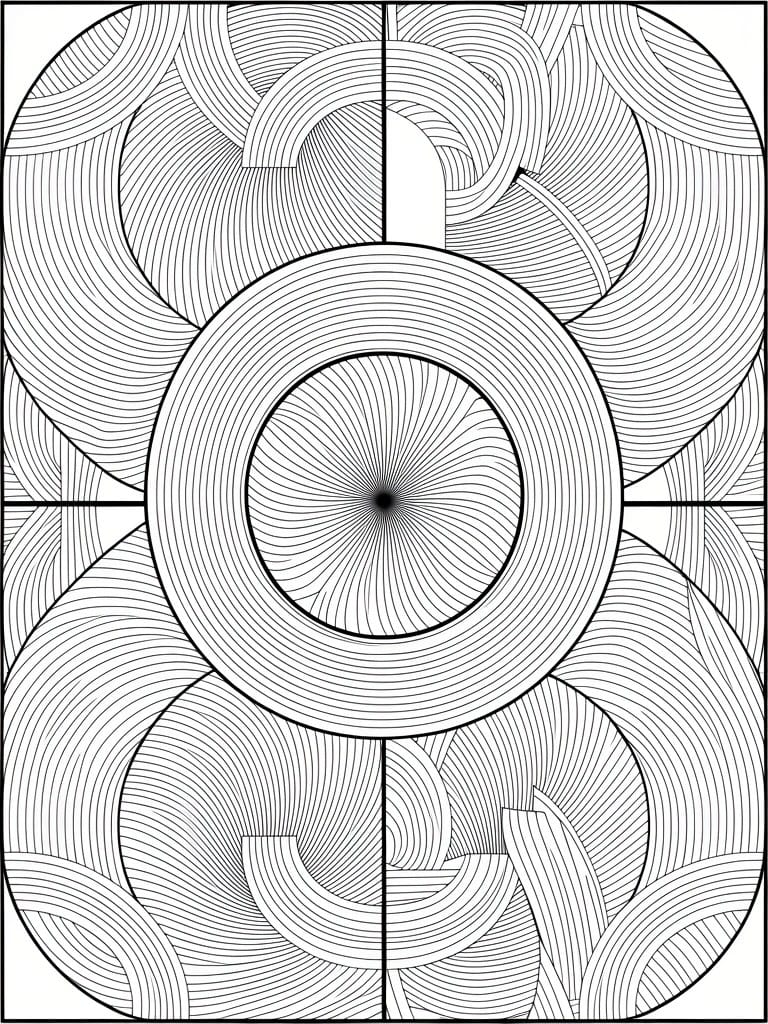
Radial symmetry anchors this design with a tight central dot expanding into layered circles and fan-like curves. Four quadrants organize the layout, mirroring swirling patterns that flow from the core to the edges. Clean, varying line weights keep the minimal style precise, turning repetitive shapes into a focal point for steady coloring.
The quadrant structure simplifies pairing colors across sections for quick visual harmony. Repetitive swirls suit beginners building confidence or adults wanting low-pressure detail work. Open rings between patterns allow easy blending, making this a standout for gradient experiments on Pinterest.
Layered Peaks with Swirling Base
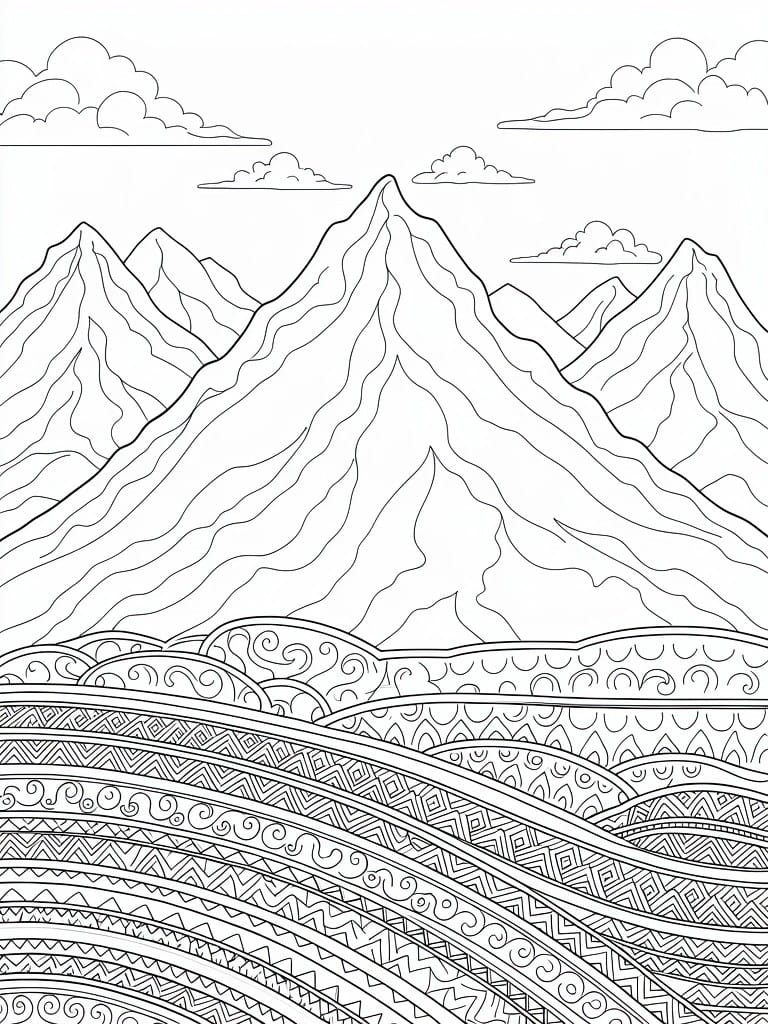
Multiple mountain peaks form the core of this design, with a tall central summit flanked by rounded summits on each side. Fine contour lines define the slopes, while the foreground packs in thick, interlocking swirls that suggest rolling hills or stylized waves. Cloud clusters dot the open sky above, creating a balanced layout where detailed sections contrast with blank areas ready for gradients.
The detail level makes this a smart pick for adults tackling pattern-heavy pages. Repetitive swirls in the base offer rhythmic coloring that builds focus without tight spots. Open skies keep it from feeling cramped, making the page stand out for printable mountain sets on Pinterest.
Symmetrical Peony Wreath Frame
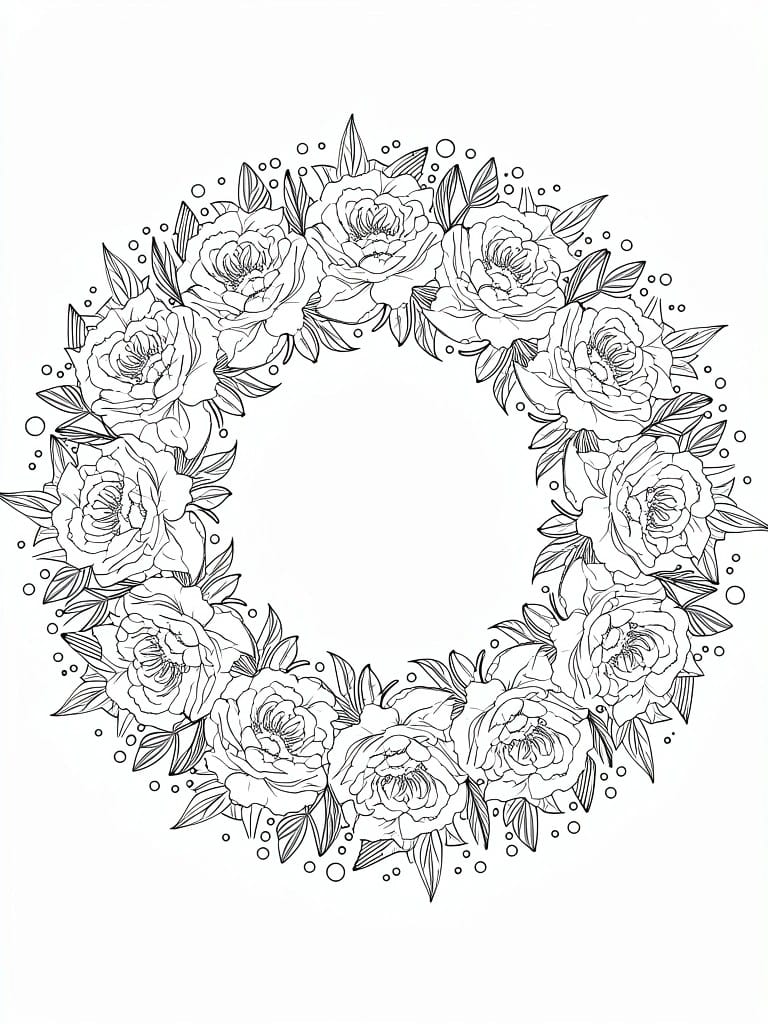
The peony wreath forms a complete circle from layered blooms with ruffled petals and trailing leaves. Fine interior lines add texture to each flower without crowding the open center space. Symmetry across the ring creates even spacing that invites balanced color choices.
The layout makes this easy to color in sections around the circle. Symmetrical repetition keeps the process steady and low-stress for adults seeking minimal patterns. Detail in the petals rewards subtle shading, while the frame shape suits framing prints. On Pinterest, the open center stands out for adding text or photos.
Symmetrical Succulent Cluster
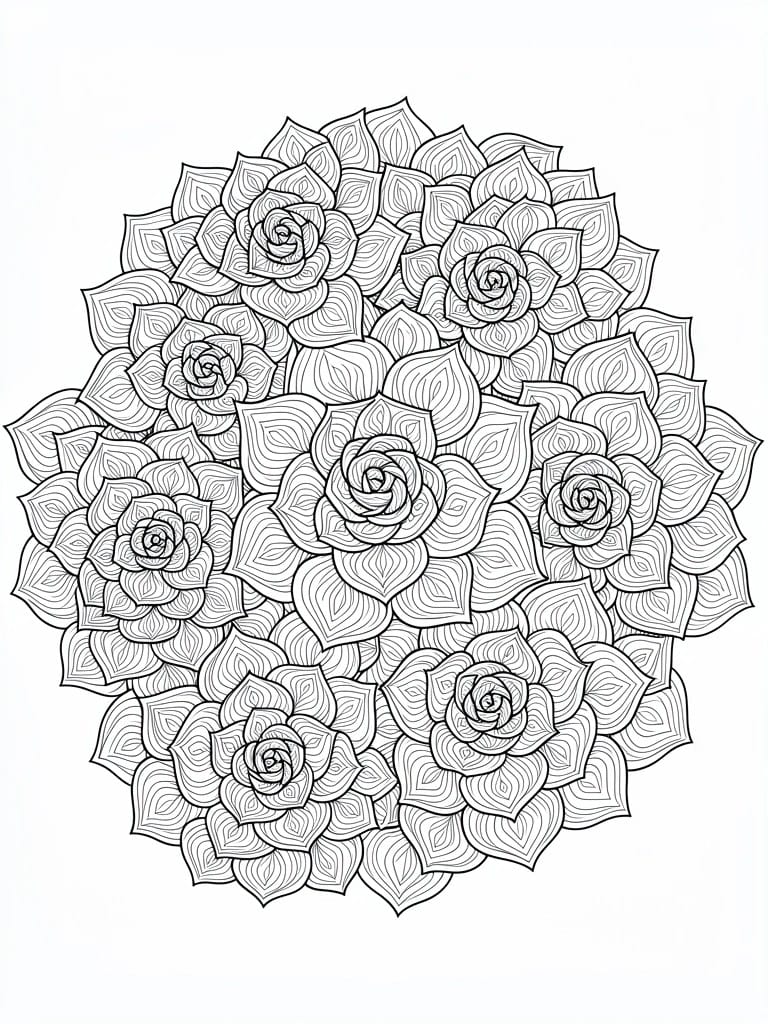
Succulents pack into a tight circular wreath with radial balance at the center. Layered petals and leaves carry fine, swirling line patterns for texture. This composition turns simple botanicals into a repeating motif that holds focus during coloring.
The detail level makes this a smart pick for adults building steady color gradients. Symmetry simplifies pairing shades across repeats without second-guessing. Open spacing around the edges keeps sessions frustration-free and shareable on Pinterest.
Symmetrical Fern Radial Pattern
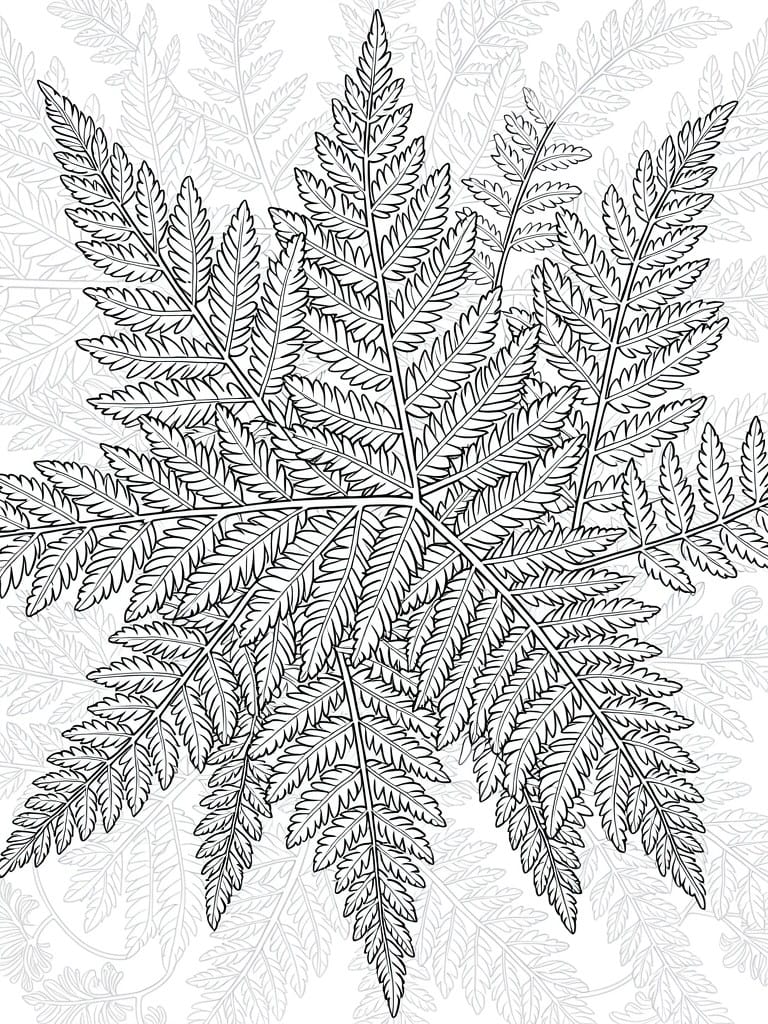
Ferns radiate from a tight central cluster in a star-shaped layout. Fronds overlap in layers with fine lines tracing leaflets and stems. This repetition builds natural balance through mirrored sections.
The detail level makes this a smart pick for adults who like intricate botanicals. Symmetry speeds up color decisions across repeats. Spaced outer edges keep sessions relaxed without crowding.
Ornate Arched Frame Over Wavy Hills
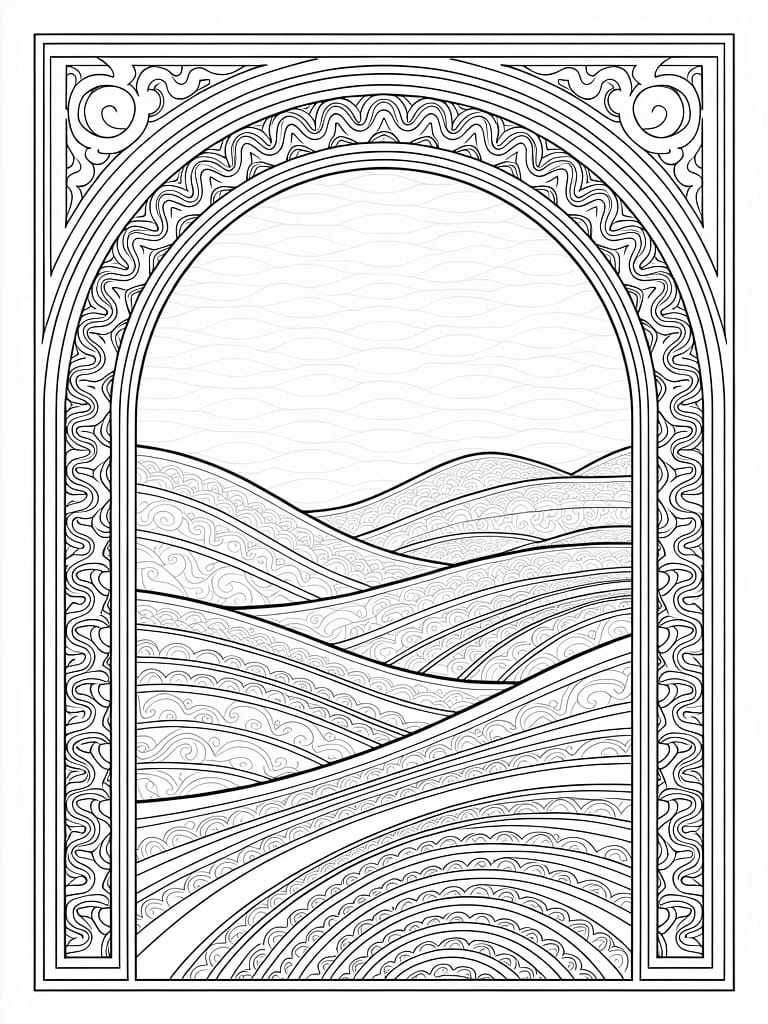
An arched portal frames a landscape of layered, undulating hills rendered in flowing, repetitive curves. Dense, swirling patterns fill the rectangular border, echoing the waves below with tighter curls and flourishes. The vertical layout stacks hills from foreground to horizon, balancing enclosed detail against open scenic space.
The detail level makes this a smart pick for pattern-focused adults. Symmetrical borders suit steady handwork with gel pens, while hill layers support quick watercolor washes. A page like this works especially well for printable sets, as the frame adds instant visual impact on social feeds.
Three Clustered Feathers
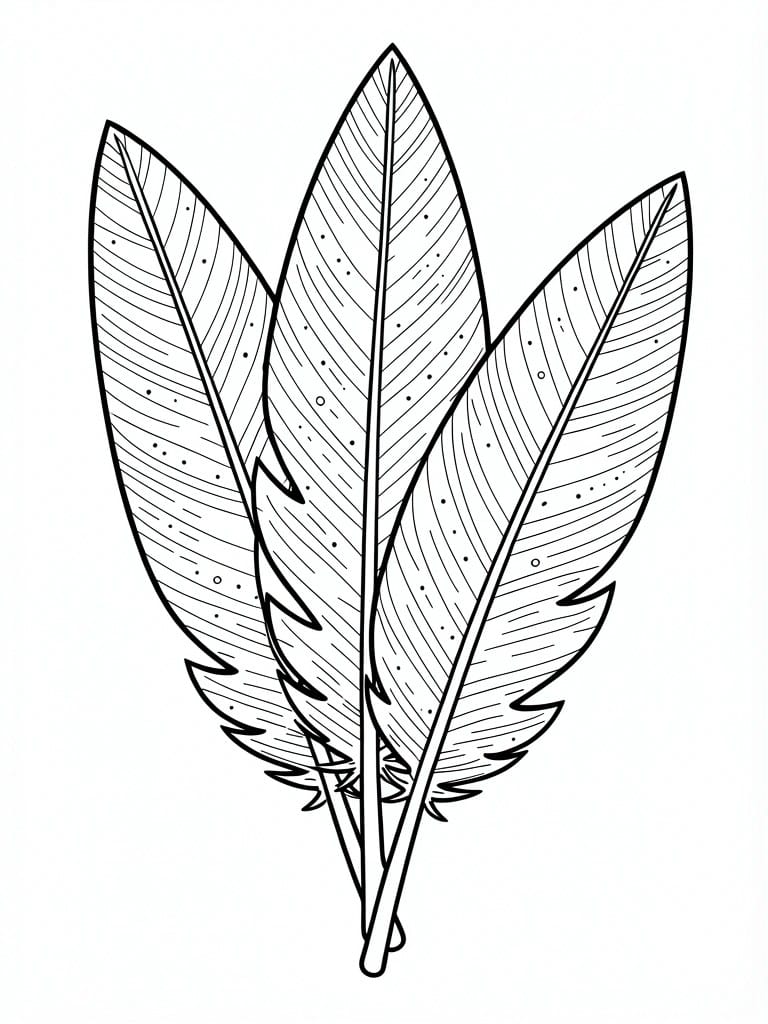
Three feathers cluster upward from a shared base in this line art design. Fine parallel lines texture each vane, capturing feather realism without extra elements. The overlapping layout balances negative space around the forms, making color placement straightforward yet engaging.
The open composition keeps coloring sessions quick and focused. Feather details reward subtle shading with pencils or markers, suiting beginners or detail seekers. Minimal elements like this pin well on Pinterest for fast zen breaks.
Dense Repeating Leaf Pattern
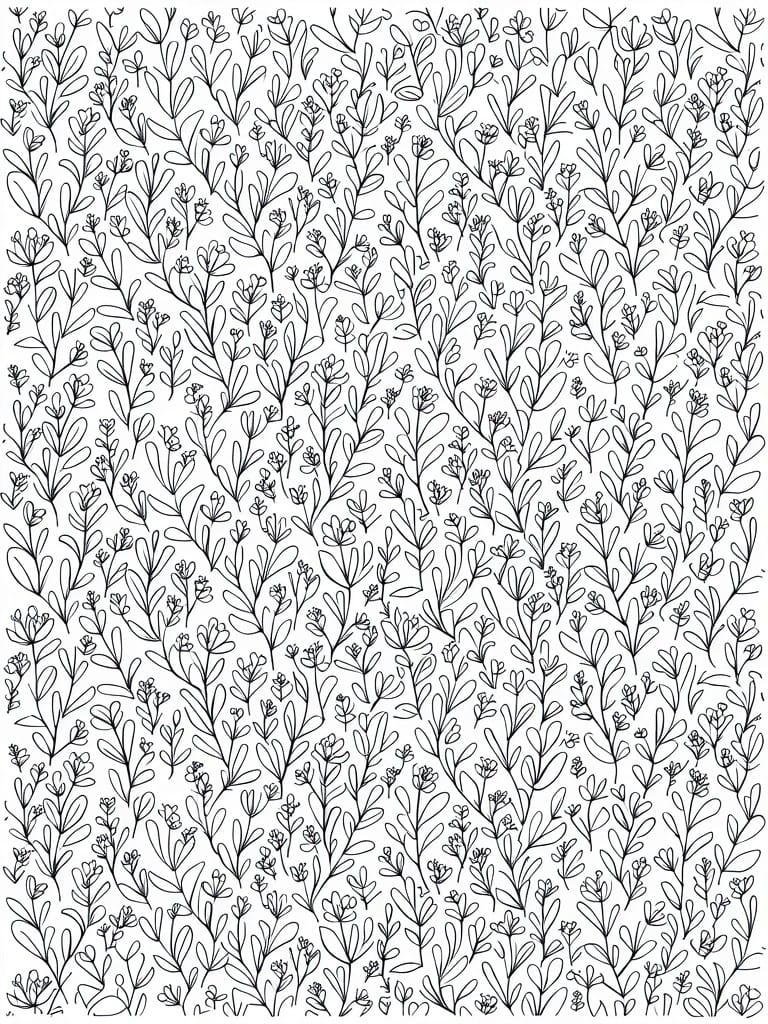
A seamless all-over pattern of thin-line leaves and sprigs covers the page without borders or focal points. The minimal line style keeps every shape simple yet varied for smooth coloring flow. This composition turns the entire sheet into a unified foliage texture.
The repeating motif delivers a meditative coloring session focused on rhythm and subtle shifts in shade. Thin lines and close spacing make it easy to fill sections quickly without frustration. A page like this stands out on Pinterest for its versatile neutral base ready for any palette.
Layered Abstract Wave Patterns
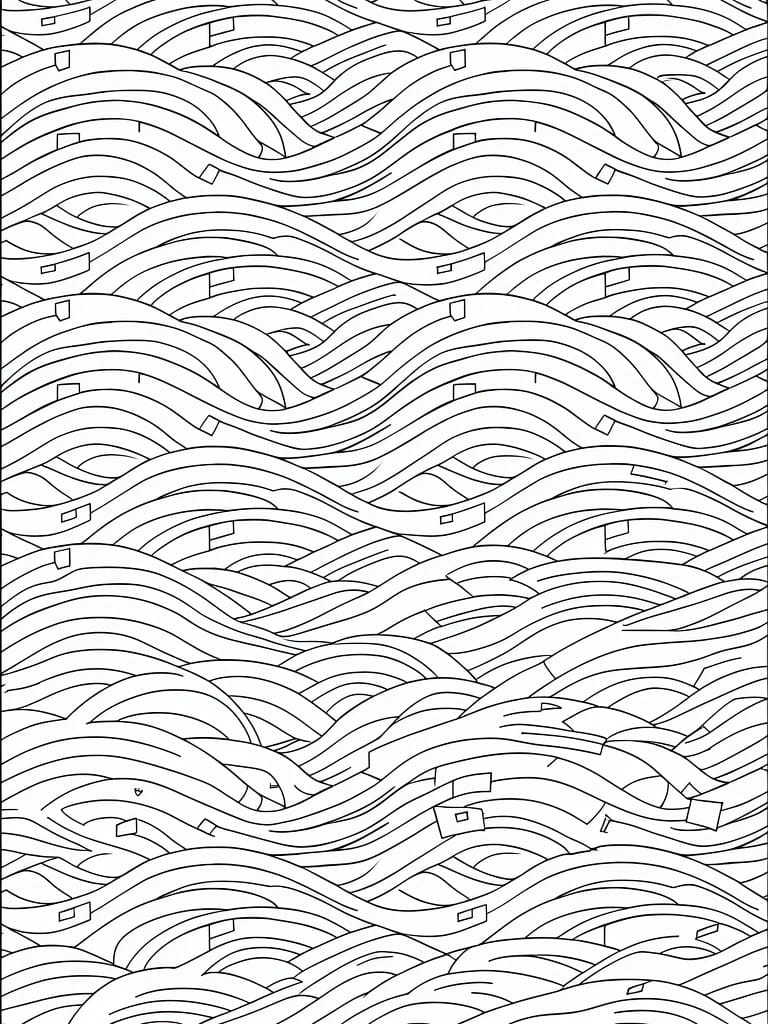
Repeating horizontal waves overlap to create a sense of fluid motion across the full page. Thin, curving lines form the core structure with subtle square accents integrated into the folds. This composition builds gentle depth through stacking, rewarding colorers with opportunities for gradient flows or bold contrasts.
The even spacing between layers keeps coloring straightforward without tight spots. Pattern-focused adults find it relaxing for zoning in on rhythmic sections. Its clean minimalism stands out on Pinterest among busier designs.
Vase with Mixed Flower Bouquet
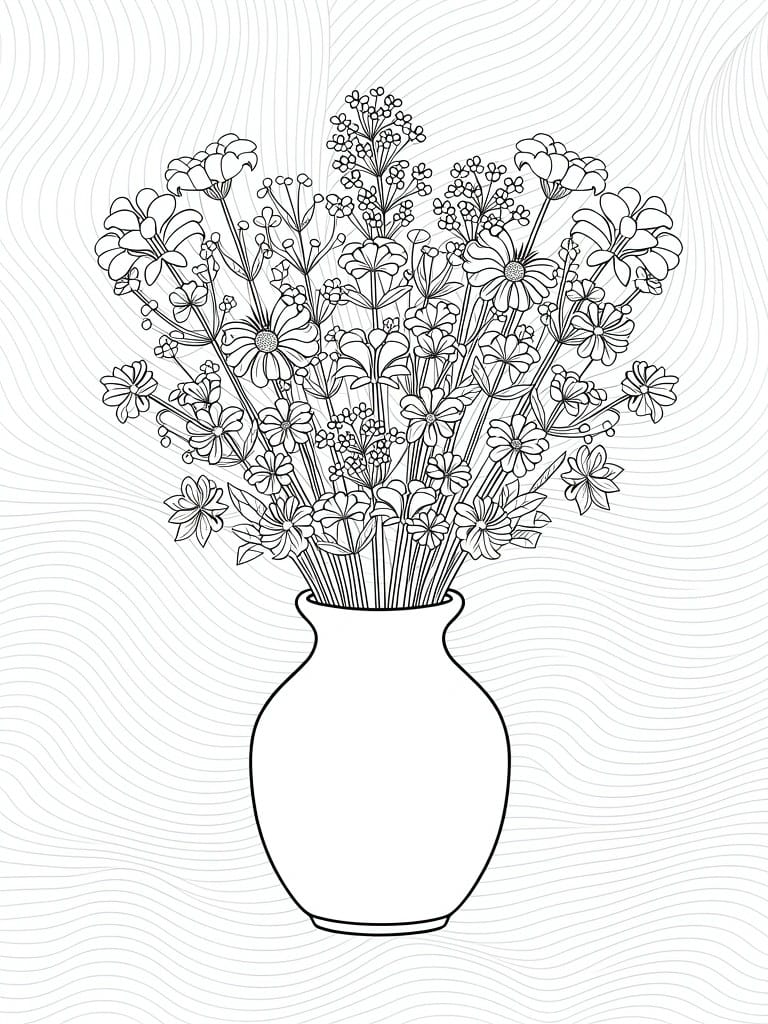
A mixed bouquet of lilies, daisies, and delicate filler stems overflows from a simple rounded vase. The design uses thin, flowing lines to capture a natural arrangement with varied petal shapes and stem heights. Balanced clusters create visual rhythm, making the page rewarding for adding subtle shades or bold contrasts.
The layout centers the vase low with flowers spreading upward, leaving room for easy pencil or marker work. Open spaces around stems reduce frustration during coloring sessions. Its clean minimal style fits adult relaxation or beginner practice, and the gentle flower variety pins well on Pinterest for spring decor ideas.
Symmetrical Sun-Moon Mandala
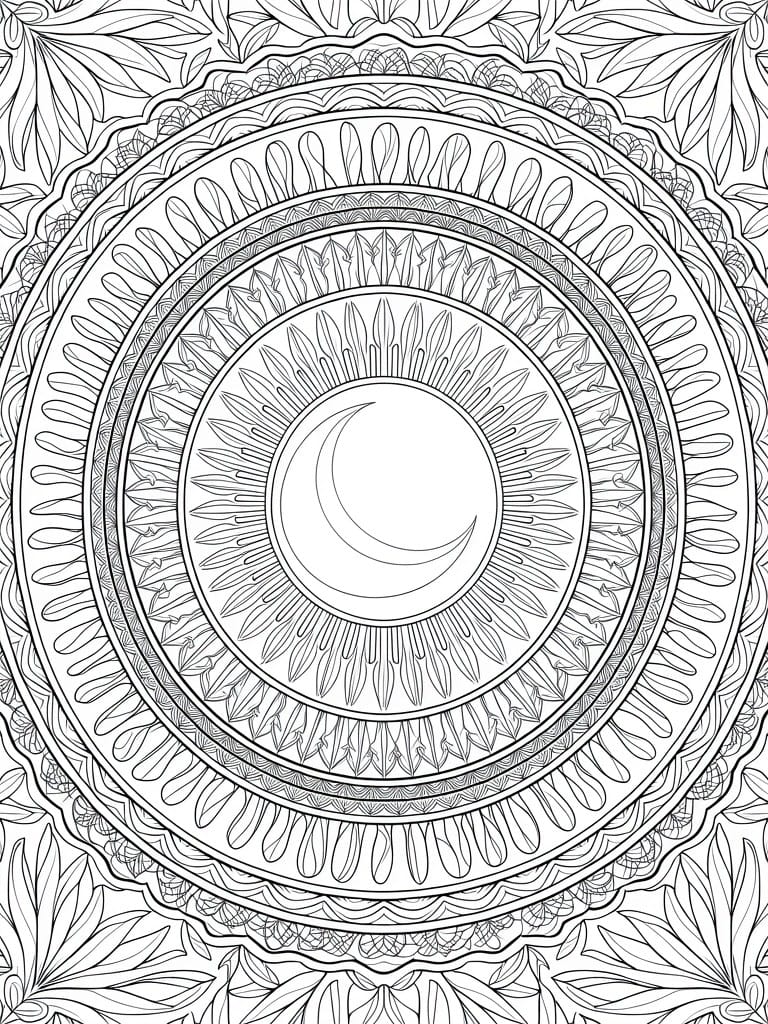
A mandala layout centers a sun circle with a crescent moon inside, surrounded by layered rings of floral motifs and vine-like extensions. Fine, repeating line work fills each ring with petals, leaves, and geometric accents. The radial symmetry pulls the eye inward while offering endless sections for color variation.
The concentric structure breaks coloring into manageable zones for steady progress. Detailed edges reward patient markers or pencils without overwhelming beginners in patterns. A page like this fits adult sessions seeking focus, and its celestial core grabs attention in minimal aesthetic collections on Pinterest.
Organic Pebble Spiral with Leaf Sprigs
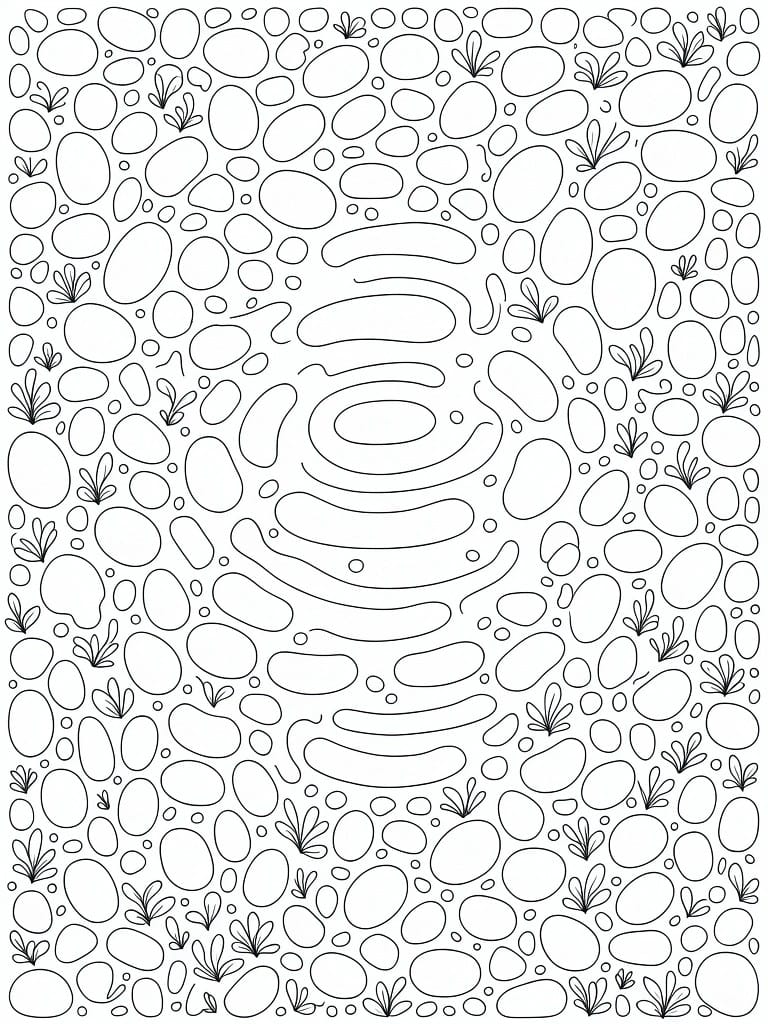
Organic pebble shapes pack tightly into a central spiral pathway. Thin lines outline each irregular oval and blob for a rhythmic, flowing composition. Leafy sprigs dot the edges, adding subtle vertical accents to the dense pebble mosaic. The radial layout pulls the eye inward, making the page visually balanced for coloring.
The repeating pebble forms offer a meditative coloring flow from outer edges to center. Open interiors keep it beginner-friendly while the spiral adds gentle focus. Dense yet simple patterns fill space without overwhelm, ideal for short sessions. This hypnotic layout stands out in minimal printables for its natural pull.
Arched Window Mountain Valley View
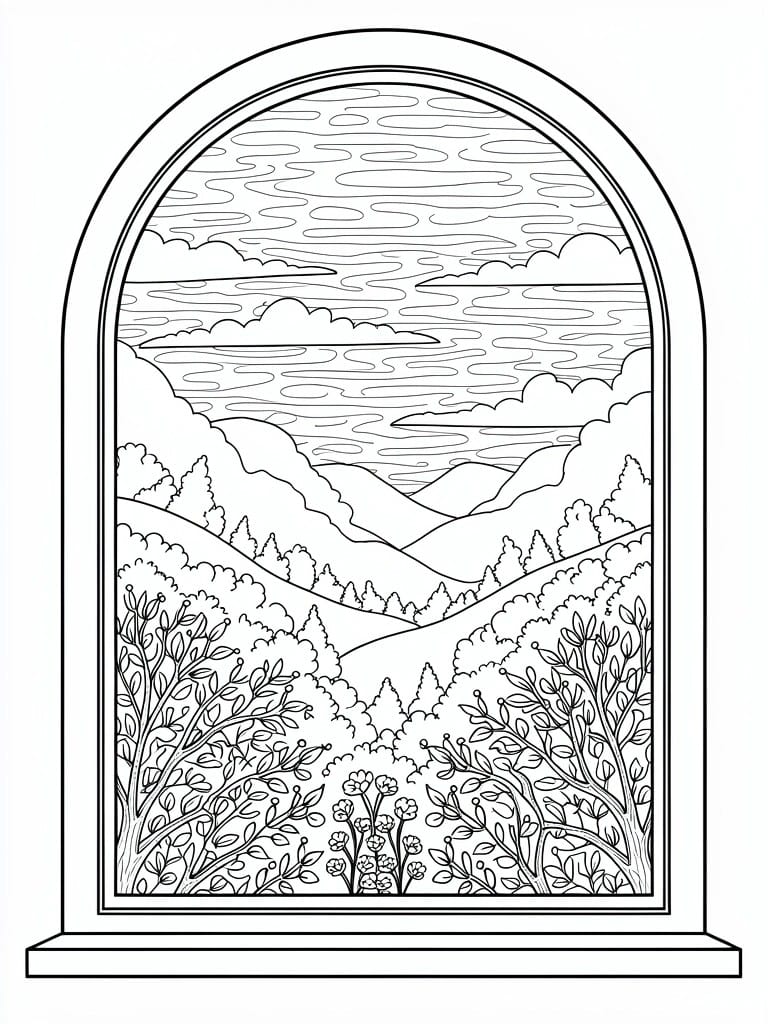
An arched window frames a layered mountain valley landscape with foreground bushes and distant peaks. Wavy line patterns texture the clouds, trees, and foliage for gentle depth. The sill at the bottom anchors the view, blending indoor frame with outdoor expanse.
The window layout sections the page into focused areas, starting with detailed branches before opening to sky. This setup suits relaxed coloring with room for bold sky gradients or subtle greens. Beginners handle the open spaces while detail fans fill the organic patterns.
Symmetrical Tulip Bouquet
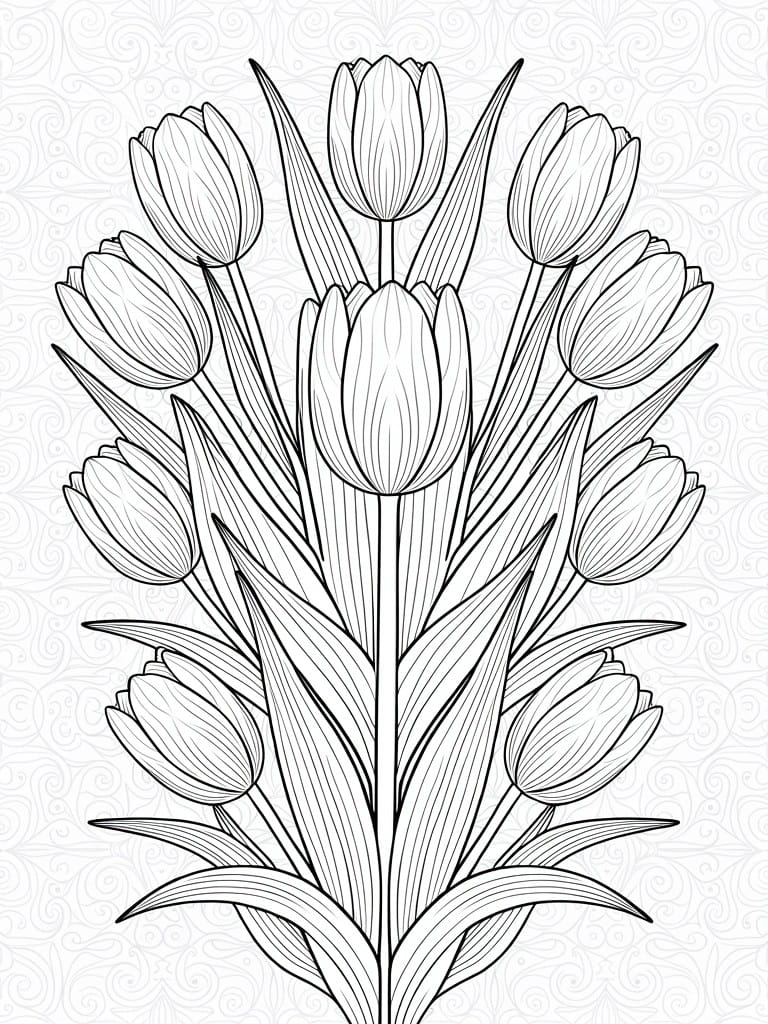
Tulips cluster in a dense, upward-fanning bouquet anchored by layered stems and broad leaves. Fine, curving lines trace each petal’s folds and the subtle swirls in the background. This vertical composition centers balance around a shared stem base. Repetitive petal shapes pair with open areas for varied shading options.
The detail level makes this a smart pick for adults who enjoy patterns. Flowing lines create a rhythmic coloring flow without tight constraints. Symmetry speeds up decisions on color placement. Print this for a session that builds satisfaction through matching blooms.
Frequently Asked Questions
1. What are minimal aesthetic coloring pages, and how do they incorporate gentle balance? Minimal aesthetic coloring pages feature simple, clean line art with sparse details, negative space, and subtle motifs inspired by nature, geometry, or abstract forms. “Gentle balance” refers to their harmonious designs that emphasize symmetry, soft curves, and equilibrium, such as flowing waves paired with steady mandalas or lone florals centered on the page. This creates a calming visual rhythm that encourages mindfulness while coloring, reducing visual clutter for a zen-like experience.
2. Where can I download or access these 19 coloring pages? The 19 pages are typically available as a free downloadable PDF bundle from the article’s linked resource or the publisher’s website. Look for a prominent “Download Now” button at the end of the article. Print them on standard A4 or letter-size paper at home, or use an online PDF viewer for digital coloring with apps like GoodNotes or Procreate. If the link expires, search for “19 Minimal Aesthetic Coloring Pages Gentle Balance PDF” on the original site.
3. What materials do I need to color these pages effectively? Start with basic supplies: high-quality colored pencils (like Prismacolor or Faber-Castell for smooth blending), fine-tip markers (such as Tombow dual-brush for gradients), or gel pens for subtle shimmer. Use thick paper (80-100gsm or higher) to prevent bleed-through. For a minimal look, opt for a limited palette of 5-8 soft pastels like sage green, blush pink, and ivory. Include an eraser for corrections and a blending stump for seamless shading.
4. Are these coloring pages suitable for beginners, adults, or children? Yes, they suit all levels due to their simplicity. Adults love them for stress relief and artistic expression, as the open spaces allow creative freedom without overwhelming details. Beginners appreciate the forgiving designs that do not require precision. Children aged 6+ can enjoy them too, though supervise younger kids with washable markers to avoid mess. They promote focus and fine motor skills across ages.
5. How can coloring these pages improve mental well-being and achieve “gentle balance”? Coloring these pages fosters gentle balance by slowing your mind through repetitive, low-pressure actions, similar to meditation. Focus on one section at a time: breathe deeply, choose soothing colors, and layer gently to build harmony. Studies from art therapy show such activities lower cortisol by 20-30% after 20 minutes. Use them daily for 15-30 minutes before bed to enhance sleep, reduce anxiety, or center yourself during breaks. Track progress in a journal to notice mood shifts.
