

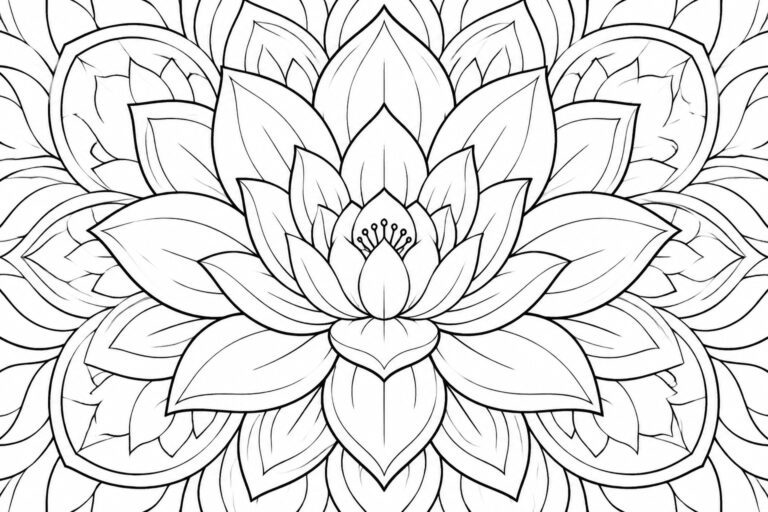
I started coloring mandalas a few years ago when I wanted something simple to fill my evenings.
Basic patterns worked better for me than the fancy ones because I did not have to worry about getting every detail right.
That is why I put together these 23 straightforward mandala pages that suit beginners who are just picking up the habit.
They use easy shapes and open spaces so anyone can color them without feeling stuck.
All you need is a set of pencils and a quiet spot to sit.
Layered Lotus Mandala with Central Bloom
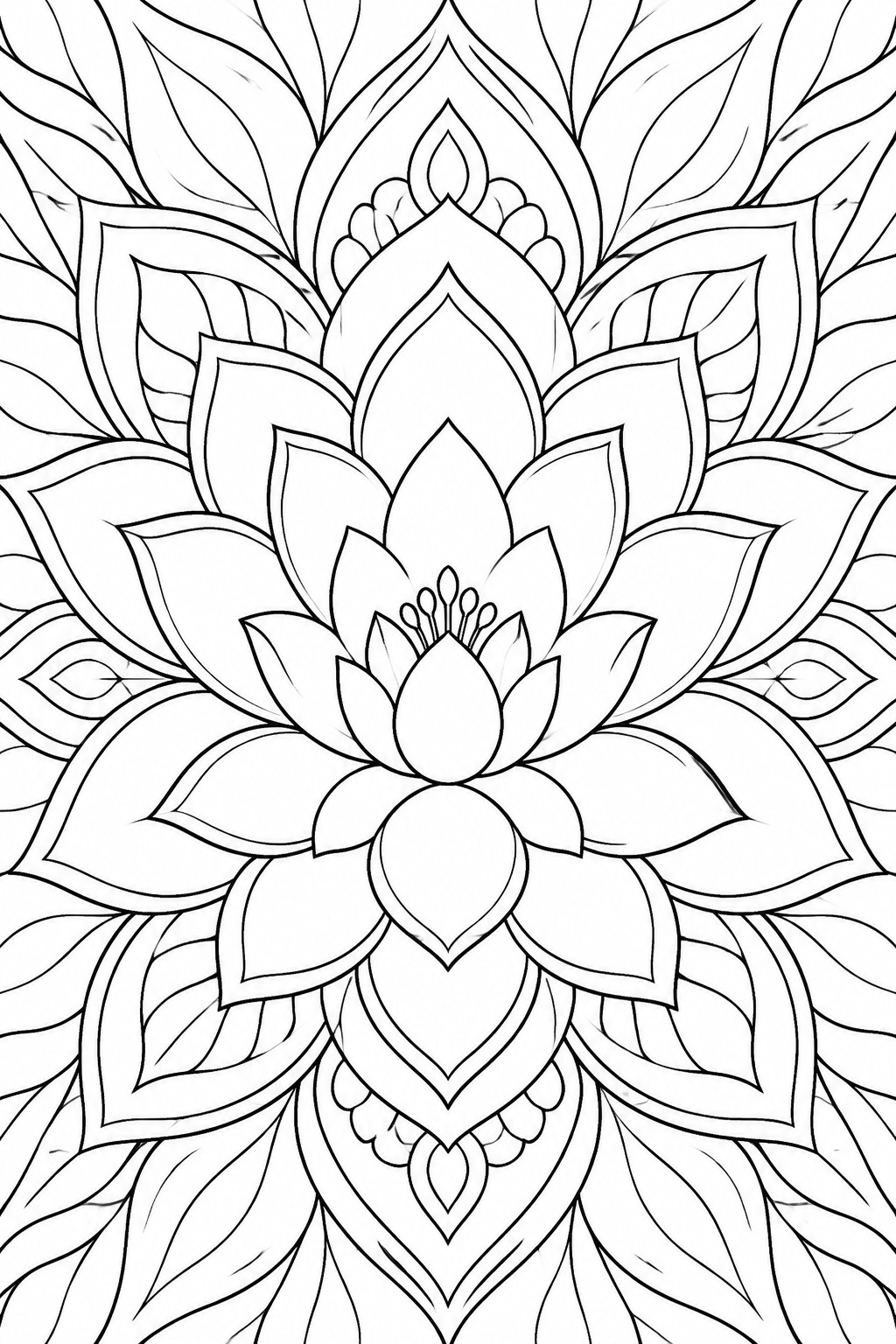
A lotus mandala built from concentric rings of petals creates the main focus here. The design places a detailed central flower at the core, then expands outward through overlapping petal layers and smaller leaf shapes that fill the surrounding space. Clean line work and even spacing between sections keep the pattern readable while still offering plenty of areas to color.
What makes this page useful is the clear division between each petal ring, which lets colorers work section by section without losing track of the overall design. The mix of larger petal shapes and tighter details near the center gives flexibility for both broad coloring and smaller accents. A page like this works especially well for adults who want a recognizable mandala theme that still feels approachable for beginners. The symmetrical layout also makes it easy to repeat colors or create simple gradients without needing advanced shading skills.
Central Flower Mandala with Expanding Circular Layers
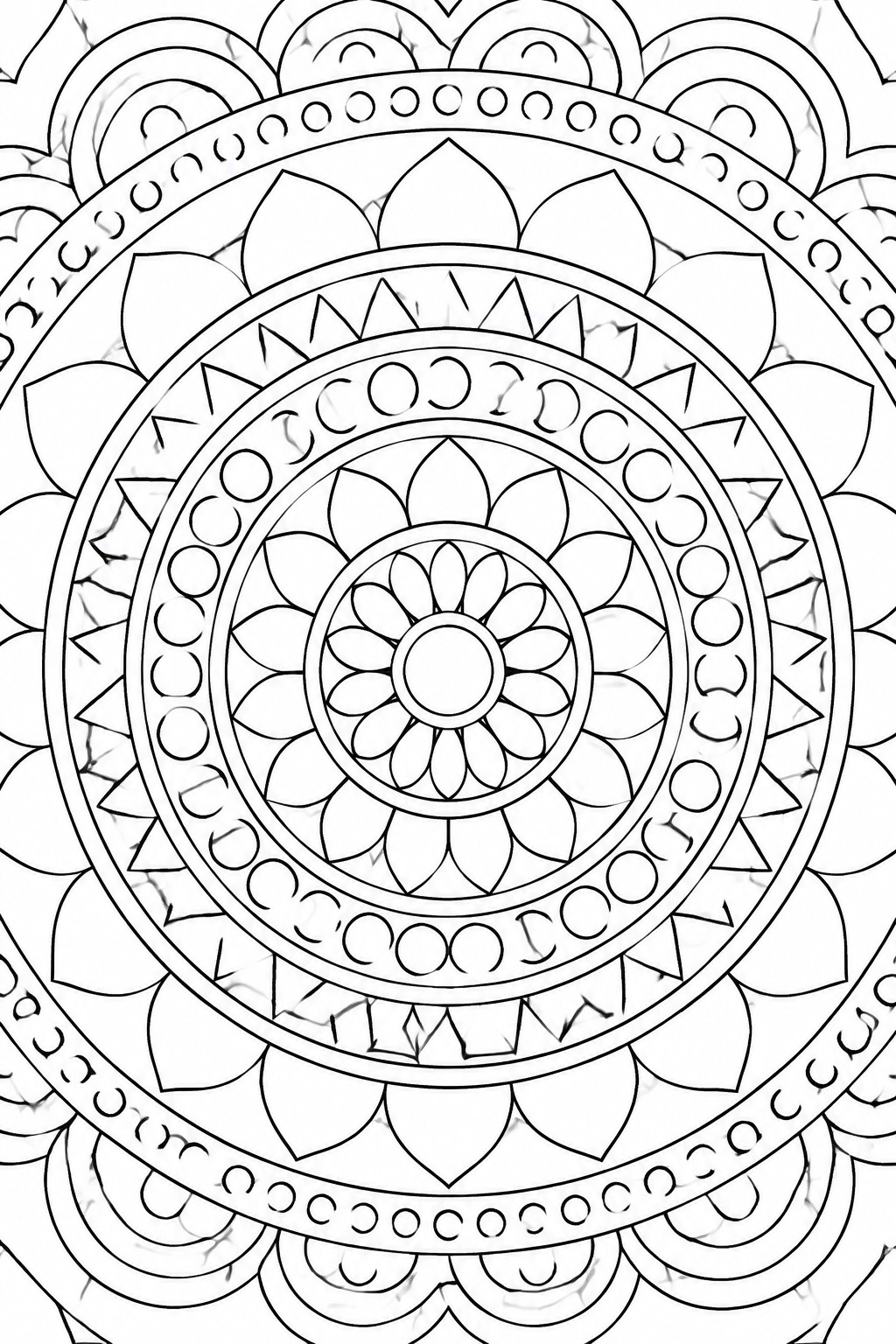
A mandala built around a single central bloom works well because the design radiates outward in clear rings of petals, dots, and pointed shapes. Each ring stays separate from the next, giving colorers distinct zones to fill one at a time. The open petal forms and repeating circular lines keep the page balanced without crowding any single area.
What makes this page useful is the even spacing between layers, which helps beginners avoid getting lost in the pattern. The mix of larger petals and smaller dots lets someone start with broad strokes and move to finer details only when ready. For adult beginners, this kind of layout offers enough structure to feel guided while still leaving room for personal color choices.
Radial Petal Mandala with Concentric Rings
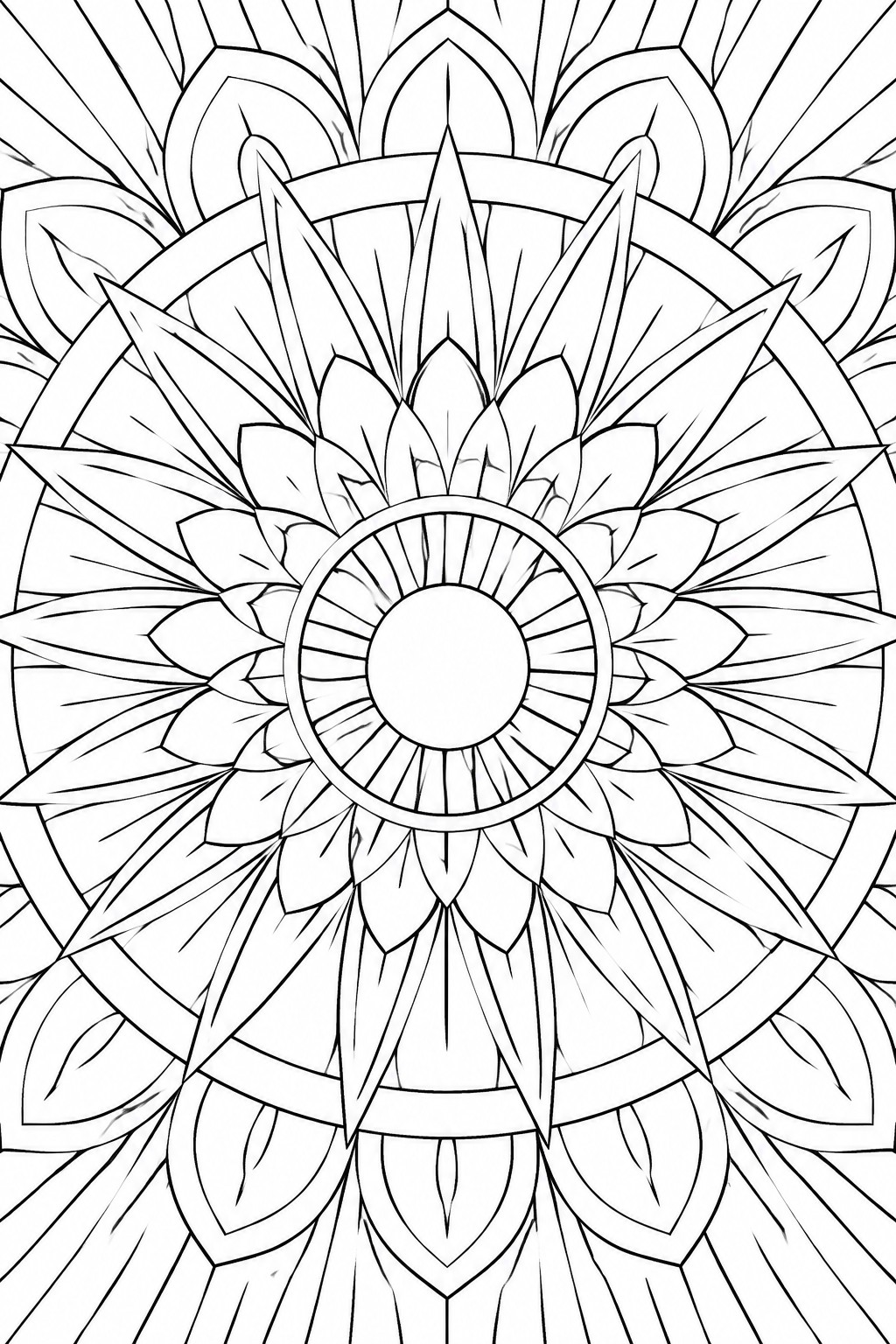
This mandala centers on a plain circle that expands into repeated layers of pointed petals and leaf forms. Each ring builds outward with consistent spacing and bold dividing lines that keep sections separate. The symmetrical layout uses simple repeating shapes to create a structured pattern that stays easy to follow.
The layout makes this easy to color because the clear rings let you work inward or outward without losing your place. A page like this works especially well for adult beginners who want a focused but not overly busy design. Defined edges reduce the chance of colors bleeding together and support quick progress in one sitting. The balanced repetition gives enough variety to hold interest while staying beginner friendly.
Night Sky Mandala with Crescent Moons and Stars
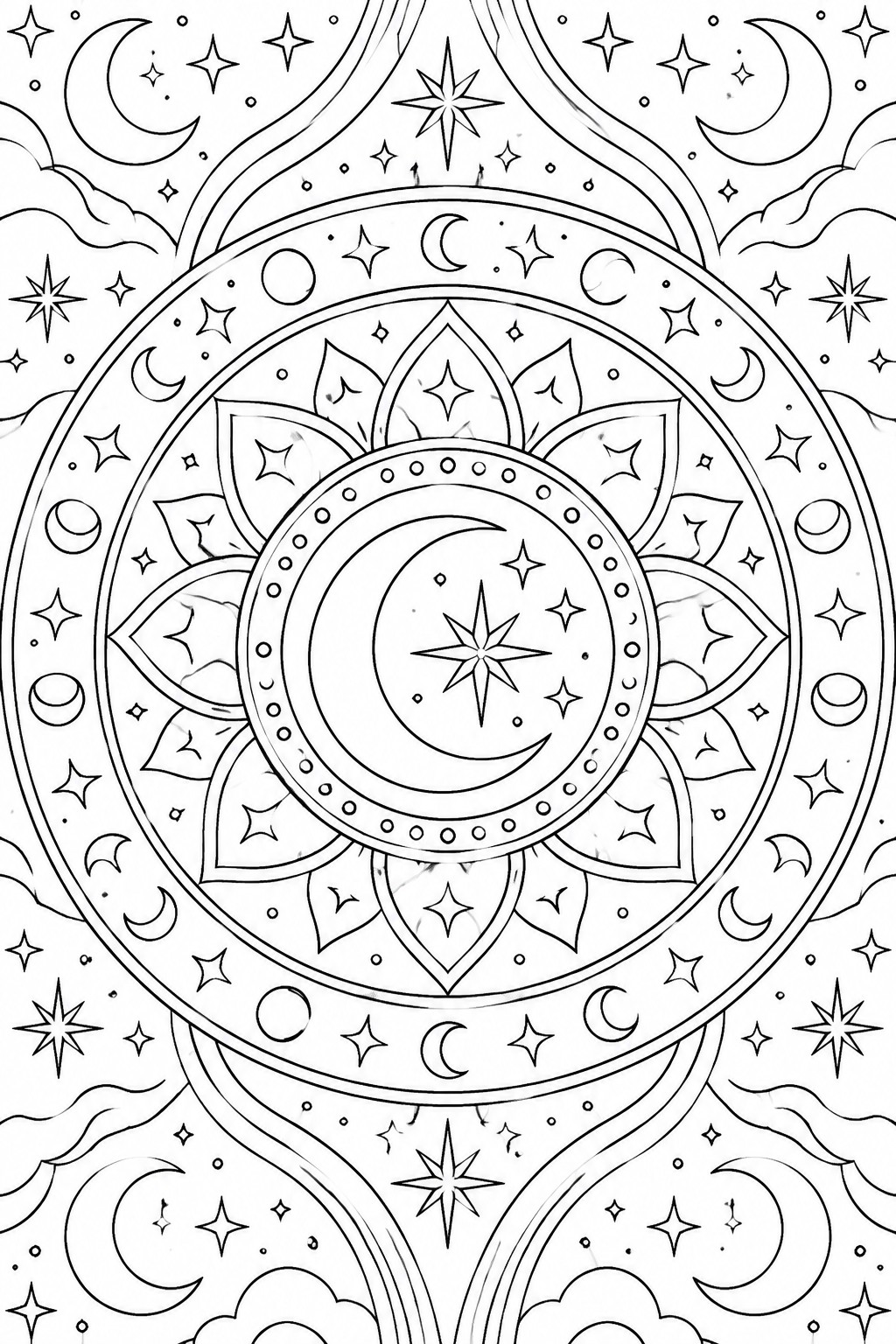
This mandala places a central crescent moon and star inside layered circles that expand outward. Petal shapes form a ring around the center while smaller moons, stars, and curved cloud lines fill the outer bands. The design uses repeating radial sections that keep the focus on filling one ring before moving to the next.
What makes this page useful is the clear separation between the detailed center and the simpler outer rings. The layout makes this easy to color without jumping between unrelated shapes. A page like this works especially well for adults who want a steady, pattern-based session that still leaves room to choose different colors for the moons and stars. The open spaces in the petals and background elements help the page stay approachable for longer coloring sessions.
Paisley Mandala with Central Flower Focus
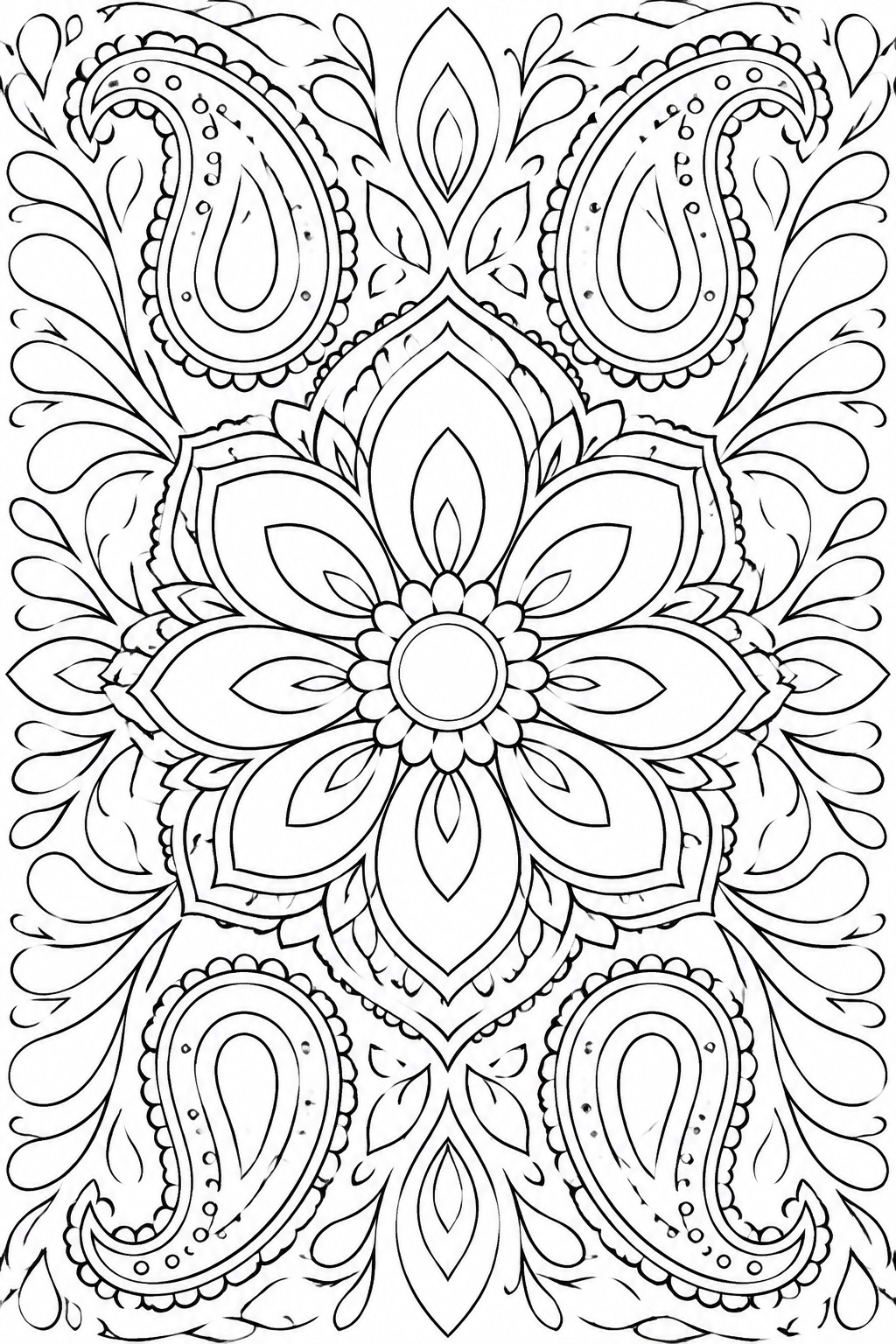
This coloring page idea pairs classic paisley shapes with a large multi-petaled flower at the center. The design builds outward in symmetrical layers, using curved outlines and leaf accents to fill the space evenly. The mix of bold paisley forms and finer petal details gives colorers clear sections to work through.
The layout makes this easy to color by moving from the middle outward without getting lost in tiny spaces. A page like this works especially well for adult beginners who want pattern variety without overwhelming detail. The repeating paisley shapes let colorers practice shading and color blending while still finishing the page in one sitting.
Celtic Knot Mandala Pattern
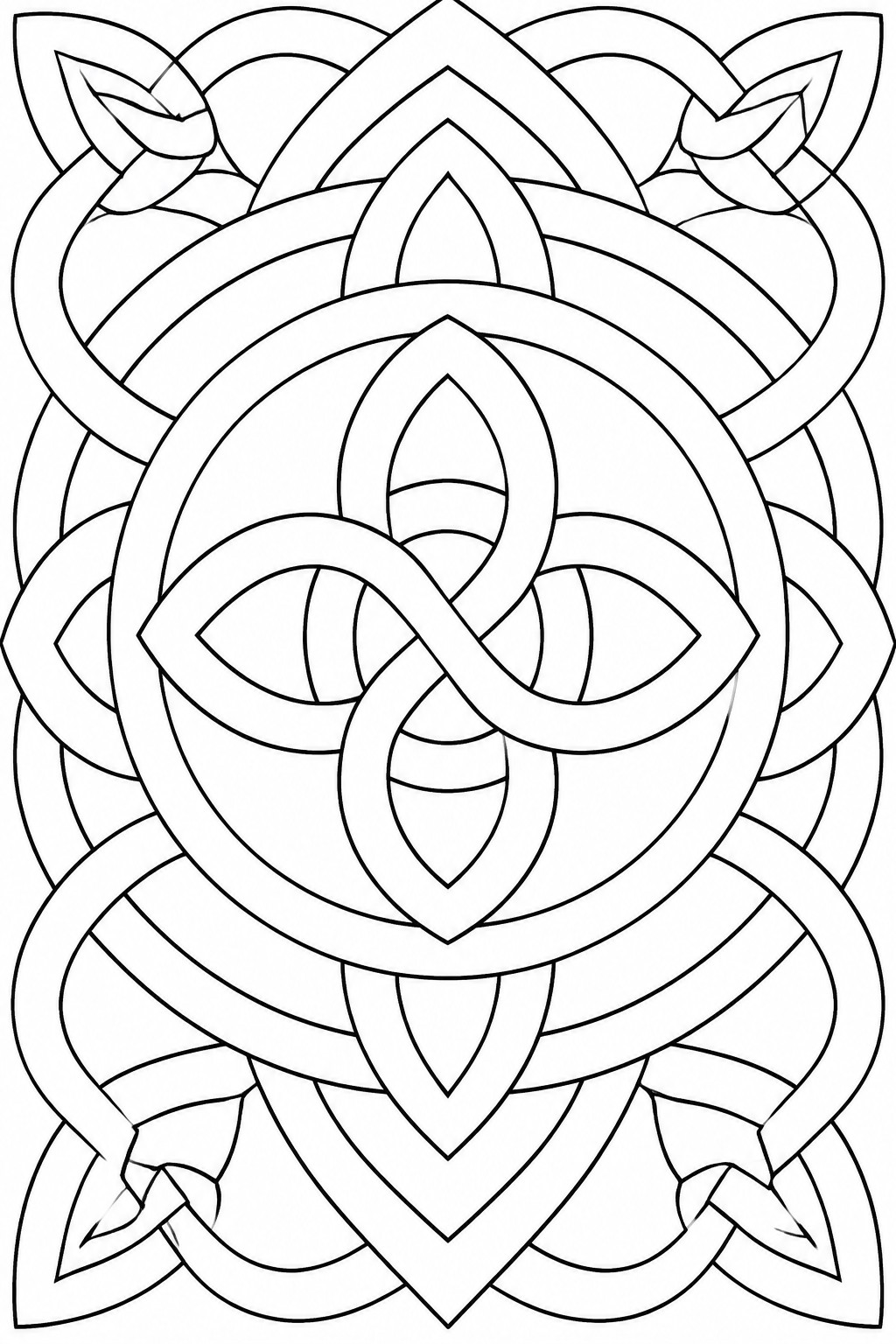
This mandala uses overlapping bands that twist and cross to form a continuous knot design. The circular layout places a central motif in the middle with layers of loops and pointed shapes extending outward in even sections. The repeating intersections create clear lines that guide color placement while leaving open areas for shading.
The layout makes this easy to color in sections without losing track of the overall pattern. Adult beginners often appreciate how the knots create natural boundaries that prevent colors from bleeding into each other. A page like this stands out for its balance of structure and open space, making it suitable for longer sessions where you want to build up layers of color gradually.
Layered Leaf Mandala with Central Flower
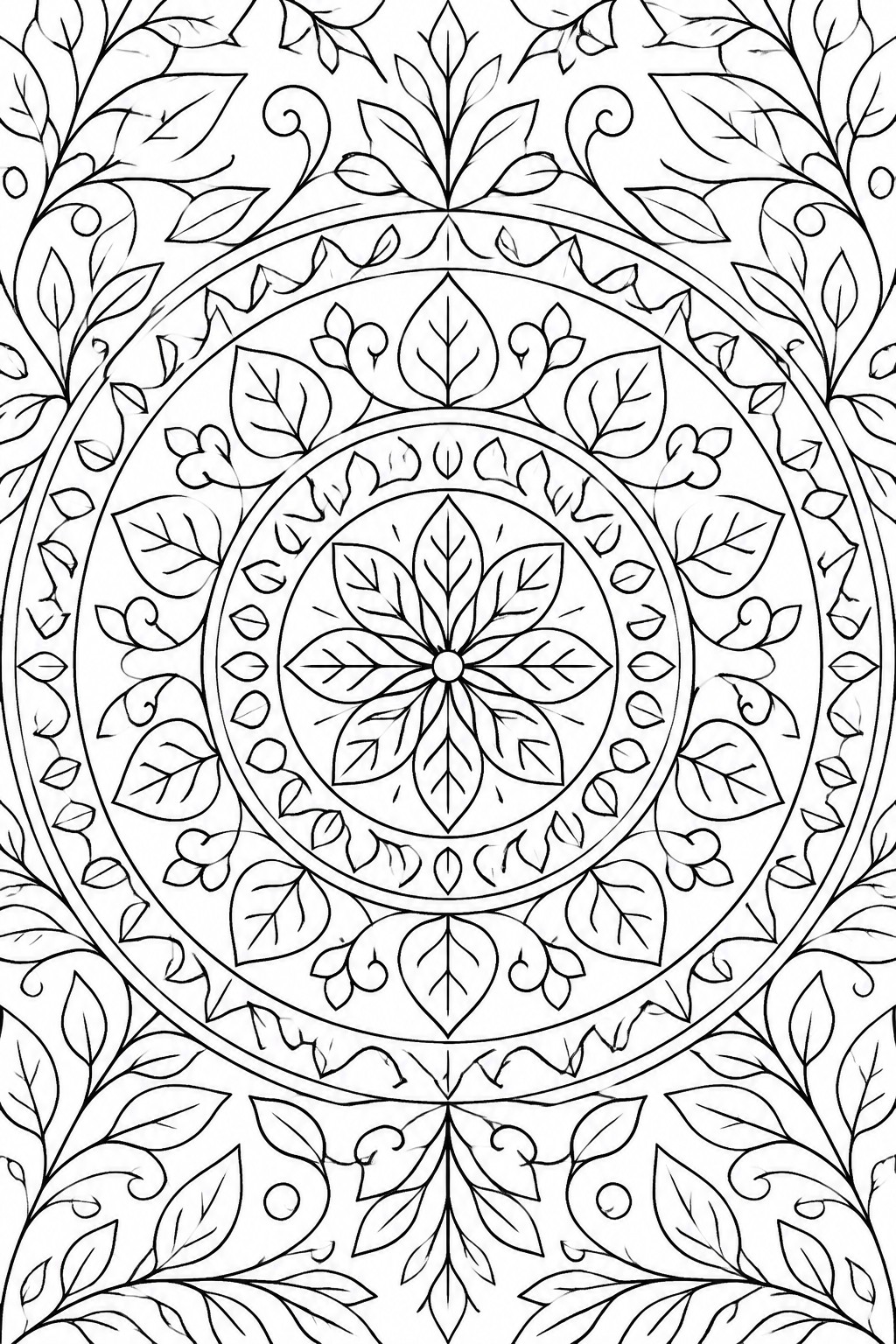
A mandala built around repeating leaf and vine shapes forms a botanical theme inside a strict circular layout. The design places a simple flower at the center, then adds three distinct rings of foliage that grow slightly more detailed toward the outer edge. This structure gives colorers clear rings to follow while keeping all the main elements connected through the same leaf motif.
What makes this page useful is the way the rings create natural stopping points, so beginners can color one section at a time without losing track. The leaf shapes stay consistent enough to build rhythm yet leave room for simple color changes. For adults new to mandalas, the open centers inside each leaf make filling easier and reduce the chance of feeling stuck in tight spaces. The balanced layout also prints cleanly at standard sizes, which helps it stand out when people search for straightforward mandala options.
Butterfly Mandala with Layered Wing Patterns
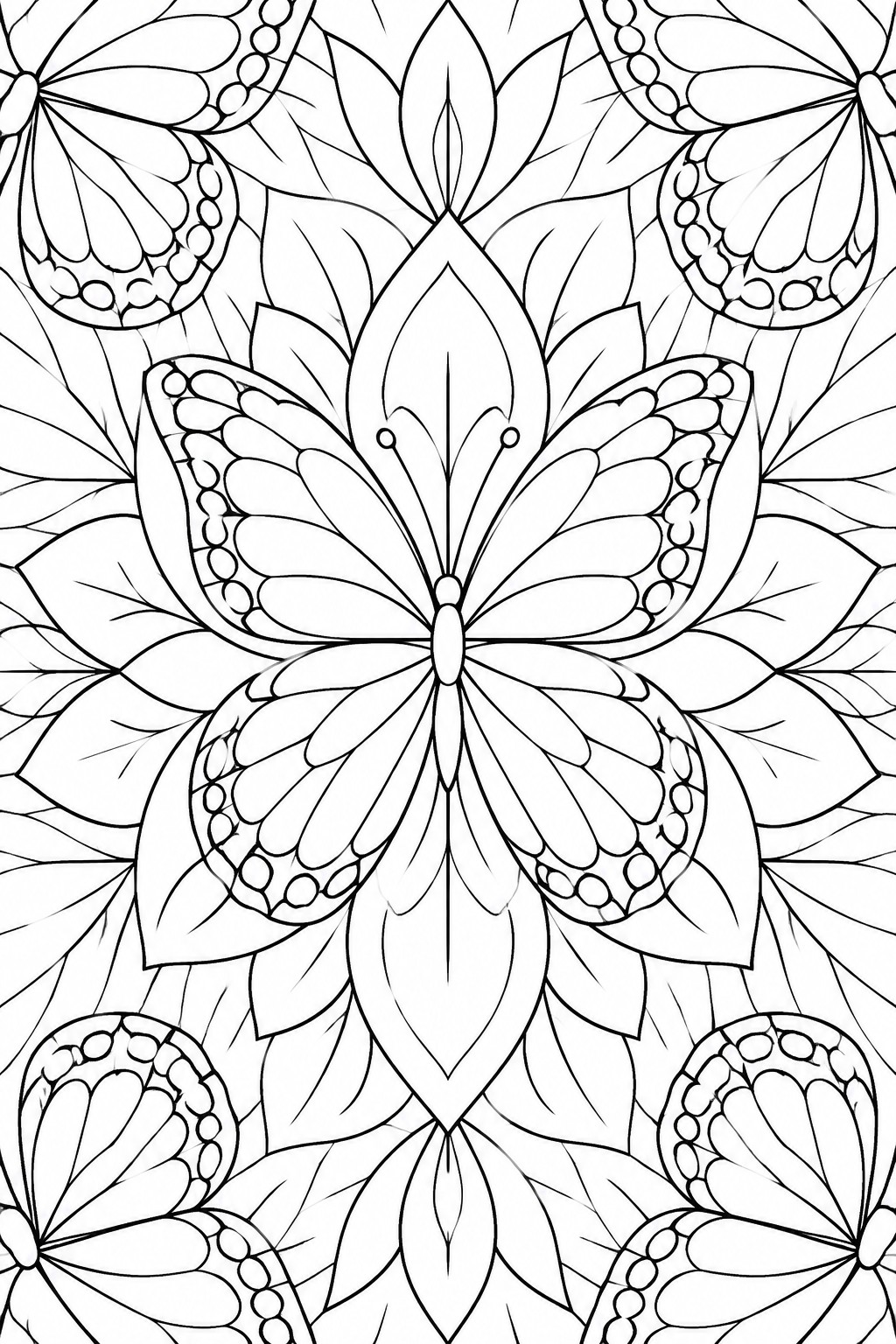
This mandala centers on a large butterfly whose wings display segmented sections filled with small circles and curved lines. Leaves radiate outward from the center while smaller butterflies sit in the outer ring to complete the circular layout. The design mixes bold outlines with finer details inside each wing shape.
The layout makes this easy to color because the main butterfly stays large enough to work on without tiny spaces. A page like this works especially well for adult beginners who want repeating patterns without high complexity. The wing sections let colorers try simple shading or color blocking while the surrounding leaves keep the page balanced.
Ocean Wave Mandala with Shells
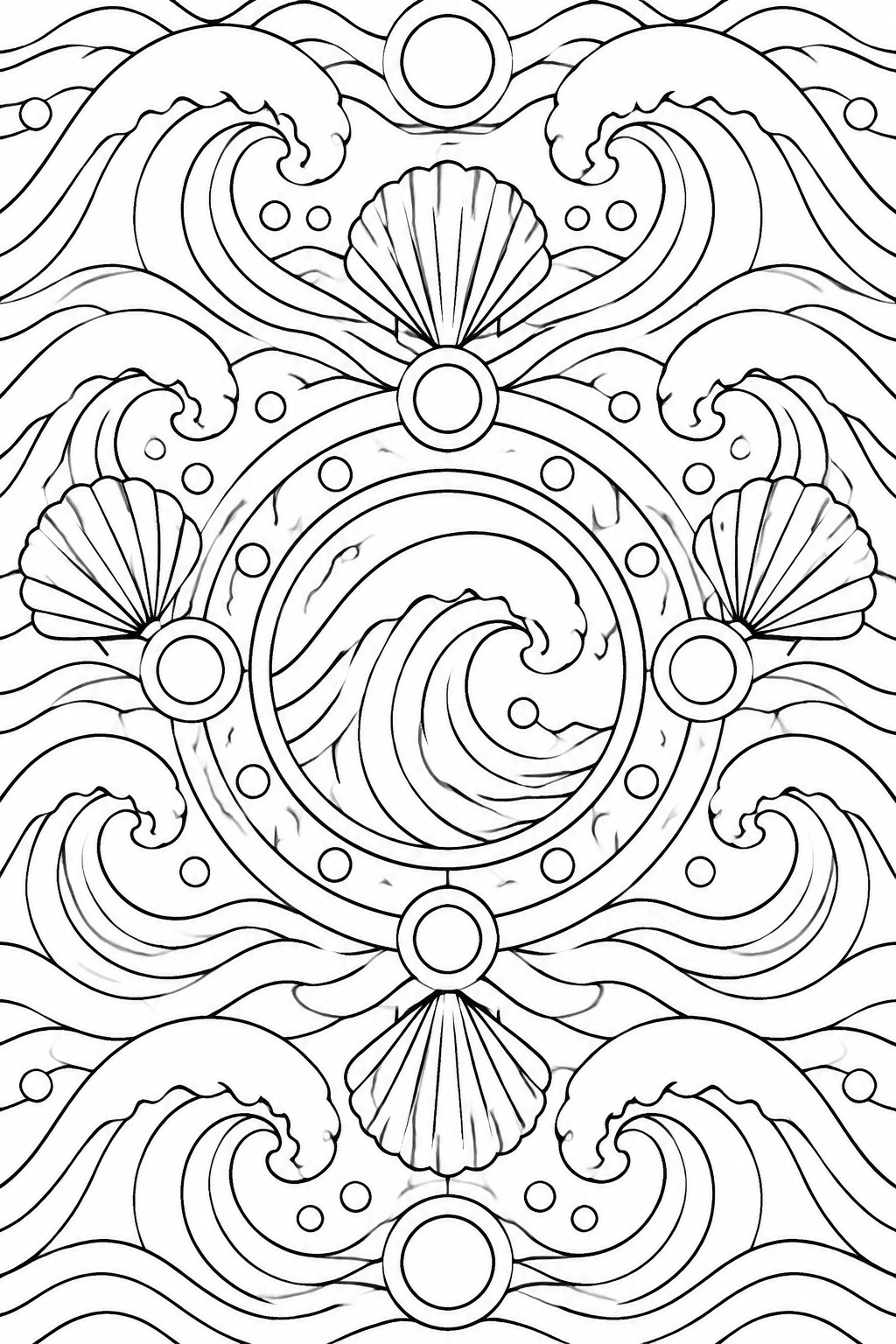
This mandala uses a circular layout built around ocean waves and seashells. Concentric rings form the center with a spiral wave pattern inside, while larger wave lines and shell shapes repeat around the outer edges. The design balances flowing curves with round geometric elements and evenly spaced dots for structure.
The layout makes this easy to color by dividing the page into clear rings and sections that can be worked on one at a time. A page like this works especially well for adult beginners who want a mandala without overly small details. The larger wave areas allow for simple color fills while the shells give natural focal points to finish last.
Symmetrical Leaf Mandala Design
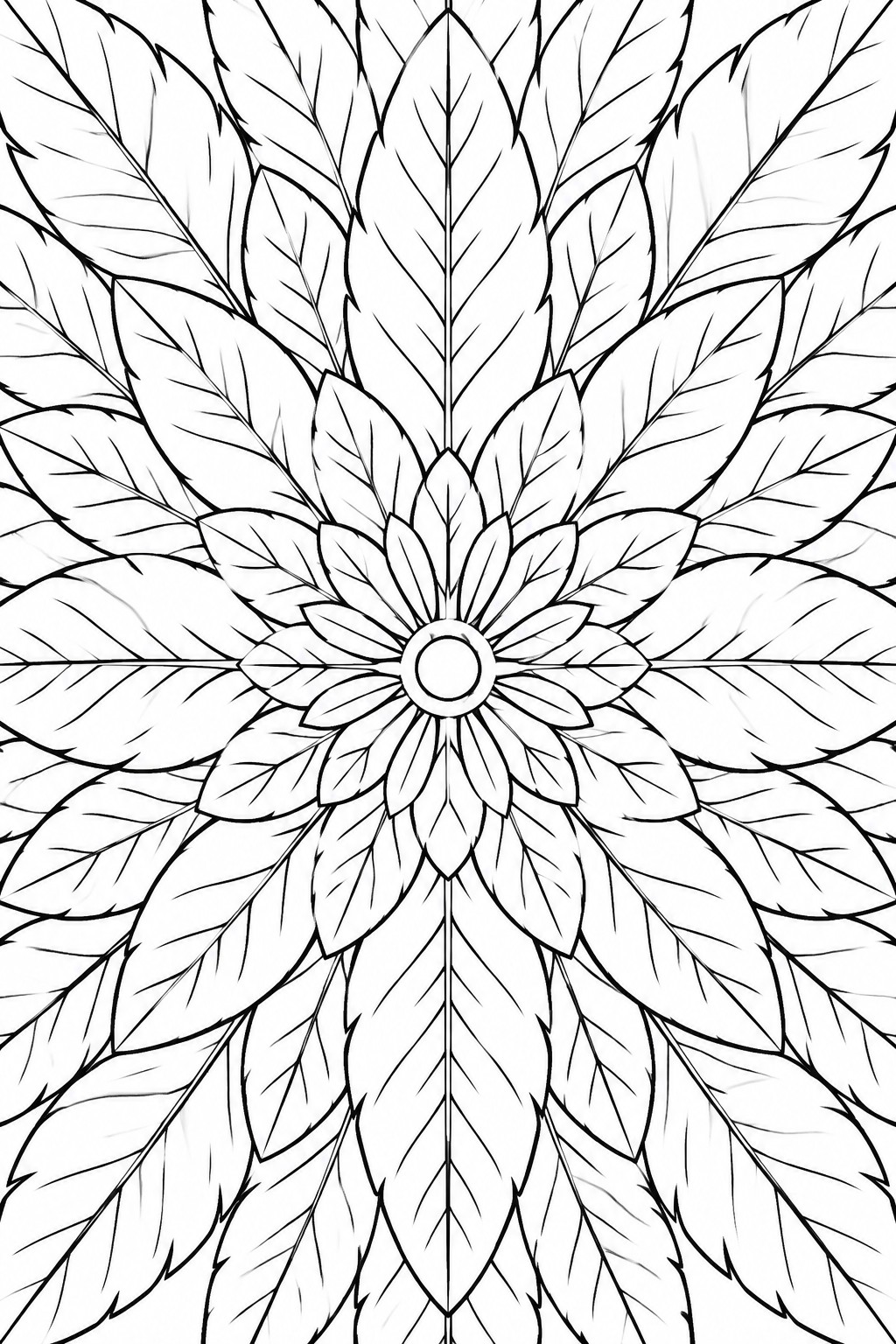
A mandala built from repeated leaf shapes creates a clear radial pattern that expands from a small center circle outward. The veins inside each leaf give light structure that helps guide color placement without adding heavy detail. This setup keeps the focus on one repeating motif that fills the page evenly.
The layout makes this easy to color because the sections mirror each other and stay consistent all the way around. Adult beginners can work section by section while practicing even shading and simple color changes. The balanced spacing reduces the chance of getting lost in the design and helps the page finish faster than more crowded options.
Hexagon Ring Mandala with Circular Details
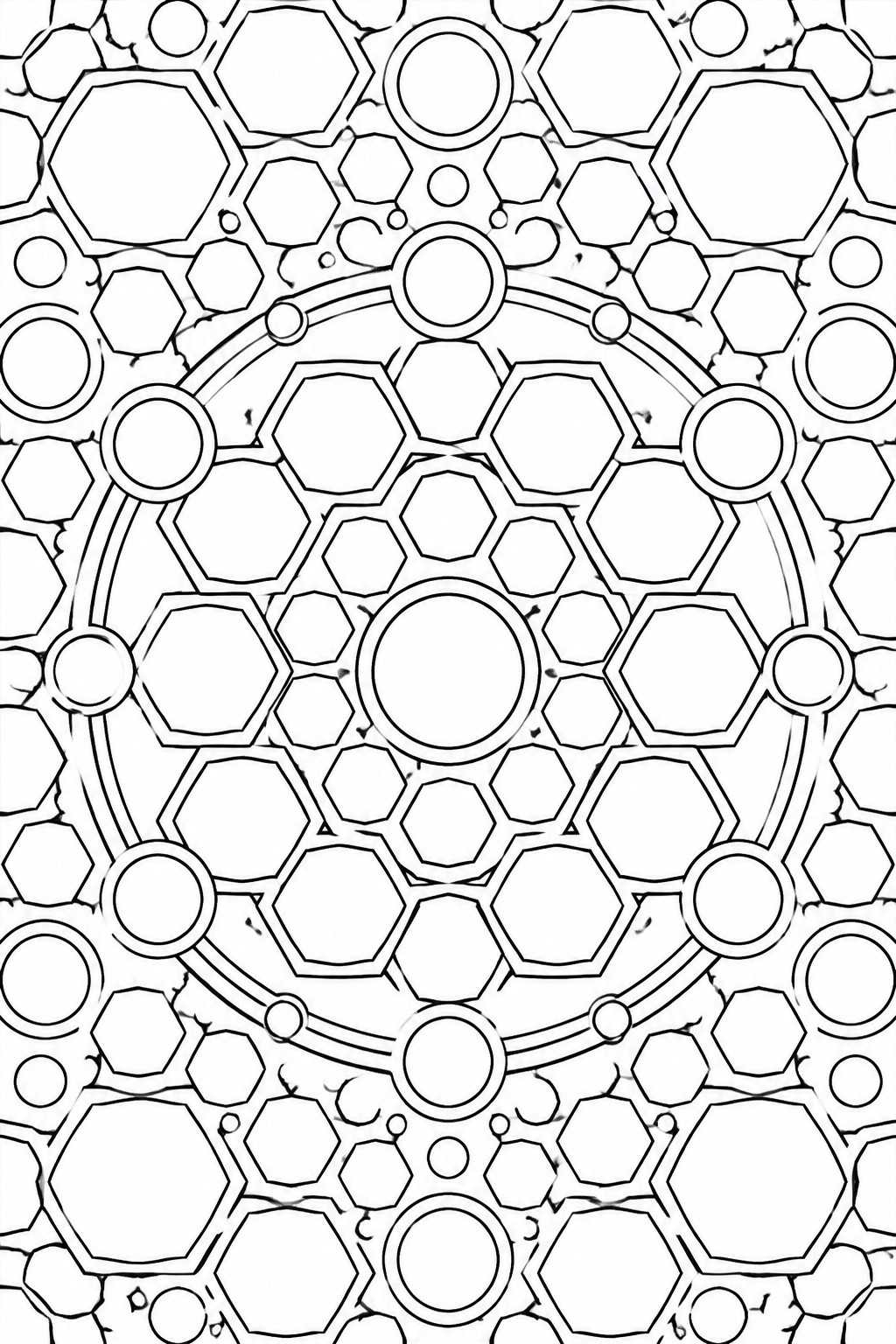
This mandala uses repeating hexagons arranged in concentric rings around a central circle. Smaller circles sit at regular intervals between the rings to create separation and balance. The design keeps a clear radial structure that moves from the middle outward through consistent geometric shapes.
The layout makes this easy to color one ring at a time without losing track of the pattern. Beginners can fill the larger hexagons first and then handle the smaller circles as accents. A page like this works especially well for adults who want a mandala but prefer clear, repeatable shapes over freeform details. The even spacing helps the finished page look orderly even if color choices stay simple.
Zen Stacked Stones Mandala
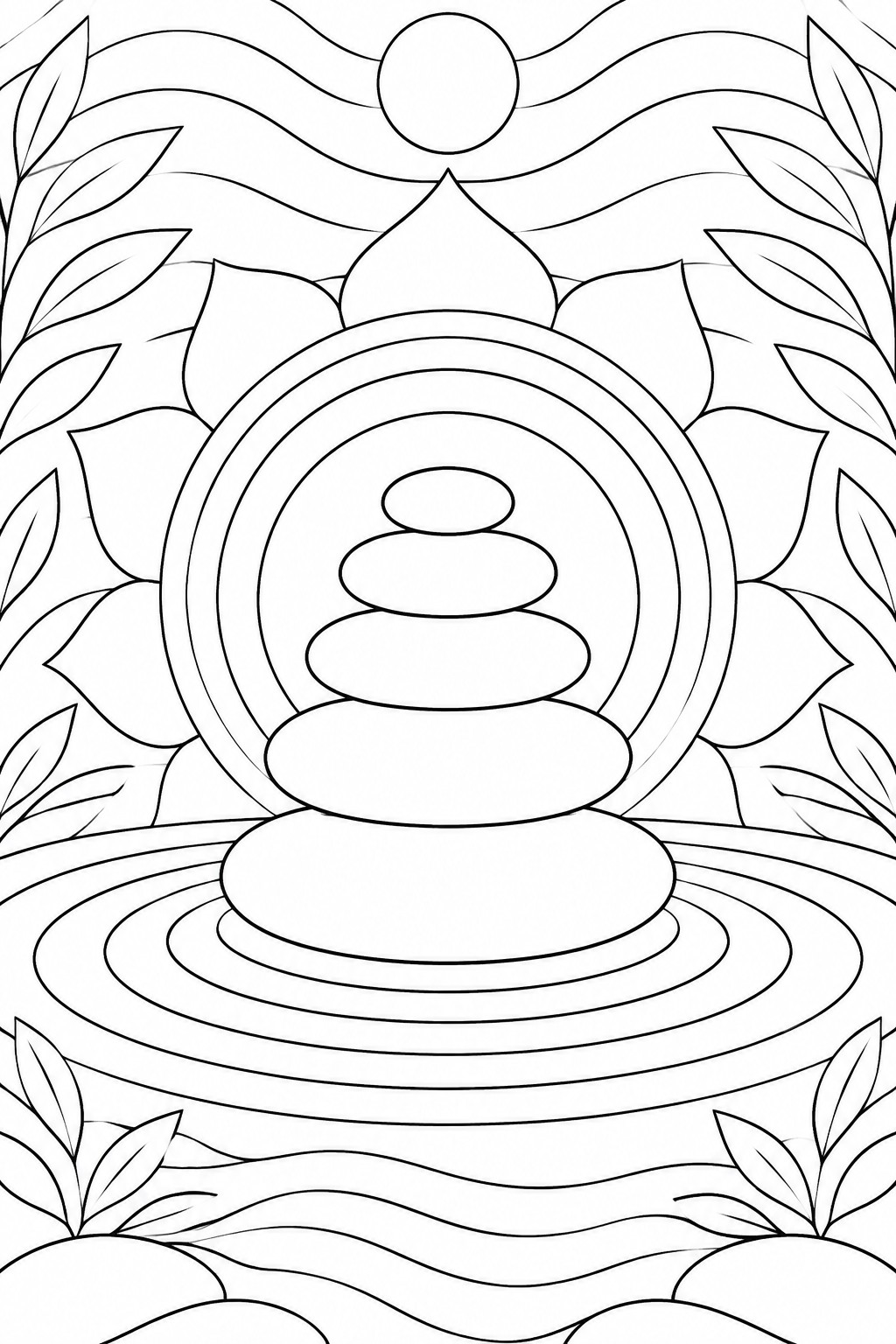
This mandala centers on a cairn of balanced oval stones that sit inside multiple concentric rings. A large lotus shape opens behind the stones while leaves and wavy water lines fill the outer sections to keep the design symmetrical. The layout uses clean circular bands and simple natural forms that stay easy to follow.
The open rings and clear stone shapes give beginners steady sections to color without tight detail work. Colorers can finish the center stones first then move to the rings and outer leaves in any order. This page works well for short sessions because the repeated curves and water lines invite simple shading choices without crowding the space.
Heart and Flower Mandala with Radial Layout
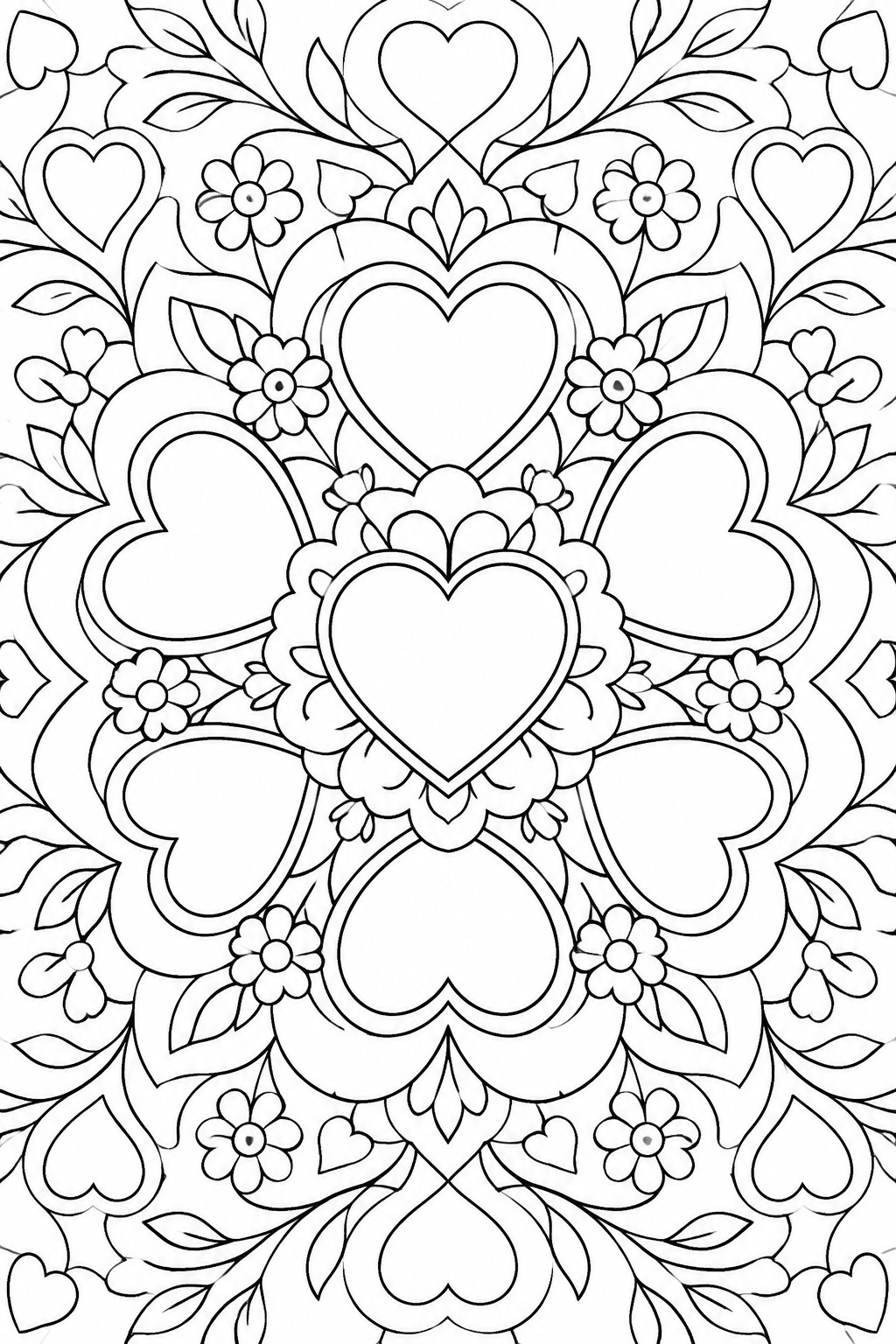
Heart mandalas use a central shape surrounded by repeated heart forms and small flowers to build a symmetrical circular design. This page arranges hearts of varying sizes around the middle with flowers placed in the gaps to fill the pattern evenly. The clear outlines and consistent spacing give colorers distinct areas to work on without crowded sections.
What makes this page useful is the balance between larger heart shapes that color quickly and smaller flower details that add interest without extra complexity. A page like this works especially well for adult beginners who want a mandala that stays relaxing and easy to complete in one sitting. The repeating layout supports simple color choices while still producing a finished pattern that looks polished.
Spiral Mandala with Layered Rings
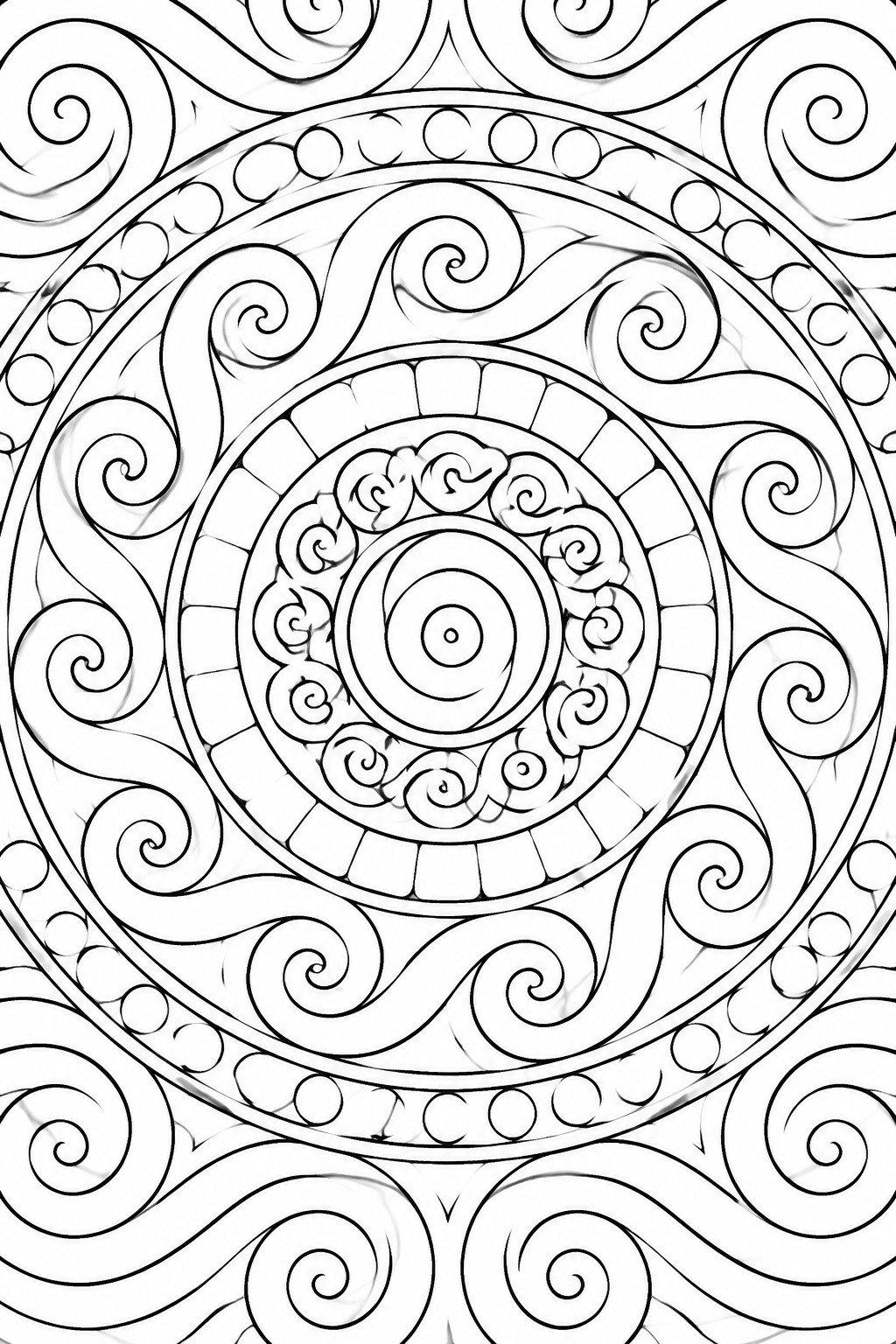
Mandala pages built on concentric spirals give colorers a clear path from the center outward. This design stacks multiple rings of swirling shapes separated by dotted borders and segmented bands. The repeating curves create a steady rhythm that guides the eye without crowding any single area.
The layout makes this easy to color because each ring stands on its own, letting beginners work in short sessions or finish the whole page in one sitting. The open spaces between the swirls leave room for simple color choices or light shading practice. A page like this works especially well for adult beginners who want structure without tiny details that demand hours of focus.
Citrus Slice Mandala with Repeating Fruit Wedges
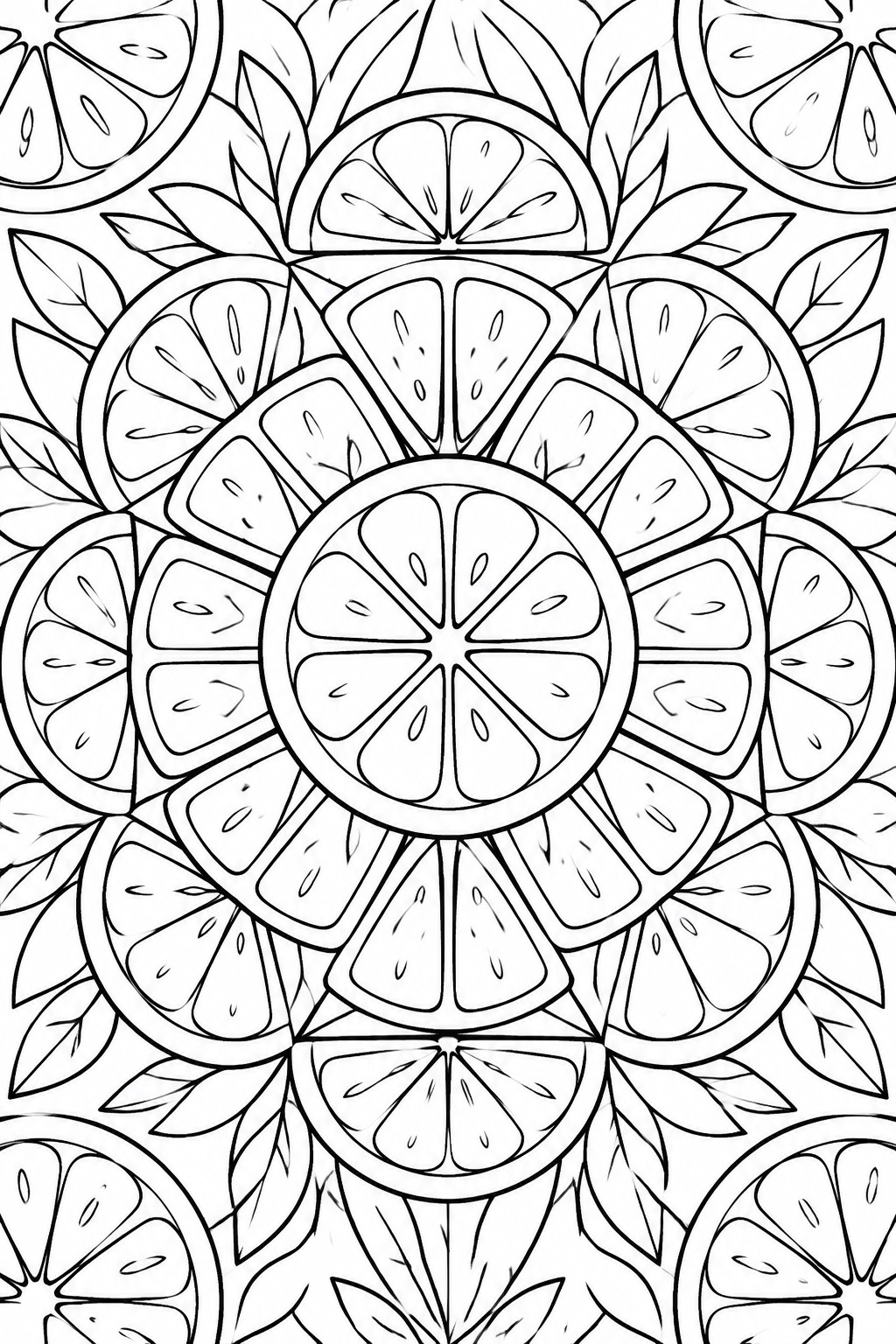
Citrus slices form the core pattern in this mandala. Wedges of fruit repeat in concentric rings that build outward from a small center circle. Leaves fill the gaps between the rings to keep the overall shape balanced and symmetrical.
The repeating fruit sections give colorers a chance to practice the same color in different intensities. Clear lines and even spacing make the page workable for beginners who want structure without heavy detail. The fruit theme also gives a clear reason to pull out bright yellows and oranges next to greens for the leaves.
Owl Mandala with Layered Feathers
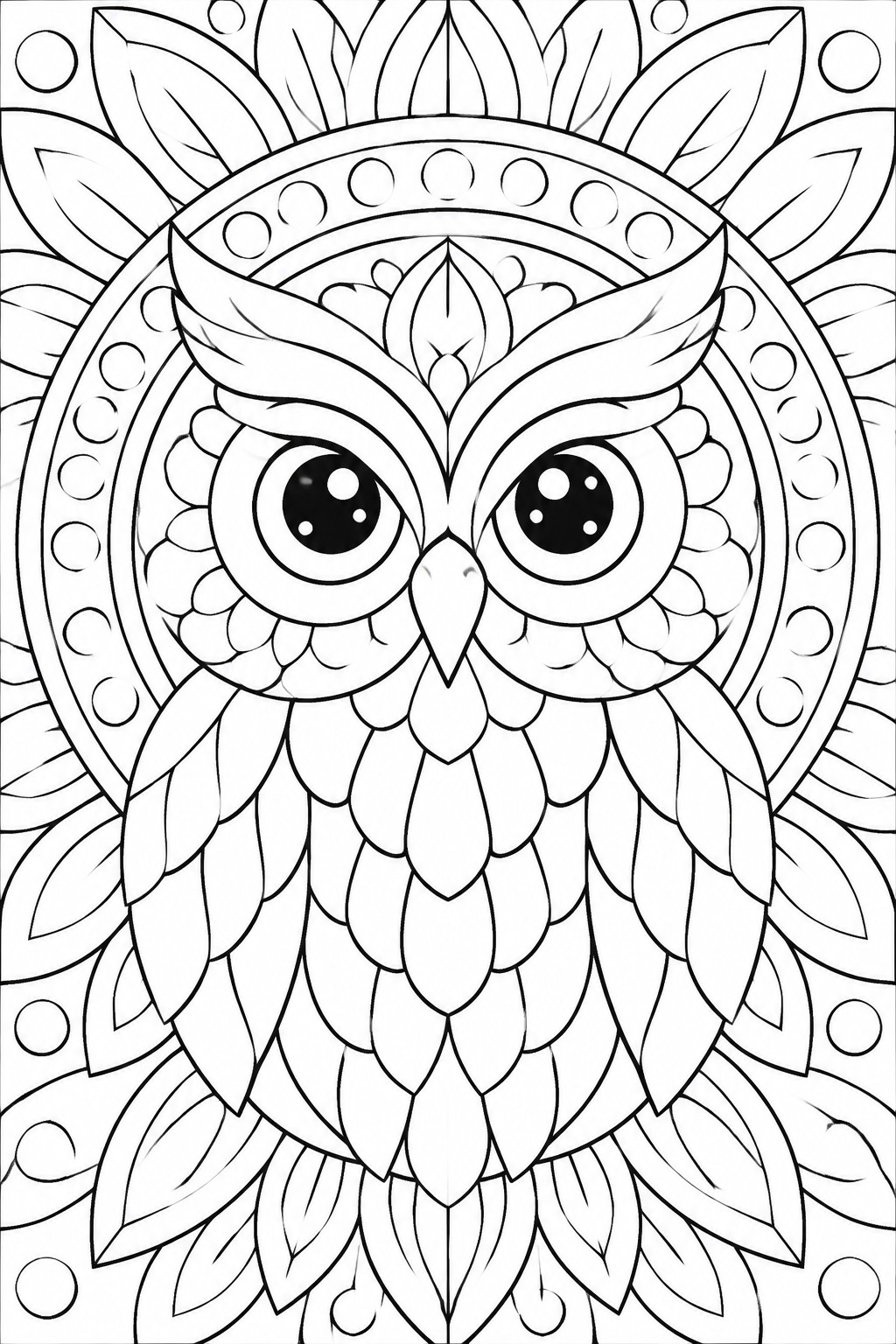
An owl mandala places a single animal subject at the center of a circular pattern. The design uses the owl’s face and chest as the main focus, with large eyes and rows of feathers creating clear zones for color. Concentric rings around the owl add leaf shapes and small circles that break the page into manageable sections.
The layout makes this easy to color section by section without losing track of the overall shape. A page like this works especially well for adult beginners who want structure plus a recognizable subject. The feather rows give natural stopping points, while the outer rings add light pattern work that does not require tiny detail work.
Tulip Mandala with Concentric Rings
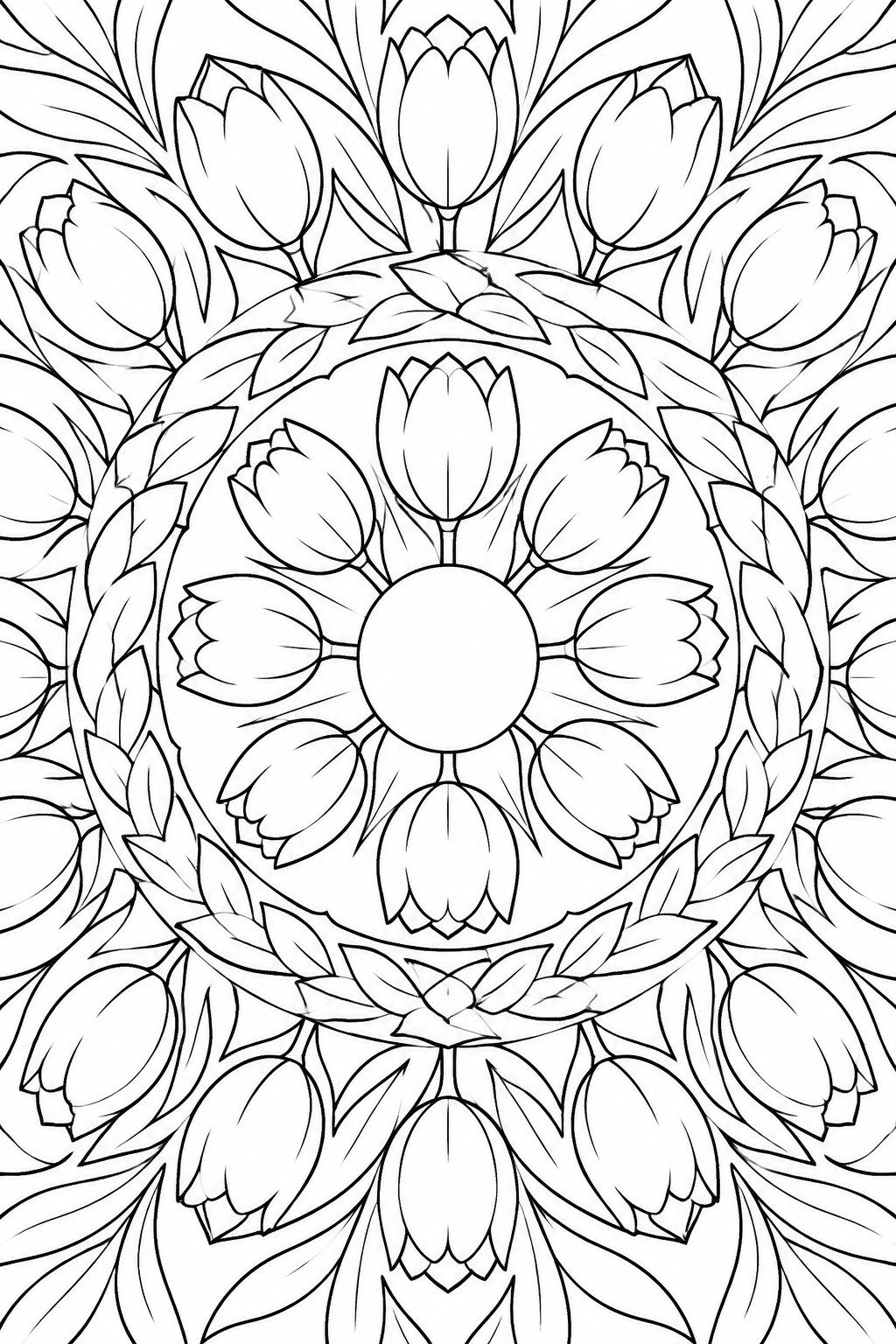
A tulip mandala builds a circular pattern using the same flower shape repeated in layers around a center point. The design places full tulips in the middle ring, smaller ones closer to the edge, and leaves used as filler between each ring. This creates separate bands that let colorers work section by section without overlapping lines.
What makes this page useful is the clear ring structure that breaks the mandala into manageable parts. Beginners can color one ring at a time and still end up with a balanced result. The tulip shapes stay simple enough for quick sessions while the repeated layout gives the page enough detail to hold interest for longer coloring. A page like this works especially well for adults who want pattern practice without tiny spaces.
Snowflake Mandala with Crystal Facets
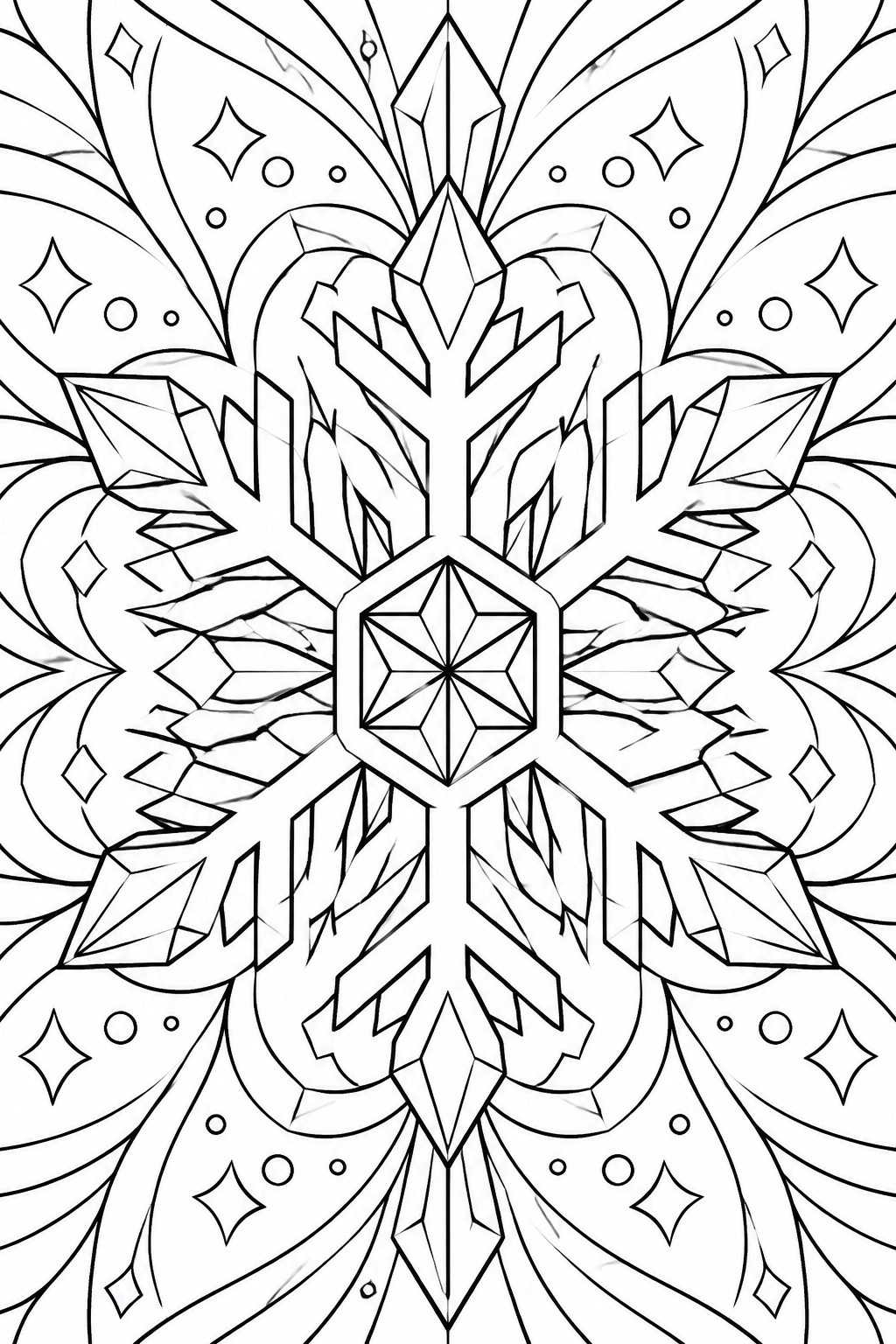
Snowflake mandalas built around a central hexagon use sharp angular lines to form layered crystal arms that repeat in perfect symmetry. The design mixes broad triangular shapes with smaller diamond cuts and scattered dots to create clear sections for coloring. This radial layout keeps the focus on the snowflake structure while leaving enough open space between the arms for easy color placement.
The layout makes this easy to color section by section without losing the overall pattern. A page like this works especially well for adults who want a seasonal mandala that still feels structured rather than overly busy. The repeating crystal forms let you try simple color gradients or shading techniques across matching shapes.
Floral Mandala with Concentric Petal Rings
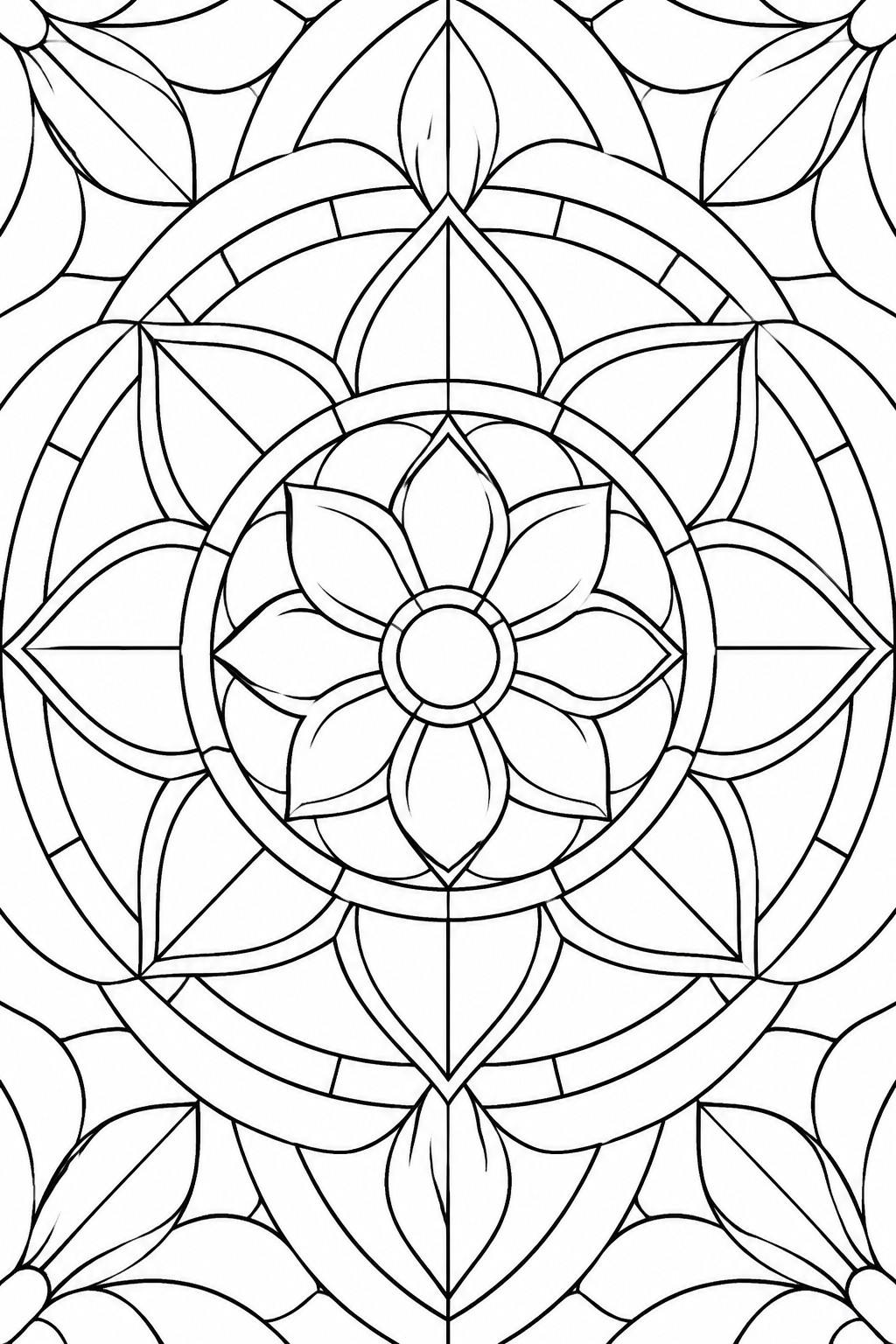
This mandala centers on a simple eight-petaled flower with a round middle. Concentric circles divide the design into clear rings that hold repeating leaf and petal shapes. The outer sections add larger pointed forms that echo the inner pattern without crowding the page.
The layout makes this easy to color because the lines stay bold and the sections stay separate. A page like this works especially well for adult beginners who want a mandala that feels complete but does not require tiny details. You can finish one ring at a time or repeat a few colors across matching shapes to keep the process simple. The even spacing also helps the finished page look balanced even if you color quickly.
Floral Mandala with Repeated Circular Blooms
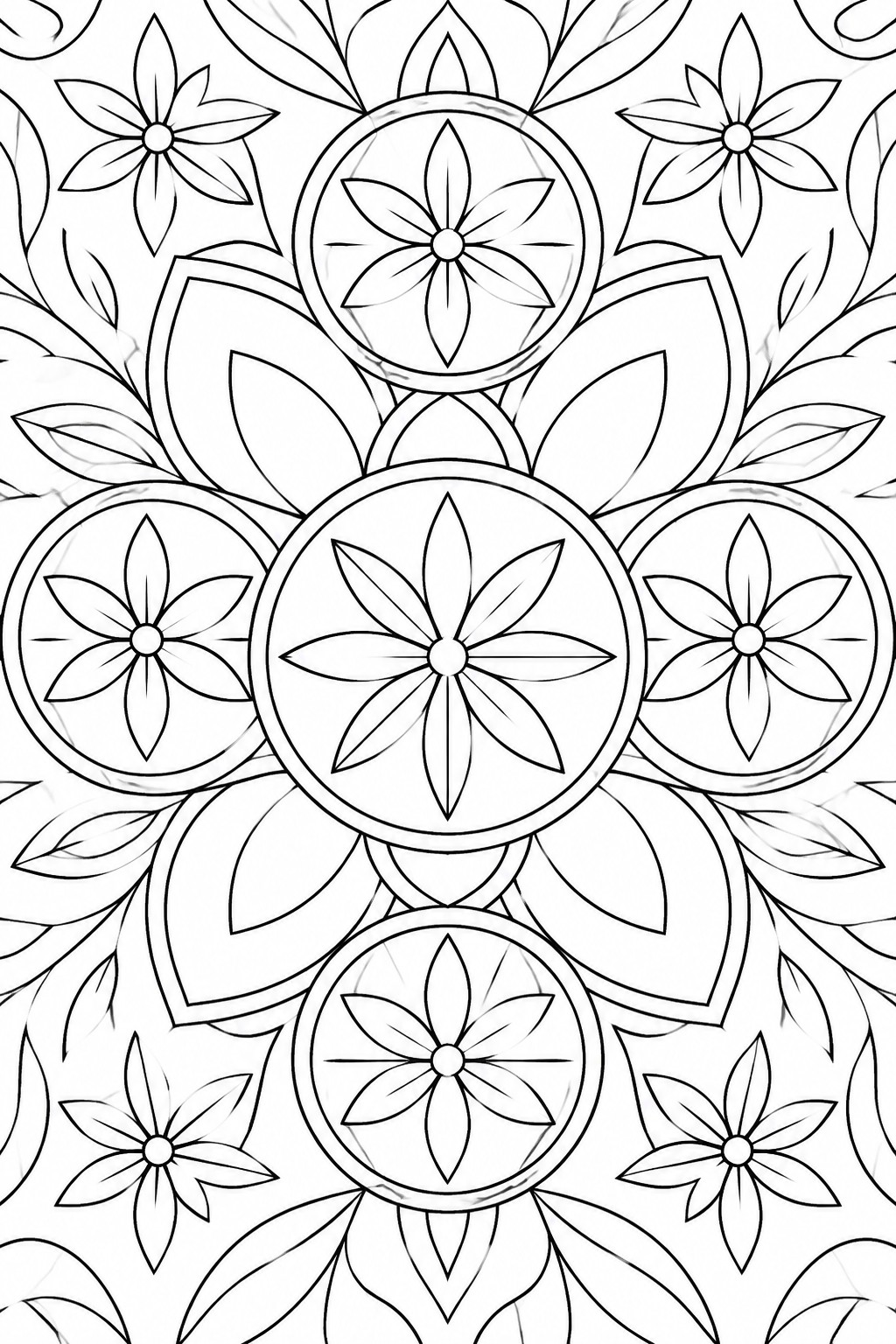
This mandala centers on a large flower inside a bold circle, surrounded by six smaller matching flowers each framed in their own circle. Leaf and petal shapes fill the spaces between these circles to create a full radial layout. The repeating flower forms give clear sections for color changes while keeping the overall design balanced and organized.
The layout makes this easy to color because the circles act as natural stopping points between sections. Beginners can focus on one flower at a time without losing the mandala structure. The mix of solid flower centers and simpler leaf outlines offers enough variety to stay interesting without requiring fine detail work in every area.
Concentric Mandala with Central Flower and Leaf Rings
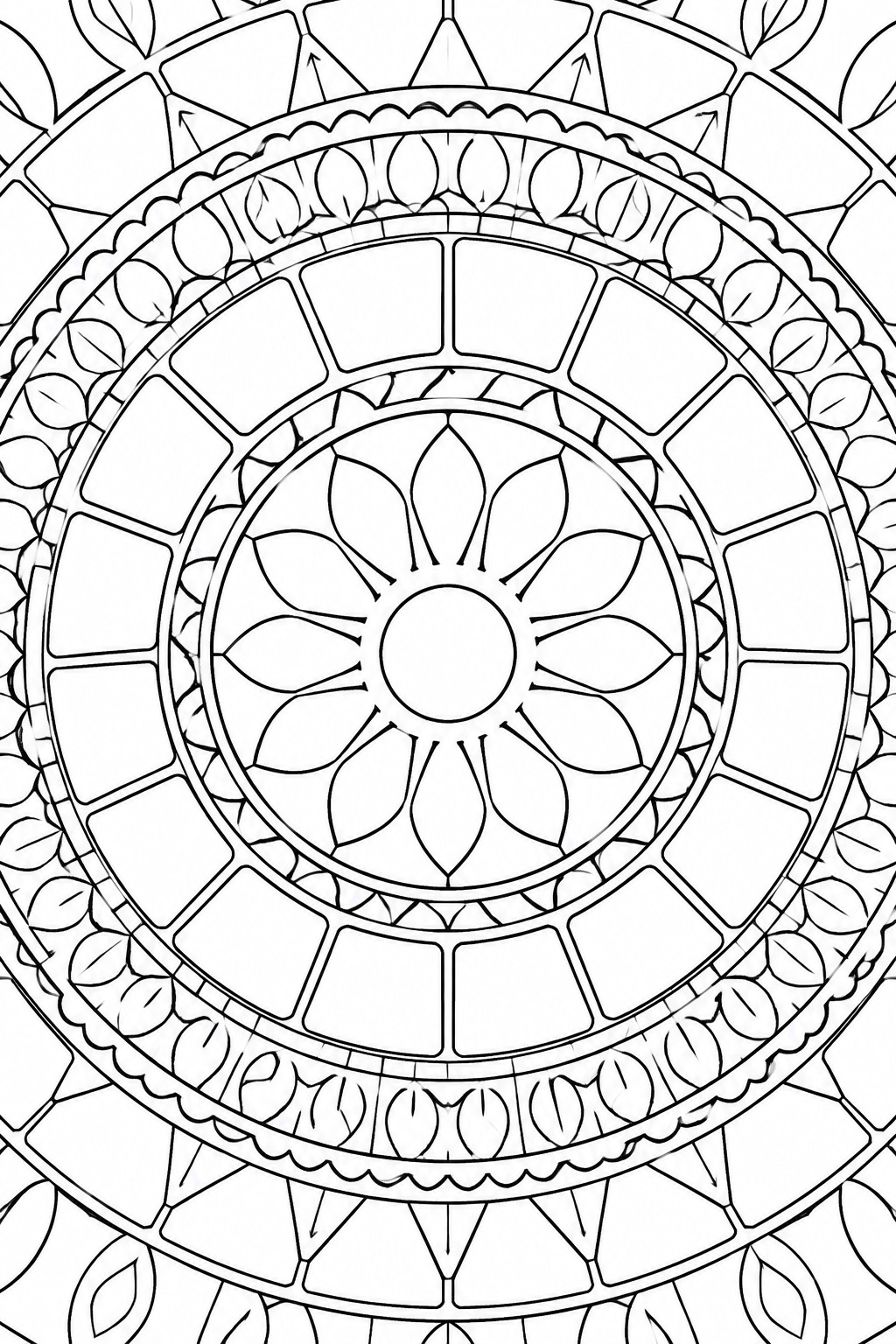
A mandala built around a simple eight-petal flower at the center creates a clear focal point that anchors the whole design. Concentric rings then add rectangular blocks and repeating leaf shapes that form distinct bands for coloring. The balanced symmetry and clear section breaks give the page a structured feel that still leaves room for color choices.
The layout makes this easy to color because the rings naturally divide the page into manageable zones. A page like this works especially well for adult beginners who want steady progress without jumping between scattered details. The rectangular shapes offer quick areas to fill while the leaf patterns provide slightly more texture in the outer bands. This combination keeps the experience focused and satisfying from start to finish.
Symmetrical Mandala Built Around a Central Bloom
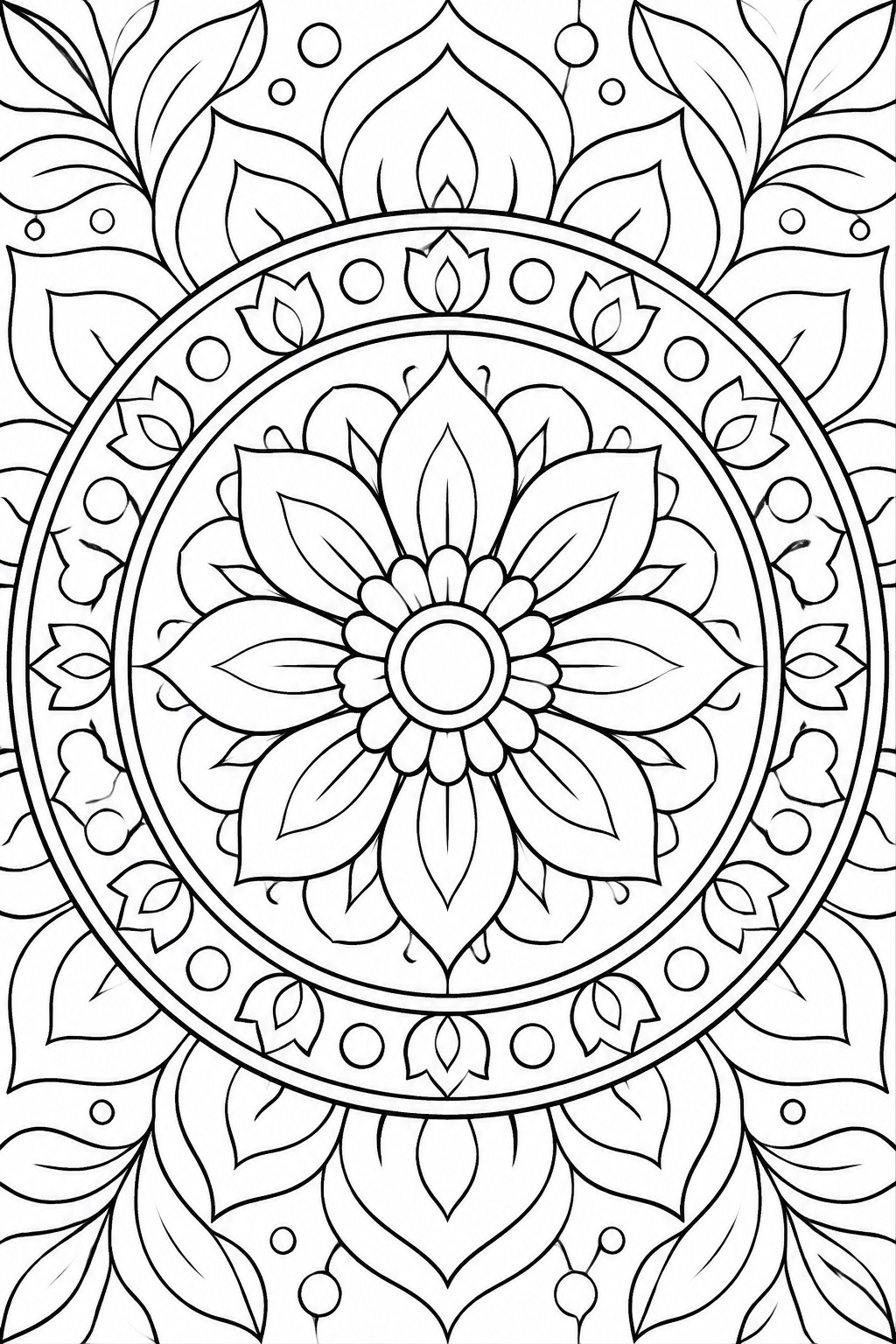
A mandala design places a large multi-petaled flower at the center with several rings of smaller petals radiating outward. Concentric circles separate the main bloom from an outer band that mixes small floral shapes, dots, and leaf clusters. The even spacing and repeated motifs create clear zones that let colorers work section by section without needing to plan complex shading.
The layout makes this easy to color because the rings keep each area contained and the larger petal shapes leave room for simple fills. Beginners can finish one ring before moving to the next, which helps build confidence with mandala patterns. A page like this works especially well for short sessions since the repeating elements stay consistent yet avoid tiny intricate details that can slow progress.
Concentric Mandala with Layered Petals and Leaves
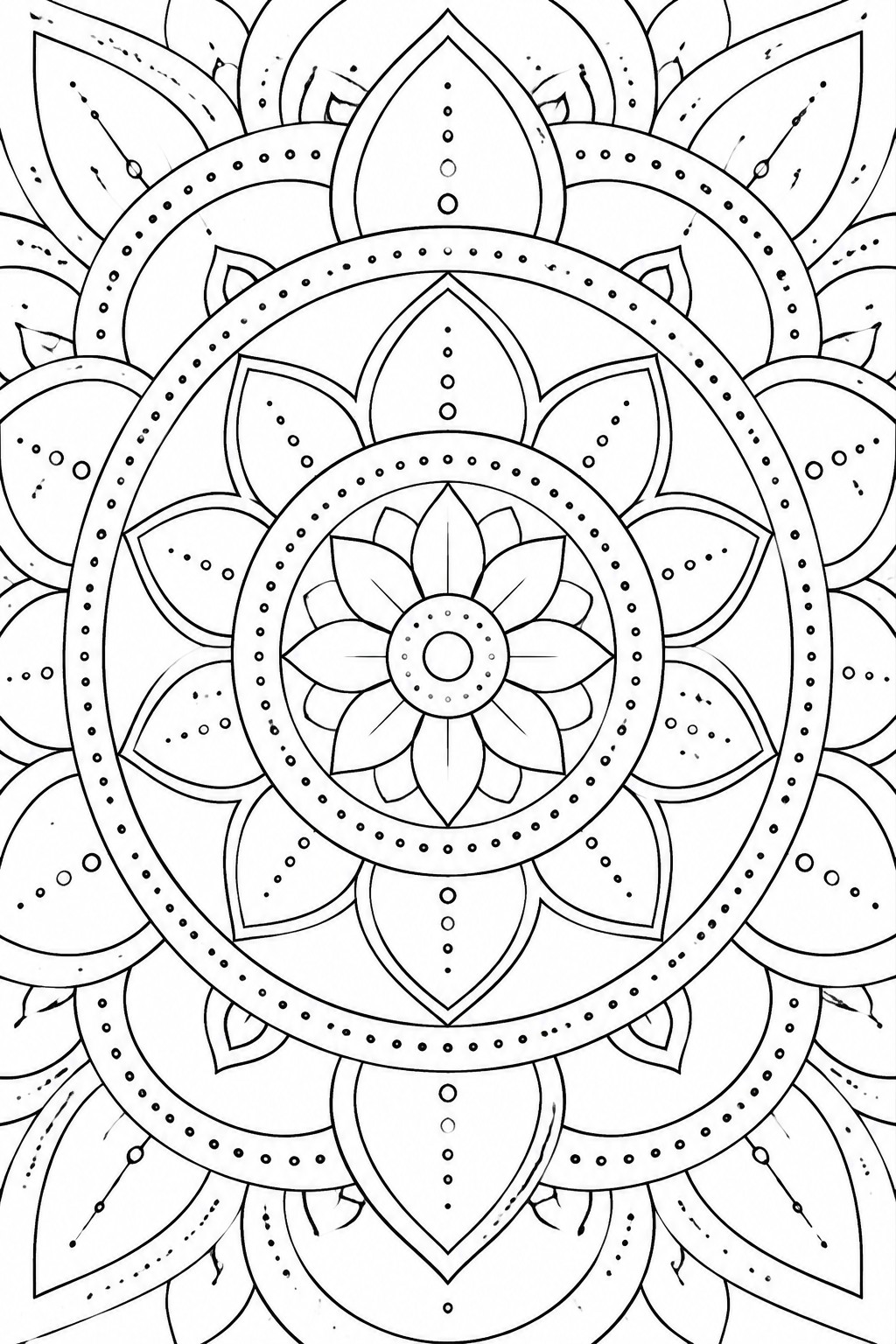
This mandala centers on a small flower core that expands through repeated rings of pointed petals and leaf shapes. Each ring uses dotted lines and small accents to separate sections while keeping the overall pattern balanced and symmetrical. The design gives colorers distinct bands to fill one at a time without losing the circular flow.
The layout makes this easy to color because the rings act as built-in stopping points that prevent the page from feeling scattered. Beginners can focus on one layer at a time while still building a complete mandala by the end. A page like this works especially well for short sessions or for anyone who wants pattern practice without extreme detail levels. The open petal shapes also leave room for simple color choices or light shading if desired.
Frequently Asked Questions
What supplies work best for coloring these simple mandala pages as a beginner?
Colored pencils offer good control and allow for easy blending on the intricate lines. Start with a basic set of 12 to 24 colors and add gel pens or fine tip markers for highlights if desired. Avoid heavy markers at first since they can bleed through paper. Test your tools on a scrap page to see how they perform before committing to the full design.
How do I print the mandala coloring pages at home without issues?
Download the pages in PDF format and open them in a program like Adobe Reader. Select the print option and choose high quality settings on plain white paper for best results. Use letter size paper unless the file specifies otherwise and make sure the scale is set to 100 percent to avoid cropping any details.
What tips help avoid feeling overwhelmed when starting a mandala?
Begin in the center and work outward in small sections rather than tackling the whole page at once. Pick one color family at a time to create harmony and take breaks if your hand tires. Remember that mandalas do not require perfect symmetry so enjoy the process and let your choices evolve naturally.
Can these pages be used on a digital device instead of printing?
Yes many PDF files work well with apps like Procreate or Adobe Fresco on tablets. Import the image and use a stylus to color digitally with layers for easy corrections. This option saves paper and lets you experiment with unlimited color palettes before deciding on a final version.
How long does it typically take to finish one of these beginner mandalas?
Most simple designs take between 30 minutes and two hours depending on your pace and level of detail. Start with shorter sessions to build focus and color during quiet moments like evenings to enhance relaxation benefits. Over time you will complete them faster as your confidence grows.
