

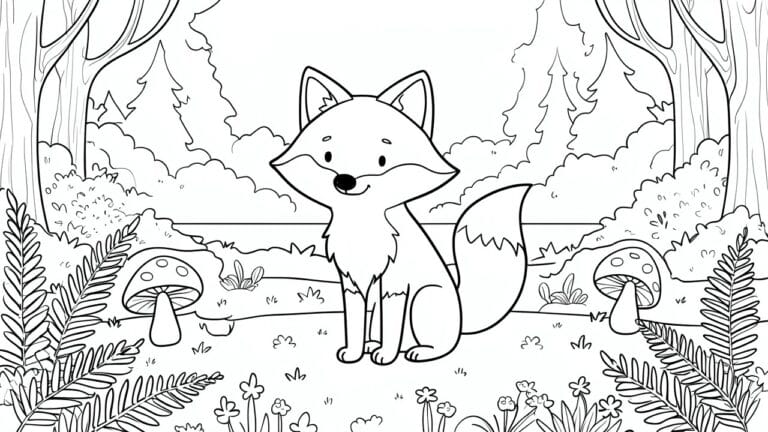
I like coloring pages that show animals in their habitats.
It makes the coloring feel a bit more connected to real life.
I picked out some pages that pair each animal with where it lives.
These work for quiet time at home or in the classroom.
I think they are a good option if you want something simple and educational to color.
Fox in a Woodland Habitat
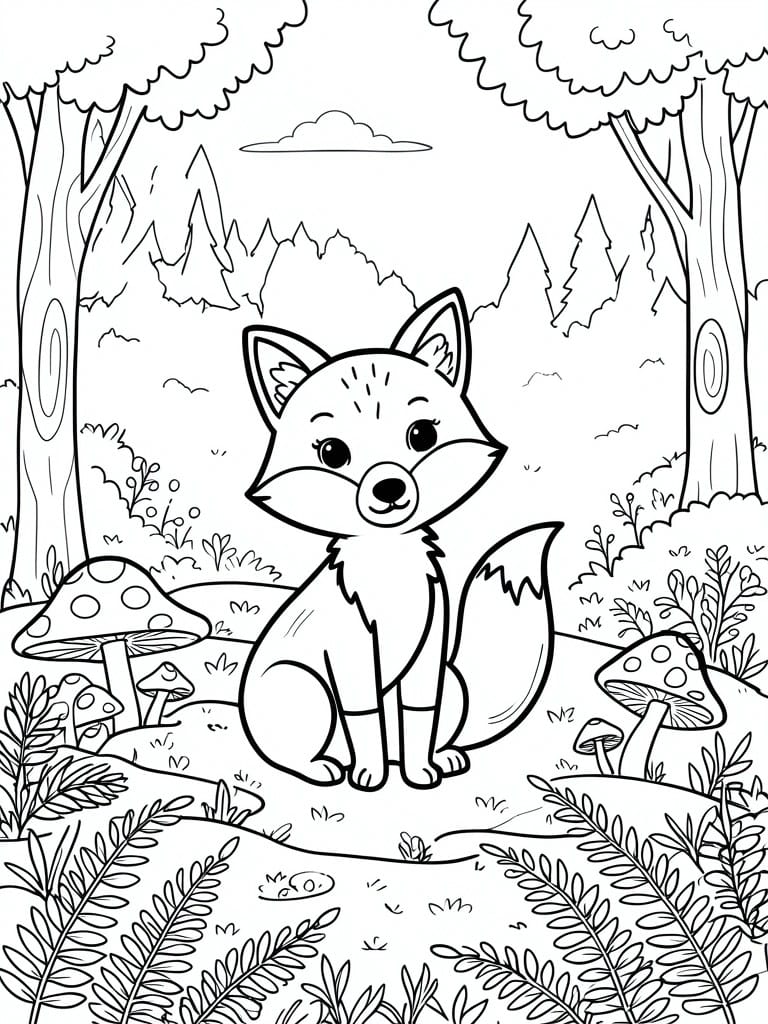
A fox habitat coloring page centers on the animal seated in a forest clearing where trees, mushrooms, and ferns create the surrounding environment. The style uses clean outlines with a mix of larger open shapes for the fox and smaller repeated patterns in the foliage and mushroom caps. This setup lets colorers fill the scene while keeping the focus on how the animal fits into its natural setting.
What makes this page useful is the way the fox takes up the center space while habitat details stay grouped around the edges. The layout makes this easy to color with markers or crayons because the main subject stays separate from the background elements. For kids, the simpler shapes here support learning about where foxes live without adding too many tiny sections. The balanced spacing also helps the finished page look complete even if some areas stay lightly colored.
Penguin Habitat on an Ice Floe
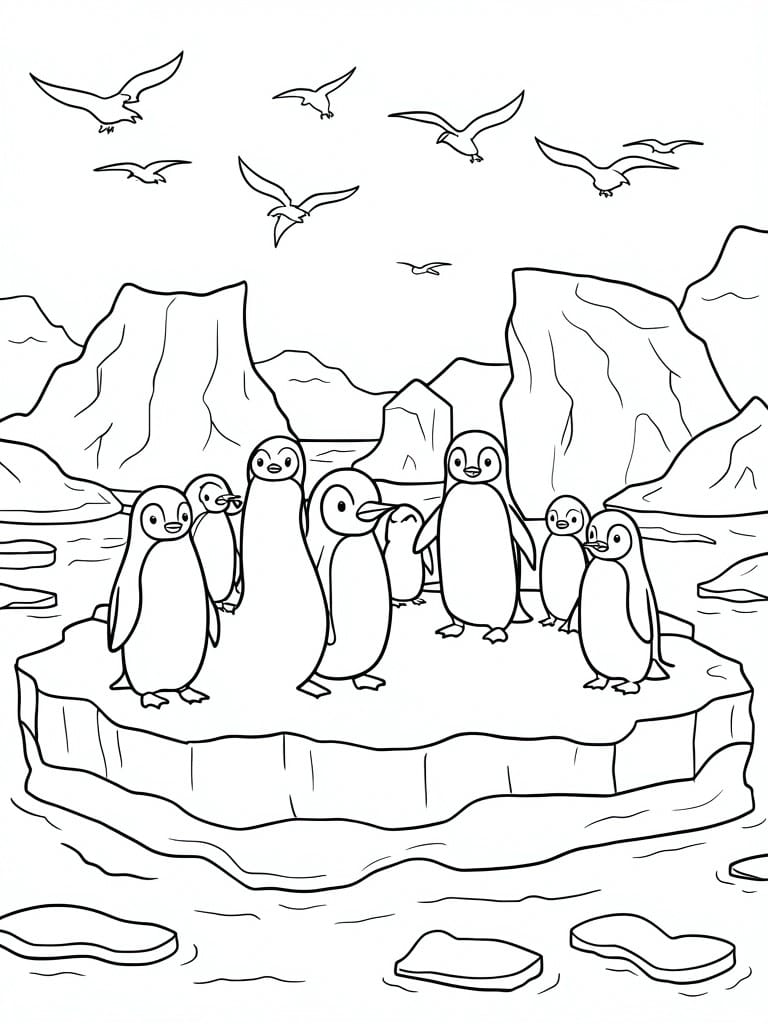
This habitat coloring page focuses on a colony of penguins gathered on a raised ice platform. The layout places the penguins in the center with flying birds overhead, rocky cliffs behind them, and scattered ice pieces in the water below. Clean outlines keep the animals separate from the landscape so each part of the habitat can be colored on its own.
What makes this page useful is the clear grouping of penguins that shows how they share space in their environment. The open areas around the ice and water allow for simple shading choices without tight spots. For kids, the simpler shapes here help connect the animals to the cold setting they live in. The overall balance of subjects and background makes the page quick to finish while still covering the full habitat idea.
Sea Turtle Coral Reef Habitat Page
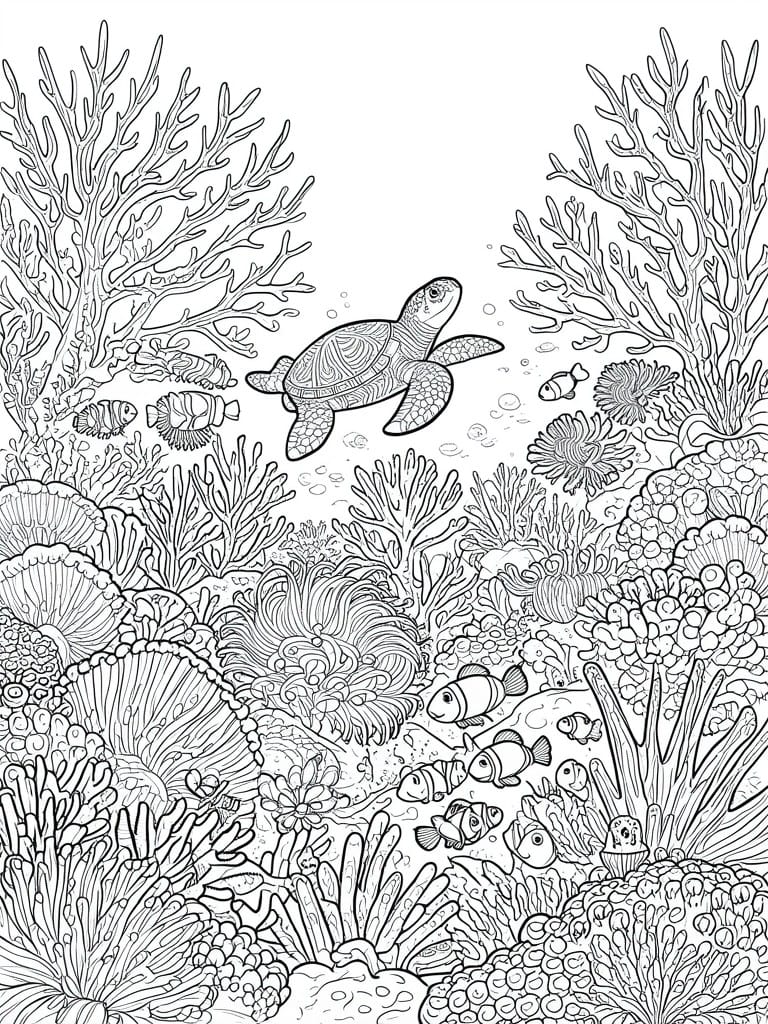
A sea turtle habitat coloring page focuses on placing the animal directly in its coral reef surroundings. The design uses a central turtle with patterned shell details, surrounded by layered corals of different shapes and scattered fish at various sizes. This composition gives colorers multiple texture areas to work with while keeping the ocean setting clear and connected.
The layout makes this easy to color in stages since the corals and fish are grouped without tight overlaps. A page like this works especially well for older kids or adults who want a mix of pattern work on the turtle and broader reef sections. The bubbles and open spaces let colorers add simple highlights or leave areas light without needing advanced techniques.
Meerkats Standing Outside Their Desert Burrow
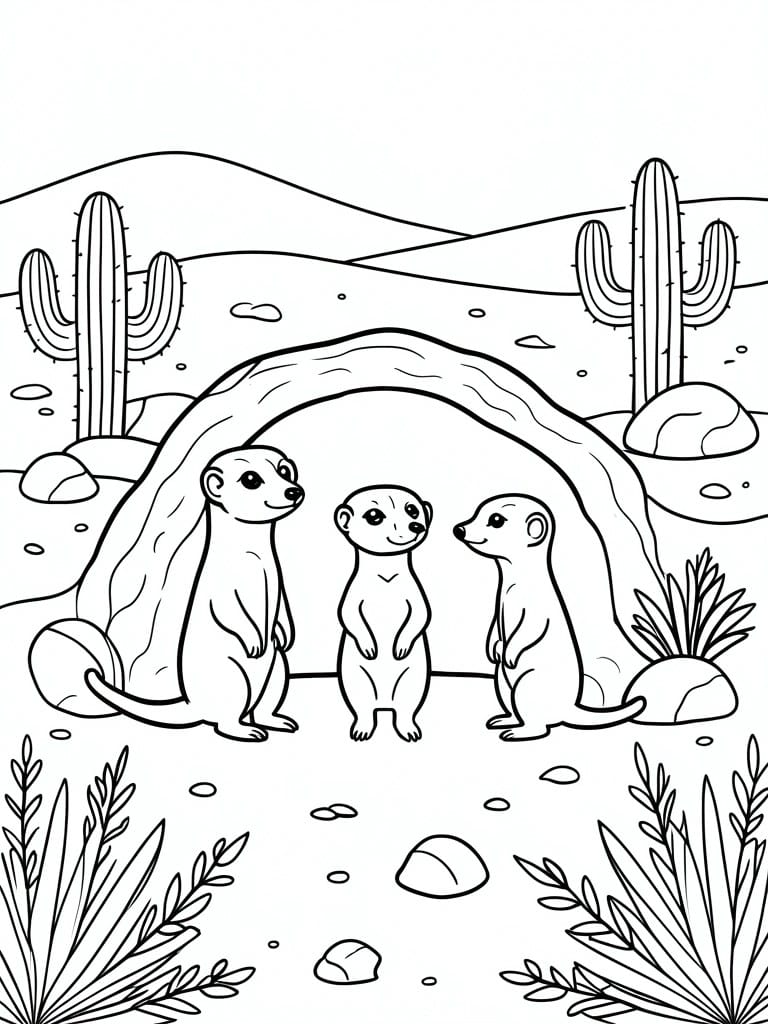
Meerkat habitat coloring pages center on showing these animals grouped near a burrow in a dry landscape filled with cacti, rocks, and low hills. The style relies on bold outlines and open areas that separate the animals from the surrounding desert features without adding extra patterns or textures. This setup creates a clear scene where the burrow forms a natural arch over the group and the scattered plants mark the edges of the sandy ground.
The layout makes this easy to color because the main figures have simple shapes and the background elements stay spaced apart. A page like this works especially well for kids who are learning about animal homes since the habitat details stay straightforward and recognizable. The open sand areas let colorers fill large sections quickly without needing to stay inside tight lines.
Heron and Frog Wetland Habitat Page
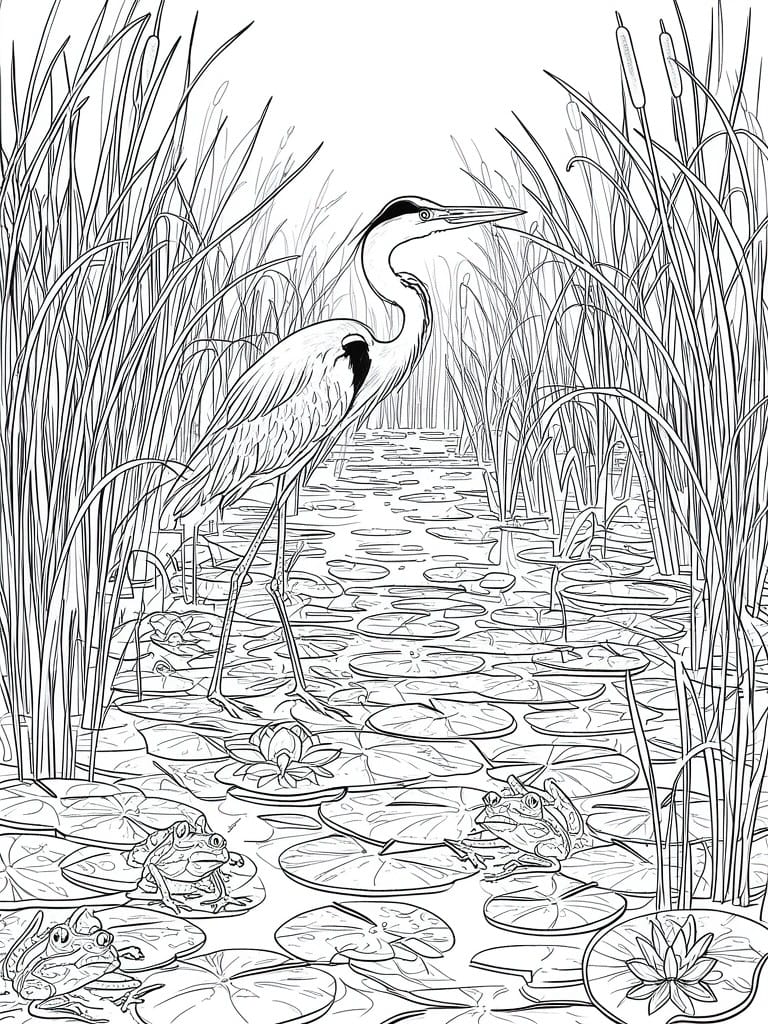
This coloring page idea focuses on a wetland scene that places a heron and several frogs together in their shared pond environment. The layout uses lily pads as a base across the water, with tall reeds and cattails creating vertical lines on both sides. The arrangement connects the tall bird, the smaller amphibians, and the surrounding plants to show a complete habitat in one view.
The layout makes this easy to color because the subjects sit on clear lily pad shapes with open water spaces between them. A page like this works especially well for colorers who want to practice filling both large areas and smaller plant details in the same session. The mix of open water and clustered reeds gives options for simple or more shaded coloring without requiring tiny patterns. For a habitat themed collection this type of page stands out because it shows multiple animals in one natural setting rather than isolated subjects.
Frog Pond Habitat Coloring Page
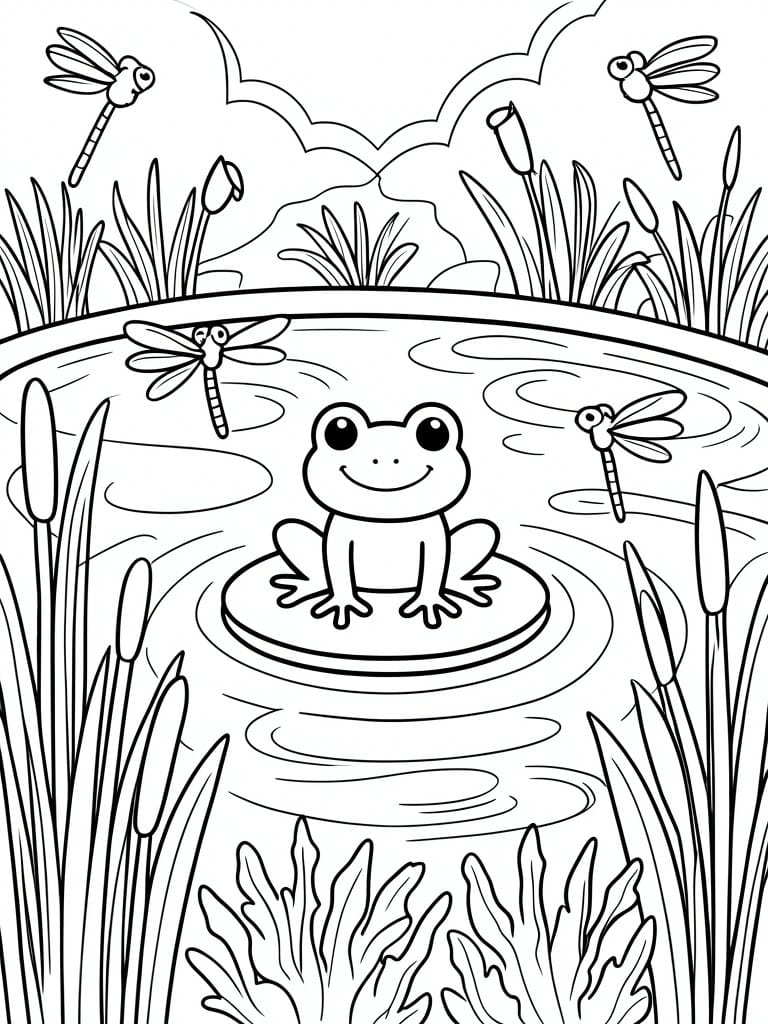
Frog pond habitat pages place the animal directly in its environment with a central frog on a lily pad. The design uses surrounding reeds, water ripples, and dragonflies to show the wetland setting without crowding the main subject. Bold outlines separate each element so colorers can work on the frog, the water, and the plants one section at a time.
The layout makes this easy to color because the main shapes stay bold and separate. Kids can practice staying inside the lines while adults might add shading to the water and plants. What makes this page useful is the clear connection between the frog and its wetland home without extra clutter. The open water areas give room for simple color fills or quick patterns if desired.
Toucan Rainforest Habitat Scene
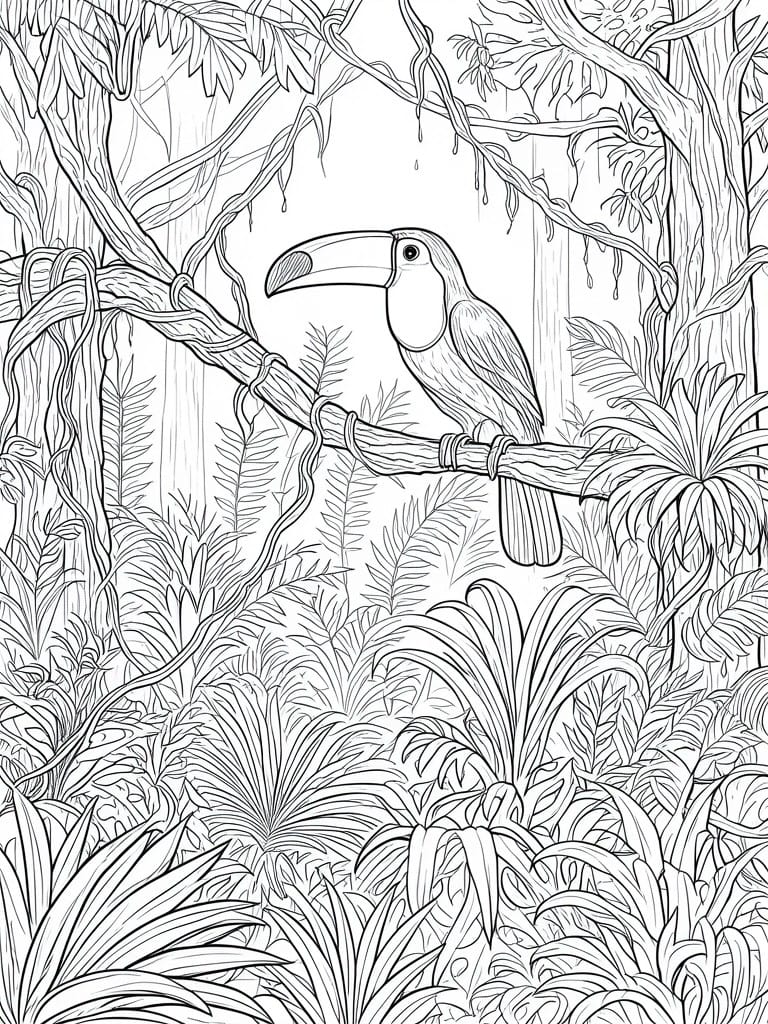
A toucan perched on a branch forms the core of this habitat coloring page. Fine lines create layers of hanging vines, palm fronds, and overlapping leaves that surround the bird and fill the background. The mix of larger open shapes on the toucan and tighter patterns in the foliage gives colorers clear choices about where to focus detail.
The layout makes this easy to color because the central bird provides a natural starting point before moving into the surrounding plants. A page like this works especially well for adults or older kids who want to practice shading different leaf textures without needing an overly complex design. The habitat elements stay distinct enough to let color choices highlight the rainforest setting.
Deer in Mountain Meadow Habitat
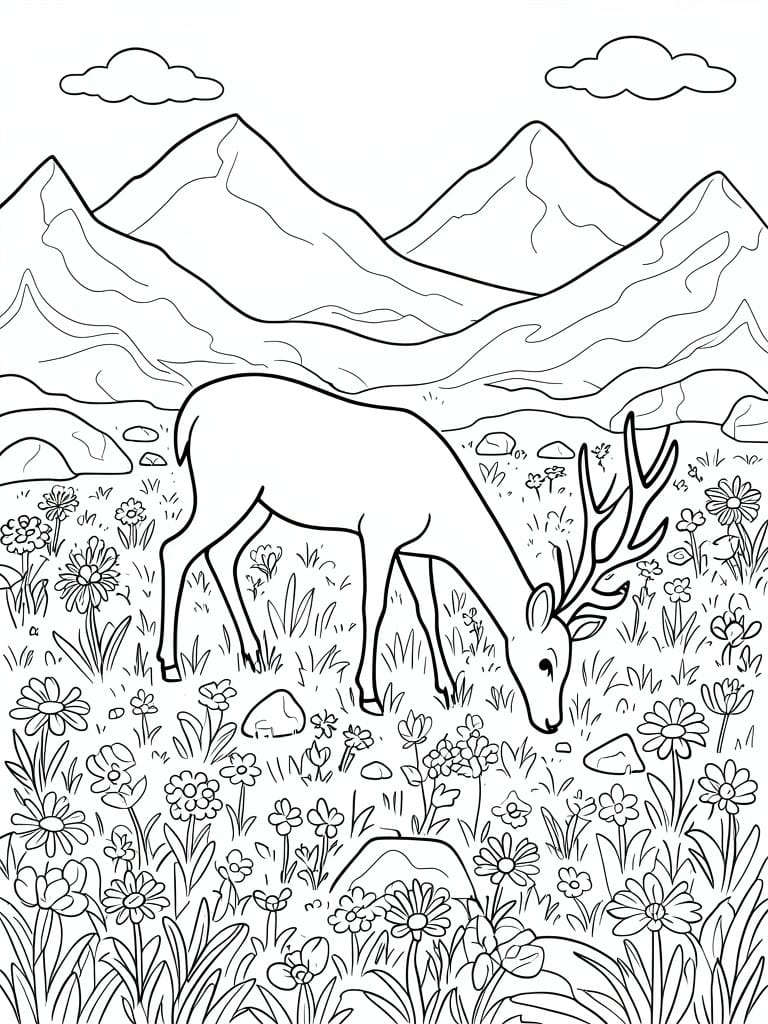
This coloring page idea pairs a grazing deer with the mountain landscape where it lives. The composition places the animal in the middle of the page surrounded by grass and flowers while mountains rise in the background. Clear outlines and a balance of large shapes with scattered smaller details create an approachable scene.
The layout makes this easy to color because the deer offers bigger areas while the flowers and grass add light detail work. A page like this works especially well for mixed age groups since it avoids both extreme simplicity and heavy intricacy. The habitat focus gives the page a clear educational angle that stands out when people search for animal environment printables.
River Otters in Their Stream Habitat
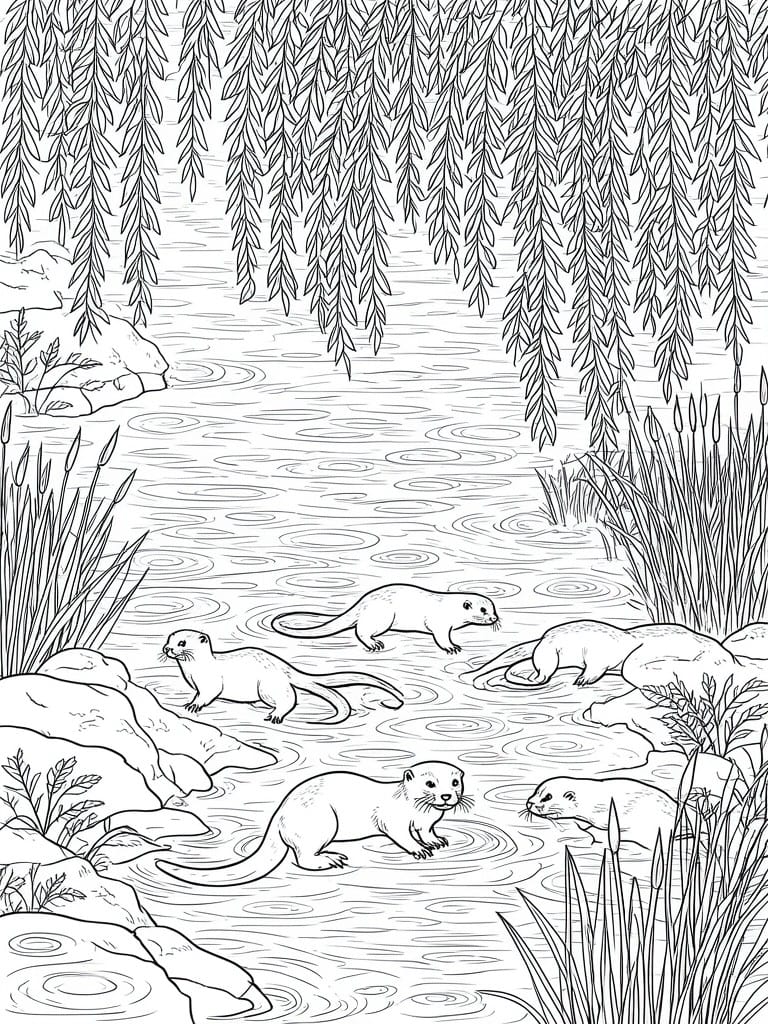
Otters placed in a river setting make up the main focus of this coloring page. The design uses line art to show the animals moving through water alongside rocks and plants that represent a typical wetland environment. Ripples across the surface and clusters of reeds and hanging branches fill out the scene without packing every space tightly.
The layout makes this easy to color because the open water sections allow quick coverage while the plants add light texture work. A page like this works especially well for kids or beginners who want a clear animal habitat theme with moderate detail. The spread of elements gives colorers room to experiment with different shades on the rocks and leaves.
Tide Pool Habitat with Crabs and Starfish
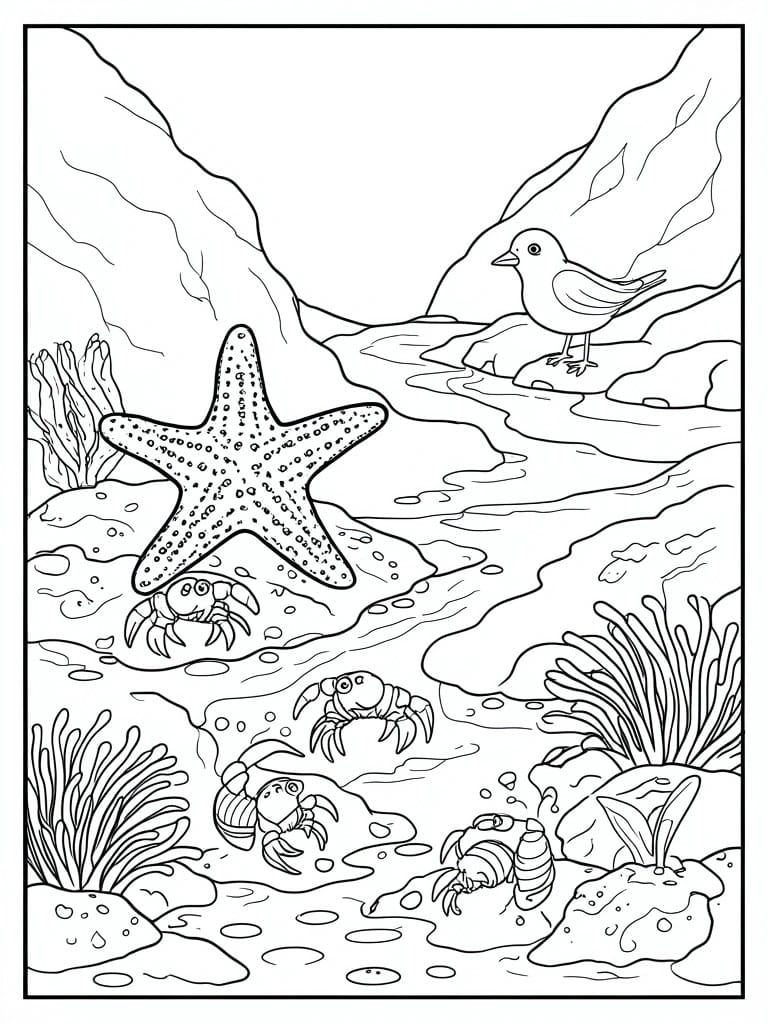
This coloring page idea centers on a tide pool habitat where multiple crabs, a starfish, and a shorebird appear together among rocks and sea plants. The page uses a connected shoreline scene with water lines and vegetation to place the animals in their shared environment instead of showing them alone. The layout spreads the creatures across different rock levels with open areas in between so each one stands out while still belonging to the same setting.
The layout makes this easy to color because the animals remain separate enough to avoid tight overlaps. Open spaces around the crabs and starfish give room for simple fills or added shading without crowding the page. A page like this works especially well for kids learning about ocean habitats since the elements stay clear and recognizable.
Badger Family Woodland Burrow
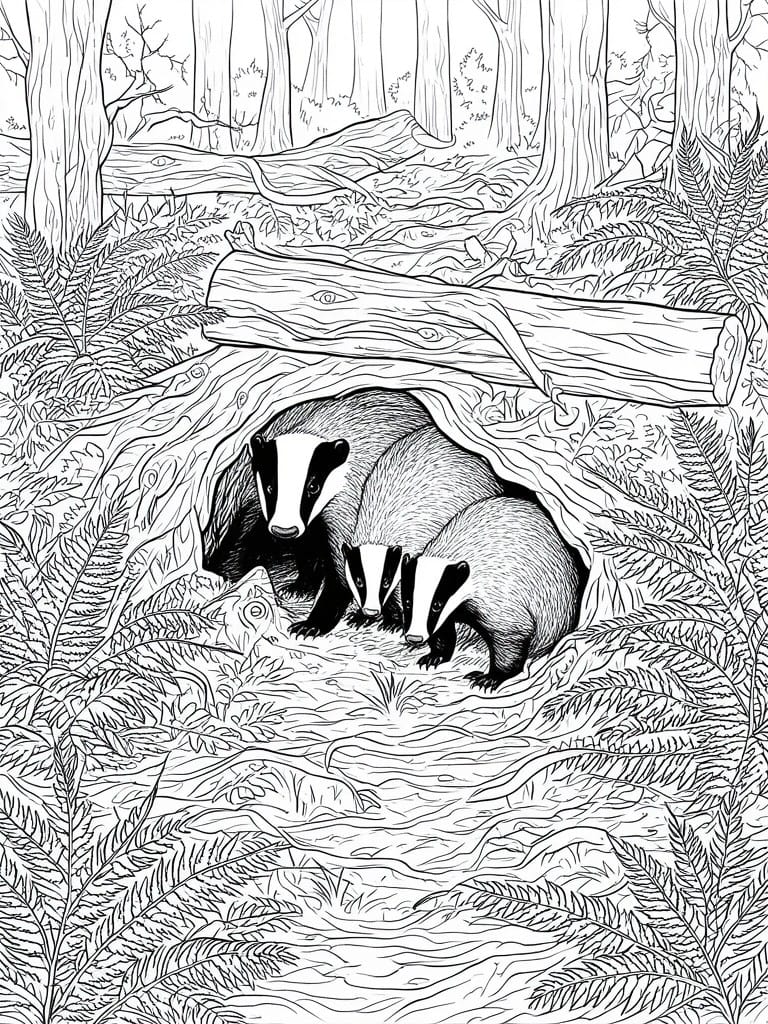
Badger habitat pages work well when they place the animals inside a burrow framed by logs and forest floor plants. The idea here uses a layered woodland scene with ferns, fallen timber, and tree trunks to show the connection between the animals and their shelter. Dense line patterns in the leaves and ground cover give colorers clear sections to fill while keeping the focus on the burrow setting.
The layout makes this easy to color because the animals sit in the center with surrounding details that guide the eye outward. A page like this works especially well for adults who like medium detail since the fur and foliage offer texture without tiny isolated shapes. The balanced spacing between the burrow and the forest elements helps the page feel complete once colored.
Mountain Goat in Steep Alpine Cliffs
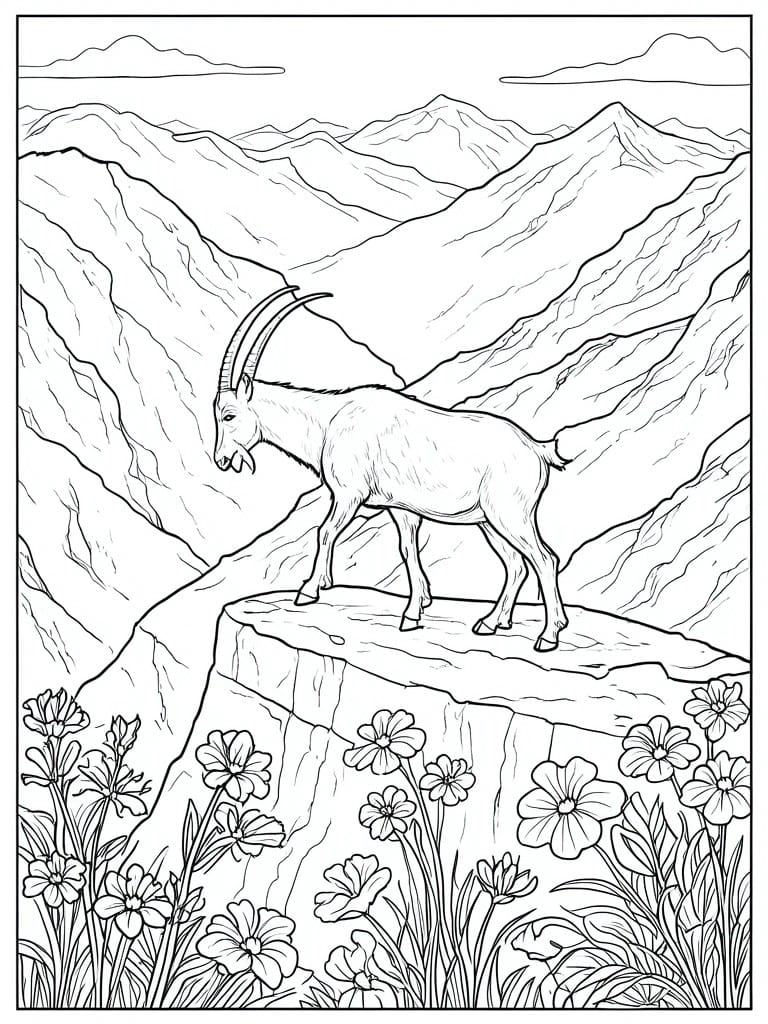
A coloring page that places a mountain goat on a narrow rocky ledge shows the animal within its high-elevation habitat. The design uses layered mountain ridges in the background and flower clusters along the lower cliffs to connect the goat to its typical surroundings. Clear outlines separate the animal, rock faces, and distant peaks so each area receives its own color treatment.
What makes this page useful is the way the main subject sits in open space while the surrounding mountains and flowers add context without crowding the page. The layout makes this easy to color in stages, starting with the goat and then filling the larger rock and sky areas. For adults or older kids who like nature scenes, the mix of simple large shapes and some finer line work in the flowers gives a satisfying session without tiny details everywhere. The single-animal focus also makes the page quick to print and complete in one sitting.
Mangrove Habitat with Heron Fish and Crabs
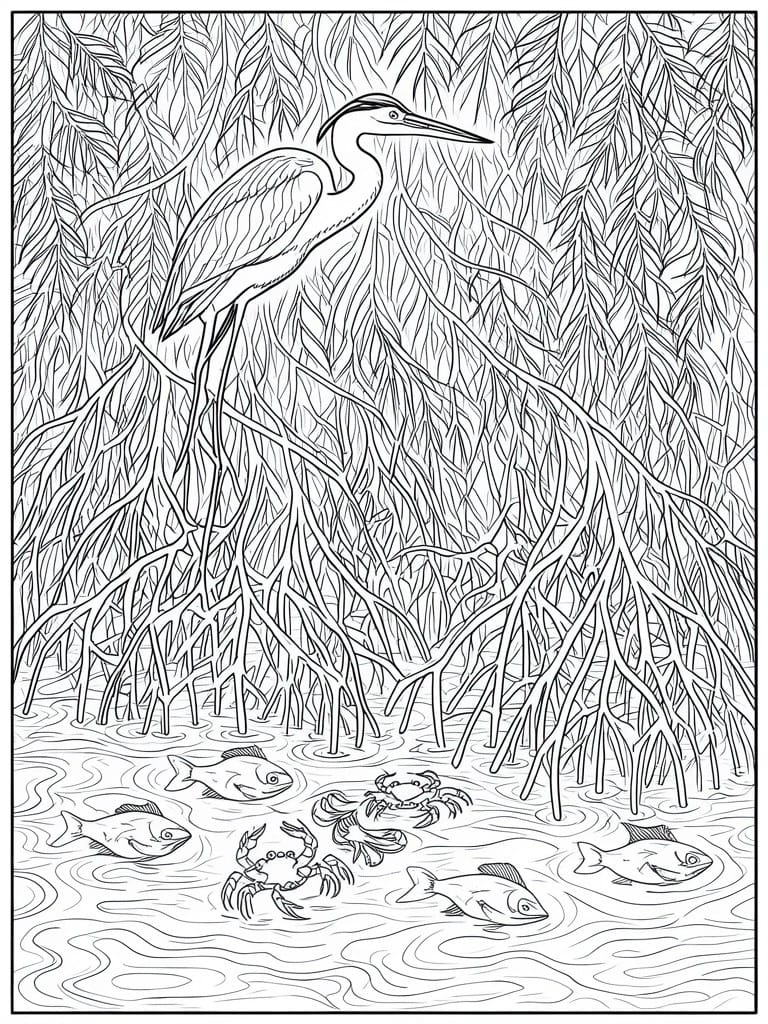
This coloring page idea focuses on a wetland habitat where a tall wading bird stands among exposed mangrove roots while fish and crabs occupy the water at its base. The page uses a detailed line style with clear separation between the bird, the root system, and the water creatures. The vertical layout places the main subject high on the page and fills the lower half with smaller animals and ripples to create a full habitat view.
The layered scene gives this page a balanced mix of larger areas on the bird and tighter patterns in the roots and water. The layout makes this easy to color in stages by working from top to bottom or focusing on one type of texture at a time. A page like this works especially well for colorers who want moderate detail without tiny sections filling every corner.
Bats in a Cave Habitat
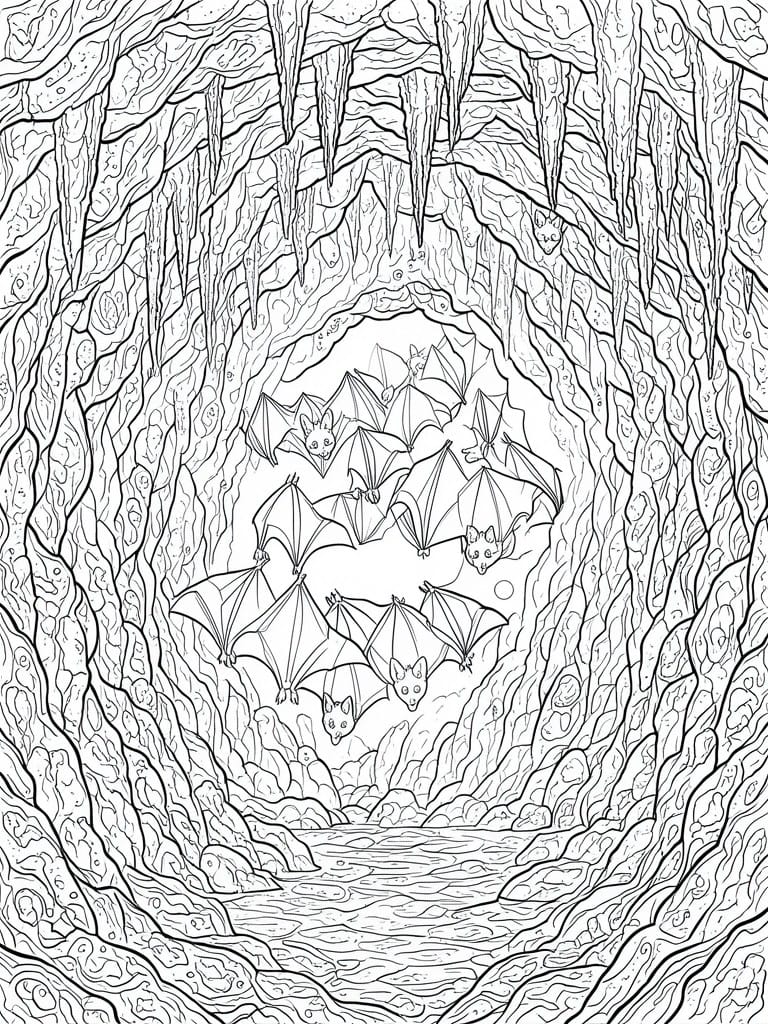
Bats in a cave setting form the core idea here, with multiple bats shown flying through a tunnel-like space surrounded by hanging rock formations. The style uses dense line work across the cave walls paired with clear outlines for the bats and a stream running along the bottom. This composition places the animals in the center against layered background elements that fill the page without crowding the main subjects.
The layout makes this easy to color because the bats sit in open space while the surrounding rocks offer repeated textures to fill. A page like this works especially well for older kids or adults who enjoy adding shading and contrast between the animals and their surroundings. The mix of simple bat shapes and detailed cave surfaces gives colorers room to experiment without needing advanced skills.
Elephant Herd in Savanna Habitat
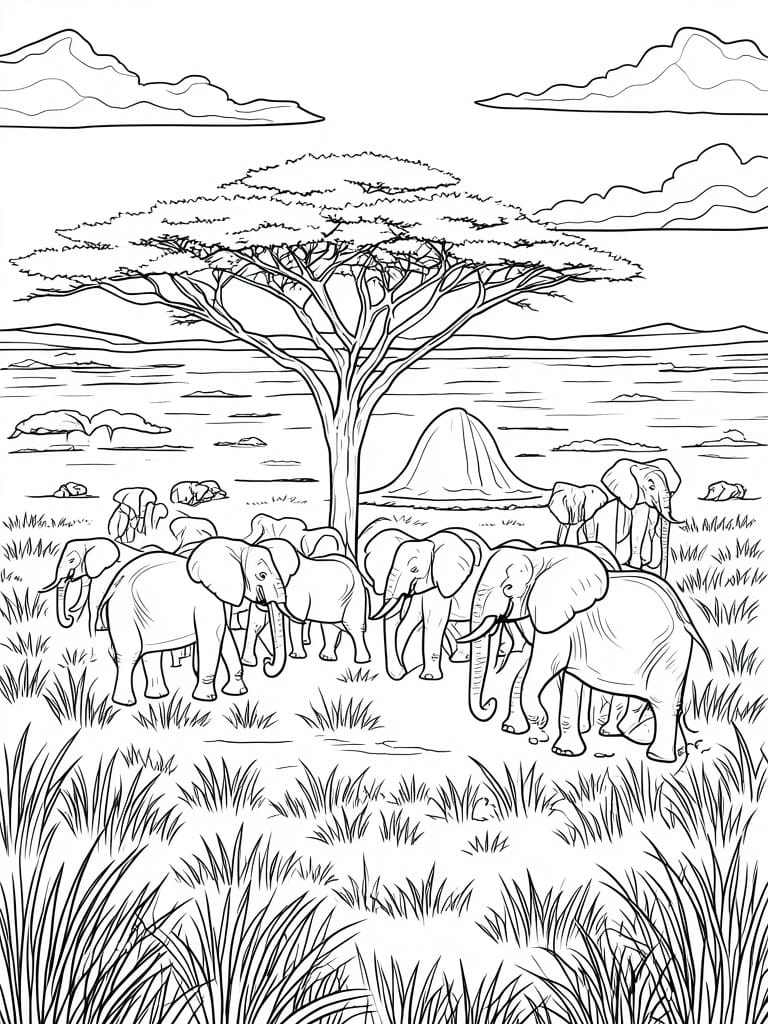
A herd of elephants placed around a large central tree forms the core idea of this habitat page. The composition spreads the animals across an open grassland with distant hills and sky to show their typical environment. Wide sections of grass in the foreground and simpler background shapes keep the focus on connecting the animals to their setting while leaving room for color.
What makes this page useful is the clear separation between the elephants and the landscape elements around them. The layout makes this easy to color because the animals have defined outlines against the flatter ground and sky areas. A page like this works especially well for kids who want to practice coloring multiple similar animals without getting lost in tiny details. The balanced mix of subjects gives it enough variety to hold interest on a single sheet.
Flamingos Wading in a Wetland Habitat
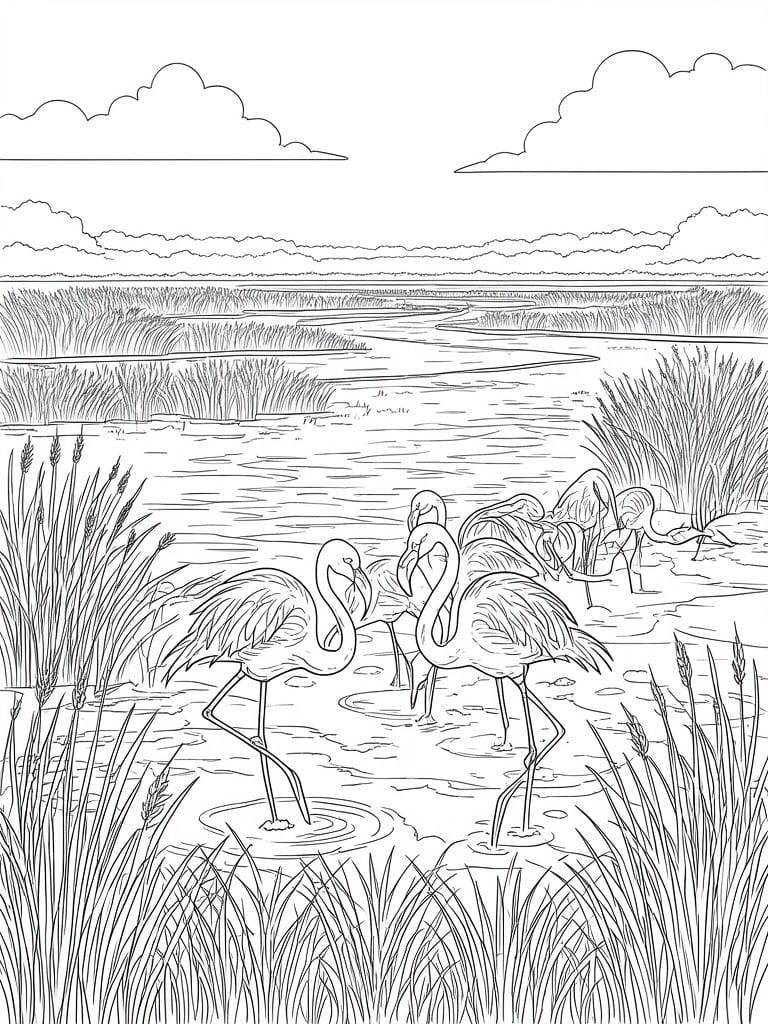
Flamingos in a wetland habitat make up the main subject of this coloring page. The design places several birds in shallow water with tall reeds and grasses on both sides and a winding stream running through the middle ground. Clear line work separates the birds from the surrounding vegetation so each section can be colored without overlapping.
The layout makes this easy to color because the flamingos occupy the center with enough open space around their legs and bodies. What makes this page useful is the combination of detailed feather lines on the birds with simpler repeating patterns in the grass and water. A page like this works especially well for colorers who want to focus on one animal group while filling in habitat details at their own pace. The separate sky area at the top leaves room for quick background work if time is limited.
Bison Prairie Habitat Coloring Page
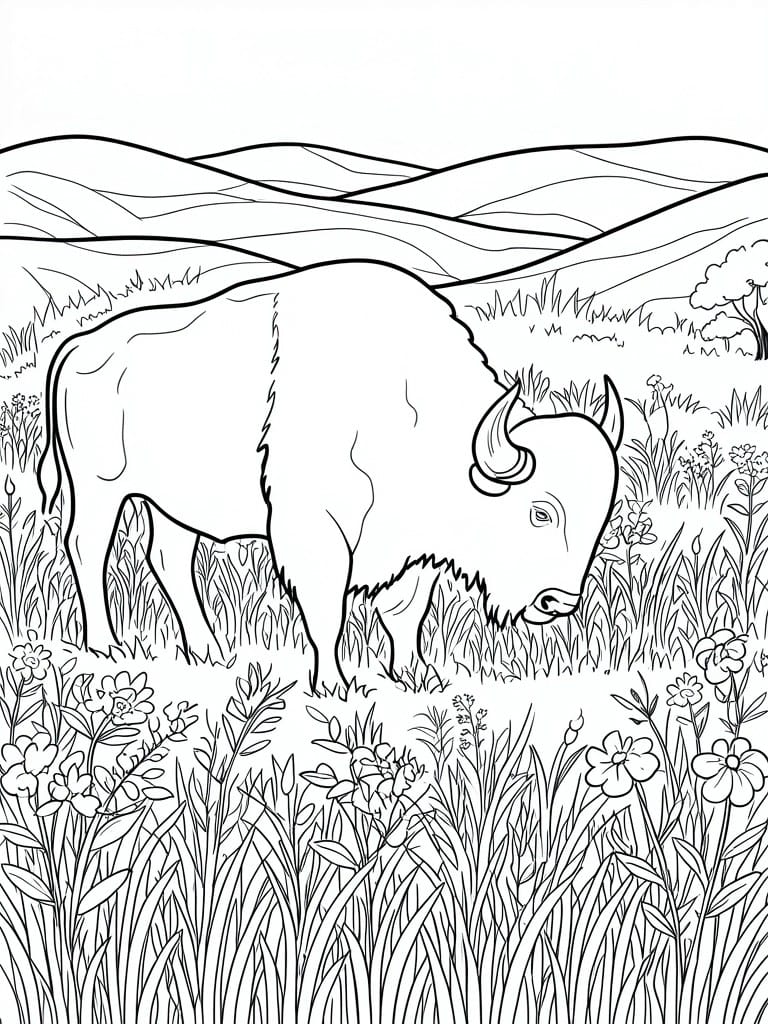
A bison prairie habitat page focuses on placing a large bison within its grassland setting using rolling hills in the background and dense wildflowers plus tall grass in the foreground. The style relies on clear outlines that separate the animal from the surrounding plants so the habitat elements frame the bison without crowding it. This setup creates a balanced scene where colorers can work on the animal’s form first then move into the layered vegetation around it.
What makes this page useful is the way the open grass areas give room for simple shading while the flowers add small repeating shapes to fill in. The layout makes this easy to color because the bison takes up the center space and leaves the lower section for quicker strokes on stems and petals. A page like this works especially well for kids who know basic animal shapes but still want some pattern practice in the plants. The detail level makes this a smart pick for short sessions that still show the connection between the animal and its environment.
Sea Otter in a Kelp Forest Habitat
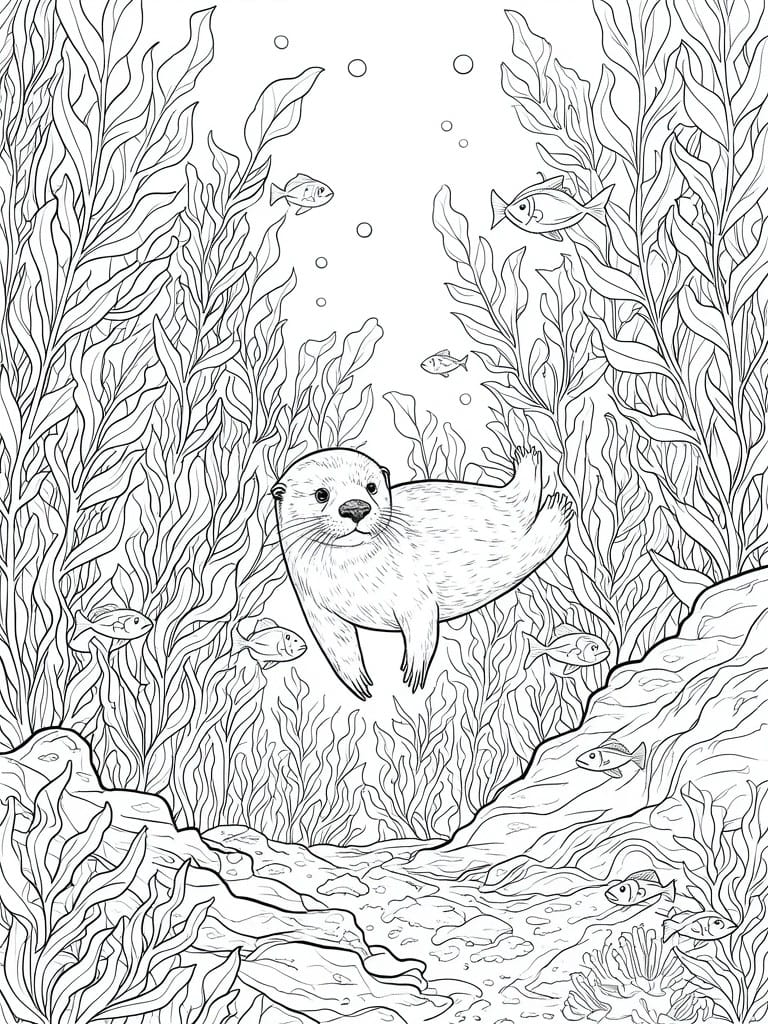
Sea otter habitat pages place the animal in its actual ocean setting with tall kelp strands, scattered fish, rising bubbles, and a rocky seabed. The layout centers the otter while filling the sides and bottom with layered plant and rock shapes that show depth. Different line weights and open areas between the elements give colorists clear spots to work without the page feeling crowded.
What makes this page useful is the mix of larger solid shapes on the otter and fish with thinner repeating lines in the kelp. The layout makes this easy to color in sections or all at once depending on time and preference. A page like this works especially well for anyone who wants a recognizable habitat scene that still leaves room for creative color choices. The detail level makes this a smart pick for older kids or adults who enjoy nature themes but do not want extreme intricacy.
Frequently Asked Questions
1. How do these coloring pages help children learn about where animals live? These pages encourage kids to color detailed scenes that show animals in their natural environments such as forests oceans or deserts. By filling in the backgrounds and animals children connect each species to its habitat through visual cues like trees water or snow which builds lasting knowledge about ecosystems.
2. What age groups benefit most from using these animal habitat coloring pages? Younger children ages four to seven enjoy the simple outlines while older kids ages eight to twelve can handle the more detailed elements. Parents and teachers often adapt the pages by adding labels or facts to match different skill levels making them useful across elementary school years.
3. Where can someone find and download the full set of 18 coloring pages? Many educational websites and printable resource platforms offer free or low cost downloads of these specific habitat themed pages. Search for the title directly on reputable sites that focus on nature education to access high quality PDF versions ready for printing.
4. How can parents or teachers turn these pages into interactive learning activities? After coloring discuss each animal and its home by asking questions about food sources or climate needs. Add extensions like researching real photos or creating a matching game with habitat facts to reinforce the connections made during the coloring process.
5. What tips improve the coloring experience for these detailed habitat scenes? Start with light colors for backgrounds and layer darker shades for animals to create depth. Use colored pencils for fine details around elements like leaves or waves and encourage kids to add their own creative touches such as extra plants to personalize each habitat.
